
K. Ritz
Author of Sheever's Journal, Diary of a Poison Master
Works by K. Ritz
Tagged
Common Knowledge
There is no Common Knowledge data for this author yet. You can help.
Members
Reviews
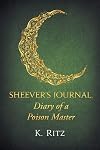
I liked this more than I expected. The concept is simple. One man with a dangerous past writes a journal while hiding in plain sight among people he has been trained to hate. The execution is not simple at all. The voice is lean, unsentimental, then suddenly raw. The mode flips from mapmaking to confession and back again. It feels like someone solving for survival with limited data and limited trust, which is exactly the point.
Sheever is working in the base kitchens of High Lord Trivak. He show more counts coins, fuel, miles, days. He measures people like variables. Cyril runs the cooks. Tobb snores and boasts and keeps bringing women into their shared room. Liana coughs herself into a grave and the child follows, and that quiet sequence hurt more than the book makes a show of. The world around the kitchens is a system of roads and walls and rules. Royal Park. Natal compounds. The Church of Eshra with its black heart called the Saeween. You can tell the author built the logic before throwing sparks into it. I respect that.
There is a scene that will stick with me for a while. Sheever buys a blank book from a bruised woman on Snake Street, and she tells him to record his deeds. He does, then tries to stop, then cannot. The journal becomes a pressure valve and a trap at the same time. That is clever and also true to how obsession works. He wants to remain invisible. He wants to be seen by someone who can judge him and maybe forgive him. He keeps saying he loathes these people, then acts like he does not. I kind of loved how messy that got.
The politics are set with a calm hand. Uttebedt. The Kinship of the Serpent. Sythene Lonntem named with reverence and anger and a little grief. The natal legions who vow peace but do not feel safe to be near. A First Secretary with a gold chain and a smile that means trouble. None of it is loud. It is just there, like voltage you can feel when you get too close to a line.
I am not sure how I feel about Sheever with the knife and the sleeping powder. I believed it. I believed the part of him that would remove a finger to protect a secret and then bury it with the dead to balance an imagined scale. I am not saying that is sane. I am saying it fits the math of his mind. I caught myself arguing with him in the margins and then rooting for him two pages later. That contradiction is the engine here.
The prose has this interesting swing. One page is a scathing audit of kitchen hierarchy and pay schedules and the way coal moves. The next page is a memory of a woman named Sythene and it spills out in a way that feels almost embarrassing and therefore honest. Then we are back to logistics. Routes through the park. How long it takes to reach the bridge. Why a wall is stupid or smart. It reads like a builder making a model and then testing it until it breaks.
Tiny complaints. A few rants about Mearans being idiots repeat a touch and I wanted one of the women in the kitchens to push back on it out loud. One early joke about wolves felt like a wedge into a different book. Also there is a late festival scene with mead where the drunk banter goes on a beat longer than it needs. None of that matters much. The signal stays high.
Did I feel something. Yes. The burial on Cemetery Lane. The barefoot priest who says nothing and takes the roots anyway. The minor kindnesses that do not fix anything, and the petty cruelties that add up. The mare trained the Kinship way and how simple it is for him to adapt her. A single word of his mother tongue spoken after five silent years. I felt all of that.
Net score. Strong book. The journal form gives it urgency and focus. The world building is cool in the original sense of that word. Controlled and precise. The emotion leaks at the right times. A five star read. If you want character under pressure, a lived in setting, and a mind that treats attention like a weapon, this delivers. show less
Sheever is working in the base kitchens of High Lord Trivak. He show more counts coins, fuel, miles, days. He measures people like variables. Cyril runs the cooks. Tobb snores and boasts and keeps bringing women into their shared room. Liana coughs herself into a grave and the child follows, and that quiet sequence hurt more than the book makes a show of. The world around the kitchens is a system of roads and walls and rules. Royal Park. Natal compounds. The Church of Eshra with its black heart called the Saeween. You can tell the author built the logic before throwing sparks into it. I respect that.
There is a scene that will stick with me for a while. Sheever buys a blank book from a bruised woman on Snake Street, and she tells him to record his deeds. He does, then tries to stop, then cannot. The journal becomes a pressure valve and a trap at the same time. That is clever and also true to how obsession works. He wants to remain invisible. He wants to be seen by someone who can judge him and maybe forgive him. He keeps saying he loathes these people, then acts like he does not. I kind of loved how messy that got.
The politics are set with a calm hand. Uttebedt. The Kinship of the Serpent. Sythene Lonntem named with reverence and anger and a little grief. The natal legions who vow peace but do not feel safe to be near. A First Secretary with a gold chain and a smile that means trouble. None of it is loud. It is just there, like voltage you can feel when you get too close to a line.
I am not sure how I feel about Sheever with the knife and the sleeping powder. I believed it. I believed the part of him that would remove a finger to protect a secret and then bury it with the dead to balance an imagined scale. I am not saying that is sane. I am saying it fits the math of his mind. I caught myself arguing with him in the margins and then rooting for him two pages later. That contradiction is the engine here.
The prose has this interesting swing. One page is a scathing audit of kitchen hierarchy and pay schedules and the way coal moves. The next page is a memory of a woman named Sythene and it spills out in a way that feels almost embarrassing and therefore honest. Then we are back to logistics. Routes through the park. How long it takes to reach the bridge. Why a wall is stupid or smart. It reads like a builder making a model and then testing it until it breaks.
Tiny complaints. A few rants about Mearans being idiots repeat a touch and I wanted one of the women in the kitchens to push back on it out loud. One early joke about wolves felt like a wedge into a different book. Also there is a late festival scene with mead where the drunk banter goes on a beat longer than it needs. None of that matters much. The signal stays high.
Did I feel something. Yes. The burial on Cemetery Lane. The barefoot priest who says nothing and takes the roots anyway. The minor kindnesses that do not fix anything, and the petty cruelties that add up. The mare trained the Kinship way and how simple it is for him to adapt her. A single word of his mother tongue spoken after five silent years. I felt all of that.
Net score. Strong book. The journal form gives it urgency and focus. The world building is cool in the original sense of that word. Controlled and precise. The emotion leaks at the right times. A five star read. If you want character under pressure, a lived in setting, and a mind that treats attention like a weapon, this delivers. show less
K. Ritz’s debut novel, "Sheever's Journal, Diary of a Poison Master," introduces readers to the richly textured and morally complex world of Me’acca Mysuth Sheever. A nuanced character study wrapped in the trappings of a fantasy thriller, this novel explores themes of identity, secrecy, and redemption with both depth and nuance.
Set in the year 516 post Cyntic War, Sheever, a former predator now living in exile, masquerades as a cook in the kitchens of High Lord Fesha Trivak. This dual show more life is meticulously documented in a journal he purchases from a mysterious woman, who urges him to record his deeds for study. The journal becomes a confessional space where Sheever's guarded past and evolving present intertwine.
Ritz’s narrative is compelling not only for its intricate plot but also for its operatic language, which seduces the reader from the opening lines. The author masterfully constructs a world that feels both exotic and grounded, filled with political intrigue and personal vendettas. The narrative voice is distinct, capturing Sheever's transformation from a bitter man living among enemies to someone who begins to question his own prejudices and actions.
The novel’s strength lies in its ability to balance detailed world-building with deep character development. Sheever's interactions with the people around him, particularly as he becomes more entangled in their lives, reveal his internal struggles and gradual shift in perspective. His relationship with a widow and her family adds an emotional layer to the story, highlighting his journey from isolation to reluctant involvement.
However, Ritz does not shy away from the darker aspects of Sheever’s past. The memories that haunt him and his constant battle to maintain his sanity add a psychological depth to the narrative, making it not just a fantasy adventure but a profound exploration of a man's fight for redemption.
The secondary characters, from the high lord he serves to the enigmatic woman who sells him the journal, are well-developed and contribute significantly to the narrative’s richness. Each interaction Sheever has is charged with tension and potential revelation, keeping the reader engaged and invested in his fate.
Ritz’s debut is notable for its ability to blend fantasy with a keen psychological insight. The journal format allows for a deep dive into Sheever’s psyche, making his journey one that is as introspective as it is action-packed. The language is lush and evocative, the plot intricate yet accessible, ensuring that the novel appeals to a broad audience.
In conclusion, "Sheever's Journal, Diary of a Poison Master" is a triumph of fantasy storytelling that also raises pertinent questions about identity, morality, and redemption. K. Ritz has crafted a narrative that is both immersive and thought-provoking, marking a promising start to a new series set in a world of shadows. show less
Set in the year 516 post Cyntic War, Sheever, a former predator now living in exile, masquerades as a cook in the kitchens of High Lord Fesha Trivak. This dual show more life is meticulously documented in a journal he purchases from a mysterious woman, who urges him to record his deeds for study. The journal becomes a confessional space where Sheever's guarded past and evolving present intertwine.
Ritz’s narrative is compelling not only for its intricate plot but also for its operatic language, which seduces the reader from the opening lines. The author masterfully constructs a world that feels both exotic and grounded, filled with political intrigue and personal vendettas. The narrative voice is distinct, capturing Sheever's transformation from a bitter man living among enemies to someone who begins to question his own prejudices and actions.
The novel’s strength lies in its ability to balance detailed world-building with deep character development. Sheever's interactions with the people around him, particularly as he becomes more entangled in their lives, reveal his internal struggles and gradual shift in perspective. His relationship with a widow and her family adds an emotional layer to the story, highlighting his journey from isolation to reluctant involvement.
However, Ritz does not shy away from the darker aspects of Sheever’s past. The memories that haunt him and his constant battle to maintain his sanity add a psychological depth to the narrative, making it not just a fantasy adventure but a profound exploration of a man's fight for redemption.
The secondary characters, from the high lord he serves to the enigmatic woman who sells him the journal, are well-developed and contribute significantly to the narrative’s richness. Each interaction Sheever has is charged with tension and potential revelation, keeping the reader engaged and invested in his fate.
Ritz’s debut is notable for its ability to blend fantasy with a keen psychological insight. The journal format allows for a deep dive into Sheever’s psyche, making his journey one that is as introspective as it is action-packed. The language is lush and evocative, the plot intricate yet accessible, ensuring that the novel appeals to a broad audience.
In conclusion, "Sheever's Journal, Diary of a Poison Master" is a triumph of fantasy storytelling that also raises pertinent questions about identity, morality, and redemption. K. Ritz has crafted a narrative that is both immersive and thought-provoking, marking a promising start to a new series set in a world of shadows. show less
This book wasn’t what I expected. I mean that in the best possible way — like ordering black coffee and realizing someone slipped a little cardamom in there. You sit with the surprise, then sip it again, slower this time, trying to figure out how something so bitter and quiet hits so deep.
Sheever (Me’acca Mysuth Sheever, if we’re being formal) starts out as this aloof, weary voice. He’s undercover — a poison master pretending to be a cook, living among the people he was trained show more to hate. And when he starts writing in this blank journal, it’s with all the reluctance of someone trying not to leave fingerprints behind. But then… something cracks. Slowly, beautifully, and not always cleanly.
The voice in the journal shifts. At first it's full of gritted teeth, dry observations, little jabs. But bit by bit, you see Sheever slipping into these reluctant attachments. A coworker he can’t stand suddenly earns a second glance. The city he despised becomes a backdrop for quieter griefs and surprising loyalties. I started caring about these people too — in that weird way where you want to shake them and hug them and feed them soup.
What got me most, though, were the memory fragments. They hit like splinters — sharp, but brief. There’s trauma in them, real weight, but also this frustrating elegance. Like he’s trying so hard not to confess, and it makes what he does say land even harder. His past unravels slowly, and honestly, I still have questions. But I think that’s kind of the point. This isn’t a story that gives you every answer — it makes you sit with uncertainty and fractured loyalty and the weird way empathy sneaks in when you’re not looking.
Also: the writing? Quietly stunning. Not flashy. But there were lines I reread twice, just to let them settle. And the pacing… okay, full disclosure, there were moments where I got a bit antsy — like when you're waiting for the storm that’s clearly building — but the payoff made that slow burn absolutely worth it.
If you're looking for sword fights and plot twists every ten pages, this might not scratch that itch. But if you want to sit inside someone’s mind as they wrestle with guilt, duty, longing, and the blurry lines between enemies and friends… this is one to savour. It’s not loud, but it lingers. Like the smell of something poisonous and lovely on your hands, long after you’ve closed the book.
I’m honestly still thinking about it. Might be for a while. show less
Sheever (Me’acca Mysuth Sheever, if we’re being formal) starts out as this aloof, weary voice. He’s undercover — a poison master pretending to be a cook, living among the people he was trained show more to hate. And when he starts writing in this blank journal, it’s with all the reluctance of someone trying not to leave fingerprints behind. But then… something cracks. Slowly, beautifully, and not always cleanly.
The voice in the journal shifts. At first it's full of gritted teeth, dry observations, little jabs. But bit by bit, you see Sheever slipping into these reluctant attachments. A coworker he can’t stand suddenly earns a second glance. The city he despised becomes a backdrop for quieter griefs and surprising loyalties. I started caring about these people too — in that weird way where you want to shake them and hug them and feed them soup.
What got me most, though, were the memory fragments. They hit like splinters — sharp, but brief. There’s trauma in them, real weight, but also this frustrating elegance. Like he’s trying so hard not to confess, and it makes what he does say land even harder. His past unravels slowly, and honestly, I still have questions. But I think that’s kind of the point. This isn’t a story that gives you every answer — it makes you sit with uncertainty and fractured loyalty and the weird way empathy sneaks in when you’re not looking.
Also: the writing? Quietly stunning. Not flashy. But there were lines I reread twice, just to let them settle. And the pacing… okay, full disclosure, there were moments where I got a bit antsy — like when you're waiting for the storm that’s clearly building — but the payoff made that slow burn absolutely worth it.
If you're looking for sword fights and plot twists every ten pages, this might not scratch that itch. But if you want to sit inside someone’s mind as they wrestle with guilt, duty, longing, and the blurry lines between enemies and friends… this is one to savour. It’s not loud, but it lingers. Like the smell of something poisonous and lovely on your hands, long after you’ve closed the book.
I’m honestly still thinking about it. Might be for a while. show less
Started this and genuinely thought I would read a few entries before bed. Cute. Next thing I knew I was fully trapped in Sheever’s head, which is not a calm place to be.
What got me was how this book makes routine feel dangerous. Kitchen gossip, bad tea, muddy errands, the absolute misery of sharing space with other people, and somehow all of it keeps tightening until you realize you are way too attached to everyone he keeps insisting he despises. I did not expect the domestic details to show more hit this hard, but they really, really did. The tiny shifts in him got me most. The moments where pity shows up before he can slam the door on it. The way loneliness keeps leaking through all that contempt. I was fine. I was not fine.
I will say there is a stretch in the middle where the pace goes very still and I almost drifted. Almost. Then the journal would hand me one sentence that felt like a knife to the ribs and I was right back in.
The ending. Okay. I see what you did there. I need to lie down and think about the fact that this book made me care so much about a man who would absolutely hate being cared about. show less
What got me was how this book makes routine feel dangerous. Kitchen gossip, bad tea, muddy errands, the absolute misery of sharing space with other people, and somehow all of it keeps tightening until you realize you are way too attached to everyone he keeps insisting he despises. I did not expect the domestic details to show more hit this hard, but they really, really did. The tiny shifts in him got me most. The moments where pity shows up before he can slam the door on it. The way loneliness keeps leaking through all that contempt. I was fine. I was not fine.
I will say there is a stretch in the middle where the pace goes very still and I almost drifted. Almost. Then the journal would hand me one sentence that felt like a knife to the ribs and I was right back in.
The ending. Okay. I see what you did there. I need to lie down and think about the fact that this book made me care so much about a man who would absolutely hate being cared about. show less
Statistics
- Works
- 2
- Members
- 81
- Popularity
- #222,753
- Rating
- 4.7
- Reviews
- 59
- ISBNs
- 3