
Works by Wayne Edwards
Associated Works
Tagged
Common Knowledge
There is no Common Knowledge data for this author yet. You can help.
Members
Reviews
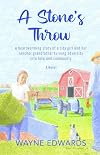
A Stone's Throw: A heartwarming story of a city girl and her rancher grandfather turning adversity into love and community by Wayne Edwards
Well I thought this was going to be a sweet ranch story and then suddenly I was emotionally invested in a stubborn grandfather, a girl trying not to fall apart, and a dog named Dimwit, which feels rude but accurate.
Maggie got me fast. She is tough in that way kids become tough when adults and life leave them no other option, and I kept wanting someone to just let her be a child for five minutes. Ira drove me a little insane at first. The man is basically a weathered fence post with a hearing show more aid and trauma. But then the book starts letting you see the soft places. Not quickly. Thank God, not quickly. I hate when a book forgives everyone by page thirty.
The ranch stuff could have lost me, and sometimes the pacing in the middle wandered around with the chickens, but weirdly that became the point. The work, the animals, the small town, all of it slowly turning into home.
And Dimwit. I was fine. I was not fine.
The ending sat me down very gently and then wrecked me anyway. show less
Maggie got me fast. She is tough in that way kids become tough when adults and life leave them no other option, and I kept wanting someone to just let her be a child for five minutes. Ira drove me a little insane at first. The man is basically a weathered fence post with a hearing show more aid and trauma. But then the book starts letting you see the soft places. Not quickly. Thank God, not quickly. I hate when a book forgives everyone by page thirty.
The ranch stuff could have lost me, and sometimes the pacing in the middle wandered around with the chickens, but weirdly that became the point. The work, the animals, the small town, all of it slowly turning into home.
And Dimwit. I was fine. I was not fine.
The ending sat me down very gently and then wrecked me anyway. show less
A Stone's Throw: A heartwarming story of a city girl and her rancher grandfather turning adversity into love and community by Wayne Edwards
What distinguishes this novel from others working in familiar coming of age territory is its refusal to manufacture transformation before it has been earned. Wayne Edwards constructs Maggie Stone’s movement from San Francisco uncertainty to life on her grandfather’s Montana ranch through accumulation rather than sudden revelation, and the book is stronger for that choice. A lesser version would have hurried toward easy mutual affection between Maggie and Ira, or turned the contrast show more between city girl and ranch life into a string of broad comic set pieces. This novel resists both impulses. It understands that trust, especially in a child who has already been uprooted more than once, is slow work.
The first person voice carries much of that work. Maggie is observant, intelligent, and often more capable than the adults around her fully register, but Edwards is careful not to make her precocious in a manner that feels arranged for effect. Her competence emerges from necessity, whether she is navigating the frightening uncertainty of her mother’s condition, adjusting to the rules of the ranch, or learning how small town loyalties and hierarchies operate. Ira, meanwhile, is rendered with an admirable restraint. He is stern, exacting, and emotionally guarded, and the novel does not ask us to mistake any of that for hidden softness before the text has shown us why it matters. When his care begins to reveal itself through pattern and presence rather than speeches, it lands with real force.
The pacing is patient, sometimes deliberately so, but it suits the book’s larger design. Edwards is interested not only in hardship but in routine as a form of repair. Chores, school, animals, letters, community events, even the awkwardness of new friendships and first romance all become part of the structure by which Maggie’s life is reassembled. The chapter in which she opens up to Whit about her mother and the weight of waiting functions as a quiet hinge in the novel. By that point, the book has already shown us adaptation; here it begins to show us belonging.
What the novel is finally arguing for is neither sentimentality nor simple resilience. It is making a more careful case that community is built through repeated acts of attention, and that love often arrives looking like obligation before it can be named as love. This is not a small achievement. As a piece of constructed fiction, it holds, and it earns the warmth it extends. show less
The first person voice carries much of that work. Maggie is observant, intelligent, and often more capable than the adults around her fully register, but Edwards is careful not to make her precocious in a manner that feels arranged for effect. Her competence emerges from necessity, whether she is navigating the frightening uncertainty of her mother’s condition, adjusting to the rules of the ranch, or learning how small town loyalties and hierarchies operate. Ira, meanwhile, is rendered with an admirable restraint. He is stern, exacting, and emotionally guarded, and the novel does not ask us to mistake any of that for hidden softness before the text has shown us why it matters. When his care begins to reveal itself through pattern and presence rather than speeches, it lands with real force.
The pacing is patient, sometimes deliberately so, but it suits the book’s larger design. Edwards is interested not only in hardship but in routine as a form of repair. Chores, school, animals, letters, community events, even the awkwardness of new friendships and first romance all become part of the structure by which Maggie’s life is reassembled. The chapter in which she opens up to Whit about her mother and the weight of waiting functions as a quiet hinge in the novel. By that point, the book has already shown us adaptation; here it begins to show us belonging.
What the novel is finally arguing for is neither sentimentality nor simple resilience. It is making a more careful case that community is built through repeated acts of attention, and that love often arrives looking like obligation before it can be named as love. This is not a small achievement. As a piece of constructed fiction, it holds, and it earns the warmth it extends. show less
A Stone's Throw: A heartwarming story of a city girl and her rancher grandfather turning adversity into love and community by Wayne Edwards
The first person choice is doing most of the load bearing here. Edwards commits to Maggie’s account and does not step outside it to tidy the material for the reader. That matters.
The early sequence is cleanly built: hospital, temporary shelter, orphanage, then the long relocation to Ira’s ranch. Each move changes the problem without repeating it. A lesser book would keep underlining how uprooted Maggie is. This one lets the new chores do the work. Feeding the calf, fighting the chickens, show more learning Ol’ Blue, raking hay, hauling Dimwit to Dr. Rath after the rattlesnake bite. Scene by scene, competence becomes the plot.
The dialogue is also more useful than it first appears. Ira’s speech could have turned into rural color, but it keeps serving action. He teaches, withholds, corrects, dodges, and occasionally gives away more than he means to. Annie’s scenes are a good counterweight because she says the things Ira cannot yet say, but the book does not let her solve him.
The riskiest late decision is Ira’s letter. Most writers would put that apology in a spoken scene and push too hard. Edwards lets the awkwardness stay on the page. The roughness is the point.
The book is generous, but not loose. It has chapters that look episodic and end up structural. I liked the quiet confidence of that. Technically cleaner than I expected, and more controlled than the title suggests. I flagged the ranch scenes for how much they get done without announcing themselves. show less
The early sequence is cleanly built: hospital, temporary shelter, orphanage, then the long relocation to Ira’s ranch. Each move changes the problem without repeating it. A lesser book would keep underlining how uprooted Maggie is. This one lets the new chores do the work. Feeding the calf, fighting the chickens, show more learning Ol’ Blue, raking hay, hauling Dimwit to Dr. Rath after the rattlesnake bite. Scene by scene, competence becomes the plot.
The dialogue is also more useful than it first appears. Ira’s speech could have turned into rural color, but it keeps serving action. He teaches, withholds, corrects, dodges, and occasionally gives away more than he means to. Annie’s scenes are a good counterweight because she says the things Ira cannot yet say, but the book does not let her solve him.
The riskiest late decision is Ira’s letter. Most writers would put that apology in a spoken scene and push too hard. Edwards lets the awkwardness stay on the page. The roughness is the point.
The book is generous, but not loose. It has chapters that look episodic and end up structural. I liked the quiet confidence of that. Technically cleaner than I expected, and more controlled than the title suggests. I flagged the ranch scenes for how much they get done without announcing themselves. show less
A Stone's Throw: A heartwarming story of a city girl and her rancher grandfather turning adversity into love and community by Wayne Edwards
What Wayne Edwards sets out to do here is deceptively simple: to take a displaced child, an embittered old rancher, and a stretch of Montana prairie, and show how a family may be remade not through sentiment, but through daily obligation. Maggie Stone's journey from 1969 San Francisco to her grandfather Ira's ranch could easily have become a tidy lesson in resilience; instead, the novel is most persuasive when it lets chores, weather, animals, and awkward silences do the emotional work.
The show more structure is deliberately episodic, which suits Maggie's age and circumstance. Each new task, learning to drive Ol' Blue, bottle feeding an orphan calf, gathering eggs from quarrelsome hens, becomes both a practical lesson and a psychological one. Edwards is especially good at tracking the slow alteration in Ira's address, from "young lady" to "Maggie" to the earned intimacy of "Papa"; that small linguistic shift carries more weight than a page of declaration would. One of the loveliest scenes comes during a thunderstorm, when frightened Maggie and equally frightened Dimwit are granted refuge upstairs. Nothing dramatic is announced, yet a household has changed.
Does the novel sometimes explain more than it needs to? It does. Certain medical passages and ranch procedures are rendered with such careful specificity that the pacing slackens, particularly in the middle stretch. Yet even that excess feels born of affection for the world being depicted, not carelessness, and younger readers may well welcome the clarity.
What stays with me is the restraint of the central bond. Maggie is allowed to be angry, capable, funny, and homesick; Ira is allowed to be wrong without being reduced to villainy. The ending, quiet and grave, is earned because the book has done the necessary work scene by scene. Recommended to readers who value lucid, humane fiction about grief, competence, and the slow making of trust. show less
The show more structure is deliberately episodic, which suits Maggie's age and circumstance. Each new task, learning to drive Ol' Blue, bottle feeding an orphan calf, gathering eggs from quarrelsome hens, becomes both a practical lesson and a psychological one. Edwards is especially good at tracking the slow alteration in Ira's address, from "young lady" to "Maggie" to the earned intimacy of "Papa"; that small linguistic shift carries more weight than a page of declaration would. One of the loveliest scenes comes during a thunderstorm, when frightened Maggie and equally frightened Dimwit are granted refuge upstairs. Nothing dramatic is announced, yet a household has changed.
Does the novel sometimes explain more than it needs to? It does. Certain medical passages and ranch procedures are rendered with such careful specificity that the pacing slackens, particularly in the middle stretch. Yet even that excess feels born of affection for the world being depicted, not carelessness, and younger readers may well welcome the clarity.
What stays with me is the restraint of the central bond. Maggie is allowed to be angry, capable, funny, and homesick; Ira is allowed to be wrong without being reduced to villainy. The ending, quiet and grave, is earned because the book has done the necessary work scene by scene. Recommended to readers who value lucid, humane fiction about grief, competence, and the slow making of trust. show less
Awards

You May Also Like
Associated Authors
Statistics
- Works
- 7
- Also by
- 1
- Members
- 27
- Popularity
- #483,026
- Rating
- 4.3
- Reviews
- 14
- ISBNs
- 9