A Stone's Throw: A heartwarming story of a city girl and her rancher grandfather turning adversity into love and community by Wayne Edwards
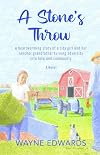
Well I thought this was going to be a sweet ranch story and then suddenly I was emotionally invested in a stubborn grandfather, a girl trying not to fall apart, and a dog named Dimwit, which feels rude but accurate.
Maggie got me fast. She is tough in that way kids become tough when adults and life leave them no other option, and I kept wanting someone to just let her be a child for five minutes. Ira drove me a little insane at first. The man is basically a weathered fence post with a hearing aid and trauma. But then the book starts letting you see the soft places. Not quickly. Thank God, not quickly. I hate when a book forgives everyone by page thirty.
The ranch stuff could have lost me, and sometimes the pacing in the middle wandered around with the chickens, but weirdly that became the point. The work, the animals, the small town, all of it slowly turning into home.
And Dimwit. I was fine. I was not fine.
The ending sat me down very gently and then wrecked me anyway.
Maggie got me fast. She is tough in that way kids become tough when adults and life leave them no other option, and I kept wanting someone to just let her be a child for five minutes. Ira drove me a little insane at first. The man is basically a weathered fence post with a hearing aid and trauma. But then the book starts letting you see the soft places. Not quickly. Thank God, not quickly. I hate when a book forgives everyone by page thirty.
The ranch stuff could have lost me, and sometimes the pacing in the middle wandered around with the chickens, but weirdly that became the point. The work, the animals, the small town, all of it slowly turning into home.
And Dimwit. I was fine. I was not fine.
The ending sat me down very gently and then wrecked me anyway.
The Doomsday Butcher: A Gripping Serial Killer Thriller with Apocalyptic Stakes (Cole Chambers FBI Profiler Thrillers Book 1) by S.E. Stitcher
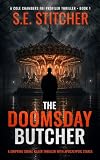
A dark, fast serial-killer thriller about a rookie FBI profiler chasing a Revelation-obsessed murderer through a small New York town in 1993.
Love the creepy setup, especially the amusement park crime scene, which is basically “what if a Bible riddle had access to a carousel and absolutely no chill.” Cole Chambers is a solid lead: damaged, scared of fire for very good reasons, but still trying to do the job. His partnership with Kozlowski gives the book some needed bite and humor between all the blood and prophecy.
The mystery moves quickly, the clues are nasty, and the whole thing has a very grim 90s crime-show feel, in a good way. Sometimes it leans a little hard into dramatic cop-thriller dialogue, but honestly, I was still turning pages.
Be warned: graphic murder, torture, religious extremism, child abuse references, and a lot of deeply upsetting crime-scene imagery. Compelling, gruesome, weirdly fun, and definitely not a “read before bed unless you enjoy staring at the ceiling” situation.
Love the creepy setup, especially the amusement park crime scene, which is basically “what if a Bible riddle had access to a carousel and absolutely no chill.” Cole Chambers is a solid lead: damaged, scared of fire for very good reasons, but still trying to do the job. His partnership with Kozlowski gives the book some needed bite and humor between all the blood and prophecy.
The mystery moves quickly, the clues are nasty, and the whole thing has a very grim 90s crime-show feel, in a good way. Sometimes it leans a little hard into dramatic cop-thriller dialogue, but honestly, I was still turning pages.
Be warned: graphic murder, torture, religious extremism, child abuse references, and a lot of deeply upsetting crime-scene imagery. Compelling, gruesome, weirdly fun, and definitely not a “read before bed unless you enjoy staring at the ceiling” situation.
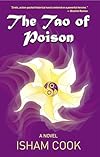
This is a book that smells of river water, blood, incense, and rot. It left a bitter taste. I mean that as praise.
The Tao of Poison begins in a place of bodily danger and never really leaves it. Isham Cook writes Imperial China not as a polished historical backdrop, but as a lived and contaminated world, full of mud, hunger, superstition, law, lust, and people trying to survive inside arrangements that were never built for mercy. The violence is often immediate, sometimes grotesque, but what lingers more strongly is the atmosphere around it. Everything feels damp. Watched. Close to spoiling.
Qiezi is not softened for the reader, which is one of the novel’s strengths. She is frightening, wounded, funny in flashes, and strangely empty in the way people become empty when the world has handled them too roughly too early. Her poisonous body could have become a simple device, but the book makes it feel like fate, curse, appetite, and defense at once. She moves through the novel less like a heroine than like a fever passing from room to room.
What impressed me most is the way the larger history gathers around her. The White Lotus Rebellion does not arrive as a clean grand event. It rises out of poverty, humiliation, desire, religious hunger, and the accumulated pressure of ordinary lives crushed too long. The book understands that rebellion is not only ideology. Sometimes it is a village, a rumor, a body, a god, a girl with poison in her blood.
There is dark humor here, but it is show more not relief. It is another blade. The novel can be obscene, violent, and almost absurd, yet underneath all of that is a very serious attention to power and the uses people make of one another. show less
The Tao of Poison begins in a place of bodily danger and never really leaves it. Isham Cook writes Imperial China not as a polished historical backdrop, but as a lived and contaminated world, full of mud, hunger, superstition, law, lust, and people trying to survive inside arrangements that were never built for mercy. The violence is often immediate, sometimes grotesque, but what lingers more strongly is the atmosphere around it. Everything feels damp. Watched. Close to spoiling.
Qiezi is not softened for the reader, which is one of the novel’s strengths. She is frightening, wounded, funny in flashes, and strangely empty in the way people become empty when the world has handled them too roughly too early. Her poisonous body could have become a simple device, but the book makes it feel like fate, curse, appetite, and defense at once. She moves through the novel less like a heroine than like a fever passing from room to room.
What impressed me most is the way the larger history gathers around her. The White Lotus Rebellion does not arrive as a clean grand event. It rises out of poverty, humiliation, desire, religious hunger, and the accumulated pressure of ordinary lives crushed too long. The book understands that rebellion is not only ideology. Sometimes it is a village, a rumor, a body, a god, a girl with poison in her blood.
There is dark humor here, but it is show more not relief. It is another blade. The novel can be obscene, violent, and almost absurd, yet underneath all of that is a very serious attention to power and the uses people make of one another. show less