
Benjamin Graham (1) (1894–1976)
Author of The Intelligent Investor
For other authors named Benjamin Graham, see the disambiguation page.
About the Author
Benjamin Graham was a seminal figure on Wall Street and is widely acknowledged to be the father of modern security analysis. As the founder of the value school of investing, Graham influenced such subsequent investment gurus as Warren Buffett, Mario Gabelli, John Neff, Michael Price, and John show more Bogle. His timeless Security Analysis and The Intelligent Investor are still considered the "bibles" for both individual investors and Wall Street professionals. Benjamin Graham grew up in New York City and graduated from Columbia University, at whose Graduate School of Business he taught from 1928 to 1957. show less
Works by Benjamin Graham
Tagged
Common Knowledge
- Canonical name
- Graham, Benjamin
- Other names
- Grossbaum, Benjamin (birth)
- Birthdate
- 1894-05-09
- Date of death
- 1976-09-21
- Gender
- male
- Education
- Columbia University (BS|1914)
- Occupations
- investor
economist
financial analyst
professor - Organizations
- University of California, Los Angeles
Columbia University Graduate School of Business
Graham–Newman Corp. - Nationality
- USA
UK (birth) - Birthplace
- London, Middlesex, England, UK
- Places of residence
- New York, New York, USA
La Jolla, California, USA - Place of death
- Aix-en-Provence, France
Members
Reviews
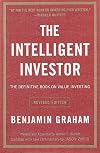
Benjamin Graham’s last line in The Intelligent Investor sums up the entire book in his trade-mark common-sense way: “ To achieve satisfactory investment results is easier than most people realize; to achieve superior results is harder than it looks.” First published in 1949, this version that I read was re-published in 2005 with a forward written by John Bogle who started Vangard Mutual Fund. Bogle’s forward serves as a very good summary of The Intelligent Investor, highlighting key show more points clearly. So I found it useful to read the forward again after finishing the book as a quick refresh of its content. Graham’s language may be a bit old fashioned, so some may find his writing style takes a little bit of getting used to. However, once I got my pace of reading going, I find the old fashion style gives me a sense of comfort and assurance – as if a grandfather was sharing all his valuable experience with me. Certainly good things stand the test of time, just as sound values: “Sound investment principles generally produced sound investment results…we must act on the assumption that they would continue to do so.” Graham is very clear form the start that he is not writing for speculators but for the layman who wants to have a sound approach to grow his weath steadily. He believes that lay investors can achieve “a creditable if unspectacular result with a minimum of effort and capability…since anyone – by just buying and holding a representative list – can equal the performance of the market averages…” He warned those who tries to beat the market, as many smart people have tied to do this and failed. How he explained this makes a lot of sense to me - every stock market broker thinks he can outdo the market. That means the stock market experts as a whole is trying to beat itself – a logical contradiction. They just cancel each other out. Thus, one should not rely on a financial advisor who promises the sky and raise your hopes that he can do better that the market average. That, claims Graham, is not possible. “The real money in investing will have to be made, as most of it has been in the past, not out of buying and selling but out of owning and holding securities, receiving interest and dividends and benefiting form their longer-term increase in value.” Graham chastises average investors for their sloth and ignorance, for willingly giving up their responsibility and rights as business owners to management. This, he feels, is due to the institutionalisation of financial services which has left investors a step removed from ownership. He disagrees with the commonly held view that “If you don’t like the management, sell the stock.” He feels this does nothing to improve bad management, only puts down the price of the stock and shifts the ownership to someone else. “Investors as a whole seem to have abandoned all claim to control over the paid superintendents of their property.” Ultimately, it is important for investors to give themselves a margin of safety by buying a stock at a price that is lower that its appraised value and to diversify the portfolio. These would put the investors in good stead, as against speculators. I like this book. It does not give you many formulas for security analysis (Graham says you can read further in his earlier book Security Analysis). What The Intelligent Investor does is that it lays the foundation for laymen by giving a sound approach to investment, written with common sense and simplicity. show less
The Intelligent Investor: The Definitive Book on Value Investing. A Book of Practical Counsel (Revised Edition) (Collins Business Essentials) by Benjamin Graham
The Intelligent Investor, in its last edition by Benjamin Graham, is a book whose acquaintance would have benefited me greatly had I come across it as a young man back when it was published in 1973.
As much a psychological guide to market investing as a technical one, Mr. Graham provides wise and emphatic counsel on when you should be excited to invest (not when euphoric markets reign) and the investments one should seek (not the hottest ones exciting everyone most). He demonstrates how to show more evaluate companies in order to become the defensive investor he believes most of us should be, with good advice for “enterprising” investors too. It’s a clarifying vision. And helpfully, this vintage volume was updated by Jason Zweig in 2003 with interesting footnotes and commentaries.
The Intelligent Investor also calls our attention to the pitfalls of uncritical belief and the vigilance necessary to avoid them. As an example, he acquaints us with the accounting malpractice employed by some business concerns, something investors can’t afford to ignore. Jason Zweig injects passion into the text when discussing dividends and stock buybacks, aiming scorching words at corporate chiefs who devalue the former practice and too often celebrate the latter.
Direct, intelligent, and even at times entertaining, The Intelligent Investor is a valuable aid for most anyone wishing to learn how to think over, with composure, the issues involved in making better investment decisions. show less
As much a psychological guide to market investing as a technical one, Mr. Graham provides wise and emphatic counsel on when you should be excited to invest (not when euphoric markets reign) and the investments one should seek (not the hottest ones exciting everyone most). He demonstrates how to show more evaluate companies in order to become the defensive investor he believes most of us should be, with good advice for “enterprising” investors too. It’s a clarifying vision. And helpfully, this vintage volume was updated by Jason Zweig in 2003 with interesting footnotes and commentaries.
The Intelligent Investor also calls our attention to the pitfalls of uncritical belief and the vigilance necessary to avoid them. As an example, he acquaints us with the accounting malpractice employed by some business concerns, something investors can’t afford to ignore. Jason Zweig injects passion into the text when discussing dividends and stock buybacks, aiming scorching words at corporate chiefs who devalue the former practice and too often celebrate the latter.
Direct, intelligent, and even at times entertaining, The Intelligent Investor is a valuable aid for most anyone wishing to learn how to think over, with composure, the issues involved in making better investment decisions. show less
Intelligent Investor: The Definitive Book on Value Investing - A Book of Practical Counsel by Benjamin Graham
Not at all what I expected. I've been investing in index funds and government bonds for decades and I expected Graham to convince me to do otherwise - to show me that it's possible to beat the market. Instead he argues - quite convincingly - that passive investing (what he calls a "defensive portfolio") is what makes most sense unless you're willing to spend several hours a day inspecting companies' fundamentals (and even then there's a good chance that the market will beat you).
Not an show more entertaining reading though. Graham subjects the reader to long, detailed discussions of stock prices in the US in the late 1960s. There are useful, timeless lessons in those boring discussions but fleshing them out yourself would require a lot of patience. So I'm really thankful to Jason Zweig for his commentary of each chapter. He neatly summarizes Graham's main points and makes them much more digestible for us impatient readers. He also updates Graham's analysis with more recent examples - Enron, the dot-com bubble, etc. And he also provides some systematic evidence to Graham's claims (which are often anecdotal).
If you're considering an audio version, pick the one narrated by Luke Daniels. show less
Not an show more entertaining reading though. Graham subjects the reader to long, detailed discussions of stock prices in the US in the late 1960s. There are useful, timeless lessons in those boring discussions but fleshing them out yourself would require a lot of patience. So I'm really thankful to Jason Zweig for his commentary of each chapter. He neatly summarizes Graham's main points and makes them much more digestible for us impatient readers. He also updates Graham's analysis with more recent examples - Enron, the dot-com bubble, etc. And he also provides some systematic evidence to Graham's claims (which are often anecdotal).
If you're considering an audio version, pick the one narrated by Luke Daniels. show less
Most of the reviews I’ve read about the book only scratch the surface. Let me tell you this: this is the single source of investing guide you ever need.
That sounds like a bold statement, right? Obviously, there’s a catch. You need to read the book, cover to cover, appendices, commentaries, notes and all.
Benjamin Graham offers sufficient guidelines to start investing successfully, you just have to pay attention.
By reading all the references and all the comments (by the author or by Jason show more Zweig) you will learn everything there is to learn for: EPS, P/E, P/B, debt to equity, current ratio, dillution of stocks, financial statements shenanigans and much more.
I honestly dread every blog post and every reviewer who just resumes Benjamin Graham to: magic formula, Mr Market and market timing. He is about much more and you’ll soon find out how much false information there is online, by the sites that empower a magic formula or by those who twist his words.
In short, I honestly think The Intelligent Investor is a book that is a come-back book when re-calibrating or reviewing investment decisions.
Mentions: I have also read “The Interpretation of Financial statements” in parallel and also have a degree in basic accounting, so I might have found some info more comprehensible. show less
That sounds like a bold statement, right? Obviously, there’s a catch. You need to read the book, cover to cover, appendices, commentaries, notes and all.
Benjamin Graham offers sufficient guidelines to start investing successfully, you just have to pay attention.
By reading all the references and all the comments (by the author or by Jason show more Zweig) you will learn everything there is to learn for: EPS, P/E, P/B, debt to equity, current ratio, dillution of stocks, financial statements shenanigans and much more.
I honestly dread every blog post and every reviewer who just resumes Benjamin Graham to: magic formula, Mr Market and market timing. He is about much more and you’ll soon find out how much false information there is online, by the sites that empower a magic formula or by those who twist his words.
In short, I honestly think The Intelligent Investor is a book that is a come-back book when re-calibrating or reviewing investment decisions.
Mentions: I have also read “The Interpretation of Financial statements” in parallel and also have a degree in basic accounting, so I might have found some info more comprehensible. show less
Lists
Awards

You May Also Like


Associated Authors
Statistics
- Works
- 20
- Members
- 7,188
- Popularity
- #3,409
- Rating
- 4.1
- Reviews
- 50
- ISBNs
- 138
- Languages
- 15
- Favorited
- 1
