
Jeff VanderMeer
Author of Annihilation
About the Author
Jeffrey Scott VanderMeer was born in Bellefonte, Pennsylvania on July 7, 1968. He is an editor, writer, teacher, and publisher. He is the founding editor and publisher of the Ministry of Whimsy Press. He is the author of several books including City of Saints, Madmen, Finch, and The Southern Reach show more Trilogy. His novel Annihilation won the Nebula Award for Best Novel in 2014. (Bowker Author Biography) show less
Series
Works by Jeff VanderMeer
The Weird: A Compendium of Strange and Dark Stories (2011) — Editor; Introduction; Contributor — 968 copies, 22 reviews
The Thackery T. Lambshead Pocket Guide to Eccentric and Discredited Diseases (2003) — Editor; Introduction — 809 copies, 20 reviews
The Steampunk Bible: An Illustrated Guide to the World of Imaginary Airships, Corsets and Goggles, Mad Scientists, and Strange Literature (2011) 737 copies, 14 reviews
The Thackery T. Lambshead Cabinet of Curiosities: Exhibits, Oddities, Images, and Stories from Top Authors and Artists (2011) — Editor — 491 copies, 17 reviews
Wonderbook (Revised and Expanded): The Illustrated Guide to Creating Imaginative Fiction (2018) 407 copies, 3 reviews
Sisters of the Revolution: A Feminist Speculative Fiction Anthology (2015) — Editor — 345 copies, 8 reviews
The Steampunk User's Manual: An Illustrated Practical and Whimsical Guide to Creating Retro-futurist Dreams (2014) 134 copies, 1 review
The Kosher Guide to Imaginary Animals: The Evil Monkey Dialogues (2010) — Author — 123 copies, 6 reviews
Dradin, in love: A tale of elsewhen & otherwhere (Buzzcity first editions) (1996) 26 copies, 1 review
Fixing Hanover 8 copies
The Cage 5 copies
A Peculiar Peril Sneak Peek 4 copies
Ambergris Appendix 4 copies
Quin's Shanghai Circus 3 copies
Leviathan : Into the Gray — Editor — 3 copies
Polluto: The Anti-pop Culture Journal - Issue One: Post-natal Depression and the Mysterons (2008) 3 copies, 1 review
The Goat Variations 3 copies
The Farmer's Cat 3 copies
Mahout 3 copies
Vaihtokauppa 3 copies
King Squid 3 copies
Three Days in a Border Town 3 copies
Assoluzione 2 copies
The Third Bear [short story] 2 copies
The Secret Life Of Dave Driscoll 2 copies
The Magician 2 copies
A New Face In Hell 2 copies
In The Hours After Death 2 copies
Predecessor 2 copies
The Book of Frog 2 copies
Shark God vs Octopus God 2 copies
Lost 2 copies
The Bone-carver's Tale 2 copies
Collected Fiction Part 1: The Novels 2 copies
Ghost In The Machine 2 copies
The Secret Life of Shane Hamill 2 copies
The Transformation of Martin Lake 2 copies
Así empezó todo 2 copies
Bliss 1 copy
Hummingbird Salamander 1 copy
Анихилация (Съдърн Рийч, #1) 1 copy
Constellations 1 copy
Ambergris 1 copy
Detectives And Cadavers 1 copy
The Release of Belacqua 1 copy
Appendix 1 copy
The Strange Case of X 1 copy
Dead Astronauts 1 copy
Shadrach 1 copy
Nicola 1 copy
Ambergris AppendiX 1 copy
The Complete Borne 1 copy
Appoggiatura (short story) 1 copy
Corpse Mouth And Spore Nose 1 copy
The General Who Is Dead 1 copy
“Bang-Whimper” 1 copy
The Goat Variations Redux 1 copy
Learning To Leave the Flesh 1 copy
X's Notes 1 copy
The Ambergris Glossary 1 copy
Man Who Had No Eyes 1 copy
Humingbird Salamander 1 copy
Borne 1 copy
Associated Works
Extraordinary Engines: The Definitive Steampunk Anthology (2008) — Contributor — 367 copies, 17 reviews
American Fantastic Tales : Terror and the Uncanny from the 1940's to Now (2009) — Contributor — 298 copies, 5 reviews
The Year's Best Fantasy & Horror 2007: 20th Annual Collection (2007) — Foreword — 222 copies, 3 reviews
The Year's Best Fantasy and Horror 2008: 21st Annual Collection (2008) — Foreword — 176 copies, 5 reviews
Worlds Seen in Passing: Ten Years of Tor.com Short Fiction (2018) — Contributor — 162 copies, 1 review
Lost Transmissions: The Secret History of Science Fiction and Fantasy (2019) — Foreword — 154 copies, 5 reviews
The Best Science Fiction and Fantasy of the Year, Volume 3 (2009) — Contributor — 150 copies, 2 reviews
Nebula Awards 30: SFWA's Choices For The Best Science Fiction And Fantasy Of The Year (Nebula Awards Showcase) (1996) — Contributor — 89 copies, 2 reviews
Halo: Evolutions Volume II: Essential Tales of the Halo Universe: 2 (2010) — Contributor — 88 copies
ParaSpheres: Extending Beyond the Spheres of Literary and Genre Fiction: Fabulist and New Wave Fabulist Stories (2006) — Contributor — 65 copies
More Human Than Human: Stories of Androids, Robots, and Manufactured Humanity (2017) — Contributor — 62 copies, 2 reviews
In the Shadow of the Towers: Speculative Fiction in a Post-9/11 World (2015) — Contributor — 42 copies
Mixed Up: Cocktail Recipes (and Flash Fiction) for the Discerning Drinker (and Reader) (2017) — Cover artist — 30 copies, 1 review
Nemonymous 1: A Megazanthus for Parthenogenic Fiction and Late Labelling (2007) — Contributor — 5 copies, 1 review
Tin Cans — Editor, some editions — 3 copies
Clarkesworld: Issue 018 (March 2008) — Interviewer — 2 copies
Tagged
Common Knowledge
- Legal name
- VanderMeer, Jeffrey Scott
- Birthdate
- 1968-07-07
- Gender
- male
- Education
- University of Florida
- Occupations
- publisher (Ministry of Whimsy Press)
editor
writer
author - Awards and honors
- Florida Individual Writers' Fellowship
Rhysling Award (Best Short Poem, 1994)
Locus Award Finalist (Editor | 2017) - Agent
- Sally Harding
- Relationships
- VanderMeer, Ann (wife)
- Short biography
- Jeff VanderMeer (born July 7, 1968) is an American author, editor, and literary critic. Initially associated with the New Weird literary genre, VanderMeer crossed over into mainstream success with his bestselling Southern Reach Trilogy. The trilogy's first novel, Annihilation, won the Nebula and Shirley Jackson Awards, and was adapted into a Hollywood film by director Alex Garland. Among VanderMeer's other novels are Shriek: An Afterword and Borne. He has also edited with his wife Ann VanderMeer such influential and award-winning anthologies as The New Weird, The Weird, and The Big Book of Science Fiction.
VanderMeer has been called "one of the most remarkable practitioners of the literary fantastic in America today," with The New Yorker naming him the "King of Weird Fiction". VanderMeer's fiction is noted for eluding genre classifications even as his works bring in themes and elements from genres such as postmodernism, ecofiction, the New Weird and post-apocalyptic fiction.
VanderMeer's writing has been described as "evocative" and containing "intellectual observations both profound and disturbing," and has been compared with the works of Jorge Luis Borges, Franz Kafka, and Henry David Thoreau. - Nationality
- USA
- Birthplace
- Bellefonte, Pennsylvania, USA
- Places of residence
- Bellefonte, Pennsylvania, USA
Fiji Islands
Tallahassee, Florida, USA
Ithaca, New York, USA
Gainesville, Florida, USA - Map Location
- Pennsylvania, USA
Members
Discussions
The Southern Reach in The Weird Tradition (January 2025)
Annihilation - page-turner or soporific? in Science Fiction Fans (March 2024)
THE DEEP ONES: "The Cage" by Jeff VanderMeer in The Weird Tradition (March 2022)
Help Please! Predator: South China Sea by Jeff VanderMeer in Book talk (October 2019)
Reviews
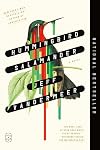
Jeff VanderMeer’s “Hummingbird Salamanderl (2021) certainly doesn't sound like a thriller. And with its cover showing a colorful hummingbird against a white background, it certainly doesn't look like a thriller. Aren't thrillers supposed to have black covers? And yet a thriller is what it is, and a particularly fine nail-biter and edge-of-the-seater at that.
VanderMeer’s story takes place in the near future when the United States is near collapse because of climate change and show more environmental disaster.
A large woman (six feet tall, 230 pounds) who works as a security consultant. "Jane Smith," as she calls herself, has a husband and daughter at home. One day she receives a box containing a stuffed hummingbird, possibly the last of that particular species. A cryptic note from someone named Silvina hints that there is a stuffed salamander out there somewhere that she should find.
Jane once thought she might like to become a detective, and so she begins trying to unravel this mystery. It dominates her life, causing her to neglect both her job and her family. She and those around her are soon in grave danger. The mystery deepens, bodies pile up and eventually her quest takes her back to the beginning — her own beginning.
By the novel's end it begins to read like science fiction, but until then it reads like a thriller, an unusually good one. show less
VanderMeer’s story takes place in the near future when the United States is near collapse because of climate change and show more environmental disaster.
A large woman (six feet tall, 230 pounds) who works as a security consultant. "Jane Smith," as she calls herself, has a husband and daughter at home. One day she receives a box containing a stuffed hummingbird, possibly the last of that particular species. A cryptic note from someone named Silvina hints that there is a stuffed salamander out there somewhere that she should find.
Jane once thought she might like to become a detective, and so she begins trying to unravel this mystery. It dominates her life, causing her to neglect both her job and her family. She and those around her are soon in grave danger. The mystery deepens, bodies pile up and eventually her quest takes her back to the beginning — her own beginning.
By the novel's end it begins to read like science fiction, but until then it reads like a thriller, an unusually good one. show less
Good news, VanderMeer fans!
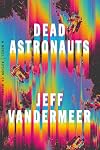
Just look at that cover and imagine, if you will, a book just like a massive acid trip filled with disjointed alternate realities, or reality versions, where men and hybrids, monsters, demons (or daemons), foxes, Shrodinger's ducks, and spawning pools populate your colorful biotech apocalypse.
And then know that the real trip lies within these pages, not on the cover.
I say good news for other reasons, however. It's not merely a nightmare of continuity issues, show more melding and morphing bodies, strained, molded, and transformed identities made from beasties, cold scientists, and long-lived leviathans who have forgotten their own stories.
The core of the text DOES have a major theme, if not anything more than a remotely identifiable plot. Of course, you might find one if you are a massive wall-charter, handy with yarn, have access to revisionary transparent overlays, and you maintain a hearty respect for novels that triples as a prequel to Borne, a contemporary, and a sequel.
I happen to love the theme. By the end of the novel, I'm rocking hard to it. It's tragic, obvious, and it truly condemns the three reality-hopping astronauts from the beginning of the tale. (The same dead three we see from Borne.)
Or, of course, any prospective reader would do just as well to sit back and relax into the brilliant, wild, and totally freaky imagery. Just trip balls. Open your mind, man.
I would love to see someone do a scholarly analysis of this s**t. show less
Just look at that cover and imagine, if you will, a book just like a massive acid trip filled with disjointed alternate realities, or reality versions, where men and hybrids, monsters, demons (or daemons), foxes, Shrodinger's ducks, and spawning pools populate your colorful biotech apocalypse.
And then know that the real trip lies within these pages, not on the cover.
I say good news for other reasons, however. It's not merely a nightmare of continuity issues, show more melding and morphing bodies, strained, molded, and transformed identities made from beasties, cold scientists, and long-lived leviathans who have forgotten their own stories.
The core of the text DOES have a major theme, if not anything more than a remotely identifiable plot. Of course, you might find one if you are a massive wall-charter, handy with yarn, have access to revisionary transparent overlays, and you maintain a hearty respect for novels that triples as a prequel to Borne, a contemporary, and a sequel.
I happen to love the theme. By the end of the novel, I'm rocking hard to it. It's tragic, obvious, and it truly condemns the three reality-hopping astronauts from the beginning of the tale. (The same dead three we see from Borne.)
Or, of course, any prospective reader would do just as well to sit back and relax into the brilliant, wild, and totally freaky imagery. Just trip balls. Open your mind, man.
I would love to see someone do a scholarly analysis of this s**t. show less
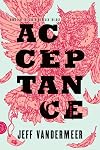
Undeniably one of speculative fiction's "events" of 2014, The Southern Reach trilogy comes to (strangling) fruition with the publication of Acceptance (FSG Originals, September 2014). ("Strangling" because of the strange text explorers find in Area X's most remote environs, "Where lies the strangling fruit that came from the hand of the sinner..." Get it? Oh, never mind.)
The speculative fiction community has rapturously received The Southern Reach trilogy, due perhaps, in part, to Jeff show more VanderMeer's obvious literary ambitions. This ain't your granddad's science fiction; Annihilation, Authority, and Acceptance are well-written (and slickly packaged) commentaries on the developing global environmental crisis, as well as examinations of the nature of "weird fiction" itself. The Southern Reach has enjoyed more muted success beyond its genre. The reviewer for The New York Times (definitely not a cutting-edge resource for speculative fiction news) was decidedly mixed in his reaction to Annihilation.
Full disclosure: I thoroughly enjoyed Annihilation and, having now completed the trilogy, consider it the best entry in the series. Annihilation seemed, at least in comparison to its successors, to be the most "distilled" essence of what VanderMeer was trying to accomplish. I suspect this is due in part to the origins of the story (it came to VanderMeer in a dream), but it is also related to the structure of the story: If Annihilation serves as the "setup," and the establishment of the mystery of Area X, then Authority is the "bridge" to Acceptance, the "resolution" to the story. I use quotes here because, of course, resolution is a relative term. Given the constraints of the genre, as well as simple good storytelling sense, VanderMeer was forced to walk the line between spelling out his vision for readers and providing them no answer at all. Some readers will be disappointed that VanderMeer hews more to the latter than the former.
Of course, all of this goes to show the ways in which the separate volumes in a trilogy (or series) ultimately become subsumed into the larger story. Would Acceptance stand on its own? I wouldn't recommend reading it without having first read Annihilation and Authority. Acceptance follows in the wake of its preceding "chapters." Even were it not the concluding volume in what amounts to a serial novel, though, Acceptance isn't quite up to snuff, at least when compared to Annihilation, but it's certainly head-and-shoulders above most other entries in the genre.
Acceptance alternates perspectives between Ghost Bird (the Area X produced doppelganger of the biologist from Annihilation), Saul (the lighthouse keeper), and Gloria, the former director of the Southern Reach--related to the reader in the second person, an effectively unsettling decision on VanderMeer's part. The threads of the story bring together different timelines (pre-Area X, post-Authority, etc.), further disorienting the reader. Ultimately, the effect is to mask the nature of Area X to the reader, who will be busy trying to figure out just what the hell is going on. But VanderMeer uses the technique to build tension, too, moving the story forward, keeping the reader guessing, if not always successfully--after all, the reader knows how Gloria's story will end, and, to some degree, Saul's. Of course, it's the "why" and the "how" the reader is chasing here, not the "what."
VanderMeer employs in Acceptance the same recursive, elliptical syntax he began building toward in Annihilation and Authority. His sentences uncoil outward, clause upon a clause, lending them a strangely hypnotic quality well-suited to the subject matter. There are times when VanderMeer's flow works against him. For instance, some of the sections discussing Gloria's involvement with the Southern Reach, and her bureaucratic in-fighting with Lowry, can tend toward tedium, but, as with his examination of institutional decrepitude in Authority, that may well be the point. VanderMeer's prose demands patience of the reader.
That patience may or may not be rewarded in the book's conclusion. How satisfactory a reader will find the ending of Acceptance is, of course, a matter of personal taste. That said, it's safe to say that readers who expect definitive answers or resolution from their narratives are better off steering clear of The Southern Reach. Answers of a sort are given, and the fates of characters decided. Word is VanderMeer may further develop the ending with a follow-up novella.
The Southern Reach is successful both because of its actual achievements, which are sometimes limited, and its ambitions, which push forward the boundaries of speculative fiction as a genre. Readers still on the fence in regards to whether or not they should read the trilogy are advised to consider how patient they are and to what degree they require definitive endings; VanderMeer asks much but dispenses little. That said, there are great things to be found in Area X, especially in Annihilation and Acceptance. A highly accomplished, if flawed, series that is recommended to most speculative fiction readers, especially those who appreciate atmosphere and character over plot. show less
The speculative fiction community has rapturously received The Southern Reach trilogy, due perhaps, in part, to Jeff show more VanderMeer's obvious literary ambitions. This ain't your granddad's science fiction; Annihilation, Authority, and Acceptance are well-written (and slickly packaged) commentaries on the developing global environmental crisis, as well as examinations of the nature of "weird fiction" itself. The Southern Reach has enjoyed more muted success beyond its genre. The reviewer for The New York Times (definitely not a cutting-edge resource for speculative fiction news) was decidedly mixed in his reaction to Annihilation.
Full disclosure: I thoroughly enjoyed Annihilation and, having now completed the trilogy, consider it the best entry in the series. Annihilation seemed, at least in comparison to its successors, to be the most "distilled" essence of what VanderMeer was trying to accomplish. I suspect this is due in part to the origins of the story (it came to VanderMeer in a dream), but it is also related to the structure of the story: If Annihilation serves as the "setup," and the establishment of the mystery of Area X, then Authority is the "bridge" to Acceptance, the "resolution" to the story. I use quotes here because, of course, resolution is a relative term. Given the constraints of the genre, as well as simple good storytelling sense, VanderMeer was forced to walk the line between spelling out his vision for readers and providing them no answer at all. Some readers will be disappointed that VanderMeer hews more to the latter than the former.
Of course, all of this goes to show the ways in which the separate volumes in a trilogy (or series) ultimately become subsumed into the larger story. Would Acceptance stand on its own? I wouldn't recommend reading it without having first read Annihilation and Authority. Acceptance follows in the wake of its preceding "chapters." Even were it not the concluding volume in what amounts to a serial novel, though, Acceptance isn't quite up to snuff, at least when compared to Annihilation, but it's certainly head-and-shoulders above most other entries in the genre.
Acceptance alternates perspectives between Ghost Bird (the Area X produced doppelganger of the biologist from Annihilation), Saul (the lighthouse keeper), and Gloria, the former director of the Southern Reach--related to the reader in the second person, an effectively unsettling decision on VanderMeer's part. The threads of the story bring together different timelines (pre-Area X, post-Authority, etc.), further disorienting the reader. Ultimately, the effect is to mask the nature of Area X to the reader, who will be busy trying to figure out just what the hell is going on. But VanderMeer uses the technique to build tension, too, moving the story forward, keeping the reader guessing, if not always successfully--after all, the reader knows how Gloria's story will end, and, to some degree, Saul's. Of course, it's the "why" and the "how" the reader is chasing here, not the "what."
VanderMeer employs in Acceptance the same recursive, elliptical syntax he began building toward in Annihilation and Authority. His sentences uncoil outward, clause upon a clause, lending them a strangely hypnotic quality well-suited to the subject matter. There are times when VanderMeer's flow works against him. For instance, some of the sections discussing Gloria's involvement with the Southern Reach, and her bureaucratic in-fighting with Lowry, can tend toward tedium, but, as with his examination of institutional decrepitude in Authority, that may well be the point. VanderMeer's prose demands patience of the reader.
That patience may or may not be rewarded in the book's conclusion. How satisfactory a reader will find the ending of Acceptance is, of course, a matter of personal taste. That said, it's safe to say that readers who expect definitive answers or resolution from their narratives are better off steering clear of The Southern Reach. Answers of a sort are given, and the fates of characters decided. Word is VanderMeer may further develop the ending with a follow-up novella.
The Southern Reach is successful both because of its actual achievements, which are sometimes limited, and its ambitions, which push forward the boundaries of speculative fiction as a genre. Readers still on the fence in regards to whether or not they should read the trilogy are advised to consider how patient they are and to what degree they require definitive endings; VanderMeer asks much but dispenses little. That said, there are great things to be found in Area X, especially in Annihilation and Acceptance. A highly accomplished, if flawed, series that is recommended to most speculative fiction readers, especially those who appreciate atmosphere and character over plot. show less
This has to be the creepiest novel I’ve read for a long time, I was really impressed with it. It also oddly reminded me of a short story I wrote about ten years ago, about a similar spatial encroachment of the uncanny. ‘Annihiliation’ is set in Area X, a secluded wilderness into which various expeditions have been sent to try and determine what is wrong with it. The latest iteration includes an unnamed biologist, our narrator. She reminded me of the calm-minded narrators of Victorian show more adventure stories, who set down their thoughts systematically even when confronted with unnamed horrors. This matter-of-fact tone definitely added to the tension, which was effectively sustained throughout. There were several extremely powerful and shocking moments, which rather reinforced to me that the worst horrors aren't supernatural but human. Perhaps my favourite form of scary writing deals with the ways places warp people; this is a great example. Being so unsettled by this first volume in the Southern Reach trilogy, I definitely plan to read the other two. It’s also worth noting that the hardback editions are beautifully designed and look very appealing. show less
Lists
Finished in 2021 (1)
Strange Cities (1)
SFFCat 2015 (1)
2024 (1)
To Read - Horror (1)
Magic Realism (1)
5 Stars in '18 (1)
2021 (1)
Sense of place (1)
Best Dystopias (1)
Literary SF/F (1)
Wishlist (1)
Ranking (1)
Read These Too (2)
Put a Bird On It (2)
To Read (3)
Disco Elysium (2)
ScaredyKit 2025 (1)
Overdue Podcast (1)
Nebula Award (1)
Metafiction (1)
Favourite Books (1)
2025 (1)
io9 Book Club (1)
To be read (1)
Awards


The Thackery T. Lambshead Pocket Guide to Eccentric and Discredited Diseases (Nominee – Anthology – 2004)
Wonderbook: The Illustrated Guide to Creating Imaginative Fiction (Nominee – Special Award – Professional – 2014)


You May Also Like


Associated Authors
Statistics
- Works
- 162
- Also by
- 96
- Members
- 39,615
- Popularity
- #448
- Rating
- 3.7
- Reviews
- 1,467
- ISBNs
- 472
- Languages
- 18
- Favorited
- 98

