
Jonathan Carroll (1) (1949–)
Author of The Land of Laughs
For other authors named Jonathan Carroll, see the disambiguation page.
About the Author
Jonathan Carroll was born in 1949 in Dobbs Ferry, New York, to two artistic parents, Sidney Carroll, a screenwriter whose film credits include The Hustler, starring Paul Newman, and June Carroll, an actress and lyricist. The family migrated between the east and west coasts, while Carroll was show more growing up, finally enrolling him in a boarding school in Connecticut. He developed an interest in writing while in high school and graduated cum laude from Rutgers University. He next pursued a master's degree in creative writing at the University of Virginia. Carroll's first novel, Land of the Laughs, was published in 1980 and was followed by Voice of Our Shadow. His novels are difficult to classify into one genre. The novels are full of fantasy and imagination, yet remain profound. His work inspires cult followings and is especially popular in France and Germany. An expatriate since the 1970s, Carroll lives in Vienna. (Bowker Author Biography) show less
Image credit: photo by 48states
Series
Works by Jonathan Carroll
The Woman Who Married a Cloud: The Collected Short Stories of Jonathan Carroll (2012) 130 copies, 1 review
Oko dnia {Carrollblog} 7 copies
The Art of Falling Down {story} 2 copies
The Stolen Church {story} 1 copy
Shoes at War {filmscript} 1 copy
East of Furious {story} 1 copy
Fish in a Barrel {story} 1 copy
Associated Works
The Year's Best Fantasy and Horror: First Annual Collection (1986) — Contributor — 335 copies, 6 reviews
The Year's Best Fantasy and Horror: Eighth Annual Collection (1995) — Contributor — 331 copies, 6 reviews
American Fantastic Tales : Terror and the Uncanny from the 1940's to Now (2009) — Contributor — 298 copies, 5 reviews
The Year's Best Fantasy and Horror: Fourteenth Annual Collection (2001) — Contributor — 258 copies, 2 reviews
The Year's Best Fantasy and Horror: Third Annual Collection (1988) — Contributor — 194 copies, 2 reviews
Hint Fiction: An Anthology of Stories in 25 Words or Fewer (2010) — Contributor — 149 copies, 26 reviews
Speaking of the Fantastic: Interviews with Writers of Science Fiction and Fantasy (2002) — Contributor — 13 copies
Tagged
Common Knowledge
- Legal name
- Carroll, Jonathan Samuel
- Birthdate
- 1949-01-26
- Gender
- male
- Education
- Rutgers University
University of Virginia (MA) - Occupations
- novelist
short story writer - Agent
- John Berlyne (Zeno Agency)
- Relationships
- Reich, Steve (half brother)
- Nationality
- USA
- Birthplace
- New York, New York, USA
- Places of residence
- Vienna, Austria
- Map Location
- USA
Members
Reviews
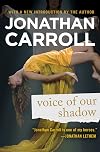
This is a weird novel. It's compelling, creepy, lame, uncomfortable; it leaves you wondering if it's going anywhere or just dilly-dallying inside Joseph Lennox's head.
Joe is a horrible, selfish and self-obsessed brat of a narrator--but his voice is also utterly uncomfortable precisely because, in being horrible, he's toeing a line that most of us have difficulty with. E.g., he uses friends for personal gain, all the while convincing himself and his audience that he's playing the Nice Guy, show more that maybe he's being unjustly victimized.
[N.B. This review includes images, and was formatted for my site, dendrobibliography -- located here.]
A lot of this novel's horror comes from that. He's just a shitty dude. Too human and too me-and-you.
Joe's your average romanticized writer living a romanticized life abroad, just with all the romantic notions beaten out of him. He fictionalized his equally-shitty dead brother's teenage exploits while getting his undergrad, and made bank on royalties from Broadway and film adaptations. He spends most of his free time--really, most of his time--living a high-brow literary life with a high-brow literary couple in Vienna. They don't really do anything other than flip witticisms back and forth and talk about how much they all care for one another at classic American movie showings.
Yeah. It's a real weird one. I liked it, and I didn't. I spent the novel feeling a bizarre concoction of captivation and anxiety, or just really pissed off. Most of what pissed me off was just how uninteresting the characters were: They spent too much time being walking witticisms and breathing in self-importance. They're social parasites to the letter.
What really captivated me was Carroll's writing style; how everything through Joe's eyes was just off-white, including the horror elements delivered in quick, unexplained punches. It's something that kept my heart thumping away, on edge, and a little confused as to why.
"Little Boy" is creepy. Any scene with those floppy cartoon gloves and their floppy reality had me reeling. *shiver*
Voice of Our Shadow feels disconnected. Its 3 short acts feel like 3 short novellas about the same characters. The connecting threads of love and dishonesty and juvenile betrayal honestly don't hold it together very well, and most of its mythic structure is, like the supernatural goings-on and shitty Joe Lennox, slightly off and yet totally real.
What a weird book--especially the ending. It goes off with what's most easily described as a punchline--a punchline that'll leave you thinking "What...? Huh? Wait..." one or two or eleven times. Yeah: I don't know. What a weird danged book. show less
Joe is a horrible, selfish and self-obsessed brat of a narrator--but his voice is also utterly uncomfortable precisely because, in being horrible, he's toeing a line that most of us have difficulty with. E.g., he uses friends for personal gain, all the while convincing himself and his audience that he's playing the Nice Guy, show more that maybe he's being unjustly victimized.
[N.B. This review includes images, and was formatted for my site, dendrobibliography -- located here.]
A lot of this novel's horror comes from that. He's just a shitty dude. Too human and too me-and-you.
Joe's your average romanticized writer living a romanticized life abroad, just with all the romantic notions beaten out of him. He fictionalized his equally-shitty dead brother's teenage exploits while getting his undergrad, and made bank on royalties from Broadway and film adaptations. He spends most of his free time--really, most of his time--living a high-brow literary life with a high-brow literary couple in Vienna. They don't really do anything other than flip witticisms back and forth and talk about how much they all care for one another at classic American movie showings.
Yeah. It's a real weird one. I liked it, and I didn't. I spent the novel feeling a bizarre concoction of captivation and anxiety, or just really pissed off. Most of what pissed me off was just how uninteresting the characters were: They spent too much time being walking witticisms and breathing in self-importance. They're social parasites to the letter.
What really captivated me was Carroll's writing style; how everything through Joe's eyes was just off-white, including the horror elements delivered in quick, unexplained punches. It's something that kept my heart thumping away, on edge, and a little confused as to why.
"Little Boy" is creepy. Any scene with those floppy cartoon gloves and their floppy reality had me reeling. *shiver*
Voice of Our Shadow feels disconnected. Its 3 short acts feel like 3 short novellas about the same characters. The connecting threads of love and dishonesty and juvenile betrayal honestly don't hold it together very well, and most of its mythic structure is, like the supernatural goings-on and shitty Joe Lennox, slightly off and yet totally real.
What a weird book--especially the ending. It goes off with what's most easily described as a punchline--a punchline that'll leave you thinking "What...? Huh? Wait..." one or two or eleven times. Yeah: I don't know. What a weird danged book. show less
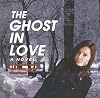
Do you remember that one night in college, where you stayed up too late with your friends, sitting in someone’s living room and drinking terrible rotgut alcohol and talking about the meaning of life, and identity, and love, and eventually around 3 a.m. you reached a drunken state of pure lucidity that was filled with revelation, and suddenly you Got It, and the universe made perfect sense to you? (No? Just me, then?) In any case, if you bottled the feeling of that night, transmuted it into show more paper, stretched it out across an entire novel, and padded it with ghosts, time traveling into one’s own past, reincarnation, murderous bums, white earless spectral dogs, and the Angel of Death, you’d have something very akin to The Ghost in Love.
Summary: This novel starts with Ben Gould, a young man who falls and hits his head on the ice, and is supposed to die, but doesn’t. Ben’s ghost – who is supposed to help Ben transition into the afterlife, and clean up any of his unfinished business – is therefore somewhat stranded, and the Angel of Death isn’t being particularly helpful; he tells the ghost just to hang out until they can figure out the “glitch” that resulted in Ben’s non-death.
Ben, in the meantime, doesn’t realize that anything’s gone wrong. Sure, he’s broken up with his girlfriend German, and spends most of his days regretting that decision, but it’s not until strange powers and occurrences start manifesting around him that he begins to suspect that there’s really something wrong. The stranger things get, the more apparent it becomes that in order to really survive death, Ben is going to have to take a hard look at his life – and himself.
Review: The Ghost in Love walks a very fine line between being deeply profound and entirely pretentious, and which way you think it tips will depend on whether or not you like a hefty dose of philosophy in your books, and the relative importance you put on philosophy versus story in your reading. Because make no mistake, this is not a sci-fi/fantasy novel with some philosophical underpinnings; this is a philosophical novel dressed up in paranormal clothing.
Personally, it’s been a while since I finished it, and I still can’t decide quite how I feel about it. There were times when I was listening when I was struck by the truth of a point that Carroll was making, and the simplicity of the language and the elegance of the writing with which that point was made. Other times, though, I’d draw back from the story, particularly when another bizarre paranormal element was introduced in service of some Deep Truth about the Nature of the Self, and think to myself: “Really? I mean, really?”
It probably didn’t help that the storytelling is supremely non-linear; even forgoing the time-traveling bits, the narrative jumps back and forth through Ben and German’s relationship with only the barest of signposts to let the reader know what’s going on. Carroll also reveals the workings of his story very, very slowly, creating confusion which may or may not have been intentional – for instance, I was halfway through the book before I realized that Ben’s ghost is not Ben’s ghost in the traditional sense, but rather a separate (and female) entity. The title is also somewhat misleading: we’re told the ghost is in love with German, but that aspect barely comes into play, and was certainly never the focus of the story.
The audiobook production was clean and well done; Ray Porter’s voice is for the most part easy to listen to, although his voice for the ghost was overly whiney, and almost certainly contributed to my dislike for that character.
Overall, this book has left me with a welter of conflicting emotions and opinions. It was interesting, but I was never absorbed in the story to the point where I would be dying to listen to more. I vacillated between being impressed by the clarity of its message and point of view, and being amused by the aura of “this novel is filled with Deep Thoughts” that it radiated. It’s well written, but strangely plotted. I can’t quite say that I really liked it, nor did I really dislike it, but I am still thinking about it… so it must have done something right. 3.5 out of 5 stars.
Recommendation: If you like your fiction with a heavy dose of philosophy, it’s worth a try. Just be warned: it’s strange. show less
Summary: This novel starts with Ben Gould, a young man who falls and hits his head on the ice, and is supposed to die, but doesn’t. Ben’s ghost – who is supposed to help Ben transition into the afterlife, and clean up any of his unfinished business – is therefore somewhat stranded, and the Angel of Death isn’t being particularly helpful; he tells the ghost just to hang out until they can figure out the “glitch” that resulted in Ben’s non-death.
Ben, in the meantime, doesn’t realize that anything’s gone wrong. Sure, he’s broken up with his girlfriend German, and spends most of his days regretting that decision, but it’s not until strange powers and occurrences start manifesting around him that he begins to suspect that there’s really something wrong. The stranger things get, the more apparent it becomes that in order to really survive death, Ben is going to have to take a hard look at his life – and himself.
Review: The Ghost in Love walks a very fine line between being deeply profound and entirely pretentious, and which way you think it tips will depend on whether or not you like a hefty dose of philosophy in your books, and the relative importance you put on philosophy versus story in your reading. Because make no mistake, this is not a sci-fi/fantasy novel with some philosophical underpinnings; this is a philosophical novel dressed up in paranormal clothing.
Personally, it’s been a while since I finished it, and I still can’t decide quite how I feel about it. There were times when I was listening when I was struck by the truth of a point that Carroll was making, and the simplicity of the language and the elegance of the writing with which that point was made. Other times, though, I’d draw back from the story, particularly when another bizarre paranormal element was introduced in service of some Deep Truth about the Nature of the Self, and think to myself: “Really? I mean, really?”
It probably didn’t help that the storytelling is supremely non-linear; even forgoing the time-traveling bits, the narrative jumps back and forth through Ben and German’s relationship with only the barest of signposts to let the reader know what’s going on. Carroll also reveals the workings of his story very, very slowly, creating confusion which may or may not have been intentional – for instance, I was halfway through the book before I realized that Ben’s ghost is not Ben’s ghost in the traditional sense, but rather a separate (and female) entity. The title is also somewhat misleading: we’re told the ghost is in love with German, but that aspect barely comes into play, and was certainly never the focus of the story.
The audiobook production was clean and well done; Ray Porter’s voice is for the most part easy to listen to, although his voice for the ghost was overly whiney, and almost certainly contributed to my dislike for that character.
Overall, this book has left me with a welter of conflicting emotions and opinions. It was interesting, but I was never absorbed in the story to the point where I would be dying to listen to more. I vacillated between being impressed by the clarity of its message and point of view, and being amused by the aura of “this novel is filled with Deep Thoughts” that it radiated. It’s well written, but strangely plotted. I can’t quite say that I really liked it, nor did I really dislike it, but I am still thinking about it… so it must have done something right. 3.5 out of 5 stars.
Recommendation: If you like your fiction with a heavy dose of philosophy, it’s worth a try. Just be warned: it’s strange. show less
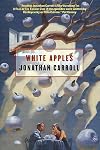
It’s been so many years since I read a book by Jonathan Carrol. This book brings back all of the fun of this author’s novels. The creativity, the surreal happenings, the humor — all of these combine to make a most enjoyable read. This novel, like his others, are tangential rather than lineal. One never knows in which direction it will go.
It begins with Victor Ettrich, a divorced man, father of two children, who remains in love with a former mistress, Isabelle Neukor of Vienna, Austria. show more She returns to tell him that she is pregnant with his child, but this child communicates with her in an unusual way. Viktor goes on to learn that he is really dead. How and why this happened is at first a mystery both to Vincent and us, the readers. As the story gets increasingly weird, it is entertaining to figure out what it all means (if we can!).
I’m not sure that I really understood all of the intricacies of this novel, but I enjoyed trying. My favorite part of this book was when Isabelle visits her grandmother (who admits to being dead) in Vienna. It reflected a dream of my own in which I sometimes wish for time to visit and speak with loved ones who had been part of my life but who are no longer alive.
When I found myself having a hard time following the story line, I knew to just keep reading. I was rewarded by the surprising finale in the last paragraph. I hope others enjoy this imaginative novel as much as I did. show less
It begins with Victor Ettrich, a divorced man, father of two children, who remains in love with a former mistress, Isabelle Neukor of Vienna, Austria. show more She returns to tell him that she is pregnant with his child, but this child communicates with her in an unusual way. Viktor goes on to learn that he is really dead. How and why this happened is at first a mystery both to Vincent and us, the readers. As the story gets increasingly weird, it is entertaining to figure out what it all means (if we can!).
I’m not sure that I really understood all of the intricacies of this novel, but I enjoyed trying. My favorite part of this book was when Isabelle visits her grandmother (who admits to being dead) in Vienna. It reflected a dream of my own in which I sometimes wish for time to visit and speak with loved ones who had been part of my life but who are no longer alive.
When I found myself having a hard time following the story line, I knew to just keep reading. I was rewarded by the surprising finale in the last paragraph. I hope others enjoy this imaginative novel as much as I did. show less
I went up and down on this. As always with Carroll, the writing can be wonderful, as in this passage in the first few pages: "She was small and had the thin carnal face of a naughty angel...One with a holy expression, but something else in that look, something wanton. It says the model for this heavenly spirit was probably the artist's mistress."
For quite a while, I feared this was yet another of those well-written sagas of male/female relationships with a tincture of fantasy: the main show more protagonist has died before the book even starts. Then, without getting into spoilers, the book becomes cosmic pulp fiction with stakes as great as anything E E Smith put together. Some may call it fantasy, but Carroll wants a logical flow more like SF. The writer I was most reminded of was R A Lafferty, particularly in a key scene in a barbershop in the latter half of the story. For much of the book, Carroll masterfully manages to tell a surreal tale without causing the reader to give up and accept whatever happens next. Eventually, too many new rules are revealed, and there are few too many interchanges of the form "how do you know?" "I just do!" The ending is fine, just a bit too mechanical.
Recommended with the caveats noted. show less
For quite a while, I feared this was yet another of those well-written sagas of male/female relationships with a tincture of fantasy: the main show more protagonist has died before the book even starts. Then, without getting into spoilers, the book becomes cosmic pulp fiction with stakes as great as anything E E Smith put together. Some may call it fantasy, but Carroll wants a logical flow more like SF. The writer I was most reminded of was R A Lafferty, particularly in a key scene in a barbershop in the latter half of the story. For much of the book, Carroll masterfully manages to tell a surreal tale without causing the reader to give up and accept whatever happens next. Eventually, too many new rules are revealed, and there are few too many interchanges of the form "how do you know?" "I just do!" The ending is fine, just a bit too mechanical.
Recommended with the caveats noted. show less
Lists
Awards


You May Also Like


Associated Authors
Statistics
- Works
- 48
- Also by
- 36
- Members
- 10,092
- Popularity
- #2,352
- Rating
- 3.7
- Reviews
- 269
- ISBNs
- 275
- Languages
- 12
- Favorited
- 11
