
Graham Joyce (1954–2014)
Author of Some Kind of Fairy Tale: A Novel
About the Author
Graham Joyce, a four-time winner of the British Fantasy Award, lives in Leicester, England. His books include Dark Sister, Requiem, and The Tooth Fairy, which received a Booker nomination and was chosen as a Publishers Weekly Best Book of 1998. (Publisher Provided) Graham Joyce was born on October show more 22, 1954. He received a Master's Degree in modern English and American literature from Leicester University. Before becoming an author, he worked for the National Association of Youth Clubs for eight years. His first novel, Dreamside, was published in 1991. His other works included House of Lost Dreams, Requiem, The Tooth Fairy, Some Kind of Fairy Tale, and The Year of the Ladybird. He won several awards including the British Fantasy award. He also taught a creative writing course at Nottingham Trent University. He died of lymphoma cancer on September 9, 2014 at the age of 59. (Bowker Author Biography) show less
Image credit: Photo by Sophia Quach
Works by Graham Joyce
Simple Goalkeeping Made Spectacular: A Riotous Footballing Memoir About the Loneliest Position on the Field (2009) 10 copies
First Catch Your Demon 3 copies
The Coventry Boy 3 copies
Under the Pylon [short fiction] 2 copies
Xenos Beach 1 copy
Candia 1 copy
Black Dust (short story) 1 copy
Last Rising Sun 1 copy
Pinkland 1 copy
A Tip From Bobby Moore 1 copy
Tiger Moth 1 copy
The Thrice-Named Hill 1 copy
Monastic Lives 1 copy
Associated Works
The Year's Best Fantasy and Horror: Fifteenth Annual Collection (2002) — Contributor — 277 copies, 4 reviews
The Year's Best Fantasy and Horror: Sixteenth Annual Collection (2003) — Contributor — 240 copies, 2 reviews
Who Can Save Us Now? Brand-New Superheroes and Their Amazing (Short) Stories (2008) — Contributor — 160 copies, 7 reviews
Mister October: An Anthology in Memory of Rick Hautala (Volume 1) (2013) — Contributor — 79 copies, 32 reviews
Flying Cups and Saucers: Gender Explorations in Science Fiction and Fantasy (1998) — Author — 57 copies, 3 reviews
Mister October: An Anthology in Memory of Rick Hautala (Volumes 1 and 2) (2013) — Contributor — 17 copies, 15 reviews
J.K. Potter's Embrace the Mutation: Fiction Inspired by the Art of J. K. Potter (2002) — Contributor — 12 copies, 1 review
Tagged
Common Knowledge
- Legal name
- Joyce, Graham William
- Other names
- Heaney, William
Heaney, W. - Birthdate
- 1954-10-22
- Date of death
- 2014-09-09
- Gender
- male
- Education
- Bishop Lonsdale College (B.Ed|1977)
University of Leicester (MA|1980)
Nottingham Trent University (Ph.D) - Occupations
- youth officer
writer
teacher
novelist - Organizations
- National Association of Youth Clubs
Nottingham Trent University - Agent
- Doug Stewart (Sterling Lord)
- Cause of death
- lymphoma
- Nationality
- UK
- Birthplace
- Keresley, West Midlands, England, UK
- Places of residence
- Leicester, Leicestershire, England, UK
- Place of death
- Leicester, Leicestershire, England, UK
- Map Location
- England, UK
Members
Discussions
Graham Joyce, 59 in Science Fiction Fans (November 2014)
Reviews

Graham Joyce has just become an author that I will be following. This story of a Tara Harris, teenage girl who disappeared in the woods only to return home virtually unchanged twenty years later has totally captured my heart. For two decades, her family and her lover have grieved and their lives were indelibly altered by Tara’s disappearance and yet now she returns telling a story that nobody can believe. Is this a story of something mundane such as kidnapping or is it something entirely show more different? And what impact does Tara’s return have on those who have struggled for years to come to terms with her absence?
Deeper meaning resides in the fairy tales told me in my childhood than any truth that is taught in life. - Johann Schiller
Fairy tales were first created not to entertain us, but to teach us. Perhaps Hansel and Gretel was first told to warn children not to wander off in the woods or to accept candy from strangers, but there are other, deeper interpretations of the stories your parents told you as a child. G.K. Chesterton once wrote that “Fairy tales do not tell children the dragons exist. Children already know that dragons exist. Fairy tales tell children the dragons can be killed.”
It doesn’t take long to realize that Joyce has an abiding love of and fascination for the folklore and mythology of his native British Isles. Tara’s name, for starters, just happens to be that of the ritual seat of the High Kings of Ireland, a place of great mystery and magic. Similarly, I doubt that it is coincidental that her brother Peter, has become a farrier, a shoer of horses, a trade long considered natural magicians for their ability to meld the living and the inanimate. Even the names of the pubs they frequent, the Green Man and the Phantom Coach, reek of dark and powerful folklore.
Bottom Line: I loved this book because, from the first page to the last, it is imbued with a sense of the uncanny, am impression that there is something out there beyond our ken that makes the world just a little bit magical. show less
Deeper meaning resides in the fairy tales told me in my childhood than any truth that is taught in life. - Johann Schiller
Fairy tales were first created not to entertain us, but to teach us. Perhaps Hansel and Gretel was first told to warn children not to wander off in the woods or to accept candy from strangers, but there are other, deeper interpretations of the stories your parents told you as a child. G.K. Chesterton once wrote that “Fairy tales do not tell children the dragons exist. Children already know that dragons exist. Fairy tales tell children the dragons can be killed.”
It doesn’t take long to realize that Joyce has an abiding love of and fascination for the folklore and mythology of his native British Isles. Tara’s name, for starters, just happens to be that of the ritual seat of the High Kings of Ireland, a place of great mystery and magic. Similarly, I doubt that it is coincidental that her brother Peter, has become a farrier, a shoer of horses, a trade long considered natural magicians for their ability to meld the living and the inanimate. Even the names of the pubs they frequent, the Green Man and the Phantom Coach, reek of dark and powerful folklore.
Bottom Line: I loved this book because, from the first page to the last, it is imbued with a sense of the uncanny, am impression that there is something out there beyond our ken that makes the world just a little bit magical. show less
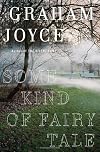
This is the second Graham Joyce book that I have read and, to my perhaps simplistic view, these novels revolve around core themes. In The Silent Land the theme was love. In Some Kind of Fair Tale it is loss of time/youth.
Peter's sixteen year old sister Tara disappears while taking a walk among the Spring flowers and woods near her home. She returns on cold Christmas day twenty years later, cold, tired, dirty, and to all appearances not having aged in those twenty years. She claims to have show more spent those years (which to her were only 6 months) with the race of magical creatures that we would call Fairies, although we learn that they not only don't like that term, but that they are very physical and more dangerous and aggressive than we imagined.
Woven into a story that is both realistic as well as fantastic is the theme of the loss of youth and of time.
I was struck by the way that the characters are as mystified and unbelieving in the changes that the years have brought to them as they are of the lack of change in Tara. But isn't that the way it always is?
Yesterday I watched my grand-daughter play in my living room and I almost felt as if the fairies had worked some magic because it seems like yesterday that I listened to her mother speak her first words. They clearly have changed so much yet why do I feel that I have not? I didn't feel the rush of years---but I am sure that I look as changed to them as they do to me.
There is a rather sinister scene at the end of the book where we see that the Fairies will soon be after Peter's young daughter. It made me think that even as the Fairies have worked their magic and my little girl is now a mother, I will blink again and my grand-daughter will be a woman. And I will still wonder where it all went. show less
Peter's sixteen year old sister Tara disappears while taking a walk among the Spring flowers and woods near her home. She returns on cold Christmas day twenty years later, cold, tired, dirty, and to all appearances not having aged in those twenty years. She claims to have show more spent those years (which to her were only 6 months) with the race of magical creatures that we would call Fairies, although we learn that they not only don't like that term, but that they are very physical and more dangerous and aggressive than we imagined.
Woven into a story that is both realistic as well as fantastic is the theme of the loss of youth and of time.
Yesterday I watched my grand-daughter play in my living room and I almost felt as if the fairies had worked some magic because it seems like yesterday that I listened to her mother speak her first words. They clearly have changed so much yet why do I feel that I have not? I didn't feel the rush of years---but I am sure that I look as changed to them as they do to me.
There is a rather sinister scene at the end of the book where we see that the Fairies will soon be after Peter's young daughter. It made me think that even as the Fairies have worked their magic and my little girl is now a mother, I will blink again and my grand-daughter will be a woman. And I will still wonder where it all went.
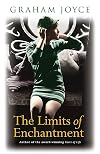
Set in the 1960s in a rural village in England, “The Limits of Enchantment” is the story of Fern, a teenage girl who has learned midwifery and herbal medicine from Mammy, the woman who raised her. When one of Mammy’s cases turns out badly, the village turns against her and she ends up hospitalized after being attacked. Fern, who has been utterly dependent on Mammy, must learn who she is, both as a woman and as a witch.
Fern is naïve and socially awkward and it is a fascinating to read show more about her stumbling journey into adulthood. The author makes a compelling observation about how the changes in culture are encroaching on “the old ways,” most notably in the clash between modern medicine and the methods Fern has learned from Mammy. Midwifery has been brought under legislation, and practioners are required to obtain a license from the government. Fern struggles to accept this, while also clinging to the more mystical lifestyle she learned from Mammy.
I had two problems with this book. First, there is very little plot development. I finished the book with the feeling that I was still waiting for something to happen. Second, I don’t understand why this is classified as fantasy or why it was nominated for the World Fantasy Award. It comes down to a question of whether one believes witchcraft is real or unreal. Witchery as practiced by Fern and Mammy is a way of life embraced by many, including people I know, so I had difficulty accepting this book as fantasy and felt the book did not deliver what was promised.
Despite my disappointment with “The Limits of Enchantment,” I did come away from the book with a sense that the author is talented, so I plan to read some of his other work. show less
Fern is naïve and socially awkward and it is a fascinating to read show more about her stumbling journey into adulthood. The author makes a compelling observation about how the changes in culture are encroaching on “the old ways,” most notably in the clash between modern medicine and the methods Fern has learned from Mammy. Midwifery has been brought under legislation, and practioners are required to obtain a license from the government. Fern struggles to accept this, while also clinging to the more mystical lifestyle she learned from Mammy.
I had two problems with this book. First, there is very little plot development. I finished the book with the feeling that I was still waiting for something to happen. Second, I don’t understand why this is classified as fantasy or why it was nominated for the World Fantasy Award. It comes down to a question of whether one believes witchcraft is real or unreal. Witchery as practiced by Fern and Mammy is a way of life embraced by many, including people I know, so I had difficulty accepting this book as fantasy and felt the book did not deliver what was promised.
Despite my disappointment with “The Limits of Enchantment,” I did come away from the book with a sense that the author is talented, so I plan to read some of his other work. show less
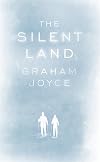
On first reading the blurb of this book I found myself wondering what on earth Graham Joyce was up to. Joyce, as original a fantasist as the literary world has to offer, seemed to be going down a fairly well-worn route, if the description of the plot was anything to go by. A husband and wife, caught in an avalanche in the Pyrenees, make their way back to their holiday village, only to find it deserted, and all their efforts to leave bring them back to the same place. I mean, it's obvious show more what's going on here, right? The reader is right there, one step ahead of he characters.
But only one step. They're not dumb. The work it out, too. The question is, what happens next? The question is, why is this happening at all? Of course, the reader will work out the next thing early on, too, as they're supposed to, but this one is something the characters cannot or will not grasp, for a very good reason. And as the lights flicker and the shadows close in and the ghostly men get nearer, you know what must happen, but instead of being a hackneyed cop-out cliche, it's Hitchcock's old lesson about suspense being when you know the bomb under the desk is going to go off, and the ending is almost unbearable.
I was explaining this to my wife.
'Because it's a love story,' I told her, and she laughed.
'How did you manage to accidentally trick yourself into reading a love story?'
'Because it's Graham Joyce.' show less
But only one step. They're not dumb. The work it out, too. The question is, what happens next? The question is, why is this happening at all? Of course, the reader will work out the next thing early on, too, as they're supposed to, but this one is something the characters cannot or will not grasp, for a very good reason. And as the lights flicker and the shadows close in and the ghostly men get nearer, you know what must happen, but instead of being a hackneyed cop-out cliche, it's Hitchcock's old lesson about suspense being when you know the bomb under the desk is going to go off, and the ending is almost unbearable.
I was explaining this to my wife.
'Because it's a love story,' I told her, and she laughed.
'How did you manage to accidentally trick yourself into reading a love story?'
'Because it's Graham Joyce.' show less
Lists
100 Hemskaste (1)
Strange Towns (1)
Winter Books (1)
Put a Bird On It (1)
Sense of place (1)
Faerie Mythology (1)
Awards


You May Also Like


Associated Authors
Statistics
- Works
- 47
- Also by
- 36
- Members
- 5,027
- Popularity
- #4,977
- Rating
- 3.7
- Reviews
- 240
- ISBNs
- 158
- Languages
- 11
- Favorited
- 29
