

Elizabeth Hand
Author of Waking the Moon
About the Author
Image credit: Elizabeth Hand at Finncon 2007 in Jyväskylä, Finland - July 2007
Photo by Mikko Aarnio, mikko.aarnio@iki.fi -- released to the creative commons
Series
Works by Elizabeth Hand
Three Tiptree Award–Winning Novels: A Woman of the Iron People, Waking the Moon, and Larque on the Wing (2018) — Author — 10 copies
Other Aliens (Conjunctions Book 67) 3 copies
Kronia {short story} 3 copies
Wonderwall 3 copies
Lucifer over Lancaster 1 copy
Anima #9: N.O. Future 1 copy
Hungerford Bridge 1 copy
Star Wars Boba Fett, Sammelband 02: Gejagt, Eine neue Bedrohung, Auf der Spur. Drei Romane in einem Band (2009) 1 copy
Unspeakable Things: A Novel 1 copy
Untitled 1 copy
Jangletown 1 copy
Associated Works
Wizards: Magical Tales From the Masters of Modern Fantasy (2007) — Contributor — 848 copies, 25 reviews
The Year's Best Fantasy and Horror: Seventh Annual Collection (1994) — Contributor — 282 copies, 3 reviews
The Year's Best Fantasy and Horror: Fifteenth Annual Collection (2002) — Contributor — 275 copies, 4 reviews
When Things Get Dark: Stories Inspired by Shirley Jackson (2021) — Contributor — 254 copies, 12 reviews
The Year's Best Fantasy & Horror 2006: 19th Annual Collection (2006) — Contributor — 244 copies, 4 reviews
The Year's Best Fantasy and Horror: Sixteenth Annual Collection (2003) — Contributor — 240 copies, 2 reviews
The Year's Best Fantasy and Horror: Eighteenth Annual Collection (2005) — Contributor — 231 copies, 5 reviews
The Best Science Fiction and Fantasy of the Year, Volume 1 (2007) — Contributor — 217 copies, 6 reviews
The Best Science Fiction and Fantasy of the Year, Volume 2 (2008) — Contributor — 177 copies, 4 reviews
The Year's Best Fantasy and Horror 2008: 21st Annual Collection (2008) — Contributor — 176 copies, 5 reviews
The Best Science Fiction and Fantasy of the Year, Volume 5 (2011) — Contributor — 165 copies, 4 reviews
The Best From Fantasy and Science Fiction: The Fiftieth Anniversary Anthology (1999) — Contributor — 127 copies, 3 reviews
The Very Best of Fantasy & Science Fiction, Volume 2 (2014) — Contributor, some editions — 109 copies, 7 reviews
Nebula Awards 32: SFWA's Choices for the Best Science Fiction and Fantasy of the Year (1998) — Contributor — 98 copies, 1 review
Nebula Awards 31: SFWA's Choices For The Best Science Fiction And Fantasy Of The Year (Nebula Awards Showcase) (1997) — Contributor — 97 copies
A Darker Shade of Noir: New Stories of Body Horror by Women Writers (2023) — Contributor — 64 copies, 18 reviews
Bound in Blood: Stories of Cursed Books, Damned Libraries and Unearthly Authors (2024) — Contributor — 58 copies, 3 reviews
Wilde Stories 2010: The Year's Best Gay Speculative Fiction (2010) — Contributor — 33 copies, 1 review
Mixed Up: Cocktail Recipes (and Flash Fiction) for the Discerning Drinker (and Reader) (2017) — Contributor — 30 copies, 1 review
The Magazine of Fantasy and Science Fiction May/June 2013, Vol. 124, Nos. 5 & 6 (2013) — Book reviewer — 21 copies, 4 reviews
The Magazine of Fantasy and Science Fiction January/February 2012, Vol. 122, No. 1 & 2 (2012) — Contributor — 21 copies
The Magazine of Fantasy and Science Fiction August/September 2009, Vol. 117, Nos. 1 & 2 (2009) — Contributor — 19 copies, 1 review
The Magazine of Fantasy and Science Fiction September 2000, Vol. 99, No. 3 (2000) — Contributor — 19 copies
The Magazine of Fantasy and Science Fiction October/November 2009, Vol. 117, Nos. 3 & 4 (60th Anniversary Issue) (2009) — Author, some editions — 19 copies, 3 reviews
The Magazine of Fantasy and Science Fiction November/December 2012 Vol. 123, Nos. 5 & 6 (2012) — Contributor — 18 copies
The Magazine of Fantasy and Science Fiction July/August 2011, Vol. 121, Nos. 1 & 2 (2011) — Contributor — 16 copies, 1 review
The Magazine of Fantasy and Science Fiction November/December 2010, Vol. 119, No. 5 & 6 (2010) — Book reviewer — 13 copies, 1 review
J.K. Potter's Embrace the Mutation: Fiction Inspired by the Art of J. K. Potter (2002) — Contributor — 12 copies, 1 review
The Magazine of Fantasy and Science Fiction August 1998, Vol. 95, No. 2 (1998) — Contributor — 11 copies, 1 review
Science Fiction Eye #10, June 1992 — Contributor — 1 copy
Science Fiction Eye #08, Winter 1991 — Contributor — 1 copy
Tagged
Common Knowledge
- Birthdate
- 1957-03-29
- Gender
- female
- Education
- sociologist
novelist - Occupations
- sociologist
novelist - Awards and honors
- Guest of Honour, Eastercon, UK (2006)
- Agent
- Sterling Lord Literistic
[UK & Commonwealth] John Berlyne (Zeno Agency) - Relationships
- Clute, John (partner)
Grant, Richard (ex-partner) - Nationality
- USA
- Birthplace
- Yonkers, New York, USA
- Places of residence
- Yonkers, New York, USA
Pound Ridge, New York, USA
Washington, D.C., USA
Maine, USA
London, Middlesex, England, UK - Associated Place (for map)
- USA
Members
Discussions
THE DEEP ONES: "The Least Trumps" by Elizabeth Hand in The Weird Tradition (September 2024)
Bookmarque and Marissa read MORTAL LOVE by Elizabeth Hand in The Green Dragon (April 2024)
Reviews
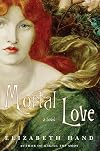
Elizabeth Hand’s Mortal Love gives the reader plenty of signals that the story they’re about to experience is not an ordinary one. Nineteen pages in, a secondary character uses the phrase “Manderley on bad acid” to describe someone’s summer home, an old Victorian structure that’s been assembled by a man made miserable by grief and loss. The place is deteriorating, falling into disrepair, an owner burdened by the taxes and remote location. This seems like a traditional setting for show more a Gothic fantasy but then the “bad acid” element kicks in – various hallucinogenic experiences as a means of controlling anxiety over loss. Only you’re not on that island on the coast of Maine anymore because the action shifts. You’re in London in the wee small hours of the night in what may or may not be the best neighborhood. Certainly, it’s not Mayfair. Another shifting of locale in the book's final third and you're on a cliff in Cornwall (but not alone).
The real feat here may be that the author has managed to deliver Gothic fantasy in an urban environment, with crowds of people, in an age when cell phones make isolation difficult and where private jets can cross oceans in a matter of hours. Heck, there was even a spiffed-up, classic motorcycle. Yet the reader still experiences all of those sensations and emotions that we expect will feature heavily in the Gothic – obsession, panic,anxiety, entrapment, etc.
There are four men whose lives we follow and none of them are entirely of sound mind and body. Should they blame their inability to cope with their base passions? (In the book’s initial pages, we see a medical professional attributing a woman’s madness to that general failure of her sex, an inability to control her base passions.)
Mortal Love references the rebellious spirit of the Pre-Raphaelite artistic movement, with those detailed renderings of natural flora and fauna. (Honestly, the book cries out for an illustrated edition.) We encounter mad poets and the folklore that inspired them. There are acorns, absinthe, and Keats’ La Belle Dame Sans Merci. Hand’s prose is not dense but literary allusions are spread out and thick on the ground. show less
The real feat here may be that the author has managed to deliver Gothic fantasy in an urban environment, with crowds of people, in an age when cell phones make isolation difficult and where private jets can cross oceans in a matter of hours. Heck, there was even a spiffed-up, classic motorcycle. Yet the reader still experiences all of those sensations and emotions that we expect will feature heavily in the Gothic – obsession, panic,anxiety, entrapment, etc.
There are four men whose lives we follow and none of them are entirely of sound mind and body. Should they blame their inability to cope with their base passions? (In the book’s initial pages, we see a medical professional attributing a woman’s madness to that general failure of her sex, an inability to control her base passions.)
Mortal Love references the rebellious spirit of the Pre-Raphaelite artistic movement, with those detailed renderings of natural flora and fauna. (Honestly, the book cries out for an illustrated edition.) We encounter mad poets and the folklore that inspired them. There are acorns, absinthe, and Keats’ La Belle Dame Sans Merci. Hand’s prose is not dense but literary allusions are spread out and thick on the ground. show less
Bear with me, folks, this is going to be a tough one to write.
I very likely had the same reaction as virtually anyone else who saw there was an "authorized" follow-up (let's not call this a sequel—I'll get into that later) to possibly one of the top two haunted house novels of all time—the other being King's THE SHINING, which saw its own disappointing sequel come out a few years back. My reaction was both incredible excitement, for a chance to read something that goes back to my show more favourite haunted house, but also a crossed-arm, narrow-eyed admonishment that it better not get screwed up.
I also went back and did a re-read of Jackson's original before this, and I'm glad I did. So, let's get into it, shall we?
To start, I should say, I actually considered Elizabeth Hand a brilliant selection, having read—and truly loved—WYLDING HALL, about a band going to a haunted house to try and write and record their next album.
Good fit, right?
I thought so. I'd hoped so.
Unfortunately, Hand sort of gave us a similar scenario, only this time it was a playwright and assorted stage personnel finessing a play about a witch. Similar feel to the band thing, just with a stage play instead of an album.
And, this is where the first problems cropped up. In Jackson's HAUNTING OF HILL HOUSE, she presented us with wholly unlikable characters. Mr and Mrs Dudley, the caretakers. Mrs. Montague. And, if we're honest, none of the main four characters, Theodora, Eleanor, Luke, and Dr. Montague, are especially likable either. Yet Jackson just gives us very quick hints of their background, enough to intrigue, but never enough to bore. And the thorougly unlikable Dudleys and Mrs Montague are also made fun of to the readers' delight.
And, while it literally takes about half the original novel to dig into the horror, Jackson never bores, while filling the reader in with what they need to know prior to the not sane Hill House starts its manipulations.
In THE HAUNTING ON THE HILL, Hand also chooses to make everyone unlikable, yet doesn't seem to offer up any true redeeming features. Holly is desperate for success. Nisa is overbearingly all about her songs. Amanda wants one last shot at a meaty role. And so on.
Unfortunately, they're all so deadly serious that there's no fun left in them. It's all been wrung out, leaving only desperation in its wake.
So, the characters tend to fail in this so-called sequel, but what about the story?
In the original, the four that come because one is also desperate to write a paper on a definitive house haunting, and the other three, due to their pasts or their affliations with the house, are invited.
In this new one, the house is stumbled upon, and first it's Holly that wants the place, but it's Nisa that is captured by the place and pushes the deal.
But the main thrust of the second story is everyone getting behind the "Witching Night" stage play, whether it's the writing, the songs, the sound design, or the acting. Unfortunately, much like the characters, the story within the story is only mildly compelling and doesn't feel strong enough to draw the people there, nor keep them there when things inevitably go south. Especially when the only message they hear throughout the entire novel is, "leave the house."
And, it should be mentioned, however that if I ever experience dialogue again where one character explains they aren't pagan, but more "neo-pagan adjacent" and they aren't trying to be wry or funny in any way?
Yeah, if that happens, I'll kill the book with fire and be done with it. That sentence moved up to the number one slot of most hated sentences in a novel I've read, and that's something, considering up to now, it was Lee Child with his shockingly bad, "It was as distinctive as the most distinctive thing you could think of."
But surely Jackson's greatest creation, Hill House—such a looming and menacing presence in the first one is equally terrifying here, right?
Well, only sort of. Hand relies on weirdly external sources, such as hares (and, oh my god, Hand, just let them pick one term and run with it...every time a character refers to a rabbit, they immediately correct themselves), and the woman who lives down the road, and a snow storm...
But she does touch on certain aspects of the original, the cold spot, previous dialogue is pulled in, the room at the top of the stairs that almost claimed Eleanor.
But here's the thing that kind of bugged me about this whole affair: Hand pay passing attention to the original with some details, which I fully appreciated. But then she creates a full ongoing history of events that occurred after the events of the first novel, not as though this book was the sequel, but as though this was about the fifth in the series, seemingly paying attention more to events from the 80s than what happened in the late 50s.
So, there's a familiar underlying odour, but overall the entire thing smells wrong.
The closest I can come to a comparison is the experience I had doing a re-read of TO KILL A MOCKINGBIRD by Harper Lee, then reading GO SET A WATCHMAN, the novel that should never have seen the light of day.
Because while it made a lot of mention of things we were familiar with in the well-loved and much-read original, it also seemed to not have as much respect as it should, and did not quite fit in with the original as it should.
This is very much the same feeling. Hand's a great author, and she didn't embarrass herself here, but it feels more like the estate of Jackson decided it was time to do something with this property they have, and Hand happened to have this haunted house story she'd been working on and shoehorned in some Hill House mentions to make it work. I've read a few reviews now that all seem to love the book and deem it a worthy successor, but for me, I guess I was hoping for something that, while not a carbon copy of the original, would at least make the house the star of the show again with its not sane presence, rather than the author bringing in completely new and, quite frankly, questionable choices as to how the house now operates. For all those glowing reviews, I know that I'll revisit Hill House at least a few more times. But it will be the Jackson Hill House I visit. I fully expect this sequel to be forgotten in a couple of years, much like GO SET A WATCHMAN has already slipped out of everyone's mind, except when they come across it in the cheap book sales.
This IS a decent haunted house novel, as far as it goes, but it's not a good haunted Hill House novel by any means. show less
I very likely had the same reaction as virtually anyone else who saw there was an "authorized" follow-up (let's not call this a sequel—I'll get into that later) to possibly one of the top two haunted house novels of all time—the other being King's THE SHINING, which saw its own disappointing sequel come out a few years back. My reaction was both incredible excitement, for a chance to read something that goes back to my show more favourite haunted house, but also a crossed-arm, narrow-eyed admonishment that it better not get screwed up.
I also went back and did a re-read of Jackson's original before this, and I'm glad I did. So, let's get into it, shall we?
To start, I should say, I actually considered Elizabeth Hand a brilliant selection, having read—and truly loved—WYLDING HALL, about a band going to a haunted house to try and write and record their next album.
Good fit, right?
I thought so. I'd hoped so.
Unfortunately, Hand sort of gave us a similar scenario, only this time it was a playwright and assorted stage personnel finessing a play about a witch. Similar feel to the band thing, just with a stage play instead of an album.
And, this is where the first problems cropped up. In Jackson's HAUNTING OF HILL HOUSE, she presented us with wholly unlikable characters. Mr and Mrs Dudley, the caretakers. Mrs. Montague. And, if we're honest, none of the main four characters, Theodora, Eleanor, Luke, and Dr. Montague, are especially likable either. Yet Jackson just gives us very quick hints of their background, enough to intrigue, but never enough to bore. And the thorougly unlikable Dudleys and Mrs Montague are also made fun of to the readers' delight.
And, while it literally takes about half the original novel to dig into the horror, Jackson never bores, while filling the reader in with what they need to know prior to the not sane Hill House starts its manipulations.
In THE HAUNTING ON THE HILL, Hand also chooses to make everyone unlikable, yet doesn't seem to offer up any true redeeming features. Holly is desperate for success. Nisa is overbearingly all about her songs. Amanda wants one last shot at a meaty role. And so on.
Unfortunately, they're all so deadly serious that there's no fun left in them. It's all been wrung out, leaving only desperation in its wake.
So, the characters tend to fail in this so-called sequel, but what about the story?
In the original, the four that come because one is also desperate to write a paper on a definitive house haunting, and the other three, due to their pasts or their affliations with the house, are invited.
In this new one, the house is stumbled upon, and first it's Holly that wants the place, but it's Nisa that is captured by the place and pushes the deal.
But the main thrust of the second story is everyone getting behind the "Witching Night" stage play, whether it's the writing, the songs, the sound design, or the acting. Unfortunately, much like the characters, the story within the story is only mildly compelling and doesn't feel strong enough to draw the people there, nor keep them there when things inevitably go south. Especially when the only message they hear throughout the entire novel is, "leave the house."
And, it should be mentioned, however that if I ever experience dialogue again where one character explains they aren't pagan, but more "neo-pagan adjacent" and they aren't trying to be wry or funny in any way?
Yeah, if that happens, I'll kill the book with fire and be done with it. That sentence moved up to the number one slot of most hated sentences in a novel I've read, and that's something, considering up to now, it was Lee Child with his shockingly bad, "It was as distinctive as the most distinctive thing you could think of."
But surely Jackson's greatest creation, Hill House—such a looming and menacing presence in the first one is equally terrifying here, right?
Well, only sort of. Hand relies on weirdly external sources, such as hares (and, oh my god, Hand, just let them pick one term and run with it...every time a character refers to a rabbit, they immediately correct themselves), and the woman who lives down the road, and a snow storm...
But she does touch on certain aspects of the original, the cold spot, previous dialogue is pulled in, the room at the top of the stairs that almost claimed Eleanor.
But here's the thing that kind of bugged me about this whole affair: Hand pay passing attention to the original with some details, which I fully appreciated. But then she creates a full ongoing history of events that occurred after the events of the first novel, not as though this book was the sequel, but as though this was about the fifth in the series, seemingly paying attention more to events from the 80s than what happened in the late 50s.
So, there's a familiar underlying odour, but overall the entire thing smells wrong.
The closest I can come to a comparison is the experience I had doing a re-read of TO KILL A MOCKINGBIRD by Harper Lee, then reading GO SET A WATCHMAN, the novel that should never have seen the light of day.
Because while it made a lot of mention of things we were familiar with in the well-loved and much-read original, it also seemed to not have as much respect as it should, and did not quite fit in with the original as it should.
This is very much the same feeling. Hand's a great author, and she didn't embarrass herself here, but it feels more like the estate of Jackson decided it was time to do something with this property they have, and Hand happened to have this haunted house story she'd been working on and shoehorned in some Hill House mentions to make it work. I've read a few reviews now that all seem to love the book and deem it a worthy successor, but for me, I guess I was hoping for something that, while not a carbon copy of the original, would at least make the house the star of the show again with its not sane presence, rather than the author bringing in completely new and, quite frankly, questionable choices as to how the house now operates. For all those glowing reviews, I know that I'll revisit Hill House at least a few more times. But it will be the Jackson Hill House I visit. I fully expect this sequel to be forgotten in a couple of years, much like GO SET A WATCHMAN has already slipped out of everyone's mind, except when they come across it in the cheap book sales.
This IS a decent haunted house novel, as far as it goes, but it's not a good haunted Hill House novel by any means. show less
This is the fourth book to feature Liz Hand's Cass Neary, and it's a solid installment in one of my favorite mystery series. Cass is an aging junkie, and one-time star photographer, who barely survived the heydey of punk-era New York City and she keeps finding herself embroiled in mysteries that drag her through the underbelly of the world. The "cases," if that's how you want to classify them, usually involve art in some way, and in Lamps and Banners the object is a lost, possibly apocryphal show more book. But the object is almost beside the point. What grabs the reader here is Hand's writing; Cass's voice and point of view. All of it is a seedy wonder. Highly recommended. show less
In the wake of the mysterious death of their lead singer, the young members of a legendary folk-rock band find themselves at Wylding Hall, an old English country house, with its own dark secrets. There they will record Wylding Hall, the album that will consecrate them and mark a before and after in their career... but at a terrifying cost, when Julian Blake, their new singer, disappears inside the mansion never to be seen again. Now, years later, each of the surviving musicians, their show more friends and lovers including a psychic, a photographer and the band's manager meet with a young documentary filmmaker to tell their own version of what happened during that summer. But what is the true story? And what really happened to the young and talented Julian Blake?
"Windhollow Faire" is an up-and-coming acid folk band who have been sent to Wylding Hall, an ancient English country mansion, by their manager, to create their first album. The album they make becomes a classic, but it is steeped in tragedy as the band’s lead singer disappears during the sessions. Years later the surviving band members and those involved in the Wylding Hall recordings come together again to tell their own memories of what really happened at the mysterious mansion.
The author, Elizabeth Hand, has created a magical tale that expertly merges the story of the young band with mythology. The story is cleverly written in "documentary style" with multiple unreliable narrators, giving very differing viewpoints and justification of the events. The story is mysterious and atmospheric with descriptions giving the whole thing a magical, eerie, and uncanny feeling. The drug-infused meanderings of the band work brilliantly with the slowly revealing "fairy tale" at the base of the narrative. The band and its hippy members just feel right, and the author throws in names and places from the late ‘60s and early ‘70s folk music scene that gives the story a feeling of real authenticity.
The "fairy tale" elements are also cleverly done and although never explicitly mentioned, there is enough in the folkloric elements and the fey feather-footed girl, to make it clear that the band, Windhollow Faire, are encountering members of the "little folk" realm. At times, the book slows down a bit, but overall, this was a creative and creepy read with pages oozing with atmosphere and mystery. I really liked everything about the book and would recommend it to anyone that loves a good mystery laced with a haunted house tale. show less
"Windhollow Faire" is an up-and-coming acid folk band who have been sent to Wylding Hall, an ancient English country mansion, by their manager, to create their first album. The album they make becomes a classic, but it is steeped in tragedy as the band’s lead singer disappears during the sessions. Years later the surviving band members and those involved in the Wylding Hall recordings come together again to tell their own memories of what really happened at the mysterious mansion.
The author, Elizabeth Hand, has created a magical tale that expertly merges the story of the young band with mythology. The story is cleverly written in "documentary style" with multiple unreliable narrators, giving very differing viewpoints and justification of the events. The story is mysterious and atmospheric with descriptions giving the whole thing a magical, eerie, and uncanny feeling. The drug-infused meanderings of the band work brilliantly with the slowly revealing "fairy tale" at the base of the narrative. The band and its hippy members just feel right, and the author throws in names and places from the late ‘60s and early ‘70s folk music scene that gives the story a feeling of real authenticity.
The "fairy tale" elements are also cleverly done and although never explicitly mentioned, there is enough in the folkloric elements and the fey feather-footed girl, to make it clear that the band, Windhollow Faire, are encountering members of the "little folk" realm. At times, the book slows down a bit, but overall, this was a creative and creepy read with pages oozing with atmosphere and mystery. I really liked everything about the book and would recommend it to anyone that loves a good mystery laced with a haunted house tale. show less
Lists
ScaredyKIT 2023 (1)
Favourite Books (1)
100 Hemskaste (1)
Gaslamp Fantasy (1)
READ in 2023 (1)
AudiblePlus 2023 (1)
Sense of place (2)
Must-Read Maine (3)
Faerie Mythology (1)
Autumn books (1)
LGBTQIA Horror (1)
Awards


You May Also Like


Associated Authors
Statistics
- Works
- 82
- Also by
- 93
- Members
- 9,699
- Popularity
- #2,462
- Rating
- 3.7
- Reviews
- 299
- ISBNs
- 306
- Languages
- 14
- Favorited
- 34
