
Lucius Shepard (1943–2014)
Author of Life During Wartime
About the Author
Lucius Shepard was born in Lynchburg, Virginia in 1947. He wrote in many different genres including science fiction and fantasy, cyberpunk, magical realism, poetry, and non-fiction. He published his first short stories in 1983 and his first novel, Green Eyes, in 1984. His other works include Life show more During Wartime, The Jaguar Hunter, and Two Trains Running. He won several awards including the John W. Campbell Award for Best New Writer in 1985, the Nebula Award for the novella R&R, the Hugo Award for the novella Barnacle Bill the Spacer, and the Shirley Jackson Award for the novella Vacancy. He died on March 18, 2014 at the age of 66. (Bowker Author Biography) show less
Image credit: Lucius Shepard
Photo: Harmonia Amanda
Photo: Harmonia Amanda
Series
Works by Lucius Shepard
Salvador 18 copies
Shades [short fiction] 11 copies
The All-Consuming [short fiction] 11 copies
A Spanish Lesson {short story} 9 copies
Delta Sly Honey [short fiction] 8 copies
Radiant green star {novella} 7 copies
Life of Buddha [short fiction] 7 copies
Stars Seen Through Stone 6 copies
Black Coral 6 copies
Eternity and Afterward 5 copies
Aymara [short fiction] 5 copies
A Little Night Music [short story] 5 copies
Dead Money 5 copies
A Traveler's Tale 4 copies
Beast of the Heartland [short story] 4 copies
The Last Time 4 copies
The Night of White Bhairab 4 copies
Hands up! Who Wants To Die? 3 copies
Over Yonder 3 copies
Jailwise 3 copies
Mengele 3 copies
Nomans Land 2 copies
Bound for Glory 2 copies
All the Perfumes of Araby 2 copies
Human History 2 copies
The Drive-in Puerto Rico 2 copies
The Exercise of Faith 2 copies
Sports in America 2 copies
Señor Volto 2 copies
On the Border 2 copies
The Glassblower's Dragon 2 copies
The Black Clay Boy 2 copies
A Wooden Tiger 2 copies
Jack's Decline 2 copies
Emerald Street Expansions 1 copy
Romance of the Century 1 copy
The Boy Who Spoke Cat 1 copy
A Walk In the Garden 1 copy
Solitario's Eyes 1 copy
Vermillion #2 1 copy
Visitor 1 copy
Collected Short Fiction 1 copy
The End Of The Earth 1 copy
Grüne Augen 1 copy
The Emperor 1 copy
Earth Hits the Fan 1 copy
Chinandega 1 copy
Anti-Trek 1 copy
Carlos Manson Lives 1 copy
The Arcevoalo 1 copy
Multiplexity 1 copy
Blade Runner Had a Baby 1 copy
Korean Futures 1 copy
Curse of the Deadly Sequel 1 copy
Star Wars, They're Not 1 copy
Slice of Life 1 copy
The Master of Error 1 copy
Say You Want a Revolution 1 copy
Funky, Funky Moscow 1 copy
Petite musique de nuit 1 copy
After Ildiko 1 copy
The Skinny Girl 1 copy
The Lepidopterist 1 copy
Associated Works
The Year's Best Science Fiction: Eighteenth Annual Collection (2001) — Contributor — 505 copies, 2 reviews
The Best of the Best: 20 Years of the Year's Best Science Fiction (2005) — Contributor — 442 copies, 20 reviews
The Year's Best Science Fiction: Eighth Annual Collection (1991) — Contributor — 417 copies, 6 reviews
The Year's Best Fantasy and Horror: First Annual Collection (1986) — Contributor — 335 copies, 6 reviews
The Year's Best Science Fiction: Seventh Annual Collection (1990) — Contributor — 311 copies, 2 reviews
The Locus Awards: Thirty Years of the Best in Science Fiction and Fantasy (2004) — Contributor — 290 copies, 11 reviews
Storming the Reality Studio: A Casebook of Cyberpunk and Postmodern Science Fiction (1991) — Contributor — 263 copies
The Year's Best Science Fiction: Third Annual Collection (1986) — Contributor — 253 copies, 2 reviews
The Year's Best Fantasy and Horror: Seventeenth Annual Collection (2004) — Contributor — 241 copies, 9 reviews
Ghosts by Gaslight: Stories of Steampunk and Supernatural Suspense (2011) — Contributor — 220 copies, 8 reviews
The Year's Best Fantasy and Horror: Sixth Annual Collection (1993) — Contributor — 219 copies, 1 review
The Year's Best Science Fiction: Fourth Annual Collection (1987) — Contributor — 219 copies, 1 review
The Year's Best Fantasy and Horror: Second Annual Collection (1987) — Contributor — 208 copies, 1 review
The Very Best of Fantasy & Science Fiction, Volume 2 (2014) — Contributor, some editions — 114 copies, 7 reviews
Asimov's Science Fiction: Hugo & Nebula Award Winning Stories (1995) — Contributor — 103 copies, 2 reviews
Nebula Awards 32: SFWA's Choices for the Best Science Fiction and Fantasy of the Year (1998) — Contributor — 98 copies, 1 review
The Best Fantasy Stories from the Magazine of Fantasy & Science Fiction (1985) — Contributor — 77 copies, 2 reviews
Nebula Awards 24: SFWA's Choices for the Best Science Fiction and Fantasy 1988 (1990) — Contributor — 61 copies
Asimov's Science Fiction Magazine: 30th Anniversary Anthology (2007) — Contributor — 60 copies, 1 review
Nebula Awards 29: SFWA's Choices For The Best Science Fiction And Fantasy Of The Year (Nebula Awards Showcase) (1995) — Contributor — 57 copies
Nebula Awards 22: Sfwa's Choices for the Best Science Fiction and Fantasy 1986 (Nebula Awards Showcase) (1988) — Contributor — 53 copies, 1 review
The Best Horror Stories from The Magazine of Fantasy & Science Fiction (1988) — Contributor — 52 copies, 1 review
Take My Advice: Letters to the Next Generation from People Who Know a Thing or Two (2002) — Contributor — 50 copies
Nebula Awards 20: SFWA's Choices for the Best Science Fiction and Fantasy 1984 (1985) — Contributor — 28 copies
The Magazine of Fantasy and Science Fiction December 2008, Vol. 115, No. 6 (1973) — Movie reviewer — 24 copies, 3 reviews
The Magazine of Fantasy and Science Fiction February 2006, Vol. 110, No. 2 (2006) — Contributor, some editions — 21 copies
The Magazine of Fantasy and Science Fiction May/June 2013, Vol. 124, Nos. 5 & 6 (2013) — Movie reviewer — 21 copies, 4 reviews
The Best Horror Stories from the Magazine of Fantasy & Science Fiction, Vol. II (1990) — Contributor — 20 copies
The Magazine of Fantasy and Science Fiction October/November 2009, Vol. 117, Nos. 3 & 4 (60th Anniversary Issue) (2009) — Author, some editions — 19 copies, 3 reviews
The Magazine of Fantasy and Science Fiction August/September 2009, Vol. 117, Nos. 1 & 2 (2009) — Contributor — 19 copies, 1 review
The Magazine of Fantasy and Science Fiction September 2006, Vol. 111, No. 3 (2006) — Contributor, some editions — 18 copies
The Magazine of Fantasy and Science Fiction August 2006, Vol. 111, No. 2 (2006) — Contributor, some editions — 17 copies
The Magazine of Fantasy and Science Fiction October/November 2005, Vol. 109, No. 4 & 5 (2005) — Contributor, some editions — 17 copies, 1 review
The Magazine of Fantasy and Science Fiction December 2005, Vol. 109, No. 6 (2005) — Contributor, some editions — 17 copies
The Magazine of Fantasy and Science Fiction June 2008, Vol. 114, No. 6 (2008) — Contributor — 16 copies, 2 reviews
The Magazine of Fantasy and Science Fiction April 2006, Vol. 110, No. 4 (2006) — Contributor, some editions — 16 copies
The Magazine of Fantasy and Science Fiction July/August 2011, Vol. 121, Nos. 1 & 2 (2011) — Contributor — 16 copies, 1 review
The Magazine of Fantasy and Science Fiction December 1985, Vol. 69, No. 6 (1985) — Contributor — 15 copies
The Magazine of Fantasy and Science Fiction October 1988, Vol. 75, No. 4 (1988) — Author — 15 copies
Isaac Asimov's Science Fiction Magazine: Vol. 10, No. 10 [October 1986] (1986) — Contributor — 15 copies
The Magazine of Fantasy and Science Fiction June 2006, Vol. 110, No. 6 (2006) — Contributor, some editions — 15 copies
Isaac Asimov's Science Fiction Magazine: Vol. 9, No. 1 [January 1985] (1985) — Contributor — 15 copies
Isaac Asimov's Science Fiction Magazine: Vol. 13, No. 9 [September 1989] (1989) — Contributor — 15 copies
Isaac Asimov's Science Fiction Magazine: Vol. 14, No. 7 [July 1990] (1990) — Contributor — 14 copies
Isaac Asimov's Science Fiction Magazine: Vol. 16, No. 8 [July 1992] (1992) — Contributor — 14 copies
The Magazine of Fantasy and Science Fiction May 1985, Vol. 68, No. 5 (1985) — Contributor — 14 copies
The Magazine of Fantasy and Science Fiction April 2008, Vol. 114, No. 4 (2008) — Movie reviewer — 13 copies
The Magazine of Fantasy and Science Fiction November/December 2010, Vol. 119, No. 5 & 6 (2010) — Film reviewer — 13 copies, 1 review
Isaac Asimov's Science Fiction Magazine: Vol. 9, No. 12 [December 1985] (1985) — Contributor — 13 copies
Isaac Asimov's Science Fiction Magazine: Vol. 11, No. 12 [December 1987] (1987) — Contributor — 12 copies
J.K. Potter's Embrace the Mutation: Fiction Inspired by the Art of J. K. Potter (2002) — Contributor — 12 copies, 1 review
Isaac Asimov's Science Fiction Magazine: Vol. 13, No. 8 [August 1989] (1989) — Contributor — 12 copies
Isaac Asimov's Science Fiction Magazine: Vol. 10, No. 8 [August 1986] (1986) — Contributor — 12 copies
Isaac Asimov's Science Fiction Magazine: Vol. 10, No. 11 [November 1986] (1986) — Author — 11 copies
The Magazine of Fantasy and Science Fiction October 1989, Vol. 77, No. 4 (1989) — Author — 11 copies
The Magazine of Fantasy and Science Fiction December 1984, Vol. 67, No. 6 (1984) — Contributor — 10 copies
Subterranean Magazine Spring 2009 — Contributor — 7 copies
Millemondi Primavera 2001: Nuove avventure nell'ignoto — Contributor — 2 copies
Subterranean Magazine Summer 2010 — Contributor — 2 copies
Science Fiction Eye #07, August 1990 — Contributor — 1 copy
Mondaugen — Contributor — 1 copy
Tagged
Common Knowledge
- Legal name
- Shepard, Lucius Taylor
- Other names
- Carteret, Sally
- Birthdate
- 1943-08-21
- Date of death
- 2014-03-18
- Gender
- male
- Occupations
- writer
- Organizations
- Science Fiction and Fantasy Writers of America
- Awards and honors
- John W. Campbell Award (1985)
- Nationality
- USA
- Birthplace
- Lynchburg, Virginia, USA
- Places of residence
- Vancouver, Washington, USA
Daytona Beach, Florida, USA - Place of death
- Portland, Oregon, USA
- Associated Place (for map)
- USA
Members
Reviews
This series of six stories about a mile long, paralysed dragon who exerts influence on the realm around it, conjured up certain expectations within the fantasy genre before I embarked upon it. Most of these went unrealised, as instead these became varied tales ranging from a plot to kill this god-like being with paint over half a century, through courtroom drama, tales of abuse and metaphysics, and finally ending in a violent and passionate political domination over a (fictional) Central show more American state set in the mid 2010s.
There's no epic questing here and yet the world was fascinating, even as a fictionalised reworking of our own world, just with magic thrown in. Griaule, despite its malevolent presence over everything, exuded power onto the page even when it was the background to everything and the focus put on the lives and societies of the people Griaule's aura affected. That these people were usually extremely flawed, repugnant characters never felt like it diminished any capacity to engage me.
Each story also acted as a discharge of the political and social frustrations Shepard saw in the world around him in the 30 years these stories were written. In the afterword, Shepard himself credited the first story (regarded as one of the finest novellas in fantasy) as a metaphor for the destruction wrought by the Reagan administration. Political discourse from there was found at the heart of every story (along with a lot of sex), and the dense final story was no doubt inspired by his own time spent in Central America. There was also plenty of contemplation over the power and worship over a being which essentially becomes the equivalent of God.
The writing evolved throughout the collection (unsurprising given he started in the 80s and finished the last story in 2012), becoming denser and more "wordy" (for want of a better term), but Shepard’s skill with prose becomes ever more powerful and lush with it. At times it grated to read whole paragraphs and even pages as run-on sentences, but when I stopped to examine why this was the case, it became clear these were carefully chosen choices, and the sum of it all built to a saga more epic than even the most hardened fantasy sometimes aims for.
A wonderful, but grim and bleak collection of adult stories that although feels slow and dense at times, rewards going in open minded. show less
There's no epic questing here and yet the world was fascinating, even as a fictionalised reworking of our own world, just with magic thrown in. Griaule, despite its malevolent presence over everything, exuded power onto the page even when it was the background to everything and the focus put on the lives and societies of the people Griaule's aura affected. That these people were usually extremely flawed, repugnant characters never felt like it diminished any capacity to engage me.
Each story also acted as a discharge of the political and social frustrations Shepard saw in the world around him in the 30 years these stories were written. In the afterword, Shepard himself credited the first story (regarded as one of the finest novellas in fantasy) as a metaphor for the destruction wrought by the Reagan administration. Political discourse from there was found at the heart of every story (along with a lot of sex), and the dense final story was no doubt inspired by his own time spent in Central America. There was also plenty of contemplation over the power and worship over a being which essentially becomes the equivalent of God.
The writing evolved throughout the collection (unsurprising given he started in the 80s and finished the last story in 2012), becoming denser and more "wordy" (for want of a better term), but Shepard’s skill with prose becomes ever more powerful and lush with it. At times it grated to read whole paragraphs and even pages as run-on sentences, but when I stopped to examine why this was the case, it became clear these were carefully chosen choices, and the sum of it all built to a saga more epic than even the most hardened fantasy sometimes aims for.
A wonderful, but grim and bleak collection of adult stories that although feels slow and dense at times, rewards going in open minded. show less
Standing, it looked to Chemayev that the stones beneath his feet were miles away, the surface of a lumpy planet seen from space. A shadowy floater cluttered his vision. The white leaves each had a doubled image, and March's features, rising form the pale seamy ground of his skin, made no sense as a face--like landmarks on a map without referents.
This collection came into my possession two years at a library sale in Louisville. Soon after I read Only Partly Here the opening piece, a ghost show more story of Ground Zero which remains the best fiction I've read concerning September 11th. Maybe as divine punishment, I then put down the book and nearly forgot it until the other day. Somewhat stranded in the house with a foot of fresh snow outdoors I picked up the book and read Eternity, a disturbing piece which concludes the tome about Putin's Kleptocracy serving as a bastion of damnation for all of Mother Russia's sins. Reeling from that I flipped back to Shepard's second story about air strike which ruptures the ground in Iraq and opens a passage to Jahannam (Hell in Islam)and read through the collection sequentially. These are philosophically charged stories addressing colonialism, addiction, the War on Terror and the psychology of incarceration. I'm not sure if I am simply over-smitten with the displayed themes to compensate for the enhanced (over-written?) dialogue which predominates. It is debatable whether I care. There was a touch of sadness when I discovered last night Shepard passed away last year. I suspect this won't be my last encounter with such frenetic and New Weird work. show less
This collection came into my possession two years at a library sale in Louisville. Soon after I read Only Partly Here the opening piece, a ghost show more story of Ground Zero which remains the best fiction I've read concerning September 11th. Maybe as divine punishment, I then put down the book and nearly forgot it until the other day. Somewhat stranded in the house with a foot of fresh snow outdoors I picked up the book and read Eternity, a disturbing piece which concludes the tome about Putin's Kleptocracy serving as a bastion of damnation for all of Mother Russia's sins. Reeling from that I flipped back to Shepard's second story about air strike which ruptures the ground in Iraq and opens a passage to Jahannam (Hell in Islam)and read through the collection sequentially. These are philosophically charged stories addressing colonialism, addiction, the War on Terror and the psychology of incarceration. I'm not sure if I am simply over-smitten with the displayed themes to compensate for the enhanced (over-written?) dialogue which predominates. It is debatable whether I care. There was a touch of sadness when I discovered last night Shepard passed away last year. I suspect this won't be my last encounter with such frenetic and New Weird work. show less
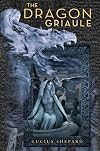
A huge dragon lying slap-bang in the middle of a valley, overgrown and embedded and part of the landscape but very much alive, if unmoving, his malevolent will working on the creatures that come to live around him and within him. An artist tries to kill him with paint, a young woman is taken deep inside his for some strange purpose, a murderer in a far-off city blames the dragon for his actions, a woman appears in a tavern and claims that she, too is a dragon, a group of people are show more transported to a version of the valley to witness something terrible, and in a South America we can readily recognise as our own, the dragon's will is still at work. And then there are the notes which contain things more hair-raising than in any of the already fairly hair-rasing stories and novellas. Fantastic writing, strong psychological inner lives of his characters, astonishing descriptions of places and things fantastical and real, and at the end of it all it's a powerful and profound political allegory. show less
It's going to be very hard to describe this work as anything other than genius.
Almost from the very start, I found myself slowing down and being dragged into the hellish nightmare of war and such densely imaginative prose that I discovered that there was nothing left for me except to become completely submerged and try to breathe the canned air that Shepard provided. I became Mingolla. I began seeing patterns in the very fabric of reality that might help me survive his life. I became show more paranoid. I grasped at any and all straws. I grasped at Debora, who was just as fucked as me.
What really blew me away was the way the stories appeared like bulletholes ripping spaces in the mist, swirling and leaving deep impressions that made a whole that was much, much grander than trying to survive the feuding families that had torn apart South and Middle America, or even coming to grips with the immense implications of so much mindfuckery. I loved the stories within stories within stories. We were treated with a dive within the mind's labyrinth, the Mayan king on one hand and the ghost of the conquistador on the other, laughing in insane merriment as they drove a whole world into an excess of dissolution and hate, marked mainly by the burning embers of obsessive hope and love.
My god, what an intense and immensely crazy ride this was. Rabbit-hole crazy. And I had no choice except to fall deep within its labyrinth. It's a mark of a truly fantastic tale when it grabs me so tight and surprises me with tears, anguish, hope, disillusionment, anger, more anger, a seething cauldron of anger, and finally, love. Is it real love? Hell if I know. Remember, I've become Mingolla. Maybe he's right. Maybe the world is completely insane and the only thing we can do is cling to each other, making whatever damn sense we can of the moment as we change with each other, and pray that we can hold a sense of the eventual and far-off understanding for safe-keeping, and that we still retain that last tiny ray of hope after we've arrived.
So damn beautiful. This novel is poetry. It should never be entered into without knowing the risks.
It's an important and brilliant piece of literature. Period. It deserves your complete attention, kiddies. This is no fluff. This is no popcorn. This can be, potentially, life-changing.
I've always hated war. I've never even particularly enjoyed the best that movies or other fiction have provided. But here's the brutal truth: While I hate war, this novel has shown me a special kind of horrible beauty that I'm unlikely to ever forget.
Like the mad-painter and his gorgeous murals that he'd booby-trap to destroy any potential admirer, and destroy the work itself in the process. It's crazy. It's also one hell of a statement of Art.
Shepard's own conversation in the field of literature is more of a gigantic fuck-you to all the writers out there who think they've ever gotten close to telling a Truth. This guy can WRITE, damn it, but whatever he touches, circles, and swoops-in to illuminate, he then shells with artillery.
Fucking amazing shit.
I remember this author from the Eighties being a part of the cyberpunk movement, but that characterization is completely unfair and not worth setting up. He's got maybe a few connections, the seeding of tech and immense discomfort, but beyond this, we've got a masterpiece of storytelling that goes beyond most pigeonholing. He's a force of nature.
I'm never forgetting this work. show less
Almost from the very start, I found myself slowing down and being dragged into the hellish nightmare of war and such densely imaginative prose that I discovered that there was nothing left for me except to become completely submerged and try to breathe the canned air that Shepard provided. I became Mingolla. I began seeing patterns in the very fabric of reality that might help me survive his life. I became show more paranoid. I grasped at any and all straws. I grasped at Debora, who was just as fucked as me.
What really blew me away was the way the stories appeared like bulletholes ripping spaces in the mist, swirling and leaving deep impressions that made a whole that was much, much grander than trying to survive the feuding families that had torn apart South and Middle America, or even coming to grips with the immense implications of so much mindfuckery. I loved the stories within stories within stories. We were treated with a dive within the mind's labyrinth, the Mayan king on one hand and the ghost of the conquistador on the other, laughing in insane merriment as they drove a whole world into an excess of dissolution and hate, marked mainly by the burning embers of obsessive hope and love.
My god, what an intense and immensely crazy ride this was. Rabbit-hole crazy. And I had no choice except to fall deep within its labyrinth. It's a mark of a truly fantastic tale when it grabs me so tight and surprises me with tears, anguish, hope, disillusionment, anger, more anger, a seething cauldron of anger, and finally, love. Is it real love? Hell if I know. Remember, I've become Mingolla. Maybe he's right. Maybe the world is completely insane and the only thing we can do is cling to each other, making whatever damn sense we can of the moment as we change with each other, and pray that we can hold a sense of the eventual and far-off understanding for safe-keeping, and that we still retain that last tiny ray of hope after we've arrived.
So damn beautiful. This novel is poetry. It should never be entered into without knowing the risks.
It's an important and brilliant piece of literature. Period. It deserves your complete attention, kiddies. This is no fluff. This is no popcorn. This can be, potentially, life-changing.
I've always hated war. I've never even particularly enjoyed the best that movies or other fiction have provided. But here's the brutal truth: While I hate war, this novel has shown me a special kind of horrible beauty that I'm unlikely to ever forget.
Like the mad-painter and his gorgeous murals that he'd booby-trap to destroy any potential admirer, and destroy the work itself in the process. It's crazy. It's also one hell of a statement of Art.
Shepard's own conversation in the field of literature is more of a gigantic fuck-you to all the writers out there who think they've ever gotten close to telling a Truth. This guy can WRITE, damn it, but whatever he touches, circles, and swoops-in to illuminate, he then shells with artillery.
Fucking amazing shit.
I remember this author from the Eighties being a part of the cyberpunk movement, but that characterization is completely unfair and not worth setting up. He's got maybe a few connections, the seeding of tech and immense discomfort, but beyond this, we've got a masterpiece of storytelling that goes beyond most pigeonholing. He's a force of nature.
I'm never forgetting this work. show less
Lists
Awards


You May Also Like


Associated Authors
Statistics
- Works
- 151
- Also by
- 180
- Members
- 4,007
- Popularity
- #6,301
- Rating
- 3.7
- Reviews
- 92
- ISBNs
- 178
- Languages
- 9
- Favorited
- 25