
Bruce Sterling
Author of The Difference Engine
About the Author
Bruce Sterling is a recent winner of the Nebula Award and the author of the nonfiction book "The Hacker Crackdown" as well as novels and short story collections. He co-authored, with William Gibson, the critically acclaimed novel "The Difference Engine." He lives in Austin, Texas, with his wife and show more daughter. (Publisher Provided) show less
Image credit: Photographed at BookPeople in Austin, Texas by Frank Arnold
Series
Works by Bruce Sterling
Mirrorshades: The Cyberpunk Anthology (1986) — Editor; Preface; Contributor — 1,736 copies, 11 reviews
Bicycle Repairman {novelette} 18 copies
Flowers of Edo [short fiction] 7 copies
The Denial 7 copies
Our Neural Chernobyl [short fiction] 6 copies
Green Days in Brunei 6 copies
The Beautiful and the Sublime 6 copies
Sacred Cow [short fiction] 5 copies
In Paradise 5 copies
The Dead Media Notebook 4 copies
The Lustration 4 copies
Ivory Tower 3 copies
The Little Magic Shop 3 copies
A Plain Tale From Our Hills 3 copies
White Fungus 3 copies
Homo Sapiens Declared Extinct 3 copies
The Master Of The Aviary 3 copies
Deep Eddy 2 copies
Sterling, Bruce - Slipstream 2 copies
Spook 2 copies
Join The Navy And See The Worlds 2 copies
The Unthinkable 2 copies
HORMIGA CANYON — Author — 2 copies
Esoteric City 2 copies
Luciferase 2 copies
The Queen Of Rhode Island 1 copy
L'amore è strano 1 copy
The Littlest Jackal 1 copy
The Difference Engine 1 copy
Short Fiction Collection 1 copy
Audiobook Collection 1 copy
Tenth Contact 1 copy
U70-38 La matrice spezzata 1 copy
Zátah na hackery 1 copy
The Latter Days Of The Law 1 copy
Mai più senza Torino. Due extracomunitari molto speciali alla scoperta della città (2012) — Author — 1 copy
My Rihla 1 copy
User-Centric (short story) 1 copy
The Paranoid Critical Method 1 copy
Colliding Branes 1 copy
Loco 1 copy
Goddess of Mercy 1 copy
The Growthing 1 copy
Telliamed 1 copy
Tall Tower 1 copy
The Interoperation 1 copy
Artificial Life 1 copy
Instead of Work 1 copy
Executive Solutions 1 copy
Associated Works
Twenty Thousand Leagues Under the Sea (1869) — Introduction, some editions — 21,615 copies, 284 reviews
Worldchanging: A User's Guide for the 21st Century (2006) — Introduction, some editions — 1,086 copies, 15 reviews
The Steampunk Bible: An Illustrated Guide to the World of Imaginary Airships, Corsets and Goggles, Mad Scientists, and Strange Literature (2011) — Contributor — 738 copies, 14 reviews
The Best Alternate History Stories of the 20th Century (2001) — Contributor — 618 copies, 10 reviews
The Year's Best Science Fiction: Twenty-Third Annual Collection (2006) — Contributor — 571 copies, 6 reviews
The Year's Best Science Fiction: Twentieth Annual Collection (2003) — Contributor — 527 copies, 2 reviews
The Big Book of Science Fiction: The Ultimate Collection (2016) — Contributor — 521 copies, 8 reviews
The Year's Best Science Fiction: Sixteenth Annual Collection (1999) — Contributor — 518 copies, 1 review
The Year's Best Science Fiction: Twenty-Fifth Annual Collection (2008) — Contributor — 511 copies, 3 reviews
The Year's Best Science Fiction: Eleventh Annual Collection (1994) — Contributor — 470 copies, 2 reviews
The Year's Best Science Fiction: Fourteenth Annual Collection (1997) — Contributor — 447 copies, 2 reviews
The Best of the Best: 20 Years of the Year's Best Science Fiction (2005) — Contributor — 441 copies, 20 reviews
The Year's Best Science Fiction: Eighth Annual Collection (1991) — Contributor — 417 copies, 6 reviews
The Norton Book of Science Fiction: North American Science Fiction, 1960-1990 (1993) — Contributor — 348 copies, 6 reviews
The Year's Best Science Fiction: Twenty-Seventh Annual Collection (2010) — Contributor — 321 copies, 6 reviews
The Year's Best Science Fiction: Seventh Annual Collection (1990) — Contributor — 310 copies, 2 reviews
The Locus Awards: Thirty Years of the Best in Science Fiction and Fantasy (2004) — Contributor — 290 copies, 11 reviews
Storming the Reality Studio: A Casebook of Cyberpunk and Postmodern Science Fiction (1991) — Contributor — 263 copies
The Year's Best Science Fiction: Third Annual Collection (1986) — Contributor — 252 copies, 2 reviews
The Year's Best Fantasy & Horror 2006: 19th Annual Collection (2006) — Contributor — 244 copies, 4 reviews
The Year's Best Science Fiction: Fourth Annual Collection (1987) — Contributor — 220 copies, 1 review
The Year's Best Fantasy and Horror: Third Annual Collection (1988) — Contributor — 195 copies, 2 reviews
The Best Science Fiction and Fantasy of the Year, Volume 2 (2008) — Contributor — 177 copies, 4 reviews
The Best Science Fiction and Fantasy of the Year, Volume 5 (2011) — Contributor — 166 copies, 4 reviews
The Best Science Fiction and Fantasy of the Year, Volume 6 (2012) — Contributor — 162 copies, 4 reviews
The Year's Best Science Fiction: Thirty-Fifth Annual Collection (2018) — Contributor — 154 copies, 3 reviews
The Year's Best Science Fiction: First Annual Collection (1984) — Contributor — 152 copies, 1 review
The Best Science Fiction and Fantasy of the Year, Volume 4 (2010) — Contributor — 141 copies, 2 reviews
The Best From Fantasy and Science Fiction: The Fiftieth Anniversary Anthology (1999) — Contributor — 128 copies, 3 reviews
Three Messages and a Warning: Contemporary Mexican Short Stories of the Fantastic (2012) — Introduction — 116 copies, 26 reviews
The Very Best of Fantasy & Science Fiction, Volume 2 (2014) — Contributor, some editions — 114 copies, 7 reviews
Cyberpunk: Stories of Hardware, Software, Wetware, Evolution, and Revolution (1995) — Contributor — 96 copies, 1 review
Significant Objects: 100 Extraordinary Stories about Ordinary Things (2012) — Contributor — 65 copies, 1 review
Nebula Awards 27: SFWA's Choices for the Best Science Fiction and Fantasy of the Year (1993) — Contributor — 61 copies, 1 review
Asimov's Science Fiction Magazine: 30th Anniversary Anthology (2007) — Contributor — 61 copies, 1 review
In the Shadow of the Towers: Speculative Fiction in a Post-9/11 World (2015) — Contributor — 42 copies
The Magazine of Fantasy and Science Fiction October/November 1994, Vol. 87, No. 4 & 5 (1994) — Contributor — 34 copies, 1 review
The Magazine of Fantasy and Science Fiction October 1990, Vol. 79, No. 4 (1990) — Contributor — 20 copies, 1 review
The Magazine of Fantasy and Science Fiction August/September 2009, Vol. 117, Nos. 1 & 2 (2009) — Contributor — 19 copies, 1 review
The Magazine of Fantasy and Science Fiction May 1994, Vol. 86, No. 5 (1994) — Contributor — 17 copies, 1 review
The Magazine of Fantasy and Science Fiction October/November 1993, Vol. 85, No. 4 & 5 (1993) — Columnist — 17 copies
Isaac Asimov's Science Fiction Magazine: Vol. 9, No. 10 [October 1985] (1985) — Contributor — 15 copies
Isaac Asimov's Science Fiction Magazine: Vol. 13, No. 9 [September 1989] (1989) — Contributor — 15 copies
The Magazine of Fantasy and Science Fiction August 1982, Vol. 63, No. 2 (1982) — Contributor — 15 copies
Asimov's Science Fiction: Vol. 20, No. 10 & 11 [October/November 1996] (1996) — Contributor — 14 copies
The Magazine of Fantasy and Science Fiction November/December 2010, Vol. 119, No. 5 & 6 (2010) — Author — 13 copies, 1 review
The Magazine of Fantasy and Science Fiction April 1983, Vol. 64, No. 4 (1983) — Contributor — 12 copies
The Magazine of Fantasy and Science Fiction September 2002, Vol. 103, No. 3 (2002) — Author — 11 copies, 1 review
The Magazine of Fantasy and Science Fiction June 1993, Vol. 84, No. 6 (1993) — Contributor — 10 copies
Subterranean Magazine Winter 2014 — Contributor — 6 copies
Science Fiction Eye #08, Winter 1991 — Contributor — 1 copy
Science Fiction Eye #07, August 1990 — Contributor — 1 copy
Science Fiction Eye #10, June 1992 — Contributor — 1 copy
ロボット・オペラ — Contributor — 1 copy
Tagged
Common Knowledge
- Legal name
- Sterling, Michael Bruce
- Other names
- Omniaveritas, Vincent
- Birthdate
- 1954-04-14
- Gender
- male
- Education
- Michigan State University (1974 ∙ Clarion Science Fiction Writers Workshop)
University of Texas at Austin (B.A. Journalism) (1976) - Occupations
- editor
novelist - Organizations
- Turkey City Writer's Workshop
- Relationships
- Tesanovic, Jasmina (wife)
- Nationality
- USA
- Birthplace
- Brownsville, Texas, USA
- Places of residence
- Brownsville, Texas, USA (birth)
Pasadena, California, USA
Belgrade, Serbia
Turin, Italy
Austin, Texas, USA - Associated Place (for map)
- USA
Members
Reviews
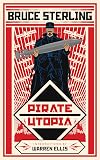
On the Adriatic coast after the Great War, a pirate utopia arises, full of poets and writers and one engineer, determined to power their way into the future in a hail of radio controlled torpedoes and huge biplanes, stealing everything in sight. A grand, romantic, fascistic vision of a technological world to come. An alternative history based on a real fledgling pirate state about politics and government increasingly unmoored from reality, driven by visionaries and raving madmen. This is show more obviously will be of no relevance to the present. show less

Bruce Sterling’s second collection is very much of its time. The stories range in publication date from 1985 to 1992 and frequently deal with topics of the time: nuclear war and arms negotiation, the decaying Soviet Union, an Islam resurgent after the Iranian Revolution, and even Somalia warlords. In his prime, no other science fiction writer was as keyed into the strangeness of the world, especially outside of America and thought about the present and near future permutations of how show more technology, politics, and popular culture mix.
These stories, sometimes written with collaborators, take us back to a mostly vanished world, and are visions made obsolete by technology and political developments. But that’s the price you pay for using a journalist eye to describe the weird now and even weirder near future. As Sterling himself has remarked, his pure fantasy works are the ones most likely to endure, not his science fiction. And some of those fantasies are here along with one story that may have no fantastic elements at all. And, since Sterling seems to love his literary theories, there’s a fair amount of literary experimentation here, mostly successful.
And there’s almost always fun. Sterling is usually a funny writer. A mentally impoverished science fiction reader might not get past the staleness of intricately imagined futures that we already know will never be, but I have no problem with them.
“Our Neural Chernobyl” (1988) is one of those things I like, a presentation of the future told not through a conventional story but through a future history, news story, or piece of art criticism. Here’s it’s a review of Dr. Hotton’s eponymous book from 2056. Hotton takes up back to the days before scientists were main stream celebrities and were white-coated sociopaths with chips on their shoulders and not much in the way of social support. We hear how one such scientist, Bugs Berenbaum, employed by an illicit narcotics manufacturer, embarked on a genetic engineering project to get the human body itself to produce various street drugs. And, while he’s at it, why not make it an infectious modificationed. But his attentions soon turn to increasing the number of dendrites in the human brain.
He succeeds. Granted, he and the other suddenly appearing geniuses of the world go poetically mad and off themselves, but his work lives on in a plague that has mentally modified various animal species. America’s ranchers now have to contend with shakedowns by coyote packs. Raccoons have made parts of the country into no-go zones, and cats . . . Well, the reviewer argues with Hotton’s contention that cats have developed a new intelligence. One gets the impression, from Hotton’s description of the current situation, that perhaps the age of the sociopathic scientist is not over.
“Storming the Cosmos” (1985), written with Rudy Rucker, is a genuinely laugh out loud story, a secret/alternate history which gives us the real reason that the Soviets, initially ahead of America in the Space Race, lost. Set in 1957, it gives us mysticism, the Tunguska Event, the theory of Kazantsev (a real Soviet sf writer and ufologist) that Tunguska was the result of a crashed spaceship, and the role of the stukach (informer) in Soviet society. Our narrator, Nikita Iosifoch Globov, is such an informer,. He became one when he failed his test to be a metallurgist and ended up being assigned to a unit of real metallurgists involved in the Soviet space program. After informing on one Vlad Zipkin, Nikita draws the ire of Vlad’s boss and would-be lover Colonel Nina Bogulyubova. After Vlad gets out of treatment for his “antisocial tendencies”, the Colonel – who outranks Nikita in the KGB pecking order – orders Nikita to keep on Vlad since the Soviet space program needs his brilliance. Soon, Nikita finds himself and Vlad on an expedition to Tunguska to get that alien spaceship engine. It’s staffed almost entirely with informers because the real scientists don’t want them interfering with their work.
Weirdness will ensue in Siberia, and Lakia, the famous cosmonaut dog, will put in an appearance.
“The Compassionate, the Digital” (1985) is not, however, fun. It is, even though only eight pages long, remarkably tedious and a complete waste of space. I suppose it’s something of a joke story with the joke being that the world’s first true artificial intellience is created in the purported backwater of the Union of Islamic Republics in 2113. The story is the press announcement of the event.
Sterling didn’t invent the term “slipstream”, defined as a “category of non-genre fantasy books”, but midwifed through an interview with Richard Dorsett. “Jim and Irene” (1991) is such a story, and I liked it a lot. Jim is a wandering figure, an ex-Vietnam vet who repaired helicopters, who likes his gadgets and lives by robbing payphones. Irene is a Russian emigre who came to America with her Jewish physicist husband who is now dead. They encounter each other, by chance, in a Los Alamos laundromat. Their clothes are stolen, and the two pursue the robbers with Irene unexpectedly taking some shots at them with a .357 Magnum revolver. Fearing the cops will show up, Jim takes Irene out of town and a strange relationship ensues. Both are loners. Both are distrustful of their native countires, best epitomized in their discussion over SDI. Both sense, in their own way, that the days of centralized control in their countries is slipping away.
Irene rather likes meeting an American “gangster” even though she constantly thinks Jim is out to sleep with her and probably has AIDS, and Jim is glad for the change of pace. There will be high strangeness on their road trip before the ending in which the two have an epiphany about human connections and their place in the world.
Sterling seems to have an interest in literary theory and “The Sword of Damocles” (1990) is an amusing and clever story. Ostensibly, it’s about a writer (suspiciously like Sterling) who wants to tell us the classic story of the Sword of Damocles. Supposedly, he hates post-modernism but goes on to give us a very postmodern story with ironic undercuttings of his stated effort to tell a straight story. There’s even a guest appearance by Tim Powers and his wife Serena. At the end, Sterling ties the whole thing up with an observation about why we all live with a Sword of Damocles over our heads.
I suppose you could call “The Gulf Wars” (1988) either an historical fantasy or a slipstream tale. Sterling plays a clever trick by opening the story with two combat engineers, Halli and Bel-Heshti, in camp in the Middle East where they’re fighting on the Iranian side in the Iran-Iraq War. Then the scene smoothly changes to another pair of men, identically named, who are pioneers in the Assyrian army of Ashurbanipal which is besieging a city of Elamites. They are not the best of soldiers given they are illegally making beer in their tent. However, it’s their big day. Ashur is pleased that they were the ones who beheaded a noted rebel leader. As a reward, they are to be given Names. But, warns the priestly Baru from Ninevah, they are in magical peril before the ceremony is completed. And then the firebrand priest launches a human wave attack on the city at noon. This seems to be Sterling’s rumination on the timelessness of religious strife in this part of the world.
The “Shores of Bohemia” (1990) anticipates some of the themes of Sterling’s later Holy Fire in that it involves a world that is, it turns out, secretly run by a high-tech society, an “oppressive gerontocracy”. The city of Paysage turns out to be something like a small reservation of the 19th century in a world of genetic engineering and massive projects. Its inhabitants are quite long-lived and maintained by nanobots. Their sort of secular cathedral, the Enantiodrome, that the city has been working on is nearing completion. But its head architect, Rodolphe, is plagued by strange building materials showing up and the stranger return of Charles, his one-time friend and the old chief architect. But Charles left for the Conventions, the post-human society that really runs the world. And the Conventions aren’t going to leave Paysage alone in living their human centered lives. Perhaps the city serves some purpose for the high-tech Conventions.
It’s an interesting story but not one of the better ones in the book.
There aren’t actually any Somalia warlords in this book, but, in “The Moral Bullet” (1991 and co-written with John Kessel), America has turned into Somalia. In Raleigh, North Carolina, the warring groups have names like the Chamber of Commerce, the Library Defense League, the Brown Berets, the Raleigh Police Department, the Christian Faith Militia, Bellevue Terrace Watch Community, and the Popular Front for the Liberation of Robeson County.
Things are like this all over the country though there are now 95 million fewer Americans. What brought this state of affairs on? In a tradition going back to at least Edmond Haracourt’s “Doctor Augérand’s Discovery”, cheap immortality brought chaos. Here it ws the invention by Dr. Havercamp of Free Radical Endocrine Enhancer – FREE. No one trusted the government not to be corrupt and favor the wealthy and connected in distributing FREE fairly. When there’s a possibility the elite will steal your future life, you have to make your own connections. Civil trust and institutions collapsed. FREE became a currency.
Now the helicopters of Swiss peacekeepers fly overhead dropping leaflets looking for Dr. Havercamp. We follow an ostensible teenager (but then, with FREE, everyone looks younger than their true age), Sniffy, as he prowls Raleigh. We never are actually told Sniffy is Havercamp, but we get clues. And, when he hears a Swiss peacekeeper say that Havercamp is going to get the “moral bullet” when they find him, Sniffy is not about to turn himself over. While Kessel and Sterling reveal what the moral bullet is, the question of its desirability and morality is somewhat unresolved at the end, an ending which has the sociopathic Sniffy acting quite in character. The story probably would have been better at a longer length, but it’s still memorable.
Sterling puts in a strong and quite memorable entry into the Cthulhu Mythos with “The Unthinkable” (1991). In Geneva, a Soviet and American arms negotiator meet, old acquaintances over several decades of talk. But, as the conversation goes on, we learn this world has moved far beyond mere nuclear weapons. The two countries have weaponized the entities of the Mythos. The American negotiator is calling it quits to spend time with his new wife and child. But can you really escape the taint of such a life? It’s Lovecraftian horror as a metaphor for nuclear weapons.
“We See Things Differently” (1989) might be termed an exercise in what diplomats call “strategic empathy”, understanding why our foes look at the world the way they do. Its narrator is a journalist from the newly formed Arab Caliphate that defeated Iran, The USSR collapsed when Afghan rebels took out Moscow with a smuggled nuke, and America is on the ropes. It has deindustrialized, and, like a colony, mostly exports raw materials now. The exception is still its pop culture with a global market. Americans resent that the world they so generously aided is now exploiting it.
The journalist has come to America to interview Tom Boston, holder of a doctorate in political science and one-time unsuccessful candidate for public office. Now he leads a populist movement through his rock band. Its logo is the 13 Stars, its songs about the Founding Fathers and American Revolution, and its concerts promote voter registration. To the journalist, America is a land of lewd women, no sense of history, and ignorance about the outside world. But, in the fiery Boston, he sees an ascetic visionary that reminds him of Khomeni, a force that could revitalize America. It’s not exactly a surprise that the journalist isn’t what he seems.
We’ve come across the “hero” of “Hollywood Kremlin” (1990) before though later in its career. It’s Leggy Starlitz who we saw hanging around Finland in “The Littlest Jackal”. Starlitz is Sterling’s global gadabout, a scammer and smuggler. This story finds him in Azerbaijan at some unspecified time during the last days of the Soviet Union. Leggy is running a smuggling operation with a Russian military pilot stationed in Afghanistan. But, when they find out the locals have purloined the gas needed for the pilot’s return, a plot ensues that will take us through Communist Party corruption, the black market, and ethnic tensions between Moslems and Christian Armenians. Leggy is given to occasional larcenous obsession with objects, and here it’s the locally modified Levi jacket of the beautiful wife of the local Party head. (She runs the local black market to provide him with plausible deniability.)
While it was originally published in The Magazine of Fantasy & Science Fiction, it may be neither. On the other hand, maybe it’s an alternate history. While the USSR did leave Afghanistan in 1988, the story gives no date. I certainly don’t know much about Azerbaijan at the time except the mentions of KGB-led anti-corruption and anti-alcohol campaigns in The World Was Going Our Way.
I do know the story was a lot of fun.
Leggy is back in “Are You for 86” (1992). Here he finds himself helping some pagan feminists to smuggle the RU-486 abortion drug throughout America. Maybe, if he’s helpful, the two lesbian phone phreak feminist in tow, will let him see the daughter he begot on one. Sterling once, in some review of his I read, said that liberals and progressives shouldn’t be smug about their supposed technological sophistication compared to their political opponents. This story takes up that idea as Leggy and the women find themselves tangling with a sophisticated group of anti-abortion advocates. Here, Leggy casts his larcenous eye on a famous car in the Utah State Capitol grounds,
And we do get a bit of fantastic content when Leggy claims he can’t be filmed. And events back that up.
I was not looking forward to reading “Dori Bangs” (1992). It involves the famous rock critic Lester Bangs. I regard music criticism as a pointless literary exercise which has to fall back, unless it’s very technical, on colorful and inaccurate metaphors and variations of “sounds like”. I’ve certainly never read any Bangs and and a person I know, who is into rock journalism, regards Bangs as a colorful writer who really didn’t have much of value to say about music.
But I ended up liking this story. It’s a flat out, self-conscious piece that doesn’t even try to suspend our disbelief in the usual way. It is “a paper dream to cover the holes they left”. Those holes are not only the death of Bangs in 1982 but the death of underground cartoonist Doris Sedia in 1986.
This story is their future fantasy life together. Like their fellow Baby Boomers, they dropped out of the counter culture, made some money, and sort of become respectable here. They may not be happy together, but they do help each other
And, lest you thought in “We See Things Differently”, Sterling was exhibiting the Baby Boomer belief that rock music can change the world, a notion that shows up in strongly in Norman Spinrad works and John Shirely’s A Song Called Youth trilogy, that ain’t so here.
Doris has a realization that
"Art can’t Change the World. Art can’t even heal your soul. All it can do is maybe ease the pain a bit or make you feel more awake."
Some would say that’s cynical. I say it’s just Sterling characteristically avoiding platitudes.
And I say Globalhead is still very much worth reading more than 30 years later. show less
These stories, sometimes written with collaborators, take us back to a mostly vanished world, and are visions made obsolete by technology and political developments. But that’s the price you pay for using a journalist eye to describe the weird now and even weirder near future. As Sterling himself has remarked, his pure fantasy works are the ones most likely to endure, not his science fiction. And some of those fantasies are here along with one story that may have no fantastic elements at all. And, since Sterling seems to love his literary theories, there’s a fair amount of literary experimentation here, mostly successful.
And there’s almost always fun. Sterling is usually a funny writer. A mentally impoverished science fiction reader might not get past the staleness of intricately imagined futures that we already know will never be, but I have no problem with them.
“Our Neural Chernobyl” (1988) is one of those things I like, a presentation of the future told not through a conventional story but through a future history, news story, or piece of art criticism. Here’s it’s a review of Dr. Hotton’s eponymous book from 2056. Hotton takes up back to the days before scientists were main stream celebrities and were white-coated sociopaths with chips on their shoulders and not much in the way of social support. We hear how one such scientist, Bugs Berenbaum, employed by an illicit narcotics manufacturer, embarked on a genetic engineering project to get the human body itself to produce various street drugs. And, while he’s at it, why not make it an infectious modificationed. But his attentions soon turn to increasing the number of dendrites in the human brain.
He succeeds. Granted, he and the other suddenly appearing geniuses of the world go poetically mad and off themselves, but his work lives on in a plague that has mentally modified various animal species. America’s ranchers now have to contend with shakedowns by coyote packs. Raccoons have made parts of the country into no-go zones, and cats . . . Well, the reviewer argues with Hotton’s contention that cats have developed a new intelligence. One gets the impression, from Hotton’s description of the current situation, that perhaps the age of the sociopathic scientist is not over.
“Storming the Cosmos” (1985), written with Rudy Rucker, is a genuinely laugh out loud story, a secret/alternate history which gives us the real reason that the Soviets, initially ahead of America in the Space Race, lost. Set in 1957, it gives us mysticism, the Tunguska Event, the theory of Kazantsev (a real Soviet sf writer and ufologist) that Tunguska was the result of a crashed spaceship, and the role of the stukach (informer) in Soviet society. Our narrator, Nikita Iosifoch Globov, is such an informer,. He became one when he failed his test to be a metallurgist and ended up being assigned to a unit of real metallurgists involved in the Soviet space program. After informing on one Vlad Zipkin, Nikita draws the ire of Vlad’s boss and would-be lover Colonel Nina Bogulyubova. After Vlad gets out of treatment for his “antisocial tendencies”, the Colonel – who outranks Nikita in the KGB pecking order – orders Nikita to keep on Vlad since the Soviet space program needs his brilliance. Soon, Nikita finds himself and Vlad on an expedition to Tunguska to get that alien spaceship engine. It’s staffed almost entirely with informers because the real scientists don’t want them interfering with their work.
Weirdness will ensue in Siberia, and Lakia, the famous cosmonaut dog, will put in an appearance.
“The Compassionate, the Digital” (1985) is not, however, fun. It is, even though only eight pages long, remarkably tedious and a complete waste of space. I suppose it’s something of a joke story with the joke being that the world’s first true artificial intellience is created in the purported backwater of the Union of Islamic Republics in 2113. The story is the press announcement of the event.
Sterling didn’t invent the term “slipstream”, defined as a “category of non-genre fantasy books”, but midwifed through an interview with Richard Dorsett. “Jim and Irene” (1991) is such a story, and I liked it a lot. Jim is a wandering figure, an ex-Vietnam vet who repaired helicopters, who likes his gadgets and lives by robbing payphones. Irene is a Russian emigre who came to America with her Jewish physicist husband who is now dead. They encounter each other, by chance, in a Los Alamos laundromat. Their clothes are stolen, and the two pursue the robbers with Irene unexpectedly taking some shots at them with a .357 Magnum revolver. Fearing the cops will show up, Jim takes Irene out of town and a strange relationship ensues. Both are loners. Both are distrustful of their native countires, best epitomized in their discussion over SDI. Both sense, in their own way, that the days of centralized control in their countries is slipping away.
Irene rather likes meeting an American “gangster” even though she constantly thinks Jim is out to sleep with her and probably has AIDS, and Jim is glad for the change of pace. There will be high strangeness on their road trip before the ending in which the two have an epiphany about human connections and their place in the world.
Sterling seems to have an interest in literary theory and “The Sword of Damocles” (1990) is an amusing and clever story. Ostensibly, it’s about a writer (suspiciously like Sterling) who wants to tell us the classic story of the Sword of Damocles. Supposedly, he hates post-modernism but goes on to give us a very postmodern story with ironic undercuttings of his stated effort to tell a straight story. There’s even a guest appearance by Tim Powers and his wife Serena. At the end, Sterling ties the whole thing up with an observation about why we all live with a Sword of Damocles over our heads.
I suppose you could call “The Gulf Wars” (1988) either an historical fantasy or a slipstream tale. Sterling plays a clever trick by opening the story with two combat engineers, Halli and Bel-Heshti, in camp in the Middle East where they’re fighting on the Iranian side in the Iran-Iraq War. Then the scene smoothly changes to another pair of men, identically named, who are pioneers in the Assyrian army of Ashurbanipal which is besieging a city of Elamites. They are not the best of soldiers given they are illegally making beer in their tent. However, it’s their big day. Ashur is pleased that they were the ones who beheaded a noted rebel leader. As a reward, they are to be given Names. But, warns the priestly Baru from Ninevah, they are in magical peril before the ceremony is completed. And then the firebrand priest launches a human wave attack on the city at noon. This seems to be Sterling’s rumination on the timelessness of religious strife in this part of the world.
The “Shores of Bohemia” (1990) anticipates some of the themes of Sterling’s later Holy Fire in that it involves a world that is, it turns out, secretly run by a high-tech society, an “oppressive gerontocracy”. The city of Paysage turns out to be something like a small reservation of the 19th century in a world of genetic engineering and massive projects. Its inhabitants are quite long-lived and maintained by nanobots. Their sort of secular cathedral, the Enantiodrome, that the city has been working on is nearing completion. But its head architect, Rodolphe, is plagued by strange building materials showing up and the stranger return of Charles, his one-time friend and the old chief architect. But Charles left for the Conventions, the post-human society that really runs the world. And the Conventions aren’t going to leave Paysage alone in living their human centered lives. Perhaps the city serves some purpose for the high-tech Conventions.
It’s an interesting story but not one of the better ones in the book.
There aren’t actually any Somalia warlords in this book, but, in “The Moral Bullet” (1991 and co-written with John Kessel), America has turned into Somalia. In Raleigh, North Carolina, the warring groups have names like the Chamber of Commerce, the Library Defense League, the Brown Berets, the Raleigh Police Department, the Christian Faith Militia, Bellevue Terrace Watch Community, and the Popular Front for the Liberation of Robeson County.
Things are like this all over the country though there are now 95 million fewer Americans. What brought this state of affairs on? In a tradition going back to at least Edmond Haracourt’s “Doctor Augérand’s Discovery”, cheap immortality brought chaos. Here it ws the invention by Dr. Havercamp of Free Radical Endocrine Enhancer – FREE. No one trusted the government not to be corrupt and favor the wealthy and connected in distributing FREE fairly. When there’s a possibility the elite will steal your future life, you have to make your own connections. Civil trust and institutions collapsed. FREE became a currency.
Now the helicopters of Swiss peacekeepers fly overhead dropping leaflets looking for Dr. Havercamp. We follow an ostensible teenager (but then, with FREE, everyone looks younger than their true age), Sniffy, as he prowls Raleigh. We never are actually told Sniffy is Havercamp, but we get clues. And, when he hears a Swiss peacekeeper say that Havercamp is going to get the “moral bullet” when they find him, Sniffy is not about to turn himself over. While Kessel and Sterling reveal what the moral bullet is, the question of its desirability and morality is somewhat unresolved at the end, an ending which has the sociopathic Sniffy acting quite in character. The story probably would have been better at a longer length, but it’s still memorable.
Sterling puts in a strong and quite memorable entry into the Cthulhu Mythos with “The Unthinkable” (1991). In Geneva, a Soviet and American arms negotiator meet, old acquaintances over several decades of talk. But, as the conversation goes on, we learn this world has moved far beyond mere nuclear weapons. The two countries have weaponized the entities of the Mythos. The American negotiator is calling it quits to spend time with his new wife and child. But can you really escape the taint of such a life? It’s Lovecraftian horror as a metaphor for nuclear weapons.
“We See Things Differently” (1989) might be termed an exercise in what diplomats call “strategic empathy”, understanding why our foes look at the world the way they do. Its narrator is a journalist from the newly formed Arab Caliphate that defeated Iran, The USSR collapsed when Afghan rebels took out Moscow with a smuggled nuke, and America is on the ropes. It has deindustrialized, and, like a colony, mostly exports raw materials now. The exception is still its pop culture with a global market. Americans resent that the world they so generously aided is now exploiting it.
The journalist has come to America to interview Tom Boston, holder of a doctorate in political science and one-time unsuccessful candidate for public office. Now he leads a populist movement through his rock band. Its logo is the 13 Stars, its songs about the Founding Fathers and American Revolution, and its concerts promote voter registration. To the journalist, America is a land of lewd women, no sense of history, and ignorance about the outside world. But, in the fiery Boston, he sees an ascetic visionary that reminds him of Khomeni, a force that could revitalize America. It’s not exactly a surprise that the journalist isn’t what he seems.
We’ve come across the “hero” of “Hollywood Kremlin” (1990) before though later in its career. It’s Leggy Starlitz who we saw hanging around Finland in “The Littlest Jackal”. Starlitz is Sterling’s global gadabout, a scammer and smuggler. This story finds him in Azerbaijan at some unspecified time during the last days of the Soviet Union. Leggy is running a smuggling operation with a Russian military pilot stationed in Afghanistan. But, when they find out the locals have purloined the gas needed for the pilot’s return, a plot ensues that will take us through Communist Party corruption, the black market, and ethnic tensions between Moslems and Christian Armenians. Leggy is given to occasional larcenous obsession with objects, and here it’s the locally modified Levi jacket of the beautiful wife of the local Party head. (She runs the local black market to provide him with plausible deniability.)
While it was originally published in The Magazine of Fantasy & Science Fiction, it may be neither. On the other hand, maybe it’s an alternate history. While the USSR did leave Afghanistan in 1988, the story gives no date. I certainly don’t know much about Azerbaijan at the time except the mentions of KGB-led anti-corruption and anti-alcohol campaigns in The World Was Going Our Way.
I do know the story was a lot of fun.
Leggy is back in “Are You for 86” (1992). Here he finds himself helping some pagan feminists to smuggle the RU-486 abortion drug throughout America. Maybe, if he’s helpful, the two lesbian phone phreak feminist in tow, will let him see the daughter he begot on one. Sterling once, in some review of his I read, said that liberals and progressives shouldn’t be smug about their supposed technological sophistication compared to their political opponents. This story takes up that idea as Leggy and the women find themselves tangling with a sophisticated group of anti-abortion advocates. Here, Leggy casts his larcenous eye on a famous car in the Utah State Capitol grounds,
And we do get a bit of fantastic content when Leggy claims he can’t be filmed. And events back that up.
I was not looking forward to reading “Dori Bangs” (1992). It involves the famous rock critic Lester Bangs. I regard music criticism as a pointless literary exercise which has to fall back, unless it’s very technical, on colorful and inaccurate metaphors and variations of “sounds like”. I’ve certainly never read any Bangs and and a person I know, who is into rock journalism, regards Bangs as a colorful writer who really didn’t have much of value to say about music.
But I ended up liking this story. It’s a flat out, self-conscious piece that doesn’t even try to suspend our disbelief in the usual way. It is “a paper dream to cover the holes they left”. Those holes are not only the death of Bangs in 1982 but the death of underground cartoonist Doris Sedia in 1986.
This story is their future fantasy life together. Like their fellow Baby Boomers, they dropped out of the counter culture, made some money, and sort of become respectable here. They may not be happy together, but they do help each other
And, lest you thought in “We See Things Differently”, Sterling was exhibiting the Baby Boomer belief that rock music can change the world, a notion that shows up in strongly in Norman Spinrad works and John Shirely’s A Song Called Youth trilogy, that ain’t so here.
Doris has a realization that
"Art can’t Change the World. Art can’t even heal your soul. All it can do is maybe ease the pain a bit or make you feel more awake."
Some would say that’s cynical. I say it’s just Sterling characteristically avoiding platitudes.
And I say Globalhead is still very much worth reading more than 30 years later. show less

Foretelling the future is hard. It's so hard that we award Grand Master status to writers of science fiction who manage to name any one thing that actually comes to pass. It's so hard that Sylvia Browne has made a vast fortune without ever getting one specific prediction right. (To be fair, she is really good at cold reading.)
I mention this because the paranormal here isn't vampires or werewolves running about buff and shirtless. Gavin and Farfalla can predict the future. For him, this means show more a lucrative career in accountancy in a venture capital firm in Seattle. For her, this means accurate personal fortune-telling of a kind that would make Cassandra squirm. He's a white boy from the US at the top of his game, she's an Italian who grew up in Brazil, and now tries to scrape together an existence as a translator.
And since a romance on its own can be tedious, we have the unlikely addition of a Cosmic Cupid sculpture to be found for a odd US academic, and the backstory of an unusual woman, Am��lie Rives Troubetzkoy, a Virginaian novelist who married first an Astor heir, and then a Russian prince.
There are Futurist conferences, philosophy, fashionable Italians, Brazilian voodoo, Swedish Methodism, steampunk novelists, time travel and state secrets. Although set now, amid the ongoing international financial turmoil, I would expect this to appeal to those who enjoy all the similar sorts of elements of [b:The Diamond Age|827|The Diamond Age|Neal Stephenson|http://d.gr-assets.com/books/1320415915s/827.jpg|2181158]. Best of all, it's a romance likely to appeal equally to men and women, tech fanciers and artists. It is amusing, quirky, earnest, and charming.
review (e)copy from publisher
Books added to the List that were mentioned in this book: [b:The Innocents Abroad|2443|The Innocents Abroad|Mark Twain|http://d.gr-assets.com/books/1320520180s/2443.jpg|6459342] [b:The Quick or the Dead?: A Study|2366521|The Quick or the Dead? A Study|Amelie Rives|http://d.gr-assets.com/books/1347644092s/2366521.jpg|2373320], [b:Archie and Amelie: Love and Madness in the Gilded Age|10729|Archie and Amelie Love and Madness in the Gilded Age|Donna M. Lucey|http://d.gr-assets.com/books/1166289757s/10729.jpg|13361] show less
I mention this because the paranormal here isn't vampires or werewolves running about buff and shirtless. Gavin and Farfalla can predict the future. For him, this means show more a lucrative career in accountancy in a venture capital firm in Seattle. For her, this means accurate personal fortune-telling of a kind that would make Cassandra squirm. He's a white boy from the US at the top of his game, she's an Italian who grew up in Brazil, and now tries to scrape together an existence as a translator.
And since a romance on its own can be tedious, we have the unlikely addition of a Cosmic Cupid sculpture to be found for a odd US academic, and the backstory of an unusual woman, Am��lie Rives Troubetzkoy, a Virginaian novelist who married first an Astor heir, and then a Russian prince.
There are Futurist conferences, philosophy, fashionable Italians, Brazilian voodoo, Swedish Methodism, steampunk novelists, time travel and state secrets. Although set now, amid the ongoing international financial turmoil, I would expect this to appeal to those who enjoy all the similar sorts of elements of [b:The Diamond Age|827|The Diamond Age|Neal Stephenson|http://d.gr-assets.com/books/1320415915s/827.jpg|2181158]. Best of all, it's a romance likely to appeal equally to men and women, tech fanciers and artists. It is amusing, quirky, earnest, and charming.
review (e)copy from publisher
Books added to the List that were mentioned in this book: [b:The Innocents Abroad|2443|The Innocents Abroad|Mark Twain|http://d.gr-assets.com/books/1320520180s/2443.jpg|6459342] [b:The Quick or the Dead?: A Study|2366521|The Quick or the Dead? A Study|Amelie Rives|http://d.gr-assets.com/books/1347644092s/2366521.jpg|2373320], [b:Archie and Amelie: Love and Madness in the Gilded Age|10729|Archie and Amelie Love and Madness in the Gilded Age|Donna M. Lucey|http://d.gr-assets.com/books/1166289757s/10729.jpg|13361] show less
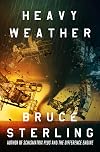
Bruce Sterling seems to be a victim of his reputation. Reviewers of Heavy Weather, his 1994 novel about near-future storm chasers using VR and other neat tech to pursue super tornadoes across a depopulated Great Plains, often ask, where’s the cyberpunk you gave us in the eighties. Yet the novel's world is carefully constructed. Sterling offers some intriguing speculations about the behavior of tornadoes and the future of money. There is also plenty of tech, but it is subordinate to the show more character-driven story he wants to tell.
Sterling doesn’t get enough credit for his nuanced characters. Alex, the asthmatic weakling who overcompensates by doubling down on any dare, reminds me of Lois Bujold’s Miles Vorkosigan. His sister Janey matures in stages throughout the story, as does her obsessed scientist lover. Other members of the Troupe of storm chasers are also given compelling backstories.
The novel may have been the inspiration for Twister, Michael Crichton’s 1996 film on a similar subject. The film is standard action-disaster fare, but it lacks the zip of Sterling's world-building and character development. show less
Sterling doesn’t get enough credit for his nuanced characters. Alex, the asthmatic weakling who overcompensates by doubling down on any dare, reminds me of Lois Bujold’s Miles Vorkosigan. His sister Janey matures in stages throughout the story, as does her obsessed scientist lover. Other members of the Troupe of storm chasers are also given compelling backstories.
The novel may have been the inspiration for Twister, Michael Crichton’s 1996 film on a similar subject. The film is standard action-disaster fare, but it lacks the zip of Sterling's world-building and character development. show less
Lists
Best Cyberpunk (4)
Unread books (1)
Read These Too (1)
Favourite Books (1)
SF Masterworks (1)
Big Data (1)
Awards


You May Also Like


Associated Authors
Statistics
- Works
- 131
- Also by
- 171
- Members
- 20,990
- Popularity
- #1,032
- Rating
- 3.7
- Reviews
- 380
- ISBNs
- 280
- Languages
- 18
- Favorited
- 74


