
Kage Baker (1952–2010)
Author of In the Garden of Iden
About the Author
Kage Baker was born in Hollywood, California on June 10, 1952. Her first novel, In the Garden of Iden, was published in 1997. She was a science fiction and fantasy writer, who was best known for The Company series. Her other works included Mendoza in Hollywood (2000), House of the Stag (2009), and show more the short story Caverns of Mystery (2009). The Empress of Mars (2003) won the Theodore Sturgeon Award. She died from uterine cancer on January 31, 2010. (Bowker Author Biography) show less
Image credit: Photo by Den'Al Damron-McElhiney
Series
Works by Kage Baker
Ancient Rockets: Treasures and Trainwrecks of the Silent Screen (2012) — Author — 66 copies, 2 reviews
The Wreck of the Gladstone 7 copies
Standing In His Light 6 copies
A Night on the Barbary Coast 6 copies
The Ruby Incomparable 6 copies
Her Father's Eyes 5 copies
Hellfire at Twilight 5 copies
Mother Aegypt [short story] 4 copies
The Catch 4 copies
Miss Yahoo Has Her Say 4 copies
Smart Alec 4 copies
To the Land Beyond the Sunset 3 copies
The Hotel at Harlan's Landing 3 copies
The Likely Lad 3 copies
Leaving His Cares Behind Him 3 copies
What the Tyger Told Her 3 copies
Monster Story 2 copies
Calamari Curls 2 copies
Caverns of Mystery 2 copies
Old Flat Top 2 copies
The Queen in Yellow 2 copies
The Ruby Incomparable 1 copy
The Faithful [novelette] 1 copy
'The Company' Stories 1 copy
The Ruined Vacation 1 copy
Attlee And The Long Walk 1 copy
Running the Snake 1 copy
Associated Works
Wizards: Magical Tales From the Masters of Modern Fantasy (2007) — Contributor — 852 copies, 25 reviews
The Thackery T. Lambshead Pocket Guide to Eccentric and Discredited Diseases (2003) — Contributor — 810 copies, 20 reviews
The Year's Best Science Fiction: Twenty-Second Annual Collection (2005) — Contributor — 581 copies, 11 reviews
The Year's Best Science Fiction: Twenty-First Annual Collection (2004) — Contributor — 577 copies, 6 reviews
The Year's Best Science Fiction: Seventeenth Annual Collection (2000) — Contributor — 559 copies, 2 reviews
The Year's Best Science Fiction: Twentieth Annual Collection (2003) — Contributor — 529 copies, 2 reviews
The Year's Best Science Fiction: Twenty-Fifth Annual Collection (2008) — Contributor — 514 copies, 3 reviews
The Dragon Book: Magical Tales from the Masters of Modern Fantasy (2009) — Contributor — 491 copies, 14 reviews
The Year's Best Science Fiction: Twenty-Fourth Annual Collection (2007) — Contributor — 458 copies, 6 reviews
Extraordinary Engines: The Definitive Steampunk Anthology (2008) — Contributor — 367 copies, 17 reviews
The Year's Best Science Fiction: Twenty-Eighth Annual Collection (2011) — Contributor — 329 copies, 3 reviews
The Very Best of the Best: 35 Years of The Year's Best Science Fiction (2019) — Contributor — 186 copies, 1 review
Asimov's Science Fiction: Vol. 24, No. 12 [December 2000] (2000) — Contributor — 12 copies, 2 reviews
Asimov's Science Fiction: Vol. 25, No. 8 [August 2001] (2001) — Author, some editions; Author — 7 copies
Tagged
Common Knowledge
- Legal name
- Baker, Kate Genevieve
- Other names
- Baker, Mary Kate Genevieve (birth)
- Birthdate
- 1952-06-10
- Date of death
- 2010-01-31
- Gender
- female
- Occupations
- science fiction writer
artist
actor
director
teacher
history re-enactor (show all 7)
fantasy writer - Organizations
- Science Fiction and Fantasy Writers of America
Living History Centre - Agent
- Linn Prentis Literary
- Relationships
- Bartholomew, Kathleen (sister)
- Cause of death
- cancer (uterine)
- Nationality
- USA
- Birthplace
- Hollywood, California, USA
- Place of death
- Pismo Beach, California, USA
- Burial location
- body donated to science
- Map Location
- California, USA
Members
Reviews
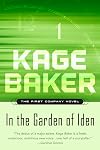
Science Fiction is my most preferred genre. I've been reading it for more than fifty years. So, I'm surprised and delighted to find an extraordinarily good Science Fiction series that's been around since the Nineties and which I completely missed. I'll be reading the entire twelve book series.
It's a series of time travel novels called 'The Company' and it's written by Kage Baker. There are quite a few time travel series out there and, different as they are, most of them have some sense that show more history is important and time travel should help to spread knowledge and solve problems. Kage Baker starts from a very different place. The purpose of time travel is to make Dr Zeus, the person who invented it, fabulously rich and extremely powerful.
Dr Zeus thinks big. His first invention was a process that bestows immortality on people by installing various pieces of technology in them when they are still children. It's a great invention but one for which there was no viable market because those who could afford it were too old for it to work and the benefits were too far in future to generate a decent return.
So Dr Zeus invests two more things: a means of travelling back to the past and The Company. The Company is an organisation that spans centuries. It exist to turn kids who won't be missed into immortals who work for Dr Zeus for centuries so that, by the time they reach the twenties-fourth century, Dr Zeus' now, The Company will have acquired huge amounts of wealth and influence and will be staffed by formidable and loyal immortals.
The first book in the series, 'In The Garden Of Iden' was published in 1997, well before Jeff Bezos and Elon Musk got into their stride and yet it perfectly captures the entitled rapacity of an organisation that knows how to use technology to secure wealth and get its own way. 'The Company' that Kage Baker has conjured up is a kind covert East India Company that is colonising the past for profit.
Kage Baker is my kind of author: very bright, a wicked wit, deeply knowledgable about history, especially Elizabethan England and she approaches politics, religion and commerce from an orthogonal perspective to the mainstream. Her view of history is nostalgia-free. She is unflinching in her understanding of just how nasty to one another we have proven ourselves to be able to be in century after century.
I found all of this stimulating but what pushed 'In The Garden Of Iden' from 'What a great idea' into 'What an extraordinary book' was Kage Baker's ability to keep the story on a human scale and focus on the people rather than the organisation or the technology.
‘In The Garden Of Iden’ tells the story of Mendoza who, at six years old, was extracted by The Company from the dungeons of the Spanish Inquisition, was operated on to be made into an immortal cyborg and trained to be a botanist who will gather specimens of soon-to-be-extinct plants that The Company can 'rediscover' in the future and make money from. Most of the book is about Mendoza's first assignment and her first love.
It takes places in 1554 when the nineteen-year-old Mendoza is sent from Spain to England as part in the influx of Spaniards following Philip II of Spain when he marries Queen Mary of England. Mendoza's mission is to collect rare samples from an English country estate called 'The Garden Of Iden'.
Mendoza is not a normal nineteen-year-old. She has been given a twenty-fourth century education. She knows how the Queen Mary's reign will turn out. She has extraordinary physical capabilities, she can speak several languages, she can communicate subvocally with her teammates and she has access to an equivalent of Google (although Google was still just a program called BackRub being played around with in Stanford when this book was published).
Kage Baker's descriptions brought mid-sixteenth century England alive and let us see them through the fresh eyes of a nineteen-year-old woman experiencing her first freedom and her first love and coming to understand the consequences of being immortal.
The Mendoza telling the story is much older (we don't learn how old) and is looking back on her time in the Garden in a 'was I really that young?' way which gives a little emotional distance but which also marks out how important to Mendoza her time in the Garden was.
I liked Mendoza for her wit and for her courage. Here's Mendoza's reaction to encountering snow for the first time in real life.
'Despite the expectations fostered by literature and art, I) snow does not fall in beautiful crystal kaleidoscopic flakes, and 2) it does not fall silently. It sounds like rain, only stealthy.'
And here's one of her 'how young was I then?' reflections on a remark made by one of her teammates who is talking about the release of all the Bogart movies onto their entertainment network, (Yep, The Company has Netflix as well as Google)
But I was young then and had yet to appreciate the wisdom of Bogart, particularly as regards the problems of three little people not amounting to a hill of beans in this or any other crazy world.
Although 'In The Garden Of Iden' contains a love story, it isn't a Love Story. This is a world where terrible things happen not just in the dungeons of the Spanish Inquisition but in the squares of English cities, where dissenters are once again being burned alive. There are no guaranteed happy endings here. Kage Baker takes a brutally honest view of humanity and the cruelties it inflicts. At one point, Mendoza's team leader is warning her against expecting humans to change and make a better world. He says:
'Don’t you ever make the mistake of thinking that mortals want to live in a golden age. They hate thinking.'
So, I'm hooked. I want more both of Mendoza and of Kage Baker. show less
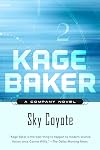
I ought to be writing a positive review of 'Sky Coyote'. It's original, surprising and clever. The ideas are huge and complex. There's a vein of quiet humour through the whole thing and, underneath that a growing sense of alienation from The Company. The characters and the overall story arc move forward and we get a richly imagined historical setting.
Sounds like great Science Fiction doesn't it? And, in its way, it is great Science Fiction. It just isn't great Science Fiction that I could show more enjoy.
I struggled to become engaged with the story or the people in it. I think that was mostly because Facilitator Jackson tells the story in a sort of tongue-in-cheek folk myth mode. I can see that this is partly because it matches the fake Sky Coyote persona that he has taken on and partly because it echoes his own growing alienation from his work and with the people driving The Company. Whatever the reason, the effect it had on me was to keep me at an emotional distance from the story. I stayed interested in the growing doubts about The Company but in a 'hurry up and get on with it' kind of way. I found some of the 'this is how I tricked an entire tribe into believing I was their God and convinced them to walk away from everything they knew and become Company assets' a little tedious. It was clever but bloodless.
At the end of the book, I found myself admiring Kage Baker's vision and imagination but not feeling a strong urge to continue with the series, especially as the next book is set in Hollywood and so is almost bound to be another exercise in gaslighting. show less
Sounds like great Science Fiction doesn't it? And, in its way, it is great Science Fiction. It just isn't great Science Fiction that I could show more enjoy.
I struggled to become engaged with the story or the people in it. I think that was mostly because Facilitator Jackson tells the story in a sort of tongue-in-cheek folk myth mode. I can see that this is partly because it matches the fake Sky Coyote persona that he has taken on and partly because it echoes his own growing alienation from his work and with the people driving The Company. Whatever the reason, the effect it had on me was to keep me at an emotional distance from the story. I stayed interested in the growing doubts about The Company but in a 'hurry up and get on with it' kind of way. I found some of the 'this is how I tricked an entire tribe into believing I was their God and convinced them to walk away from everything they knew and become Company assets' a little tedious. It was clever but bloodless.
At the end of the book, I found myself admiring Kage Baker's vision and imagination but not feeling a strong urge to continue with the series, especially as the next book is set in Hollywood and so is almost bound to be another exercise in gaslighting. show less
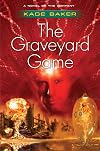
Joseph and Lewis search for missing immortals and ponder the mystery of the returning mortal. Mendoza has vanished after an incident in Hollywood and Joseph's own father has been on the run for centuries. Why they have vanished and where they've vanished to and what it says about the all-encompassing Company and the coming deadline when the Silence descend on the future are only some of the questions troubling our heroes and mostly they just end up with a lot more questions. This is the show more first Company novel that breaks into the future, though there are plenty of incidents in the past, particularly the massacre of the Ninth Roman Legion, and the investigation takes place over hundreds of years, across societal and cultural upheaval and technological breakthrough and the odd pandemic that may not have been entirely natural. We've already glimpsed the future though, and seen hints that it's a strange, almost sad place where the lively, curious, hungry immortals could never be at home. The problem is, the future seems to know that, too.
Baker's style and story are eminently readable, funny and thoughtful and occasionally horrific. It's funny to see the powerful, knowing immortals who have operated in history's shadow become lost and uncertain and begin looking for answers that affect them directly. They are about to step out of the shadow and into history itself, and they well know how fraught and bloody and messy that is. Excellent book in an excellent series. show less
Baker's style and story are eminently readable, funny and thoughtful and occasionally horrific. It's funny to see the powerful, knowing immortals who have operated in history's shadow become lost and uncertain and begin looking for answers that affect them directly. They are about to step out of the shadow and into history itself, and they well know how fraught and bloody and messy that is. Excellent book in an excellent series. show less
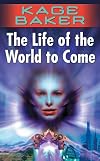
Mendoza, imprisoned alone billions of years in the past, is suddenly and unexpectedly visited by someone who looks a lot like not one but two other men she loved and lost under various violent and traumatic circumstances and despite knowing that history has every chance of repeating, she falls for him all over again, and even advises him on various ways of carrying on his time jaunt without dying. But how does this mysterious third iteration of something even a immortal time-travelling show more preservationist cyborg has a hard time crediting come to exist?
Way up in the future, close to the fabled blackout point from whence no report comes, four history buffs in a highly constrained world who are part of the Dr Zeus company invent a new type of enforcer. Alec Checkerfield is one of them, and this is his life. Staggeringly priveleged but deeply dysfunctional, he hides his genius and sails the world with an artificial companion he, at first inadvertantly, turned into the most powerful AI in the world. Searching for a purpose and a way to do good, Alec gradually homes in on the truth of his origins, following the path that will eventually lead to Mendoza, and then on further still to utter catastrophe.
I love these Company books. Witty and clever, they are also dark and exciting. I was also very pleased to come across a Dorothy Dunnett reference. show less
Way up in the future, close to the fabled blackout point from whence no report comes, four history buffs in a highly constrained world who are part of the Dr Zeus company invent a new type of enforcer. Alec Checkerfield is one of them, and this is his life. Staggeringly priveleged but deeply dysfunctional, he hides his genius and sails the world with an artificial companion he, at first inadvertantly, turned into the most powerful AI in the world. Searching for a purpose and a way to do good, Alec gradually homes in on the truth of his origins, following the path that will eventually lead to Mendoza, and then on further still to utter catastrophe.
I love these Company books. Witty and clever, they are also dark and exciting. I was also very pleased to come across a Dorothy Dunnett reference. show less
Lists
Awards


You May Also Like


Associated Authors
Statistics
- Works
- 105
- Also by
- 68
- Members
- 11,926
- Popularity
- #1,965
- Rating
- 3.8
- Reviews
- 446
- ISBNs
- 125
- Languages
- 4
- Favorited
- 73