
Jo Walton
Author of Among Others
About the Author
Image credit: Jo Walton trying to cheer up a stone lion in Florence.
Series
Works by Jo Walton
An Informal History of the Hugos: A Personal Look Back at the Hugo Awards, 1953-2000 (2018) 168 copies, 10 reviews
Trace Elements: Conversations on the Project of Science Fiction and Fantasy (2026) 52 copies, 1 review
Three Twilight Tales 4 copies
Relentlessly Mundane 3 copies
Unreliable Witness 3 copies
What A Piece Of Work 3 copies
Parable Lost 3 copies
Fra gli altri 2 copies
Remember The Allosaur 2 copies
Three Shouts on a Hill {short story} 2 copies
At The Bottom Of The Garden 2 copies
Tradition 2 copies
On the Wall 2 copies
Cendrillon at Sunrise 1 copy
Those Who Favor Fire 1 copy
pierre de lune 1 copy
Muses and Lurkers 1 copy
Out of It {short story} 1 copy
Associated Works
The Year's Best Science Fiction: Twenty-Seventh Annual Collection (2010) — Contributor — 321 copies, 6 reviews
Firebirds Soaring: An Anthology of Original Speculative Fiction (2009) — Contributor — 232 copies, 9 reviews
The Best Science Fiction and Fantasy of the Year, Volume 4 (2010) — Contributor — 141 copies, 2 reviews
Glorifying Terrorism, Manufacturing Contempt: An Anthology (2006) — Contributor — 69 copies, 3 reviews
Lone Star Stories 13 — Contributor — 4 copies
Climbing Lightly Through Forests: A Poetry Anthology Honoring Ursula K. Le Guin (2021) — Contributor — 4 copies
TFF-X: Ten years of The Future Fire: A speculative fiction anthology (2015) — Contributor — 3 copies
BSFA Awards 2020: Featuring All the Nominated Short Stories and Non-Fiction for the 2020 BSFA Awards (2021) — Contributor — 2 copies, 1 review
Tagged
Common Knowledge
- Birthdate
- 1964-12-01
- Gender
- female
- Education
- Park School, Aberdare
Aberdare Girls' Grammar School
Howell's School, Llandaff
Oswestry School, Shropshire
Lancaster University - Occupations
- fantasy writer
poet
science fiction writer - Awards and honors
- Canadian Science Fiction and Fantasy Association Hall of Fame (2024)
- Nationality
- UK
Canada - Birthplace
- Aberdare, Glamorgan, Wales, UK
- Places of residence
- Swansea, Wales, UK
Lancaster, Lancashire, England, UK
London, Middlesex, England, UK
Montréal, Québec, Canada
Aberdare, Glamorgan, Wales, UK
Cardiff, Wales, UK - Associated Place (for map)
- UK
Members
Discussions
Jo Walton's Among Others in Science Fiction Fans (August 2012)
Chat about... Among Others by Jo Walton in The SF&F Book Chat (June 2012)
"Farthing" Group Discussion in Group Reads - Sci-Fi (February 2009)
Reviews
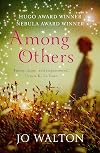
The first few chapters of this novel triggered an astonishing cascade of thoughts, memories and sensations. Growing up in the seventies/eighties, reading Tolkien, Lewis, Garner, and any and all science fiction and fantasy I could get my hands on, the chord struck was, presumably, the intended one. My reading would not have been anywhere near the breadth or vigour of Mori's, nor would my responses have been as astute or thoughtful, but the effect on my imagination of reading The Lord Of The show more Rings was like hooking up a Christmas tree to a nuclear power plant. And a few years ago that might have been enough to make me fall in love with this book, just to see it being recreated, reimagined like this. I cherish my memories of being a bookish boy who half preferred to live in fantasy or way out in the galaxy somewhere than the real world, but I'm also perfectly aware of the drawbacks to such a life, the seclusion, the ant-social avoidance of other people and the tendency towards solipsism. There was also the seductive lure of language and wish-fulfillment, as it seemed possible to achieve things just by describing them in a few pages or chapter. Learn magic or warrior skills in as long as it takes to describe it! Much easier than actually doing the hard physical graft.
So it's worth remembering that I didn't just live my life through books. I was extremely fond of climbing mountains, for one thing, and I climbed most of the mountains in Ireland at one time or another, which meant that I climbed them in the worst weather imaginable and had the skills, experience and strength to love every minute. I also hiked through Wales, twice, which is relevant.
What I mean to say is that I had the suspicion that I was being pandered to, being told that I was special and misunderstood, but that I wasn't alone. Well I wasn't really, they don't let you climb mountains alone at that age. Fortunately, Jo Walton seems to get this, too, but that initial rush was the most vivid response to a book I've had in a long time. Which is fine, but is it any good?
It really is better than it has a right to be. A confection of whimsical fantasy, realism and nostalgia, the three worlds co-exist separately, much as the fairies do, so it's like an odd triangle balancing on one point at any given time.
Mori Markova has saved the world from her insane mother's magic, resulting in a dreadful sacrifice, and this is what happens in the aftermath. Sent away from her childhood home and extended family in the valleys and mountains of Wales to a boarding school in England, bringing with her a voracious appetite for reading. Lonely and isolated, she tries to find her way back to a life, but can't quite escape her mother's dark influence and her own propensity for magic.
Thus the three sides of her life: her books - a barrage of names and titles most of which I'm not too proud to say I am familiar with (but if you're not, there's a particularly lovely section where Mori describes her family and its history, another barrage of names and details, and like the books you really don't need to keep close track of everyone and everything to follow along); her new life and all its complexities and difficulties; and the fairies - which she sees everywhere - and the magic, and somehow it all works. Beautifully written, perceptive, quirky and evocative, Walton keeps them all balanced and poised with perfection.
This has won the Nebula and the Hugo, and it's easy to see why this has won the hearts of pros and fans alike, but it does more than just pander, which is not to say that it isn't a kind of wish fulfillment. The life, the books, the magic. Mori gets to have all three. But she earns it and she deserves it, and it's not a happy ending, but a happy beginning. After that, anything could happen. It's called growing up.
Just to note the coincidence: the last book I read and reviewed here was The Magus, which is one of the books Mori reads and talks about, which brought me up short a bit. I mean, you can read hundreds and hundreds of books, and none of them mention The Magus, but then you go and read The Magus, and in the very next book you read, the protagonist reads and talks about The Magus. Is that not peculiar? I found it peculiar. VERY peculiar. show less
So it's worth remembering that I didn't just live my life through books. I was extremely fond of climbing mountains, for one thing, and I climbed most of the mountains in Ireland at one time or another, which meant that I climbed them in the worst weather imaginable and had the skills, experience and strength to love every minute. I also hiked through Wales, twice, which is relevant.
What I mean to say is that I had the suspicion that I was being pandered to, being told that I was special and misunderstood, but that I wasn't alone. Well I wasn't really, they don't let you climb mountains alone at that age. Fortunately, Jo Walton seems to get this, too, but that initial rush was the most vivid response to a book I've had in a long time. Which is fine, but is it any good?
It really is better than it has a right to be. A confection of whimsical fantasy, realism and nostalgia, the three worlds co-exist separately, much as the fairies do, so it's like an odd triangle balancing on one point at any given time.
Mori Markova has saved the world from her insane mother's magic, resulting in a dreadful sacrifice, and this is what happens in the aftermath. Sent away from her childhood home and extended family in the valleys and mountains of Wales to a boarding school in England, bringing with her a voracious appetite for reading. Lonely and isolated, she tries to find her way back to a life, but can't quite escape her mother's dark influence and her own propensity for magic.
Thus the three sides of her life: her books - a barrage of names and titles most of which I'm not too proud to say I am familiar with (but if you're not, there's a particularly lovely section where Mori describes her family and its history, another barrage of names and details, and like the books you really don't need to keep close track of everyone and everything to follow along); her new life and all its complexities and difficulties; and the fairies - which she sees everywhere - and the magic, and somehow it all works. Beautifully written, perceptive, quirky and evocative, Walton keeps them all balanced and poised with perfection.
This has won the Nebula and the Hugo, and it's easy to see why this has won the hearts of pros and fans alike, but it does more than just pander, which is not to say that it isn't a kind of wish fulfillment. The life, the books, the magic. Mori gets to have all three. But she earns it and she deserves it, and it's not a happy ending, but a happy beginning. After that, anything could happen. It's called growing up.
Just to note the coincidence: the last book I read and reviewed here was The Magus, which is one of the books Mori reads and talks about, which brought me up short a bit. I mean, you can read hundreds and hundreds of books, and none of them mention The Magus, but then you go and read The Magus, and in the very next book you read, the protagonist reads and talks about The Magus. Is that not peculiar? I found it peculiar. VERY peculiar. show less

For all your fascism-escapism-by-reading-about-fascism needs.
I read once that the genre-defining 'purpose' of a mystery novel is to show the world upended through murder so that the detective can put it right by solving the case and bringing the murderer to justice. Does it then quite count as a mystery if the case is solved but there is no justice, or is mystery as a genre a bit more flexible than romance where you absolutely must have your happily ever after?
Lucy is delightful. Carmichael show more is a perfectly fine narrator but suffers in comparison. This may be the novel where I realised that *all* mothers in Jo Walton novels are toxic people, like uncles in Diana Wynne Jones books. show less
I read once that the genre-defining 'purpose' of a mystery novel is to show the world upended through murder so that the detective can put it right by solving the case and bringing the murderer to justice. Does it then quite count as a mystery if the case is solved but there is no justice, or is mystery as a genre a bit more flexible than romance where you absolutely must have your happily ever after?
Lucy is delightful. Carmichael show more is a perfectly fine narrator but suffers in comparison. This may be the novel where I realised that *all* mothers in Jo Walton novels are toxic people, like uncles in Diana Wynne Jones books. show less

There was an epic contest between good and evil. Twins Mor and Mori, with the help of the faeries, faced down their mother, the Evil Queen, as she made a bid for world domination. The consequences were tragic . . . but all of this is actually just back-story for the book Among Others by Jo Walton.
Mori ran away from home after her sister died. She ends up in the care of her father (a man she doesn't even remember) and his three controlling sisters, who send her to boarding school. At school, show more she is an outsider -- because she is Welsh, because she is crippled, because her mother's family is not wealthy -- and she longs for acceptance, not from her schoolmates, but from a group of like-minded individuals with whom she can discuss books and the other things that she finds meaningful in life. She longs for this so much that she uses a little bit of magic -- and though the results are all she could wish, she finds herself conflicted. Is she really any better than her mother, using magic for her own ends?
Written in diary format, this is first and foremost a paean to books -- the science fiction and fantasy stories that Mori reads incessantly, the books that keep her company in her loneliest times, that entertain and console and educate her, that make her think and question, that make her embrace life. Readers unfamiliar with classic sci-fi may not understand a lot of the references, but the heart of the story is more about loving books than about knowing science fiction.
And then there are the faeries -- the magical denizens of forests and ruins. The main plot of the story, interwoven into the tale of Mori's life at boarding school, her personal reflections on growing up, and her comments on her voracious reading, is of Mori and magic, Mori and the faeries, and the things that Mori must do if she is to work only on the side of goodness. Despite the fact that Mori believes implicitly in the faeries, the existence and prevalence of magic in Mori's world is ultimately left up to the reader. Is Mori's mother a witch, or just insane? Do Mori's aunts keep her father under their thumb with a little genteel magic, or has he just given up? Does Mori bring the book club into being with her spell, or was it there all along?
Personal anecdote time: when I was a few years younger than Mori is in the book, I attended a particularly heinous private school, and I survived by reading (in the halls, in class, on the bus, etc.) -- so much so that, in my yearbook, another student wrote, "I'll miss seeing you read books." I think any bookish outsider will immediately identify with Mori on that level, even if, as with me, sci-fi is only a peripheral interest. I might have loved this book more if I had read everything Mori does -- but even without sharing her tastes, I was completely absorbed in her story, and I highly recommend this book. show less
Mori ran away from home after her sister died. She ends up in the care of her father (a man she doesn't even remember) and his three controlling sisters, who send her to boarding school. At school, show more she is an outsider -- because she is Welsh, because she is crippled, because her mother's family is not wealthy -- and she longs for acceptance, not from her schoolmates, but from a group of like-minded individuals with whom she can discuss books and the other things that she finds meaningful in life. She longs for this so much that she uses a little bit of magic -- and though the results are all she could wish, she finds herself conflicted. Is she really any better than her mother, using magic for her own ends?
Written in diary format, this is first and foremost a paean to books -- the science fiction and fantasy stories that Mori reads incessantly, the books that keep her company in her loneliest times, that entertain and console and educate her, that make her think and question, that make her embrace life. Readers unfamiliar with classic sci-fi may not understand a lot of the references, but the heart of the story is more about loving books than about knowing science fiction.
And then there are the faeries -- the magical denizens of forests and ruins. The main plot of the story, interwoven into the tale of Mori's life at boarding school, her personal reflections on growing up, and her comments on her voracious reading, is of Mori and magic, Mori and the faeries, and the things that Mori must do if she is to work only on the side of goodness. Despite the fact that Mori believes implicitly in the faeries, the existence and prevalence of magic in Mori's world is ultimately left up to the reader. Is Mori's mother a witch, or just insane? Do Mori's aunts keep her father under their thumb with a little genteel magic, or has he just given up? Does Mori bring the book club into being with her spell, or was it there all along?
Personal anecdote time: when I was a few years younger than Mori is in the book, I attended a particularly heinous private school, and I survived by reading (in the halls, in class, on the bus, etc.) -- so much so that, in my yearbook, another student wrote, "I'll miss seeing you read books." I think any bookish outsider will immediately identify with Mori on that level, even if, as with me, sci-fi is only a peripheral interest. I might have loved this book more if I had read everything Mori does -- but even without sharing her tastes, I was completely absorbed in her story, and I highly recommend this book. show less
Let me just start by saying that I really, really hate it when people compare things to Jane Austen novels. I think we always do this because 1)she's the only nineteenth century manners novelist we can think of 2)there are very few women considered "classic" novelists.
That said, I was reminded, while reading this book (only the tiniest, tiniest bit) of Miss Austen, in an allusive sense. Of course, Austen would have written a much longer novel than this slim volume, and would have tied off show more far more of those pesky loose ends, and, and- so many things. Mostly I am referring to the fact that this is a novel of manners and of society and of the careful structure of those things, and of relationships; it has this subtle humor and wit to it which I definitely missed in Austen's work when I was in high school slogging through P&P.
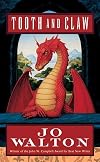
Oh yes, but let's return to the fact that this is a book about DRAGONS. Did I mention that? These dragons wear hats and talk of marriage prospects, but they also are undeniably dragons down to their attitudes about *ahem* what is appropriate to eat and how to eat it. To be delicate. And without inventing a sparkly vampire, Walton manages to come up with a whole new mythology and a class system which somehow absolutely makes sense to the reader.
Jo Walton is a new author to me. I read Among Others, and I enjoyed it enough to pick up this one from the library. What I did not expect is how much I would love this book. Now I'm reading another one of hers, Farthing, an alternate historical, and what I can tell you is that Jo Walton is a rare treat: an author who creates a wholly original story every time she sits down to write.
I wish that this book was longer, or that there were more volumes. There is not nearly enough time to get into everything and everyone before you are closing the book with a sigh of regret. Nonetheless, I really think that you should read this if you are interested in reading imaginative works that aren't also brain sludge (sorry, Urban Fantasy- I love you but you're often brainless). show less
That said, I was reminded, while reading this book (only the tiniest, tiniest bit) of Miss Austen, in an allusive sense. Of course, Austen would have written a much longer novel than this slim volume, and would have tied off show more far more of those pesky loose ends, and, and- so many things. Mostly I am referring to the fact that this is a novel of manners and of society and of the careful structure of those things, and of relationships; it has this subtle humor and wit to it which I definitely missed in Austen's work when I was in high school slogging through P&P.
Oh yes, but let's return to the fact that this is a book about DRAGONS. Did I mention that? These dragons wear hats and talk of marriage prospects, but they also are undeniably dragons down to their attitudes about *ahem* what is appropriate to eat and how to eat it. To be delicate. And without inventing a sparkly vampire, Walton manages to come up with a whole new mythology and a class system which somehow absolutely makes sense to the reader.
Jo Walton is a new author to me. I read Among Others, and I enjoyed it enough to pick up this one from the library. What I did not expect is how much I would love this book. Now I'm reading another one of hers, Farthing, an alternate historical, and what I can tell you is that Jo Walton is a rare treat: an author who creates a wholly original story every time she sits down to write.
I wish that this book was longer, or that there were more volumes. There is not nearly enough time to get into everything and everyone before you are closing the book with a sigh of regret. Nonetheless, I really think that you should read this if you are interested in reading imaginative works that aren't also brain sludge (sorry, Urban Fantasy- I love you but you're often brainless). show less
Lists
Books with Twins (1)
Geek Books (1)
Next in Series (1)
Parallel Novels (1)
Nebula Award (1)
Gaslamp Fantasy (1)
Faerie Mythology (1)
Conspiracies (1)
Generation Ship (1)
Five star books (2)
Overdue Podcast (2)
Female Author (3)
To read (4)
Shelf 101 (1)
Magic Realism (1)
io9 Book Club (1)
British Mystery (1)
Awards


You May Also Like


Associated Authors
Statistics
- Works
- 61
- Also by
- 35
- Members
- 14,707
- Popularity
- #1,563
- Rating
- 3.9
- Reviews
- 954
- ISBNs
- 198
- Languages
- 9
- Favorited
- 55

