
Mary Robinette Kowal
Author of The Calculating Stars
About the Author
Series
Works by Mary Robinette Kowal
Life Beyond Us: An Original Anthology of SF Stories and Science Essays (2023) — Contributor — 36 copies, 1 review
The Consciousness Problem 4 copies
Chrysalis 3 copies
Asimov's Science Fiction: Vol. 48, No. 11 & 12 [November/December 2024] — Contributor — 3 copies
Body Language 2 copies
Jaiden's Weaver {short story} 2 copies
Fiction Sampler 2 copies
Marginalia 2 copies
The Bride Replete {short story} 2 copies
Horizontal Rain 2 copies
The Spare Man Sneak Peek 1 copy
Evil Monkey Robot 1 copy
The Lady Astronaut Series 1 copy
Salt of the Earth 1 copy
Deep Space Has The Beat 1 copy
Midnight Hour {short story} 1 copy
American Changeling 1 copy
Shimmer Magazine 35 1 copy
The Wind Comes 1 copy
Like Native Things 1 copy
Beauty Will Come 1 copy
Artisanal Trucking LLC 1 copy
Rampion 1 copy
At the Edge of Dying 1 copy
Beyond The Garden Close 1 copy
Prayer at Dark River 1 copy
The Dragon Question 1 copy
Associated Works
Redshirts: A Novel with Three Codas (2012) — Introduction, some editions — 5,813 copies, 474 reviews
The Mad Scientist's Guide to World Domination: Original Short Fiction for the Modern Evil Genius (2013) — Contributor — 433 copies, 22 reviews
The Year's Best Science Fiction: Twenty-Sixth Annual Collection (2009) — Contributor — 424 copies, 2 reviews
Chicks Dig Time Lords: A Celebration of Doctor Who by the Women Who Love It (2010) — Contributor — 271 copies, 10 reviews
Lightspeed Magazine, Issue 49 • June 2014 (Women Destroy Science Fiction! special issue) (2014) — Contributor — 174 copies, 11 reviews
Worlds Seen in Passing: Ten Years of Tor.com Short Fiction (2018) — Contributor — 161 copies, 1 review
Some of the Best from Tor.com: 2019 Edition: A Tor.com Original (2020) — Contributor — 157 copies, 3 reviews
Ender's World: Fresh Perspectives on the SF Classic Ender's Game (2013) — Contributor — 149 copies, 3 reviews
Willful Impropriety: 13 Tales of Society, Scandal, and Romance (2012) — Contributor — 87 copies, 4 reviews
HELP FUND MY ROBOT ARMY!!! and Other Improbable Crowdfunding Projects (2014) — Contributor — 82 copies, 4 reviews
Clockwork Phoenix 2: More Tales of Beauty and Strangeness (2009) — Contributor — 70 copies, 1 review
The Long List Anthology Volume 3: More Stories from the Hugo Award Nomination List (2017) — Contributor — 59 copies
The Long List Anthology Volume 4: More Stories from the Hugo Award Nomination List (2018) — Contributor — 59 copies
The Best Science Fiction and Fantasy of the Year, Volume 12 (2018) — Contributor — 47 copies, 2 reviews
Companion Piece: Women Celebrate the Humans, Aliens and Tin Dogs of Doctor Who (2015) — Contributor — 34 copies, 2 reviews
The Long List Anthology Volume 6: More Stories from the Hugo Award Nomination List (2020) — Contributor — 30 copies, 2 reviews
The Magazine of Fantasy and Science Fiction July/August 2018, Vol. 135, Nos. 1 & 2 (2018) — Contributor — 22 copies, 1 review
The Long List Anthology Volume 8: More Stories from the Hugo Award Nomination List (2022) — Contributor — 15 copies, 1 review
Asimov's Science Fiction: Vol. 33, No. 10 & 11 [October/November 2009] (2009) — Contributor — 13 copies, 2 reviews
Asimov's Science Fiction: Vol. 42, No. 3 & 4 [March/April 2018] (2018) — Contributor — 12 copies, 1 review
The PaulandStormonomicon — Contributor — 2 copies
Tagged
Common Knowledge
- Legal name
- Kowal, Mary Robinette
- Other names
- Harrison, Mary
- Birthdate
- 1969-02-08
- Gender
- female
- Education
- East Carolina State University (Art Education)
- Occupations
- puppeteer
author
voice actor - Organizations
- Science Fiction and Fantasy Writers of America (SFWA)
Puppeteers of America - Awards and honors
- John W. Campbell Award (2008)
- Agent
- Seth Fishman (Gernert Co.)
- Short biography
- Mary Robinette Kowal is the 2008 recipient of the Campbell Award for Best New Writer, and the author of Shades of Milk and Honey, published by Tor Books in 2010. Her short fiction appears in Strange Horizons, Cosmos and Asimov's. Mary, a professional puppeteer and voice actor, lives in Portland, OR.
- Nationality
- USA
- Birthplace
- Raleigh, North Carolina, USA
- Places of residence
- Portland, Oregon, USA
Chicago, Illinois, USA
Nashville, Tennessee, USA - Associated Place (for map)
- USA
Members
Reviews
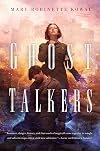
This was a wonderful historical fantasy set during World War I. Ginger Stuyvesant is an American heiress who is engaged to Captain Ben Harford, an English intelligence officer. Ginger is also a medium and one of the women who take reports from soldiers who die in battle and then watch them go into the light. Their skills and their location is a secret from the Germans since the intelligence they gather helps in the war effort.
She and Ben are harassed by a drunken soldier one evening when show more they are out together and Ben fights him off. Imagine Ginger's surprise when the same soldier's ghost comes to her the next day to tell her that he was murdered after overhearing threats to the Spirit Corps. When Ginger brings this news to her commanding officer, he is quick to dismiss her information. However, Ben has also been picking up rumors of a traitor in the ranks. When he is murdered, he comes to give his final report but refuses to go on to the light until he finds the one who killed him and the traitor who endangers Ginger and the rest of the Spirit Corps.
She and Ben are in a time crunch. The longer he stays, the worse his memory gets as his personality fragments. And Ginger is torn between her loss and broken heart, and the best good for Ben. They need to retrace his steps and track down the clues that he found to the traitor when he doesn't remember any of it.
I thought the setting and time period with its endemic chauvinism and racism was well done. One of Ginger's colleagues is West Indian. She's the one who developed the technique that has the dead coming to them to report. However, her skin color makes it easy for the commanding officer to ignore her contributions. Another key character is an Indian truck driver who hides the fact that he is also a medium.
The romance between Ben and Ginger was wonderfully realized. I was heartbroken knowing that the relationship had to end. This was a great story filled with memorable characters. show less
She and Ben are harassed by a drunken soldier one evening when show more they are out together and Ben fights him off. Imagine Ginger's surprise when the same soldier's ghost comes to her the next day to tell her that he was murdered after overhearing threats to the Spirit Corps. When Ginger brings this news to her commanding officer, he is quick to dismiss her information. However, Ben has also been picking up rumors of a traitor in the ranks. When he is murdered, he comes to give his final report but refuses to go on to the light until he finds the one who killed him and the traitor who endangers Ginger and the rest of the Spirit Corps.
She and Ben are in a time crunch. The longer he stays, the worse his memory gets as his personality fragments. And Ginger is torn between her loss and broken heart, and the best good for Ben. They need to retrace his steps and track down the clues that he found to the traitor when he doesn't remember any of it.
I thought the setting and time period with its endemic chauvinism and racism was well done. One of Ginger's colleagues is West Indian. She's the one who developed the technique that has the dead coming to them to report. However, her skin color makes it easy for the commanding officer to ignore her contributions. Another key character is an Indian truck driver who hides the fact that he is also a medium.
The romance between Ben and Ginger was wonderfully realized. I was heartbroken knowing that the relationship had to end. This was a great story filled with memorable characters. show less
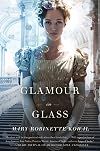
*sighs* I'm loving these books... The style is very Jane Austen, but with magic. I like how the author keeps quite faithful to the style, even when she digresses from the typical Jane Austen subjects. And how she sticks to those subjects, even when magic or war are discussed. Jane's outlook remains firmly Jane-Austen like, even though she does change her mind about things due to her new profession and circumstances. For instance, Jane remains very conscious of propriety, even if she is show more sometimes annoyed by people who dismiss her because she is a woman, or when she observes different social rules in Belgium.
What I almost always dislike in books is when being pregnant diminishes a woman's capability of performing magic. Although that is also the case in Glamour in glass, I must admit that in this case, it makes sense. In other books it often seems just a ploy to introduce weakness for a woman, particularly if that woman is strong and powerful (in some cases, even a period results in weakness, for instance in the Daughter of the blood books by Anne Bishop.) Here though, it seems inevitable that performing glamour is a bad idea if you are pregnant, since already in the first book it was made quite clear that it can be dangerous to your health if overdone. Both Vincent and Jane are overcome by excessive glamour use before the author every thought of having anyone become pregnant.
Although I didn't really like the pregnancy, I love both Jane and Vincent, and even lack of glamour didn't stop Jane from contributing to science and to the war efforts. The glitches in their marriage that Jane and Vincent experience are natural to their characters and situation, and I like that even though it results in momentary unhappiness, their arguments are honest and performed with mutual respect, without unnecesary misunderstandings. And I definitely like how Jane grows character-wise, losing her pain over being plain and becoming more secure in her relationship with Vincent.
I've already started part 3 in this series, and I can totally see me reading all of them. If they keep up this level, that won't be any problem! show less
What I almost always dislike in books is when being pregnant diminishes a woman's capability of performing magic. Although that is also the case in Glamour in glass, I must admit that in this case, it makes sense. In other books it often seems just a ploy to introduce weakness for a woman, particularly if that woman is strong and powerful (in some cases, even a period results in weakness, for instance in the Daughter of the blood books by Anne Bishop.) Here though, it seems inevitable that performing glamour is a bad idea if you are pregnant, since already in the first book it was made quite clear that it can be dangerous to your health if overdone. Both Vincent and Jane are overcome by excessive glamour use before the author every thought of having anyone become pregnant.
Although I didn't really like the pregnancy, I love both Jane and Vincent, and even lack of glamour didn't stop Jane from contributing to science and to the war efforts. The glitches in their marriage that Jane and Vincent experience are natural to their characters and situation, and I like that even though it results in momentary unhappiness, their arguments are honest and performed with mutual respect, without unnecesary misunderstandings. And I definitely like how Jane grows character-wise, losing her pain over being plain and becoming more secure in her relationship with Vincent.
I've already started part 3 in this series, and I can totally see me reading all of them. If they keep up this level, that won't be any problem! show less
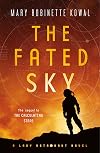
I started on The Fated Sky the day after finishing the first book in the duology. Together, they are among my favorite reads for the year.
In this alternate history, an impact off the American eastern seaboard in the early 1950s killed millions and is starting to cause radical shifts in the planet's climate. Elma York, pilot and rocket program computer, has been involved in the efforts to get humanity space-born along with her husband, lead engineer Nathaniel York. A decade after the show more cataclysm, their efforts have led to the formation of a space station and base on the moon, but the ultimate goal is Mars.
This journey isn't simply a matched wits battle of scientific innovation and technology, but of humanity's own innate criticism and cruelty. This is the 1960s. The Civil Rights movement is underway. Racism and sexism plague the space program, even after Elma sets off on her journey with an intrepid crew. This is, at times, an uncomfortable read, as it should be. But it's also a beautiful one. This is science fiction full of ingenuity and genuine characters. These books brought tears to my eyes more than once. The Fated Sky is also an incredibly tense read. I cared deeply about these people and I needed them to be okay. To my shock, that even included Stetson Parker, a man I truly loathed and wished death upon in the first book. He evolves here to be an even more complicated and sympathetic character.
I could talk about the authentic feel of the science and jargon, and how multiple astronauts and NASA personnel vetted the material, but I want to end this review talking about the true backbone of these two books: the marriage of the Yorks. It is probably one of the most realistic depictions I've ever read, and I've read a lot. It reminded me a lot of my own marriage. My husband is an engineer like Nathaniel and in a similar crisis-management kind of job, so the resemblances and quirks felt eerie at times. Even though Elma was the one in the most peril, I felt downright panicky over Nathaniel at times, too.
In all truth, I think these two books are now up there as among my all-time favorites. show less
In this alternate history, an impact off the American eastern seaboard in the early 1950s killed millions and is starting to cause radical shifts in the planet's climate. Elma York, pilot and rocket program computer, has been involved in the efforts to get humanity space-born along with her husband, lead engineer Nathaniel York. A decade after the show more cataclysm, their efforts have led to the formation of a space station and base on the moon, but the ultimate goal is Mars.
This journey isn't simply a matched wits battle of scientific innovation and technology, but of humanity's own innate criticism and cruelty. This is the 1960s. The Civil Rights movement is underway. Racism and sexism plague the space program, even after Elma sets off on her journey with an intrepid crew. This is, at times, an uncomfortable read, as it should be. But it's also a beautiful one. This is science fiction full of ingenuity and genuine characters. These books brought tears to my eyes more than once. The Fated Sky is also an incredibly tense read. I cared deeply about these people and I needed them to be okay. To my shock, that even included Stetson Parker, a man I truly loathed and wished death upon in the first book. He evolves here to be an even more complicated and sympathetic character.
I could talk about the authentic feel of the science and jargon, and how multiple astronauts and NASA personnel vetted the material, but I want to end this review talking about the true backbone of these two books: the marriage of the Yorks. It is probably one of the most realistic depictions I've ever read, and I've read a lot. It reminded me a lot of my own marriage. My husband is an engineer like Nathaniel and in a similar crisis-management kind of job, so the resemblances and quirks felt eerie at times. Even though Elma was the one in the most peril, I felt downright panicky over Nathaniel at times, too.
In all truth, I think these two books are now up there as among my all-time favorites. show less
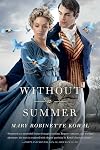
Sometimes a little patience pays off. As I recall, when I started this charming Regency fantasy series, I found it entertaining but felt the world was a little thin. With each additional volume, however, the characters, their rules of magic, and their alternate Austen-esque setting have grown on me. In this, the third volume of the continuing series, I finally felt that all the pieces had settled together to feel both comfortable and fresh. Our main characters, the married glamourists Jane show more and Vincent, seem like old friends at this point; their story relies on human folly and foible even more than magical elements, and that only makes it stronger. In fact, the fantasy portions of Kowal's world here take a back seat to the political and personal events, which perhaps makes sense given the elegantly limited form that the magic takes. In other words, with its Regency politics and its true love and its family drama, this book felt quite like the Austen works from which its author draws inspiration. And that is a true compliment.
Full disclosure: I have now met the author a couple of times and hearing her speak about her process has not only increased my regard for her as a writer, but helped me see more clearly the ways that she works, specifically and deliberately, with elements from Austen and other Regency novels. And she has proven, in person and in her books, that she has done her homework (and extra credit as well -- the woman makes her own Regency gowns, for goodness' sake). That makes me appreciate the books more. Either way, though, I think this is the best of the series so far and I look forward to the next installment. show less
Full disclosure: I have now met the author a couple of times and hearing her speak about her process has not only increased my regard for her as a writer, but helped me see more clearly the ways that she works, specifically and deliberately, with elements from Austen and other Regency novels. And she has proven, in person and in her books, that she has done her homework (and extra credit as well -- the woman makes her own Regency gowns, for goodness' sake). That makes me appreciate the books more. Either way, though, I think this is the best of the series so far and I look forward to the next installment. show less
Lists
Female Author (1)
Awards


You May Also Like


Associated Authors
Statistics
- Works
- 87
- Also by
- 102
- Members
- 11,492
- Popularity
- #2,042
- Rating
- 3.8
- Reviews
- 793
- ISBNs
- 135
- Languages
- 6
- Favorited
- 24


