
Naomi Novik
Author of His Majesty's Dragon
About the Author
Naomi Novik was born in New York on April 30, 1973. She received a Bachelor's degree in English literature at Brown University and a Master's degree in Computer Science from Columbia University. She participated in the design and development of the computer game Neverwinter Nights: Shadows of show more Undrentide. Her first novel, His Majesty's Dragon, was published in 2006 and was the start of the Temeraire series. She has won the John W. Campbell Award for Best New Writer, the Compton Crook Award for Best First Novel, and the Locus Award for Best First Novel. Her book, Uprooted, won the 2016 Nebula Award for Best Novel. (Bowker Author Biography) show less
Image credit: Naomi Novik on 2006
Series
Works by Naomi Novik
Seven Years from Home 7 copies
Apples {short story} 3 copies
Lord Dunsany's Teapot {short story} 2 copies
Blessings 2 copies
Commonplaces {short story} 2 copies
Folly 2 copies
Purity Test {short story} 1 copy
Rocks Fall {short story} 1 copy
Temeraire {excerpt} 1 copy
After Hours {short story} 1 copy
Buried Deep {short story} 1 copy
Seven {short story} 1 copy
Associated Works
The Thackery T. Lambshead Cabinet of Curiosities: Exhibits, Oddities, Images, and Stories from Top Authors and Artists (2011) — Contributor — 491 copies, 17 reviews
The Dragon Book: Magical Tales from the Masters of Modern Fantasy (2009) — Contributor — 489 copies, 14 reviews
The Mad Scientist's Guide to World Domination: Original Short Fiction for the Modern Evil Genius (2013) — Contributor — 433 copies, 22 reviews
The Year's Best Science Fiction: Twenty-Eighth Annual Collection (2011) — Contributor — 328 copies, 3 reviews
The Best Science Fiction and Fantasy of the Year, Volume 13 (2019) — Contributor — 68 copies, 3 reviews
New York Fantastic: Fantasy Stories from the City that Never Sleeps (2017) — Contributor — 43 copies, 1 review
Uncanny Magazine: The Best of 2018 — Contributor, some editions — 4 copies
Tagged
Common Knowledge
- Birthdate
- 1973-04-30
- Gender
- female
- Education
- Brown University (BA|English Literature)
Columbia University (MS|Computer Science) - Occupations
- fantasy writer
computer programmer - Organizations
- Organization for Transformative Works
- Awards and honors
- John W. Campbell Award (2007)
- Agent
- Cynthia Manson
- Relationships
- Ardai, Charles (spouse)
- Nationality
- USA
- Birthplace
- New York, New York, USA
- Places of residence
- New York, New York, USA
- Associated Place (for map)
- New York, New York, USA
Members
Discussions
Book Discussion: His Majesty's Dragon Chapters 7 - The End! in The Green Dragon (July 2007)
Book Discussion: His Majesty's Dragon Chapters 1 - 6 in The Green Dragon (June 2007)
Reviews
Temeraire: In the Service of the King: His Majesty's Dragon / Throne of Jade / Black Powder War by Naomi Novik

Periodically when reading these books, I would turn to my wife and make a remark along the lines of, "These were made for me." I have long been a fan of the Horatio Hornblower television show and novels as well as the Master and Commander film (haven't gotten around to those novels yet). It would be impossible to overstate how absolutely perfect Novik is at capturing the vibe of Napoleonic naval fiction—only, you know, it's got dragons in it. The worldbuilding totally convinces because show more everything totally convinces. Even before you get to dragons, the series utterly captures that world of duty and obligation and cruelty. Every time some new wrinkle was introduced, I thought to myself, "Yes, if there really were dragons during the Napoleonic Wars, that's exactly how it would be," such as when she explores the rivalry between aviators and sailors in the second book, Throne of Jade. The idea that dragons would require whole crews, not just single riders, is clever and makes for a lot of interesting dynamics.
The first book is strong, mostly serving to set up the world, characters, and situation: Will Laurence is captain of HMS Reliant, but circumstances mean he ends up bonded to a newly hatched dragon, Temeraire, and so he must give up the career he has spent his entire life in and discover an entirely different way of living. We discover the world of dragons and aviators through the eyes of Laurence, and we also experience the developing bond between aviator and dragon. I was genuinely moved by a passage where Laurence and Temeraire are almost tricked into giving each other up Laurence ends up telling Temeraire, "I would rather have you than any ship in the Navy."
It would be easy for a series like this to just be formulaic adventures. I expected it to be nine volumes of fighting Bonaparte, even if I also expected it to be good. But the series impresses in two ways as it develops across the first three books, and I imagine it will continue to go further in both areas. The first is that Novik broadens the canvas: the second novel sees Laureance and Temeraire journey to China on a British dragon transport, so we see what China and bits of the British Empire are like in the world; the third has them travel overland from China to Turkey, and then into continental Europe, expanding the world even more. The other is that many dragonrider fictions make their dragons sentient... and then just have them happily serve their masters without complaint. The Temeraire books actually explore this, as Temeraire has a growing awareness across these three books of the ways in which he is not free, and in which he and his people are given little in the way of choice. Why should a human make a choice but a dragon be constrained? But at the same time the exigencies of war press heavily upon Captain Laurence. How can dragons make a push for freedom when all of Europe is in peril?
I enjoyed all three books collected here. As I already said, His Majesty's Dragon is a solid series opener. The long journey to China in Throne of Jade was fascinating, and the navigating of Chinese politics pulled together a lot of stuff in a clever way. The overland journey in Black Powder War was tense, and I really enjoyed the novel's second half, as Laurence, Temeraire, and crew are swept up in a series of devastating battles in continental Europe was utterly gripping, compelling reading. I am taking a bit of a break before going onto book four, but I can't wait to find out what happens next. show less
The first book is strong, mostly serving to set up the world, characters, and situation: Will Laurence is captain of HMS Reliant, but circumstances mean he ends up bonded to a newly hatched dragon, Temeraire, and so he must give up the career he has spent his entire life in and discover an entirely different way of living. We discover the world of dragons and aviators through the eyes of Laurence, and we also experience the developing bond between aviator and dragon. I was genuinely moved by a passage where Laurence and Temeraire are almost tricked into giving each other up Laurence ends up telling Temeraire, "I would rather have you than any ship in the Navy."
It would be easy for a series like this to just be formulaic adventures. I expected it to be nine volumes of fighting Bonaparte, even if I also expected it to be good. But the series impresses in two ways as it develops across the first three books, and I imagine it will continue to go further in both areas. The first is that Novik broadens the canvas: the second novel sees Laureance and Temeraire journey to China on a British dragon transport, so we see what China and bits of the British Empire are like in the world; the third has them travel overland from China to Turkey, and then into continental Europe, expanding the world even more. The other is that many dragonrider fictions make their dragons sentient... and then just have them happily serve their masters without complaint. The Temeraire books actually explore this, as Temeraire has a growing awareness across these three books of the ways in which he is not free, and in which he and his people are given little in the way of choice. Why should a human make a choice but a dragon be constrained? But at the same time the exigencies of war press heavily upon Captain Laurence. How can dragons make a push for freedom when all of Europe is in peril?
I enjoyed all three books collected here. As I already said, His Majesty's Dragon is a solid series opener. The long journey to China in Throne of Jade was fascinating, and the navigating of Chinese politics pulled together a lot of stuff in a clever way. The overland journey in Black Powder War was tense, and I really enjoyed the novel's second half, as Laurence, Temeraire, and crew are swept up in a series of devastating battles in continental Europe was utterly gripping, compelling reading. I am taking a bit of a break before going onto book four, but I can't wait to find out what happens next. show less
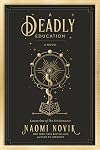
Why didn't anyone tell me the lead is a Murderbot? I would have read this much, much sooner.
Alright, the full review is here, with sub-spoilers:
Undoubtedly five stars. What makes it so? The ability to capture my attention and hold until finished, the daze of finishing, and the desire upon finishing to flip to the beginning and start reading all over again. Sure, it has some shortcomings. But I haven't felt like this since the first Murderbot. I was on the fence for months over reading this book. On the plus side, a number of my friends loved it. On the negative was the label 'young-adult' and everything that has become shorthand for--love triangles, fashion choices, and relationship drama. But Nataliya and Jennifer sang a siren song of buddy reads, and I gave it a shot, thinking I'd read a couple chapters then set it down. Oh, no--I finished it the same day.
Objections to this book are many, and likely played a role in my hesitancy. Chief among complaints is the combination of 'slow pace' and 'narrative-heavy' style Novik uses. I, perhaps unsurprisingly given my history, loved it.
The lead, Galadriel, or 'El,' is a conflicted, isolated young woman who has been told from her youngest memories that she'll be responsible for death and destruction, and her magical affinity and skills seem to point her the same direction. She asks the universe for a cleaning spell; she gets one to incinerate everything in her path. Other magical people are aware of this and shun her, while the mundane people avoid her in favor of her gentle, compassionate mother. El has become an outsider looking in, with only her mother having faith that her ethics are equal to her potential.
I feel like Novik and I must have read that same books as a child. Those books centered on introverted young women who felt like outsiders, heavy on the internal narrative and personal skill development and low on social interaction. Definitely Robin McKinley [b:The Blue Sword|407813|The Blue Sword (Damar, #1)|Robin McKinley|https://i.gr-assets.com/images/S/compressed.photo.goodreads.com/books/1563198223l/407813._SY75_.jpg|2321296] and Patricia McKillip, with a heavy dose of fairy tale retellings. Uprooted was nice, although as I aged, found the development of relationship between the young lead and significantly older male wizard a bit too uncomfortable for modern times. It's one of those things that makes me think we had similar tastes, though, as there was a high prevalence of the exact thing in those childhood books (Anne McCaffery, [b:Dragonsong / Dragonsinger|28550|Dragonsong / Dragonsinger (Pern Harper Hall, #1-2)|Anne McCaffrey|https://i.gr-assets.com/images/S/compressed.photo.goodreads.com/books/1540854722l/28550._SY75_.jpg|29078], McKinley again). Now she's taken that head-voice heroine to boarding school in A Deadly Education and I couldn't be happier with her modern, cynical twist (Gideon, without the non-sequiturs).
So it turned out that the major detraction is actually a feature in for me. What else? When I dug around, I discovered there's also a couple of items that provoked accusations of racism. I'll be honest, both scenes gave me a 'huh?' moment on first read. But even more honestly, probably for different reasons. The mention of dreadlocks was done awkwardly, though in my case, I put it down to modern authors' tendency to make sure they are being inclusive and Novik's general lack of describing characters' looks. The modern Arabic language bookwith it's picture of the car and people being hit didn't make sense to me either, mostly because the school seemed intent on teaching her mass-destruction skills, not ones on the scale of a handful of people, and to be really honest, the only incident with cars that immediately came to mind are all the ones we've had lately in the U.S. at anti-45 protests.
I like to think that I'm reasonably aware of many of my short-comings and prejudices. I appreciate people might perceive it differently, I'll throw out that both made me feel Novik was modifying her story for the audience, but in a more inclusive, albeit awkward, way.
The good stuff was everywhere: a lead character complex enough to realize some of her attitude was defensive and maladaptive, supporting characters that were developed enough to have both flaws and positive traits, a cast that included gender representation and a multinational cast, a conflict that became more about the environment than interpersonal angst, with lots of interesting magic and creatures to keep the fantasy element strong.
Novik does an absolutely believable job of El's growing emotional complexity and feels, and by the end of the book, she feels strangely familiar--almost like looking in a mirror.
"Yes, because just what I wanted was to make a friend of a rich enclave girl so I could routinely rub my face around in all the luxuries I couldn't have, all of which were in fact quite nice even if they didn't measure up to the things I'd chosen in their place. And if Chloe Rasmussen turned out to be an actual decent person and a real friend, that would mean the things I didn't have weren't necessarily incompatible with the things I really cared about, and how exactly I was meant to put that together about being discontented all the time, I didn't see"
Definitely a book that has earned a place in my library and will be re-read until the sequel is out September 28. Here's to my inspiring buddies, Nataliya and Jennifer, and to Emma for a great discussion!
Re-read July 2022 because I just love that tone. Such a nice balance between cynicism and hope. show less
Alright, the full review is here, with sub-spoilers:
Undoubtedly five stars. What makes it so? The ability to capture my attention and hold until finished, the daze of finishing, and the desire upon finishing to flip to the beginning and start reading all over again. Sure, it has some shortcomings. But I haven't felt like this since the first Murderbot. I was on the fence for months over reading this
Objections to this book are many, and likely played a role in my hesitancy. Chief among complaints is the combination of 'slow pace' and 'narrative-heavy' style Novik uses. I, perhaps unsurprisingly given my history, loved it.
The lead, Galadriel, or 'El,' is a conflicted, isolated young woman who has been told from her youngest memories that she'll be responsible for death and destruction, and her magical affinity and skills seem to point her the same direction. She asks the universe for a cleaning spell; she gets one to incinerate everything in her path. Other magical people are aware of this and shun her, while the mundane people avoid her in favor of her gentle, compassionate mother. El has become an outsider looking in, with only her mother having faith that her ethics are equal to her potential.
I feel like Novik and I must have read that same books as a child. Those books centered on introverted young women who felt like outsiders, heavy on the internal narrative and personal skill development and low on social interaction. Definitely Robin McKinley [b:The Blue Sword|407813|The Blue Sword (Damar, #1)|Robin McKinley|https://i.gr-assets.com/images/S/compressed.photo.goodreads.com/books/1563198223l/407813._SY75_.jpg|2321296] and Patricia McKillip, with a heavy dose of fairy tale retellings. Uprooted was nice, although as I aged, found the development of relationship between the young lead and significantly older male wizard a bit too uncomfortable for modern times. It's one of those things that makes me think we had similar tastes, though, as there was a high prevalence of the exact thing in those childhood books (Anne McCaffery, [b:Dragonsong / Dragonsinger|28550|Dragonsong / Dragonsinger (Pern Harper Hall, #1-2)|Anne McCaffrey|https://i.gr-assets.com/images/S/compressed.photo.goodreads.com/books/1540854722l/28550._SY75_.jpg|29078], McKinley again). Now she's taken that head-voice heroine to boarding school in A Deadly Education and I couldn't be happier with her modern, cynical twist (Gideon, without the non-sequiturs).
So it turned out that the major detraction is actually a feature in for me. What else? When I dug around, I discovered there's also a couple of items that provoked accusations of racism. I'll be honest, both scenes gave me a 'huh?' moment on first read. But even more honestly, probably for different reasons. The mention of dreadlocks was done awkwardly, though in my case, I put it down to modern authors' tendency to make sure they are being inclusive and Novik's general lack of describing characters' looks. The modern Arabic language book
I like to think that I'm reasonably aware of many of my short-comings and prejudices. I appreciate people might perceive it differently, I'll throw out that both made me feel Novik was modifying her story for the audience, but in a more inclusive, albeit awkward, way.
The good stuff was everywhere: a lead character complex enough to realize some of her attitude was defensive and maladaptive, supporting characters that were developed enough to have both flaws and positive traits, a cast that included gender representation and a multinational cast, a conflict that became more about the environment than interpersonal angst, with lots of interesting magic and creatures to keep the fantasy element strong.
Novik does an absolutely believable job of El's growing emotional complexity and feels, and by the end of the book, she feels strangely familiar--almost like looking in a mirror.
"Yes, because just what I wanted was to make a friend of a rich enclave girl so I could routinely rub my face around in all the luxuries I couldn't have, all of which were in fact quite nice even if they didn't measure up to the things I'd chosen in their place. And if Chloe Rasmussen turned out to be an actual decent person and a real friend, that would mean the things I didn't have weren't necessarily incompatible with the things I really cared about, and how exactly I was meant to put that together about being discontented all the time, I didn't see"
Definitely a book that has earned a place in my library and will be re-read until the sequel is out September 28. Here's to my inspiring buddies, Nataliya and Jennifer, and to Emma for a great discussion!
Re-read July 2022 because I just love that tone. Such a nice balance between cynicism and hope. show less
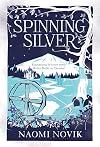
I liked this even more than Uprooted (and I really liked Uprooted). Each character was drawn with care and nuance, and the many threads wrapped up in a satisfying way without feeling overly orchestrated. Bonus points for the sensitive portrayal of a character with some sensory processing difficulties who may have been on the autism spectrum, and the thoughtful integration of Jewish customs as well as the discrimination and isolation Jewish people and communities face.
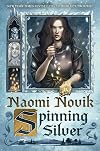
The short way to describe this book is as a retelling of Rumpelstiltskin. And I suppose it is, in a sense. In a weird way, though it's purely fantasy, it struck me as more realistic than the original fairy tale. The bare bones: a moneylender's daughter gets herself in hot water when she attracts the notice of the Staryk king for her ability to make money, "change silver to gold."
Naomi Novik spins a taut and intricate tale of three women - Miryem, Wanda and Irina - all in very different show more social classes and situations who manage to create agency for themselves when life deals them hard knocks. Each of the three, and occasionally other characters, narrate their tales in first-person. You'd think this would get confusing, but their voices are distinctive and Novik does a great job of introducing details early on so you know who's speaking. It allows her to bring in multiple locations and perspectives in a fascinating way. If you love your fantasy with rich world-building and strong female characters, this is an excellent choice. show less
Naomi Novik spins a taut and intricate tale of three women - Miryem, Wanda and Irina - all in very different show more social classes and situations who manage to create agency for themselves when life deals them hard knocks. Each of the three, and occasionally other characters, narrate their tales in first-person. You'd think this would get confusing, but their voices are distinctive and Novik does a great job of introducing details early on so you know who's speaking. It allows her to bring in multiple locations and perspectives in a fascinating way. If you love your fantasy with rich world-building and strong female characters, this is an excellent choice. show less
Lists
mom (10)
Favorite Series (1)
BookTok Adult (1)
Autumn books (1)
First Novels (1)
Dragonriders (1)
Gaslamp Fantasy (1)
Winter Books (1)
Magic schools (1)
High Priority (1)
Winter Books (1)
Nebula Award (1)
Christmas Books (1)
READ IN 2020 (1)
Shelf 101 (1)
Dragons (1)
Favourite Books (1)
Witchy Fiction (2)
io9 Book Club (2)
Five star books (3)
Swashbucklers (5)
Female Author (5)
el (1)
Overdue Podcast (1)
Unread books (2)
Awards


You May Also Like


Associated Authors
Statistics
- Works
- 52
- Also by
- 31
- Members
- 60,173
- Popularity
- #240
- Rating
- 4.0
- Reviews
- 2,393
- ISBNs
- 498
- Languages
- 25
- Favorited
- 252


