
Patrick O'Brian (1914–2000)
Author of Master & Commander
About the Author
Patrick O'Brian is the author of twenty volumes in the highly respected Aubrey/Maturin series of novels. (Publisher Provided) Patrick O'Brien was born in Ireland in 1914. His education included the Sorbonne. O'Brian has produced a variety of works, including biographies of Picasso and Sir Joseph show more Banks and translations of the novels and memoirs of Simone de Beauvoir, but he is best known for the creation of an unlikely pair of Napoleonic War-era heroes in the Aubrey-Maturin Series. British naval officer Jack Aubrey and Irish scholar and physician Stephen Maturin have been featured in more than a novels published in Great Britain (five of which have also appeared in America). He died on January 2, 2000. (Bowker Author Biography) show less
Disambiguation Notice:
The principal author here is Patrick O'Brian famous for the Aubrey-Maturin novels. The birth name of this author was Richard Patrick Russ. He changed his name by deed poll in August 1945 to Patrick O'Brian, under which name his books were published.
Series
Works by Patrick O'Brian
LEGO Ninjago: Ready, Steady, Stick!: Sticker Activity Book (2014-11-06)" to "A Book of Voyages" 5 copies
The last pool and other stories 3 copies
Three Bear Witness 2 copies
Les aventures de Jack Aubrey : Coffret en 5 volumes : Tomes 1 à 5 : Avec Les navires de Jack Aubrey (2006) 2 copies
Treason's Harbour 1 copy
AM #02 - Post Captain 1 copy
Los Cien DíAs 1 copy
The Thirteen-Gun Salute (Aubrey-Maturin, Book 13) (Aubrey & Maturin series) (English Edition) 1 copy
The Thirtteen Gun Salute 1 copy
THE ILIAD SIDE OF THE WORLD 1 copy
Ai confini del mare 1 copy
AM #03 - H.M.S. Surprise 1 copy
El Puerto De La Traición 1 copy
Misión en Jonia 1 copy
Die Inseln der Paschas 1 copy
Maître A Bord 1 copy
No Pirates Nowadays 1 copy
Sophie 1 copy
Whispers 1 copy
Patrick O'Brian Collection: "HMS "Surprise"", "The Commodore", "The Far Side of the World" v. 1 (2002) 1 copy
Set of 4 Aubrey/Maturin Novels: Blue at the Mizzen, The Hundred Days, The Yellow Admiral, and the Commodore (1999) 1 copy
O butim da guerra 1 copy
Hundred days, The 1 copy
The Walker & Other Stories 1 copy
Picasso: A Biography 1 copy
Associated Works
Banco: The Further Adventures of Papillion (1972) — Translator, some editions — 692 copies, 8 reviews
The Mammoth Book of Men O'War: Stories from the Glory Days of Sail (1999) — Contributor — 107 copies, 1 review
Deep Blue: Stories of Shipwreck, Sunken Treasure, and Survival (Adrenaline) (2001) — Contributor — 32 copies
Van Der Valk, Series 1-5 [1972-1992] — Screenwriter — 7 copies
Tagged
Common Knowledge
- Canonical name
- O'Brian, Patrick
- Legal name
- Russ, Richard Patrick (birth)
O'Brian, Patrick (changed 1945) - Other names
- Russ, Patrick
Russ, R. P. - Birthdate
- 1914-12-12
- Date of death
- 2000-01-02
- Gender
- male
- Occupations
- translator
novelist - Awards and honors
- The Heywood Hill Literary Prize (1995)
Order of the British Empire (Commander, 1997)
Honorary Doctorate of Letters, Trinity College Dublin (1997) - Relationships
- Jones, Elizabeth (first wife)
Tolstoy, Mary (second wife)
Tolstoy, Nikolai (stepson) - Short biography
- Patrick O'Brian was known for being a prolific English novelist, biographer, and translator. He was best known for his Aubrey-Maturin novels set in the period of the Napoleonic Wars. The novels centered on the characters of Jack Aubrey, an officer in the Royal Navy, and his friend the physician, natural philosopher and intelligence agent Stephen Maturin. Meticulously researched, this twenty-volume series garnered enthusiastic critical reviews and a wide and fervent readership. The 21st unfinished novel of this series was published posthumously. After having an American publisher, he received notoriety, selling millions of books. Born Richard Patrick Russ, he published two books and several short stories under his birthname before changing his name after World War II. In 1949 he and his second wife moved to France. In addition, O'Brian authored biographies of Pablo Picasso and Sir Joseph Banks. His translations from French into English included Henri Charrière's "Papillion," Jean LaCouture's biography "Charles De Gaulle," and works of Simone de Beauvoir. In 1995 at age 80, he received his first award, the Heywood Hill Literary Prize for his lifetime literary contributions. In 1997 he received the Most Excellent Order of the British Empire and an honorary doctorate degree from Trinity College.
- Cause of death
- heart attack
- Nationality
- UK
- Birthplace
- Chalfont St. Peter, Buckinghamshire, England, UK
- Places of residence
- Chalfont St. Peter, Buckinghamshire, England, UK
Collioure, France
Cwm Croesor, Gwynedd, Wales, UK - Place of death
- Dublin, County Dublin, Ireland
- Burial location
- Nouveau Cimetière de Collioure, Collioure, Departement des Pyrénées-Orientales, Languedoc-Roussillon, France
- Map Location
- England, UK
- Disambiguation notice
- The principal author here is Patrick O'Brian famous for the Aubrey-Maturin novels. The birth name of this author was Richard Patrick Russ. He changed his name by deed poll in August 1945 to Patrick O'Brian, under which name his books were published.
Members
Discussions
Ampersand Studio - Master and Commander in Fine Press Forum (November 2025)
Purchased the first nine volumes of Patrick O'Brian's Master & Commander. However... in Folio Society Devotees (September 2022)
Phantom duplicate ISBN in Bug Collectors (June 2021)
New pair of Aubrey - Maturin due in Folio Society Devotees (August 2011)
***Group Read: H.M.S. Surprise by Patrick O'Brian in 75 Books Challenge for 2011 (April 2011)
Folio Society Aubrey/Maturin Series in HMS Surprise (July 2010)
Reviews
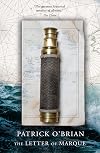
I'm returning to this series after a very long break, and I'm glad that I did. It's possible, after all, to read books wrong, which can end up spoiling the book for reasons that are nothing to do with the book itself. In the case of the Aubrey/Maturin series, the uniformity of their excellence in terms of writing, their largely character-driven, relatively shapeless novelistic plotting compared poorly, I thought, to the more intricate, complex and subtle mechanisms of Dorothy Dunnett. Of show more course, that's the wrong approach. They don't suffer in comparison at all. They are completely different animals. To read them for the thrill of clever plot twists that have been deviously woven into eight massive volumes is both pointless and a bit stupid, and I'm glad now that I've achieved this perspective, because the pleasures of O'Brian's novels are in some ways richer than Dunnett's, for all that Dunnett will always edge out O'Brian as one of my favourite writers.
Jack Aubrey is in a sorry state at the start of The Letter Of Marque, struck off the naval lists after a trumped-up charge, he is morose, short-tempered and depressed. Stephen Maturin has purchased The Surprise, however, and with the titular letter and a crew half of old naval hands and half of doughty pirates, they set out to restore Jack's fortunes.
The aforementioned uniformity of excellence of these novels tends to render each succeeding novel susceptible to accusations of sameness. Certainly there is progression. Each book is a chapter in the ongoing history of our heroes' friendship and careers. They age and change in circumstances and temperament. There are voyages, there are battles, there are some exchanges of intelligence, observations of flora and fauna, and occasional visits to hearth and home and family, where Jack can blunder cheerfully and Stephen can mope for his estranged wife. The story develops, the characters grow, the world opens up around them, a world so fully and perfectly realised that we come to understand that what we mistook for sameness is, in fact, recognition and comfort and familiarity. Each book gives exactly what it sets out to give, and so long as we don't mistake it for something it's not, we can fully enjoy them in all their warmth and generosity. For all love. show less
Jack Aubrey is in a sorry state at the start of The Letter Of Marque, struck off the naval lists after a trumped-up charge, he is morose, short-tempered and depressed. Stephen Maturin has purchased The Surprise, however, and with the titular letter and a crew half of old naval hands and half of doughty pirates, they set out to restore Jack's fortunes.
The aforementioned uniformity of excellence of these novels tends to render each succeeding novel susceptible to accusations of sameness. Certainly there is progression. Each book is a chapter in the ongoing history of our heroes' friendship and careers. They age and change in circumstances and temperament. There are voyages, there are battles, there are some exchanges of intelligence, observations of flora and fauna, and occasional visits to hearth and home and family, where Jack can blunder cheerfully and Stephen can mope for his estranged wife. The story develops, the characters grow, the world opens up around them, a world so fully and perfectly realised that we come to understand that what we mistook for sameness is, in fact, recognition and comfort and familiarity. Each book gives exactly what it sets out to give, and so long as we don't mistake it for something it's not, we can fully enjoy them in all their warmth and generosity. For all love. show less
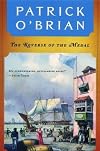
Book 11 in Patrick O'Brian's Aubrey-Maturin series sees some surprising revelations, changes, and reversals of fortune. There's not much sea-going action here, and what there is isn't incredibly satisfying. And the spy stuff is somehow never quite as interesting to me as it feels like it should be, even with the treason-in-high-places plot we've got going on at this point in the series. But the parts of the story involving the characters' personal lives and problems are extremely engaging. show more Both Captain Aubrey and Dr. Maturin have moments here that make me feel immense affection for them... and also moments where I'd kind of like to knock some sense into them. Especially Jack Aubrey. How can a man that unbelievably competent at sea be such a gullible screw-up on land? But, of course, that's all part of what makes him such an interesting and oddly lovable character. There's also a moment towards the end that genuinely got me a little choked up, and a very interesting setup for going forward into the next volume. show less
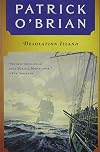
Desolation Island is my favorite of the series so far, deploying all the elements of the series with care and precision. At the start of the book, both Maturin and Aubrey are suffering from success on shore. Stephen has become despondent over love, addicted to laudanum, and is in the bad lights of British intelligence. Jack's family is going well, but he's losing money to card-sharks, con-artists, and horse speculators. The solution is simple, a voyage in the HMS Leopard to Australia to show more either reinstate or remove Governor Bligh, who's suffered another mutiny, and to transport suspect spy Louisa Wogan to Botany Bay.
The main action of the book takes place in the roaring 40s. The Leopard encounters the implacable and competently handled Dutch ship of the line Waakzaamheid. Jack flees from a battle that would destroy him, a tense chase that tests every ounce of seamanship both captains have, and ends when a lucky shot demasts the Waakzaamheid and causes it to founder with all hands.
The Leopard is little better off, as Jack is wounded, and the ship itself strikes an iceberg and begins to sink. Half the crew take to the boats, and Jack manages to bring the survivors to the extremely isolated Kerguelen Islands. There Maturin embarks in both naturalism and espionage, and the chance arrival of an American whaler provides a chance to effect needed repairs, and Maturin's schemes, at the cost of Louisa Wogan and a potential diplomatic incident. show less
The main action of the book takes place in the roaring 40s. The Leopard encounters the implacable and competently handled Dutch ship of the line Waakzaamheid. Jack flees from a battle that would destroy him, a tense chase that tests every ounce of seamanship both captains have, and ends when a lucky shot demasts the Waakzaamheid and causes it to founder with all hands.
The Leopard is little better off, as Jack is wounded, and the ship itself strikes an iceberg and begins to sink. Half the crew take to the boats, and Jack manages to bring the survivors to the extremely isolated Kerguelen Islands. There Maturin embarks in both naturalism and espionage, and the chance arrival of an American whaler provides a chance to effect needed repairs, and Maturin's schemes, at the cost of Louisa Wogan and a potential diplomatic incident. show less
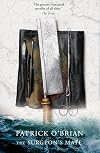
Continuing my travels with Captain Jack Aubrey and Stephen Maturin, I have now reached the seventh chapter in this ongoing novel. The Surgeon’s Mate seemed a bit rambling even by O’Brian’s standards (although I suppose one might see the opening – Jack returning to the sea and the command of a ship – and the ending episodes – Jack fleeing a French prison – as variations on the theme of escape, thus placing a kind of parenthesis around the novel, a structure O’Brian seems fond show more of) and that is probably the reason why I liked it slightly (very, very slightly) less than the two preceding volumes.
There is no lack of things happening in this volume, however – the book begins where the last one left off, in Halifax, then moves to London, from there to Scandinavia and finally to Paris. There are no naval battles (but another exciting chase) and no discovery of exotic flora or fauna (but more spy work by Stephen); indeed the various intelligence machinations during the Napoleonic Wars are very much in the foreground here, turning this at time almost into an 18th century version of a John le Carré novel. O’Brian never quite reaches (or indeed aims for) the dizzy heights of moral ambiguity where Le Carré places his novels, but something he shares with that author is the way he can even the most mundane everyday activities endlessly fascinating (placing both in sharp contrast to Neal Stephenson who can make them endlessly boring). After seven volumes, this is turning out more and more to be the second mark of greatness for the Aubrey-Maturin series, together with the characterisation and friendship of its protagonists: the incredibly vivid sense of detail Patrick O’Brian brings to bear on the world he describes.
The freshness of his colours, the fullness of his sounds, the immediacy of his smells, the intensity of his tastes and sensations would already be remarkable in a novelist who transmuted a world into language that was spreading out right in front of him, but to achieve this sensory and sensual richness of description for history, for a world gone and disappeared is nothing short of – and I do not use this word lightly – genius. Even with something I consider a slightly (very, very slightly) weaker installment of this monumental novel of naval history, of friendship and adventure, of warfare and discovery, I am becoming steadily more impressed with the series as a whole the more of it I read. I can feel a shiver of excitement run down my spine at the thought that there are thirteen more volumes of this waiting for me on the shelf, and a tiny stab of sadness in my heart that there are only thirteen more volumes left. Who knows, by the end of it I might even agree with the Times as quoted on the cover of my edition that Patrick O’Brian was “the greatest historical novelist of all time.” (Okay, not very likely, as I’m inherently suspicious of any statements that feature “of all time”, all the more so if “greatest” is also a part of it. But I can at least feel some degree of sympathy for such a claim, pointless hyperbole that it is.) show less
There is no lack of things happening in this volume, however – the book begins where the last one left off, in Halifax, then moves to London, from there to Scandinavia and finally to Paris. There are no naval battles (but another exciting chase) and no discovery of exotic flora or fauna (but more spy work by Stephen); indeed the various intelligence machinations during the Napoleonic Wars are very much in the foreground here, turning this at time almost into an 18th century version of a John le Carré novel. O’Brian never quite reaches (or indeed aims for) the dizzy heights of moral ambiguity where Le Carré places his novels, but something he shares with that author is the way he can even the most mundane everyday activities endlessly fascinating (placing both in sharp contrast to Neal Stephenson who can make them endlessly boring). After seven volumes, this is turning out more and more to be the second mark of greatness for the Aubrey-Maturin series, together with the characterisation and friendship of its protagonists: the incredibly vivid sense of detail Patrick O’Brian brings to bear on the world he describes.
The freshness of his colours, the fullness of his sounds, the immediacy of his smells, the intensity of his tastes and sensations would already be remarkable in a novelist who transmuted a world into language that was spreading out right in front of him, but to achieve this sensory and sensual richness of description for history, for a world gone and disappeared is nothing short of – and I do not use this word lightly – genius. Even with something I consider a slightly (very, very slightly) weaker installment of this monumental novel of naval history, of friendship and adventure, of warfare and discovery, I am becoming steadily more impressed with the series as a whole the more of it I read. I can feel a shiver of excitement run down my spine at the thought that there are thirteen more volumes of this waiting for me on the shelf, and a tiny stab of sadness in my heart that there are only thirteen more volumes left. Who knows, by the end of it I might even agree with the Times as quoted on the cover of my edition that Patrick O’Brian was “the greatest historical novelist of all time.” (Okay, not very likely, as I’m inherently suspicious of any statements that feature “of all time”, all the more so if “greatest” is also a part of it. But I can at least feel some degree of sympathy for such a claim, pointless hyperbole that it is.) show less
Lists
Books Read in 2018 (20)
BBC Big Read (1)
Unread books (1)
Booker Prize (1)
Folio Society (16)
Favorite Series (1)
Best Sea Stories (3)
Favourite Books (2)
Mamet's Ear (1)
War Literature (1)
Best Spy Fiction (1)
Overdue Podcast (1)
1980 great books (1)
Awards


You May Also Like


Associated Authors
Statistics
- Works
- 154
- Also by
- 22
- Members
- 76,965
- Popularity
- #159
- Rating
- 4.1
- Reviews
- 1,048
- ISBNs
- 1,580
- Languages
- 20
- Favorited
- 370


