
Julian Stockwin
Author of Kydd
About the Author
Image credit: By Julian Stockwin - Julian Stockwin, CC BY-SA 3.0, https://commons.wikimedia.org/w/index.php?curid=9642616
Series
Works by Julian Stockwin
Kidd 2 copies
Balkan Glory Thomas Kidd #23 1 copy
Tagged
Common Knowledge
- Birthdate
- 1944
- Gender
- male
- Nationality
- UK (birth)
- Places of residence
- Devon, England, UK
Australia - Associated Place (for map)
- England, UK
Members
Reviews

It feels somewhat cruel to entirely spend one's time reading comparing a book against another one, but in the case of any Napoleonic naval warfare novel, it's thoroughly inevitable. C. S. Forester defined this genre (for me at least) with his Horatio Hornblower books, and anyway, I won this book from LibraryThing's EarlyReviewer program, and the part of my library that enabled me to win it has to have been my complete run of Hornblower. So, the entire time I was reading Invasion, #10 in the show more Kydd Sea Adventures, I was thinking about C. S. Forester and Horatio Hornblower-- and how they had done this exact same thing so much better.
Invasion opens with Commander Thomas Kydd being reinstated as commander of the HMS Teazer and sent back out to sea to fight the French. No date is ever specifically given, but the Peace of Amiens has recently come to an end, and many British feel that an invasion by Napoleon and his French is imminent (hence the book's title). The Teazer is sent out to the French coast, where it engages in a couple chases, a pitched battle, and a cunning deception before it is recalled home, all within the second chapter! This is, perhaps, my biggest problem with Julian Stockwin's writing style. It just moves too quickly and doesn't spend enough time on events to strongly build a feeling of excitement or interest. Every naval engagement (apart from the one at the book's climax) seems to be over as soon as it has begun, even if the text informs us that the engagement lasted for quite a while. I was always left thinking that any of the incidents could have been made exciting by going a little deeper (with a submarine, perhaps, to make an appropriate metaphor), but most of the time, Stockwin was content to sail along the surface.
The book is pretty unfocused: as I said, the Teazer goes out to sea and comes back in the second chapter, then gets assigned to a squadron for defending the coast, then gets in a few more battles culminating in some major damage just as understated as everything else, then gets sent back to England again, meaning the book has three distinct segments where the characters sit around in England, preparing for war. The book lacks a strong throughline of any sort. Some of the Hornblower novels could be like this (Hornblower and the Atropos comes to mind, or even moreso, Ship of the Line), but those books had Horatio Hornblower himself as a character to carry the reader through. His emotional journey usually provided a connection between the novel's disparate events.
But Thomas Kydd is not as compelling a character as Horatio Hornblower, not by a long shot. Mostly he's just kind of there, giving orders and complaining on occasion. He's lower class, pulling himself up through the ranks, which seems to be his defining characteristic, but we don't really get much insight into how this actually affects him as a person. His flat characterization is probably the biggest problem with tying this novel together. I don't think Kydd (or any of the other characters) are well-served by the way Stockwin writes dialogue, which is often one line after another, with no real feel of what the characters are doing or how they are saying it, just a series of context-less sentences.
The main plot of the book (such as it is, but it's what the back cover claims is the main plot) concerns the real-life inventor Robert Fulton, who had been working to develop a submarine boat for the French. The Teazer's clerk, Nicholas Renzi, is sent to Paris on a (bizarrely poorly planned) secret mission to convince Fulton to defect to the British, apparently loosely based on real historical events. Upon Fulton's arrival in England, Kydd and the Teazer are detached to help Fulton in his project. This leads to what is probably the most interesting part of the book, the ruminations of these sailors on the coming of a very different type of warfare, one where entire groups of people can be wiped out by unseen enemies with a single stroke. Renzi sums up the problems to Kydd: "It's an inviolable maxim of conduct in war that one's enemy is met on the field face to face, that the issue be decided nobly by courage, resolution and skill-at-arms. Failing that, the mastery of the profession of war is set at naught and we descend into a base hackery -- or the promiscuous exploring of bodies unknown" (283). Of course, neither the submarine boat nor the torpedoes work out, as we know from history, but Kydd and Renzi both know that it is just a matter of time, now that they have seen "where man's ingenuity and creative spirit had led him -- and that the world must now change" (336). Stockwin connects this in his Author's Note with modern "weapons of mass destruction" (344) and it's a strongly effective connection to make, especially as submarines and torpedoes no longer seem like WMDs to those of us who have grown up with their destructive power looking insignificant to much of the modern arsenal.
There are some interesting notions wrestled with by the characters (though one suspects more drama could have been wrung by not having Kydd and Renzi being in so much accord on their disdain for Fulton and his submarines), and I wished that more could have been done with it: certainly this plot could have began before page 154! On the other hand, one detects a certain amount of romanticization of the past, which is reinforced by the Author's Note, where Stockwin makes the rather absurd statement that he'd prefer to live in the Georgian era. Yes, if you could be one of the upper class, but not if you were one of the press-ganged sailors you don't focus on in your novels, I'd bet!
In the end, Invasion is a fine book. It's never actively terrible, and it has a couple points where it becomes fairly good... but I can't imagine that I'll ever pick up another Kydd Sea Adventure. I think I'll just stick with Horatio Hornblower instead. show less
Invasion opens with Commander Thomas Kydd being reinstated as commander of the HMS Teazer and sent back out to sea to fight the French. No date is ever specifically given, but the Peace of Amiens has recently come to an end, and many British feel that an invasion by Napoleon and his French is imminent (hence the book's title). The Teazer is sent out to the French coast, where it engages in a couple chases, a pitched battle, and a cunning deception before it is recalled home, all within the second chapter! This is, perhaps, my biggest problem with Julian Stockwin's writing style. It just moves too quickly and doesn't spend enough time on events to strongly build a feeling of excitement or interest. Every naval engagement (apart from the one at the book's climax) seems to be over as soon as it has begun, even if the text informs us that the engagement lasted for quite a while. I was always left thinking that any of the incidents could have been made exciting by going a little deeper (with a submarine, perhaps, to make an appropriate metaphor), but most of the time, Stockwin was content to sail along the surface.
The book is pretty unfocused: as I said, the Teazer goes out to sea and comes back in the second chapter, then gets assigned to a squadron for defending the coast, then gets in a few more battles culminating in some major damage just as understated as everything else, then gets sent back to England again, meaning the book has three distinct segments where the characters sit around in England, preparing for war. The book lacks a strong throughline of any sort. Some of the Hornblower novels could be like this (Hornblower and the Atropos comes to mind, or even moreso, Ship of the Line), but those books had Horatio Hornblower himself as a character to carry the reader through. His emotional journey usually provided a connection between the novel's disparate events.
But Thomas Kydd is not as compelling a character as Horatio Hornblower, not by a long shot. Mostly he's just kind of there, giving orders and complaining on occasion. He's lower class, pulling himself up through the ranks, which seems to be his defining characteristic, but we don't really get much insight into how this actually affects him as a person. His flat characterization is probably the biggest problem with tying this novel together. I don't think Kydd (or any of the other characters) are well-served by the way Stockwin writes dialogue, which is often one line after another, with no real feel of what the characters are doing or how they are saying it, just a series of context-less sentences.
The main plot of the book (such as it is, but it's what the back cover claims is the main plot) concerns the real-life inventor Robert Fulton, who had been working to develop a submarine boat for the French. The Teazer's clerk, Nicholas Renzi, is sent to Paris on a (bizarrely poorly planned) secret mission to convince Fulton to defect to the British, apparently loosely based on real historical events. Upon Fulton's arrival in England, Kydd and the Teazer are detached to help Fulton in his project. This leads to what is probably the most interesting part of the book, the ruminations of these sailors on the coming of a very different type of warfare, one where entire groups of people can be wiped out by unseen enemies with a single stroke. Renzi sums up the problems to Kydd: "It's an inviolable maxim of conduct in war that one's enemy is met on the field face to face, that the issue be decided nobly by courage, resolution and skill-at-arms. Failing that, the mastery of the profession of war is set at naught and we descend into a base hackery -- or the promiscuous exploring of bodies unknown" (283). Of course, neither the submarine boat nor the torpedoes work out, as we know from history, but Kydd and Renzi both know that it is just a matter of time, now that they have seen "where man's ingenuity and creative spirit had led him -- and that the world must now change" (336). Stockwin connects this in his Author's Note with modern "weapons of mass destruction" (344) and it's a strongly effective connection to make, especially as submarines and torpedoes no longer seem like WMDs to those of us who have grown up with their destructive power looking insignificant to much of the modern arsenal.
There are some interesting notions wrestled with by the characters (though one suspects more drama could have been wrung by not having Kydd and Renzi being in so much accord on their disdain for Fulton and his submarines), and I wished that more could have been done with it: certainly this plot could have began before page 154! On the other hand, one detects a certain amount of romanticization of the past, which is reinforced by the Author's Note, where Stockwin makes the rather absurd statement that he'd prefer to live in the Georgian era. Yes, if you could be one of the upper class, but not if you were one of the press-ganged sailors you don't focus on in your novels, I'd bet!
In the end, Invasion is a fine book. It's never actively terrible, and it has a couple points where it becomes fairly good... but I can't imagine that I'll ever pick up another Kydd Sea Adventure. I think I'll just stick with Horatio Hornblower instead. show less
 This review was written for LibraryThing Early Reviewers.
The author of a good and longstanding Age of Sail series tries his hand at another historic arena; gunpowder as a propulsive source. Stockwin continues to weave interesting stories from brief skeins of history.
The evolution of a skilled blacksmith into an early artillerist is peopled with interesting characters coupled with a good storyline and ends with the ultimate irony; pun intended. Initially, employed by the English to defeat the French, it became a very notable weapon for them show more playing a large role in Napolean's conquest of Europe. Wellington sorted out a solution to Napolean's success, but that would be another "Moment in History". show less
The evolution of a skilled blacksmith into an early artillerist is peopled with interesting characters coupled with a good storyline and ends with the ultimate irony; pun intended. Initially, employed by the English to defeat the French, it became a very notable weapon for them show more playing a large role in Napolean's conquest of Europe. Wellington sorted out a solution to Napolean's success, but that would be another "Moment in History". show less
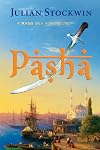
Pasha, by Julian Stockwin, is the latest installment in the Kydd Sea Adventures. In this volume, newly knighted Sir Thomas Kydd is sent to Turkey to help prevent the French from befriending the Sultan and thus establishing a land bridge to India. Meanwhile, his close friend, Renzi, leaves the ship and pursues his own destiny.
The writing, especially of the dialogue, was very impressive in this book. Not only were many of the accents accurately written, but the work choice itself was very show more reflective of the early 19th century. Likewise, the historical details, such as the loss of the Ajax, were spot on. The tale itself moved nicely along with enough details to be interesting, but not too many to drag.
Sadly, the book also suffers from predictability. Much of the plot is clearly foretold so that the climax is lacking. Additionally, and this is probably just me, but in 15 novels, Thomas Kydd has gone from pressed wig-maker with no sailing experience to a knighted captain on his way to admiral. I know this is fiction, but can't the guy have a failure?
Overall, it was a good, bedtime read. Not great, but serviceable. show less
The writing, especially of the dialogue, was very impressive in this book. Not only were many of the accents accurately written, but the work choice itself was very show more reflective of the early 19th century. Likewise, the historical details, such as the loss of the Ajax, were spot on. The tale itself moved nicely along with enough details to be interesting, but not too many to drag.
Sadly, the book also suffers from predictability. Much of the plot is clearly foretold so that the climax is lacking. Additionally, and this is probably just me, but in 15 novels, Thomas Kydd has gone from pressed wig-maker with no sailing experience to a knighted captain on his way to admiral. I know this is fiction, but can't the guy have a failure?
Overall, it was a good, bedtime read. Not great, but serviceable. show less
This review was written for LibraryThing Early Reviewers.
Another interesting entry in this quite good series. Stockwin captures the essence of the islands.in Georgian times as well as the political importance of their geography and their most important export, sugar. Interesting characters and a suitably intriguing story line aptly explores the excitement and difficulties of his "up from the ranks" frigate captain. .
This review was written for LibraryThing Early Reviewers.Lists
Awards

You May Also Like


Associated Authors
Statistics
- Works
- 35
- Members
- 3,030
- Popularity
- #8,427
- Rating
- 3.8
- Reviews
- 155
- ISBNs
- 399
- Languages
- 3
- Favorited
- 3

