The Joyful Guide To Retirement—A Simple Roadmap to Happy, Healthy and a Thriving Life by Sandy Rogers

As someone who is nearing retirement, I was looking forward to reading this book and learning tips on how to prepare for retirement. And yes, the book has a lot of advice and examples all collected into a very easy to read style.
But, and honestly it may be just me, the premise of the book seems that one will be bored, "lost" without a career or job and that this whole in one's life needs to be filled. For me, I could easily and meaningfully fill my time 24/7 without a job. So, much of the book was irrelevant.
But, and honestly it may be just me, the premise of the book seems that one will be bored, "lost" without a career or job and that this whole in one's life needs to be filled. For me, I could easily and meaningfully fill my time 24/7 without a job. So, much of the book was irrelevant.
 This review was written for LibraryThing Early Reviewers.
Putin's Sledgehammer: The Wagner Group and Russia’s Collapse into Mercenary Chaos by Candace Rondeaux
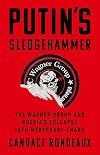
Putin's Sledgehammer is the story of the rise and fall of the Wagner Group in Russia. The book begins before there was a Wagner Group and continues in detail to the aftermath of Prigozhin's mutiny. The text itself is 380 some pages with another 40 pages of notes and references.
To say this book is dense and detailed in an understatement. The author, Candance Rondeaux, has clearly spent an incredible amount of time and effort amassing this information and carefully crafting the narrative. Her writing style is straightforward but not boring. For folks, not necessarily scholars, who wish to understand the rise and fall of Wagner Group, this is a fully accessible text. Even readers who are familiar with Russia and Ukraine will probably learn something by reading this book.
On a personal note, this book rivals the works of Timothy Snyder and Ann Applebaum. I did receive the ebook version, but somewhere in the first chapter, I realized I needed the hard copy version to add to my library. I will be looking for more books by this author.
To say this book is dense and detailed in an understatement. The author, Candance Rondeaux, has clearly spent an incredible amount of time and effort amassing this information and carefully crafting the narrative. Her writing style is straightforward but not boring. For folks, not necessarily scholars, who wish to understand the rise and fall of Wagner Group, this is a fully accessible text. Even readers who are familiar with Russia and Ukraine will probably learn something by reading this book.
On a personal note, this book rivals the works of Timothy Snyder and Ann Applebaum. I did receive the ebook version, but somewhere in the first chapter, I realized I needed the hard copy version to add to my library. I will be looking for more books by this author.
This review was written for LibraryThing Early Reviewers.
The Alchemy of Chores is a relatively short book (about 90 pages) with a powerful message -- household chores do not have to be chores. The book is divided into 3 sections -- Foundation, Transforming Specific Chores, and Awareness to Action, followed by a 30-day challenge. The main thesis of the book is that chores are not something "evil" to dread and avoid, but, with a shift in mindset, they are opportunities to stop and focus on the mundane which will lead to clarity and awareness and thus, the chores get done.
Okay, I kind of snorted at all this as it is the same Buddhist idea of being in the moment and the author does refer frequently to monks sweeping. But he does interlace the examples with down-to-earth ideas. Folding laundry becomes "adult origami", which is a "nope" in my book, but it was more than enough to encourage me to read the rest. And honestly, as someone who procrastinates with the best of them when it comes to dishes and sweeping, by the end of the book, I was looking at both tasks in a slightly different light. (This does not mean I'm cured of dreading chores, but a small crack has opened in my mindset.)
Overall, the book is well written and clear. I have already recommended this book to a couple of fellow "I hate to do chores" friends. My one small personal issue is with the use of bold text to emphasize certain words and phrases. I understand the point, but I would have preferred little to no bold text within paragraphs.
Okay, I kind of snorted at all this as it is the same Buddhist idea of being in the moment and the author does refer frequently to monks sweeping. But he does interlace the examples with down-to-earth ideas. Folding laundry becomes "adult origami", which is a "nope" in my book, but it was more than enough to encourage me to read the rest. And honestly, as someone who procrastinates with the best of them when it comes to dishes and sweeping, by the end of the book, I was looking at both tasks in a slightly different light. (This does not mean I'm cured of dreading chores, but a small crack has opened in my mindset.)
Overall, the book is well written and clear. I have already recommended this book to a couple of fellow "I hate to do chores" friends. My one small personal issue is with the use of bold text to emphasize certain words and phrases. I understand the point, but I would have preferred little to no bold text within paragraphs.
This review was written for LibraryThing Early Reviewers.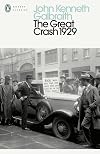
The Great Depression 1929 was a short but fairly thorough discussion of the events leading upto the Great Depression and shortly thereafter.
The writing is solid for the most part, but occasionally a definition would have helped this non-economics major's understanding. Overall, the ecominics terminology was kept to a minimum and was fairly comprehensible. It is frightening to see the events from 1929-1932 unfold on the pages as the US teeters on the brink economically (2025).
My two major complaints:
1) The book was written in 1954 and would be wonderful if undated.
2) In several areas, the author says, "This is discussed many other places" as if the layperson is supposed to know or have access to this knowledge. Some suggestions for reading would have been nice.
The writing is solid for the most part, but occasionally a definition would have helped this non-economics major's understanding. Overall, the ecominics terminology was kept to a minimum and was fairly comprehensible. It is frightening to see the events from 1929-1932 unfold on the pages as the US teeters on the brink economically (2025).
My two major complaints:
1) The book was written in 1954 and would be wonderful if undated.
2) In several areas, the author says, "This is discussed many other places" as if the layperson is supposed to know or have access to this knowledge. Some suggestions for reading would have been nice.
Mondegreen: Songs about Death and Love (Harvard Library of Ukrainian Literature) by Volodymyr Rafeyenko
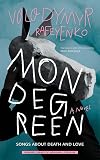
Apparently I do not appreciate high literature as I found much of this book incomprehensible. (Although I like James Joyce, so it may not be a "me" problem.)
I worried if I was going to be in trouble when the preface by another writer was very long and somewhat confusing. That foreboding proved accurate.
In sections where the text made sense, the writing style was interesting. And that's about all the good I can say.
In the rest of the book, it was a series of flashbacks, "visions", strange jumps from character to character, with some sections seemingly written by someone undergoing a psychotic break or someone on hallucinogenics. Based on the last section, the former, I guess.
I did wonder if the translation (original is in Ukrainian) was part of the fault. But after talking to a couple Ukrainians, they said no and suggested I throw the book out as it wasn't worth my time.
Very rarely do I stop reading a book, so despite their advice, I finished it. Now I regret the wasted time.
I worried if I was going to be in trouble when the preface by another writer was very long and somewhat confusing. That foreboding proved accurate.
In sections where the text made sense, the writing style was interesting. And that's about all the good I can say.
In the rest of the book, it was a series of flashbacks, "visions", strange jumps from character to character, with some sections seemingly written by someone undergoing a psychotic break or someone on hallucinogenics. Based on the last section, the former, I guess.
I did wonder if the translation (original is in Ukrainian) was part of the fault. But after talking to a couple Ukrainians, they said no and suggested I throw the book out as it wasn't worth my time.
Very rarely do I stop reading a book, so despite their advice, I finished it. Now I regret the wasted time.
Grey Bees: A captivating, heartwarming story about a gentle beekeeper caught up in the war in Ukraine by Andrej Kurkow
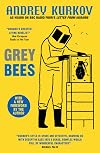
Grey Bees is the story of Sergey, a bee keeper, who lives in the Grey zone between Russian backed separatists and Ukrainian forces. In the small village, it's only him, Pasha, and his Bees. The story centers on the complexity of his seemingly simple life and the problems brought by the Russian occupation.
The book is very well written and included many details of life in a grey zone. Having some familiarity with the 2014 Russian attack on Ukraine and Ukrainian/Russian general history would be helpful to fully understand the book.
The book is very well written and included many details of life in a grey zone. Having some familiarity with the 2014 Russian attack on Ukraine and Ukrainian/Russian general history would be helpful to fully understand the book.
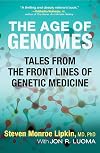
Fascinating book on how genes influence health and how medicine is using it to heal us. While it is technical in spots, anyone with a good science background should have no problem reading this as the author does a stellar job explaining these complex topics.
This review was written for LibraryThing Early Reviewers.52 Small Changes for the Mind: Improve Memory * Minimize Stress * Increase Productivity * Boost Happiness by Brett Blumenthal
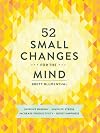
While I find many self-help books to be idealistic and impractical, this one is very practical and truly helpful. The weekly tast is explained as to why one should do and how to do it. Great book!
This review was written for LibraryThing Early Reviewers.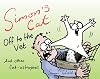
Simon Goes to the Vet is a fun little book that provided a lot of humor. I was a bit disappointed in it for 2 reasons. First, I was expecting a central theme, I suppose like a plot, that would connect the cartoons together, but there was only hints of one. This made it interesting to turn the page and find yet another topic. Second, there was a lot of good 'go to vet' material not used. I have cats -- I know what fun some vet trips are. I suppose this is not a fair criticism, but it did annoy me.
Overall, I would recommend the book as it is funny in spots, but it just didn't grab me.
Overall, I would recommend the book as it is funny in spots, but it just didn't grab me.
This review was written for LibraryThing Early Reviewers.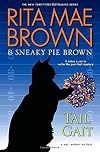
Having read several others in this series, this story was an average one. The writing was okay -- not great, not bad. The plot was comfortingly predictable, which is what a cozy mystery is at times.
The truly outstanding part of this book was the illustrations. I loved them!
Would I recommend this book to a serious reader? No. But I would recommend it for a little light reading either at bedtime, or as I read it, between doctor appointments.
The truly outstanding part of this book was the illustrations. I loved them!
Would I recommend this book to a serious reader? No. But I would recommend it for a little light reading either at bedtime, or as I read it, between doctor appointments.
This review was written for LibraryThing Early Reviewers.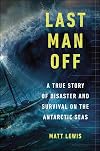
Last Man Off is the fascinating, if not gruesome, account of a young fish biologist aboard a South African fishing vessel. His role was simply to make sure the fishery was not over fished. When the ship began to sank, his role changed to one of leader.
The story, based on true accounts, was riveting. The writing was well done, with enough detail to make the story come alive.
Highly recommend this book!
The story, based on true accounts, was riveting. The writing was well done, with enough detail to make the story come alive.
Highly recommend this book!
This review was written for LibraryThing Early Reviewers.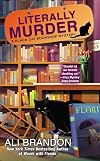
Literally Murder is the 4th in the Black Cat Bookshop Mystery and one that takes place almost entirely outside of the the bookstore and New York. In this installment, Darla (bookstore owner), Jake (friend), and Hamlet (the black cat) are invited to a national cat show in Florida where, of course, there is a murder and they get entangled in the case.
The writing is fine, not spectacular, and the plot moves along nicely. The ending was a surprise. More impressively to me, the details about the cat show were almost all correct. A few things, like how they called the cats to the ring and the ribbons were slightly off, but that is to be expected if one doesn't show cats. The whole relationship of cat shows and animal rights was well explained.
Overall, this was a very good cozy cat mystery!
The writing is fine, not spectacular, and the plot moves along nicely. The ending was a surprise. More impressively to me, the details about the cat show were almost all correct. A few things, like how they called the cats to the ring and the ribbons were slightly off, but that is to be expected if one doesn't show cats. The whole relationship of cat shows and animal rights was well explained.
Overall, this was a very good cozy cat mystery!
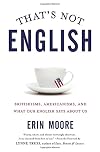
That's Not English is a collection of anecdotal stories on various words that occur in American and/or British English but with slightly different meanings. The stories come from the author's life -- an American who has moved to Britain.
The writing is fine and many of the stories are humorous. The chapters are brief and make for light reading. Sadly, after about the 6th chapter, I got bored. While the stories are entertaining, I wanted more information on why the meanings and usage diverged. If a person has either lived in the UK or has studied the history of the English language, that person may be disappointed by this book.
Overall, good, but not very satisfying to me.
The writing is fine and many of the stories are humorous. The chapters are brief and make for light reading. Sadly, after about the 6th chapter, I got bored. While the stories are entertaining, I wanted more information on why the meanings and usage diverged. If a person has either lived in the UK or has studied the history of the English language, that person may be disappointed by this book.
Overall, good, but not very satisfying to me.
This review was written for LibraryThing Early Reviewers.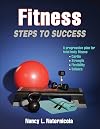
Fitness: Steps to Success is, as the title says, a guide to getting fit in simple steps. The author starts by having one assess his/her level of fitness, both in terms of body condition and in terms of ability. Then a workout is devised based on individual needs.
The writing was clear and helpful. The instructions for the exercises were easy to follow. The discussion on levels of fitness was not 'preachy'. Most surprisingly, the book clearly states that it was meant to get you started and give you guidance on some exercises, but it encourages the reader to seek other resources for more exercises. The section on diet was also very practical and very useful.
Overall, this was a wonderful book and one that I am personally using to get fit.
The writing was clear and helpful. The instructions for the exercises were easy to follow. The discussion on levels of fitness was not 'preachy'. Most surprisingly, the book clearly states that it was meant to get you started and give you guidance on some exercises, but it encourages the reader to seek other resources for more exercises. The section on diet was also very practical and very useful.
Overall, this was a wonderful book and one that I am personally using to get fit.
This review was written for LibraryThing Early Reviewers.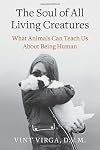
The Soul of All Creatures sounded very interesting but... The writing is fine. Many of the stories are interesting. But that is where the appeal for me ends. Between the animal stories is 'stuff' which consisted of fairly shallow commentary on human behaviors and ethics and which apparently was the whole point of the book. Sadly, the whole book left me cold. I struggled to read it and in the end, after 3 attempts, gave up.
This review was written for LibraryThing Early Reviewers.
English Dialects from the Eighth Century to the Present Day by W.W. Skeat is a slim volume (only about 120 small pages). The main part of the book discusses the 4 major dialects of Old English, giving many examples and many citations to published texts. The remainder of the book looks at how the dialects changed until the beginning of the 20th century, but in much less detail.
The comments and discussion on the Old English dialects constitute a very important part of the study of Old English. Dr. Skeat was eminently qualified to studied the dialects. One of the most valuable, although now a bit dated, parts is the references to various published manuscripts or collections of Old English writings.
Unfortunately, the book is a slim volume. It does not present a comparative grammar of the dialects, but word lists and a few brief comparisons. Dr. Skeat seemingly assumes the reader will be familiar with Old English and only needs to have some of the differences pointed out, which is a bit frustrating if one's Old English is rusty.
Overall, this is a useful book, but not a thorough one. It whetted my appetite to look at the early history of English, but left much of the work to be done on my own.
The comments and discussion on the Old English dialects constitute a very important part of the study of Old English. Dr. Skeat was eminently qualified to studied the dialects. One of the most valuable, although now a bit dated, parts is the references to various published manuscripts or collections of Old English writings.
Unfortunately, the book is a slim volume. It does not present a comparative grammar of the dialects, but word lists and a few brief comparisons. Dr. Skeat seemingly assumes the reader will be familiar with Old English and only needs to have some of the differences pointed out, which is a bit frustrating if one's Old English is rusty.
Overall, this is a useful book, but not a thorough one. It whetted my appetite to look at the early history of English, but left much of the work to be done on my own.
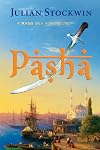
Pasha, by Julian Stockwin, is the latest installment in the Kydd Sea Adventures. In this volume, newly knighted Sir Thomas Kydd is sent to Turkey to help prevent the French from befriending the Sultan and thus establishing a land bridge to India. Meanwhile, his close friend, Renzi, leaves the ship and pursues his own destiny.
The writing, especially of the dialogue, was very impressive in this book. Not only were many of the accents accurately written, but the work choice itself was very reflective of the early 19th century. Likewise, the historical details, such as the loss of the Ajax, were spot on. The tale itself moved nicely along with enough details to be interesting, but not too many to drag.
Sadly, the book also suffers from predictability. Much of the plot is clearly foretold so that the climax is lacking. Additionally, and this is probably just me, but in 15 novels, Thomas Kydd has gone from pressed wig-maker with no sailing experience to a knighted captain on his way to admiral. I know this is fiction, but can't the guy have a failure?
Overall, it was a good, bedtime read. Not great, but serviceable.
The writing, especially of the dialogue, was very impressive in this book. Not only were many of the accents accurately written, but the work choice itself was very reflective of the early 19th century. Likewise, the historical details, such as the loss of the Ajax, were spot on. The tale itself moved nicely along with enough details to be interesting, but not too many to drag.
Sadly, the book also suffers from predictability. Much of the plot is clearly foretold so that the climax is lacking. Additionally, and this is probably just me, but in 15 novels, Thomas Kydd has gone from pressed wig-maker with no sailing experience to a knighted captain on his way to admiral. I know this is fiction, but can't the guy have a failure?
Overall, it was a good, bedtime read. Not great, but serviceable.
This review was written for LibraryThing Early Reviewers.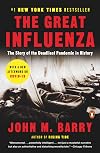
The Great Influenza focuses on both the actual pandemic of 1918 and the problems associated with it as well as the science and doctors who fought, and in some cases died, to understand and stop this pandemic. Most of the material is drawn from the US, with some mention of events in other parts of the world. The book contains photographic plates as well as an extensive bibliography.
I approached this book with some apprehension, fearing that it would be a dry recitation of statistics about deaths, illness, etc. Instead, I found a book that both gave the important statistics and clearly set them in context regarding science, society, and history. The writing was well done -- perhaps not the best prose, but not dry nor tedious.
If there was a criticism to make it would be the last few chapters, where some of the biographical information about the researchers seemed to far from the topic. Additionally, I would have liked to see a more thorough discussion of how viruses mutate -- this perhaps would have been best as an appendix, but it was a key point in the book (as the flu came in waves after each mutation).
Overall, this was a very good book and one that I highly recommend to others interested either in epidemics or in science circa 1920.
I approached this book with some apprehension, fearing that it would be a dry recitation of statistics about deaths, illness, etc. Instead, I found a book that both gave the important statistics and clearly set them in context regarding science, society, and history. The writing was well done -- perhaps not the best prose, but not dry nor tedious.
If there was a criticism to make it would be the last few chapters, where some of the biographical information about the researchers seemed to far from the topic. Additionally, I would have liked to see a more thorough discussion of how viruses mutate -- this perhaps would have been best as an appendix, but it was a key point in the book (as the flu came in waves after each mutation).
Overall, this was a very good book and one that I highly recommend to others interested either in epidemics or in science circa 1920.
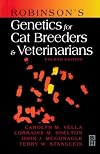
Robinson's Genetics for Cat Breeders & Veterinarians has long been the standard reference for cat genetics, whether you are a cat breeder, a vet, or a simple cat owner interested in genetics and cats. And it has earned this reputation because it is a very well written book.
The begins with a basic introduction to genetics and how simple genes works. It then goes on to discuss topics such as coat color and genetics, inbreeding, and genetic anomalies, such as PKD. As someone very familiar with cats and genetics, even I learned some things about why breeders do inbreeding versus line breeding and the benefits/harms of each.
My only quibble with the book is I would have like more illustrations both of the genetic defects when appropriate and of various crossings. I also know that some of the comments such as "in the future it may be discovered..." does date the contents somewhat. I sincerely hope there is a 5th edition in the works.
Still, this book is a valuable addition to any cat breeders', vet's or cat enthusiast's library. Highly recommended!
The begins with a basic introduction to genetics and how simple genes works. It then goes on to discuss topics such as coat color and genetics, inbreeding, and genetic anomalies, such as PKD. As someone very familiar with cats and genetics, even I learned some things about why breeders do inbreeding versus line breeding and the benefits/harms of each.
My only quibble with the book is I would have like more illustrations both of the genetic defects when appropriate and of various crossings. I also know that some of the comments such as "in the future it may be discovered..." does date the contents somewhat. I sincerely hope there is a 5th edition in the works.
Still, this book is a valuable addition to any cat breeders', vet's or cat enthusiast's library. Highly recommended!
The Litter of the Law is a further volume in the Mrs. Murphy Mystery series, feature the cat Mrs. Murphy and her friends. In this installment, set around Halloween, bodies begin to show up in 'interesting' situations. For example, one is found as a scarecrow. One body leads to another and a mystery must be solved.
While the writing is as well done as the others in the series, the end, the climax, was confusing and abrupt. True, I was reading this book in bed as I was falling asleep, but I had to reread sections to figure out who did what. It almost seemed that the author got to page 250 and said, "Oh gee, I have to wrap this up quickly."
While the writing is as well done as the others in the series, the end, the climax, was confusing and abrupt. True, I was reading this book in bed as I was falling asleep, but I had to reread sections to figure out who did what. It almost seemed that the author got to page 250 and said, "Oh gee, I have to wrap this up quickly."
This review was written for LibraryThing Early Reviewers.
Nine Lives to Die is another installment from the Mrs. Murphy Mystery series, featuring Mrs. Murphy, a cat. In this book, the remains of a person are found, which sets off a train of events.
Compared to other volumes in this series, it is about average with them. The writing is sound if not spectacular. The plot moves gently along with a twist or two at the end. While I would never recommend this book as serious literature or even a great mystery, it is what it is and that is, a cozy mystery, good for a bedtime read as I was fading off to sleep.
Compared to other volumes in this series, it is about average with them. The writing is sound if not spectacular. The plot moves gently along with a twist or two at the end. While I would never recommend this book as serious literature or even a great mystery, it is what it is and that is, a cozy mystery, good for a bedtime read as I was fading off to sleep.
This review was written for LibraryThing Early Reviewers.
I'm fat... There's no getting around this. Over the years, I have purchased numerous books on weight loss, both by dieting and by exercise. And honestly, I've been disappointed in most. Sure some books have a few ideas, but most are based on tricks and gimmicks that the average sane person would not use.
This book, however, IS helpful. The 'diet' section is brief, to the point, and spot one. The exercises, which are the main part of the book, are well illustrated and well described. And the workout routines are reasonable and varied -- one does not need an entire gym to follow the routines!
My only criticism is that the introductory routine, for those who aren't working out, is, well, VERY demanding. I had to scale back the reps and follow that routine for a month, not the week that was suggested.
Overall, this is an excellent book for strengthening muscles while losing weight. And hey, I've lost 5 pounds!
This book, however, IS helpful. The 'diet' section is brief, to the point, and spot one. The exercises, which are the main part of the book, are well illustrated and well described. And the workout routines are reasonable and varied -- one does not need an entire gym to follow the routines!
My only criticism is that the introductory routine, for those who aren't working out, is, well, VERY demanding. I had to scale back the reps and follow that routine for a month, not the week that was suggested.
Overall, this is an excellent book for strengthening muscles while losing weight. And hey, I've lost 5 pounds!
This review was written for LibraryThing Early Reviewers.
Cat to the Dogs (#5 of the Joe Grey series) begins with a car crash and two large puppies. As Joe and Dulcie investigate, they also must deal with a widow's family. Not surprisingly all these threads are related and the cats solve the mystery first.
This volume is marginally better than the last. The humans actually play a minimal role, so the cats and 2 large puppies are front and center. Sadly the puppies don't talk and do little more than make messes. As for Joe and Dulcie, while they talk, it seems as if the author is a bit uncomfortable with her talking cats as, low and behold, there is another talking cat!
I'm feeling very sad about this series -- I think it has potential with a cat-owning guy, a handy-woman girlfriend, and two likable cats, but nothing much has come of any of this.
This volume is marginally better than the last. The humans actually play a minimal role, so the cats and 2 large puppies are front and center. Sadly the puppies don't talk and do little more than make messes. As for Joe and Dulcie, while they talk, it seems as if the author is a bit uncomfortable with her talking cats as, low and behold, there is another talking cat!
I'm feeling very sad about this series -- I think it has potential with a cat-owning guy, a handy-woman girlfriend, and two likable cats, but nothing much has come of any of this.
Saxons, Vikings, and Celts examines the origins of the people on the British Isles. The legends and written histories are given in detail. Much of those accounts are corroborated by the genetic testing which the author did.
Overall, I found this book to be mildly interesting, but annoying and tedious in spots. The author carefully goes through the histories of each group of people, such as the Irish. This takes up the bulk of the book, but it's something that I already knew and I suspect most people reading this book would already know. Another large part is how the blood was collected, which was interesting but this gave the book more of a travel log feeling than a presentation of scientific findings. The large conclusions on the genetic origin is in the second half of the very last chapter. Since it was the topic of the book, I would have liked to seen it discussed more.
Additionally, since I was listening to the audio version of this book, I was frustrated by the reader, Dick Hill. He would speak in a normal voice, then speak very softly for dramatic effect, and then back to normal for the point. This might work if I had been listening in a quite room, but I was driving. The quiet parts were generally lost. Eventually, I gave up trying to hear them and assumed if whatever he was saying was important, he would say it in a normal voice.
I'll probably listen to this again just because I commute so much and I run out of books to listen to, but I would not really recommend it.
Overall, I found this book to be mildly interesting, but annoying and tedious in spots. The author carefully goes through the histories of each group of people, such as the Irish. This takes up the bulk of the book, but it's something that I already knew and I suspect most people reading this book would already know. Another large part is how the blood was collected, which was interesting but this gave the book more of a travel log feeling than a presentation of scientific findings. The large conclusions on the genetic origin is in the second half of the very last chapter. Since it was the topic of the book, I would have liked to seen it discussed more.
Additionally, since I was listening to the audio version of this book, I was frustrated by the reader, Dick Hill. He would speak in a normal voice, then speak very softly for dramatic effect, and then back to normal for the point. This might work if I had been listening in a quite room, but I was driving. The quiet parts were generally lost. Eventually, I gave up trying to hear them and assumed if whatever he was saying was important, he would say it in a normal voice.
I'll probably listen to this again just because I commute so much and I run out of books to listen to, but I would not really recommend it.

Cat in the Dark (#4 of Joe Grey Mysteries) starts with a series of burglaries, which Joe and Dulcie discover are aided by another talking cat, Azreal. And then, a couple are murdered, another person is murdered, and a dear friend is assaulted. Again, the two cats step in to help the police.
Compared to the previous book, this one took a small step backwards. The plot seemed to drag through the first half of the book, as the murders themselves didn't occur until well into the second half. The writing was confusing in various spots, so that I had to reread a numerous short passages to figure out who was being referred to. The transitions from one scene to another were non-existent in a couple of cases. The author, Shirley Rousseau Murphy, seemed to be trying too hard. She even created another talking cat, Azreal, who embodied evil, and then left this cat in Molena Point (maybe to reappear in a future book?).
Overall, this was barely 3.5 stars -- the cats saved it with some interesting observations and comments.
Compared to the previous book, this one took a small step backwards. The plot seemed to drag through the first half of the book, as the murders themselves didn't occur until well into the second half. The writing was confusing in various spots, so that I had to reread a numerous short passages to figure out who was being referred to. The transitions from one scene to another were non-existent in a couple of cases. The author, Shirley Rousseau Murphy, seemed to be trying too hard. She even created another talking cat, Azreal, who embodied evil, and then left this cat in Molena Point (maybe to reappear in a future book?).
Overall, this was barely 3.5 stars -- the cats saved it with some interesting observations and comments.
Cat Raise the Dead (#3 in the Joe Grey mystery series) has elderly patients in a nursing home disappearing and an assortment of burglaries. Joe and Dulcie (2 talking cats) are drawn to investigate both mysteries.
Compared to the 2 previous books, the writing is a bit improved. Some of the characters, such as the police chief Max Harper and one of the owners Clyde are much more rounded with some more personal details. The plot is a bit contrived and transparent in spots. And the cats, well, it seems Shirley Rousseau Murphy has finally come to grips with her own creation of talking cats. They cats are very much cats with the talking part seeming much more natural.
Overall, still only a good bedtime read, but looking up.
Compared to the 2 previous books, the writing is a bit improved. Some of the characters, such as the police chief Max Harper and one of the owners Clyde are much more rounded with some more personal details. The plot is a bit contrived and transparent in spots. And the cats, well, it seems Shirley Rousseau Murphy has finally come to grips with her own creation of talking cats. They cats are very much cats with the talking part seeming much more natural.
Overall, still only a good bedtime read, but looking up.

Cat under Fire is book #2 in the Joe Grey mysteries. In this volume, a local artist is killed and her studio is burned downed, with the prime suspect being her ex. Naturally, Joe, your basic talking cat, is convinced he is innocent and so, along with his companion cat, Dulcie (also talking), they investigate and help to solve the case.
The writing, plot, characters, etc. are at the same par as the first book. That is to say, so-so. The human characters are not well-rounded, but the cats are. The plot was interesting enough, but not gripping. As for the talking cats, well, honestly, they didn't talk a lot in this book.
Overall, not the best cozy cat mystery, but good enough for a bedtime read when you are falling asleep.
The writing, plot, characters, etc. are at the same par as the first book. That is to say, so-so. The human characters are not well-rounded, but the cats are. The plot was interesting enough, but not gripping. As for the talking cats, well, honestly, they didn't talk a lot in this book.
Overall, not the best cozy cat mystery, but good enough for a bedtime read when you are falling asleep.
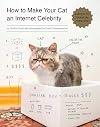
How to Make Your Cat an Internet Celebrity is a plan to take your cat, find his/her special characteristics, and then market him/her to the world. Sounds impossible? Some cats and their owners have done just that. This book guides you through the process, step by step.
I thoroughly enjoyed this book. The photo-illustrations are wonderful! This book kept me laughing from cover to cover. The plan it lays out might work, and not just for cats. (The actual marketing strategies are real -- just applied to cats on the internet!)
While I don't think I'll try this with one of my cats, I do have friends who probably NEED this book! Good reading!!!
I thoroughly enjoyed this book. The photo-illustrations are wonderful! This book kept me laughing from cover to cover. The plan it lays out might work, and not just for cats. (The actual marketing strategies are real -- just applied to cats on the internet!)
While I don't think I'll try this with one of my cats, I do have friends who probably NEED this book! Good reading!!!
This review was written for LibraryThing Early Reviewers.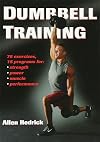
Dumbbell Training is a book about, well, training using dumbbells. It presents a large number of exercises, some modifications from barbell exercises and some specific to dumbbells. For each exercise, there is a detailed description of how to perform the movement as well as common errors. In the beginning and end of the book, the author presents routines and schedules for beginners, seasoned lifters, and specific sports.
The book is well written with many very useful photographs. The exercises are realistic. Having a list of common errors is a wonderful idea and one I have not seen in other weightlifting books.
My biggest complaint is the routines in the back are mostly for specific sports such as sprint cycling. Yes, there is a 1-week introduction routine and a general muscle-building routine, but I would have liked to see more routines for the general public, like me. Still, this is a valuable book to help someone (like me) get back into shape.
The book is well written with many very useful photographs. The exercises are realistic. Having a list of common errors is a wonderful idea and one I have not seen in other weightlifting books.
My biggest complaint is the routines in the back are mostly for specific sports such as sprint cycling. Yes, there is a 1-week introduction routine and a general muscle-building routine, but I would have liked to see more routines for the general public, like me. Still, this is a valuable book to help someone (like me) get back into shape.
This review was written for LibraryThing Early Reviewers.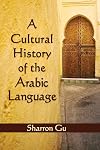
A Cultural History of the Arabic Language presents the evolution of the Arabic language in the context of it's literature and history of the Arab people. The book is well written with many examples and an extensive bibliography. The chapters each focus on an aspect of the cultural history, such as on poetry and the use of Arabic imagery.
The book is good for what it is -- the development of the Arabic language in a cultural context. The nuances are lost, however, on people such as myself who have not read much (or any) Arabic literature. If, like myself, one is expecting a more linguistic analysis of the development of the Arabic language, this is not the book.
The book is good for what it is -- the development of the Arabic language in a cultural context. The nuances are lost, however, on people such as myself who have not read much (or any) Arabic literature. If, like myself, one is expecting a more linguistic analysis of the development of the Arabic language, this is not the book.
This review was written for LibraryThing Early Reviewers.