
Sean Russell
Author of The One Kingdom
About the Author
Series
Works by Sean Russell
Tagged
Common Knowledge
- Canonical name
- Russell, Sean
- Legal name
- Russell, Sean Thomas
- Other names
- S. Thomas Russell
- Birthdate
- 1952-01-30
- Gender
- male
- Nationality
- Canada
- Birthplace
- Toronto, Ontario, Canada
- Places of residence
- Vancouver Island, British Columbia, Canada
- Associated Place (for map)
- Canada
Members
Discussions
Take Burn or Destory in Naval History and Fiction (June 2013)
Reviews
Rating: 4.5 out of 5
Note: World Without End, is technically the first book in the Moontide and Magic Rise duology, however it really is just the first volume of the book, which was split in two simply due to the length of the text. I purchased the first editions, and each is a mass-market paperback of 600~ pages, simply too much material for one volume. A few years ago DAW republished the books in a single omnibus volume.
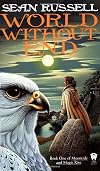
Note 2: I really love the cover of the original book, its much better show more than the omnibus cover.
Wow, just wow. World Without End is astonishingly good. Perhaps its just nostalgia, but I love a good nautical novel with elements of discovery and adventure. As a kid, my favorite books belonged to this genre, R.M. Ballantyne’s books specifically, but they have aged poorly enough in my mind that I can’t enjoy them anymore. Unlike Ballantyne’s books, which generally feature a flawlessly manly, heroic, virtuous, righteous etc. main character who remains impeccable in the face of adversity, Tristam, this books main character, is flawed, lackluster, filled with self-doubts, driven by fleeting passions, but he learns to be courageous, courteous, and discards some of his youthful inexperience. I felt as if I was along for Tristam’s journey, lapping in his botanical enthusiasm and sympathizing with his naivete at every turn of the page.
Plot: 4 out of 5
Setting/Worldbuilding: 4.5 out of 5
Characters: 4 out of 5
Writing Style 5 out of 5
Personal Enjoyment: 5 out of 5
In the introduction to the omnibus edition, Russell writes:
While this is certainly a plot element, there is so much more going on in this story. Courtly drama and politics, conflicted characters, diplomatic intrigue all flow together relatively seamlessly. While it is pretty easy to figure out what the Regis plant’s function is, the rest of the plot remains rather subversive and intriguing.
The ‘romance’ in this book, if it can be called that, is a nuance filled one, and despite my general loathing of the object Tristam’s fascination, Russell perfectly counterbalances irrational emotional desire against caution and instinct.
Simply because World Without End is only the first half of the story, I can’t elaborate at length on the book, because so many things remain unresolved. I have already enthusiastically started the second volume, Sea Without a Shore. show less
Note: World Without End, is technically the first book in the Moontide and Magic Rise duology, however it really is just the first volume of the book, which was split in two simply due to the length of the text. I purchased the first editions, and each is a mass-market paperback of 600~ pages, simply too much material for one volume. A few years ago DAW republished the books in a single omnibus volume.
Note 2: I really love the cover of the original book, its much better show more than the omnibus cover.
Wow, just wow. World Without End is astonishingly good. Perhaps its just nostalgia, but I love a good nautical novel with elements of discovery and adventure. As a kid, my favorite books belonged to this genre, R.M. Ballantyne’s books specifically, but they have aged poorly enough in my mind that I can’t enjoy them anymore. Unlike Ballantyne’s books, which generally feature a flawlessly manly, heroic, virtuous, righteous etc. main character who remains impeccable in the face of adversity, Tristam, this books main character, is flawed, lackluster, filled with self-doubts, driven by fleeting passions, but he learns to be courageous, courteous, and discards some of his youthful inexperience. I felt as if I was along for Tristam’s journey, lapping in his botanical enthusiasm and sympathizing with his naivete at every turn of the page.
Plot: 4 out of 5
Setting/Worldbuilding: 4.5 out of 5
Characters: 4 out of 5
Writing Style 5 out of 5
Personal Enjoyment: 5 out of 5
In the introduction to the omnibus edition, Russell writes:
World Without End had a simple premise, though one that was somewhat original for its time. What if a young naturalist, like Charles Darwin, was sent on a long voyage to distant parts of the earth, but instead of discovering a foundational theory of biological science, discovered magic existed?
While this is certainly a plot element, there is so much more going on in this story. Courtly drama and politics, conflicted characters, diplomatic intrigue all flow together relatively seamlessly. While it is pretty easy to figure out what the Regis plant’s function is, the rest of the plot remains rather subversive and intriguing.
The ‘romance’ in this book, if it can be called that, is a nuance filled one, and despite my general loathing of the object Tristam’s fascination, Russell perfectly counterbalances irrational emotional desire against caution and instinct.
Simply because World Without End is only the first half of the story, I can’t elaborate at length on the book, because so many things remain unresolved. I have already enthusiastically started the second volume, Sea Without a Shore. show less
ORIGINALLY POSTED AT Fantasy Literature.
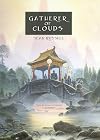
Gatherer of Clouds is the sequel to Sean Russell’s The Initiate Brother, a story which is not so much about the Initiate Brother Shuyun, spiritual advisor to Lord Shonto, as it is about the entire Shonto household — a household that is seen as a threat by an insecure emperor. And with good reason, for Lord Shonto is an honorable, intelligent, and insightful man who has raised his children to be his equals and who has surrounded himself with a show more competent and loyal staff and several clever allies.
As the story opens, Shonto, governor of the northern province of She, is preparing for a massive barbarian invasion that the emperor refuses to believe in (since he only paid for a small invasion in order to get rid of Shonto). Should Shonto stay in the north, as ordered, and be wiped out by the barbarian horde? Or should he let his province fall and retreat toward the capital to raise an army that may have a chance to defeat the invaders? This latter option seems the only way to save the empire of Wa, but the emperor will certainly declare treason if Shonto starts recruiting soldiers. There are hard choices and harder sacrifices to make, not just for Shonto, but for everyone involved.
While reading Gatherer of Clouds, I was completely immersed in the lives of Lord Shonto, Brother Shuyun, Lady Nishima, Lord Komawara, and the Jaku brothers, as well as the beauty and elegance of their lifestyles. Each of Sean Russell’s diverse set of characters is vivid, unique, and realistic, and they all learn much about themselves and each other as the stress ramps up. Because we spend so much time with them, and because they feel so real, their inner struggles become our inner struggles. Would we be willing to sacrifice love for duty? When is it right to disobey (or murder!) a sovereign ruler? Are there times when it is better to kill than to heal? What is true religion and how do we recognize when it has become corrupt? When does loyalty become dishonorable? When principles conflict, how do we know which principle is highest? I found myself considering each of these questions as I read Gatherer of Clouds.
In addition to making us think about some tough ideas, Russell also shows us how legends are made. Every one of his characters has the potential to become either a hero or a villain, and Russell shows us that it’s our daily choices that add up to determine our destiny and how we’ll be perceived by history.
If you enjoy character-centered epic fantasy with lots of political intrigue, Sean Russell’s The Initiate Brother is a great choice. I listened to Blackstone Audio’s version and can recommend this format. This was my first experience with Sean Russell’s writing, but I’ll definitely be exploring more of his work in the future. show less
Gatherer of Clouds is the sequel to Sean Russell’s The Initiate Brother, a story which is not so much about the Initiate Brother Shuyun, spiritual advisor to Lord Shonto, as it is about the entire Shonto household — a household that is seen as a threat by an insecure emperor. And with good reason, for Lord Shonto is an honorable, intelligent, and insightful man who has raised his children to be his equals and who has surrounded himself with a show more competent and loyal staff and several clever allies.
As the story opens, Shonto, governor of the northern province of She, is preparing for a massive barbarian invasion that the emperor refuses to believe in (since he only paid for a small invasion in order to get rid of Shonto). Should Shonto stay in the north, as ordered, and be wiped out by the barbarian horde? Or should he let his province fall and retreat toward the capital to raise an army that may have a chance to defeat the invaders? This latter option seems the only way to save the empire of Wa, but the emperor will certainly declare treason if Shonto starts recruiting soldiers. There are hard choices and harder sacrifices to make, not just for Shonto, but for everyone involved.
While reading Gatherer of Clouds, I was completely immersed in the lives of Lord Shonto, Brother Shuyun, Lady Nishima, Lord Komawara, and the Jaku brothers, as well as the beauty and elegance of their lifestyles. Each of Sean Russell’s diverse set of characters is vivid, unique, and realistic, and they all learn much about themselves and each other as the stress ramps up. Because we spend so much time with them, and because they feel so real, their inner struggles become our inner struggles. Would we be willing to sacrifice love for duty? When is it right to disobey (or murder!) a sovereign ruler? Are there times when it is better to kill than to heal? What is true religion and how do we recognize when it has become corrupt? When does loyalty become dishonorable? When principles conflict, how do we know which principle is highest? I found myself considering each of these questions as I read Gatherer of Clouds.
In addition to making us think about some tough ideas, Russell also shows us how legends are made. Every one of his characters has the potential to become either a hero or a villain, and Russell shows us that it’s our daily choices that add up to determine our destiny and how we’ll be perceived by history.
If you enjoy character-centered epic fantasy with lots of political intrigue, Sean Russell’s The Initiate Brother is a great choice. I listened to Blackstone Audio’s version and can recommend this format. This was my first experience with Sean Russell’s writing, but I’ll definitely be exploring more of his work in the future. show less
"The point of the second draft is to make it look like you knew what you were doing in the first draft." Neil Gaiman
The above quote might be the only possible explanation for how this massive trilogy came to be: as a first draft dumped on paper from start to finish, then immediately printed and shipped.
This was such a disappointing trilogy for me. Massively underwhelming. Which is a shame, considering the author has written Moontide and Magic Rise: an excellent duology that knew where it was show more going. Not here though.
==Spoilers alert==
The first book dances around the idea and invents a thousand pretenses for keeping the premise of the trilogy a secret. Alaan is researching genealogies? Knights of the vow relics? Elise getting forced into a marriage? Cynddl digging up hidden stories? Baore haunted by a nagar? All of that is thrown into the trash can in the next couple of books, as if it was never there. No continuance, no consequences. Just filler that was laid up for volume then promptly forgotten about.
And the cycle repeats itself with the second book and its supposed plot. Alaan baiting Hafydd into the Stillwater and trapping him? Hafydd summoning a souleater monster? The supposed drama with Carl and Jamm? Crowheart, Theason, Pwyll? Everyone is introduced and forgotten about. Scene follows scene and there's just no sense to any of it.
With such a large cast, one would think there has to be some identifier for each character, something remarkable to keep him memorable. But no effort at all is made there; a character is introduced with an adjective or two attached and that's it. Samuel is tricky, Dease is loving, Llyn is noble, Michael is good, but does any of them do anything at all to justify the adjective?
In a particularly telling example, one character is introduced in three different occasions, where each time another character would think of him as "a man of limited imagination". I can't even begin to imagine what would make me believe this is the best way to describe someone. Let alone three different characters thinking the exact same phrase of the same man. But maybe I'm a man of limited imagination myself.
I find it maddening when every single character in the book sounds the same. Arden is Dease is Toren is Tam is Carl is Michael. Baore isn't even there, nor is Fynnol. Cynddl shuts the f up after the first book and disappears till the end of the trilogy. The Fael: just there for flavor, and even then erased too quickly. Pwyll, Crowheart, Theason, Kilydd, Gaint-dude-with-sword: again, invisible there-but-not-there characters. Elise is a Dudley-do-good, while Hafydd is a mustache-twirling villain. I don't want to list all the hundred characters in the book because they're completely indistinguishable from one another. No one is anyone who matters or who acts or sounds any different from anyone else.
It was all so predictable and tedious that I literally groaned at various points.
Perhaps the only redeeming thing about the book was that some of the short stories there were interesting: tiny bits of the past that worked well as myths on their own.
It was obvious that the author wrote the whole thing in an exploratory mood, following each character wherever his road took him, but the end result was a sorry mess that, in my opinion, might have been salvaged by savage rewriting and deletion of all the fluff and extraneous characters and their extremely uninteresting journeys. A dozen drafts later, the trilogy might have become just one book: readable, even enjoyable.
The author's infatuation with his world shows through, possibly explaining how he tried to construct this sense of history into the first book without actually moving any plot forward for the whole length of the book. But this enthusiasm alone does not translate into a pleasurable reading experience at all.
I've only stayed with the book out of a misguided sense of responsibility to finish whatever I've started reading, but this time I was justly punished for my pigheadedness. There was no reward at the end of the trilogy. Just more of the same until it was over.
Please skip this trilogy. Read Moon Tide and Magic Rise by the same author instead. I've read it a decade ago but have nothing but fond memories of it. show less
The above quote might be the only possible explanation for how this massive trilogy came to be: as a first draft dumped on paper from start to finish, then immediately printed and shipped.
This was such a disappointing trilogy for me. Massively underwhelming. Which is a shame, considering the author has written Moontide and Magic Rise: an excellent duology that knew where it was show more going. Not here though.
==Spoilers alert==
The first book dances around the idea and invents a thousand pretenses for keeping the premise of the trilogy a secret. Alaan is researching genealogies? Knights of the vow relics? Elise getting forced into a marriage? Cynddl digging up hidden stories? Baore haunted by a nagar? All of that is thrown into the trash can in the next couple of books, as if it was never there. No continuance, no consequences. Just filler that was laid up for volume then promptly forgotten about.
And the cycle repeats itself with the second book and its supposed plot. Alaan baiting Hafydd into the Stillwater and trapping him? Hafydd summoning a souleater monster? The supposed drama with Carl and Jamm? Crowheart, Theason, Pwyll? Everyone is introduced and forgotten about. Scene follows scene and there's just no sense to any of it.
With such a large cast, one would think there has to be some identifier for each character, something remarkable to keep him memorable. But no effort at all is made there; a character is introduced with an adjective or two attached and that's it. Samuel is tricky, Dease is loving, Llyn is noble, Michael is good, but does any of them do anything at all to justify the adjective?
In a particularly telling example, one character is introduced in three different occasions, where each time another character would think of him as "a man of limited imagination". I can't even begin to imagine what would make me believe this is the best way to describe someone. Let alone three different characters thinking the exact same phrase of the same man. But maybe I'm a man of limited imagination myself.
I find it maddening when every single character in the book sounds the same. Arden is Dease is Toren is Tam is Carl is Michael. Baore isn't even there, nor is Fynnol. Cynddl shuts the f up after the first book and disappears till the end of the trilogy. The Fael: just there for flavor, and even then erased too quickly. Pwyll, Crowheart, Theason, Kilydd, Gaint-dude-with-sword: again, invisible there-but-not-there characters. Elise is a Dudley-do-good, while Hafydd is a mustache-twirling villain. I don't want to list all the hundred characters in the book because they're completely indistinguishable from one another. No one is anyone who matters or who acts or sounds any different from anyone else.
It was all so predictable and tedious that I literally groaned at various points.
Perhaps the only redeeming thing about the book was that some of the short stories there were interesting: tiny bits of the past that worked well as myths on their own.
It was obvious that the author wrote the whole thing in an exploratory mood, following each character wherever his road took him, but the end result was a sorry mess that, in my opinion, might have been salvaged by savage rewriting and deletion of all the fluff and extraneous characters and their extremely uninteresting journeys. A dozen drafts later, the trilogy might have become just one book: readable, even enjoyable.
The author's infatuation with his world shows through, possibly explaining how he tried to construct this sense of history into the first book without actually moving any plot forward for the whole length of the book. But this enthusiasm alone does not translate into a pleasurable reading experience at all.
I've only stayed with the book out of a misguided sense of responsibility to finish whatever I've started reading, but this time I was justly punished for my pigheadedness. There was no reward at the end of the trilogy. Just more of the same until it was over.
Please skip this trilogy. Read Moon Tide and Magic Rise by the same author instead. I've read it a decade ago but have nothing but fond memories of it. show less
"The point of the second draft is to make it look like you knew what you were doing in the first draft." Neil Gaiman
The above quote might be the only possible explanation for how this massive trilogy came to be: as a first draft dumped on paper from start to finish, then immediately printed and shipped.
This was such a disappointing trilogy for me. Massively underwhelming. Which is a shame, considering the author has written Moontide and Magic Rise: an excellent duology that knew where it was show more going. Not here though.
==Spoilers alert==
The first book dances around the idea and invents a thousand pretenses for keeping the premise of the trilogy a secret. Alaan is researching genealogies? Knights of the vow relics? Elise getting forced into a marriage? Cynddl digging up hidden stories? Baore haunted by a nagar? All of that is thrown into the trash can in the next couple of books, as if it was never there. No continuance, no consequences. Just filler that was laid up for volume then promptly forgotten about.
And the cycle repeats itself with the second book and its supposed plot. Alaan baiting Hafydd into the Stillwater and trapping him? Hafydd summoning a souleater monster? The supposed drama with Carl and Jamm? Crowheart, Theason, Pwyll? Everyone is introduced and forgotten about. Scene follows scene and there's just no sense to any of it.
With such a large cast, one would think there has to be some identifier for each character, something remarkable to keep him memorable. But no effort at all is made there; a character is introduced with an adjective or two attached and that's it. Samuel is tricky, Dease is loving, Llyn is noble, Michael is good, but does any of them do anything at all to justify the adjective?
In a particularly telling example, one character is introduced in three different occasions, where each time another character would think of him as "a man of limited imagination". I can't even begin to imagine what would make me believe this is the best way to describe someone. Let alone three different characters thinking the exact same phrase of the same man. But maybe I'm a man of limited imagination myself.
I find it maddening when every single character in the book sounds the same. Arden is Dease is Toren is Tam is Carl is Michael. Baore isn't even there, nor is Fynnol. Cynddl shuts the f up after the first book and disappears till the end of the trilogy. The Fael: just there for flavor, and even then erased too quickly. Pwyll, Crowheart, Theason, Kilydd, Gaint-dude-with-sword: again, invisible there-but-not-there characters. Elise is a Dudley-do-good, while Hafydd is a mustache-twirling villain. I don't want to list all the hundred characters in the book because they're completely indistinguishable from one another. No one is anyone who matters or who acts or sounds any different from anyone else.
It was all so predictable and tedious that I literally groaned at various points.
Perhaps the only redeeming thing about the book was that some of the short stories there were interesting: tiny bits of the past that worked well as myths on their own.
It was obvious that the author wrote the whole thing in an exploratory mood, following each character wherever his road took him, but the end result was a sorry mess that, in my opinion, might have been salvaged by savage rewriting and deletion of all the fluff and extraneous characters and their extremely uninteresting journeys. A dozen drafts later, the trilogy might have become just one book: readable, even enjoyable.
The author's infatuation with his world shows through, possibly explaining how he tried to construct this sense of history into the first book without actually moving any plot forward for the whole length of the book. But this enthusiasm alone does not translate into a pleasurable reading experience at all.
I've only stayed with the book out of a misguided sense of responsibility to finish whatever I've started reading, but this time I was justly punished for my pigheadedness. There was no reward at the end of the trilogy. Just more of the same until it was over.
Please skip this trilogy. Read Moon Tide and Magic Rise by the same author instead. I've read it a decade ago but have nothing but fond memories of it. show less
The above quote might be the only possible explanation for how this massive trilogy came to be: as a first draft dumped on paper from start to finish, then immediately printed and shipped.
This was such a disappointing trilogy for me. Massively underwhelming. Which is a shame, considering the author has written Moontide and Magic Rise: an excellent duology that knew where it was show more going. Not here though.
==Spoilers alert==
The first book dances around the idea and invents a thousand pretenses for keeping the premise of the trilogy a secret. Alaan is researching genealogies? Knights of the vow relics? Elise getting forced into a marriage? Cynddl digging up hidden stories? Baore haunted by a nagar? All of that is thrown into the trash can in the next couple of books, as if it was never there. No continuance, no consequences. Just filler that was laid up for volume then promptly forgotten about.
And the cycle repeats itself with the second book and its supposed plot. Alaan baiting Hafydd into the Stillwater and trapping him? Hafydd summoning a souleater monster? The supposed drama with Carl and Jamm? Crowheart, Theason, Pwyll? Everyone is introduced and forgotten about. Scene follows scene and there's just no sense to any of it.
With such a large cast, one would think there has to be some identifier for each character, something remarkable to keep him memorable. But no effort at all is made there; a character is introduced with an adjective or two attached and that's it. Samuel is tricky, Dease is loving, Llyn is noble, Michael is good, but does any of them do anything at all to justify the adjective?
In a particularly telling example, one character is introduced in three different occasions, where each time another character would think of him as "a man of limited imagination". I can't even begin to imagine what would make me believe this is the best way to describe someone. Let alone three different characters thinking the exact same phrase of the same man. But maybe I'm a man of limited imagination myself.
I find it maddening when every single character in the book sounds the same. Arden is Dease is Toren is Tam is Carl is Michael. Baore isn't even there, nor is Fynnol. Cynddl shuts the f up after the first book and disappears till the end of the trilogy. The Fael: just there for flavor, and even then erased too quickly. Pwyll, Crowheart, Theason, Kilydd, Gaint-dude-with-sword: again, invisible there-but-not-there characters. Elise is a Dudley-do-good, while Hafydd is a mustache-twirling villain. I don't want to list all the hundred characters in the book because they're completely indistinguishable from one another. No one is anyone who matters or who acts or sounds any different from anyone else.
It was all so predictable and tedious that I literally groaned at various points.
Perhaps the only redeeming thing about the book was that some of the short stories there were interesting: tiny bits of the past that worked well as myths on their own.
It was obvious that the author wrote the whole thing in an exploratory mood, following each character wherever his road took him, but the end result was a sorry mess that, in my opinion, might have been salvaged by savage rewriting and deletion of all the fluff and extraneous characters and their extremely uninteresting journeys. A dozen drafts later, the trilogy might have become just one book: readable, even enjoyable.
The author's infatuation with his world shows through, possibly explaining how he tried to construct this sense of history into the first book without actually moving any plot forward for the whole length of the book. But this enthusiasm alone does not translate into a pleasurable reading experience at all.
I've only stayed with the book out of a misguided sense of responsibility to finish whatever I've started reading, but this time I was justly punished for my pigheadedness. There was no reward at the end of the trilogy. Just more of the same until it was over.
Please skip this trilogy. Read Moon Tide and Magic Rise by the same author instead. I've read it a decade ago but have nothing but fond memories of it. show less
Lists
Awards


You May Also Like


Associated Authors
Statistics
- Works
- 22
- Members
- 4,960
- Popularity
- #5,056
- Rating
- 3.8
- Reviews
- 103
- ISBNs
- 173
- Languages
- 7
