

Dudley Pope (1925–1997)
Author of Ramage
About the Author
Author Dudley Pope was born in Ashford, Kent, England on December 29, 1925. At the age of 16, he joined the Navy as a midshipman, but was invalided out when his ship was torpedoed the next year. He became a journalist for a newspaper in Kent and in 1944, became the naval and defense correspondent show more for the London Evening News. In 1954, he published his first book, Flag 4, which was followed by other books on historical accounts. He is best known for his Nicholas Ramage series, which follows the exploits of Lord Nicholas Ramage during the Napoleonic Wars. The first book of this 18-book series was published in 1965. He died on April 25, 1997. (Bowker Author Biography) show less
Series
Works by Dudley Pope
Tagged
Common Knowledge
- Legal name
- Pope, Dudley Bernard Egerton
- Birthdate
- 1925-12-29
- Date of death
- 1997-04-25
- Gender
- male
- Education
- Merchant Navy cadet
- Occupations
- reporter
sailor (merchant sailor)
writer
novelist
author - Nationality
- UK
- Birthplace
- Ashford, Kent, England, UK
- Places of residence
- Ashford, Kent, England, UK (birth)
Porto Santo Stefano, Italy
Barbados
St. Martin, West Indies - Place of death
- Marigot, St. Martin, West Indies
- Burial location
- ashes scattered at sea
- Map Location
- England, UK
Members
Reviews

The Battle of the Barents Sea is the Kardashians of naval conflicts, mattering not because it was important but because certain people (in this case, Hitler) decided to treat it as if it were important.
At the end of 1942, a British naval convoy, JW 51B, was headed for Russia, with an escort of a handful of destroyers and some smaller ships. The Germans spotted the convoy and sent a much stronger force -- the "pocket battleship" Lützow, the heavy cruiser Admiral Hipper, and six destroyers -- show more to eliminate the convoy. But the Germans, who had been ordered by Hitler not to take any real risks, were extraordinarily cautious. The British destroyers bluffed them away from the convoy (although one of the destroyers was sunk, another badly damaged, and still others damaged to lesser degrees). Then two British cruisers showed up and damaged the Hipper. The Germans retreated, the convoy survived -- and Hitler exploded, ordering the destruction of Germany's surface fleet. He was finally talked out of it, but among the other casualties was German naval boss Admiral Raeder, who resigned rather than face more of Hitler's abuse. All this even though the Germans inflicted more damage than they took, and the whole fiasco was ultimately Hitler's fault anyway.
This book, published a dozen years after the war ended, is without doubt the best-known account of the battle, and it is certainly very detailed. If anything, too detailed; it's easy to get lost in all the zigs and zags the convoy took to try to avoid detection. Another curious effect of the book's popularity is that it was published in multiple editions, and the paginations were different, and sometimes they weren't updated, so that my copy actually has references to pages that are wrong and, in at least one case, to photos that aren't there! (My copy, which as this trait, is the edition with ISBN 0870216600; I was able to verify the mis-pagination by comparing against ISBN 1590131029 -- which, however, was mis-bound, so be very careful to check whichever copy you get!)
The book is particularly strong for the period leading up to the sailing of the convoy; it is also very good on the Onslow's first attack on the Germans (that resulted in horrid damage to the Onslow and left the commander of the destroyer flotilla, Captain Sherbrooke, permanently disfigured and with damaged vision) and on the unsuccessful attempts to save the destroyer Achates. It's not nearly so good for what came after the battle -- e.g. what happened to Sherbrooke after the war? And what happened to Admiral Kummetz, the German commander who so signally failed to take advantage of a tremendous opportunity?
Indeed, there isn't much perspective at all from the German side. This is very much a book describing things from the British standpoint. That's not entirely bad -- do any of us really want insight into how the Nazis thought? -- but it makes it harder to understand what is going on. We know what and why the British did, but for the Germans, we generally only know what.
Also, there is some weakness in the descriptions of what happened on the British ships other than the Onslow. I became interested in this battle because of a song about it, "The Kola Run," written by a sailor on the Obdurate. He apparently wrote it in a fit of pique because younger sailors didn't know what it was like in the old days. But this book doesn't really help us know what it was like to serve on the Obdurate either, so it's no help in checking "The Kola Run."
At least the conclusion, about how the battle influenced Hitler's behavior, seems quite strong. The Battle of the Barents Sea should have been no big deal, but it changed the course of the war because of the strange way Hitler viewed it. You may not learn all you want to know about the battle from this book, but you will probably learn all you want to know, and more, about how psychologically disordered the Führer was. show less
At the end of 1942, a British naval convoy, JW 51B, was headed for Russia, with an escort of a handful of destroyers and some smaller ships. The Germans spotted the convoy and sent a much stronger force -- the "pocket battleship" Lützow, the heavy cruiser Admiral Hipper, and six destroyers -- show more to eliminate the convoy. But the Germans, who had been ordered by Hitler not to take any real risks, were extraordinarily cautious. The British destroyers bluffed them away from the convoy (although one of the destroyers was sunk, another badly damaged, and still others damaged to lesser degrees). Then two British cruisers showed up and damaged the Hipper. The Germans retreated, the convoy survived -- and Hitler exploded, ordering the destruction of Germany's surface fleet. He was finally talked out of it, but among the other casualties was German naval boss Admiral Raeder, who resigned rather than face more of Hitler's abuse. All this even though the Germans inflicted more damage than they took, and the whole fiasco was ultimately Hitler's fault anyway.
This book, published a dozen years after the war ended, is without doubt the best-known account of the battle, and it is certainly very detailed. If anything, too detailed; it's easy to get lost in all the zigs and zags the convoy took to try to avoid detection. Another curious effect of the book's popularity is that it was published in multiple editions, and the paginations were different, and sometimes they weren't updated, so that my copy actually has references to pages that are wrong and, in at least one case, to photos that aren't there! (My copy, which as this trait, is the edition with ISBN 0870216600; I was able to verify the mis-pagination by comparing against ISBN 1590131029 -- which, however, was mis-bound, so be very careful to check whichever copy you get!)
The book is particularly strong for the period leading up to the sailing of the convoy; it is also very good on the Onslow's first attack on the Germans (that resulted in horrid damage to the Onslow and left the commander of the destroyer flotilla, Captain Sherbrooke, permanently disfigured and with damaged vision) and on the unsuccessful attempts to save the destroyer Achates. It's not nearly so good for what came after the battle -- e.g. what happened to Sherbrooke after the war? And what happened to Admiral Kummetz, the German commander who so signally failed to take advantage of a tremendous opportunity?
Indeed, there isn't much perspective at all from the German side. This is very much a book describing things from the British standpoint. That's not entirely bad -- do any of us really want insight into how the Nazis thought? -- but it makes it harder to understand what is going on. We know what and why the British did, but for the Germans, we generally only know what.
Also, there is some weakness in the descriptions of what happened on the British ships other than the Onslow. I became interested in this battle because of a song about it, "The Kola Run," written by a sailor on the Obdurate. He apparently wrote it in a fit of pique because younger sailors didn't know what it was like in the old days. But this book doesn't really help us know what it was like to serve on the Obdurate either, so it's no help in checking "The Kola Run."
At least the conclusion, about how the battle influenced Hitler's behavior, seems quite strong. The Battle of the Barents Sea should have been no big deal, but it changed the course of the war because of the strange way Hitler viewed it. You may not learn all you want to know about the battle from this book, but you will probably learn all you want to know, and more, about how psychologically disordered the Führer was. show less

Only Ramage could get fired upon by another British frigate and end up as the defendant in another court-martial presided over by the evil Adm Goddard. Whiz bang, and mostly feasible ending.
Excellent series, sometimes based upon actual events. Always a good story with interesting characters, puzzling quandaries and sometimes quirky solutions. Age of sail tyros should read early in their literary questing for his knowledge and insights into fighting, sailing and British Navy life during these show more quite fascinating times. Many set in the Caribbean where Pope lived for most of his writing career enabling him to provide very helpful maps, not often found in fiction, for his scenarios.scenarios. show less
Excellent series, sometimes based upon actual events. Always a good story with interesting characters, puzzling quandaries and sometimes quirky solutions. Age of sail tyros should read early in their literary questing for his knowledge and insights into fighting, sailing and British Navy life during these show more quite fascinating times. Many set in the Caribbean where Pope lived for most of his writing career enabling him to provide very helpful maps, not often found in fiction, for his scenarios.scenarios. show less
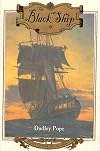
Dudley Pope, author of the Ramage series, has written an absorbing history of the most bloody mutiny to occur in the English navy .
His Majesty's frigates during the late 18th century were crammed with men. It was an unusual captain who managed to keep the men reasonably content and safe under such circumstances. The Hermione, a very small ship, carried 170 at the time of her crew's mutiny against Captain Pigot. Even though the normal complement was 220 for such a small warship, that was a show more lot of men, and it meant many duties on the foretops had to be shared. Pigot was an extraordinarily cruel captain at a time when cruelty was commonplace.
Hugh Pigot had led a charmed life. His father was an Admiral of the Blue, and Hugh's first experience as a midshipman was on a ship used as flagship by his father. For obvious reasons at a time when connections meant everything, Hugh was not treated in the rough-and-tumble manner a normal midshipman would have been. He had the best of everything and no chance to learn "assurance and tolerance." His promotions were hurried along and when appointed post captain he had had only twelve
weeks of command experience.
Flogging with a cat-o'-nine tails (nine two-foot lengths of rope attached to a handle) was the most common form of punishment to maintain discipline. A few lashes could reduce a man's back to bloody ruins and until 1790 Admiralty rules forbade more than twelve, a regulation that was ignore d. Experiments done with replicas have shown that one or two strokes with the lash could easily break a 1 x2 board, and in 1781 three men died within twenty-four hours of being flogged. For mutinous behavior a man could be flogged around the fleet, i.e., taken to each ship to receive twelve lashes; the total might be 300, leading to almost certain death. Punishments on shore were equally harsh, hanging being th e retribution for over two hundred different offenses, but 0 n shore some oversight was available. At sea no one could take exception to the captain's orders. Pigot flogged everyone except his favorites over and over again.
The mutiny was successful, but only in the sense that the captain and most of the officers were killed or thrown overboard. The ship was sailed to a Spanish port where it remained for several years, moored in a sea of red tape, the Spanish being unable to decide what to do with the men and vessel. The ship was eventually recaptured during a daring raid into the Spanish harbor. About thirty of the mutineers were captured and hung. It is extraordinary how Pope has managed to reconstruct the events using contemporary documents to recreate a rather dismal period of British history. show less
His Majesty's frigates during the late 18th century were crammed with men. It was an unusual captain who managed to keep the men reasonably content and safe under such circumstances. The Hermione, a very small ship, carried 170 at the time of her crew's mutiny against Captain Pigot. Even though the normal complement was 220 for such a small warship, that was a show more lot of men, and it meant many duties on the foretops had to be shared. Pigot was an extraordinarily cruel captain at a time when cruelty was commonplace.
Hugh Pigot had led a charmed life. His father was an Admiral of the Blue, and Hugh's first experience as a midshipman was on a ship used as flagship by his father. For obvious reasons at a time when connections meant everything, Hugh was not treated in the rough-and-tumble manner a normal midshipman would have been. He had the best of everything and no chance to learn "assurance and tolerance." His promotions were hurried along and when appointed post captain he had had only twelve
weeks of command experience.
Flogging with a cat-o'-nine tails (nine two-foot lengths of rope attached to a handle) was the most common form of punishment to maintain discipline. A few lashes could reduce a man's back to bloody ruins and until 1790 Admiralty rules forbade more than twelve, a regulation that was ignore d. Experiments done with replicas have shown that one or two strokes with the lash could easily break a 1 x2 board, and in 1781 three men died within twenty-four hours of being flogged. For mutinous behavior a man could be flogged around the fleet, i.e., taken to each ship to receive twelve lashes; the total might be 300, leading to almost certain death. Punishments on shore were equally harsh, hanging being th e retribution for over two hundred different offenses, but 0 n shore some oversight was available. At sea no one could take exception to the captain's orders. Pigot flogged everyone except his favorites over and over again.
The mutiny was successful, but only in the sense that the captain and most of the officers were killed or thrown overboard. The ship was sailed to a Spanish port where it remained for several years, moored in a sea of red tape, the Spanish being unable to decide what to do with the men and vessel. The ship was eventually recaptured during a daring raid into the Spanish harbor. About thirty of the mutineers were captured and hung. It is extraordinary how Pope has managed to reconstruct the events using contemporary documents to recreate a rather dismal period of British history. show less
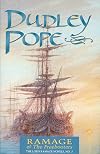
Well, OK, 1'm sorry. I apologize to Dudley Pope. I had said some rather unkind things about one of his Ramage novels, based on an audiotape. To be fair I read another, Ramage and the Freebooters, and it's really quite entertaining.
As with the C.S. Forester, Alexander Kent, and O'Brian series, this one is also set at sea during the Napoleonic War. Lieutenant Ramage, son of the disgraced admiral, is under a cloud himself for having performed some rather unorthodox maneuvers during the Battle show more of St. Vincent. These maneuvers were much to the delight of Sir Jervis and Lord Nelson, but to the consternation and dismay of the more traditional officers, who actually believe in following orders to the letter.
Believing he is to be reprimanded, Ramage appears before Admiral Spencer, only to be given command of a small brig - ten guns the Triton. There's a catch, however. The brig is tied up at Spithead, and this is the year 1797. You will remember that was the year the British sailors mutinied at Spithead. Ramage's task is to find a crew and sail to the Caribbean to carry word of the mutiny to the rest of the British fleet command so they can take appropriate action. A tricky task. Should he succeed, the glory will go to the Board; should he fail, he becomes a convenient scapegoat.
The mutineers' demands were really quite reasonable. Aside from a request for slightly higher pay --they were paid much less than sailors in the merchant service-- they asked for leave when in port (always denied for rear of desertion) and that a pound be considered 16 ounces. Normally, it was the custom of the purser, who had to account for everything, to receipt fur 16 ounces, but supply the men with only 14 ounces, arguing the difference was spoilage or wastage. He usually pocketed the difference himself.
Another scam was to charge off all sorts of expenses to dead sailors, leaving little for the widow, but making himself wealthy. Pursers were not popular. Once Ramage arrives in the West Indies, he is assigned another tricky task. Schooners have been disappearing with regularity, and the Navy has been unable to discover what has happened to them Clearly they have been taken by privateers, yet a search of the entire region reveals no inlets or bays where they could be hiding and transhipping the cargoes. Pope has crafted a page-turning yardbracing mystery. show less
As with the C.S. Forester, Alexander Kent, and O'Brian series, this one is also set at sea during the Napoleonic War. Lieutenant Ramage, son of the disgraced admiral, is under a cloud himself for having performed some rather unorthodox maneuvers during the Battle show more of St. Vincent. These maneuvers were much to the delight of Sir Jervis and Lord Nelson, but to the consternation and dismay of the more traditional officers, who actually believe in following orders to the letter.
Believing he is to be reprimanded, Ramage appears before Admiral Spencer, only to be given command of a small brig - ten guns the Triton. There's a catch, however. The brig is tied up at Spithead, and this is the year 1797. You will remember that was the year the British sailors mutinied at Spithead. Ramage's task is to find a crew and sail to the Caribbean to carry word of the mutiny to the rest of the British fleet command so they can take appropriate action. A tricky task. Should he succeed, the glory will go to the Board; should he fail, he becomes a convenient scapegoat.
The mutineers' demands were really quite reasonable. Aside from a request for slightly higher pay --they were paid much less than sailors in the merchant service-- they asked for leave when in port (always denied for rear of desertion) and that a pound be considered 16 ounces. Normally, it was the custom of the purser, who had to account for everything, to receipt fur 16 ounces, but supply the men with only 14 ounces, arguing the difference was spoilage or wastage. He usually pocketed the difference himself.
Another scam was to charge off all sorts of expenses to dead sailors, leaving little for the widow, but making himself wealthy. Pursers were not popular. Once Ramage arrives in the West Indies, he is assigned another tricky task. Schooners have been disappearing with regularity, and the Navy has been unable to discover what has happened to them Clearly they have been taken by privateers, yet a search of the entire region reveals no inlets or bays where they could be hiding and transhipping the cargoes. Pope has crafted a page-turning yardbracing mystery. show less
Lists
Awards

You May Also Like


Associated Authors
Statistics
- Works
- 48
- Members
- 5,474
- Popularity
- #4,552
- Rating
- 3.7
- Reviews
- 124
- ISBNs
- 373
- Languages
- 9
- Favorited
- 9