
James L. Nelson
Author of The Guardship
About the Author
James L. Nelson is a native of Maine & a former professional square-rig sailor. He still lives in Maine with his wife & children, where he continues to write & maintain his involvement with traditional sail. He is the author of "By Force of Arms", "The Maddest Idea", "The Continental Risque", & show more "Lords of the Ocean". (Bowker Author Biography) show less
Image credit: James Nelson website, picture enhanced by vintage_books. Permission received to copy, enhance and upload photo during phone conversation November 17, 2008.
Series
Works by James L. Nelson
With Fire and Sword: The Battle of Bunker Hill and the Beginning of the American Revolution (2011) 118 copies, 1 review
George Washington's Secret Navy: How the American Revolution Went to Sea (2008) 103 copies, 2 reviews
Reign of Iron: The Story of the First Battling Ironclads, the Monitor and the Merrimack (2004) 98 copies
The Only Life That Mattered: The Short and Merry Lives of Anne Bonny, Mary Read, and Calico Jack Rackam (2004) 72 copies, 2 reviews
George Washington's Great Gamble: And the Sea Battle That Won the American Revolution (2010) 51 copies
The Midgard Serpent: A Novel of Viking Age England (The Norsemen Saga Book 10) (2020) 9 copies, 1 review
Full Fathom Five: A Caleb Hayes Thriller (The Caleb Hayes Thrillers) (Volume 1) (2016) 6 copies, 1 review
Die Wikinger - Tod dem Verräter!: Historischer Roman (Nordmann-Saga 5) (German Edition) (2019) 1 copy
All the Brave Fellows 1 copy
Associated Works
Reporting the Revolutionary War: Before It Was History, It Was News (2012) — Contributor — 158 copies, 4 reviews
MHQ: The Quarterly Journal of Military History — Autumn 2009 (2009) — Author "Burning Falmouth" — 7 copies
MHQ: The Quarterly Journal of Military History — Winter 2014 (2013) — Author "Unknown Soldier: Being There" — 4 copies
Tagged
Common Knowledge
- Other names
- Spudcake, Black Jim
Garrett, Elizabeth - Birthdate
- 1962-04-05
- Gender
- male
- Education
- University of Massachusetts, Amherst
University of California, Los Angeles - Occupations
- historical novelist
- Awards and honors
- William Young Boyd Award for Excellence in Military Fiction, 2004
- Short biography
- James L. Nelson was born in Lewiston, Maine, which is not exactly on the coast, but if people choose to think it is, he is not inclined to disabuse them of that notion. It is, however, enough to earn Nelson the coveted status of "Native Mainer." Nelson's father, David, taught English at Bates College in Lewiston, his mother, Selma, taught English at Lewiston High School. It was clear, early on, that Nelson was not going to be a mathematician.
Nelson's love of ships and the sea began early. At seven he started building plastic ship models and soon moved on to scratch-build wooden models. He also read, voraciously, whatever he could, fiction and nonfiction, about the days of sail.
In High School, Nelson went from model building to boat building. He built a fifteen foot skipjack in his mother's garage, and he and a friend built an eighteen foot canoe in the basement, which proved somewhat problematic to remove. Nelson also began working part-time as a disc jockey at the local Top 40 AM station, spawning an interest in broadcasting and filmmaking.
In 1980, Nelson graduated from Lewiston High School, with, if not honors, then at least a High School diploma (which he never did pick up). He took a year off to wander around the country, first hitchhiking and then riding his first motorcycle, a 1977 Honda 550-4 which he purchased while working as a tour guide at Denver's Zoo. On that bike he rode from Denver to Northern California and back to Maine. Nelson hoped a year on the road would cure him of his wanderlust.
And it did.
For a little while.
Nelson attended the University of Massachusetts, Amherst for two years, and then transferred to UCLA Film and Television, with the ambition of becoming a film director, much like every other waiter and parking lot attendant in Los Angeles. He began sailing with the UCLA Yachtlater, a Newport 27, which he lived aboard in Marina Del Rey.
After several years of working in the television business, Nelson had had enough. Learning that the replica of Sir Francis Drake's Golden Hinde would be visiting Marina del Rey - and that they were looking for crew - he decided to chuck it all and run away to sea, which is what he had always wanted to do, anyway. In 1988, Nelson signed on as a deckhand aboard the Golden Hinde and was soon promoted to boatswain, much to the annoyance of fellow crewmember
Lisa Page, who also sought the position. Lisa vowed then that she would some day marry Nelson and make him pay for the rest of his life for taking that job from her.
James Nelson was with the Golden Hinde for a year, sailing from Los Angeles through the Panama Canal to Texas, eventually leaving the ship in Houston. After selling his boat and nearly all his possessions he moved to Washington State, where he went to work aboard the Lady Washington, a replica of an 18th Century brig, as a rigger and deckhand. After the Washington, beset with financial troubles, laid everyone off, Nelson joined "H.M.S." Rose, a replica of a Revolutionary War British frigate.
Nelson sailed with Rose for two years, ultimately as third mate. While working aboard Rose, Nelson came up with the idea for his first novel, By Force of Arms. In January of 1992 he finally succumb to the writing urge,and began work on the novel.
The following September, Nelson "swallowed the anchor" to pursue writing. He moved to Northern California, where his old shipmate Lisa Page made good on her threat of matrimony.
In 1994 the book was completed and sent off to agent Nat Sobel, who managed to sell it and two more books in the series to Pocket Books. This was the beginning of Nelson's career as a novelist, the fulfillment of a dream. But there was a down side, too. With deadlines for more books looming, he was forced to give up his paper stocking career.
Nelson and his wife, Lisa and their daughter Betsy lived for two years in Steubenville, Ohio, while Lisa attended Franciscan University. They now live in Harpswell, Maine (which really is on the coast). The family has expanded to include two boys, Nate and Jack, and a second daughter, Abigail, born in 2006. James Nelson continues to write full time (when he can find the time). - Nationality
- USA
- Birthplace
- Lewiston, Maine, USA
- Places of residence
- Lewiston, Maine, USA
Los Angeles, California, USA
Steubenville, Ohio, USA
Harpswell, Maine, USA
Brunswick, Maine, USA - Associated Place (for map)
- Maine, USA
Members
Reviews
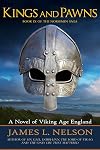
I've been enjoying this series for many years now. I have noticed that at times, long-running series start to feel a bit stale and like maybe it's time for them to come to an end. (Bernard Cornwell's generally excellent Last Kingdom series comes to mind for the last few installments.)
However, I didn't get that sense at all here. Things are changing, new characters have been introduced, and the book was generally a rollicking good read. We finally get to see what Thorgrim's brother, Odd, is show more doing back in Norway. Nothwulf and Cynewise continue to develop and become more fully-fleshed out adversaries. In general, this book felt just as fresh as any other in this fantastic series, and I do think the author's overall writing skills may have ticked up slightly (not that they were lacking before).
In general, I would consider this to be the preeminent Viking series being published at this point. Highly recommended for fans or potential fans of the genre. show less
However, I didn't get that sense at all here. Things are changing, new characters have been introduced, and the book was generally a rollicking good read. We finally get to see what Thorgrim's brother, Odd, is show more doing back in Norway. Nothwulf and Cynewise continue to develop and become more fully-fleshed out adversaries. In general, this book felt just as fresh as any other in this fantastic series, and I do think the author's overall writing skills may have ticked up slightly (not that they were lacking before).
In general, I would consider this to be the preeminent Viking series being published at this point. Highly recommended for fans or potential fans of the genre. show less
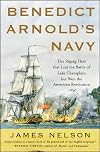
Both the title and the subtitle (“The Ragtag Fleet that Lost the Battle of Lake Champlain but Won the American Revolution”) are misleading; although a good part of the book does cover Arnold’s command on Lake Champlain, it’s actually a discussion of Arnold’s entire career before his treason, including the capture of Fort Ticonderoga, the march on Quebec, and the Battle of Saratoga. And the lacustrine battle that Arnold took part in is almost always called the Battle of Valcour show more Island, to avoid confusion with another Battle of Lake Champlain that took place during the War of 1812.
Nevertheless, this was pretty interesting. Reading about the early days of the Revolution (with three independent expeditions sent out by Congress and the states to try and capture Ticonderoga, resulting in Arnold and Ethan Allen fighting to get through the door first) makes you wonder how anything ever got accomplished at all.
I never realized the attempt to seize Canada came so close to success; just a little better luck at Quebec would have done it. It remains as an alternative history topic to decide if the capture of Canada actually would have made a difference to the outcome of the Revolution. The Americans would have been at the end of an extremely tenuous supply line; the Canadians were not at all enthusiastic about becoming the 14th Colony; and the British could have easily controlled the Saint Lawrence; it was easier to supply British troops in Canada from Europe than American troops in Montreal from New York. I suppose the capture of Canada might have made foreign recognition come earlier. The most logical political route for the Americans to take, offering independence to Quebecois, wasn’t tried; one of the reasons for the Revolution in the first place was British toleration of French language and Catholicism in Quebec.
I think author James Nelson might give a little too much emphasis to Arnold’s actions at Saratoga; it’s pretty clear that the Americans weren’t so much winners as Burgoyne was a loser, allowing himself to be cut off from his supply line and dividing his forces. Nevertheless, contemporary participants at Saratoga praised Arnold’s actions, and he certainly took serious wounds while leading his detachment.
The centerpiece of the book is Arnold’s action at Valcour Island. The fact that the Americans had a “fleet” of sorts on Lake Champlain delayed a British advance for a vital few months, even though the Royal Navy made fairly short work of Arnold’s collection of galleys, “gundalos” and other miscellaneous ships once they got into action. There probably wasn’t anything Arnold could have done to win or even come close, and once the fleet was gone the British easily retook Ticonderoga, but it was too late in the season to continue the advance (in this context the invasion of Canada probably made sense, too, not to inveigle the Canadians into joining up or capture the country, but simply to make the British start that much farther away from Lake Champlain). The reasonably skillful withdrawal from Canada, with the American Army more or less intact, was probably more important than invading in the first place.
I learned a whole lot of stuff I didn’t know about the Revolution. I suppose Arnold’s contributions have been downplayed because of the later problems with Major Andre and West Point, which unfortunately resulted in the whole campaigns in Canada and Lake Champlain being ignored, which is an injustice to the men who fought there regardless of what you think about Arnold. show less
Nevertheless, this was pretty interesting. Reading about the early days of the Revolution (with three independent expeditions sent out by Congress and the states to try and capture Ticonderoga, resulting in Arnold and Ethan Allen fighting to get through the door first) makes you wonder how anything ever got accomplished at all.
I never realized the attempt to seize Canada came so close to success; just a little better luck at Quebec would have done it. It remains as an alternative history topic to decide if the capture of Canada actually would have made a difference to the outcome of the Revolution. The Americans would have been at the end of an extremely tenuous supply line; the Canadians were not at all enthusiastic about becoming the 14th Colony; and the British could have easily controlled the Saint Lawrence; it was easier to supply British troops in Canada from Europe than American troops in Montreal from New York. I suppose the capture of Canada might have made foreign recognition come earlier. The most logical political route for the Americans to take, offering independence to Quebecois, wasn’t tried; one of the reasons for the Revolution in the first place was British toleration of French language and Catholicism in Quebec.
I think author James Nelson might give a little too much emphasis to Arnold’s actions at Saratoga; it’s pretty clear that the Americans weren’t so much winners as Burgoyne was a loser, allowing himself to be cut off from his supply line and dividing his forces. Nevertheless, contemporary participants at Saratoga praised Arnold’s actions, and he certainly took serious wounds while leading his detachment.
The centerpiece of the book is Arnold’s action at Valcour Island. The fact that the Americans had a “fleet” of sorts on Lake Champlain delayed a British advance for a vital few months, even though the Royal Navy made fairly short work of Arnold’s collection of galleys, “gundalos” and other miscellaneous ships once they got into action. There probably wasn’t anything Arnold could have done to win or even come close, and once the fleet was gone the British easily retook Ticonderoga, but it was too late in the season to continue the advance (in this context the invasion of Canada probably made sense, too, not to inveigle the Canadians into joining up or capture the country, but simply to make the British start that much farther away from Lake Champlain). The reasonably skillful withdrawal from Canada, with the American Army more or less intact, was probably more important than invading in the first place.
I learned a whole lot of stuff I didn’t know about the Revolution. I suppose Arnold’s contributions have been downplayed because of the later problems with Major Andre and West Point, which unfortunately resulted in the whole campaigns in Canada and Lake Champlain being ignored, which is an injustice to the men who fought there regardless of what you think about Arnold. show less
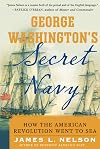
All most people know of Revolutionary War naval history is John Paul Jones and the BonHomme Richard versus the Serapis. James L. Nelson has been working to correct that image, first with Benedict Arnold’s Navy (reviewed earlier) and now with George Washington’s Secret Navy. The “Secret” part is a little overdone, with back cover blurbs suggesting that Washington was engaged in deliberate deception by keeping his “navy” secret from Congress. Apparently presidents (well, future show more presidents) engaging in clandestine military operations sells books. The facts are less scandalous but still interesting. In 1775, the Continental Army had General Thomas Gage and his army at bay in Boston. Gage couldn’t get out, because doing so would have required an attack across a narrow neck of land in the face of American fortification. The Americans couldn’t get in, because doing so would have required an attack across a narrow neck of land in the face of British fortifications. The Americans were short of all sorts of military supplies, especially ammunition; the British had plenty of military stores but were short of everything else, especially food and firewood, all of which had to come across the Atlantic or from loyal parts of North American. (There’s an interesting insight into Royal Army supply methods here. Supply was contracted to a London firm, which subcontracted to American firms to supply the Royal Army in North American. Obviously, this arrangement went slightly haywire after Lexington/Concord).
What Washington did was not so much create a navy as commission quasi-privateers. These were miscellaneous small merchant ships hastily outfitted with whatever small cannon the army could spare and sent to seize ships supplying Boston. Simultaneously the Continental Congress got into the act and commissioned some “warships” of its own. Plus various colonies had their own navies. (The confusion over whose ships were what results in both Beverly and Marblehead, Massachusetts claiming to be “the birthplace of the American Navy”). With a few minor exceptions, not much came of this. The privateers were understandably cautious about venturing out to sea in the face of the Royal Navy; their major success was capturing a vessel loaded with much needed gunpowder. The other ships didn’t do much better, completely disregarding orders to intercept some munitions ships known to be bound for Canada and instead capturing a number of American vessels, and, despite explicit orders not to annoy the Canadians (in hopes of getting them to join in the revolution) staging a raid on Charlottetown, Prince Edward Island with no discernable results.
Like Nelson’s other books, this is an excellent read. It covers a part of the Revolutionary War that isn’t very well known. The various blunderings of the Continentals and the British makes you appreciate the axiom that “winner of a battle is the one to make the second to last mistake”. show less
What Washington did was not so much create a navy as commission quasi-privateers. These were miscellaneous small merchant ships hastily outfitted with whatever small cannon the army could spare and sent to seize ships supplying Boston. Simultaneously the Continental Congress got into the act and commissioned some “warships” of its own. Plus various colonies had their own navies. (The confusion over whose ships were what results in both Beverly and Marblehead, Massachusetts claiming to be “the birthplace of the American Navy”). With a few minor exceptions, not much came of this. The privateers were understandably cautious about venturing out to sea in the face of the Royal Navy; their major success was capturing a vessel loaded with much needed gunpowder. The other ships didn’t do much better, completely disregarding orders to intercept some munitions ships known to be bound for Canada and instead capturing a number of American vessels, and, despite explicit orders not to annoy the Canadians (in hopes of getting them to join in the revolution) staging a raid on Charlottetown, Prince Edward Island with no discernable results.
Like Nelson’s other books, this is an excellent read. It covers a part of the Revolutionary War that isn’t very well known. The various blunderings of the Continentals and the British makes you appreciate the axiom that “winner of a battle is the one to make the second to last mistake”. show less
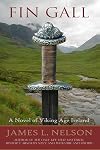
This was historical fiction as it should be. Nelson has a knack for penning characters that are both intriguing and believable. Thorgrim Night-Wolf is a fascinating character to me, a warrior who is world-weary, yet still powerful and has an obvious love for his son, Harald, who has gone a-viking with him to Ireland. I won't spoil the plot by summarizing it here, but it's a cracking fun read and worth the time of anyone who enjoys Vikings or somewhat militaristic historical fiction. It's show more more than just battles and adventure, though -- he does a good job of exploring his characters' thoughts and motivations. A stand-out book for me. show less
Lists
Awards


You May Also Like


Associated Authors
Statistics
- Works
- 50
- Also by
- 3
- Members
- 2,126
- Popularity
- #12,106
- Rating
- 3.8
- Reviews
- 38
- ISBNs
- 197
- Languages
- 3
- Favorited
- 3