
C. S. Forester (1899–1966)
Author of Mr Midshipman Hornblower
About the Author
Born Cecil Louis Troughton Smith on August 27, 1899, in Cairo, Egypt, where his father was a government official, C. S. Forester grew up mainly in England. He was educated at Dulwich College, studying medicine briefly before decidint to become a writer. Forester moved to the United States before show more the start of World War II, and lived in Berkeley, California, until his death in 1966. Although Forester was a journalist, a novelist and a Hollywood scriptwriter, he is probably best known for his historical fiction, particularly the series of novels that feature Horatio Hornblower. The eleven-book series begins with Mr. Midshipmen Hornblower, in which the seventeen-year old Hornblower joins the British navy in 1793, just as the Napoleonic Wars are about to begin. Hornblower's continuing adventures, as well as his advancement to the highest ranks of the navy, are chronicled in further books, including Beat to Quarters, Flying Colours, Commodore Hornblower, Lord Hornblower, The Happy Return, and A Ship of the Line, for which Forester recived the James Tait Black Memorial Prize in 1939. Several of Forester's novels were made into films, most notably Payment Deferred (his first novel published in 1926), Eagle Squadron, The Commandos (the movie title was The Commandos Strike at Dawn), Captain Horatio Hornblower, Sink the Bismarck!, and The African Queen, starring Katharine Hepburn and Humphrey Bogart. Forester's nonfiction includes The Age of Fighting Sail: The Story of the Naval War of 1812, as well as biographies of Lord Nelson, Napoleon, Josephine, and King Louis XIV. He also wrote an autobiography, Long Before Forty. (Bowker Author Biography) show less
Image credit: Cecil Scott ('C.S.') Forester, Portrait published in Life magazine, 14 March 1955
Series
Works by C. S. Forester
Captain Horatio Hornblower: Beat to Quarters / Ship of the Line / Flying Colours (1939) 580 copies, 5 reviews
Mr. Midshipman Hornblower / Lieutenant Hornblower / Hornblower and the Hotspur (1950) 436 copies, 5 reviews
Captain Hornblower R. N.: Hornblower and the Atropos / The Happy Return / A Ship of the Line (1937) 389 copies, 2 reviews
Admiral Hornblower Omnibus: Flying Colours / The Commodore / Lord Hornblower / Hornblower in the West Indies (1996) 306 copies, 5 reviews
Mr. Midshipman Hornblower / Lieutenant Hornblower / Hornblower and the Atropos (1953) 249 copies, 2 reviews
The Ship / Mr. Midshipman Hornblower / The Earthly Paradise / The General / The Captain from Connecticut / The African Queen (1977) 44 copies
Captain Horatio Hornblower, Part II 15 copies
Captain Horatio Hornblower (Hornblower and the Atropos; The Happy Return; A Ship of the Line; Flying Colors) (2019) — Author — 14 copies
A Ship of the Line / Flying Colours / The Commodore / Lord Hornblower / Admiral Hornblower in the West Indies (1994) — Author — 12 copies
Mr. Midshipman Hornblower / Lieutenant Hornblower / Hornblower and the Hotspur / Hornblower and the Crisis (1984) — Author — 8 copies
Captain Horatio Hornblower, Part I 7 copies
One Wonderful Week 6 copies
The Bedchamber Mystery with which is included the story of The Eleven Deckchairs and Modernity and Maternity (1944) 6 copies
Mr. Midshipman Hornblower / Lieutenant Hornblower / Hornblower and the Hotspur / Hornblower and the Atropos / Beat to Quarters (1994) 3 copies
Horatio Hornblower books 3 copies
Rendevous 2 copies
Paradiso terrestre 2 copies
The Voyage of the "Annie Marble" 2 copies
Capt Horatio Hornblower 2 copies
The Point and the Edge [short story] 2 copies
Hornblower Reading Order 1 copy
The Naval War Of 1912 1 copy
Lordi Hornblower 1 copy
Kommodori Hornblower 1 copy
Wanton Fate 1 copy
Hornblower Bibliography 1 copy
Horatio Hornblower — Author — 1 copy
Konvoi 1943 1 copy
Mr. Midshipman Hornblower / Lieutenant Hornblower / Hornblower and the Atropos / The Happy Return 1 copy
Le avventure del capitano Hornblower. Volume primo — Author — 1 copy
BUQUE DE LINEA 1 copy
Lorn Hornblower 1 copy
The Point and the Edge 1 copy
Lord Hornblower Omnibus 1 copy
Hornblower's Temptation 1 copy
Fregatten Delaware 1 copy
Hornblower During the Crisis / Hornblower and the Atropos / Admiral Hornblower in the West Indies 1 copy
Simples Assassínio 1 copy
Castigo Adiado 1 copy
Den gode herden 1 copy
Freibeuter seiner Majestät 1 copy
Saattuehävittäjä : romaani 1 copy
HORNBLOWER SUOMENLAHDELLA 1 copy
UM MONSTRO 1 copy
Capitan Horacio Hornblower 1 copy
Ship in the line 1 copy
Orgoglio e passione 1 copy
Rivulets of Blood 1 copy
Associated Works
75 Short Masterpieces: Stories from the World's Literature (1961) — Contributor — 319 copies, 2 reviews
Secrets & Spies: Behind the Scenes Stories of World War II (1964) — Contributor — 207 copies, 2 reviews
The Mammoth Book of Men O'War: Stories from the Glory Days of Sail (1999) — Contributor — 107 copies, 1 review
Dreadnought: A History of the Modern Battleship (1968) — Introduction, some editions — 87 copies, 2 reviews
The Greatest Sailing Stories Ever Told: Twenty-Seven Unforgettable Stories (2002) — Contributor — 84 copies
The lucifer society;: Macabre tales by great modern writers (1972) — Contributor; Contributor — 52 copies, 1 review
The Mammoth Book of Hearts of Oak: Classic and New Stories from the Age of Fighting Sail (2001) — Contributor — 41 copies, 1 review
100 Best True Stories of World War II (WW2) (with 32 illustrations) (2011) — Contributor — 36 copies
The Greatest War Stories Ever Told: Twenty-Four Incredible War Tales (2001) — Contributor — 31 copies, 1 review
To the Queen's Taste: The First Supplement to 101 Years Entertainment Consisting of the Best Stories Published in the First Four Years of Ellery Queen's Mystery Magazine (1946) — Contributor — 28 copies
Van Jules Verne tot Isaac Asimov de vijftig beste science fiction verhalen (1981) — Contributor — 17 copies, 1 review
More Murder on Cue: Stage, Screen & Radio Favorites: Stories from Ellery Queen's Mystery Magazine (1990) — Contributor — 9 copies
The Magazine of Fantasy and Science Fiction August 1958, Vol. 15, No. 2 (1958) — Contributor — 8 copies
Reader's Digest Condensed Books: Bel Ria • The Naked Country • The Physicians • Captain Horatio Hornblower • Home Before Dark (1977) 7 copies
Het dagboek in de sneeuw : en andere griezelverhalen — Contributor — 7 copies
Selecciones Reader's Digest: (libros condensados) El Gran Robo del Tren. Un Hombre Contra un Crucero. La Canción de Bernadette. Habla la Tierra (1977) — Contributor — 7 copies
20th Century Fox Studio Classics Collection: Volume 11 (The Blue Max / The Desert Fox / Immortal Sergeant / Sink the Bismarck) — Writer — 7 copies
Reader's Digest Condensed Books: The Great Train Robbery • Blind Love • Brown on Resolution • Where are the Children? • Among the Elephants (1974) 6 copies
The Magazine of Fantasy and Science Fiction June 1956, Vol. 10, No. 6 (1956) — Contributor — 5 copies
The Best from Cosmopolitan — Contributor — 4 copies
Reader's Digest Condensed Books: Merlin's Keep • A Stranger is Watching • The Experiment • Brown on Resolution — Author — 4 copies
Payment Deferred: A Play in a Prologue, Three Acts and an Epilogue (1934) — Original novel — 3 copies
Heroes of War Collection - Navy Battles (The Enemy Below, The Frogmen, Morituri, Sink the Bismarck!) (2009) — Writer — 3 copies
The Saturday Evening Post Stories 1962 — Contributor — 3 copies
ARGOSY DECEMBER 3, 1938 VOLUME 286 NUMBER 4 ["FLYING COLOURS"] ["THE SHIP OF ISHTAR"] (1938) — Contributor — 2 copies
ARGOSY Weekly: December, Dec. 17, 1938 (Young Doctor Kildare; The Thirty-nine Steps ; Flying Colours (1938) — Contributor — 2 copies
Great tales of adventure: A selection of condensed novels and full-length short stories (1982) — Contributor — 2 copies
High Moment: Stories of Supreme Crises in the Lives of Great Men — Contributor — 2 copies
ARGOSY COMBINED WITH ALL-AMERICAN FICTION MAGAZINE DECEMBER 24, 1938 VOLUME 287 NUMBER 1 (1938) — Contributor — 2 copies
Lilliput Magazine. November - December 1952. Vol. 31 no. 6. Issue no. 186. — Contributor — 1 copy
Argosy, May 14, 1938 — Contributor — 1 copy
My Most Exciting Story: A Collection of Stories Chosen by Their Own Authors (1936) — Contributor — 1 copy
Argosy: December 1964 — Contributor — 1 copy
Argosy, March 19, 1938 — Contributor — 1 copy
Synnitön lankeemus [1943 film] — Original story — 1 copy
Ellery Queen's Mystery Magazine - 1958/08 — Contributor — 1 copy
Forever England [1935 film] — Original novel — 1 copy
Argosy, January 7, 1939 — Contributor — 1 copy
Saturday Evening Post July 16, 1966 No. 15 — Contributor — 1 copy
Argosy, January 18, 1941 — Contributor — 1 copy
Argosy (UK) [Vol. IV No. 5, June 1943] — Contributor — 1 copy
Tagged
Common Knowledge
- Canonical name
- Forester, C. S.
- Legal name
- Smith, Cecil Louis Troughton
- Other names
- Forester, Cecil Scott
- Birthdate
- 1899-08-27
- Date of death
- 1966-04-02
- Gender
- male
- Education
- Alleyn's School, London
Dulwich College, London
Guy's Hospital, London - Occupations
- novelist
short story writer
journalist
screenwriter - Organizations
- British Ministry of Information (WWII)
- Relationships
- Forester, John (son)
- Cause of death
- stroke
- Nationality
- UK
- Birthplace
- Cairo, Egypt
- Places of residence
- Cairo, Egypt
London, Middlesex, England, UK
Berkeley, California, USA
Washington, D.C., USA
Fullerton, California, USA - Place of death
- Fullerton, California, USA
- Burial location
- Loma Vista Memorial Park, Fullerton, California, USA
- Map Location
- England, UK
Members
Reviews
Commodore Hornblower: Number Eight in the Hornblower Saga, The greatest naval adventures of all time! by C. S. Forester

This is the first book in my reread of the Hornblower series that is not, in fact a reread. Unfortunately, it is clearly the worst of the Hornblower novels, confirming my suspicion that Forester made a mistake at the end of Flying Colours when he gave Hornblower everything he ever wanted: recognition, wealth, and love. Hornblower with recognition, wealth, and love is just not Hornblower, even if he does yearn to go to sea. Commodore Hornblower is the worst installment in the entire series. show more Unlike in the first three books, where Hornblower is cleverly making the best out of a bad situation, in this book, he commands a squadron and respect. His situation is actually quite nice! You could do a book about how commanding a squadron brings new challenges, but Forester doesn't; Hornblower seems to settle in quickly, without a problem.
Which is really symptomatic of the whole book. It never feels like anything's at stake. In Beat to Quarters, Forester made you feel like this one ship-to-ship battle was of the utmost importance. In Commodore Hornblower, we're constantly told that the war in the Baltic, and thus the whole war with Napoleon, depends on what Hornblower does. But one never really feels that anything significant depends on Hornblower cruising around lobbing bombs from safety and discovering hors d'oeuvres.
It is interesting to note how Forester pulls back from some of the elements of Flying Colours that were intended to wrap things up. In that book, Bush is promoted to captain, but we're told he'll work in a naval yard on account of his wooden leg. Here, he assumes command of an active-duty ship because, well, what's a Hornblower novel without Bush?
(Delightfully, the title page of my 1981 Pinnacle Books edition gives the title as Commodore Hornblower: Number Eight in the Hornblower Saga, The greatest naval adventures of all time! I love it.) show less
Which is really symptomatic of the whole book. It never feels like anything's at stake. In Beat to Quarters, Forester made you feel like this one ship-to-ship battle was of the utmost importance. In Commodore Hornblower, we're constantly told that the war in the Baltic, and thus the whole war with Napoleon, depends on what Hornblower does. But one never really feels that anything significant depends on Hornblower cruising around lobbing bombs from safety and discovering hors d'oeuvres.
It is interesting to note how Forester pulls back from some of the elements of Flying Colours that were intended to wrap things up. In that book, Bush is promoted to captain, but we're told he'll work in a naval yard on account of his wooden leg. Here, he assumes command of an active-duty ship because, well, what's a Hornblower novel without Bush?
(Delightfully, the title page of my 1981 Pinnacle Books edition gives the title as Commodore Hornblower: Number Eight in the Hornblower Saga, The greatest naval adventures of all time! I love it.) show less
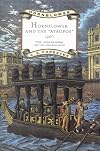
Ripping good yarn alert!!!
My favorite of the series so far. Capital A Adventure with a lot of great historical detail. There’s a funeral at sea, midnight attacks, buried treasure, and a daring escape. Plus, Forester explores Hornblower’s marriage and fatherhood more than he has yet in the series.
If you only like Hornblower for sea battles this one is comparatively light on those, but this is a great adventure that takes the reader into the past.
My favorite of the series so far. Capital A Adventure with a lot of great historical detail. There’s a funeral at sea, midnight attacks, buried treasure, and a daring escape. Plus, Forester explores Hornblower’s marriage and fatherhood more than he has yet in the series.
If you only like Hornblower for sea battles this one is comparatively light on those, but this is a great adventure that takes the reader into the past.

This is really very good. It is more a psychological study of a man losing his mind as a result of his actions.
At the beginning of the book, the Marble family are struggling financially, they are living within their means but have not actually taken any steps to address the problem and now it has become acute. The "solution" arrives in 2 parts, one legal, if slightly immoral, the other most certainly not legal. One rests on his conscious, the other not at all.
From this point on, the money show more worries vanish, but Mr Marble, in particular, has a new obsession, not being caught for his actions. This disrupts his family's lives in many ways, which are fascinating to follow. The way his anxiety escalates into paranoia and obsession is very well done, you can almost feel your skin crawl at times. The ending is brilliantly executed and most unexpected. show less
At the beginning of the book, the Marble family are struggling financially, they are living within their means but have not actually taken any steps to address the problem and now it has become acute. The "solution" arrives in 2 parts, one legal, if slightly immoral, the other most certainly not legal. One rests on his conscious, the other not at all.
From this point on, the money show more worries vanish, but Mr Marble, in particular, has a new obsession, not being caught for his actions. This disrupts his family's lives in many ways, which are fascinating to follow. The way his anxiety escalates into paranoia and obsession is very well done, you can almost feel your skin crawl at times. The ending is brilliantly executed and most unexpected. show less

This is the last of the Hornblower books that I own-- obviously it's time to make another trip to the used bookstore. Overall, this one was honestly something of a disappointment. Hornblower doesn't really succeed in this one because of his natural brilliance; he succeeds mostly because of a series of unlikely coincidences. The house he takes refuge in in France just happens to host someone sympathetic to his cause, the harbor he visits just happens to have a captured English ship there, the show more harbor also just happens to have a passing group of prisoners he can liberate and enlist (somewhat less egregious than in the film, though, where the prisoners just happen to be British to boot), and his wife and Lady Barbara's husband just happen to die in time for a marriage. Hornblower's various marital indiscretions, though probably realistic, make him less than sympathetic, and I just don't like Lady Barbara. (God, the scene where his learning that she's taken his son in makes him feel a rush of affection aggravated me to no end. His wife taking care of the kids never seemed to do much for his feelings for her!) Still, the seafaring bits (rare though they are in this volume) never fail to disappoint as always. My least favorite book in the series so far.
added April 2019:
This time I liked it more, and I would definitely rate it above some of the books Forester wrote later, like Hornblower and the Atropos. Yes, a lot of things go in Hornblower's favor, but the thing that makes Hornblower succeed isn't those opportunities, it's the way he seizes hold of them. He's lucky with what happens to his carriage in the snow, but taking hold of that opportunity and getting Bush and Brown out of there requires genius and determination. It's a harrowing, thrilling sequence. Though one wants some good naval adventures in a Hornblower novel, I actually felt the contrast between this book and the previous ones worked very well. It's a tragic notion that Hornblower, Bush, and Brown actually have the best time of their life while hiding in Napoleonic France-- it's a much less hard life than that in the Royal Navy. I like the different side to all three characters we get here. Brown was in the previous book, but not up to much of note; here he pops. I always like Bush's stolidness; here he puts up with an awful lot!
As always, I have thoughts on Hornblower's relationships. Here my theory that Laby Barbara is meant to show how duty constrains his personal life as much as his professional one breaks down because here Hornblower totally has an affair with Marie, which means he's cheating on Maria and on Lady Barbara! He has neither respect for the commitment he's made to Maria, nor for the torch he supposedly carries for Barbara. What is up with you, dude, except that you will take sex and affection where you can get it? (The novel carefully makes him not an initiator... it just kind of "happens.") It's weird that a man who twists himself into knots with self-control in other aspects of his life has none here, and I just don't quite know how to reconcile it with my mental image of Hornblower.
Well, I kind of do. The main thing we know about Hornblower is that Hornblower Must Suffer. He accomplishes much, but he never quite succeeds. His battle in Beat to Quarters was an amazing success that went relatively unheralded due to circumstances. So keeping him apart from Lady Barbara adds to his suffering. Though then at the end of the book, Hornblower gets everything he ever wanted, including Lady Barbara. I wasn't really into this, because I think Hornblower works best when he's scrapping, trying to make the best of a bad situation. Making him successful, rich, renowned, and loved undermines what makes Hornblower Hornblower (as we'll see in Commodore Hornblower). But Forester thought this would be his last Hornblower novel, so I can forgive a happy ending; the issue isn't really with Flying Colours, then, but with the fact that three more novels followed it chronologically. show less
added April 2019:
This time I liked it more, and I would definitely rate it above some of the books Forester wrote later, like Hornblower and the Atropos. Yes, a lot of things go in Hornblower's favor, but the thing that makes Hornblower succeed isn't those opportunities, it's the way he seizes hold of them. He's lucky with what happens to his carriage in the snow, but taking hold of that opportunity and getting Bush and Brown out of there requires genius and determination. It's a harrowing, thrilling sequence. Though one wants some good naval adventures in a Hornblower novel, I actually felt the contrast between this book and the previous ones worked very well. It's a tragic notion that Hornblower, Bush, and Brown actually have the best time of their life while hiding in Napoleonic France-- it's a much less hard life than that in the Royal Navy. I like the different side to all three characters we get here. Brown was in the previous book, but not up to much of note; here he pops. I always like Bush's stolidness; here he puts up with an awful lot!
As always, I have thoughts on Hornblower's relationships. Here my theory that Laby Barbara is meant to show how duty constrains his personal life as much as his professional one breaks down because here Hornblower totally has an affair with Marie, which means he's cheating on Maria and on Lady Barbara! He has neither respect for the commitment he's made to Maria, nor for the torch he supposedly carries for Barbara. What is up with you, dude, except that you will take sex and affection where you can get it? (The novel carefully makes him not an initiator... it just kind of "happens.") It's weird that a man who twists himself into knots with self-control in other aspects of his life has none here, and I just don't quite know how to reconcile it with my mental image of Hornblower.
Well, I kind of do. The main thing we know about Hornblower is that Hornblower Must Suffer. He accomplishes much, but he never quite succeeds. His battle in Beat to Quarters was an amazing success that went relatively unheralded due to circumstances. So keeping him apart from Lady Barbara adds to his suffering. Though then at the end of the book, Hornblower gets everything he ever wanted, including Lady Barbara. I wasn't really into this, because I think Hornblower works best when he's scrapping, trying to make the best of a bad situation. Making him successful, rich, renowned, and loved undermines what makes Hornblower Hornblower (as we'll see in Commodore Hornblower). But Forester thought this would be his last Hornblower novel, so I can forgive a happy ending; the issue isn't really with Flying Colours, then, but with the fact that three more novels followed it chronologically. show less
Lists
Elevenses (1)
A Novel Cure (1)
Reading LIst (1)
Awards


You May Also Like


Associated Authors
Statistics
- Works
- 182
- Also by
- 158
- Members
- 34,702
- Popularity
- #544
- Rating
- 4.0
- Reviews
- 597
- ISBNs
- 1,008
- Languages
- 20
- Favorited
- 121
