

George MacDonald Fraser (1925–2008)
Author of Flashman
About the Author
Author George MacDonald Fraser was born April 2, 1925 in Carlisle. He was refused entrance to the medical faculty of Glasgow University, so he joined the army in 1943. He served as an infantryman with the 17th Indian Division of the XIVth Army in Burma, a lance corporal and was commissioned in the show more Gordon Highlanders. After the war, he became a sports reporter with the Carlisle Journal; and during this time, he met and married Kathleen Hetherington, a reporter from another paper. He worked as a reporter and sub-editor on the Cumberland News and then moved to Glasgow, in 1953, where he worked at the Glasgow Herald as a features editor and deputy editor. Fraser's first novel was "Flashman" (1969), which was followed by nine sequels, so far, that deal with different venues of the 19th century ranging from Russia, Borneo and China to the Great Plains of the America West. Some of the other titles in the Flashman Papers are "Royal Flash" (1970), "Flashman in the Great Game" (1975), "Flashman and the Redskins" (1982), and "Flashman and the Angel of the Lord" (1994). Some of his non-fiction work includes "The Steel Bonnets" (1971), which is a factual study of the Anglo-Scottish border thieves in the seventeenth century, and "Quartered Safe Out Here" (1992). Fraser has also written a number of screenplays that include "The Three Musketeers" (1973), "Royal Flash" (1975), "Octopussy" (1983), and "Return of the Musketeers" (1989). He has also written a series of short stories about Private McAuslan whose titles include "The General Danced at Dawn" (1970), "McAuslan in the Rough" (1974), and "The Sheik and the Dustbin and other McAuslan Stories" (1988). He died of cancer on January 2, 2008. (Bowker Author Biography) show less
Disambiguation Notice:
1. George MacDonald Fraser (CK info above) wrote Flashman.
2. George MacDonald (1824-1905) wrote At the Back of the North Wind.
George Milne Fraser is a separate author. Please do not combine.
Series
Works by George MacDonald Fraser
The Steel Bonnets: The Story of the Anglo-Scottish Border Reivers (1971) — Author — 575 copies, 13 reviews
The Three Musketeers / The Four Musketeers: Two Films by Richard Lester (1973) — Screenwriter — 67 copies
Adventure Novels: King Solomon's Mines, Prisoner of Zenda, Under the Red Robe, The Lost World, Beau Geste (Collins Classics) (1995) — Editor — 7 copies
Crossed Swords 1 copy
Flashman Set - 5 Books 1 copy
Associated Works
The Exploits and Adventures of Brigadier Gerard (1910) — Introduction, some editions — 262 copies, 5 reviews
Tagged
Common Knowledge
- Legal name
- Fraser, George MacDonald
- Birthdate
- 1925-04-02
- Date of death
- 2008-01-02
- Gender
- male
- Education
- The Glasgow Academy, Glasgow, Scotland, UK
- Occupations
- soldier (British Army)
journalist
editor
screenwriter
novelist - Organizations
- British Army (WWII)
Glasgow Herald - Awards and honors
- Order of the British Empire (Officer, 1999)
Royal Society of Literature (Fellow, 1998) - Relationships
- Fraser, Caro (daughter)
Hetherington, Kathleen (wife) - Short biography
- George MacDonald Fraser OBE FRSL (2 April 1925 – 2 January 2008) was a Scottish author who wrote historical novels, non-fiction books and several screenplays. He is best known for a series of works that featured the character Flashman.
- Nationality
- UK
- Birthplace
- Carlisle, Cumbria, England, UK
- Places of residence
- Isle of Man
Carlisle, Cumbria, England, UK (birth) - Place of death
- Strang, Isle of Man
- Map Location
- England, UK
- Disambiguation notice
- 1. George MacDonald Fraser (CK info above) wrote Flashman.
2. George MacDonald (1824-1905) wrote At the Back of the North Wind.
George Milne Fraser is a separate author. Please do not combine.
Members
Discussions
George MacDonald Fraser in Legacy Libraries (July 2014)
Reviews
Flashman in the Great Game: From the Flashman Papers, 1856-58 (Flashman #5) by George MacDonald Fraser

Today - August 17th - is my birthday. And I'm sat here, having just finished Flashman in the Great Game, thinking that there's no better way to spend a day - any day, not just a birthday - than to spend it reading a Flashman novel. Adventure, action, laughs, pathos, emotion, twists and turns, good prose, excellent characterisation... just about every single thing that you can think of which contributes to creating a great novel and a great reading experience - well, the Flashman books all show more have them in spades. And I've been contemplating whether Great Game is in fact the best one I've read yet.
It's certainly up there with the first Flashman and the fourth, Flashman at the Charge (though Royal Flash and Flash for Freedom! are excellent too). But what is interesting (and unique, at least in the five books of the series I've read so far) is that Harry Flashman actually sometimes acts with compassion in Great Game, and even - whisper it - bravery. He confronts his dangerous missions with a peculiar sort of bloody-mindedness (even though he's quaking in his boots) and is clearly disturbed by a lot of the atrocities he witnesses. At one point (pg. 172), he even stops in his desperate flight from danger to try and help some beleaguered occupants of a bungalow. On a few rare occasions, he even betrays a sort of sentimentality that goes beyond the wistfulness of a nonagenarian Flash reminiscing about the old days. Witness, for example, the following beautiful piece of prose after Flash has been told of the Jokan Bagh massacre, purportedly ordered by Lakshmibai, an Indian queen he is besotted with:
... we sat our mounts under the trees, and the others fell in two by two behind us. In the distance, very black against the starlit purple of the night sky, was the outline of the Jhansi fortress with the glow of the city beneath it; Ilderim was staring towards it bright-eyed - I remember that moment so clearly, with the warm gloom and the smell of Indian earth and horse-flesh, the creak of leather and the soft stamping of the beasts. I was thinking of the horror that lay in the Jokan Bagh - and of that lovely girl, in her mirrored palace yonder with its swing and soft carpets and luxurious furniture, and trying to make myself believe that they belonged in the same world." (pg. 195)
That same Lakshmibai, the Rani of Jhansi, is also worth noting here. Flashy's adventures in the sack throughout the series are almost as thrilling as his other escapades, and at one point in Great Game (pg. 342) he estimates that he's slept with 478 women. But the Flashman series' female characters are never just brainless objects worthy only of a quick tumble (although Flash often treats them as such), and the enigmatic Lakshmibai is a great illustration of this. Flash is pulled every which way by her charms, and by the end even the reader doesn't know what's what with her. Ol' Flashy himself admits a genuine affection - even love - for her, though of course he does so in his own inimitable way:
"I did love her - pretty well, anyway, just then. Not as much as Elspeth [his wife], I dare say - although, mind you, put 'em together, side by side, both stripped down, and you'd think hard before putting England in to bat." (pg. 327)
None of this is to say that George MacDonald Fraser, the author, has betrayed the essence of Flash's character - i.e. the cowardice, lechery and roguery in which he indulges most often. Rather, Flashy has always been a very real and very human character who witnesses events and acts accordingly (usually to try and run away). And when Flashy is confronted with the appalling horror of the Indian Mutiny of 1857 - well, only a psychopath wouldn't let a bit of compassion and altruism sneak through. The Mutiny is one of the most horrifying events in British and Indian history, with appalling atrocities committed by the sepoy mutineers and, it must be said, ruthless reprisals by the British too. The Flashman series, as I've always asserted in my reviews of the other books, has always been great history, and the reader gets a real feel for the atmosphere that must have been present during that tumultuous time. And Fraser - through Flashman - addresses it with an even-hand. It says a lot that, after five books in the series, I'm still so impressed with Fraser's historical research.
All in all, I'm still undecided as to whether Flashman in the Great Game is the best in the Flashman series, but that's only because I'm loath to choose between them. It is just as flawlessly brilliant as the other volumes I've read so far, though I have to say that on balance, it probably is joint-top in my opinion with the first Flashman. As interesting historical fiction, the Indian Mutiny rivals the retreat from Kabul in the first book. As adventure, it probably surpasses it. And the women are just as memorable. Perhaps the only thing that keeps the first Flashman on top for me is that Flashy is more shameless in that first book. But people who are thinking about reading Great Game are probably already Flashman fans; to those people, I'd say that the fact I'm even putting this fifth book on the same footing is testament to how great the series continues to be." show less
It's certainly up there with the first Flashman and the fourth, Flashman at the Charge (though Royal Flash and Flash for Freedom! are excellent too). But what is interesting (and unique, at least in the five books of the series I've read so far) is that Harry Flashman actually sometimes acts with compassion in Great Game, and even - whisper it - bravery. He confronts his dangerous missions with a peculiar sort of bloody-mindedness (even though he's quaking in his boots) and is clearly disturbed by a lot of the atrocities he witnesses. At one point (pg. 172), he even stops in his desperate flight from danger to try and help some beleaguered occupants of a bungalow. On a few rare occasions, he even betrays a sort of sentimentality that goes beyond the wistfulness of a nonagenarian Flash reminiscing about the old days. Witness, for example, the following beautiful piece of prose after Flash has been told of the Jokan Bagh massacre, purportedly ordered by Lakshmibai, an Indian queen he is besotted with:
... we sat our mounts under the trees, and the others fell in two by two behind us. In the distance, very black against the starlit purple of the night sky, was the outline of the Jhansi fortress with the glow of the city beneath it; Ilderim was staring towards it bright-eyed - I remember that moment so clearly, with the warm gloom and the smell of Indian earth and horse-flesh, the creak of leather and the soft stamping of the beasts. I was thinking of the horror that lay in the Jokan Bagh - and of that lovely girl, in her mirrored palace yonder with its swing and soft carpets and luxurious furniture, and trying to make myself believe that they belonged in the same world." (pg. 195)
That same Lakshmibai, the Rani of Jhansi, is also worth noting here. Flashy's adventures in the sack throughout the series are almost as thrilling as his other escapades, and at one point in Great Game (pg. 342) he estimates that he's slept with 478 women. But the Flashman series' female characters are never just brainless objects worthy only of a quick tumble (although Flash often treats them as such), and the enigmatic Lakshmibai is a great illustration of this. Flash is pulled every which way by her charms, and by the end even the reader doesn't know what's what with her. Ol' Flashy himself admits a genuine affection - even love - for her, though of course he does so in his own inimitable way:
"I did love her - pretty well, anyway, just then. Not as much as Elspeth [his wife], I dare say - although, mind you, put 'em together, side by side, both stripped down, and you'd think hard before putting England in to bat." (pg. 327)
None of this is to say that George MacDonald Fraser, the author, has betrayed the essence of Flash's character - i.e. the cowardice, lechery and roguery in which he indulges most often. Rather, Flashy has always been a very real and very human character who witnesses events and acts accordingly (usually to try and run away). And when Flashy is confronted with the appalling horror of the Indian Mutiny of 1857 - well, only a psychopath wouldn't let a bit of compassion and altruism sneak through. The Mutiny is one of the most horrifying events in British and Indian history, with appalling atrocities committed by the sepoy mutineers and, it must be said, ruthless reprisals by the British too. The Flashman series, as I've always asserted in my reviews of the other books, has always been great history, and the reader gets a real feel for the atmosphere that must have been present during that tumultuous time. And Fraser - through Flashman - addresses it with an even-hand. It says a lot that, after five books in the series, I'm still so impressed with Fraser's historical research.
All in all, I'm still undecided as to whether Flashman in the Great Game is the best in the Flashman series, but that's only because I'm loath to choose between them. It is just as flawlessly brilliant as the other volumes I've read so far, though I have to say that on balance, it probably is joint-top in my opinion with the first Flashman. As interesting historical fiction, the Indian Mutiny rivals the retreat from Kabul in the first book. As adventure, it probably surpasses it. And the women are just as memorable. Perhaps the only thing that keeps the first Flashman on top for me is that Flashy is more shameless in that first book. But people who are thinking about reading Great Game are probably already Flashman fans; to those people, I'd say that the fact I'm even putting this fifth book on the same footing is testament to how great the series continues to be." show less

Despite being one of the more taut and focused Flashman adventures, Flashman and the Dragon took a little while to win me over, but by the end I found it as enchanting as any I have read. There's no point going over what I've already said ad nauseam in my other reviews; this eighth book in the series remains as thrilling an adventure, rip-roaring a comedy, rich a story and accurate a history as any of the previous seven. And Flashman is still an absolutely devious scoundrel and magnificent show more bastard, as Irish Nolan finds out to his cost.
Of these fine qualities, I feel Fraser's historical research warrants the greatest praise. With the possible exception of Flashman and the Great Game, which taught me more about the Indian Mutiny than any history book ever could, Flashman and the Dragon is the most illuminating book of the series, bringing to the fore the fascinating events of the Taiping Rebellion. What is doubly valuable about the Flashman books as historical fiction is that they cover less well-known, yet still important, events in history. I knew only a little about the Taiping Rebellion before reading Flashman and the Dragon, yet now I feel I could give a good stab at bluffing my way through Mastermind with it as my chosen topic. Towards the end of the book, there's even an eloquent historical analysis of the looting and destruction of the Summer Palace which manages to be extremely informative and melancholy whilst never losing the general rhythm and tone of the story. By this point, I had the sense that I'd been reading something truly special, even by Fraser's lofty standards.
I think perhaps the reason it took me longer to warm to Dragon's charms was because, in the period Fraser is describing, China was like another planet completely. Consequently, Fraser delights in describing all the various wonders of Imperial China, which slows the pace down a tad and draws attention away from the scoundrel acts of Flashman himself. This is not a criticism as such, for the reader delights in reading it (there are some truly beautiful passages of prose) and we get a real sense of the otherworldly nature of the country as it was in 1860. Elsewhere, I found that the humour was often subtler than in previous instalments; for me, the heartiest chuckles came from little snarky asides in the dialogue rather than the more overt shamelessness of Flash's actions. Overall, Flashman is just an excellent companion; I'd say without a doubt his voice, as wrought by Fraser, is the finest example of first-person prosing there is. It is conversational and amiable, making it accessible, yet allows for the sort of waxing lyrical I allude to above without any of it seeming out of place. I remain, as ever, truly staggered by Fraser's writing and lament that his books are not read more widely. If I had my way, there'd be a permanent statue of Flashman on the Fourth Plinth of Trafalgar Square, with a bevy of lovingly-sculpted stone beauties writhing at his feet. show less
Of these fine qualities, I feel Fraser's historical research warrants the greatest praise. With the possible exception of Flashman and the Great Game, which taught me more about the Indian Mutiny than any history book ever could, Flashman and the Dragon is the most illuminating book of the series, bringing to the fore the fascinating events of the Taiping Rebellion. What is doubly valuable about the Flashman books as historical fiction is that they cover less well-known, yet still important, events in history. I knew only a little about the Taiping Rebellion before reading Flashman and the Dragon, yet now I feel I could give a good stab at bluffing my way through Mastermind with it as my chosen topic. Towards the end of the book, there's even an eloquent historical analysis of the looting and destruction of the Summer Palace which manages to be extremely informative and melancholy whilst never losing the general rhythm and tone of the story. By this point, I had the sense that I'd been reading something truly special, even by Fraser's lofty standards.
I think perhaps the reason it took me longer to warm to Dragon's charms was because, in the period Fraser is describing, China was like another planet completely. Consequently, Fraser delights in describing all the various wonders of Imperial China, which slows the pace down a tad and draws attention away from the scoundrel acts of Flashman himself. This is not a criticism as such, for the reader delights in reading it (there are some truly beautiful passages of prose) and we get a real sense of the otherworldly nature of the country as it was in 1860. Elsewhere, I found that the humour was often subtler than in previous instalments; for me, the heartiest chuckles came from little snarky asides in the dialogue rather than the more overt shamelessness of Flash's actions. Overall, Flashman is just an excellent companion; I'd say without a doubt his voice, as wrought by Fraser, is the finest example of first-person prosing there is. It is conversational and amiable, making it accessible, yet allows for the sort of waxing lyrical I allude to above without any of it seeming out of place. I remain, as ever, truly staggered by Fraser's writing and lament that his books are not read more widely. If I had my way, there'd be a permanent statue of Flashman on the Fourth Plinth of Trafalgar Square, with a bevy of lovingly-sculpted stone beauties writhing at his feet. show less
Flashman and the Angel of the Lord: From the Flashman Papers, 1858-59 (Flashman #10) by George MacDonald Fraser

By the time of this, the tenth Flashman book, I'd have thought there'd be nothing further that this series could do to surprise me. And, in a way, I'd have been right: Flashman and the Angel of the Lord is a classic Flashman adventure. However, I still experienced surprise; not at the book, but at the apparent general consensus among reviewers on this and other websites that Angel of the Lord was a poor addition to the series.
I was a bit wary about this one, given all the naysaying about show more it, but it was bloody fantastic as usual. What do people want? Rip-roaring adventure? (Antebellum USA: check.) Fantastically-drawn characters? (Joe, Annette, the welcome return of John Charity Spring: check.) Well-realised real historical figures? (John Brown, Allan Pinkerton, even Abe Lincoln: check.) Luscious ladies and all sorts of bedroom-based depravities? (Miranda, Annette, Hannah: check.) Shameless poltroonery from our beloved Flashy? (On page 328, he reminds us he has no more of the milk of human kindness than you'd put in a cup of tea." So check.) Well-researched historical fiction (erm, antebellum USA again, and one of the most legendary raids in history: Harper's Ferry. That's a check.) A deliriously funny romp? (is there anything more humorous than Flashman indignantly squirming under the yoke of not one, not two, but three different factions?) You get the picture. It's not the best of the Flashman series, but then again, that is a very high bar. Damn your eyes, if you don't enjoy this then just what have you been doing for the last nine books?
(And I can't get the song 'Glory, Glory, Hallelujah' out of my head. It took me a moment to recall the tune from the basis of the lyrics given to us by Flashman (and his adorable great-grandchildren), and then all but smacked myself for not recognising it sooner. Not only did it later morph into 'The Battle Hymn of the Republic', but a rousing adaptation of it was given by the paratroopers in the best TV mini-series of all time, Band of Brothers ("Gory, gory, what a hell of a way to die/And he ain't gonna jump no more!"), and it is a well-known chant of my hometown football club, where it is known as 'Glory, Glory, Man United'.)
"What the deuce was I, Harry Flashman, V.C., and soon to be knighted by Her Majesty, en route from India to England, doing toting a tittering whore down a reeking lane in America's capital city? Well, the wind bloweth where it listeth, you see, and if it carries you up several flights of back stairs, along corridors where the air has been replaced by cigar smoke and the carpet fairly squelches with tobacco juice, and at last into a dimly lit salon whose ornate gilt-and-plush décor would do credit to a Damascus brothel, why, you must make the best of it and get her stripped and on the bed before your luck changes." (pp109-10)" show less
I was a bit wary about this one, given all the naysaying about show more it, but it was bloody fantastic as usual. What do people want? Rip-roaring adventure? (Antebellum USA: check.) Fantastically-drawn characters? (Joe, Annette, the welcome return of John Charity Spring: check.) Well-realised real historical figures? (John Brown, Allan Pinkerton, even Abe Lincoln: check.) Luscious ladies and all sorts of bedroom-based depravities? (Miranda, Annette, Hannah: check.) Shameless poltroonery from our beloved Flashy? (On page 328, he reminds us he has no more of the milk of human kindness than you'd put in a cup of tea." So check.) Well-researched historical fiction (erm, antebellum USA again, and one of the most legendary raids in history: Harper's Ferry. That's a check.) A deliriously funny romp? (is there anything more humorous than Flashman indignantly squirming under the yoke of not one, not two, but three different factions?) You get the picture. It's not the best of the Flashman series, but then again, that is a very high bar. Damn your eyes, if you don't enjoy this then just what have you been doing for the last nine books?
(And I can't get the song 'Glory, Glory, Hallelujah' out of my head. It took me a moment to recall the tune from the basis of the lyrics given to us by Flashman (and his adorable great-grandchildren), and then all but smacked myself for not recognising it sooner. Not only did it later morph into 'The Battle Hymn of the Republic', but a rousing adaptation of it was given by the paratroopers in the best TV mini-series of all time, Band of Brothers ("Gory, gory, what a hell of a way to die/And he ain't gonna jump no more!"), and it is a well-known chant of my hometown football club, where it is known as 'Glory, Glory, Man United'.)
"What the deuce was I, Harry Flashman, V.C., and soon to be knighted by Her Majesty, en route from India to England, doing toting a tittering whore down a reeking lane in America's capital city? Well, the wind bloweth where it listeth, you see, and if it carries you up several flights of back stairs, along corridors where the air has been replaced by cigar smoke and the carpet fairly squelches with tobacco juice, and at last into a dimly lit salon whose ornate gilt-and-plush décor would do credit to a Damascus brothel, why, you must make the best of it and get her stripped and on the bed before your luck changes." (pp109-10)" show less
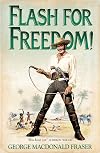
The recent death of George McDonald Fraser has brought a close (maybe permanent, maybe not?) to this delightful series of books. I have had the pleasure of following this series every since the release of the first book back in the sixties. The Flashman novels combine history (including substantial endnotes) with sex, action, adventure and the secret pleasure of enjoying the exploits of one of the most notoriously popular non-politically correct characters of 20th Century literature. show more Flashman is a womanizer, a coward, a scoundrel and a cheat, but in the novels, which are all narrated by Flashman himself, he is utterly honest with his readers. He is a man not proud of his faults, but certainly unabashed about them.
The Flashman novels could be dismissed as sensationalized light reading , but Fraser cleverly tied his character into most of the major events of the last sixty years of the nineteenth century, a Victorian Zelig or Forrest Gump. Flashman casually mentions this minor detail or that simple observation, then Fraser in his assumed role as editor of the Flashman papers meticulously explains in the endnotes how these mentions by Flashman confirm the truth of his narrative, since only if Flashman was there could he have known about this fact or that. Fraser's endnotes also round out the historic details of the narrative, giving background and elaboration to the history-as-I-lived-it tales told by Flashman. It all works wonderfully, even if you somewhat suspect that some details are being outrageously fabricated.
I very strongly recommend these books to anyone who has an interest in history and is willing to keep an open mind towards the womanizing and the language (the n-word appears quite a bit, but completely in character for Flashman). I would suggest the best way to read them is in order of publication. This doesn't follow Flashman's own life chronology, but the books published later often make reference to previous editions of the "Flashman Papers" and so is more fun for the reader to follow. show less
The Flashman novels could be dismissed as sensationalized light reading , but Fraser cleverly tied his character into most of the major events of the last sixty years of the nineteenth century, a Victorian Zelig or Forrest Gump. Flashman casually mentions this minor detail or that simple observation, then Fraser in his assumed role as editor of the Flashman papers meticulously explains in the endnotes how these mentions by Flashman confirm the truth of his narrative, since only if Flashman was there could he have known about this fact or that. Fraser's endnotes also round out the historic details of the narrative, giving background and elaboration to the history-as-I-lived-it tales told by Flashman. It all works wonderfully, even if you somewhat suspect that some details are being outrageously fabricated.
I very strongly recommend these books to anyone who has an interest in history and is willing to keep an open mind towards the womanizing and the language (the n-word appears quite a bit, but completely in character for Flashman). I would suggest the best way to read them is in order of publication. This doesn't follow Flashman's own life chronology, but the books published later often make reference to previous editions of the "Flashman Papers" and so is more fun for the reader to follow. show less
Lists
Awards


You May Also Like


Associated Authors
Statistics
- Works
- 48
- Also by
- 7
- Members
- 19,693
- Popularity
- #1,106
- Rating
- 3.9
- Reviews
- 366
- ISBNs
- 470
- Languages
- 11
- Favorited
- 119