
Robin Hobb
Author of Assassin's Apprentice
About the Author
Robin Hobb was born in California but grew up in Alaska. It was there that she learned to love the forest and the wilderness. She has lived most of her life in the Pacific Northwest and currently resides in Tacoma, Washington. She is the author of five critically acclaimed fantasy series: The Rain show more Wilds Chronicles (Dragon Keeper, Dragon Haven, City of Dragons, Blood of Dragons), The Soldier Son Trilogy, The Tawny Man Trilogy, The Liveship Traders Trilogy, and The Farseer Trilogy. Under the name Megan Lindholm she is the author of The Wizard of the Pigeons, Windsingers, and Cloven Hooves. The Inheritance, a collection of stories, was published under both names. Her short fiction has won the Asimov's Readers' Award and she has been a finalist for both the Nebula and Hugo awards. (Publisher Provided) Margaret Astrid Lindholm Ogden was born in Berkeley, California on March 5, 1952. She writes under the pseudonyms Megan Lindholm and Robin Hobb. She writes fantasy and science fiction under the name Robin Hobb including the Farseer Trilogy, the Liveship Traders Trilogy, the Tawny Man Trilogy, the Soldier Son Trilogy, the Rain Wilds Chronicles, and the Fitz and the Fool Trilogy. Her title, Assassin's Fate, made The New York Times Best Seller List in 2017. (Bowker Author Biography) show less
Disambiguation Notice:
Margaret Astrid Lindholm Ogden writes as Robin Hobb and as Megan Lindholm.
Series
Works by Robin Hobb
The Farseer Trilogy (Assassin's Apprentice / Royal Assassin / Assassin's Quest) (1997) 351 copies, 6 reviews
The Soldier Son Trilogy (Shaman's Crossing / Forest Mage / Renegade's Magic) (2012) 110 copies, 4 reviews
The Rain Wilds Chronicles (Dragon Keeper / Dragon Haven / City of Dragons / Blood of Dragons) (2012) 103 copies
Blue Boots [short story] 5 copies
Cut 2 copies
Neighbors 2 copies
rod Seerlongs Other Worlds 2 copies
Second Chances 1 copy
Strays [novelette] 1 copy
Generations 1 copy
Giving Up The Ghost 1 copy
Drum Machine [short story] 1 copy
Finis [short story] 1 copy
Cat's Meat [short story] 1 copy
Associated Works
Legends II: New Short Novels by the Masters of Modern Fantasy (2003) — Contributor — 1,373 copies, 22 reviews
Songs of Love and Death: All Original Tales of Star Crossed Love (2010) — Contributor — 808 copies, 37 reviews
The Year's Best Science Fiction: Seventh Annual Collection (1990) — Contributor — 312 copies, 2 reviews
The Year's Best Science Fiction: Thirtieth Annual Collection (2013) — Contributor — 255 copies, 3 reviews
Légendes de la Fantasy, Vol. 2: Cinq récits inédits par les maîtres de la Fantasy moderne (2003) — Contributor — 10 copies, 1 review
Asimov's Science Fiction: Vol. 44, No. 7 & 8 [July/August 2020] (2020) — Contributor — 5 copies, 1 review
Fantastisches Lesen: Ausgewählte Leseproben von Robin Hobb, Holly Black, Benedict Jacka, Lena Kiefer u.v.m. — Author — 2 copies
Legends II: New Short Novels by the Masters of Modern Fantasy: Vol. 4 (Audio) (2003) — Contributor — 1 copy
Tagged
Common Knowledge
- Legal name
- Ogden, Margaret Astrid Lindholm
- Other names
- Lindholm, Megan
Lindholm, M.
Hobb, Robin - Birthdate
- 1952-03-05
- Gender
- female
- Education
- University of Denver
Austin E. Lathrop High School - Occupations
- electronics store manager
restaurant server
journalist
photojournalist
fantasy writer - Organizations
- Science Fiction and Fantasy Writers of America
- Awards and honors
- Isaac Asimov’s Science Fiction Readers’ Award (won 2)
World Fantasy Award for Life Achievement (2021) - Nationality
- USA
- Birthplace
- Berkeley, California, USA
- Places of residence
- Tacoma, Washington, USA (Current)
San Rafael, California, USA
Fairbanks, Alaska, USA
Chiniak, Alaska, USA
Roy, Washington, USA
Berkeley, California, USA (show all 7)
Kodiak, Alaska, USA - Map Location
- USA
- Disambiguation notice
- Margaret Astrid Lindholm Ogden writes as Robin Hobb and as Megan Lindholm.
- Associated Place (for map)
- USA
Members
Discussions
Found: Fantasy Novel possibly by Mercedes Lackey in Name that Book (September 2023)
Kid grows up in stables and has magic ability to bond with an animal in Name that Book (August 2020)
Group read: Golden Fool by Robin Hobb - The Tawny Man Trilogy in 75 Books Challenge for 2019 (September 2019)
Group read: Fool's Fate by Robin Hobb - The Tawny Man Trilogy in 75 Books Challenge for 2019 (September 2019)
Group read: Fool's Errand by Robin Hobb - The Tawny Man Trilogy in 75 Books Challenge for 2019 (February 2019)
Group read: Assassin's Quest by Robin Hobb - Farseer trilogy in 75 Books Challenge for 2018 (January 2019)
Group read: Ship of Destiny by Robin Hobb - The Liveship Trilogy in 75 Books Challenge for 2018 (December 2018)
Group read: The Mad Ship by Robin Hobb - The Liveship Trilogy in 75 Books Challenge for 2018 (November 2018)
Group read: Ship of Magic by Robin Hobb - The Liveship Trilogy in 75 Books Challenge for 2018 (November 2018)
Group read: Royal Assassin by Robin Hobb - Farseer trilogy in 75 Books Challenge for 2018 (May 2018)
Reviews

“Time is an unkind teacher, delivering lessons that we learn far too late for them to be useful. Years after I could have benefited from them, the insights come to me.”
Many years have passed. FitzChivalry Farseer's days as a royal assassin and spy are long behind him. Having fully adopted his Tom Badgerlock identiy, he and his wife Molly have retired to Withywoods to spend the rest of their days together as they care for the estate. Haunted by memories of his old friend the Fool and show more wondering what has happened to him since their parting, Fitz finds himself at relative peace as he reflects on his past. When menacing pale skinned strangers appear at Winterfest and seem to have killed someone in Fitz's house, Fitz realizes his past is not done with him and he'll have to use some of his old skills if he is to protect the future of those he loves.
I don't know how she does it. Robin Hobb is the queen of the slow burn and some of the most wonderful characterizations, and best character relationships, I've ever read. Fool's Assassin is the first book in Hobb's final Elderlings trilogy titled The Fitz and the Fool and is the 7th book to star Fitz. Just when you think you've known all you can about a character Hobb proves you wrong and continues to add layers to the complex and rich world she's created and the characters that live here.
There will be some spoilers beyond this point. You've been warned.
Much of this book is devoted to the domestic daily life at Withywoods and I loved every minute of it. Hobb's prose is gorgeous. Fitz spends a lot of time being introspective of his past as Molly runs the house. I never really was a fan of Molly throughout the series. I think both time and being away from Farseer politics has helped mellow her character out so she's the most tolerable she's been to date. Even still, their relationship is a bitersweet one. Due to events from the Tawny Man trilogy, Fitz doesn't age normally and has to watch as Molly's mental health slowly declines as she ages. It is with great joy and much confusion to learn that Molly is pregnant in her 50's. The new addition to the family, their daughter Bee, is a surprise and a delight. It was wonderful reading about her and getting to know this character.
Since the focus of this book is on Withywoods, those of you hoping for old characters to make a return will be disappointed. While Chade and the others do make appearances, they are not central to this story though I suspect some of them may have bigger roles in the remainder of the series. Still, Fitz is Fitz and proves yet again that the more things change, the more they remain the same.
As I mentioned earlier this book is a slow burn. While the action is kept to a minimum until the very end there is plenty of tension throughout. It makes for an emotional and engaging read with some scenes being deeply moving. This is Robin Hobb - you just know the peace for Fitz and his family can't last. The last 100-150 pages were intense, with that final chapter being so high adrenaline that it took me a while to calm down after reading it!
Fool's Assassin is a fantastic start to this new trilogy. For those who have not read Robin Hobb, you definitely need to start back at the beginning with Assassin's Apprentice. Now it's straight on to book two for me. show less
Many years have passed. FitzChivalry Farseer's days as a royal assassin and spy are long behind him. Having fully adopted his Tom Badgerlock identiy, he and his wife Molly have retired to Withywoods to spend the rest of their days together as they care for the estate. Haunted by memories of his old friend the Fool and show more wondering what has happened to him since their parting, Fitz finds himself at relative peace as he reflects on his past. When menacing pale skinned strangers appear at Winterfest and seem to have killed someone in Fitz's house, Fitz realizes his past is not done with him and he'll have to use some of his old skills if he is to protect the future of those he loves.
I don't know how she does it. Robin Hobb is the queen of the slow burn and some of the most wonderful characterizations, and best character relationships, I've ever read. Fool's Assassin is the first book in Hobb's final Elderlings trilogy titled The Fitz and the Fool and is the 7th book to star Fitz. Just when you think you've known all you can about a character Hobb proves you wrong and continues to add layers to the complex and rich world she's created and the characters that live here.
There will be some spoilers beyond this point. You've been warned.
Much of this book is devoted to the domestic daily life at Withywoods and I loved every minute of it. Hobb's prose is gorgeous. Fitz spends a lot of time being introspective of his past as Molly runs the house. I never really was a fan of Molly throughout the series. I think both time and being away from Farseer politics has helped mellow her character out so she's the most tolerable she's been to date. Even still, their relationship is a bitersweet one. Due to events from the Tawny Man trilogy, Fitz doesn't age normally and has to watch as Molly's mental health slowly declines as she ages. It is with great joy and much confusion to learn that Molly is pregnant in her 50's. The new addition to the family, their daughter Bee, is a surprise and a delight. It was wonderful reading about her and getting to know this character.
Since the focus of this book is on Withywoods, those of you hoping for old characters to make a return will be disappointed. While Chade and the others do make appearances, they are not central to this story though I suspect some of them may have bigger roles in the remainder of the series. Still, Fitz is Fitz and proves yet again that the more things change, the more they remain the same.
As I mentioned earlier this book is a slow burn. While the action is kept to a minimum until the very end there is plenty of tension throughout. It makes for an emotional and engaging read with some scenes being deeply moving. This is Robin Hobb - you just know the peace for Fitz and his family can't last. The last 100-150 pages were intense, with that final chapter being so high adrenaline that it took me a while to calm down after reading it!
Fool's Assassin is a fantastic start to this new trilogy. For those who have not read Robin Hobb, you definitely need to start back at the beginning with Assassin's Apprentice. Now it's straight on to book two for me. show less

This is the fourth and final volume in Robin Hobb’s Rain Wild Chronicles – or rather, it is the second part of the second novel, a novel which (like the first one) would probably have been much better served and definitely been much more enjoyable if it had been published in one part. After City of Dragons ended on a rather weird point - basically, a recap of what had happened before which would have made much more sense at the beginning of a volume than at its end - Blood of Dragons show more throws the reader in medias res, and even with Hobb’s wondeful skills at memorable characterisation, at least this reader had to struggle somewhat to remember who was who and what they had been up to in the previous volume.
I liked this somewhat better than City of Dragons, and am reasonably certain that I would have not been quite so disgruntled with the previous novel if I had read it together with Blood of Dragons, either as one novel or immediately afterwards – in retrospect, I should have just waited until all of it was released before starting reading, but it is hard, if not impossible, for me to resist the lure of a new Robin Hobb novel. Anyway, and even so, I am not as enthusiastic about the complete novel (and, I suppose, about The Rain Wild Chronicles in general) than about her previous work. It is hard to put a finger on the reason for that – the descriptions here are still wonderful, the atmosphere of the Elderling city where most of the novel takes place are breathtaking, evoking both the decay and the former glory of Kelsingra in slow, sensuous prose; the characters are engaging as well as realistic, Hobb makes us genuinely care for what happens to them (however, I remain unimpressed by the villains, but that is really just a minor quibble).
And Robin Hobb’s dragons are as splendid, as arrogantly glorious and as gloriously arrogant as ever. Overall, we have been closer to the dragons in The Rain Wild Chronicles than in any of the previous novels of Realms of the Elderlings, and while that invariably has led to a certain familiarity and them appearing more like everyday creatures and less like transcendent beings of legend, it has not really diminshed their mystique – even though she gives some of them (namely, Sintara and, of course, the incomparable Tintaglia) their own point of view chapters, Hobb manages to retain their essential strangeness and always makes their distance from humans felt even as she shows us the inner workings of their minds.
So where does that nagging feeling of dissatisfaction that persists even after turning the last page of Blood of Dragons come from? It is a very enjoyable novel, mind you, but I just do not feel myself moved by it in quite the same way as I was by all of Robin Hobb’s novels prior to The Rain Wild Chronicles. My theory is that my own lack of enthusiasm mirrors that of Robin Hobb, that there is a certain exhaustion about those recent novels because their author has just grown tired of most, if not all, trappings of Epic Fantasy. This is of course pure speculation on my part, I know nothing at all of the actual state of mind of the actual Robin Hobb – but the impression that I am getting from this and previous novels in the current series is that she just can’t bring herself to muster much interest for any standard fantasy tropes, and that in conesquence her novels still shine as brightly as ever where she manages to disentangle herself from them - in her descriptions of landscapes and cities, her characters (apart from the villains, that is) and her entirely original take on dragons – but feel stale whenever they get tied up in the demands of the genre – which is pretty much every time the plots steps into the foreground. This is most striking at the end of the novel, when the dragons attack Chalced to overthrow its ruler and rescue one of their elderlings – surely, that would have been a high point in every other Fantasy novel, a glorious moment with the dragons fighting for their future and reclaiming their place in the world, which every other author would have described at great length and with great gusto. Robin Hobb, on the other hand, barely describes it all, keeps most of it offstage and spares the rest only a very cursory description – it’s like she just couldn’t be bothered to waste her time on all that traditional Fantasy paraphernilia and would much rather be doing something else, like exploring the relationships between her characters. And I even agree with that, but it makes it somewhat hard to see why all the battle-and-glory stuff is there in the first place.
Again, Blood of Dragons is an excellent novels, as the whole Rain Wild Chronicles are excellent – I just don’t think that they are up to Robin Hobb’s usual standards. With the Soldier Son trilogy she left conventional Fantasy far behind her, and it seems that there is not really any way back. In the light of that, I’m a bit torn about the news that there are apparently going to be more novels in the Realm of the Elderlings series – on the one hand, I think there are still a lot of open threads, and I’d love to know how things continue in that world now that the dragons have returned in full force. On the other hand, I would also love to see Robin Hobb explore new ways of writing Fantasy, like she did in Soldier Son. Of course, there is always the chance that she manages to do both at once and take Realm of the Elderlings in completely new, unexpected directions… show less
I liked this somewhat better than City of Dragons, and am reasonably certain that I would have not been quite so disgruntled with the previous novel if I had read it together with Blood of Dragons, either as one novel or immediately afterwards – in retrospect, I should have just waited until all of it was released before starting reading, but it is hard, if not impossible, for me to resist the lure of a new Robin Hobb novel. Anyway, and even so, I am not as enthusiastic about the complete novel (and, I suppose, about The Rain Wild Chronicles in general) than about her previous work. It is hard to put a finger on the reason for that – the descriptions here are still wonderful, the atmosphere of the Elderling city where most of the novel takes place are breathtaking, evoking both the decay and the former glory of Kelsingra in slow, sensuous prose; the characters are engaging as well as realistic, Hobb makes us genuinely care for what happens to them (however, I remain unimpressed by the villains, but that is really just a minor quibble).
And Robin Hobb’s dragons are as splendid, as arrogantly glorious and as gloriously arrogant as ever. Overall, we have been closer to the dragons in The Rain Wild Chronicles than in any of the previous novels of Realms of the Elderlings, and while that invariably has led to a certain familiarity and them appearing more like everyday creatures and less like transcendent beings of legend, it has not really diminshed their mystique – even though she gives some of them (namely, Sintara and, of course, the incomparable Tintaglia) their own point of view chapters, Hobb manages to retain their essential strangeness and always makes their distance from humans felt even as she shows us the inner workings of their minds.
So where does that nagging feeling of dissatisfaction that persists even after turning the last page of Blood of Dragons come from? It is a very enjoyable novel, mind you, but I just do not feel myself moved by it in quite the same way as I was by all of Robin Hobb’s novels prior to The Rain Wild Chronicles. My theory is that my own lack of enthusiasm mirrors that of Robin Hobb, that there is a certain exhaustion about those recent novels because their author has just grown tired of most, if not all, trappings of Epic Fantasy. This is of course pure speculation on my part, I know nothing at all of the actual state of mind of the actual Robin Hobb – but the impression that I am getting from this and previous novels in the current series is that she just can’t bring herself to muster much interest for any standard fantasy tropes, and that in conesquence her novels still shine as brightly as ever where she manages to disentangle herself from them - in her descriptions of landscapes and cities, her characters (apart from the villains, that is) and her entirely original take on dragons – but feel stale whenever they get tied up in the demands of the genre – which is pretty much every time the plots steps into the foreground. This is most striking at the end of the novel, when the dragons attack Chalced to overthrow its ruler and rescue one of their elderlings – surely, that would have been a high point in every other Fantasy novel, a glorious moment with the dragons fighting for their future and reclaiming their place in the world, which every other author would have described at great length and with great gusto. Robin Hobb, on the other hand, barely describes it all, keeps most of it offstage and spares the rest only a very cursory description – it’s like she just couldn’t be bothered to waste her time on all that traditional Fantasy paraphernilia and would much rather be doing something else, like exploring the relationships between her characters. And I even agree with that, but it makes it somewhat hard to see why all the battle-and-glory stuff is there in the first place.
Again, Blood of Dragons is an excellent novels, as the whole Rain Wild Chronicles are excellent – I just don’t think that they are up to Robin Hobb’s usual standards. With the Soldier Son trilogy she left conventional Fantasy far behind her, and it seems that there is not really any way back. In the light of that, I’m a bit torn about the news that there are apparently going to be more novels in the Realm of the Elderlings series – on the one hand, I think there are still a lot of open threads, and I’d love to know how things continue in that world now that the dragons have returned in full force. On the other hand, I would also love to see Robin Hobb explore new ways of writing Fantasy, like she did in Soldier Son. Of course, there is always the chance that she manages to do both at once and take Realm of the Elderlings in completely new, unexpected directions… show less
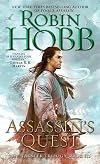
Background (No Spoilers)
This is a saga about a boy, Fitz, who spends his life always in reluctant service to others - in particular, the Farseer Rulers of the Six Duchies. Fitz wants so much just to follow his own dreams. Yet his royal blood means that self-determination can never really be his fate. Like the rulers of the Mountain Kingdoms acknowledge, those with royal blood must be a “sacrifice” to their people, and have no other choice: “the true ruler of a kingdom is the servant of show more all.”
Fitz was born out of wedlock to Chivalry Farseer, the King-in-Waiting of the Six Duchies. At age six, Fitz was taken away from his mother by his grandfather and handed over to Verity, Chivalry’s brother, at Buckkeep Fortress.
With Fitz's existence known, Chivalry was forced as a manner of honor to abdicate his right to the throne and to leave Buckkeep. Fitz’s care was given by Verity in part to Burrich, the Stablemaster of Buckkeep and Chivalry’s right-hand man. A third brother, Regal, was jealous of Chivalry and Verity, and when Fitz came, Regal began to hate Fitz the most of all of them. Regal resolved to get rid of all three of them so he could rule after the death of their father, King Shrewd.
The others ignored Regal, because the Six Duchies had bigger (or so they thought) problems. They were being besieged by pirates from the Outislands, who traveled in distinctive red ships, raiding the shores and stealing the wealth of the Six Duchies. Then the Outislanders began kidnapping villagers and by some unknown process returning them as zombie-like monsters. Because this practice began with the village of Forge, such people, no matter their origin, were ever after known as “Forged.”
People who were Forged could not even be detected by the Skill. This was a magic common to those in the Farseer line enabling a person to reach out to another’s mind, no matter how distant, and know that person’s thoughts. If the other person were Skilled also, the two could even communicate through mind-speak, and if one had evil intent, he or she could control or even kill the other person via the Skill.
The trilogy can almost be seen as a catalog of Fitz’s suffering. Yes, he is a hero, but not a shining, caped hero that escapes repeated trials to save the day. Rather, he is battered and bruised, both physically and psychologically, with few moments of happiness. Thus it is that the rare glimpses of sunlight in his life make you want to weep for him. It is not at all spoilery to tell you he survives however, because the trilogy begins as a recounting by a much older Fitz of his memories. But as for how intact he is when he writes down these memories, and what his current status is - for that you have to read the books.
Assassin’s Quest (Spoilers for Books One and Two)
As Book Three begins, Fitz is living with Burrich in a hut. In the previous book, Fitz had escaped vicious torture and almost certain death in Regal’s prison by taking a poison that made him appear dead, and then transferring his mind and soul to the wolf, Nighteyes. When it was safe, Burrich and Chade dug up Fitz’s body and coaxed Fitz to re-enter it. But Fitz still thinks and acts like a wolf, and it is a long time before he recovers. Most people assume he is dead.
King Shrewd has died, and Prince Verity is missing, after having left on his pursuit of the Elderlings, the legendary allies of the Six Duchies. Regal announced Verity was dead, and took over the kingdom, turning it into a kleptocracy. More and more towns fall victim to the raiders, since there is no money for defending them.
In time, Fitz finally returns to “himself,” but is full of anger and venom, even toward Burrich and Chade, who care for him the most. They tell him he is free to leave, and he resolves to go find and kill Regal. Before leaving, however, he is attacked by some of the Forged. He survives, but Burrich believes him really dead this time. Burrich, doing what he thinks Fitz would want, sets out to find Molly and help her.
Fitz fails in his attempt to assassinate Regal, and hears a Skill command from Verity to come to him in the mountains. He and Nighteyes join a group of pilgrims setting out in that direction. Regal has a huge reward out for them, however, and they are recognized, and fall into a trap. Once again they escape, and joined by two of the pilgrims - the minstrel Starling and a mysterious old woman named Kettle, they continue their journey. Later they are also joined by Verity's Queen Kettricken and Shrewd's former Fool, who had helped Kettricken escape from Regal.
As they continue on, all the plot threads coalesce and we finally get answers: will the travelers find Verity? Did Verity ever reach the Elderlings? What happened to Molly? Will Regal prevail? Who will rule the Six Duchies? show less
This is a saga about a boy, Fitz, who spends his life always in reluctant service to others - in particular, the Farseer Rulers of the Six Duchies. Fitz wants so much just to follow his own dreams. Yet his royal blood means that self-determination can never really be his fate. Like the rulers of the Mountain Kingdoms acknowledge, those with royal blood must be a “sacrifice” to their people, and have no other choice: “the true ruler of a kingdom is the servant of show more all.”
Fitz was born out of wedlock to Chivalry Farseer, the King-in-Waiting of the Six Duchies. At age six, Fitz was taken away from his mother by his grandfather and handed over to Verity, Chivalry’s brother, at Buckkeep Fortress.
With Fitz's existence known, Chivalry was forced as a manner of honor to abdicate his right to the throne and to leave Buckkeep. Fitz’s care was given by Verity in part to Burrich, the Stablemaster of Buckkeep and Chivalry’s right-hand man. A third brother, Regal, was jealous of Chivalry and Verity, and when Fitz came, Regal began to hate Fitz the most of all of them. Regal resolved to get rid of all three of them so he could rule after the death of their father, King Shrewd.
The others ignored Regal, because the Six Duchies had bigger (or so they thought) problems. They were being besieged by pirates from the Outislands, who traveled in distinctive red ships, raiding the shores and stealing the wealth of the Six Duchies. Then the Outislanders began kidnapping villagers and by some unknown process returning them as zombie-like monsters. Because this practice began with the village of Forge, such people, no matter their origin, were ever after known as “Forged.”
People who were Forged could not even be detected by the Skill. This was a magic common to those in the Farseer line enabling a person to reach out to another’s mind, no matter how distant, and know that person’s thoughts. If the other person were Skilled also, the two could even communicate through mind-speak, and if one had evil intent, he or she could control or even kill the other person via the Skill.
The trilogy can almost be seen as a catalog of Fitz’s suffering. Yes, he is a hero, but not a shining, caped hero that escapes repeated trials to save the day. Rather, he is battered and bruised, both physically and psychologically, with few moments of happiness. Thus it is that the rare glimpses of sunlight in his life make you want to weep for him. It is not at all spoilery to tell you he survives however, because the trilogy begins as a recounting by a much older Fitz of his memories. But as for how intact he is when he writes down these memories, and what his current status is - for that you have to read the books.
Assassin’s Quest (Spoilers for Books One and Two)
As Book Three begins, Fitz is living with Burrich in a hut. In the previous book, Fitz had escaped vicious torture and almost certain death in Regal’s prison by taking a poison that made him appear dead, and then transferring his mind and soul to the wolf, Nighteyes. When it was safe, Burrich and Chade dug up Fitz’s body and coaxed Fitz to re-enter it. But Fitz still thinks and acts like a wolf, and it is a long time before he recovers. Most people assume he is dead.
King Shrewd has died, and Prince Verity is missing, after having left on his pursuit of the Elderlings, the legendary allies of the Six Duchies. Regal announced Verity was dead, and took over the kingdom, turning it into a kleptocracy. More and more towns fall victim to the raiders, since there is no money for defending them.
In time, Fitz finally returns to “himself,” but is full of anger and venom, even toward Burrich and Chade, who care for him the most. They tell him he is free to leave, and he resolves to go find and kill Regal. Before leaving, however, he is attacked by some of the Forged. He survives, but Burrich believes him really dead this time. Burrich, doing what he thinks Fitz would want, sets out to find Molly and help her.
Fitz fails in his attempt to assassinate Regal, and hears a Skill command from Verity to come to him in the mountains. He and Nighteyes join a group of pilgrims setting out in that direction. Regal has a huge reward out for them, however, and they are recognized, and fall into a trap. Once again they escape, and joined by two of the pilgrims - the minstrel Starling and a mysterious old woman named Kettle, they continue their journey. Later they are also joined by Verity's Queen Kettricken and Shrewd's former Fool, who had helped Kettricken escape from Regal.
As they continue on, all the plot threads coalesce and we finally get answers: will the travelers find Verity? Did Verity ever reach the Elderlings? What happened to Molly? Will Regal prevail? Who will rule the Six Duchies? show less
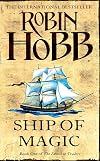
After the flaws in the Farseer trilogy, I wasn't sure about tackling another huge Hobb saga, but so far I am enjoying it a lot more. The set up of ships, including liveships animated by an intelligence, pirates and the politics of Bingtown, torn between the Old Traders with their secrets and contracts with the mutated Rain Wilders on the one hand and the crass New Traders, given illegal land grants by the corrupt and drugged up satrap of Jamaillia, provides far more interest and conflict, show more and does not require characters to constantly behave stupidly to make the plot work. Some characters do act stupidly, such as Malta, the spoiled brat, and the odious Kyle, but their behaviour arises from their character flaws - there is far more character development in this book than in the Farseer books. There are also the odd sections from the POV of some of the sea serpents who keep attacking ships, especially the slaver ships, which throw dead bodies over the side, and I expect they will turn out to be more important than at first appears. And I can't help wondering if Amber is like the Fool in the Farseer books. Anyway, I am interested to see how things develop in book 2. show less
Lists
Books Read in 2014 (13)
READ 2025 (1)
Florida (1)
Requests (1)
Epic Fantasy (1)
Shelf 101 (1)
Epic Fantasy (1)
Assassins (1)
Sentient ships (3)
Read in 2006 (3)
Read in 2014 (4)
Unread books (3)
Female Author (2)
Favourite Books (1)
Missing Books (2)
Favorite Series (2)
Off on a Quest (2)
al.vick-series (2)
READ 2026 (2)
Magic Realism (2)
FAB 2026 (2)
Five star books (2)
Awards


You May Also Like


Associated Authors
Statistics
- Works
- 142
- Also by
- 54
- Members
- 107,133
- Popularity
- #82
- Rating
- 4.1
- Reviews
- 2,069
- ISBNs
- 1,212
- Languages
- 22
- Favorited
- 454


