
Raymond E. Feist
Author of Silverthorn
About the Author
Fantasy writer Raymond E. Feist was born in Southern California. He received a B.A. in Communication Arts with honors from the University of California at San Diego in 1977. His first novel, Magician, published in 1982 is the first book of The Riftwar Saga. His other series include The Serpentwar show more Saga, The Empire Trilogy, The Riftwar Legacy, Krondor's Sons, Legends of the Riftwar, Conclave of Shadows, Darkwar Saga, Chaoswar Saga, Demonwar Saga, and The Firemane Saga. Feist's work appears regularly on the bestseller lists of The New York Times and The Times of London. He has also worked with Sierra Studios and PyroTechnix to produce a role-playing game. (Bowker Author Biography) show less
Series
Works by Raymond E. Feist
Serpentwar Saga: Shadow of a Dark Queen • Rise of a Merchant Prince • Rage of a Demon King • Shards of a Broken Crown (2013) 344 copies, 1 review
Empire Trilogy: Daughter of the Empire • Servant of the Empire • Mistress of the Empire (2012) 53 copies
De wereld van de magiër : over de boeken en werelden van Raymond E. Feist (2000) — Author — 30 copies
Conclave of Shadows: Talon of the Silver Hawk • King of Foxes • Exile's Return (2012) 21 copies, 1 review
The Riftwar Saga: Magician • Silverthorn • A Darkness at Sethanon • Prince of the Blood • The King's Buccaneer (1994) 8 copies
Riftwar Legacy: Krondor: The Betrayal • Krondor: The Assassins • Krondor: Tear of the Gods • Jimmy and the Crawler (2013) 8 copies
Daughter of the Empire • Servant of the Empire • Mistress of the Empire • Prince of Blood • The King's Buccaneer (1990) 5 copies
The Riftwar Cycle: Magician • Silverthorn • A Darkness at Sethanon • Prince of the Blood (1990) 4 copies
Magician: Apprentice #12 3 copies
Complete Raymond Fiest Collection: The Rift War Saga, The Empire Trilogy, Krondor's Sons, The SerpentWar Saga, The Rfitwar Legacy, Legends of Riftwar, Conclave of Shadows,… (2012) 2 copies, 1 review
Magician: Apprentice #11 2 copies
Magician: Apprentice #10 2 copies
Magician: Apprentice #9 2 copies
Magician: Apprentice #3 2 copies
Magician: Apprentice #8 2 copies
Magician: Apprentice #2 2 copies
Magician: Apprentice #5 2 copies
Magician: Apprentice #7 2 copies
Magician: Apprentice #1 2 copies
The Magician's Apprentice 1 copy
Král popela 1 copy
Stín temné královny : Vrazi 1 copy
Stín temné královny: Žoldáci 1 copy
Vzestup magnáta: Risk 1 copy
Hněv krále démonů. Boj 1 copy
Daughter of the Empire 1 copy
Tulan of the Isles + Cities 1 copy
Exiles Return 1 copy
Magician: Apprentice #4 1 copy
Associated Works
Legends I: New Short Novels by the Masters of Modern Fantasy (1998) — Contributor — 2,086 copies, 19 reviews
Legends II: New Short Novels by the Masters of Modern Fantasy (2003) — Contributor — 1,374 copies, 22 reviews
Legends: Short Novels by the Masters of Modern Fantasy, Vol. 1 (of 3) (1999) — Contributor — 470 copies
Legends: Short Novels by the Masters of Modern Fantasy, Vol. A (of 2) (1998) — Contributor — 289 copies, 1 review
Legends: Short Novels by the Masters of Modern Fantasy, Vol. B (of 2) (2000) — Contributor — 148 copies, 5 reviews
Légendes de la Fantasy, Vol. 1: Six récits inédits par les maîtres de la Fantasy moderne (2003) — Contributor — 9 copies
Legends. Racconti inediti dei maestri del nuovo fantastico: 2 (1998) — Contributor — 6 copies, 2 reviews
Legends II: New Short Novels by the Masters of Modern Fantasy: Vol. 4 (Audio) (2003) — Contributor — 1 copy
Tagged
Common Knowledge
- Legal name
- Feist, Raymond Elias
- Other names
- Gonzales, Raymond E., III (birth name)
- Birthdate
- 1945-12-23
- Gender
- male
- Education
- University of California, San Diego (BA, Communication Arts)
- Occupations
- fantasy writer
- Nationality
- USA
- Birthplace
- Los Angeles, California, USA
- Places of residence
- San Diego, California, USA
- Associated Place (for map)
- California, USA
Members
Discussions
Medieval Fantasy/Adventure. Prince with Clubfoot exiled? in Name that Book (June 2018)
Teen Sci Fi 90's Book in Name that Book (September 2012)
Reviews
Daughter of the Empire: An Epic Saga of the World on the Other Side of the Riftwar (Riftwar Cycle: The Empire Trilogy) by Raymond E. Feist
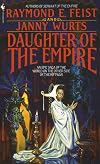
Surprisingly good, given how boring and cardboard Feist's Midkemia characters tend to be. The protagonist is not really a nice person--she is a slaver after all-but she is interesting, and I was caught up in her courtly intrigues. It is tempting to attribute the uptick in quality to departing the generic Tolkien-esque Midkemia setting for the vaguely Asian/Mesoamerican Kelewan. In reality, I suspect Feist's coauthor Jenny Wurts deserves the credit. My main complaint is that the novel focuses show more on how the protagonist navigates the aristocratic circles of the Tsuranuanni Empire, governed by byzantine rules of honor and gentility, and often the narrative progresses by the authors introducing a new rule that works in favor of the protagonist. It is a common trope in science fiction but oh well. show less
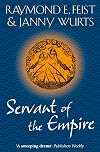
Unfortunately, this book unambiguously disappointed me compared to the first book, primarily due to 1) Mara's incompetence, 2) the Midkemian slave plot device, and 3) the boring pace. In the first book, Mara makes mistakes, since she is a callow player of the Game, after all, recently torn from a convent of all places, but at the same time she shows flashes of brilliance, and executes a plot from end-to-end all on her own. In the second book, Mara loses all her competence - she receives show more accolades from enemies and allies alike, but never does she actually show, through her plans and actions, that she knows what she is doing, that she is a master strategist, that she's achieving her goals through her ability rather than luck or the ability of her subordinates.
I knew about and dreaded going in the Midkemian slave - he was every bit as annoying as I feared, and then some. Just as in the first Riftwar trilogy, I found the declared cultural superiority of Midkema over Kelewan to be racist and repellent. His relationship with Mara just exacerbated the annoying place he had in the plot and her character's development.
Finally, I had trouble staying awake through this book. It suffered from the uneven pacing of Feist's first Riftwar trilogy, and even worse, on multiple occasions it built up suspense only to switch perspectives at the climax so you didn't even know what happened much less get to experience the visceral payoff. I couldn't understand the decision to make the book so much less compelling than it could've been.
I had hopes that the trilogy would live up to the promise of the first book, but I'm going to have to pass on the third book. Servant of the Empire felt like a huge waste of time, and I have no reason to believe that the third book won't be even worse. show less
I knew about and dreaded going in the Midkemian slave - he was every bit as annoying as I feared, and then some. Just as in the first Riftwar trilogy, I found the declared cultural superiority of Midkema over Kelewan to be racist and repellent. His relationship with Mara just exacerbated the annoying place he had in the plot and her character's development.
Finally, I had trouble staying awake through this book. It suffered from the uneven pacing of Feist's first Riftwar trilogy, and even worse, on multiple occasions it built up suspense only to switch perspectives at the climax so you didn't even know what happened much less get to experience the visceral payoff. I couldn't understand the decision to make the book so much less compelling than it could've been.
I had hopes that the trilogy would live up to the promise of the first book, but I'm going to have to pass on the third book. Servant of the Empire felt like a huge waste of time, and I have no reason to believe that the third book won't be even worse. show less
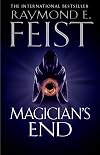
I loved the ending of this book, but I didn't love that the series has now come to an end. I've been reading Raymond Feist's Midkemia series for more than half my adult life, since I first picked up and read the back of a book called Magician in my early 20s.
I put the book back on the shelf that first day but, every time I went into the bookshop, I was drawn by the cover and the basic premise of the novel and eventually I bought it and set off to read it expecting nothing more than just an show more enjoyable few hours wasted.
How wrong I was, it was the start of a journey which has only now ended some 20 years and nearly 30 books later with a novel which fortunately lived up to all my expectations for the conclusion of a story of such epic scale that it had to go back to the beginning.
Feist's Pug has been at the heart of these novels but he's not a hero in the traditional sense of the word, his path to greatness has come at great personal cost and over a lifetime of trials and troubles. His magic, while powerful, has never been of the "wave your fingers and solve all ills" and in Magician's End we see him struggling with the ultimate outcome of everything that had gone on before. All conflicts and conquests are, when it comes down to it, nothing more but humps on a road which leads to a pyrrhic victory or utter destruction.
Other reviewers have mentioned the return of characters from the past, Kulgan Pug's first magician mentor, King Borric, Arutha's eldest son, even Jimmy the Hand makes a fleeting appearance, in image if not in substance, and at the heart of this book - as it has been at the heart of all Feist's works - is that it is the capacity for love which makes everything worth it in the end. Their appearances are all to teach various lessons to the most powerful magic users on Midkemia. To go back to the beginning, that the simplest answer is usually the right one, that it's all a matter of perspective and that, if you have to do anything, doing it for love (whether that be love of the land, love of another person, love for ones country, love for information) is as good a reason as any other.
There are two distinct paths through this novel, what's happening with the conDoin brothers (who couldn't have been more like our original Arutha, Lyam and Martin if they tried!) during the brewing Civil Warfor the Throne of the Isles, and Pug and his fellow magicians' journey to find out what is at the "Heart of Darkness".
While I agree with a previous reviewer that the political strife, battles and general manoeuvring about of Henry, Martin and Brendan is the more pacey and exciting part of Magician's End, I have to say I preferred the quieter, introspective moments of Pug's journey. I had more tearful moments reading those chapters than I can remember in a long time. Tomas' passing was beautifully done, fitting that such a man of power should go in such peace, I loved how it hearkened back to his earliest interactions with Ashen-Shugar as Tomas fought the overwhelming nature of the Valheru.
Previously Feist had peed me off beyond measure with his death of Arutha off page and due to a broken hip. This book round he did it with Dolgan, King of the Dwarves and such a major character from the beginning. Having him die, and the fabled Hammer of Tholin buried along with him, in a throw away one-liner made me really cross!
As this was the "end" I knew deaths would be coming and I have to admit to only being slightly surprised by Feist's final "twist" in the tale. Still, it worked perfectly in ending the cycle of both Pug and my journey through Midkemia and I will always be profoundly grateful that I went back and picked up that book with its intriguing title and cover for his novels have provided me with such joy over the years. show less
I put the book back on the shelf that first day but, every time I went into the bookshop, I was drawn by the cover and the basic premise of the novel and eventually I bought it and set off to read it expecting nothing more than just an show more enjoyable few hours wasted.
How wrong I was, it was the start of a journey which has only now ended some 20 years and nearly 30 books later with a novel which fortunately lived up to all my expectations for the conclusion of a story of such epic scale that it had to go back to the beginning.
Feist's Pug has been at the heart of these novels but he's not a hero in the traditional sense of the word, his path to greatness has come at great personal cost and over a lifetime of trials and troubles. His magic, while powerful, has never been of the "wave your fingers and solve all ills" and in Magician's End we see him struggling with the ultimate outcome of everything that had gone on before. All conflicts and conquests are, when it comes down to it, nothing more but humps on a road which leads to a pyrrhic victory or utter destruction.
Other reviewers have mentioned the return of characters from the past,
There are two distinct paths through this novel, what's happening with the conDoin brothers (who couldn't have been more like our original Arutha, Lyam and Martin if they tried!) during the brewing Civil Warfor the Throne of the Isles, and Pug and his fellow magicians' journey to find out what is at the "Heart of Darkness".
While I agree with a previous reviewer that the political strife, battles and general manoeuvring about of Henry, Martin and Brendan is the more pacey and exciting part of Magician's End, I have to say I preferred the quieter, introspective moments of Pug's journey. I had more tearful moments reading those chapters than I can remember in a long time. Tomas' passing was beautifully done, fitting that such a man of power should go in such peace, I loved how it hearkened back to his earliest interactions with Ashen-Shugar as Tomas fought the overwhelming nature of the Valheru.
Previously Feist had peed me off beyond measure with his death of Arutha off page and due to a broken hip. This book round he did it with Dolgan, King of the Dwarves and such a major character from the beginning. Having him die, and the fabled Hammer of Tholin buried along with him, in a throw away one-liner made me really cross!
As this was the "end" I knew deaths would be coming and I have to admit to only being slightly surprised by Feist's final "twist" in the tale. Still, it worked perfectly in ending the cycle of both Pug and my journey through Midkemia and I will always be profoundly grateful that I went back and picked up that book with its intriguing title and cover for his novels have provided me with such joy over the years.
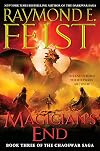
This was the very last book in the entire 31-book Riftwar Cycle that I’ve been reading for months! I think it was a mostly-satisfying conclusion. There weren’t any big surprises. Not everybody comes out alive at the end, which also wasn’t a big surprise. There were some slow spots, but it mostly held my attention well.
As I had mentioned in some of my reviews, the early books in this series are the ones that introduced me to fantasy as an adult and got me addicted to the genre. This was show more 20+ years ago when I was in my early 20’s. At the time, only about half of the books had been published and I never went back to it after reading everything that was published at the time. I now have a lot more fantasy under my belt, and can see some of the flaws in these books that I didn’t notice back then, but I still really enjoyed going back and revisiting this series, and this time seeing it through to the end.
There are certain things the author does a really great job writing, and they tend to be the types of things I enjoy in stories. He does a really great job of writing noble, loyal characters who are trying to do the right thing and will sacrifice for the greater good. He also does a great job of writing camaraderie between characters. Although his books aren’t uproariously funny, they do have a smattering of humor, particularly in the dialogue, that helps make them enjoyable to read. He does a good job of writing battles so that they remain interesting and not too repetitive, and a pretty good job with political intrigue as well.
There are also things the author isn’t so great at writing. Females and romantic relationships would be high on that list. Although he occasionally managed to make his females interesting, for the most part I found them generic. In his earlier books especially, female characters showed up mainly to support the men and to give them somebody to occasionally glance longingly at, or to worry about, or to admire. In later books some of his females took on a little more personality, but they had a tendency to be either super sweet and supportive, or temperamental and irrational. There was also a frequent implication that anybody who wasn’t married was really a miserable person who hadn’t found their true reason for living yet. I found it particularly frustrating when a favorite character who had been living a full and productive, if rather dangerous, life as a single male suddenly encountered his soul mate (whom he promptly got engaged to later that day) and we were told he’d actually been miserable all this time and only now was he truly happy. Blech! :p
An exception to my above comments about his writing of females is the early trilogy he co-wrote with with Janny Wurts, the Empire Trilogy, beginning with Daughter of the Empire. It has an awesome female main character who was well-developed and interesting, and I thought it probably had some of the best over-all writing in the entire series. I would recommend that subseries to fans of epic fantasy without reservation, whereas I would be more reluctant to recommend the rest of the series unless the person were fond of older, classic fantasy and had minimal expectations for well-written females. The first subseries is still my favorite of his solo work though, so it would be a good place for readers to start to see if his writing style works for them. The trilogy co-written with Janny Wurts is the second subseries but doesn’t rely on knowledge from the other books so one could also jump straight into that.
In his first few books, he created some characters I love and whom I’ve remembered fondly for the past couple of decades. However, quite a bit of time passes throughout the overall series. Old favorites die and new generations are born. When it comes to a long series, I think I prefer the type that stays with the same characters from beginning to end. The newer characters never quite gained the same level of investment from me as the original characters did, although I did very much like many of them. There are some powerful/magical characters who show up in most of the books in one way or another, but these weren’t the characters I was the most attached to and their parts of the stories were often the parts I found less interesting. Those parts often got a bit too philosophical/mystical/monologue-y for my tastes.
The author does tend to recycle similar storylines and character types throughout his books. Since a lot of these were things I liked, it didn’t bug me too much, but sometimes I felt like he was trying to recapture the greatness of his earliest characters by creating descendants of those characters who had similar traits. That always fell a little flat for me and just made me miss the originals more. There was also an attempt to make each subseries even more “epic” than the last one, with each threat or source of problems from the previous subseries actually being caused by some bigger threat in the current subseries. By the end of the entire series, I was having “A Fly Went By” flashbacks – where the fly is being chased by the frog being chased by the cat being chased by the dog, etc. However, I’m pleased to report that the series did not end with an (um, spoiler for “A Fly Went By”?)innocent lamb with its foot stuck in a can .
Although I normally prefer to read a large series as close to straight through as possible, I think even I would have benefitted from spacing this one out a bit more, especially in the last few subseries. Despite feeling a bit of series fatigue by the end, I did really enjoy reading these books. In many ways they were comfort reads -- I knew what to expect from them and could count on certain things that I would enjoy. show less
As I had mentioned in some of my reviews, the early books in this series are the ones that introduced me to fantasy as an adult and got me addicted to the genre. This was show more 20+ years ago when I was in my early 20’s. At the time, only about half of the books had been published and I never went back to it after reading everything that was published at the time. I now have a lot more fantasy under my belt, and can see some of the flaws in these books that I didn’t notice back then, but I still really enjoyed going back and revisiting this series, and this time seeing it through to the end.
There are certain things the author does a really great job writing, and they tend to be the types of things I enjoy in stories. He does a really great job of writing noble, loyal characters who are trying to do the right thing and will sacrifice for the greater good. He also does a great job of writing camaraderie between characters. Although his books aren’t uproariously funny, they do have a smattering of humor, particularly in the dialogue, that helps make them enjoyable to read. He does a good job of writing battles so that they remain interesting and not too repetitive, and a pretty good job with political intrigue as well.
There are also things the author isn’t so great at writing. Females and romantic relationships would be high on that list. Although he occasionally managed to make his females interesting, for the most part I found them generic. In his earlier books especially, female characters showed up mainly to support the men and to give them somebody to occasionally glance longingly at, or to worry about, or to admire. In later books some of his females took on a little more personality, but they had a tendency to be either super sweet and supportive, or temperamental and irrational. There was also a frequent implication that anybody who wasn’t married was really a miserable person who hadn’t found their true reason for living yet. I found it particularly frustrating when a favorite character who had been living a full and productive, if rather dangerous, life as a single male suddenly encountered his soul mate (whom he promptly got engaged to later that day) and we were told he’d actually been miserable all this time and only now was he truly happy. Blech! :p
An exception to my above comments about his writing of females is the early trilogy he co-wrote with with Janny Wurts, the Empire Trilogy, beginning with Daughter of the Empire. It has an awesome female main character who was well-developed and interesting, and I thought it probably had some of the best over-all writing in the entire series. I would recommend that subseries to fans of epic fantasy without reservation, whereas I would be more reluctant to recommend the rest of the series unless the person were fond of older, classic fantasy and had minimal expectations for well-written females. The first subseries is still my favorite of his solo work though, so it would be a good place for readers to start to see if his writing style works for them. The trilogy co-written with Janny Wurts is the second subseries but doesn’t rely on knowledge from the other books so one could also jump straight into that.
In his first few books, he created some characters I love and whom I’ve remembered fondly for the past couple of decades. However, quite a bit of time passes throughout the overall series. Old favorites die and new generations are born. When it comes to a long series, I think I prefer the type that stays with the same characters from beginning to end. The newer characters never quite gained the same level of investment from me as the original characters did, although I did very much like many of them. There are some powerful/magical characters who show up in most of the books in one way or another, but these weren’t the characters I was the most attached to and their parts of the stories were often the parts I found less interesting. Those parts often got a bit too philosophical/mystical/monologue-y for my tastes.
The author does tend to recycle similar storylines and character types throughout his books. Since a lot of these were things I liked, it didn’t bug me too much, but sometimes I felt like he was trying to recapture the greatness of his earliest characters by creating descendants of those characters who had similar traits. That always fell a little flat for me and just made me miss the originals more. There was also an attempt to make each subseries even more “epic” than the last one, with each threat or source of problems from the previous subseries actually being caused by some bigger threat in the current subseries. By the end of the entire series, I was having “A Fly Went By” flashbacks – where the fly is being chased by the frog being chased by the cat being chased by the dog, etc. However, I’m pleased to report that the series did not end with an (um, spoiler for “A Fly Went By”?)
Although I normally prefer to read a large series as close to straight through as possible, I think even I would have benefitted from spacing this one out a bit more, especially in the last few subseries. Despite feeling a bit of series fatigue by the end, I did really enjoy reading these books. In many ways they were comfort reads -- I knew what to expect from them and could count on certain things that I would enjoy. show less
Lists
Favorite Series (1)
BBC Big Read (1)
Farm Boy Fantasy (1)
1980s (1)
Best Fantasy Novels (18)
Missing Books (5)
Elaina's (2)
Favourite Books (2)
Awards


You May Also Like


Associated Authors
Statistics
- Works
- 157
- Also by
- 29
- Members
- 96,826
- Popularity
- #94
- Rating
- 3.9
- Reviews
- 1,035
- ISBNs
- 1,209
- Languages
- 19
- Favorited
- 221

