

Mark Helprin
Author of Winter's Tale
About the Author
Mark Helprin was born in Manhattan, New York on June 28, 1947. He received degrees from Harvard College and Harvard's Graduate School of Arts and Sciences, and did postgraduate work at the University of Oxford, Princeton University, and Columbia University. He has served in the British Merchant show more Navy, the Israeli infantry, and the Israeli Air Force. He is the author of numerous novels including Refiner's Fire, A Soldier of the Great War, Memoir from Antproof Case, Freddy and Fredericka, and In Sunlight and In Shadow. Winter's Tale was adapted into a movie in 2014. His short story collection, Ellis Island and Other Stories, was nominated for a National Book Award in 1981. His other short story collections include A Dove of the East and Other Stories and The Pacific and Other Stories. He also writes children's books including Swan Lake, A City in Winter, and The Veil of Snows. He has received several awards including the National Jewish Book Award, the Prix de Rome, the Peggy V. Helmerich Distinguished Author Award in 2006, and the Salvatori Prize in the American Founding in 2010. (Bowker Author Biography) show less
Image credit: Lisa Kennedy
Series
Works by Mark Helprin
The Schreuderspitze 1 copy
"Sail Shining in White" 1 copy
Associated Works
The Arabian Nights: Their Best-Known Tales (1909) — Introduction, some editions — 859 copies, 9 reviews
The World of the Short Story: A 20th Century Collection (1986) — Contributor — 511 copies, 4 reviews
First Fiction: An Anthology of the First Published Stories by Famous Writers (1994) — Contributor — 196 copies, 1 review
Who's Writing This? Notations on the Authorial I, with Self-Portraits {not Antæus} (1995) — Contributor — 75 copies
Take My Advice: Letters to the Next Generation from People Who Know a Thing or Two (2002) — Contributor — 50 copies
Life, Liberty, and the Pursuit of Happiness: Ten Years of the Claremont Review of Books (2012) — Contributor — 16 copies
Tagged
Common Knowledge
- Birthdate
- 1947-06-28
- Gender
- male
- Education
- Harvard University (BA|1969|MA|1972)
Princeton University
University of Oxford (Magdalen College)
Columbia University - Occupations
- novelist
short story writer
columnist
essayist
speechwriter
journalist (show all 11)
Israeli Infantry
Israeli Air Force
British Merchant Navy
teacher
editor - Organizations
- Israeli Infantry
Israeli Air Force
British Merchant Navy
The New Yorker
The Wall Street Journal
The New Criterion (show all 15)
The Claremont Review of Books
Esquire
National Review
The Weekly Standard
Commentary
The New York Times
Hudson Institute
Council on Foreign Relations
Hillsdale College - Awards and honors
- Prix de Rome, American Academy and Institute of Arts and Letters (1982)
Guggenheim Fellowship (1984)
Mightier Pen Award, Center for Security Policy (2001)
Peggy V. Helmerich Distinguished Author Award, Tulsa Library Trust (2006)
Salvatori Prize, The Claremont Institute (2010)
Senior Fellow, The Claremont Institute (show all 9)
Fellow, Hudson Institute
Fellow, American Academy in Rome
World Fantasy Award (1997) - Relationships
- Helprin, Lisa (wife)
Helprin, Morris (father)
Lynn, Eleanor (mother) - Nationality
- USA
Israel - Birthplace
- Manhattan, New York, USA
- Places of residence
- Manhattan, New York, New York, USA
Ossining, New York, USA
British West Indies
Earlysville, Virginia, USA - Associated Place (for map)
- New York, USA
Members
Reviews
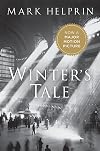
Wow, this is just one big messy pile of "um, wha?!" Magical realism, as you may remember, is super not my jam, mostly because I am a firm believer in the notionthat if you introduce magic or any other out-of-the-ordinary elements into an otherwise-normal setting, you're gonna need to explain and justify it. But this novel goes so far beyond breaking that rule that it pushes over into utter nonsense. So we have a steampunk-ish, old-timey, yet sort-of-quasi-futuristic NYC, a street rat orphan show more who's wise beyond his means, a magical (and in no way explained) flying horse, a street gang that's meant, I think, to be menacing but comes off 100% comical and which is, I think, supposed to be the main Big Bad, but disappears for most of the book only to POOF back into the action at the end, again, with no explanation, and a super-rich and super-brilliant (or maybe just totally bananas) young woman who's dying of TB. Oh, and a cloud bank that's somehow deadly and surrounds NYC but also moves but also people come and go from the city unharmed with - you guessed it - no explanation. But wait - there's more! Helprin apparently gets bored of these main characters, so he abandons them for a new set, but their actions and circumstances aren't any less lacking in logic. Just...wooof. And it doesn't read as if all these logistical problems are the point; instead it reads like a sloppily-written fevre dream, or a toddler telling you about the dream they had last night and getting sidetracked many, MANY times along the way. Yeah, it's that agonizing and exhausting. show less

Jules Lacour is 74 years old. He is incredibly fit for his age, spending considerable time running, swimming, and rowing on the Seine. A cellist, he composes music and teaches part-time. Widowed for many years, he deeply mourns the loss of his wife Jacqueline but finds solace in the company of his adult daughter Catherine and her family. Jules’ parents were killed during World War II, and Jules (irrationally) feels responsible for their deaths as well other losses in his life. He is show more determined to reverse this “trend” with his grandson Luc, recently diagnosed with leukemia.
Seemingly out of nowhere, three events dramatically change the course of Jules’ life: he receives a lucrative commission for an original composition, meets and experiences strong mutual attraction with a much younger woman, and is involved in a serious crime. What follows from these events inspires Jules to live increasingly in the moment, while also laying the groundwork to take care of those who will be left behind when he dies.
On the surface, this novel takes the form of a “caper” as Jules works feverishly to ensure his schemes come to fruition. There’s a bit of suspense and I couldn’t help cheering for the underdog. But the writing is sublime, and there’s something deeper going on here, from Jules’ experiences as a French Jew from the war to the present, to his ruminations on aging and a life well lived: “You learn to see with your emotions and feel with your reason. If at its end the life you’re living takes on the attributes of art, it doesn’t matter if you’ve forgotten where you put your reading glasses.” Highly recommended. show less
Seemingly out of nowhere, three events dramatically change the course of Jules’ life: he receives a lucrative commission for an original composition, meets and experiences strong mutual attraction with a much younger woman, and is involved in a serious crime. What follows from these events inspires Jules to live increasingly in the moment, while also laying the groundwork to take care of those who will be left behind when he dies.
On the surface, this novel takes the form of a “caper” as Jules works feverishly to ensure his schemes come to fruition. There’s a bit of suspense and I couldn’t help cheering for the underdog. But the writing is sublime, and there’s something deeper going on here, from Jules’ experiences as a French Jew from the war to the present, to his ruminations on aging and a life well lived: “You learn to see with your emotions and feel with your reason. If at its end the life you’re living takes on the attributes of art, it doesn’t matter if you’ve forgotten where you put your reading glasses.” Highly recommended. show less
This is neither urban fantasy nor magical realism, occupying its own niche between the two. It is dreamy realism, an alternate version of reality overlapping our own where most things are recognizable but with fantastic elements scattered among them. A wall of clouds plays with time, pornography burns through the floor, police applaud in their sleep, an indefatigable horse can fly... Some people in the story are shocked and don't know what to make of it, while others hardly blink, and show more therein lies the clue and the difference. Perhaps the author's greatest invention lies outside of the city: the Lake of the Coheeries, an upstate backwoods Shangri-la. Another layer of unreality is added since its 1983 publication, in presenting a millennium without the Internet, cellphones etc. and events that never happened.
New York provides the perfect setting for the majority of this novel. It is one of a handful of cities that pervade the western cultural conscience even of those who will never lay eyes on it. Many of its citizens no doubt love and appreciate their city, but for distant admirers who aren't exposed to the day-in, day-out experience of living there that can take the shine off of anything, New York projects an aura of myth and legend like a distant land of Oz.
While it is not a difficult novel to read, it is also not straightforward. Characters we're introduced to in part one are set aside for the entirety of part two as we move significantly forward in time. It didn't bother me, personally. I can see how the passage of time is mirrored in the interval we must wait before Peter Lake returns (multiple clues are dropped to assure us that he eventually will.) We're introduced to several other engaging characters who can be made three-dimensional, rather than rushing their introduction all at once. And we can share Peter's disorientation upon his rejoining the story, now an outsider among the characters we've been following in his absence.
The novel's ending becomes clearer upon noting the underlying unreality to our reality, and that this novel is populated by characters with the ability to see it. Pearly Soames is fascinated by colour, the Baymen predict the future, Beverly's father opines that she has seen what he cannot, etc. - and then there is Peter Lake, in a class of his own. It is due to these characters that lines between worlds have been blurred in the telling, thus the 'magical realism' elements. In that underlying reality, justice is ultimately served and all things must be balanced. Someone who understands that balance like Peter Lake (he is a master mechanic in every sense) knows how he must proceed if he is to maintain it. He knows the sacrifice he must make in order to obtain his desired victories.
The descriptive passages in this novel must be mentioned. Mark Helprin is a writer's writer, not necessarily for the words he uses but for the sound they make. I expect he read every page aloud to himself and then fine-tuned it like a piano. Of course all that would be lost when the story is translated to film. It's a shame the 2014 movie is apparently so terrible that it couldn't renew much interest in this intriguing, mystical novel. show less
New York provides the perfect setting for the majority of this novel. It is one of a handful of cities that pervade the western cultural conscience even of those who will never lay eyes on it. Many of its citizens no doubt love and appreciate their city, but for distant admirers who aren't exposed to the day-in, day-out experience of living there that can take the shine off of anything, New York projects an aura of myth and legend like a distant land of Oz.
While it is not a difficult novel to read, it is also not straightforward. Characters we're introduced to in part one are set aside for the entirety of part two as we move significantly forward in time. It didn't bother me, personally. I can see how the passage of time is mirrored in the interval we must wait before Peter Lake returns (multiple clues are dropped to assure us that he eventually will.) We're introduced to several other engaging characters who can be made three-dimensional, rather than rushing their introduction all at once. And we can share Peter's disorientation upon his rejoining the story, now an outsider among the characters we've been following in his absence.
The novel's ending becomes clearer upon noting the underlying unreality to our reality, and that this novel is populated by characters with the ability to see it. Pearly Soames is fascinated by colour, the Baymen predict the future, Beverly's father opines that she has seen what he cannot, etc. - and then there is Peter Lake, in a class of his own. It is due to these characters that lines between worlds have been blurred in the telling, thus the 'magical realism' elements. In that underlying reality, justice is ultimately served and all things must be balanced. Someone who understands that balance like Peter Lake (he is a master mechanic in every sense) knows how he must proceed if he is to maintain it. He knows the sacrifice he must make in order to obtain his desired victories.
The descriptive passages in this novel must be mentioned. Mark Helprin is a writer's writer, not necessarily for the words he uses but for the sound they make. I expect he read every page aloud to himself and then fine-tuned it like a piano. Of course all that would be lost when the story is translated to film. It's a shame the 2014 movie is apparently so terrible that it couldn't renew much interest in this intriguing, mystical novel. show less

I really wanted to dislike this book after being annoyed by Helprin's sometimes pompous (and even empty) writing style (i.e. too many of his descriptors mean nothing but the sound of their words on the ear), but, my goodness, I loved this book. Against my better judgement, I found myself mesmerized by the main character, the landscape, the war, and the consistently engaging conversation about beauty, truth, life, and God. This is one of those books that needs to be over 700 pages, so you can show more spend quality time with the character and story. I was very upset to finish it. show less
Lists
Favourite Books (3)
Fiction For Men (1)
War Literature (1)
Magic Realism (1)
Unread books (1)
Awards


You May Also Like


Associated Authors
Statistics
- Works
- 21
- Also by
- 15
- Members
- 13,835
- Popularity
- #1,671
- Rating
- 3.9
- Reviews
- 318
- ISBNs
- 214
- Languages
- 14
- Favorited
- 80