
Andrea Barrett
Author of The Voyage of the Narwhal
About the Author
Andrea Barrett was born on July 17, 1965. She has taught in the M.F.A. program for writers at Warren Wilson College, and has been a visiting writer at several other colleges and universities, as well as teaching frequently at conferences such as the Bread Loaf Writers' Conference. She writes short show more stories and novels. Her short story collections include Servants of the Map, Archangel, and Ship Fever and Other Stories, which won the National Book Award in 1996 for the short story collection. She received the Distinguished Story Citation from Best American Short Stories in 1995 for The Littoral Zone and the 2015 Rea Award for the Short Story. Her short fiction has appeared in periodicals such as Mademoiselle and Prairie Schooner. Her novels include The Voyage of the Narwhal, Lucid Stars, Secret Harmonies, The Middle Kingdom, and The Forms of Water. (Bowker Author Biography) show less
Works by Andrea Barrett
The Story Behind the Story: 26 Stories by Contemporary Writers and How They Work (2004) 113 copies, 2 reviews
Associated Works
The Ends of the Earth: An Anthology of the Finest Writing on the Arctic and the Antarctic (2007) — Contributor — 136 copies, 8 reviews
More Stories We Tell: The Best Contemporary Short Stories by North American Women (2004) — Contributor — 65 copies
Tagged
Common Knowledge
- Birthdate
- 1954-11-16
- Gender
- female
- Education
- Union College
- Occupations
- professor
novelist
short story writer - Awards and honors
- American Academy of Arts and Letters Academy Award (Literature ∙ 2003)
National Endowment for the Arts Fellowship (1992)
National Book Award (1996)
MacArthur Fellowship (2001) - Agent
- Wendy Weil (The Wendy Weil Agency)
Bruce Hunter (David Higham Associates) - Nationality
- USA
- Birthplace
- Boston, Massachusetts, USA
- Places of residence
- North Adams, Massachusetts, USA
Rochester, New York, USA - Associated Place (for map)
- Massachusetts, USA
Members
Reviews

Summary: Erasmus Wells always wanted to be an explorer and naturalist, but his first experience with a collecting expedition in which the captain claimed credit for all of Erasmus's work has left him somewhat bitter. But now he's offered the chance to go on another expedition - to the Arctic this time - ostensibly to look for signs of a previous polar expedition that had disappeared without a trace the year before. It's being captained by Zeke, a young man raised in the Wells family, show more sweetheart to Erasmus's sister, and with a fierce drive to make a name for himself. This drive leads to tensions between the members of the expedition party and the crew of the Narwhal, the ship they've hired to take them to the far reaches of the North. And then when a disastrous decision means that the crew must overwinter in the Arctic, trapped in the ice throughout the endless night, Erasmus must face where his loyalties and his principles truly lie.
Review: I found this book really interesting, and very well written, but not exactly enjoyable. It (like Andrea Barrett's other books) was chock-full of the history of science. Erasmus and the Narwhal were fictional, but many other aspects of the story were not, and the Narwhal felt like a vivid and realistic representation of something that could have happened. Similarly, the characters were discussing and debating many of the scientific theories of the day, in such a way as to really give the reader a feeling for what the general zeitgeist of the time was. The details about the daily life of the expedition Barrett provided were excellent, and woven into the fabric of the story in such a way as to build the world of the Narwhal and its trials (and the world of the Philidelphia society they were coming from) up around me. This was done so effectively that it actually made me claustrophobic at times, particularly during the portion of the book where the Narwhal is stuck in the ice. This was probably made worse by the fact that I was reading the audiobook - I typically find audiobooks more immersive than print, and so there were times I would have to turn it off, shake myself, and remind myself that it was in the 80s and sunny outside, and that I was in no imminent danger of going insane while slowly freezing to death. (So while that was a point in favor of the audiobook, in general, this is one book where I'd recommend reading the print version. I found the narrator's pace of speaking to be intolerably slow - thank goodness for Audible's 1.25x speed button!) Barrett's writing was also really lovely, and felt believably authentic, its tone well-matched to the period.
However, while I was interested and engaged by the book, it's hard to say that I really enjoyed the experience of reading it, and that's down entirely to a lack of truly likable characters (some of the secondary characters - Ned Kind, and Dr. Boorhave, and Alexandra - were generally likable, but it wasn't enough to salvage things). Zeke drove me crazy - I don't think I've ever rooted harder for a mutiny to happen - and while Erasmus was mostly sympathetic, he was too waffly and hand-wringing for my tastes, especially when it came to matters involving Zeke. I suppose if he'd grown a spine sooner, it would have been a much shorter book, but ARGH! This book did make for an interesting book club, with lots of fodder for discussion about the attitudes of the time, and the nature of loyalty, and what Zeke's motivations were and whether we thought those were believable, and why Erasmus didn't just tip Zeke over the side already and tell everyone that he'd been eaten by a polar bear. 4 out of 5 stars.
Recommendation: I like books about the history of science and the history of exploration, so this novel was straight up my alley. If you also like those things, I definitely think this is worth reading, even if it was a little crazy-making at times. show less
Review: I found this book really interesting, and very well written, but not exactly enjoyable. It (like Andrea Barrett's other books) was chock-full of the history of science. Erasmus and the Narwhal were fictional, but many other aspects of the story were not, and the Narwhal felt like a vivid and realistic representation of something that could have happened. Similarly, the characters were discussing and debating many of the scientific theories of the day, in such a way as to really give the reader a feeling for what the general zeitgeist of the time was. The details about the daily life of the expedition Barrett provided were excellent, and woven into the fabric of the story in such a way as to build the world of the Narwhal and its trials (and the world of the Philidelphia society they were coming from) up around me. This was done so effectively that it actually made me claustrophobic at times, particularly during the portion of the book where the Narwhal is stuck in the ice. This was probably made worse by the fact that I was reading the audiobook - I typically find audiobooks more immersive than print, and so there were times I would have to turn it off, shake myself, and remind myself that it was in the 80s and sunny outside, and that I was in no imminent danger of going insane while slowly freezing to death. (So while that was a point in favor of the audiobook, in general, this is one book where I'd recommend reading the print version. I found the narrator's pace of speaking to be intolerably slow - thank goodness for Audible's 1.25x speed button!) Barrett's writing was also really lovely, and felt believably authentic, its tone well-matched to the period.
However, while I was interested and engaged by the book, it's hard to say that I really enjoyed the experience of reading it, and that's down entirely to a lack of truly likable characters (some of the secondary characters - Ned Kind, and Dr. Boorhave, and Alexandra - were generally likable, but it wasn't enough to salvage things). Zeke drove me crazy - I don't think I've ever rooted harder for a mutiny to happen - and while Erasmus was mostly sympathetic, he was too waffly and hand-wringing for my tastes, especially when it came to matters involving Zeke. I suppose if he'd grown a spine sooner, it would have been a much shorter book, but ARGH! This book did make for an interesting book club, with lots of fodder for discussion about the attitudes of the time, and the nature of loyalty, and what Zeke's motivations were and whether we thought those were believable, and why Erasmus didn't just tip Zeke over the side already and tell everyone that he'd been eaten by a polar bear. 4 out of 5 stars.
Recommendation: I like books about the history of science and the history of exploration, so this novel was straight up my alley. If you also like those things, I definitely think this is worth reading, even if it was a little crazy-making at times. show less
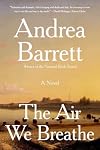
Andrea Barrett is a master at blending science and history within compelling works of fiction. "The Air We Breathe" is set in the Adirondacks in the fall of 1916, a time when tuberculosis is devastating urban populations and the entry of America into World War I is looming. The story takes place in the fictional town of Tamarack Lake, where poor tubercular patients live in a large public sanatorium and wealthy patients in private “cure cottages.”
The treatment provided to the Tamarack show more State Sanatorium patients consists of a strictly enforced regimen of bed-rest, fresh air and good nutrition, intended to support the body’s ability to develop a resistance to the tubercular bacillus. Patients are separated by gender and fight boredom with rumors and gossip. Into this environment enter two patients from highly dissimilar backgrounds: Leo Marburg, a poor Polish-German-Russian immigrant with a background in chemistry and Miles Fairchild, a wealthy cement plant owner and paleontology enthusiast, who establishes a weekly educational discussion group for patients. The relationships that they develop through these sessions with two young women who are close friends - Naomi Martin, a young cottage worker, and a ward maid, Eudora MacEachern – lead to tragedy for the sanatorium, fueling the divisions and xenophobic, anti-immigrant prejudices that accompanied the war.
Represented by the pronoun “we,” the 60 women and 60 men who are residents of the Tamarack public sanatorium serve as a collective narrator, not always in agreement, but in closing acknowledging a collective blame for events. Through this “all-seeing” narrator, we are introduced to the atmosphere of the sanatorium and its daily routines, as well as the lives of local citizens who manage the cure cottages. I found this technique to be an effective vehicle for tying together the thoughts and motivations of the various main characters, adding to an understanding of the nature of communications and relationships within the confinement of such communities. In an appendix to this work, Barrett provides an additional vehicle illustrating the evolving historical and human inter-connections she addresses, through a multi-generational family tree of characters that have appeared in others of her short stories and novels.
While the story-line is a work of fiction, the background, setting and themes of this novel are largely factual. The novel’s setting strongly resembles the Adirondack village of Saranac Lake, where the first U.S. laboratory for tuberculosis research was established, as well as an early network of sanatoria “cure cottages.” The manifestations of Nationalism exhibited in the novel by both local citizens and sanatorium patients, despite many themselves being poor immigrants, parallel the attitudes of citizen “surveillance” groups formed throughout the country as American involvement in the war intensified. Other events drawn from the history and science of this period include the advances and dangers of the developing x-ray technology and of chemical weapons, and the emergence of women as significant participants in scientific circles.
Andrea Barrett has become a favorite author of mine and I highly recommend this novel, which has inspired in me an interest in comparing it with two other works of fiction set in sanatoria: "The Magic Mountain" by Thomas Mann and "The Empusium" by Olga Tokarczuk. show less
The treatment provided to the Tamarack show more State Sanatorium patients consists of a strictly enforced regimen of bed-rest, fresh air and good nutrition, intended to support the body’s ability to develop a resistance to the tubercular bacillus. Patients are separated by gender and fight boredom with rumors and gossip. Into this environment enter two patients from highly dissimilar backgrounds: Leo Marburg, a poor Polish-German-Russian immigrant with a background in chemistry and Miles Fairchild, a wealthy cement plant owner and paleontology enthusiast, who establishes a weekly educational discussion group for patients. The relationships that they develop through these sessions with two young women who are close friends - Naomi Martin, a young cottage worker, and a ward maid, Eudora MacEachern – lead to tragedy for the sanatorium, fueling the divisions and xenophobic, anti-immigrant prejudices that accompanied the war.
Represented by the pronoun “we,” the 60 women and 60 men who are residents of the Tamarack public sanatorium serve as a collective narrator, not always in agreement, but in closing acknowledging a collective blame for events. Through this “all-seeing” narrator, we are introduced to the atmosphere of the sanatorium and its daily routines, as well as the lives of local citizens who manage the cure cottages. I found this technique to be an effective vehicle for tying together the thoughts and motivations of the various main characters, adding to an understanding of the nature of communications and relationships within the confinement of such communities. In an appendix to this work, Barrett provides an additional vehicle illustrating the evolving historical and human inter-connections she addresses, through a multi-generational family tree of characters that have appeared in others of her short stories and novels.
While the story-line is a work of fiction, the background, setting and themes of this novel are largely factual. The novel’s setting strongly resembles the Adirondack village of Saranac Lake, where the first U.S. laboratory for tuberculosis research was established, as well as an early network of sanatoria “cure cottages.” The manifestations of Nationalism exhibited in the novel by both local citizens and sanatorium patients, despite many themselves being poor immigrants, parallel the attitudes of citizen “surveillance” groups formed throughout the country as American involvement in the war intensified. Other events drawn from the history and science of this period include the advances and dangers of the developing x-ray technology and of chemical weapons, and the emergence of women as significant participants in scientific circles.
Andrea Barrett has become a favorite author of mine and I highly recommend this novel, which has inspired in me an interest in comparing it with two other works of fiction set in sanatoria: "The Magic Mountain" by Thomas Mann and "The Empusium" by Olga Tokarczuk. show less
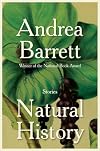
Andrea Barrett demonstrates yet again how life tells its stories through aspiration, work, dreams, and disillusion of everyday people. She expertly listens and illuminates for us the inner journeys of a wide variety of sympathetic characters in her collection of stories, Natural History. It is a bravura performance from a well-loved and multi-awarded author.
The stories feature a principal group of characters; Henrietta Atkins, born in what might be the Finger Lakes district of New York show more before the Civil War, provides the focus for 150 years of storytelling. You wouldn’t, however, call this a multigenerational saga, because the short pieces here bring dramatic moments in people’s lives into clear focus, leaving other broad dramas and events out of the scheme.
Barrett introduces her characters and we come to know them very, very well. Henrietta is an accomplished amateur natural historian, a type with a long, illustrious history. She teaches high school science, and guides extra-curricular science activities. She eschews one potential proposal through an odd, self-conscious reaction, but does not go loveless through life.
Strong relationships between strong women abound in this collection, and provide some of the most gratifying reading. We witness the great and the tragic events of the times—the Civil War and the First World War both occur during Henrietta’s life, along with the 1918 influenza epidemic, the sensational early days of flying by celebrated pilots, and the Volstead Act, inaugurating Prohibition. Throughout, women reinforce each other during strife-torn times, write ground-breaking scientific papers, defy death in flying machines, and pass learning on the the next generation through wisdom and compassion.
Andrea Barrett’s power of observation, her kindness toward her readers, and her uncanny felicity with the language lead us to hours of delight and wonder. I recommend this very, very highly. show less
The stories feature a principal group of characters; Henrietta Atkins, born in what might be the Finger Lakes district of New York show more before the Civil War, provides the focus for 150 years of storytelling. You wouldn’t, however, call this a multigenerational saga, because the short pieces here bring dramatic moments in people’s lives into clear focus, leaving other broad dramas and events out of the scheme.
Barrett introduces her characters and we come to know them very, very well. Henrietta is an accomplished amateur natural historian, a type with a long, illustrious history. She teaches high school science, and guides extra-curricular science activities. She eschews one potential proposal through an odd, self-conscious reaction, but does not go loveless through life.
Strong relationships between strong women abound in this collection, and provide some of the most gratifying reading. We witness the great and the tragic events of the times—the Civil War and the First World War both occur during Henrietta’s life, along with the 1918 influenza epidemic, the sensational early days of flying by celebrated pilots, and the Volstead Act, inaugurating Prohibition. Throughout, women reinforce each other during strife-torn times, write ground-breaking scientific papers, defy death in flying machines, and pass learning on the the next generation through wisdom and compassion.
Andrea Barrett’s power of observation, her kindness toward her readers, and her uncanny felicity with the language lead us to hours of delight and wonder. I recommend this very, very highly. show less
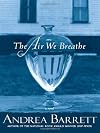
Tuberculosis patients are transported to an Adirondack sanatorium for their rest-cure in the days just before World War I, and in Andrea Barrett’s excellent The Air We Breathe provides a microcosm for the world on the eve of losing its innocence in the “War to End All Wars.” There are many novels which show an author’s deep understanding of human nature, and "The Air We Breathe" belongs in the ranks of the very finest.
Leo Marburg, a young Russian immigrant without family or cultural show more ties, contracts the dread consumption while living and working in Brooklyn in the spring of 1917. His arrival at Tamarack State, the institution for tuberculosis patients, precipitates at length a series of misunderstandings, and attracts the suspicion of the self-appointed authorities. His fellow inmates also succumb to unfounded suspicion, and turn on him. At novel’s end, they realize how unfair they were to their former friend, and how unjust.
Ms. Barrett does a marvelous job of bringing in the remarkable historical events at that epochal moment. The inmates, suffering from boredom and a sense of abandonment, begin, grudgingly at first, to gather once a week to hear a talk by one of their own. Late in the book, after all the reproach and recrimination have played their havoc on the principals, particularly Leo, the group reflects on a time of lost innocence (a grand job of the author to catch the tenor and momentousness of the time):
“How innocent we seem to ourselves, now, when we look back at our first Wednesday afternoons! Gathering to learn about fossils, poison gas, the communal settlement at Ovid, about Stravinsky and Chekhov, trade unions and moving pictures and the relative nature of time, when we could have learned what we needed about the world and war simply by observing our own actions and desires. We lived as if nothing was important.”
In awe of events swirling beyond their walls, the inmates make the mistake of missing the feelings and personal strife right within their midst. They have witnessed thwarted love, betrayal, xenophobia, wartime jingoism, and the disillusionment of talented immigrants. The clever author accomplishes two tricks at once here: she uses the folly and selfishness of the patients to illuminate the faults of the outside world (there is a fire that generates poison gas and fatally injures three), and also shows in stark relief the truth that the less we care for our fellow beings, the less we are worth. She offers here a lesson for the world at large, and also for much smaller communities. This is superbly thought-provoking, plainly told, and deceptively straightforward. Find the depth through the archetypes. Recommended, big-time.
http://bassoprofundo1.blogspot.com/2012/06/air-we-breathe-by-andrea-barrett.html show less
Leo Marburg, a young Russian immigrant without family or cultural show more ties, contracts the dread consumption while living and working in Brooklyn in the spring of 1917. His arrival at Tamarack State, the institution for tuberculosis patients, precipitates at length a series of misunderstandings, and attracts the suspicion of the self-appointed authorities. His fellow inmates also succumb to unfounded suspicion, and turn on him. At novel’s end, they realize how unfair they were to their former friend, and how unjust.
Ms. Barrett does a marvelous job of bringing in the remarkable historical events at that epochal moment. The inmates, suffering from boredom and a sense of abandonment, begin, grudgingly at first, to gather once a week to hear a talk by one of their own. Late in the book, after all the reproach and recrimination have played their havoc on the principals, particularly Leo, the group reflects on a time of lost innocence (a grand job of the author to catch the tenor and momentousness of the time):
“How innocent we seem to ourselves, now, when we look back at our first Wednesday afternoons! Gathering to learn about fossils, poison gas, the communal settlement at Ovid, about Stravinsky and Chekhov, trade unions and moving pictures and the relative nature of time, when we could have learned what we needed about the world and war simply by observing our own actions and desires. We lived as if nothing was important.”
In awe of events swirling beyond their walls, the inmates make the mistake of missing the feelings and personal strife right within their midst. They have witnessed thwarted love, betrayal, xenophobia, wartime jingoism, and the disillusionment of talented immigrants. The clever author accomplishes two tricks at once here: she uses the folly and selfishness of the patients to illuminate the faults of the outside world (there is a fire that generates poison gas and fatally injures three), and also shows in stark relief the truth that the less we care for our fellow beings, the less we are worth. She offers here a lesson for the world at large, and also for much smaller communities. This is superbly thought-provoking, plainly told, and deceptively straightforward. Find the depth through the archetypes. Recommended, big-time.
http://bassoprofundo1.blogspot.com/2012/06/air-we-breathe-by-andrea-barrett.html show less
Lists
Arctic novels (1)
Awards


You May Also Like


Associated Authors
Statistics
- Works
- 19
- Also by
- 15
- Members
- 5,237
- Popularity
- #4,760
- Rating
- 3.9
- Reviews
- 141
- ISBNs
- 118
- Languages
- 6
- Favorited
- 32
