
Robert Boswell (1)
Author of Mystery Ride
For other authors named Robert Boswell, see the disambiguation page.
About the Author
Robert Boswell is Professor of English at New Mexico State University and is on the faculty of the Warren Wilson MFA Program for Writers. He lives with his wife, the writer Antonya Nelson, and their children in Las Cruces, New Mexico , and Telluride, Colorado.
Works by Robert Boswell
Associated Works
Still Wild: Short Fiction of the American West 1950 to the Present (2000) — Contributor — 165 copies, 1 review
The Worst Years of Your Life: Stories for the Geeked-Out, Angst-Ridden, Lust-Addled, and Deeply Misunderstood Adolescent in All of Us (2007) — Contributor — 94 copies, 1 review
High Infidelity: 24 Great Short Stories About Adultery by Some of Our Best Contemporary Authors (1997) — Contributor — 33 copies
Tagged
Common Knowledge
- Gender
- male
- Short biography
- [from author's website]
Robert Boswell has published seven novels, three story collections, and two books of nonfiction. He has had two plays produced. His work has earned him two National Endowment for the Arts Fellowships, a Guggenheim Fellowship, the Iowa School of Letters Award for Fiction, a Lila Wallace/Woodrow Wilson Fellowship, the PEN West Award for Fiction, the John Gassner Prize for Playwriting, and the Evil Companions Award. The Heyday of the Insensitive Bastards was a finalist for the 2010 PEN USA Award in Fiction. What Men Call Treasure was a finalist for the Western Writers of America Nonfiction Spur Award. Both the Chicago Tribune and Publisher's Weekly named Mystery Ride as one of the best books of the year. The London Independent picked The Geography of Desire as one of the best books of the year. Virtual Death was a finalist for the Philip K. Dick Award and was named by the Science Fiction Chronicle as one of the best novels of the year. Boswell has published more than 70 stories and essays. They have appeared in the New Yorker, Best American Short Stories, O. Henry Prize Stories, Pushcart Prize Stories, Esquire, Colorado Review, Epoch, Ploughshares, and many other magazines and anthologies. He holds the Cullen Endowed Chair in Creative Writing at the University of Houston. He lives in Houston, Texas; Las Cruces, New Mexico; and Telluride, Colorado. He also spends time in a ghost town high in the Rockies. - Nationality
- USA
- Places of residence
- Las Cruces, New Mexico, USA
Houston, Texas, USA
Telluride, Colorado, USA - Associated Place (for map)
- USA
Members
Reviews

Life is a journey, so we say. So is marriage or any kind of relationship. You start in one place and end up somewhere else, and how you get there is something of a mystery even after you've arrived at the end.
Robert Boswell's 1992 novel “Mystery Ride” is not read much today — try finding it in a bookstore — but in the 1990s it was a bestseller. The title may have been a bit deceptive. One wonders how many people bought it assuming it to be a murder mystery, perhaps taking place show more during a drive across the country. There's plenty of travel in Boswell's story, yet the ride of the title takes place mostly on an Iowa farm.
Very much in love when they buy the farm in 1971, Angela and Stephen Landis each envision a different kind of future. She sees the farm as just a youthful fling, a charming place to live during their extended honeymoon. He actually wants to become a farmer. And so she divorces the man she still loves and moves west with their young daughter, hoping he will follow her. He doesn't.
The story skips forward a number of years when their daughter, Dulcie, has become a troubled teenager whom Angela can no longer manage. She decides to take the girl back to the farm for the summer to see if Stephen can control her. Meanwhile she has remarried to a dashing but unfaithful man named Quinn, while a woman named Leah and her own teenage daughter, Roxanne, have just moved into the farmhouse with Stephen.
In other hands this plot could easily turn into a comedy, but Boswell has other, better ideas. Readers, like the characters themselves, have no idea where this ride might take them. show less
Robert Boswell's 1992 novel “Mystery Ride” is not read much today — try finding it in a bookstore — but in the 1990s it was a bestseller. The title may have been a bit deceptive. One wonders how many people bought it assuming it to be a murder mystery, perhaps taking place show more during a drive across the country. There's plenty of travel in Boswell's story, yet the ride of the title takes place mostly on an Iowa farm.
Very much in love when they buy the farm in 1971, Angela and Stephen Landis each envision a different kind of future. She sees the farm as just a youthful fling, a charming place to live during their extended honeymoon. He actually wants to become a farmer. And so she divorces the man she still loves and moves west with their young daughter, hoping he will follow her. He doesn't.
The story skips forward a number of years when their daughter, Dulcie, has become a troubled teenager whom Angela can no longer manage. She decides to take the girl back to the farm for the summer to see if Stephen can control her. Meanwhile she has remarried to a dashing but unfaithful man named Quinn, while a woman named Leah and her own teenage daughter, Roxanne, have just moved into the farmhouse with Stephen.
In other hands this plot could easily turn into a comedy, but Boswell has other, better ideas. Readers, like the characters themselves, have no idea where this ride might take them. show less
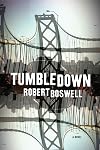
Too wonderful, too long, too much, too many characters, too overwhelming, too heavy in the hands, too great to miss. Robert Boswell is one of my favorite authors, and how can you fault a writer with too much to say? The main characters are all crawling up ravines on their hands and knees on sharp little pebbles. All you can do is hang on and follow. Boswell spends more time with their internal aches but takes pains to make everyone as humanly flawed yet endearing as can be. James is a show more counselor in a mental health facility and his friends and family are just as dear and damaged as those in the asylum. Maybe try one of his earlier books first, like Mystery Ride. If you like it, grab Tumbledown next. If not, at least you gave it a shot. To me he is a bit like John Irving but more humble. show less

For some inexplicable reason I did not purchase, or read, Robert Boswell's novel Century's Son. I really don't recall the exact reason why the book failed to capture me. I had read everything that he had ever written, and own the books as well. I vividly recall regaling my secretary for a week, as I related to her the exploits of Dulcie , while reading his novel Mystery Ride. Perhaps the jacket art of Century's Son wasn't to my liking.
Suffice it to say that the jacket art for The Heyday of show more Insensitive Bastards is much more intriguing. But the real attraction to this collection is not the jacket art, but the writing. It is simply exquisite. The characters are often bold and impudent. And the stories are imaginatively conveyed and ultimately, compellingly wise.
My favorite stories are: "No River Wide", where two lifelong friends become strangers after they are separated by geography and marital status. "Supreme Beings", where a young man's obsessions with a fortune teller and his search for a living, walking around the neighborhood, Jesus Christ leaves him ultimately in jail. Guess who he discovers in his jail cell? "In a Foreign Land", here Mr. Boswell takes a jab at a New York literary evening. And finally the title story where a young man recalls, for a probation hearing, the summer he spent on a mountain with a group of charming reprobates living in a borrowed house. Keen, the individual relating the story, decides to change his life by abstaining from drugs. In order to give the plan half a chance of working, he decides to stay drunk as much as possible. The character Clete could be a novel in himself.
This is a smart, imaginative, thought provoking, page turner of a collection. Filled with story and quirky, compelling characters, witty dialogue, compassion and wisdom.
Oh, by the way I just this day ordered Century's Son from a book dealer friend of mine. I will never again let the jacket art deter me from purchasing any Robert Boswell book. I can hardly wait for the next one. show less
Suffice it to say that the jacket art for The Heyday of show more Insensitive Bastards is much more intriguing. But the real attraction to this collection is not the jacket art, but the writing. It is simply exquisite. The characters are often bold and impudent. And the stories are imaginatively conveyed and ultimately, compellingly wise.
My favorite stories are: "No River Wide", where two lifelong friends become strangers after they are separated by geography and marital status. "Supreme Beings", where a young man's obsessions with a fortune teller and his search for a living, walking around the neighborhood, Jesus Christ leaves him ultimately in jail. Guess who he discovers in his jail cell? "In a Foreign Land", here Mr. Boswell takes a jab at a New York literary evening. And finally the title story where a young man recalls, for a probation hearing, the summer he spent on a mountain with a group of charming reprobates living in a borrowed house. Keen, the individual relating the story, decides to change his life by abstaining from drugs. In order to give the plan half a chance of working, he decides to stay drunk as much as possible. The character Clete could be a novel in himself.
This is a smart, imaginative, thought provoking, page turner of a collection. Filled with story and quirky, compelling characters, witty dialogue, compassion and wisdom.
Oh, by the way I just this day ordered Century's Son from a book dealer friend of mine. I will never again let the jacket art deter me from purchasing any Robert Boswell book. I can hardly wait for the next one. show less

The first, and most important thing that one can say about Virtual Death is that the deaths that Lydia Melmoth is famous for are not virtual at all. The apparent contradiction in the title is important because it seems to be a theme that runs through the entire novel. In short, Virtual Death, a cyberpunk novel in which computers have all but vanished from society, depicts a world in which everything seems to have been turned upside down.
While most cyberpunk novels depict a gritty, harsh show more world in which the haves are separated from the have-nots, and the 'net serves as the battleground between massive corporations that control every one's lives and the heroic plucky hackers who try to subvert the system, Virtual Death turns many of these conventions on their head. As noted before, computers have all but vanished from the future world, driven to extinction by widespread viruses that effectively annihilated all the information technology in the world - the damage was so extensive that public pay phones have seen a resurgence since no one owns a cell phone any more. Though the government, which controls all the remaining computers that are carefully segregated from outside connections, is ostensibly the villain in much of the book, it is mostly ineffective, people drop out of society and live in dumpsters and are ignored, shooting someone in a nonfatal way has become an acceptable form of political protest, and so on.
Into this hyper violent world steps Lydia Melmoth, who is famous as the girl who dies. Basically, a death artist takes a drug and temporarily dies as a form of entertainment. They are then revived before their death becomes permanent, although most death artists suffer brain degeneration known as "gray rot". Lydia is famous for making her name as a death artist in a time when it was officially illegal, and for dying more times than anyone else - seven times - although at the time the story takes place she is officially retired. Her drift into post-artist obscurity is interrupted by two events: a young celebrity death artist named Quigley is set to break her death record, and Lydia's mother's political activities as a banjoist catch Lydia, her brother and her only friend in their wake.
The banjoists are another contradiction: anti-gun activists who seek to reduce the number of gun related deaths by shooting and killing gun store owners, gun friendly politicians, and anyone else they consider to be in any way related to providing guns. Lydia is tagged by the government for prosecution and possible execution because of her connection to her mother, a prominent banjoist. She flees with her brother Stamen and her roommate, the diminutive Frankly. In another set of contrasts, Lydia's brother is freakishly tall and Frankly is a midget. Frankly is a depressionist, effectively the opposite of a stand-up comedian who entertains people by depressing them with stories about his awful life. However, Frankly is constantly pursuing fame and fortune, and for much of the novel has very little to be depressed about, while Stamen seems to be depressed all the time. Frankly is also a "nowist" who insists on speaking only in the present tense, which gets very annoying in short order.
Eventually Lydia runs across a fan and talent agent named Fenester who arranges for her to seek refuge with the only group strong enough to stand up to the government: the television studios who want her to promote Quigley's upcoming record breaking death. Her mother, with secrets of her own, also wants Lydia to do this, for reasons that are entirely related to her mother's political goals. (Lydia's mother is another contradiction: a mother who views her daughter as nothing more than a political tool, and an anti-government terrorist whose favored child is a government worker). Fenester turns out to have contradictions of his own, relating to both his sexual proclivities and gender. The story sort of careens about as Lydia bounces from place to place, hoping to find refuge and in interludes, describing each of her death experiences and the strange and unique hallucinations she had during each of them. Or perhaps they were not hallucinations and Lydia has been granted a view of the "other side". The book is carefully ambiguous on this score, reflecting Lydia's own confusion and providing an explanation for why she chose to "go under" so many times.
In the end, the story gets incredibly complicated as numerous competing interest groups crop up and double cross and triple cross one another. Then it sort of sputters to a stop, which is one of the reasons why, despite having some extraordinarily interesting ideas concerning the nature of the imagined world in which the story takes place, the book is only slightly above average. The other reasons are the entirely annoying nature of Frankly's character and his "nowist" diction (although he was clearly written to be annoying), and the use of an invented pseudo-hacker style of spelling (replacing, for example, the word "no one" with no1 and "to", "too", and "two" with 2 in the text; this gets tiresome quickly). Lydia finally does virtually die at the end of the novel, which finally has something occur that is not a contradiction, and gets answers of a sort to the questions posed by her death-state hallucinations. Despite a somewhat less than convincing ending, the novel is still pretty good, and an interesting take on the cyberpunk genre.
This review has also been posted to my blog Dreaming About Other Worlds. show less
While most cyberpunk novels depict a gritty, harsh show more world in which the haves are separated from the have-nots, and the 'net serves as the battleground between massive corporations that control every one's lives and the heroic plucky hackers who try to subvert the system, Virtual Death turns many of these conventions on their head. As noted before, computers have all but vanished from the future world, driven to extinction by widespread viruses that effectively annihilated all the information technology in the world - the damage was so extensive that public pay phones have seen a resurgence since no one owns a cell phone any more. Though the government, which controls all the remaining computers that are carefully segregated from outside connections, is ostensibly the villain in much of the book, it is mostly ineffective, people drop out of society and live in dumpsters and are ignored, shooting someone in a nonfatal way has become an acceptable form of political protest, and so on.
Into this hyper violent world steps Lydia Melmoth, who is famous as the girl who dies. Basically, a death artist takes a drug and temporarily dies as a form of entertainment. They are then revived before their death becomes permanent, although most death artists suffer brain degeneration known as "gray rot". Lydia is famous for making her name as a death artist in a time when it was officially illegal, and for dying more times than anyone else - seven times - although at the time the story takes place she is officially retired. Her drift into post-artist obscurity is interrupted by two events: a young celebrity death artist named Quigley is set to break her death record, and Lydia's mother's political activities as a banjoist catch Lydia, her brother and her only friend in their wake.
The banjoists are another contradiction: anti-gun activists who seek to reduce the number of gun related deaths by shooting and killing gun store owners, gun friendly politicians, and anyone else they consider to be in any way related to providing guns. Lydia is tagged by the government for prosecution and possible execution because of her connection to her mother, a prominent banjoist. She flees with her brother Stamen and her roommate, the diminutive Frankly. In another set of contrasts, Lydia's brother is freakishly tall and Frankly is a midget. Frankly is a depressionist, effectively the opposite of a stand-up comedian who entertains people by depressing them with stories about his awful life. However, Frankly is constantly pursuing fame and fortune, and for much of the novel has very little to be depressed about, while Stamen seems to be depressed all the time. Frankly is also a "nowist" who insists on speaking only in the present tense, which gets very annoying in short order.
Eventually Lydia runs across a fan and talent agent named Fenester who arranges for her to seek refuge with the only group strong enough to stand up to the government: the television studios who want her to promote Quigley's upcoming record breaking death. Her mother, with secrets of her own, also wants Lydia to do this, for reasons that are entirely related to her mother's political goals. (Lydia's mother is another contradiction: a mother who views her daughter as nothing more than a political tool, and an anti-government terrorist whose favored child is a government worker). Fenester turns out to have contradictions of his own, relating to both his sexual proclivities and gender. The story sort of careens about as Lydia bounces from place to place, hoping to find refuge and in interludes, describing each of her death experiences and the strange and unique hallucinations she had during each of them. Or perhaps they were not hallucinations and Lydia has been granted a view of the "other side". The book is carefully ambiguous on this score, reflecting Lydia's own confusion and providing an explanation for why she chose to "go under" so many times.
In the end, the story gets incredibly complicated as numerous competing interest groups crop up and double cross and triple cross one another. Then it sort of sputters to a stop, which is one of the reasons why, despite having some extraordinarily interesting ideas concerning the nature of the imagined world in which the story takes place, the book is only slightly above average. The other reasons are the entirely annoying nature of Frankly's character and his "nowist" diction (although he was clearly written to be annoying), and the use of an invented pseudo-hacker style of spelling (replacing, for example, the word "no one" with no1 and "to", "too", and "two" with 2 in the text; this gets tiresome quickly). Lydia finally does virtually die at the end of the novel, which finally has something occur that is not a contradiction, and gets answers of a sort to the questions posed by her death-state hallucinations. Despite a somewhat less than convincing ending, the novel is still pretty good, and an interesting take on the cyberpunk genre.
This review has also been posted to my blog Dreaming About Other Worlds. show less
Lists
Awards


You May Also Like


Associated Authors
Statistics
- Works
- 13
- Also by
- 8
- Members
- 796
- Popularity
- #32,018
- Rating
- 3.8
- Reviews
- 14
- ISBNs
- 44
- Languages
- 3
- Favorited
- 1