
Ethan Canin
Author of America America
About the Author
Ethan Canin was born in Michigan, in 1960. Although he did not publish his first book, a collection of short stories titled Emperor of the Air until 1988, he has enjoyed considerable success in a short period of time. The collection of short stories received high praise and encouragement from show more Danielle Steel, Canin's high school English teacher. All the more impressive is the fact that the book was written and published while Canin was at Harvard Medical School, where he received his M.D. in 1992. Canin asserts that medicine is a more useful profession than fiction writing. Canin's subsequent books include The Palace Thief (1994), a collection of stories that appeared in Esquire, Granta and The Paris Review; the novel Blue River (1991); and For Kings and Planets (1998). In addition to his M.D., Canin earned his undergraduate degree at Stanford in 1982 and his M.F.A. from the University of Iowa in 1984. Canin lives in California and has taught creative writing at the University of Iowa, Columbia University, The University of Michigan, The University of California at Irvine, and San Francisco State University. (Bowker Author Biography) Ethan Canin is the author of "For Kings & Planets", "The Palace Thief", "Blue River", & "Emperor of the Air". He is a graduate of Harvard Medical School & on the faculty of the University of Iowa Writer's Workshop. He lives in California & Iowa. (Publisher Provided) show less
Works by Ethan Canin
Associated Works
The Story and Its Writer: An Introduction to Short Fiction (1976) — Contributor — 1,219 copies, 3 reviews
The Scribner Anthology of Contemporary Short Fiction: Fifty North American American Stories Since 1970 (1999) — Contributor — 587 copies, 4 reviews
For the Love of Books: 115 Celebrated Writers on the Books They Love Most (1999) — Contributor — 479 copies, 4 reviews
Object Lessons: The Paris Review Presents the Art of the Short Story (2012) — Contributor — 256 copies, 9 reviews
The Workshop: Seven Decades of the Iowa Writers Workshop - 43 Stories, Recollections, & Essays on Iowa's Place in Twentieth-Century American Literature (1999) — Contributor — 198 copies, 1 review
Light the Dark: Writers on Creativity, Inspiration, and the Artistic Process (2017) — Contributor — 167 copies, 5 reviews
The Haves and Have Nots: 30 Stories About Money and Class in America (1999) — Contributor — 36 copies
High Infidelity: 24 Great Short Stories About Adultery by Some of Our Best Contemporary Authors (1997) — Contributor — 33 copies
Hebbes7: 10 nieuwe smaakmakers voor het najaar — Contributor — 3 copies
Tagged
Common Knowledge
- Birthdate
- 1960-07-19
- Gender
- male
- Education
- Stanford University (BA|English)
University of Iowa (MFA, 1984)
Harvard University (MD, 1991) - Occupations
- doctor
- Organizations
- Iowa Writers' Workshop
San Francisco Writers' Grotto - Awards and honors
- Granta's Best Of Young American Novelists (1996)
- Nationality
- USA
- Birthplace
- Ann Arbor, Michigan, USA
- Places of residence
- San Francisco, California, USA
- Associated Place (for map)
- USA
Members
Reviews
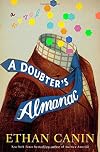
The Doubter's Almanac is the story of Milo Andret, a mathematical genius. He seems to be able to visualize complex spaces. A loner as a boy wandering in the Michigan woods he carves a chain with no seams from a single piece of wood. Is it a forgone conclusion he would specialize in topology?
Although mathematics is the backdrop for the story and the chapter headings are obscure (and sometimes in Latin) the book is not about mathematics. It's about the problem of genius, it's effect on you show more and your family. We who are not genius are, perhaps, lucky.
Milo's mentor tells him, "Topology is God's language ... you've been called to translate it." It's odd to say this about a character such as Milo, but he is almost spiritual (or is it mania?) in his mathematical quest:
"God is subtle but not malicious . . . success in mathematics is in good part a question of wanting badly enough to look ... To look inside the mind. .. For that is where God has thrown the universe - sometimes inverted and upside down...like a pinhole camera. Seeing it all is secondary to the love of looking and the faith that it is not unknowable."
Later in the book, Milo's Jesuit doctor posits that Milo's problems are God's revenge against spies such as he.
A very different and compelling book! show less
Although mathematics is the backdrop for the story and the chapter headings are obscure (and sometimes in Latin) the book is not about mathematics. It's about the problem of genius, it's effect on you show more and your family. We who are not genius are, perhaps, lucky.
Milo's mentor tells him, "Topology is God's language ... you've been called to translate it." It's odd to say this about a character such as Milo, but he is almost spiritual (or is it mania?) in his mathematical quest:
"God is subtle but not malicious . . . success in mathematics is in good part a question of wanting badly enough to look ... To look inside the mind. .. For that is where God has thrown the universe - sometimes inverted and upside down...like a pinhole camera. Seeing it all is secondary to the love of looking and the faith that it is not unknowable."
Later in the book, Milo's Jesuit doctor posits that Milo's problems are God's revenge against spies such as he.
A very different and compelling book! show less
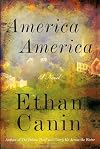
Ethan Canin's America America is the story of a working class boy who, in his role as all purpose helper, becomes an observer of a local wealthy, politically connected family, the Metareys. The tale's trajectory takes the reader along as the protagonist, Corey, is progressively disillusioned by the Metareys' idiosyncracies, political ambitions, and unethical choices.
The book's themes deal with the brutality of wealth acquisition and politics and the irony of wealthy politicians advocating show more populist principles, but in a disappointingly mild voice. Corey is an observer and little else, although he both benefits from and participates in the Metareys' circle, and therefore offers scant critique. Instead, he expresses tepid bemusement at the privileges of the wealthy, surprising given the vast class chasm separating him from the Metareys. And his guilt at assisting—however unwittingly—the Metareys' cover up of the crime of their favorite political aspirant is oddly anemic. They key struggle for Corey is how to reconcile his judgment that the Metareys are not bad people with revelations of their misdeeds.
In the end, Corey marries a Metarey daughter, perhaps signaling that the story is also about the co-option of privilege, or the ambiguity of ethical action. Nonetheless, I finished the book frustrated that even themes of brutality, crime, uncontrolled ambition, and mindless entitlement weren't cast in harsher terms. show less
The book's themes deal with the brutality of wealth acquisition and politics and the irony of wealthy politicians advocating show more populist principles, but in a disappointingly mild voice. Corey is an observer and little else, although he both benefits from and participates in the Metareys' circle, and therefore offers scant critique. Instead, he expresses tepid bemusement at the privileges of the wealthy, surprising given the vast class chasm separating him from the Metareys. And his guilt at assisting—however unwittingly—the Metareys' cover up of the crime of their favorite political aspirant is oddly anemic. They key struggle for Corey is how to reconcile his judgment that the Metareys are not bad people with revelations of their misdeeds.
In the end, Corey marries a Metarey daughter, perhaps signaling that the story is also about the co-option of privilege, or the ambiguity of ethical action. Nonetheless, I finished the book frustrated that even themes of brutality, crime, uncontrolled ambition, and mindless entitlement weren't cast in harsher terms. show less
 This review was written for LibraryThing Early Reviewers.
I’d read anything Ethan Canin writes. In fact, I have read everything I can get my hands on.
What I think distinguishes him is his empathy with his characters. He writes from deep inside his characters, spanning a remarkable diversity, from older women to young men, to, in this case, an obsessive, self-destructive mathematical genius.
The intensity makes the story almost painful to read at times. Milo Andret is a genius at topologies. As a withdrawn child, he carves a topological show more masterpiece, a wooden chain with no seams or joins, from a wood stump in the forest near his house. The chain follows him through his life, as he stars in grad school at Berkeley, solves one of the long standing conjectures of mathematics, accepts a position at Princeton, wins the Nobel-equivalent for mathematics, and takes on his next challenge in what amounts to competitive mathematics at the highest level.
At the same time, though, he sputters through relationships, burdened by an emotional obtuseness that Canin portrays subtly and devastatingly. Relationships include a kind of mathematical muse at Berkeley, a frustratingly laid-back competitor both in mathematics and romance, colleagues he occasionally disrespects in furious tones, and ultimately a family of his own that tries to deal with their inheritance of his extreme flaws and virtues.
Milo is always on a path to self-destruction, physically, emotionally, and socially. The only question is collateral damage. Milo can’t stop thinking. His mind is not his own, ironically flipping Descartes’ cogito ergo sum on its head — Milo thinks unceasingly, obsessively and carries himself constantly away from himself and from other people. His genius is a cancer — “God’s revenge”, his doctor says.
His escapes are drinking, rage, and sexual affairs. Not really a great recipe.
The story is told in events, but, in keeping with Canin’s strength, it is more a portrait than a play-by-play. That’s where things get a little painful. Milo is doomed.
The last one hundred pages of the book are almost an epilogue, a postmortem on a man who hasn’t even died yet. You know it’s coming. It’s just a matter of how bad it’s going to be, how his wife, son, and daughter will learn and adapt to their own share of his affliction, and whether or not there will be any sign of Milo winning out over his demons.
This is not light. In its own odd way, it is affirming, because of the few rays of daylight that poke through Milo’s life. Canin put a lot of research into the story — the sociology of heavyweight mathematics, and the psychology of obsessive genius. Sure worked for me. show less
What I think distinguishes him is his empathy with his characters. He writes from deep inside his characters, spanning a remarkable diversity, from older women to young men, to, in this case, an obsessive, self-destructive mathematical genius.
The intensity makes the story almost painful to read at times. Milo Andret is a genius at topologies. As a withdrawn child, he carves a topological show more masterpiece, a wooden chain with no seams or joins, from a wood stump in the forest near his house. The chain follows him through his life, as he stars in grad school at Berkeley, solves one of the long standing conjectures of mathematics, accepts a position at Princeton, wins the Nobel-equivalent for mathematics, and takes on his next challenge in what amounts to competitive mathematics at the highest level.
At the same time, though, he sputters through relationships, burdened by an emotional obtuseness that Canin portrays subtly and devastatingly. Relationships include a kind of mathematical muse at Berkeley, a frustratingly laid-back competitor both in mathematics and romance, colleagues he occasionally disrespects in furious tones, and ultimately a family of his own that tries to deal with their inheritance of his extreme flaws and virtues.
Milo is always on a path to self-destruction, physically, emotionally, and socially. The only question is collateral damage. Milo can’t stop thinking. His mind is not his own, ironically flipping Descartes’ cogito ergo sum on its head — Milo thinks unceasingly, obsessively and carries himself constantly away from himself and from other people. His genius is a cancer — “God’s revenge”, his doctor says.
His escapes are drinking, rage, and sexual affairs. Not really a great recipe.
The story is told in events, but, in keeping with Canin’s strength, it is more a portrait than a play-by-play. That’s where things get a little painful. Milo is doomed.
The last one hundred pages of the book are almost an epilogue, a postmortem on a man who hasn’t even died yet. You know it’s coming. It’s just a matter of how bad it’s going to be, how his wife, son, and daughter will learn and adapt to their own share of his affliction, and whether or not there will be any sign of Milo winning out over his demons.
This is not light. In its own odd way, it is affirming, because of the few rays of daylight that poke through Milo’s life. Canin put a lot of research into the story — the sociology of heavyweight mathematics, and the psychology of obsessive genius. Sure worked for me. show less
A DOUBTER'S ALMANAC may well be Ethan Canin's magnum opus. It's certainly a 'big' book, at nearly 600 pages. The truth is, I am simply in awe of this guy's writing. I've read five of his seven books now, and they are all simply terrific. But this may be his best yet.
It's a book about family, but mostly about fathers and sons. Milo Andret, a mathematics savant - a genius, perhaps - grew up an only child in the woods of northern Michigan. His parents pretty much left him to his own devices and show more he had few friend, so his childhood was solitary. He lived inside his own head. His mathematical skills got him to grad school in Berkley where he was championed by another recognized genius. He won the prestigious Fields medal and got an endowed chair at Princeton. But then alcoholism, his own strangeness, and lack of social skills cause it all to fall apart. After a stint at a backwater Ohio college, he ends up back in the Michigan woods. But the book is not just about Milo. It's equally about his family, and particularly his son, Hans (who narrates the story), who inherits his father's mathematical skills, but is plagued by his own addictions and phantoms.
When I picked this book up, I hefted it and thought, this is gonna take me a week or two. Nope. I finished it in just three days. Because the characters in here are so real, so multi-dimensional, that I could not wait to see what they would do next. And yes, it's about fathers and sons. There was a particular line that stopped me cold. It was Hans remembering his father years later, and remarking on how incurious he was as a boy about his father.
"That kind of curiosity - a curiosity about the man beyond the effects he had on my life - wouldn't arrive for years."
I had to pause after reading this line, thinking of all the things I wish I had asked my own father about his life, things I wish I knew now, but never will. My father has been dead for more than twenty-five years now. Fortunately, Hans does get another chance to know his father better, and those scenes, near the end of the book, are some of the most emotionally charged of the whole story. In one of them, Milo admits, quite unapologetically, "For that matter, I wouldn't have said that you kids were a big part of my life ... That's just how it was in those days. I was working. That's what we did."
Indeed, what I remember most about my father was how he was always worrying about how he could improve his business, make more money, better support his growing family. (I was one of six children.) He never had much time to spend with us kids. He "was working." That's what he did.
I know these are just a couple lines out of a book nearly six hundred pages long, but they hit home. And there were plenty more passages like that all through the story that kept me turning those pages, identifying with and caring for these characters. Of course I was never a math genius, nor was anyone in my family, but that didn't matter. There is one climactic scene, a family crisis, in the chapter, "Thomson's Lamp," that caused me to gasp at its explosive and unexpected violence, as Hans and his sister both struggle to protect their mother from their father's sudden fury.
And in yet another scene, unexpectedly tender, a drugged and dying Milo, in his suffering, breathes out this line, which Hans's wife recognizes is from a poem - "They do not ... tax their lives ... with forethought of grief."
I found this to be a line from Wendell Berry's poem "The Peace of Wild Things." And it fits, because there is something wild about Milo Andret, this tortured and driven man who grew up nearly alone, in the woods behind his childhood home, and is trying to find his way back there. Here is the Berry poem in its entirety.
"When despair for the world grows in me
and I wake in the night at the least sound
in fear of what my life and my children’s lives may be,
I go and lie down where the wood drake
rests in his beauty on the water, and the great heron feeds.
I come into the peace of wild things
who do not tax their lives with forethought
of grief. I come into the presence of still water.
And I feel above me the day-blind stars
waiting with their light. For a time
I rest in the grace of the world, and am free."
Later, Hans says of his father, "I hope he went back to the woods. Back to the great leafy woods of his childhood, where he'd first known solace."
A DOUBTER'S ALMANAC is a tome to read and re-read, to treasure. Yes, it's a 'big' book, but I was sad to see it end. It is a wise and wonderful book about genius, family and the frailty of human life. It will make you think, and it may make you weep. I loved it. My very highest recommendation.
- Tim Bazzett, author of the memoir, BOOKLOVER show less
It's a book about family, but mostly about fathers and sons. Milo Andret, a mathematics savant - a genius, perhaps - grew up an only child in the woods of northern Michigan. His parents pretty much left him to his own devices and show more he had few friend, so his childhood was solitary. He lived inside his own head. His mathematical skills got him to grad school in Berkley where he was championed by another recognized genius. He won the prestigious Fields medal and got an endowed chair at Princeton. But then alcoholism, his own strangeness, and lack of social skills cause it all to fall apart. After a stint at a backwater Ohio college, he ends up back in the Michigan woods. But the book is not just about Milo. It's equally about his family, and particularly his son, Hans (who narrates the story), who inherits his father's mathematical skills, but is plagued by his own addictions and phantoms.
When I picked this book up, I hefted it and thought, this is gonna take me a week or two. Nope. I finished it in just three days. Because the characters in here are so real, so multi-dimensional, that I could not wait to see what they would do next. And yes, it's about fathers and sons. There was a particular line that stopped me cold. It was Hans remembering his father years later, and remarking on how incurious he was as a boy about his father.
"That kind of curiosity - a curiosity about the man beyond the effects he had on my life - wouldn't arrive for years."
I had to pause after reading this line, thinking of all the things I wish I had asked my own father about his life, things I wish I knew now, but never will. My father has been dead for more than twenty-five years now. Fortunately, Hans does get another chance to know his father better, and those scenes, near the end of the book, are some of the most emotionally charged of the whole story. In one of them, Milo admits, quite unapologetically, "For that matter, I wouldn't have said that you kids were a big part of my life ... That's just how it was in those days. I was working. That's what we did."
Indeed, what I remember most about my father was how he was always worrying about how he could improve his business, make more money, better support his growing family. (I was one of six children.) He never had much time to spend with us kids. He "was working." That's what he did.
I know these are just a couple lines out of a book nearly six hundred pages long, but they hit home. And there were plenty more passages like that all through the story that kept me turning those pages, identifying with and caring for these characters. Of course I was never a math genius, nor was anyone in my family, but that didn't matter. There is one climactic scene, a family crisis, in the chapter, "Thomson's Lamp," that caused me to gasp at its explosive and unexpected violence, as Hans and his sister both struggle to protect their mother from their father's sudden fury.
And in yet another scene, unexpectedly tender, a drugged and dying Milo, in his suffering, breathes out this line, which Hans's wife recognizes is from a poem - "They do not ... tax their lives ... with forethought of grief."
I found this to be a line from Wendell Berry's poem "The Peace of Wild Things." And it fits, because there is something wild about Milo Andret, this tortured and driven man who grew up nearly alone, in the woods behind his childhood home, and is trying to find his way back there. Here is the Berry poem in its entirety.
"When despair for the world grows in me
and I wake in the night at the least sound
in fear of what my life and my children’s lives may be,
I go and lie down where the wood drake
rests in his beauty on the water, and the great heron feeds.
I come into the peace of wild things
who do not tax their lives with forethought
of grief. I come into the presence of still water.
And I feel above me the day-blind stars
waiting with their light. For a time
I rest in the grace of the world, and am free."
Later, Hans says of his father, "I hope he went back to the woods. Back to the great leafy woods of his childhood, where he'd first known solace."
A DOUBTER'S ALMANAC is a tome to read and re-read, to treasure. Yes, it's a 'big' book, but I was sad to see it end. It is a wise and wonderful book about genius, family and the frailty of human life. It will make you think, and it may make you weep. I loved it. My very highest recommendation.
- Tim Bazzett, author of the memoir, BOOKLOVER show less
Lists
Awards


You May Also Like


Associated Authors
Statistics
- Works
- 11
- Also by
- 17
- Members
- 3,985
- Popularity
- #6,333
- Rating
- 3.7
- Reviews
- 166
- ISBNs
- 126
- Languages
- 11
- Favorited
- 9


