
Tobias Wolff
Author of This Boy's Life: A Memoir
About the Author
Tobias Wolff was born in Birmingham, Alabama on June 19, 1945. He served in the military as a paratrooper during the Vietnam War. He received a B.A. in 1972 and a M.A. in 1975 from the University of Oxford and a M.A. in 1978 from Stanford University. He held faculty positions at Stanford show more University, Goddard College, Arizona State University, and Syracuse University. He was also a reporter for the Washington Post. His first collection of short stories, In the Garden of the North American Martyrs, won the St. Lawrence award for fiction in 1982. His other works include Back in the World, In Pharaoh's Army: Memories of a Lost War, The Night in Question, Old School, and Our Story Begins. The Barracks Thief won the PEN/Faulkner award for fiction in 1985. This Boy's Life: A Memoir won the Los Angeles Times Book prize in 1989 and was made into a 1993 film starring Robert De Niro and Leonardo DiCaprio. He also won three O. Henry Awards in 1980, 1981, and 1985 and the National Medal of Arts in 2015. He edited several anthologies of short stories including Matters of Life and Death: New American Stories, A Doctor's Visit: Short Stories by Anton Chekhov, and The Vintage Book of Contemporary American Short Stories. (Bowker Author Biography) show less
Image credit: Photo by flickr user Mark Coggins
Works by Tobias Wolff
Bible [short story] 2 copies
Meus Dias de Escritor 2 copies
Kundenkommunikation in sozialen Medien : Analyse und Steuerung der Kommunikationsprozesse (2017) 1 copy
Stories by Tobias Wolff 1 copy
Smokers 1 copy
Associated Works
Ivanov / The Seagull / Uncle Vanya / Three Sisters / The Cherry Orchard (1887) — Introduction, some editions — 2,559 copies, 9 reviews
The Story and Its Writer: An Introduction to Short Fiction (1976) — Contributor — 1,218 copies, 3 reviews
For the Love of Books: 115 Celebrated Writers on the Books They Love Most (1999) — Contributor — 479 copies, 4 reviews
You've Got to Read This: Contemporary American Writers Introduce Stories that Held Them in Awe (1994) — Introduction — 414 copies, 3 reviews
The Art of the Story: An International Anthology of Contemporary Short Stories (1999) — Contributor — 395 copies, 5 reviews
The Art of the Tale: An International Anthology of Short Stories (1986) — Contributor — 381 copies, 3 reviews
The Ecco Anthology of Contemporary American Short Fiction (2008) — Contributor — 141 copies, 2 reviews
American Fiction, Volume 1: The Best Unpublished Short Stories by Emerging Writers (1990) — Introduction, some editions — 18 copies
Antaeus No. 64/65, Spring/Autumn 1990 - Twentieth Anniversary Issue (1990) — Contributor — 14 copies
TriQuarterly 48: Western Stories — Contributor — 2 copies
What We Talk About When We Talk About Love / Raymond Carver Had His Cake and Ate It Too (1990) — Contributor — 1 copy
Tagged
Common Knowledge
- Legal name
- Wolff, Tobias Jonathan Ansell
- Birthdate
- 1945-06-19
- Gender
- male
- Education
- Stanford University (MA ∙ English)
Hertford College, Oxford - Occupations
- teacher
writer - Awards and honors
- PEN/Malamud Award (2006)
American Academy of Arts and Letters Academy Award ( [2001])
Whiting Writers' Award (1989)
PEN/Faulkner Award (1985)
National Medal of Arts (2014)
American Academy of Arts and Letters (2014) - Relationships
- Wolff, Geoffrey (brother)
- Nationality
- USA
- Birthplace
- Birmingham, Alabama, USA
- Places of residence
- Seattle, Washington, USA
Palo Alto, California, USA - Associated Place (for map)
- USA
Members
Reviews

A second read, the first was more or less when it was published, thirty years ago. Tobias is ten and he and his mother are fleeing Florida and yet another of her bad relationships, headed for Utah; it is the early 50's. When she and Tobias's father split, each took one child. The other, Geoffrey Wolff is also a writer and among other things wrote about their father in The Duke of Deception- a handsome, brilliant, charismatic man who was unable, basically, to ever tell the truth. He tells the show more story of this six or so year period of his life in a series of connected stories in sections--each section focussed around a place and a situation and that are further divided into separate vignettes.
If possible the memoir was even more rewarding the second time around because my understanding of both the emotional difficult and the writing 'craft' that went into the creation goes so much deeper. Wolff achieves (what is more or less impossible) writing a memoir about that specific (and critical) period between pre- and late-adolescence not as a narrative but as a series of stories, dialogue and all, that is utterly convincing as a memoir. While it is written as if fiction, it feels and is, surely, the truth of that period of his life. Perhaps only his truth, but truth. One could discuss why this works for days or weeks. Wolff himself says in his preface: "I remember the past in terms of stories. That's how I think of it, how I talk about it, and how I've written it here." I've written plenty of stories that are based on my life experiences, but I deviate from the facts knowingly to shape the story the way I want it to go. Most of us can't help doing that, interfering with and remaking our past in that way. Here, Wolff ruthlessly re-imagines the past exactly as he remembers it, I say ruthlessly because he doesn't spare himself for one second. He is his father's son and lying and subterfuge come naturally to him, sometimes with (some) justification, sometimes not. Also he re-inhabits the mind of the boy he was, with no judgement from his adult self about the things he did (and didn't) do. Such as regret, yes, or even something like disbelief at his stupidity or naivete but never judgement. He was a kid, this is how I coped. The self-awareness that went into the work is blinding. ***** show less
If possible the memoir was even more rewarding the second time around because my understanding of both the emotional difficult and the writing 'craft' that went into the creation goes so much deeper. Wolff achieves (what is more or less impossible) writing a memoir about that specific (and critical) period between pre- and late-adolescence not as a narrative but as a series of stories, dialogue and all, that is utterly convincing as a memoir. While it is written as if fiction, it feels and is, surely, the truth of that period of his life. Perhaps only his truth, but truth. One could discuss why this works for days or weeks. Wolff himself says in his preface: "I remember the past in terms of stories. That's how I think of it, how I talk about it, and how I've written it here." I've written plenty of stories that are based on my life experiences, but I deviate from the facts knowingly to shape the story the way I want it to go. Most of us can't help doing that, interfering with and remaking our past in that way. Here, Wolff ruthlessly re-imagines the past exactly as he remembers it, I say ruthlessly because he doesn't spare himself for one second. He is his father's son and lying and subterfuge come naturally to him, sometimes with (some) justification, sometimes not. Also he re-inhabits the mind of the boy he was, with no judgement from his adult self about the things he did (and didn't) do. Such as regret, yes, or even something like disbelief at his stupidity or naivete but never judgement. He was a kid, this is how I coped. The self-awareness that went into the work is blinding. ***** show less
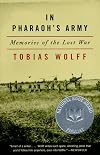
Having read some of Wolff's other work, namely Old School and his childhood memoir This Boy's Life, I was eager to delve into the author's experiences with the proverbial "lost war" of Vietnam. With the same terse and declarative prose of This Boy's Life, Wolff deftly captures the elusive and, oftentimes, discrete sensations of war. For fan's of Wolff, this memoir will not disappoint.
In Pharaoh's Army recounts the author's year long tour in Vietnam, where as a Lieutenant in the Special show more Forces, he is ultimately assigned the privileged and comparatively "lucky" position of adviser to a South Vietnamese Army battalion stationed in the Delta region of My Tho. His memoir is broken up into 13 discrete chapters, each functioning as a stand alone short story. Although all stories relate directly Vietnam and the experiences that led him to enlistment, there is no clear linear narrative in this work. I think this narrative structure succeeds in underscoring the seemingly arbitrary and hazy nature of war itself and overall strengthens the tenor of this work. In Pharaoh's Army lacks the grittiness found in a Tim O'Brien novel. Instead, writes in a low key minimalist style with an economy of prose that is reminiscent of Hemingway (which is not surprising considering that Wolff admired all author's who served, especially Hemingway).
At the onset, Wolff was an idealistic recruit, one with a novel in his head. With his deployment orders in hand, he states, "The life around me began at last to take on form, to signify. No longer a powerless confusion of desires, I was now a protagonist, the hero of a novel to which I endlessly added from the stories I dreamed and saw everywhere." However, In Pharaoh's Army ultimately chronicles the author's growing disillusionment with the American presence in Vietnam. The title itself alludes to the absurd and doomed blind charge of the Pharaoh's chariots into the Red Sea. Though disillusioned, this year of combat nevertheless allowed to author to come into his own and find his true character. In his own words, he "Lost Faith. Prayed anyway. Persisted...That's how we found out who we are". show less
In Pharaoh's Army recounts the author's year long tour in Vietnam, where as a Lieutenant in the Special show more Forces, he is ultimately assigned the privileged and comparatively "lucky" position of adviser to a South Vietnamese Army battalion stationed in the Delta region of My Tho. His memoir is broken up into 13 discrete chapters, each functioning as a stand alone short story. Although all stories relate directly Vietnam and the experiences that led him to enlistment, there is no clear linear narrative in this work. I think this narrative structure succeeds in underscoring the seemingly arbitrary and hazy nature of war itself and overall strengthens the tenor of this work. In Pharaoh's Army lacks the grittiness found in a Tim O'Brien novel. Instead, writes in a low key minimalist style with an economy of prose that is reminiscent of Hemingway (which is not surprising considering that Wolff admired all author's who served, especially Hemingway).
At the onset, Wolff was an idealistic recruit, one with a novel in his head. With his deployment orders in hand, he states, "The life around me began at last to take on form, to signify. No longer a powerless confusion of desires, I was now a protagonist, the hero of a novel to which I endlessly added from the stories I dreamed and saw everywhere." However, In Pharaoh's Army ultimately chronicles the author's growing disillusionment with the American presence in Vietnam. The title itself alludes to the absurd and doomed blind charge of the Pharaoh's chariots into the Red Sea. Though disillusioned, this year of combat nevertheless allowed to author to come into his own and find his true character. In his own words, he "Lost Faith. Prayed anyway. Persisted...That's how we found out who we are". show less
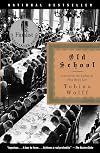
A beautiful short novel set in an American prep school where the biggest event of the academic year, at least for the unnamed first-person narrator and many of his friends, is not a sporting event; not a mixer with the girls' school down the road, but a writing competition. A competition that gives the winner a one-on-one meeting with whichever visiting writer of renown the school has successfully invited to talk to the students this year. Frost, Ayn Rand, Hemingway---the boys' minds boggle show more at being judged worthy of standing in such light. Our narrator dreams of being a writer. "I knew that Maupassant...had been taken up when young by Flaubert and Turgenev; Faulkner by Sherwood Anderson; Hemingway by Fitzgerald and Pound and Gertrude Stein. All these writers were welcomed by other writers. It seemed to follow that you needed such a welcome...My aspirations were mystical. I wanted to receive the laying on of hands...I wanted to be anointed." For three years, Toby (I'm going to call him Toby, because let's face it: this has to be heavily autobiographical stuff. It reads much more like memoir than fiction.) strives to be the chosen one. The process becomes the core of his education--not just in literature, or in creativity, but in life, as he confronts again and again the difficulty of knowing the purpose of Truth when Honor may seem to be better served by deception. show less
This Boy's Life is author Tobias Wolff's coming-of-age memoir. After his parents divorced, Wolff remained with his mother while his older brother lived with their father. There was almost always an abusive man in his mother's life. She wasn't the only one who suffered from the abuse. Tobias (who preferred the name “Jack”) suffered, too. With little parental supervision, Wolff unfailingly hooked up with the wrong crowd with every move. Deceit became second nature to Wolff. He lied, stole, show more and engaged in other delinquent behavior, likely for self-preservation. While I was moved by Wolff's circumstances, I also couldn't help wondering how deeply ingrained these habits are in Wolff's character. Might he be an unreliable narrator of his own life story? show less
Lists
Awards


You May Also Like


Associated Authors
Statistics
- Works
- 53
- Also by
- 54
- Members
- 11,112
- Popularity
- #2,122
- Rating
- 3.9
- Reviews
- 215
- ISBNs
- 261
- Languages
- 14
- Favorited
- 45
