
Charles Baxter
Author of The Feast of Love
About the Author
Charles Baxter is the author of novels and short story collections. His novels include The Feast of Love, The Soul Thief, Saul and Patsy, Shadow Play, and First Light. His short story collections include Gryphon, Believers, A Relative Stranger, Through the Safety Net, Harmony of the World, and show more There's Something I Want You to Do. He teaches at the University of Minnesota and in the MFA Program for Writers at Warren Wilson College. (Bowker Author Biography) Charles Baxter is author of several novels, including "The Feast of Love", "Shadow Play", & "First Light", & collections of stories including "Believers" & "A Relative Stranger". He teaches writing at the University of Michigan. (Publisher Provided) He lives in Ann Arbor, Michigan. He is the recipient of a Lila Wallace-Reader's Digest Foundation Award for Writers & an Academy Award in Literature from the American Academy of Arts & Letters. (Publisher Provided) show less
Works by Charles Baxter
Associated Works
The Scribner Anthology of Contemporary Short Fiction: Fifty North American American Stories Since 1970 (1999) — Contributor — 586 copies, 4 reviews
You've Got to Read This: Contemporary American Writers Introduce Stories that Held Them in Awe (1994) — Introduction — 414 copies, 3 reviews
Sudden Fiction International: Sixty Short-Short Stories (1989) — Introduction — 228 copies, 1 review
Sherwood Anderson: Collected Stories: Winesburg, Ohio / The Triumph of the Egg / Horses and Men / Death in the Woods / Uncollected Stories (2012) — Editor — 155 copies
The Ecco Anthology of Contemporary American Short Fiction (2008) — Contributor — 140 copies, 2 reviews
Significant Objects: 100 Extraordinary Stories about Ordinary Things (2012) — Contributor — 65 copies, 1 review
Take My Advice: Letters to the Next Generation from People Who Know a Thing or Two (2002) — Contributor — 50 copies
Coming Attractions: An Anthology of American Poets in Their Twenties (1980) — Contributor — 8 copies
Tagged
Common Knowledge
- Canonical name
- Baxter, Charles
- Legal name
- Baxter, Charles Morley
- Birthdate
- 1947-05-13
- Gender
- male
- Education
- Macalester College (BA|1969)
State University of New York, Buffalo (PhD|English|1974) - Occupations
- university professor (English and creative writing)
poet
fiction author
teacher (high school)
non-fiction author - Organizations
- Wayne State University
Warren Wilson College
University of Michigan
University of Minnesota - Awards and honors
- Faculty Recognition Award (Wayne State University, 1985, 1987)
Lawrence Foundation Award (1991)
Michigan Author of the Year Award (Michigan Foundation, 1994)
Harvard Review Award (1995)
Award in Literature (American Academy of Arts and Letters, 1997) - Agent
- Darhansoff & Verrill Literary Agents
- Nationality
- USA
- Birthplace
- Minneapolis, Minnesota, USA
- Places of residence
- Minneapolis, Minnesota, USA
- Associated Place (for map)
- Minneapolis, Minnesota, USA
Members
Reviews
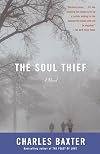
THE SOUL THIEF is my third Baxter book, and I liked it, but it's something of a puzzle. I mean, who's telling this story? Is it Nathaniel Mason, or is it the weird watcher, Jerome Coolberg? And why does Nathaniel fall for the lesbian artist, Jamie, when he's already involved with Theresa, who offers him no-strings uninhibited high-energy sex? And how does Coolberg know so much about the intimate details of Nathaniel's family history? Well, follow Nathaniel from his disturbed grad school days show more in Buffalo to his settled, married years in the New Jersey suburbs - with some blackout gaps and a major fast forward - and maybe it will all become clear. Or maybe not, and, like me, maybe you'll wonder if you missed something, if you should go back and reread the whole damn thing.
But, confusion aside, it's worth the trip. Because Baxter's strength always comes through in his characters, and THE SOUL THIEF is no exception. Nathaniel Mason, as well as the strange, sexually ambiguous Coolberg, are two more memorable characters to add to the varied collection I've already encountered in FEAST OF LOVE and SAUL AND PATSY. Highly recommended, but pay attention!
- Tim Bazzett, author of the memoir, BOOKLOVER show less
But, confusion aside, it's worth the trip. Because Baxter's strength always comes through in his characters, and THE SOUL THIEF is no exception. Nathaniel Mason, as well as the strange, sexually ambiguous Coolberg, are two more memorable characters to add to the varied collection I've already encountered in FEAST OF LOVE and SAUL AND PATSY. Highly recommended, but pay attention!
- Tim Bazzett, author of the memoir, BOOKLOVER show less
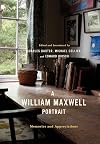
I love the way William Maxwell wrote. Even now that past tense form, 'wrote,' pains me, ten years after Maxwell's death at 91. I never had the good fortune to meet the man, or even write to him, but I miss him all the same. Anyone who has ever read THEY CAME LIKE SWALLOWS or THE FOLDED LEAF must, I think, feel the same way. In a recent email exchange with a writer friend of mine who was lucky enough to once meet William Maxwell, my friend described him as 'a sweet man.' And there is show more certainly a sweetness about Maxwell's writing. Other writers who contributed to this tribute note a 'steel' in the man. Sweetness and steel? Yes, probably - and everything that might lie in between too. Read his books and you will see what I mean.
I applaud the editors of this collection of essays: Baxter, Collier and Hirsch. I enjoyed most of them, but some I liked better - the more personal ones, by Richard Bausch, Benjamin Cheever and Alec Wilkinson, and perhaps Shirley Hazzard. I like them precisely because they are more personal in nature. My least favorite essay here is probably the one by Ellen Bryant Voigt - too long, too egg-headed and scholarly. In fact, I think there is, in one of the other essays, a quote from Maxwell: "I hate scholars." Me too. I also especially enjoyed Hirsch's "Portrait of the Artist as an Old Man," particularly the 'some things he said' section. But perhaps my favorite line here came from Richard Bausch when he tried to describe the kind of 'exhilaration' he felt in Maxwell's company, in experiencing the much older man's 'humanity.' He said, "I wish I could explain this better. I simply can't." Richard, you explained it just fine. I so envy you your close association with William Maxwell. He was one of a kind, the like of which may never be seen on this earth again. show less
I applaud the editors of this collection of essays: Baxter, Collier and Hirsch. I enjoyed most of them, but some I liked better - the more personal ones, by Richard Bausch, Benjamin Cheever and Alec Wilkinson, and perhaps Shirley Hazzard. I like them precisely because they are more personal in nature. My least favorite essay here is probably the one by Ellen Bryant Voigt - too long, too egg-headed and scholarly. In fact, I think there is, in one of the other essays, a quote from Maxwell: "I hate scholars." Me too. I also especially enjoyed Hirsch's "Portrait of the Artist as an Old Man," particularly the 'some things he said' section. But perhaps my favorite line here came from Richard Bausch when he tried to describe the kind of 'exhilaration' he felt in Maxwell's company, in experiencing the much older man's 'humanity.' He said, "I wish I could explain this better. I simply can't." Richard, you explained it just fine. I so envy you your close association with William Maxwell. He was one of a kind, the like of which may never be seen on this earth again. show less
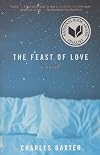
Devoured this book. Now I wonder what took me so long to read it, because I've had it on my shelf for a few years now, ever since I happened to see the film adaptation of THE FEAST OF LOVE on TV one night. I loved the movie so much that I emailed Charles Baxter to tell him. He responded graciously, thanking me, but said the film was really rather different from his novel, that he'd had little input into the screenplay.
And now that I've finally read the book - immersed myself in it for the show more past two days; didn't want to put it down - I can't really remember much about the film. Because my head is too full of the book.
The title comes from a painting by one of the book's main characters. But hey, painting, shmainting - it's the characters that rule in Baxter's novel. One of the voices here, a narrator who frames the stories of the other characters, is a guy named Charlie Baxter, who is a writer living in Ann Arbor. (Baxter was teaching at U of M at the time he wrote this.) Then there's Bradley Smith, who suggests that Charlie just write down regular people's stories - which is what he does. Poor Bradley, who runs Jitters, a coffe shop, and is also a painter (that title I mentioned), has no luck with women, having gone through two marriages already. His story is in here. As is Kathryn's, who leaves Bradley for a woman. And there is Diana, Bradley's second wife, very briefly. She is a high-powered, rather cold-blooded type who carries on with David, a married man. And Bradley's elderly neighbors, Harry and Esther Ginsberg, a philosophy professor and a scientist, respectively. But probably the best characters of all here are teenage Chloe (pronounced Clo-AY; she 'customized' her name) and her quirky, recovering addict lover, Oscar. It was Chloe's voice that really slew me. She is an older, wiser, corrupt-but-innocent 'Phoebe' sort- remember Holden Caulfield's sister? Estranged for some time from her parents, she later bridges that gap, in fact worrying about her parents -
"... I was my own woman and not their little girl anymore. Besides, I wanted to show them how mature I'd gotten by not saying f**k all the time, a habit that's hard to give up. That's scary for parents. You have to be careful with parents once you're grown up into mature adulthood. They get 'sensitive.' Almost anything you say, you hurt their feelings. Their aging hearts get broken. They just crumple up. Besides, I was about to become one of them."
You see? You chuckle at what she says, and yet at the same time you ache for her innocence. How author Baxter got so fully inside the head of types like Chloe - and Diana and Kathryn and others - is anybody's guess, but he does it, and he does it so damn well you just keep turning those pages wanting to find out what the hell these people will do next. Because this is a book full of wisdom, humor and the sadness and sometimes silliness of everyday living, all about love in its many permutations. It is indeed a 'feast' for anyone who loves good writing. I cannot recommend this book highly enough. Did I say I loved this book? Well, I did. Bravo, Mr. Baxter!
- Tim Bazzett, author of the memoir, BOOKLOVER show less
And now that I've finally read the book - immersed myself in it for the show more past two days; didn't want to put it down - I can't really remember much about the film. Because my head is too full of the book.
The title comes from a painting by one of the book's main characters. But hey, painting, shmainting - it's the characters that rule in Baxter's novel. One of the voices here, a narrator who frames the stories of the other characters, is a guy named Charlie Baxter, who is a writer living in Ann Arbor. (Baxter was teaching at U of M at the time he wrote this.) Then there's Bradley Smith, who suggests that Charlie just write down regular people's stories - which is what he does. Poor Bradley, who runs Jitters, a coffe shop, and is also a painter (that title I mentioned), has no luck with women, having gone through two marriages already. His story is in here. As is Kathryn's, who leaves Bradley for a woman. And there is Diana, Bradley's second wife, very briefly. She is a high-powered, rather cold-blooded type who carries on with David, a married man. And Bradley's elderly neighbors, Harry and Esther Ginsberg, a philosophy professor and a scientist, respectively. But probably the best characters of all here are teenage Chloe (pronounced Clo-AY; she 'customized' her name) and her quirky, recovering addict lover, Oscar. It was Chloe's voice that really slew me. She is an older, wiser, corrupt-but-innocent 'Phoebe' sort- remember Holden Caulfield's sister? Estranged for some time from her parents, she later bridges that gap, in fact worrying about her parents -
"... I was my own woman and not their little girl anymore. Besides, I wanted to show them how mature I'd gotten by not saying f**k all the time, a habit that's hard to give up. That's scary for parents. You have to be careful with parents once you're grown up into mature adulthood. They get 'sensitive.' Almost anything you say, you hurt their feelings. Their aging hearts get broken. They just crumple up. Besides, I was about to become one of them."
You see? You chuckle at what she says, and yet at the same time you ache for her innocence. How author Baxter got so fully inside the head of types like Chloe - and Diana and Kathryn and others - is anybody's guess, but he does it, and he does it so damn well you just keep turning those pages wanting to find out what the hell these people will do next. Because this is a book full of wisdom, humor and the sadness and sometimes silliness of everyday living, all about love in its many permutations. It is indeed a 'feast' for anyone who loves good writing. I cannot recommend this book highly enough. Did I say I loved this book? Well, I did. Bravo, Mr. Baxter!
- Tim Bazzett, author of the memoir, BOOKLOVER show less
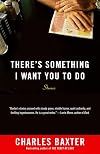
This is one of those books I feel better for having read, but I can’t really say why. It contains ten stories, five grouped together under a theme of virtues — titled Bravery, Loyalty, Chastity, Charity, and Forbearance — and give grouped under a theme of vices — Lust, Sloth, Avarice, Gluttony, and Vanity.
The stories do anything but illustrate straight-forward simple morals, organized around their title virtues. Life is messy, and so are virtues and vices. In fact, sometimes you show more can’t tell if the exercise of a virtue is a vice, or the exercise of vice a virtue.
The stories (most of them) also contain the direction, “There’s something I want you to do,” told by one character to another. It’s worth pausing over the line, both before and after it occurs in the story. In Loyalty, an ex-wife, in dire straits, comes to visit her ex-husband, son, and his new wife and daughter. She speaks that line to her ex-husband near the beginning of the story. She doesn’t specify the “something” when she says it. And it’s not clear, to me anyway, who has done what she wanted by the end of the story, although it has gotten done.
It’s also interesting to think how the title virtue or vice relates to the story. In Sloth, a pediatrician (one of several characters who recur across stories) is trying to come to terms with the limits of what he can do with his patients, the seeming role of chance, and the need for parents to find a reason, or blame, for what’s happening to their children under his care. And generally, he’s trying to come to terms with himself. Dealing with a particular child, his patient, after he has done what he can, he meets a Hitchcockian figure in a bar, a vision. The Hitchcockian figure becomes the interlocuter for his inner dialogue. In the end, after his patient’s fate has been determined, he asks his wife to do the “something” he wants her to do — pray for him. He says, “I don’t understand anything, and I need to understand what’s happening to me.”
All of the stories involve uncomfortable situations, the situations in which people reach out for help of one kind or another, and the situations in which virtues and vices are at play. Life is messy, and it’s a hard job to find the simplicity. show less
The stories do anything but illustrate straight-forward simple morals, organized around their title virtues. Life is messy, and so are virtues and vices. In fact, sometimes you show more can’t tell if the exercise of a virtue is a vice, or the exercise of vice a virtue.
The stories (most of them) also contain the direction, “There’s something I want you to do,” told by one character to another. It’s worth pausing over the line, both before and after it occurs in the story. In Loyalty, an ex-wife, in dire straits, comes to visit her ex-husband, son, and his new wife and daughter. She speaks that line to her ex-husband near the beginning of the story. She doesn’t specify the “something” when she says it. And it’s not clear, to me anyway, who has done what she wanted by the end of the story, although it has gotten done.
It’s also interesting to think how the title virtue or vice relates to the story. In Sloth, a pediatrician (one of several characters who recur across stories) is trying to come to terms with the limits of what he can do with his patients, the seeming role of chance, and the need for parents to find a reason, or blame, for what’s happening to their children under his care. And generally, he’s trying to come to terms with himself. Dealing with a particular child, his patient, after he has done what he can, he meets a Hitchcockian figure in a bar, a vision. The Hitchcockian figure becomes the interlocuter for his inner dialogue. In the end, after his patient’s fate has been determined, he asks his wife to do the “something” he wants her to do — pray for him. He says, “I don’t understand anything, and I need to understand what’s happening to me.”
All of the stories involve uncomfortable situations, the situations in which people reach out for help of one kind or another, and the situations in which virtues and vices are at play. Life is messy, and it’s a hard job to find the simplicity. show less
Lists
Awards


You May Also Like


Associated Authors
Statistics
- Works
- 34
- Also by
- 34
- Members
- 5,665
- Popularity
- #4,370
- Rating
- 3.6
- Reviews
- 127
- ISBNs
- 118
- Languages
- 8
- Favorited
- 17


