
Michelle Huneven
Author of Blame
About the Author
Works by Michelle Huneven
Associated Works
Death by Pad Thai and Other Unforgettable Meals (2015) — Author, some editions — 84 copies, 1 review
The O. Henry Prize Stories 2017 (The O. Henry Prize Collection) (2017) — Contributor — 55 copies, 1 review
Tagged
Common Knowledge
- Canonical name
- Huneven, Michelle
- Birthdate
- 1953-08-14
- Gender
- female
- Education
- Claremont School of Theology
Iowa Writers Workshop (MFA) - Occupations
- teaches creative writing at UCLA and at Occidental College
- Awards and honors
- Whiting Writers' Award (2002)
- Nationality
- USA
- Birthplace
- Altadena, California, USA
- Places of residence
- Altadena, California, USA (birth)
Los Angeles, California, USA - Associated Place (for map)
- California, USA
Members
Reviews
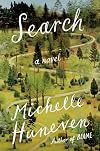
SEARCH is a novel that takes a deep dive into the 1-2 year process most Unitarian-Universalist (UU) churches follow when choosing a new minister. It’s written from the point of view of a fictional food critic (Dana Potowski, who I imagine acts as the author’s alter ego) who serves on that search committee. Dana is one of eight people, chosen to represent the wider congregation, who work together to select a ministerial candidate they then present to the full congregation, for them to show more meet and vote on. Awarded three stars on Goodreads.
I too have participated in a ministerial search committee at my own UU church. I also subsequently acted as a volunteer coach helping about a dozen other UU churches navigate their ministerial searches. So, heads up. It is impossible for me to review this book without drawing on my own experience. And I find myself eager to defend a prescribed process I came to deeply respect.
All the steps described in the novel (creating online profiles, reviewing more detailed packets, conducting Skype interviews, arranging pre-candidating weekends, making reference checks, planning candidating week, etc.) were the same ones my group followed. But Dana’s experience of the search process could not be more different than my own. And most of those differences come because both the lay leadership of Dana’s congregation and the search committee members themselves ignored recommended practices.
Just a few examples:
• In the book, lay leaders were not even careful selecting search committee members. They chose one person who was not a member of the church and another who knew nothing about the church. A third member was an outright bully. Serving on a search committee is an honor. Searchers are supposed to be picked because they know the congregation, represent different interests in the congregation, bring specific skills needed to tackle the work (like writing, web skills, survey analysis experience, etc.), and have the abilities to be both open-minded and collaborative.
• Both the sitting minister at Dana’s church and a second “outside” minister tried to solicit information and/or influence the outcome, even though confidentiality among search members if supposed to sacrosanct.
• Regardless of whatever individual preferences members of the committee have at the start of the search process, once work begins they are supposed to set their personal wishes aside and be guided by the extensive input they collect from the wider congregation. This was my experience. But members of Dana’s fictional committee rigidly held onto their personal preferences and disrespected one another throughout — to the detriment of the outcome.
It is my sincere hope that Huneven intentionally strayed from the truth of her own experience in order to craft a more dramatic narrative. Conflict, after all, works in a novel. But her characters are not all that likeable, never gel as a cooperative working group, and make the actual search process look like a cross between fraternity rush week and a Thanksgiving dinner with a small dysfunctional family. So I found it was not much fun to read.
And speaking of food, while I recognize that Huneven’s decided to make her protagonist a food critic, did there need to be so SO much information (including a bunch of recipes) about the food this search committee ate? You would have thought that the food prepared for each meeting was more important than their decision making process.
Bottom line – even putting aside that my own experience with ministerial search prevents me from being an impartial reviewer — I still can’t say I found the novel particularly compelling. I felt obligated to finish it. I hoped the novel would eventually capture the deep thoughtfulness, care, and responsibility that actually goes into the work. But instead, my lasting impression is that I had just spent way too much time with a group of mean-spirited, weak, and unqualified people who made a sham of the diligent process I experienced.
If you happen to be on a UU search committee, you might want to read this. You’ll learn what not to do. Otherwise, I wouldn’t bother. Either way, don't think this book portrays what a real search process is like. show less
I too have participated in a ministerial search committee at my own UU church. I also subsequently acted as a volunteer coach helping about a dozen other UU churches navigate their ministerial searches. So, heads up. It is impossible for me to review this book without drawing on my own experience. And I find myself eager to defend a prescribed process I came to deeply respect.
All the steps described in the novel (creating online profiles, reviewing more detailed packets, conducting Skype interviews, arranging pre-candidating weekends, making reference checks, planning candidating week, etc.) were the same ones my group followed. But Dana’s experience of the search process could not be more different than my own. And most of those differences come because both the lay leadership of Dana’s congregation and the search committee members themselves ignored recommended practices.
Just a few examples:
• In the book, lay leaders were not even careful selecting search committee members. They chose one person who was not a member of the church and another who knew nothing about the church. A third member was an outright bully. Serving on a search committee is an honor. Searchers are supposed to be picked because they know the congregation, represent different interests in the congregation, bring specific skills needed to tackle the work (like writing, web skills, survey analysis experience, etc.), and have the abilities to be both open-minded and collaborative.
• Both the sitting minister at Dana’s church and a second “outside” minister tried to solicit information and/or influence the outcome, even though confidentiality among search members if supposed to sacrosanct.
• Regardless of whatever individual preferences members of the committee have at the start of the search process, once work begins they are supposed to set their personal wishes aside and be guided by the extensive input they collect from the wider congregation. This was my experience. But members of Dana’s fictional committee rigidly held onto their personal preferences and disrespected one another throughout — to the detriment of the outcome.
It is my sincere hope that Huneven intentionally strayed from the truth of her own experience in order to craft a more dramatic narrative. Conflict, after all, works in a novel. But her characters are not all that likeable, never gel as a cooperative working group, and make the actual search process look like a cross between fraternity rush week and a Thanksgiving dinner with a small dysfunctional family. So I found it was not much fun to read.
And speaking of food, while I recognize that Huneven’s decided to make her protagonist a food critic, did there need to be so SO much information (including a bunch of recipes) about the food this search committee ate? You would have thought that the food prepared for each meeting was more important than their decision making process.
Bottom line – even putting aside that my own experience with ministerial search prevents me from being an impartial reviewer — I still can’t say I found the novel particularly compelling. I felt obligated to finish it. I hoped the novel would eventually capture the deep thoughtfulness, care, and responsibility that actually goes into the work. But instead, my lasting impression is that I had just spent way too much time with a group of mean-spirited, weak, and unqualified people who made a sham of the diligent process I experienced.
If you happen to be on a UU search committee, you might want to read this. You’ll learn what not to do. Otherwise, I wouldn’t bother. Either way, don't think this book portrays what a real search process is like. show less
Who would suspect that the fictional machinations of a committee at the Arroyo UU (Unitarian-Universalist) Community Church would be the foundation of such a sweet-tart, ruminative novel? Dana, a middle aged food writer, is one of the number given the difficult shared task of replacing a beloved minister, who had replaced an even more beloved minister. The committee consists of the Olds and the Youngs, who disagree over the importance of sermons, physical plant and staff management, and even show more hand bells, yea or nay! The cumbersome vetting process itself will be fascinating to the uninitiated, and observing how each committee member behaves under pressure from each other and from the factions, and the interviews and tests of the finalists, is truly gripping. So much so that appointed scribe Dana is secretly turning it all into a novel! High drama and rueful humor place this unusual novel in my top 5 of 2022.
Quotes: “Several of the living have recognized themselves, although sometimes in the wrong character.”
“These days, ministry’s more a march to mutual disappointment.” show less
Quotes: “Several of the living have recognized themselves, although sometimes in the wrong character.”
“These days, ministry’s more a march to mutual disappointment.” show less
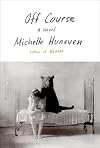
Let me begin by saying the last third of this book is much more engaging than the first two-thirds.
Cressida Hartley heads to her parent's remote vacation cabin to write her dissertation. Looking for any excuse to delay, she gets involved with the locals, including, ultimately, an affair with a married man.
Along the way and through other characters, the author explores the nature of love and passion as it plays out in a small community, full of people with differing values. It also forces show more you to look at how and when does love become obsession and how much will one person endure to keep it going?
That sounds interesting but I didn't find myself caring that much for the main characters, nor believing the strength of their emotions. Then, by the time I did get engaged (the last third of the book), there was an ending that simply tied everything up too neatly in too few pages. So, to me, the book isn't nearly as believable or interesting as it might have been.
I chose this book because I read an article that suggested that OFF COURSE would be a good contemporary choice for MADAME BOVARY fans. Maybe not surprisingly, MB is MUCH richer. show less
Cressida Hartley heads to her parent's remote vacation cabin to write her dissertation. Looking for any excuse to delay, she gets involved with the locals, including, ultimately, an affair with a married man.
Along the way and through other characters, the author explores the nature of love and passion as it plays out in a small community, full of people with differing values. It also forces show more you to look at how and when does love become obsession and how much will one person endure to keep it going?
That sounds interesting but I didn't find myself caring that much for the main characters, nor believing the strength of their emotions. Then, by the time I did get engaged (the last third of the book), there was an ending that simply tied everything up too neatly in too few pages. So, to me, the book isn't nearly as believable or interesting as it might have been.
I chose this book because I read an article that suggested that OFF COURSE would be a good contemporary choice for MADAME BOVARY fans. Maybe not surprisingly, MB is MUCH richer. show less
SEARCH is a novel that takes a deep dive into the 1-2 year process most Unitarian-Universalist (UU) churches follow when choosing a new minister. It’s written from the point of view of a fictional food critic (Dana Potowski, who I imagine acts as the author’s alter ego) who serves on that search committee. Dana is one of eight people, chosen to represent the wider congregation, who work together to select a ministerial candidate they then present to the full congregation, for them to show more meet and vote on. Awarded three stars on Goodreads.
I too have participated in a ministerial search committee at my own UU church. I also subsequently acted as a volunteer coach helping about a dozen other UU churches navigate their ministerial searches. So, heads up. It is impossible for me to review this book without drawing on my own experience. And I find myself eager to defend a prescribed process I came to deeply respect.
All the steps described in the novel (creating online profiles, reviewing more detailed packets, conducting Skype interviews, arranging pre-candidating weekends, making reference checks, planning candidating week, etc.) were the same ones my group followed. But Dana’s experience of the search process could not be more different than my own. And most of those differences come because both the lay leadership of Dana’s congregation and the search committee members themselves ignored recommended practices.
Just a few examples:
• In the book, lay leaders were not even careful selecting search committee members. They chose one person who was not a member of the church and another who knew nothing about the church. A third member was an outright bully. Serving on a search committee is an honor. Searchers are supposed to be picked because they know the congregation, represent different interests in the congregation, bring specific skills needed to tackle the work (like writing, web skills, survey analysis experience, etc.), and have the abilities to be both open-minded and collaborative.
• Both the sitting minister at Dana’s church and a second “outside” minister tried to solicit information and/or influence the outcome, even though confidentiality among search members if supposed to sacrosanct.
• Regardless of whatever individual preferences members of the committee have at the start of the search process, once work begins they are supposed to set their personal wishes aside and be guided by the extensive input they collect from the wider congregation. This was my experience. But members of Dana’s fictional committee rigidly held onto their personal preferences and disrespected one another throughout — to the detriment of the outcome.
It is my sincere hope that Huneven intentionally strayed from the truth of her own experience in order to craft a more dramatic narrative. Conflict, after all, works in a novel. But her characters are not all that likeable, never gel as a cooperative working group, and make the actual search process look like a cross between fraternity rush week and a Thanksgiving dinner with a small dysfunctional family. So I found it was not much fun to read.
And speaking of food, while I recognize that Huneven’s decided to make her protagonist a food critic, did there need to be so SO much information (including a bunch of recipes) about the food this search committee ate? You would have thought that the food prepared for each meeting was more important than their decision making process.
Bottom line – even putting aside that my own experience with ministerial search prevents me from being an impartial reviewer — I still can’t say I found the novel particularly compelling. I felt obligated to finish it. I hoped the novel would eventually capture the deep thoughtfulness, care, and responsibility that actually goes into the work. But instead, my lasting impression is that I had just spent way too much time with a group of mean-spirited, weak, and unqualified people who made a sham of the diligent process I experienced.
If you happen to be on a UU search committee, you might want to read this. You’ll learn what not to do. Otherwise, I wouldn’t bother. Either way, don't think this book portrays what a real search process is like. show less
I too have participated in a ministerial search committee at my own UU church. I also subsequently acted as a volunteer coach helping about a dozen other UU churches navigate their ministerial searches. So, heads up. It is impossible for me to review this book without drawing on my own experience. And I find myself eager to defend a prescribed process I came to deeply respect.
All the steps described in the novel (creating online profiles, reviewing more detailed packets, conducting Skype interviews, arranging pre-candidating weekends, making reference checks, planning candidating week, etc.) were the same ones my group followed. But Dana’s experience of the search process could not be more different than my own. And most of those differences come because both the lay leadership of Dana’s congregation and the search committee members themselves ignored recommended practices.
Just a few examples:
• In the book, lay leaders were not even careful selecting search committee members. They chose one person who was not a member of the church and another who knew nothing about the church. A third member was an outright bully. Serving on a search committee is an honor. Searchers are supposed to be picked because they know the congregation, represent different interests in the congregation, bring specific skills needed to tackle the work (like writing, web skills, survey analysis experience, etc.), and have the abilities to be both open-minded and collaborative.
• Both the sitting minister at Dana’s church and a second “outside” minister tried to solicit information and/or influence the outcome, even though confidentiality among search members if supposed to sacrosanct.
• Regardless of whatever individual preferences members of the committee have at the start of the search process, once work begins they are supposed to set their personal wishes aside and be guided by the extensive input they collect from the wider congregation. This was my experience. But members of Dana’s fictional committee rigidly held onto their personal preferences and disrespected one another throughout — to the detriment of the outcome.
It is my sincere hope that Huneven intentionally strayed from the truth of her own experience in order to craft a more dramatic narrative. Conflict, after all, works in a novel. But her characters are not all that likeable, never gel as a cooperative working group, and make the actual search process look like a cross between fraternity rush week and a Thanksgiving dinner with a small dysfunctional family. So I found it was not much fun to read.
And speaking of food, while I recognize that Huneven’s decided to make her protagonist a food critic, did there need to be so SO much information (including a bunch of recipes) about the food this search committee ate? You would have thought that the food prepared for each meeting was more important than their decision making process.
Bottom line – even putting aside that my own experience with ministerial search prevents me from being an impartial reviewer — I still can’t say I found the novel particularly compelling. I felt obligated to finish it. I hoped the novel would eventually capture the deep thoughtfulness, care, and responsibility that actually goes into the work. But instead, my lasting impression is that I had just spent way too much time with a group of mean-spirited, weak, and unqualified people who made a sham of the diligent process I experienced.
If you happen to be on a UU search committee, you might want to read this. You’ll learn what not to do. Otherwise, I wouldn’t bother. Either way, don't think this book portrays what a real search process is like. show less
Lists
Awards


You May Also Like


Associated Authors
Statistics
- Works
- 7
- Also by
- 3
- Members
- 1,412
- Popularity
- #18,207
- Rating
- 3.7
- Reviews
- 98
- ISBNs
- 41
- Favorited
- 3
