
Jennifer Haigh
Author of Mrs Kimble
About the Author
Jennifer Haigh was born in Barnesboro, Pennsylvania. She attended Dickinson College in Carlisle, Pennsylvania and earned a Master of Fine Arts degree from the Iowa Writers' Workshop in 2002. Her novel, Mrs. Kimble, won the PEN/Hemingway Award for outstanding debut fiction in 2003. Her other works show more include Baker Towers, which won the 2006 PEN/L. L. Winship Award for outstanding book by a New England author, The Condition, and Faith. (Bowker Author Biography) show less
Works by Jennifer Haigh
Paramour 1 copy
The Dearly departed 1 copy
Flora 1 copy
Associated Works
Tagged
Common Knowledge
- Birthdate
- 1968-10-16
- Gender
- female
- Education
- Dickinson College
Iowa Writers' Workshop - Occupations
- novelist
short story writer - Nationality
- USA
- Birthplace
- Barnesboro, Pennsylvania, USA
- Places of residence
- Boston, Massachusetts, USA
Barnesboro, Pennsylvania, USA (birth) - Associated Place (for map)
- USA
Members
Reviews
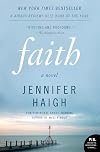
I had not wanted to read this book, thinking it could not add to the narrative already out there about the scandal in the Church involving pedophile priests. Was I ever wrong! I was deeply affected by this novel. This is a magnificent exposé of that moment in time, of the condemned and the wrongly condemned, of the dogma and the crises affecting the churches, everywhere, because of the vows a priest must make. It is a book that shines a spotlight on the fact that although they are the show more conduit to G-d, they are also humans, humans subject to all the frailties and possible commissions of sin they are heir to, humans that G-d, in his infinite wisdom will forgive (if you believe), as G-d forgives the sinner.
I couldn’t stop listening to the audio; I was so taken by Father Art and the way in which he handled the abuse he faced, the anger exhibited toward him, the spewed vitriol. He contended with his sudden discharge from the only life he had known since boyhood, with such a quiet grace, with such a forgiving outlook and compassionate demeanor, always faithful to his beliefs. His behavior contrasted sharply with the harsh judgment passed upon him by the people who jumped to conclusions, friends and worshipers who condemned him and the entire Catholic Church, for the sins of a few, without even investigating the facts.
Were the accused priests guilty? Certainly many were, but the innocent were judged to be guilty right along with them, because suddenly, there was zero tolerance once the crime was publicized and knowledge of it became widespread; the issue went from being ignored, hidden in a closet for years, to appearing on the front page of all major and minor newspapers, and it became the main topic of discussion for all the talking heads on television and radio, as well.
As I read the book, I kept thinking, let he who is without sin throw the first stone! It was an appalling crime and it horrified everyone as it should have, but it should not have taken down the unblemished priest simply because an accusation was made. A mistake in judgment should not have, therefore, been compounded by a rush to judgment. Of course, ultimately, it was the cover-up by the church, adding to the crimes already committed, that led to the over-reactions. The world watched the confessions of troubled adults who were shaped by their haunted childhoods, haunted because they were corrupted by men of G-d. Was their mistreatment the precursor of their own abusive behavior toward others? How pervasive was this pedophilia issue? I was stunned by the betrayals of family members, their lack of trust because of the shame they faced, stunned by the judgments that were made condemning those accused as guilty when those that judged them were sometimes just as guilty of committing great sins. They seemed heartless, and blind to the truth, in their single-minded attempt to wipe out the scourge of the errant priest. Would the Church ever regain its power, its reputation? Would a priest ever again be respected by the parishioners in the same unquestioning manner?
The author has crafted a tale which neither forgives nor ignores the ignominy of the shamed priest, but she also paints a beautiful image of the humanity and benevolence of other priests, those priests who truly connected with their G-d and their calling. She also explored the challenges their vows forced them to face, as well as some of the reasons that a priest might choose that wayward path.
After reading this, the reader will wonder, were some priests wrongly accused in the mania and hysteria that erupted when the world learned of the conspiracy to conceal the wrongdoing of some men of the cloth? How widespread and pervasive was the crime? This is a story about the failure of the Church and some of its priests, certainly only a minority; it is a heartbreaking story of abuse, a tragic tale of dysfunction, injustice, lies and greed, but it is also a story of hope. There is a beauty and sincerity within the dedicated men of the cloth that shines through. Haigh brings a human touch to the scandal of the Catholic Church, a scandal that rocked the nation and forced formerly devout people to question their religion and their places of worship, their relatives and their friends. Liars and scammers, those who were seeking undeserved financial reward were bound to mix themselves into the fury for their own personal gain, regardless of the innocents they hurt in the process. The moral is this: all priests should not have to dwell under the same umbrella as those that violated the very code of decency demanded by their vows! show less
I couldn’t stop listening to the audio; I was so taken by Father Art and the way in which he handled the abuse he faced, the anger exhibited toward him, the spewed vitriol. He contended with his sudden discharge from the only life he had known since boyhood, with such a quiet grace, with such a forgiving outlook and compassionate demeanor, always faithful to his beliefs. His behavior contrasted sharply with the harsh judgment passed upon him by the people who jumped to conclusions, friends and worshipers who condemned him and the entire Catholic Church, for the sins of a few, without even investigating the facts.
Were the accused priests guilty? Certainly many were, but the innocent were judged to be guilty right along with them, because suddenly, there was zero tolerance once the crime was publicized and knowledge of it became widespread; the issue went from being ignored, hidden in a closet for years, to appearing on the front page of all major and minor newspapers, and it became the main topic of discussion for all the talking heads on television and radio, as well.
As I read the book, I kept thinking, let he who is without sin throw the first stone! It was an appalling crime and it horrified everyone as it should have, but it should not have taken down the unblemished priest simply because an accusation was made. A mistake in judgment should not have, therefore, been compounded by a rush to judgment. Of course, ultimately, it was the cover-up by the church, adding to the crimes already committed, that led to the over-reactions. The world watched the confessions of troubled adults who were shaped by their haunted childhoods, haunted because they were corrupted by men of G-d. Was their mistreatment the precursor of their own abusive behavior toward others? How pervasive was this pedophilia issue? I was stunned by the betrayals of family members, their lack of trust because of the shame they faced, stunned by the judgments that were made condemning those accused as guilty when those that judged them were sometimes just as guilty of committing great sins. They seemed heartless, and blind to the truth, in their single-minded attempt to wipe out the scourge of the errant priest. Would the Church ever regain its power, its reputation? Would a priest ever again be respected by the parishioners in the same unquestioning manner?
The author has crafted a tale which neither forgives nor ignores the ignominy of the shamed priest, but she also paints a beautiful image of the humanity and benevolence of other priests, those priests who truly connected with their G-d and their calling. She also explored the challenges their vows forced them to face, as well as some of the reasons that a priest might choose that wayward path.
After reading this, the reader will wonder, were some priests wrongly accused in the mania and hysteria that erupted when the world learned of the conspiracy to conceal the wrongdoing of some men of the cloth? How widespread and pervasive was the crime? This is a story about the failure of the Church and some of its priests, certainly only a minority; it is a heartbreaking story of abuse, a tragic tale of dysfunction, injustice, lies and greed, but it is also a story of hope. There is a beauty and sincerity within the dedicated men of the cloth that shines through. Haigh brings a human touch to the scandal of the Catholic Church, a scandal that rocked the nation and forced formerly devout people to question their religion and their places of worship, their relatives and their friends. Liars and scammers, those who were seeking undeserved financial reward were bound to mix themselves into the fury for their own personal gain, regardless of the innocents they hurt in the process. The moral is this: all priests should not have to dwell under the same umbrella as those that violated the very code of decency demanded by their vows! show less
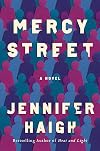
Highly recommended: Suspenseful, read-aloud writing, incredible characterizations, and as prescient as possible given its theme of a woman who works as a counselor in an abortion clinic. As Ron Charles wrote in the Washington Post, "[b:Mercy Street|58006995|Mercy Street|Jennifer Haigh|https://i.gr-assets.com/images/S/compressed.photo.goodreads.com/books/1626718788l/58006995._SY75_.jpg|90897808] carefully sketches out the geography of poverty, that invisible realm that lies just beyond the show more horizon of middle-class life. Without condescension or sentimentality, [a:Jennifer Haigh|41209|Jennifer Haigh|https://images.gr-assets.com/authors/1623875593p2/41209.jpg] describes people who aspire to live in a double-wide trailer, who must decide between paying the water bill and the cable bill, who feel the humiliation of using food stamps. Indeed, that life was Claudia’s adolescence, a background that makes her particularly attuned to the logic of the clinic’s poorer clients."
He goes on "Claudia’s mother, who had no particular interest in parenting, took in foster kids expressly to get extra cash from the state. Haigh never pushes on this theme, but she doesn’t need to: It’s clear that Claudia’s early exposure to the multitude of children unwanted by anyone and carelessly warehoused by the government has made her determined to present women with real reproductive choices."
The descriptions of snowy NE weather and roads, and conversations among the wildly varied cast of characters were on the mark, as, I imagine, were the strange mental meanderings of the gun freak haunting the Internet. Reminded me a bit of [b:The Beans of Egypt, Maine|263862|The Beans of Egypt, Maine|Carolyn Chute|https://i.gr-assets.com/images/S/compressed.photo.goodreads.com/books/1389141854l/263862._SY75_.jpg|464869] Fine work. show less
He goes on "Claudia’s mother, who had no particular interest in parenting, took in foster kids expressly to get extra cash from the state. Haigh never pushes on this theme, but she doesn’t need to: It’s clear that Claudia’s early exposure to the multitude of children unwanted by anyone and carelessly warehoused by the government has made her determined to present women with real reproductive choices."
The descriptions of snowy NE weather and roads, and conversations among the wildly varied cast of characters were on the mark, as, I imagine, were the strange mental meanderings of the gun freak haunting the Internet. Reminded me a bit of [b:The Beans of Egypt, Maine|263862|The Beans of Egypt, Maine|Carolyn Chute|https://i.gr-assets.com/images/S/compressed.photo.goodreads.com/books/1389141854l/263862._SY75_.jpg|464869] Fine work. show less
In the winter of 2015, Boston was hit with "monstah northeastah" after monster northeaster: a series of weekly blizzards that dumped so much snow there was no place to put it all. This weather, and the siege mentality it produced, is the setting for Mercy Street, a story with several characters whose lives glance off each other's in various ways.
*Spoilers*
Claudia Birch is a social worker at the Mercy Street women's health clinic; she answers the help line and counsels abortion patients. She show more had a difficult childhood in rural Maine, about which she said little to her husband Phil and his family (the marriage didn't last, but their friendship did). Claudia has trouble sleeping and visits Timmy, her weed dealer, for help with insomnia.
Timmy Flynn has an ex and a fourteen-year-old son in Florida; he worries that if/when weed becomes legal, he'll be out of a job, and thinks about getting out of the drug business and opening a laundromat - but first, he'll need more cash than he has, so he decides to sell the car he's been restoring.
Anthony ("Winky") knew the Flynns growing up, but his life was knocked off course by an accident when he was working on the Big Dig. He receives disability payments and spends his time attending the Catholic church, St. Dymphna's, and taking photos of the patients outside Mercy Street for his "second best friend" online, Victor.
Victor is a former trucker, prepper, white supremacist, obsessed with "white females'" lack of dedication to fulfilling their purpose of having babies. He runs a website that includes a "Hall of Shame," of women outside abortion clinics all over the country. After Anthony takes a photo of Claudia, Victor becomes obsessed with her, and drives to Massachusetts to see her in person, but crashes in the snow before reaching Boston.
Claudia avoids whatever confrontation Victor would have caused, but realizes that after having sex with Timmy one time, she is pregnant; though she miscarried (and was relieved) when she was married, she decides to keep this pregnancy.
Quotes
Everyone says that kids are adaptable. If that's true, it's because they have no choice. (Claudia, 51)
He was like water spilled everywhere. He no longer had a container for his life. (Timmy, 67)
Phil's family was half the reason she'd married him, and yet she'd come to resent their generosity and concern and relentless advice, which she badly needed but couldn't bear to receive. She had misrepresented herself to them and they had believed her, which made them seem stupid. The Claudia they loved was a fiction, the person she pretended to be. (96)
It was as though he'd missed the bus that was supposed to take him to the rest of his life.
The rest of his life was a country he had yet to visit. Nothing, nothing had turned out as planned. (Anthony/Winky, 110)
Preventing her abortion was all [the protesters] cared about. The bleak struggle of her life - the stark daily realities that made motherhood impossible - didn't trouble them at all. (Claudia, 130)
You couldn't see it clearly unless you knew what it used to be. (Victor, 143)
There was nowhere left to put the snow....Life had ground to a halt and would stay ground. Until further notice, everything was suspended: deliveries, trash pickup, mail service, bus service. Animation, judgment, disbelief. (217)
If you happen to be a woman, all problems are female problems.
Failure to perform scheduled maintenance may void the warranty. (285)
There is a fine line between concern and intrusiveness. (327) show less
*Spoilers*
Claudia Birch is a social worker at the Mercy Street women's health clinic; she answers the help line and counsels abortion patients. She show more had a difficult childhood in rural Maine, about which she said little to her husband Phil and his family (the marriage didn't last, but their friendship did). Claudia has trouble sleeping and visits Timmy, her weed dealer, for help with insomnia.
Timmy Flynn has an ex and a fourteen-year-old son in Florida; he worries that if/when weed becomes legal, he'll be out of a job, and thinks about getting out of the drug business and opening a laundromat - but first, he'll need more cash than he has, so he decides to sell the car he's been restoring.
Anthony ("Winky") knew the Flynns growing up, but his life was knocked off course by an accident when he was working on the Big Dig. He receives disability payments and spends his time attending the Catholic church, St. Dymphna's, and taking photos of the patients outside Mercy Street for his "second best friend" online, Victor.
Victor is a former trucker, prepper, white supremacist, obsessed with "white females'" lack of dedication to fulfilling their purpose of having babies. He runs a website that includes a "Hall of Shame," of women outside abortion clinics all over the country. After Anthony takes a photo of Claudia, Victor becomes obsessed with her, and drives to Massachusetts to see her in person, but crashes in the snow before reaching Boston.
Claudia avoids whatever confrontation Victor would have caused, but realizes that after having sex with Timmy one time, she is pregnant; though she miscarried (and was relieved) when she was married, she decides to keep this pregnancy.
Quotes
Everyone says that kids are adaptable. If that's true, it's because they have no choice. (Claudia, 51)
He was like water spilled everywhere. He no longer had a container for his life. (Timmy, 67)
Phil's family was half the reason she'd married him, and yet she'd come to resent their generosity and concern and relentless advice, which she badly needed but couldn't bear to receive. She had misrepresented herself to them and they had believed her, which made them seem stupid. The Claudia they loved was a fiction, the person she pretended to be. (96)
It was as though he'd missed the bus that was supposed to take him to the rest of his life.
The rest of his life was a country he had yet to visit. Nothing, nothing had turned out as planned. (Anthony/Winky, 110)
Preventing her abortion was all [the protesters] cared about. The bleak struggle of her life - the stark daily realities that made motherhood impossible - didn't trouble them at all. (Claudia, 130)
You couldn't see it clearly unless you knew what it used to be. (Victor, 143)
There was nowhere left to put the snow....Life had ground to a halt and would stay ground. Until further notice, everything was suspended: deliveries, trash pickup, mail service, bus service. Animation, judgment, disbelief. (217)
If you happen to be a woman, all problems are female problems.
Failure to perform scheduled maintenance may void the warranty. (285)
There is a fine line between concern and intrusiveness. (327) show less
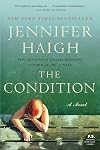
No one creates more believable, true-to-life characters in their fiction than Jennifer Haigh. Period. And I am a stone cold fan of character driven novels. Which is why I have worked my way steadily through Haigh's complete oeuvre, although not in the order they were published. THE CONDITION (2008) is the sixth Haigh novel I've read, and its characters - and their story - are simply outstanding. Frank and Paulette McKotch and their three children - Billy, Gwen and Scott - all suffer from show more their own particular "conditions," which, in the end, amount to nothing more than the human condition. Frank is a successful scientist and academic workaholic at MIT who hails from the coal fields of Pennsylvania, and has worked his way up from the bottom. (His character represents a tenuous tie to Haigh's other works about the town and people of Bakerton, that began with BAKER TOWERS.) He has "married up." Paulette is from a blueblood Boston family whose fortunes have been frittered away one generation at a time. The family implodes in 1976 when they learn of thirteen year-old Gwen's "condition" - Turner syndrome, which inhibits normal growth, puberty and maturation. Twenty years later we see how the family has splintered and changed, and follow their separate fortunes. I hesitate to say any more, just because I don't want to spoil it for any other readers who love great CHARACTERS. I can't stop thinking about the McKotch family. They are all just THAT real. I LOVED this book! One more Haigh novel left to read. Must find a copy of MRS. KIMBLE. (And I hope there's another one coming soon.) My very highest recommendation.
- Tim Bazzett, author of the memoir, BOOKLOVER show less
- Tim Bazzett, author of the memoir, BOOKLOVER show less
Lists
Feminism (1)
Five star books (1)
Awards


You May Also Like


Associated Authors
Statistics
- Works
- 19
- Also by
- 3
- Members
- 5,241
- Popularity
- #4,755
- Rating
- 3.7
- Reviews
- 307
- ISBNs
- 144
- Languages
- 8
- Favorited
- 15


