
Anita Shreve (1946–2018)
Author of The Pilot's Wife
About the Author
Anita Shreve grew up in Dedham, Massachusetts. After receiving a bachelor's degree in English from Tufts University, she taught high school English for five years before becoming a full-time author. She worked for an English-language magazine in Nairobi and wrote for everything from Cosmopolitan show more magazine to The New York Times. Her nonfiction books included Remaking Motherhood and Women Together, Women Alone. Her novels included Eden Close, Strange Fits of Passion, Where or When, Fortune's Rocks, Rescue, Stella Bain, and The Stars are Fire. Several of her books were made into movies including The Pilot's Wife, Resistance, and The Weight of Water. She died from cancer on March 29, 2018 at the age of 71. (Bowker Author Biography) show less
Series
Works by Anita Shreve
The Fortune's Rocks Quartet: Fortune's Rocks, Sea Glass, The Pilot's Wife, Body Surfing (2010) 9 copies
Unwind 1 copy
A Wedding in Dec. 1 copy
Associated Works
Mentors, Muses & Monsters: 30 Writers on the People Who Changed Their Lives (2009) — Contributor — 71 copies, 2 reviews
Tagged
Common Knowledge
- Canonical name
- Shreve, Anita
- Legal name
- Shreve, Anita Hale
- Birthdate
- 1946-10-07
- Date of death
- 2018-03-29
- Gender
- female
- Education
- Tufts University (BA|1968)
Dedham High School - Occupations
- teacher (English, high school)
journalist
writer - Organizations
- Chi Omega
- Agent
- William Morris Agency
- Short biography
- Anita Hale Shreve was an American writer, chiefly known for her novels. One of her first published stories, Past the Island, Drifting (published in 1975), was awarded an O. Henry Prize in 1976.
- Cause of death
- breast cancer
- Nationality
- USA
- Birthplace
- Boston, Massachusetts, USA
- Places of residence
- Nairobi, Kenya
Longmeadow, Massachusetts, USA
Dedham, Massachusetts, USA - Place of death
- Newfields, New Hampshire, USA
- Associated Place (for map)
- Massachusetts, USA
Members
Discussions
Wife who leads a double life- Owns her own cottage without husband knowing in Name that Book (January 2016)
Reviews

I love Shreve's work. I love how at the end of every book she always leaves the reader slightly unsettled, as if there is more to the story. She refuses to wrap up the ending in a solid "Hollywood-happy" resolution.
Margaret and Patrick are newlyweds; only married for five months and yet I personally found their relationship flat and dispassionate. He, a doctor, travels around Kenya in exchange for research data on equatorial diseases. She, an out of work photographer, hopes to freelance show more around Nairobi and capture landscapes unfamiliar to her American eye. Together Patrick and Margaret join two other couples in an effort to climb Mount Kenya. Almost immediately, there is an imbalance to their chemistry. Margaret's feminist sensibilities were threatened when she couldn't earn her keep with a job and now she can't keep up with the mountaineering climb. The others continuously leave her behind. Her companions have a much easier go at it. She is further insulted when the men in the group display subtle attitudes of sexism towards her. Arthur repeatedly claims he will take care of her while Wilfred casually refers to the women in the group as "girls." Her climbing partners are snobbish; questioning the Masai tribe that has been around for centuries. All the while Margaret doesn't fit in and stays quiet. She has something to prove but does little to promote her capabilities. Oddly, it is only after tragedy strikes is she then able to find her voice. This tragedy will carry consequences long into the future; long after Margaret finds a photography job with a controversial newspaper; long after Patrick and Margaret have new troubles in their marriage.
I couldn't get a read on Margaret. It was weird, but I found her to be a bit unemotional. She was strangely calm when the couple's only car is stolen or when she is attacked by fire ants. [The fire ant scene made me itch for days.] show less
Margaret and Patrick are newlyweds; only married for five months and yet I personally found their relationship flat and dispassionate. He, a doctor, travels around Kenya in exchange for research data on equatorial diseases. She, an out of work photographer, hopes to freelance show more around Nairobi and capture landscapes unfamiliar to her American eye. Together Patrick and Margaret join two other couples in an effort to climb Mount Kenya. Almost immediately, there is an imbalance to their chemistry. Margaret's feminist sensibilities were threatened when she couldn't earn her keep with a job and now she can't keep up with the mountaineering climb. The others continuously leave her behind. Her companions have a much easier go at it. She is further insulted when the men in the group display subtle attitudes of sexism towards her. Arthur repeatedly claims he will take care of her while Wilfred casually refers to the women in the group as "girls." Her climbing partners are snobbish; questioning the Masai tribe that has been around for centuries. All the while Margaret doesn't fit in and stays quiet. She has something to prove but does little to promote her capabilities. Oddly, it is only after tragedy strikes is she then able to find her voice. This tragedy will carry consequences long into the future; long after Margaret finds a photography job with a controversial newspaper; long after Patrick and Margaret have new troubles in their marriage.
I couldn't get a read on Margaret. It was weird, but I found her to be a bit unemotional. She was strangely calm when the couple's only car is stolen or when she is attacked by fire ants. [The fire ant scene made me itch for days.] show less
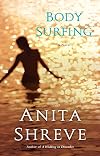
Body Surfing by Anita Shreve drops the reader into calm waters with violent waves waiting just below the surface to create turmoil. As Sydney recovers from personal loss she becomes entangled in the tidal pool that is the Edwards family. Sydney has been hired to tutor the youngest Edward child, Julie, to prepare her for a future no one has asked her if she wants. When the two Edward sons,Jeff and Ben, arrive, Sydney ends up in the middle of a lifelong competition that results in much show more confusion and chaos. Smack in the middle of family dysfunction built around family secrets and heartache, Sydney is pulled between the family members as she navigates her place in the family. Shreve writes characters that feel as if they could step off the page at any moment. In a story that feels like it should end before it does, the reader is glad it doesn't when the end finally comes. Body Surfing stays with the reader long after reading the final page with its hauntingly realistic look at pain, loss, and family life. show less
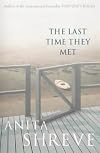
"Such extraordinary emotions in the space of paragraphs." - Thoughts on The Last Time They Met by Anita Shreve
I hate you, Anita Shreve.
I hate you for writing The Last Time They Met. For making me fall in love and breaking my heart, all at once, on the same (last) page. I hate how you pretty much destroyed my hope in finding love as perfect and enduring and dangerous as that of Linda and Thomas. I will now probably end up an old maid with delusions of love so grand, there is no possibility show more whatsoever that I will find it. All thanks to you.
I hate you for creating a character like Thomas: a man who has his faults, but who loves with such a passion that all faults are forgotten. You just made me go against my personal standard of not falling for men who smoke, all for someone who unfortunately exists only on paper and in your words.
Thomas, oh Thomas. Who aged so beautifully backwards, whose poetry I was never able to read (yes, women who are reading this, this lovely character writes poetry!) but for which I am willing to bet a limb on is beautiful prose. Thomas, whose love never waned from boyhood to manhood to old age, despite all the sad in-betweens and heart-wrenching subplots to the story. I caught myself asking - nay, praying - if the good Lord will permit him to come alive, so that I may look for him, find him and fall in love with him, in the hopes that he will love me in return. But then I realized this cannot be - nay, this shouldn't be - because I am no Linda: I am not the woman he was meant to be with.
And Linda, whom I envied with such conviction because she was capable of love so enduring that it survived personal tragedies, subsequent relationships, distance and time. Linda, compared over and over to Magdalene - a fallen woman. And yet despite that she had the luck of the draw; she, whose soulmate was a man equally, if not more, madly in love with her as she is with him.
I hate you for writing The Last Time They Met the way it's written: backwards, like reading a book from the last page forward. And yet, it never read like a flashback or a memory or a reminiscent. Oddly, Thomas and Linda seemed to have grown more as they aged younger, from fifty-two, to twenty-six, to seventeen, yet at the same time they also seemed more bare as the story progressed; like watching an artist paint on tape and in rewind: a complete portrait, fully painted, worked in reverse until all that remained were the sketches, skeletal. But aren't skeletons the basic means of support?
I hate you for giving them writing professions, for making Thomas a poet, and for letting him tell Linda that she's cut out for novels than poems (Did you become a poet because of me?). I hate you for including an exchange of letters, for allowing a peek more intimate than any narration could ever hope to achieve: words written by the characters themselves, sometimes funny, sometimes heartbreaking, overall inadequate. As Linda first wrote to Thomas: "I think that words corrupt and oxidize love. That it is better not to write of it."
And to which Thomas promptly replied: "Write me. For God's sake, keep writing."
I am running out of words as to how your book has ruined me, Anita Shreve. And so I will resort to quoting from their brief exchange of love letters - a more adequate show of the agony you have put me through:
Ugh, Anita Shreve. Your book has turned me into a blabbering lovestruck buffoon.
PS. The ending was the death of me. I hate you, I hate you, I hate you.
Orinigally posted here. show less
I hate you, Anita Shreve.
I hate you for writing The Last Time They Met. For making me fall in love and breaking my heart, all at once, on the same (last) page. I hate how you pretty much destroyed my hope in finding love as perfect and enduring and dangerous as that of Linda and Thomas. I will now probably end up an old maid with delusions of love so grand, there is no possibility show more whatsoever that I will find it. All thanks to you.
I hate you for creating a character like Thomas: a man who has his faults, but who loves with such a passion that all faults are forgotten. You just made me go against my personal standard of not falling for men who smoke, all for someone who unfortunately exists only on paper and in your words.
Thomas, oh Thomas. Who aged so beautifully backwards, whose poetry I was never able to read (yes, women who are reading this, this lovely character writes poetry!) but for which I am willing to bet a limb on is beautiful prose. Thomas, whose love never waned from boyhood to manhood to old age, despite all the sad in-betweens and heart-wrenching subplots to the story. I caught myself asking - nay, praying - if the good Lord will permit him to come alive, so that I may look for him, find him and fall in love with him, in the hopes that he will love me in return. But then I realized this cannot be - nay, this shouldn't be - because I am no Linda: I am not the woman he was meant to be with.
And Linda, whom I envied with such conviction because she was capable of love so enduring that it survived personal tragedies, subsequent relationships, distance and time. Linda, compared over and over to Magdalene - a fallen woman. And yet despite that she had the luck of the draw; she, whose soulmate was a man equally, if not more, madly in love with her as she is with him.
I hate you for writing The Last Time They Met the way it's written: backwards, like reading a book from the last page forward. And yet, it never read like a flashback or a memory or a reminiscent. Oddly, Thomas and Linda seemed to have grown more as they aged younger, from fifty-two, to twenty-six, to seventeen, yet at the same time they also seemed more bare as the story progressed; like watching an artist paint on tape and in rewind: a complete portrait, fully painted, worked in reverse until all that remained were the sketches, skeletal. But aren't skeletons the basic means of support?
I hate you for giving them writing professions, for making Thomas a poet, and for letting him tell Linda that she's cut out for novels than poems (Did you become a poet because of me?). I hate you for including an exchange of letters, for allowing a peek more intimate than any narration could ever hope to achieve: words written by the characters themselves, sometimes funny, sometimes heartbreaking, overall inadequate. As Linda first wrote to Thomas: "I think that words corrupt and oxidize love. That it is better not to write of it."
And to which Thomas promptly replied: "Write me. For God's sake, keep writing."
I am running out of words as to how your book has ruined me, Anita Shreve. And so I will resort to quoting from their brief exchange of love letters - a more adequate show of the agony you have put me through:
"So much has been left unsaid."
Ugh, Anita Shreve. Your book has turned me into a blabbering lovestruck buffoon.
PS. The ending was the death of me. I hate you, I hate you, I hate you.
Orinigally posted here. show less
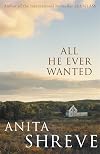
This is a highly biased review. I took an instant and violent dislike to the narrator. I'm pretty sure the author wanted me to hate the narrator...
The narrator is telling the story of how he fell in love with a woman, pursued her, married her, and became disillusioned on their wedding night. He's a pedantic, arrogant, prejudiced, boring jerk. He makes excuses for his behavior throughout the book, but I believe that the author wants the reader to see how weak his excuses are. He is willing to show more use any means to get what he wants, even involving his children in his manipulations of his wife and other relationships.
The most interesting question that is put forward in the story is whether the wife has the right to a private, inviolate space in her home. Much as the husband, who has a study or a sacred room established in the home where he goes to read the newspaper and smoke. Obviously, the narrator (the husband) does not believe that the wife has a right to any time or space of her own, and that along with a few other character flaws ultimately destroys their already weak marriage.
I'm just angry about this book, and I need to go read Little Women or something nice. show less
The narrator is telling the story of how he fell in love with a woman, pursued her, married her, and became disillusioned on their wedding night. He's a pedantic, arrogant, prejudiced, boring jerk. He makes excuses for his behavior throughout the book, but I believe that the author wants the reader to see how weak his excuses are. He is willing to show more use any means to get what he wants, even involving his children in his manipulations of his wife and other relationships.
The most interesting question that is put forward in the story is whether the wife has the right to a private, inviolate space in her home. Much as the husband, who has a study or a sacred room established in the home where he goes to read the newspaper and smoke. Obviously, the narrator (the husband) does not believe that the wife has a right to any time or space of her own, and that along with a few other character flaws ultimately destroys their already weak marriage.
I'm just angry about this book, and I need to go read Little Women or something nice. show less
Lists
Awards


You May Also Like


Associated Authors
Statistics
- Works
- 30
- Also by
- 5
- Members
- 43,761
- Popularity
- #384
- Rating
- 3.5
- Reviews
- 1,023
- ISBNs
- 827
- Languages
- 17
- Favorited
- 120


