
Jane Hamilton
Author of A Map of the World
About the Author
Jane Hamilton was born in 1957. She is the author of The Book of Ruth, winner of the PEN/Hemingway Award for First Fiction. A Map of the World, a New York Times Notable Book of the Year was named one of the top ten books of the year by Entertainment Weekly, Publishers Weekly, The Miami Herald, and show more People. Both The Book of Ruth and A Map of the World have been selections of Oprah's Book Club. A Map of the World was recently made into a major motion picture, starring Sigourney Weaver and Julianne Moore. Her work, The Short History of a Prince, was a Publishers Weekly Best Book of 1998. She lives in Rochester, Wisconsin. (Bowker Author Biography) Jane Hamilton was born on July 13, 1957. She received a bachelor's degree in English from Carleton College in 1979. In 1983, two of her short stories, My Own Earth and Aunt Marj's Happy Ending, were published in Harper's Magazine. Aunt Marj's Happy Ending later appeared in The Best American Short Stories 1984. Her first novel, The Book of Ruth, won the PEN/Ernest Hemingway Foundation Award for best first novel, the Great Lakes College Association New Writers Award, and the Wisconsin Library Association Banta Book Award and was an Oprah's Book Club selection in 1996. Her second novel, A Map of the World, was also an Oprah's Book Club selection. Her other works include The Short History of a Prince, Disobedience, When Madeline Was Young, and Laura Rider's Masterpiece. In 2000, she was named a Notable Wisconsin Author by the Wisconsin Library Association. (Bowker Author Biography) show less
Image credit: Kevin Horan, 2006.
Works by Jane Hamilton
A Map of the World | House of Sand and Fog | Reinventing Mona — Contributor — 2 copies
Associated Works
From Sea to Stormy Sea: 17 Stories Inspired by Great American Paintings (2019) — Contributor — 33 copies, 3 reviews
Tagged
Common Knowledge
- Birthdate
- 1957-07-13
- Gender
- female
- Education
- Carleton College (BA|1979)
- Occupations
- novelist
- Awards and honors
- Hemingway Foundation/PEN Award (1989)
- Relationships
- Willard, Robert (husband)
- Nationality
- USA
- Birthplace
- Oak Park, Illinois, USA
- Places of residence
- Oak Park, Illinois, USA
Rochester, Wisconsin, USA - Associated Place (for map)
- USA
Members
Discussions
The Short History Of A Prince, Jane Hamilton in World Reading Circle (August 2013)
Young boy drowns in neighbors pond in Name that Book (July 2011)
Reviews
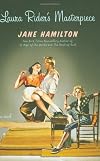
I feel guilty about being too critical, but the word "masterpiece" has no place being used anywhere in reference to this book. Perhaps it is intended to come off as trashy, as some sort of commentary on the romance novel Laura hopes to write, but that intention is swallowed up beyond any hope of ironic redemption.
Foremost among the book's sins is that Hamilton seems to have no idea how people talk. Consider the first conversation in the book, between Laura and Jenna, which is little more show more than a series of lengthy non sequiturs, with each woman rambling along some weird tangent. All the characters in the book, to be sure, speak as if reciting some carefully-constructed, previously-written dissertation.
Even aside from the awkwardness of their dialogue, Hamilton's characters are insufferable boors -- pretentious, yet somehow still ignorant. They seem to exist in a state where their every utterance could be a precursor to some grand personal revelation. They orate from a limited sphere of cultural references, as if they'd selected ten items from some list of topics about which learned people think and discuss, and so must constantly return and rereference Faulkner or the Clintons.
To her credit, Hamilton does manage to glimpse some of the goofiness to which otherwise reasonable people might succumb in the throes of new love or obsession, but buried beneath the weight of her nauseatingly florid prose, the only hope that a reader can have for Laura Rider's Masterpiece is that it will end. show less
Foremost among the book's sins is that Hamilton seems to have no idea how people talk. Consider the first conversation in the book, between Laura and Jenna, which is little more show more than a series of lengthy non sequiturs, with each woman rambling along some weird tangent. All the characters in the book, to be sure, speak as if reciting some carefully-constructed, previously-written dissertation.
Even aside from the awkwardness of their dialogue, Hamilton's characters are insufferable boors -- pretentious, yet somehow still ignorant. They seem to exist in a state where their every utterance could be a precursor to some grand personal revelation. They orate from a limited sphere of cultural references, as if they'd selected ten items from some list of topics about which learned people think and discuss, and so must constantly return and rereference Faulkner or the Clintons.
To her credit, Hamilton does manage to glimpse some of the goofiness to which otherwise reasonable people might succumb in the throes of new love or obsession, but buried beneath the weight of her nauseatingly florid prose, the only hope that a reader can have for Laura Rider's Masterpiece is that it will end. show less
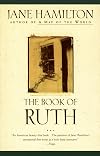
Read this book for the characters, not the plot. Hamilton's narrator is simple and comical and endearing. For example, her description of an elderly neighbor from her childhood: "[Mrs. Foote] had several black moles on her face and breasts so big if they had hands at the end of them they might be useful." (p. 80)
Read this book for heartbreak, not for happiness. If you're looking for a light read, this isn't it. But it's damn fine fiction.
Read this book for heartbreak, not for happiness. If you're looking for a light read, this isn't it. But it's damn fine fiction.
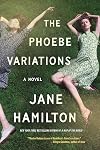
(12) I have not read Jane Hamilton in years. She is a master at creating memorable authentic adolescent characters that tear at your heart. Phoebe Hudson has a coming of age summer before leaving for college. While this seems like a well worn trope - Hamilton uses this frame to do a much deeper dive into how we become who we are - belonging, identity, motherhood.
The relationship between Phoebe and Luna is quite well done - most of us can remember the intensity of the teenage best friend show more relationship - the competition, the love, the jealousy. I didn't quite feel the relationship with the O'Connor household and some of the goings-on there seemed a bit overwritten. But I guess everything is a bit random and melodramatic when you are a teenager. I did wish that there was a bit more focus on the Dahlgrens and Phoebe's relationship with Greta. I did not feel like I really "knew" Phoebe, accounting for the 1 star off.
Otherwise the book was structurally beautiful - like a piano concerto or a piece by Bach. The theme of music's ability to transform and transport was artfully woven throughout, yet not heavy-handed. The prose and dialogue were seamless, authentic, though not conscientiously so. Hamilton is a technically gifted writer and is so much more than a 'Women's book-club" pick author. There is gravitas here - but her characterizations were not as strong as what I remember from previous books. In my memory, Walter McCLoud from 'A Short History of a Prince' was masterfully rendered in his pivotal coming of age story.
I am glad that I made a return to Jane Hamilton, and I may look for her more recent titles that I missed. show less
The relationship between Phoebe and Luna is quite well done - most of us can remember the intensity of the teenage best friend show more relationship - the competition, the love, the jealousy. I didn't quite feel the relationship with the O'Connor household and some of the goings-on there seemed a bit overwritten. But I guess everything is a bit random and melodramatic when you are a teenager. I did wish that there was a bit more focus on the Dahlgrens and Phoebe's relationship with Greta. I did not feel like I really "knew" Phoebe, accounting for the 1 star off.
Otherwise the book was structurally beautiful - like a piano concerto or a piece by Bach. The theme of music's ability to transform and transport was artfully woven throughout, yet not heavy-handed. The prose and dialogue were seamless, authentic, though not conscientiously so. Hamilton is a technically gifted writer and is so much more than a 'Women's book-club" pick author. There is gravitas here - but her characterizations were not as strong as what I remember from previous books. In my memory, Walter McCLoud from 'A Short History of a Prince' was masterfully rendered in his pivotal coming of age story.
I am glad that I made a return to Jane Hamilton, and I may look for her more recent titles that I missed. show less
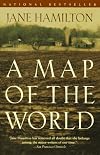
Alice, the central character in Jane Hamilton's great 1994 novel “A Map of the World,” takes a one-two punch that could knock any of us flat, if not out cold. First this school nurse and wife of a Wisconsin dairy farmer is still looking for her swimsuit when the two-year-old daughter of Teresa, her best friend, drowns in the farm pond. Numb with grief and guilt, Alice is then arrested, charged with sexual molestation of a boy in her school. She's jailed for months, while virtually the show more entire community thinks the very worst of her.
Most of the story is told from Alice's point of view, but in the middle third of the novel Hamilton gives us the perspective of Howard, her silent, handsome husband, for whom a dairy farm is a dream come true. Yet a lawyer, not to mention bail, costs money.
A third main character is Teresa, a devout Catholic woman who despite her daughter's death, perhaps because of Alice's carelessness, cannot turn against her friend. At least not until she spends a night in Howard's arms, albeit the two of them consumed more with grief than passion. Still she and Howard now have their own reason for feeling guilt.
Alice is clearly not guilty of the criminal charges against her, yet her trial proves dramatic anyway, mainly because we see it through her eyes and can read her compassionate thoughts about not just those who testify against her but also about those women with whom she lived with so long in jail.
As for the book's title, it refers to a map of an ideal country in an ideal world that Alice had drawn when she was a girl. She finds the map, in fact, while she is looking for that elusive swimsuit, and the image pops up here and there throughout the novel. Alice's own story shows us that such a perfect world is impossible, yet by the end we see that the only chance we have is for the people of our own world to accept, forgive and even love one another. The story is really all about grace. show less
Most of the story is told from Alice's point of view, but in the middle third of the novel Hamilton gives us the perspective of Howard, her silent, handsome husband, for whom a dairy farm is a dream come true. Yet a lawyer, not to mention bail, costs money.
A third main character is Teresa, a devout Catholic woman who despite her daughter's death, perhaps because of Alice's carelessness, cannot turn against her friend. At least not until she spends a night in Howard's arms, albeit the two of them consumed more with grief than passion. Still she and Howard now have their own reason for feeling guilt.
Alice is clearly not guilty of the criminal charges against her, yet her trial proves dramatic anyway, mainly because we see it through her eyes and can read her compassionate thoughts about not just those who testify against her but also about those women with whom she lived with so long in jail.
As for the book's title, it refers to a map of an ideal country in an ideal world that Alice had drawn when she was a girl. She finds the map, in fact, while she is looking for that elusive swimsuit, and the image pops up here and there throughout the novel. Alice's own story shows us that such a perfect world is impossible, yet by the end we see that the only chance we have is for the people of our own world to accept, forgive and even love one another. The story is really all about grace. show less
Lists
Awards


You May Also Like


Associated Authors
Statistics
- Works
- 17
- Also by
- 6
- Members
- 12,128
- Popularity
- #1,933
- Rating
- 3.5
- Reviews
- 228
- ISBNs
- 145
- Languages
- 5
- Favorited
- 28
