

Jacquelyn Mitchard
Author of The Deep End of the Ocean
About the Author
Jacquelyn Mitchard was born in Chicago, Illinois on December 10, 1957. She studied creative writing at the University of Illinois at Urbana-Champaign. In 1976, she became a journalist and eventually achieved the position as lifestyle columnist for the Milwaukee Journal Sentinel newspaper. Her show more weekly column, The Rest of Us: Dispatches from the Mother Ship, appeared in 125 newspapers nationwide until she retired it in 2007. She is the author of children's, young adult, and adult books. Her first novel, The Deep End of the Ocean, was the first selection for Oprah's Book Club and was named by USA Today as one of the ten most influential books of the past 25 years. It was also adapted into a movie starring Michelle Pfeiffer. Her other adult novels include The Breakdown Lane; Twelve Times Blessed; Christmas, Present; A Theory of Relativity; The Most Wanted; Cage of Stars; and Still Summer. Her children's books include Starring Prima!: The Mouse of the Ballet Jolie; Rosalie, My Rosalie: The Tale of a Duckling; and Ready, Set , School! Her young adult books include Now You See Her; All We Know of Heaven; and The Midnight Twins series. (Bowker Author Biography) show less
Series
Works by Jacquelyn Mitchard
Associated Works
The Book That Changed My Life: 71 Remarkable Writers Celebrate the Books That Matter Most to Them (2006) — Contributor — 411 copies, 18 reviews
Choice: True Stories of Birth, Contraception, Infertility, Adoption, Single Parenthood, and Abortion (2007) — Contributor — 94 copies, 4 reviews
Altared: Bridezillas, Bewilderment, Big Love, Breakups, and What Women Really Think About Contemporary Weddings (2007) — Contributor — 74 copies, 5 reviews
Tagged
Common Knowledge
- Birthdate
- 1955-12-10
- Gender
- female
- Education
- Rockford College (BA ∙ 1973)
University of Illinois, Urbana-Champaign (creative writing) - Occupations
- journalist
author
editor
professor (creative writing)
high school teacher (English) - Organizations
- Milwaukee Journal Sentinel (syndicated columnist)
Ragdale Foundation
One Writer's Place - Agent
- Jeff Kleinman (Folio)
Jane Gelfman (Gelfman Schneider Literary Agents Inc.) - Relationships
- Costello, Mark (mentor)
- Short biography
- Jacquelyn Mitchard is an American journalist and author. She has written the best-selling novel The Deep End of the Ocean, which was the first selection for Oprah's Book Club, on September 17, 1996. Other books by Mitchard include The Breakdown Lane, Twelve Times Blessed, Christmas, Present, A Theory of Relativity, The Most Wanted, Cage of Stars, No Time to Wave Goodbye, Second Nature - A Love Story, and Still Summer.
- Nationality
- USA
- Birthplace
- Chicago, Illinois, USA
- Places of residence
- Madison, Wisconsin, USA
Brewster, Massachusetts, USA
Chicago, Illinois, USA - Associated Place (for map)
- USA
Members
Reviews
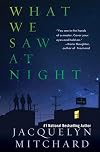
In What We Saw at Night, Jacquelyn Mitchard introduces readers to those suffering from Xeroderma Pigmentosum. Famous for being the disease ailing Nicole Kidman's children in the movie The Others, Allie, Juliet, and Rob live in perpetual darkness while knowingly facing a shortened lifespan. To offset their "handicap", they take up Parkour, a fascinating and actually quite beautiful stunt sport. It is while they are running around performing stunts where they witness what looks like a murder. show more Or is it?
Much like the darkness in which the three friends live, What We Saw at Night is filled with secrets and unanswered questions. Each friend harbors secrets as they try to live their lives without regrets while knowing that they are facing a life with no solutions and little long-term hope. Juliet in particular is one of those mysterious friends who always maintains an element of reserve while citing bestie status. It is these pockets of unknown that drive Allie for answers while forcing her to grow up in ways she never thought possible or necessary.
Throughout it all, however, there is nothing cliched or forced about the story or its characters. In fact, Allie's voice is refreshingly honest and realistic. She has her teenage moments, but there is a level of maturity that befits someone living with an ultimately fatal illness. Even better, her mother is a very real presence in her life, as are all of the parents. Finally, there is a novel about teenagers where the parents are not mysteriously absent or clueless. It is such a welcome feature.
Be warned, however. Just as the action heats up and the need for answers reaches a fever pitch, the novel abruptly ends. It is a testament to Ms. Mitchard's writing skills and the great story that is What We Saw at Night that I am anxious for the sequel because my frustration and irritation at discovering that there was a sequel was great indeed.
Even with my annoyance at the lack of resolution, this is one novel I cannot wait to discuss with others. There was so much to love, starting with the characters to their family to the mystery itself and ending with their disease. What We Saw at Night was simply a great way to usher in the new year. show less
Much like the darkness in which the three friends live, What We Saw at Night is filled with secrets and unanswered questions. Each friend harbors secrets as they try to live their lives without regrets while knowing that they are facing a life with no solutions and little long-term hope. Juliet in particular is one of those mysterious friends who always maintains an element of reserve while citing bestie status. It is these pockets of unknown that drive Allie for answers while forcing her to grow up in ways she never thought possible or necessary.
Throughout it all, however, there is nothing cliched or forced about the story or its characters. In fact, Allie's voice is refreshingly honest and realistic. She has her teenage moments, but there is a level of maturity that befits someone living with an ultimately fatal illness. Even better, her mother is a very real presence in her life, as are all of the parents. Finally, there is a novel about teenagers where the parents are not mysteriously absent or clueless. It is such a welcome feature.
Be warned, however. Just as the action heats up and the need for answers reaches a fever pitch, the novel abruptly ends. It is a testament to Ms. Mitchard's writing skills and the great story that is What We Saw at Night that I am anxious for the sequel because my frustration and irritation at discovering that there was a sequel was great indeed.
Even with my annoyance at the lack of resolution, this is one novel I cannot wait to discuss with others. There was so much to love, starting with the characters to their family to the mystery itself and ending with their disease. What We Saw at Night was simply a great way to usher in the new year. show less
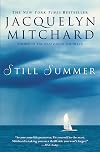
There's something about Jacqueline Mitchard's blend of women's fiction and suspense which I just adore. Her attention to nuances of character and setting immerses me in each world she creates, with characters who are so flawed and believable that they feel plucked from everyday life.
That said, I can see why the reviews on this particular one are somewhat mixed. The pacing felt incredibly strange. Action sequences moved by so quickly as to nearly be a blur, where at other times the pacing show more lagged and wandered, particularly in the first third of the book, where it felt like Mitchard was at pains to create a suspense novel when the genre just wasn't coming naturally in this particular book--not until a good portion of the way in, anyway, at which point things suddenly became rushed.
I'm glad this wasn't the first Mitchard I read--affecting as it was, I'm not sure it would have left me so anxious to pick up more of her work as I generally am, and I've truly loved some of her books. I'm glad to have read this one, and there are some aspects and characters that I do think may well stick with me, but it certainly be the one I'd recommend folks start with if just discovering her.
I'd recommend it most to readers who like blended genre work as well as women's fiction and suspense novels. show less
That said, I can see why the reviews on this particular one are somewhat mixed. The pacing felt incredibly strange. Action sequences moved by so quickly as to nearly be a blur, where at other times the pacing show more lagged and wandered, particularly in the first third of the book, where it felt like Mitchard was at pains to create a suspense novel when the genre just wasn't coming naturally in this particular book--not until a good portion of the way in, anyway, at which point things suddenly became rushed.
I'm glad this wasn't the first Mitchard I read--affecting as it was, I'm not sure it would have left me so anxious to pick up more of her work as I generally am, and I've truly loved some of her books. I'm glad to have read this one, and there are some aspects and characters that I do think may well stick with me, but it certainly be the one I'd recommend folks start with if just discovering her.
I'd recommend it most to readers who like blended genre work as well as women's fiction and suspense novels. show less
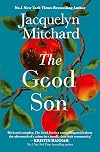
“I was picking my son up at the prison gates when I spotted the mother of the girl he had murdered.”
Nearly three years after being convicted for beating his girlfriend, Belinda McCormack, to death while high on a cocktail of drugs, 20 year old Stefan Christiansen is released from prison. Despite everything, his mother, university professor Thea, is determined to support Stefan and encourage him to rebuild his life. She knows it won’t be easy, though Stefan remembers nothing of the show more crime he confessed to he is tormented by remorse and self-loathing, and the family is subject to sustained harassment, not only from supporters of a campaign spearheaded by Belinda’s devastated mother, Jill, but also a hooded figure and an anonymous caller.
Unfolding from Thea’s perspective, Jacqueline Mitchard presents a provocative narrative that explores the themes of guilt, redemption and unconditional love in The Good Son.
Thea is an sympathetic character, contemplating myself and my ‘good son’ in such a situation is unnerving. I thought Thea’s inner conflict was well articulated as she struggled to reconcile her love for her son with the crime he committed. While I didn’t always agree with her actions, I felt her character behaved consistently. I liked that Mitchard explored the stigma Thea faced as the mother of a murderer, though I wondered if she went quite far enough.
In the main I felt Mitchard’s portrayal of Stefan’s character was believable, his mercurial attitude in the weeks after his release seemed genuine and appropriate to his age. His struggles to rejoin society were thoughtfully represented, raising issues I’d given little thought to. I found myself torn between sympathy for, and a kind of impatience with, Stefan, a dynamic which I think was skilfully exploited by the author to illustrate the maxim that each of us is more than the worst thing we’ve ever done.
While I think the premise of the story is powerful, the execution was quite uneven. The pacing was an issue for me, the middle third dragged, and it definitely affected the suspense related to the identity and motivations of the family’s stalker. I’m conflicted with regards to the ending too. I think the novel would have been stronger had Mitchard chosen another, less melodramatic and arguably more authentic, path.
Though not without its flaws, I did find The Good Son to be a thought-provoking read, and I do believe it would be a rewarding choice for a book club, as it explores issues sure to stimulate a lively discussion. show less
Nearly three years after being convicted for beating his girlfriend, Belinda McCormack, to death while high on a cocktail of drugs, 20 year old Stefan Christiansen is released from prison. Despite everything, his mother, university professor Thea, is determined to support Stefan and encourage him to rebuild his life. She knows it won’t be easy, though Stefan remembers nothing of the show more crime he confessed to he is tormented by remorse and self-loathing, and the family is subject to sustained harassment, not only from supporters of a campaign spearheaded by Belinda’s devastated mother, Jill, but also a hooded figure and an anonymous caller.
Unfolding from Thea’s perspective, Jacqueline Mitchard presents a provocative narrative that explores the themes of guilt, redemption and unconditional love in The Good Son.
Thea is an sympathetic character, contemplating myself and my ‘good son’ in such a situation is unnerving. I thought Thea’s inner conflict was well articulated as she struggled to reconcile her love for her son with the crime he committed. While I didn’t always agree with her actions, I felt her character behaved consistently. I liked that Mitchard explored the stigma Thea faced as the mother of a murderer, though I wondered if she went quite far enough.
In the main I felt Mitchard’s portrayal of Stefan’s character was believable, his mercurial attitude in the weeks after his release seemed genuine and appropriate to his age. His struggles to rejoin society were thoughtfully represented, raising issues I’d given little thought to. I found myself torn between sympathy for, and a kind of impatience with, Stefan, a dynamic which I think was skilfully exploited by the author to illustrate the maxim that each of us is more than the worst thing we’ve ever done.
While I think the premise of the story is powerful, the execution was quite uneven. The pacing was an issue for me, the middle third dragged, and it definitely affected the suspense related to the identity and motivations of the family’s stalker. I’m conflicted with regards to the ending too. I think the novel would have been stronger had Mitchard chosen another, less melodramatic and arguably more authentic, path.
Though not without its flaws, I did find The Good Son to be a thought-provoking read, and I do believe it would be a rewarding choice for a book club, as it explores issues sure to stimulate a lively discussion. show less
Author Ann Patchett said that if a book doesn't grab her from the first sentence or page, she will stop reading it. The first sentence of Jacquelyn Mitchard's novel, The Good Son, grabs the reader hard.
"I was picking up my son at the prison gates when I spotted the mother of the girl he murdered."
How can you not read on after that?
Thea was at the prison to pick up Stefan, her twenty year-old son who had just served nearly three years in prison for killing his girlfriend in a drug-induced show more haze. He was so out of it, he didn't remember what he had done.
As the story progresses, we discover that Stefan was obsessed with his high school girlfriend Belinda, and was distraught when she went away to college. They continued to see each other, and Stefan was planning on going to the same college when she was killed.
Thea and her husband Jep saw that Stefan was obsessed, but didn't know what to do. For the past three years, Thea has visited Stefan in prison every chance she could, but her and Jep's life settled into a routine; Jep is a well-respected college football coach, Thea a professor. Other than the young women (organized by Belinda's devout and distraught mother) who protested about domestic violence outside of their home on a daily basis, life went on.
But things changed when Stefan came home. He had to adjust to life outside prison, and plan for a new life. No one would hire him. He was depressed, and Thea and Jep feared that he might harm himself. Stefan needed to find a purpose for his life or he was doomed.
There were repercussions for Stefan coming home. His release made people in the community uncomfortable, including the people at Thea's college. Now that people were face-to-face with Stefan and his crime, reactions to the family were different than when he was away in prison.
They were used to getting phone calls about Stefan's crime while he was in prison, but now a young woman keeps calling Thea saying that they don't know the truth about what happened the night Stefan killed Belinda. There is also a man who keeps showing up wherever Thea and Stefan are, trying to run them off the road, and even breaking into their home.
I liked the premise of the book- what if your child did something so horrible, it was unforgiveable? How do you live with that as a parent, and still love and support your son? Do you question what you did or didn't do as a parent? Mitchard does an wonderful job putting the reader in Thea's shoes.
There is the question of redemption, can Stefan redeem himself in his own eyes and the eyes of the community? And what does he owe the mother of the woman he killed?
Without giving away the ending of the book, I will say that I found the end disappointing. Up until the end, I liked where Mitchard had taken us with this book, but the resolution took it in a different direction. I really liked Mitchard's The Deep End of the Ocean, she knows how to write family drama that gets you right in the heart, and The Good Son does the same. I recommend it for that reason.
Thanks to Harlequin Books for putting me on Jacquelyn Mitchard's tour. show less
"I was picking up my son at the prison gates when I spotted the mother of the girl he murdered."
How can you not read on after that?
Thea was at the prison to pick up Stefan, her twenty year-old son who had just served nearly three years in prison for killing his girlfriend in a drug-induced show more haze. He was so out of it, he didn't remember what he had done.
As the story progresses, we discover that Stefan was obsessed with his high school girlfriend Belinda, and was distraught when she went away to college. They continued to see each other, and Stefan was planning on going to the same college when she was killed.
Thea and her husband Jep saw that Stefan was obsessed, but didn't know what to do. For the past three years, Thea has visited Stefan in prison every chance she could, but her and Jep's life settled into a routine; Jep is a well-respected college football coach, Thea a professor. Other than the young women (organized by Belinda's devout and distraught mother) who protested about domestic violence outside of their home on a daily basis, life went on.
But things changed when Stefan came home. He had to adjust to life outside prison, and plan for a new life. No one would hire him. He was depressed, and Thea and Jep feared that he might harm himself. Stefan needed to find a purpose for his life or he was doomed.
There were repercussions for Stefan coming home. His release made people in the community uncomfortable, including the people at Thea's college. Now that people were face-to-face with Stefan and his crime, reactions to the family were different than when he was away in prison.
They were used to getting phone calls about Stefan's crime while he was in prison, but now a young woman keeps calling Thea saying that they don't know the truth about what happened the night Stefan killed Belinda. There is also a man who keeps showing up wherever Thea and Stefan are, trying to run them off the road, and even breaking into their home.
I liked the premise of the book- what if your child did something so horrible, it was unforgiveable? How do you live with that as a parent, and still love and support your son? Do you question what you did or didn't do as a parent? Mitchard does an wonderful job putting the reader in Thea's shoes.
There is the question of redemption, can Stefan redeem himself in his own eyes and the eyes of the community? And what does he owe the mother of the woman he killed?
Without giving away the ending of the book, I will say that I found the end disappointing. Up until the end, I liked where Mitchard had taken us with this book, but the resolution took it in a different direction. I really liked Mitchard's The Deep End of the Ocean, she knows how to write family drama that gets you right in the heart, and The Good Son does the same. I recommend it for that reason.
Thanks to Harlequin Books for putting me on Jacquelyn Mitchard's tour. show less
Lists
Awards


You May Also Like


Associated Authors
Statistics
- Works
- 41
- Also by
- 12
- Members
- 11,456
- Popularity
- #2,051
- Rating
- 3.5
- Reviews
- 305
- ISBNs
- 420
- Languages
- 14
- Favorited
- 17

