
John Green (1) (1977–)
Author of The Fault in Our Stars
For other authors named John Green, see the disambiguation page.
About the Author
John Green was born in Indianapolis, Indiana on August 24, 1977. He graduated from Kenyon College in 2000 with a double major in English and religious studies. Before becoming a writer, he was a publishing assistant and production editor for Booklist, which is a book review journal. His first show more novel, Looking for Alaska, was published in 2005 and won the Michael L. Printz Award for excellence in Young Adult literature in 2006. His other works include An Abundance of Katherines, a 2007 Michael L. Printz Award Honor Book; Paper Towns, which won the 2009 Edgar Award for Best Young Adult Novel and the 2010 Corine Literature Prize; and The Fault in Our Stars, which was a New York Times Best Seller. He is also the co-author, with David Levithan, of Will Grayson, Will Grayson. Two of John Green's titles, The Fault in Our Stars and Paper Towns, have been made into major motion pictures. His title, An Abundance of Katherines, made the New York Times Best Seller List. Paper Towns made The New Zealand Best Seller List 2015. (Bowker Author Biography) show less
Series
Works by John Green
The Anthropocene Reviewed: Essays on a Human-Centered Planet (2021) — Narrator, some editions — 3,644 copies, 116 reviews
Everything Is Tuberculosis: The History and Persistence of Our Deadliest Infection (2025) — Author — 2,244 copies, 78 reviews
Looking for Alaska / An Abundance of Katherines / Paper Towns / The Fault in Our Stars (2012) 286 copies, 6 reviews
The Fault in Our Stars / Looking for Alaska / Paper Towns / An Abundance of Katherines / Will Grayson, Will Grayson (2013) 35 copies, 2 reviews
Looking for Alaska / An Abundance of Katherines / Paper Towns / The Fault in Our Stars / Turtles All the Way Down (2019) 23 copies
Double On-Call and Other Stories 11 copies
The Sequel 10 copies
An Imperial Affliction 10 copies
The Space & The Cat and the Mouse 4 copies
The Fault in our Stars / An Abundance of Katherines / Will Grayson, Will Grayson / Paper Towns (2020) 1 copy
The Fault in Our Stars / An Abundance of Katherines / Will Grayson, Will Grayson / Turtles all the Way Down (2023) 1 copy
Double On-Call {story} 1 copy
Associated Works
This Star Won't Go Out: The Life and Words of Esther Grace Earl (2014) — Introduction — 884 copies, 30 reviews
Twice Told: Original Stories Inspired by Original Artwork (2006) — Contributor — 123 copies, 4 reviews
Tagged
Common Knowledge
- Legal name
- Green, John Michael
- Birthdate
- 1977-08-24
- Gender
- male
- Education
- Indian Springs School, Alabama
Kenyon College (BA | English, religious studies|2000)
Columbia University - Occupations
- fiction writer
Nerdfighter
web host
critic - Organizations
- YouTube - vlogbrothers
YouTube - CrashCourse - Awards and honors
- Los Angeles Times Book Prize, Innovator's Award
Honorary Doctorate of Letters from Butler University
Honorary Doctorate of Letters from Kenyon College - Agent
- Jodi Reamer (Writers House)
- Relationships
- Green, Hank (sibling)
Green, Sarah Urist (spouse) - Nationality
- USA
- Birthplace
- Indianapolis, Indiana, USA
- Places of residence
- Birmingham, Alabama, USA
East Lansing, Michigan, USA
Orlando, Florida, USA
Chicago, Illinois, USA
New York, New York, USA
Amsterdam, Netherlands (show all 7)
Indianapolis, Indiana, USA - Associated Place (for map)
- USA
Members
Discussions
John Green? in Read YA Lit (February 2014)
Reviews
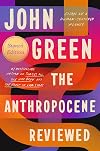
In this essay collection, YA novelist John Green explores human life in all its richness, mundaneness, absurdity, and joy.
These essays originally began as a podcast, but you don't have to have listened to the podcast to enjoy the Green's personal explorations of what he likes - and doesn't - about our modern American life. Their format of five-star reviews of daily human experience in all its ups and downs came at least in part from a trip author John Green took with his brother, Hank, in show more which they tried to find the most absurd Google reviews possible. Though many have been written over the last four years or so, a few were very clearly from 2020 and briefly mention or specifically address the pandemic. I found myself relating to his comments about missing sports and hating to mow, intrigued by the history of the Piggly Wiggly, and enjoying the profound thoughts mixed with humor and wry observation. I started out reading just an essay or two a day, but found myself not able to stop after just a few and finished the collection quickly. Whether you've read any of John Green's fiction or not, I highly recommend this collection. show less
These essays originally began as a podcast, but you don't have to have listened to the podcast to enjoy the Green's personal explorations of what he likes - and doesn't - about our modern American life. Their format of five-star reviews of daily human experience in all its ups and downs came at least in part from a trip author John Green took with his brother, Hank, in show more which they tried to find the most absurd Google reviews possible. Though many have been written over the last four years or so, a few were very clearly from 2020 and briefly mention or specifically address the pandemic. I found myself relating to his comments about missing sports and hating to mow, intrigued by the history of the Piggly Wiggly, and enjoying the profound thoughts mixed with humor and wry observation. I started out reading just an essay or two a day, but found myself not able to stop after just a few and finished the collection quickly. Whether you've read any of John Green's fiction or not, I highly recommend this collection. show less
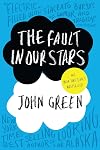
The fault does not lie in our stars, but in me: I read the thing, and more or less lived to tell about it.
The story itself is compelling of course: how could it not be ... unless you are some kind of soul-less sociopath who could not connect to any human story of love?
It is the writing that is execrable -- and then perhaps not so much the writing in itself, as the construct of absurd dialogues that move between the idiotic and the half-witted. Teenagers/Young Adults simply do not show more speak/think/behave in this way; and for those who do, I lump them into the "idiotic and half-witted" camp, and I rest my case.
It beggars belief that this story has garnered so many 5-star ratings because it is a rambling mish-mash of regurgitated and far-too-often replicated stories of young love, written in a less-than-stellar style. Accolades such as "lyrical" and "poetic" accompany this book wherever it goes. .... Huh???
Let me offer some "lyricism and poetry" instead:
"The fault, dear Brutus, is not in our stars, but in ourselves, that we are underlings."
Now that I suspect was the storyline that Green was trying to pursue, but just couldn't quite get his mind around -- and so he gave up, and blamed the universe anyway. It took him a few hundred pages to not achieve what Shakespeare captured, absolutely, in 16 words. Shakespeare -- who was writing in the 16th century -- outstripped this story in a handful of words, 5 centuries ago.
I bemoan the fact that nobody reads good literature anymore. If this is an example of what the world is rating as "stellar", then I give up on "literature" altogether, for surely, It is a tale told by an idiot, full of sound and fury, signifying nothing."
One star is generous. At some point, goodreads will have to initiate a negative rating.
PS I suspect that even in its initial stages of construction, this novel was intended for the Big Screen, to capitalize/exploit its theme, for it reads very much like a slapped-together script. On that level, I'm sure it has achieved a 3-hankie rating, for this translates much better on the screen, in the hands of an expert director, than it appears on the page. show less
The story itself is compelling of course: how could it not be ... unless you are some kind of soul-less sociopath who could not connect to any human story of love?
It is the writing that is execrable -- and then perhaps not so much the writing in itself, as the construct of absurd dialogues that move between the idiotic and the half-witted. Teenagers/Young Adults simply do not show more speak/think/behave in this way; and for those who do, I lump them into the "idiotic and half-witted" camp, and I rest my case.
It beggars belief that this story has garnered so many 5-star ratings because it is a rambling mish-mash of regurgitated and far-too-often replicated stories of young love, written in a less-than-stellar style. Accolades such as "lyrical" and "poetic" accompany this book wherever it goes. .... Huh???
Let me offer some "lyricism and poetry" instead:
"The fault, dear Brutus, is not in our stars, but in ourselves, that we are underlings."
Now that I suspect was the storyline that Green was trying to pursue, but just couldn't quite get his mind around -- and so he gave up, and blamed the universe anyway. It took him a few hundred pages to not achieve what Shakespeare captured, absolutely, in 16 words. Shakespeare -- who was writing in the 16th century -- outstripped this story in a handful of words, 5 centuries ago.
I bemoan the fact that nobody reads good literature anymore. If this is an example of what the world is rating as "stellar", then I give up on "literature" altogether, for surely, It is a tale told by an idiot, full of sound and fury, signifying nothing."
One star is generous. At some point, goodreads will have to initiate a negative rating.
PS I suspect that even in its initial stages of construction, this novel was intended for the Big Screen, to capitalize/exploit its theme, for it reads very much like a slapped-together script. On that level, I'm sure it has achieved a 3-hankie rating, for this translates much better on the screen, in the hands of an expert director, than it appears on the page. show less
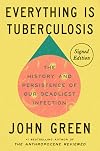
For those of us lucky enough to live in rich countries with decent healthcare it's easy to think of tuberculosis as something quaint and old-fashioned, bringing to mind languishing 19th century poets or Doc Holliday quietly coughing blood into a handkerchief. But not only has tuberculosis killed a truly staggering number of people throughout human history, it continues to kill frankly unfathomable numbers today... even though, with modern medicine, it is entirely curable. Not easily curable. show more But curable.
I was fascinated and horrified to learn these particular statistics, but, I admit, I spent much of the early parts of this book feeling as if, interesting as it might be, it was skimming a little too lightly over its subject and not going into nearly as much depth as I'd been hoping for. Eventually, though, I realized that's because it wasn't quite the book I had expected it to be. It's not a medical history of TB at all. It is, to some extent, a cultural history of the disease. But it's not even primarily that. What it's really about is the story of TB as the story of inequality, of the vicious cycles with which poverty and disease reinforce each other, and of a world that could put its efforts and resources towards addressing these problems and has chosen not to. All of which is extremely depressing, although John Green does find space for hope and optimism, as well as centering his narrative around the story of one particular TB patient from Sierra Leone whose story, despite years of struggle, stigma, and hardship, did have a happy ending.
I will say that I eventually did reach a point where I felt like Green was mostly just making the same points over and over again in slightly different ways, which sort of makes me feel like this might be one of those non-fiction books that might have been slightly more suited to life as a long article instead. But then, I imagine far fewer people would have read it in that case, and its message is one that deserves to reach as wide an audience as it can get. show less
I was fascinated and horrified to learn these particular statistics, but, I admit, I spent much of the early parts of this book feeling as if, interesting as it might be, it was skimming a little too lightly over its subject and not going into nearly as much depth as I'd been hoping for. Eventually, though, I realized that's because it wasn't quite the book I had expected it to be. It's not a medical history of TB at all. It is, to some extent, a cultural history of the disease. But it's not even primarily that. What it's really about is the story of TB as the story of inequality, of the vicious cycles with which poverty and disease reinforce each other, and of a world that could put its efforts and resources towards addressing these problems and has chosen not to. All of which is extremely depressing, although John Green does find space for hope and optimism, as well as centering his narrative around the story of one particular TB patient from Sierra Leone whose story, despite years of struggle, stigma, and hardship, did have a happy ending.
I will say that I eventually did reach a point where I felt like Green was mostly just making the same points over and over again in slightly different ways, which sort of makes me feel like this might be one of those non-fiction books that might have been slightly more suited to life as a long article instead. But then, I imagine far fewer people would have read it in that case, and its message is one that deserves to reach as wide an audience as it can get. show less

Green, John. The Anthropocene Reviewed: Essays on a Human-Centered Planet. New York: Dutton, 2021. 274 pp.
On the surface, John Green’s Anthropocene Reviewed goes through 40 to 50 items or concepts from the human world, gives them a decent Yelp-style review, and rates them on a five-star scale. Almost everything is up for grabs, from the movie Harvey to Diet Dr. Pepper to the Lascaux cave paintings and so on. Seems simple, but the part that grabs you is that interlaced in every review a bit show more of biography and reflection. It seems self-evident that in order to review something, you have to interact with it, and it becomes a part of your life, so all reviews are in some ways autobiographical.
Green’s reviews go deeper, however. We get his pain from his days as a chaplain, his joy in finding family in fellow football fans, his serenity when talking to his children, his fear when admitting that he Googles people before going to their house.
This book is great but suffers from the bite-size/binging problem. Each little review is great for quick dips when you have a few minutes, but I found myself flying through them, about ten at a time. I give John Green’s Anthropocene Reviewed five stars. show less
On the surface, John Green’s Anthropocene Reviewed goes through 40 to 50 items or concepts from the human world, gives them a decent Yelp-style review, and rates them on a five-star scale. Almost everything is up for grabs, from the movie Harvey to Diet Dr. Pepper to the Lascaux cave paintings and so on. Seems simple, but the part that grabs you is that interlaced in every review a bit show more of biography and reflection. It seems self-evident that in order to review something, you have to interact with it, and it becomes a part of your life, so all reviews are in some ways autobiographical.
Green’s reviews go deeper, however. We get his pain from his days as a chaplain, his joy in finding family in fellow football fans, his serenity when talking to his children, his fear when admitting that he Googles people before going to their house.
This book is great but suffers from the bite-size/binging problem. Each little review is great for quick dips when you have a few minutes, but I found myself flying through them, about ten at a time. I give John Green’s Anthropocene Reviewed five stars. show less
Lists
Reading list (1)
. (1)
World (1)
Christmas Books (1)
Science: Earth (1)
Movies/Shows (1)
Road Trip (1)
READ IN 2021 (1)
Boeken. (1)
Favourite Books (1)
Books About Boys (1)
Overdue Podcast (1)
Great Audiobooks (1)
To Read (2)
Best Audiobooks (2)
Florida (4)
Best Young Adult (4)
Five star books (5)
A Novel Cure (2)
Carole's List (1)
Edgar Award (1)
Awards


You May Also Like


Associated Authors
Statistics
- Works
- 30
- Also by
- 7
- Members
- 117,583
- Popularity
- #69
- Rating
- 4.0
- Reviews
- 4,454
- ISBNs
- 1,146
- Languages
- 37
- Favorited
- 546


