

Alice Hoffman
Author of Practical Magic
About the Author
Alice Hoffman, an American novelist and screenwriter, was born in New York City on March 16, 1952. She earned a B.A. from Adelphi University in 1973 and an M.A. in creative writing from Stanford University in 1975 before publishing her first novel, Property Of, in 1977. Known for blending realism show more and fantasy in her fiction, she often creates richly detailed characters who live on society's margins and places them in extraordinary situations as she did with At Risk, her 1988 novel about the AIDS crisis. Her other works include The Drowning Season, Seventh Heaven, The River King, Blue Diary, The Probable Future, The Ice Queen, and The Dovekeepers. Her book, The Third Angel, won the 2008 New England Booksellers' Award for fiction. Two of her novels, Practical Magic and Aquamarine, were made into films. She has also written numerous screenplays, including adaptations of her own novels and the original screenplay, Independence Day. Her title's The Museum of Exteaordinary Things, The Marriage of Opposites, Seventh Heaven, and The Rules of Magic made The New York Times Best Seller List. (Bowker Author Biography) show less
Disambiguation Notice:
Do not combine with Alice Hoffmann, a different person whose name is spelt differently.
Series
Works by Alice Hoffman
The Collected Novels Volume One (Property Of | The Drowning Season | Fortune's Daughter | At Risk) (2016) 35 copies, 1 review
The Collected Novels Volume Two (The Foretelling, White Horses, Angel Landing, and Seventh Heaven) (2018) 8 copies
The Practical Magic Series Collection 4 Books Set By Alice Hoffman (Practical Magic, The Rules of Magic, Magic Lessons & The Book of Magic) (2024) 5 copies
The Witch of Truro {story} 1 copy
Mother's Day 1 copy
Property Of / Second Nature 1 copy
Farm Fatale 10/07 1 copy
Associated Works
Writers on Writing: Collected Essays from the New York Times (2001) — Contributor — 480 copies, 5 reviews
The Book That Changed My Life: 71 Remarkable Writers Celebrate the Books That Matter Most to Them (2006) — Contributor — 411 copies, 18 reviews
The Year's Best Fantasy and Horror: Eighteenth Annual Collection (2005) — Contributor — 231 copies, 5 reviews
Who's Writing This? Notations on the Authorial I, with Self-Portraits {not Antæus} (1995) — Contributor — 75 copies
Cape Cod Stories: Tales from Cape Cod, Nantucket, and Martha's Vineyard (1996) — Introduction — 59 copies, 5 reviews
The Artists' and Writers' Cookbook: A Collection of Stories with Recipes (2016) — Contributor — 19 copies
Amerika, Amerika bloemlezing — Contributor — 8 copies
Faerie Magazine, #38 Spring 2017: The Warriors & Goddesses Issue (2017) — Contributor — 4 copies, 1 review
Faerie Magazine, #39 Summer 2017: A Midsummer Faerie Court (2017) — Contributor — 2 copies, 1 review
Enchanted Living, #52 Autumn 2020: The Natural Magic Issue (2020) — Interview / Excerpt — 2 copies, 1 review
Tagged
Common Knowledge
- Birthdate
- 1952-03-16
- Gender
- female
- Education
- Adelphi University (BA)
Stanford University (MA, creative writing) - Organizations
- Hoffman Breast Center
Doubleday
Brandeis University - Agent
- Elaine Markson (Elaine Markson Agency)
Amanda Urban (ICM Partners) - Relationships
- Hoffman, Lisa (cousin)
- Short biography
- Alice Hoffman is an American novelist and young-adult and children's writer, best known for her 1995 novel Practical Magic, which was adapted for a 1998 film of the same name. Many of her works fall into the genre of magic realism and contain elements of magic, irony, and non-standard romances and relationships.
- Nationality
- USA
- Birthplace
- New York, New York, USA
- Places of residence
- Boston, Massachusetts, USA
New York, New York, USA - Disambiguation notice
- Do not combine with Alice Hoffmann, a different person whose name is spelt differently.
- Associated Place (for map)
- USA
Members
Discussions
AMERICAN AUTHORS CHALLENGE--SEPTEMBER 2025--ALICE HOFFMAN in 75 Books Challenge for 2025 (November 2025)
Reviews
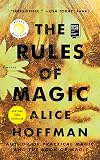
I am glad so many people have gotten enjoyment from this book. I just don't happen to be one of them. The unnamed, omniscient narrator is so distant I read through the whole book and still didn't care one bit about these emo kids. They find out they are witches and they do pretty much nothing with that magic? This makes little logical sense and even less considering the rebellion they had already committed to. Much is made out of Vincent being the first and only male born in the Owens show more bloodline, but that also comes to a big fat nothing. This is especially frustrating when the author has absolutely zero faith in the intelligence of her audience and beats them over the head with the same bits of information over and over and over--lavender is for protection! Jet has "lost the sight/her gift"! Hawthorne put the "w" in his name to distance himself from the Hathorne witch hunter family! Some dude designed Central Park (okay obviously that one didn't stick despite it being explained three times, but by then I was too bored to care anyway)! All this information, yet we don't get proper names for some of the flowers these witches are supposed to be so in tune with (e.g. shouldn't those daffodils with the orange centers be called narcissists? Considering how self-absorbed they all are it would be fitting). And why, oh why, does wise old Isabelle let these children ruin their entire lives by letting them wallow in self pity for decades without once piping up and saying, "You're m-f-ing WITCHES, do something and be happy!" But no, these oh so powerful witches let an entire book of preventible things happen TO them as they drift through and affect no change beyond softening up some old man who lost his will to live earlier in the book. All in all, a pretty big yawner and eye-roller for me. show less
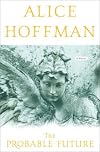
Written after Hoffman’s runaway hit witchy novel Practical Magic, but before she fully came into her own (in my opinion at least) with the prequel novel The Rules of Magic, this book treads much of the same territory and hits somewhere in between in terms of excellence. In its pages we see three generations of the Sparrow family women learn to live, love, and deal with their unique witchy powers - one who sees all lies for what they are, one who can peer into dreams, and one who catches show more glimpses of coming death. And yet, these powers (like all intuitions) do the women no good, as each of their talents deceives them in turn; there is really no such thing as a probable future, and they are led down unexpected paths as they make choices that were never quite understood until years later. Hoffman uses her talents to deftly weave their stories (and their family history) together from the small town of Unity outwards to Boston before bringing all three back together for a grande finale tinged with equal parts heartache and happiness. Having come to the conclusion, we may not have been totally engaged quite the whole way through (like I said, Hoffman hasn’t hit her peak yet), but the ties that bound the family together throughout have bound us in turn to see their ending through. Like the final lines of the story we must “close [our] eyes and listen… then walk twenty paces farther than [we] thought necessary. Just when [we]’re certain [we]’ve lost [our] way completely, [we]’ll be there.” show less
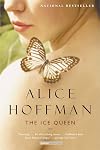
This was a strange little novel, but it was still quite an enjoyable read. Hoffman uses tropes and themes from classic fairytales to weave a story of a woman learning to know herself, incorporating elements from tales as starkly different as Hans Christian Andersen, the Grimms Brothers, and many that are part of the larger folkloric tradition. Our protagonist is not, in fact, the Ice Queen of the title, but her own lack of self-knowledge and of faith in the world around her leaves her with a show more distance from the world that is quite chilling. Our story begins as many fairytales do: with a wish made that has consequences that are unexpected and horrifying -- in this case, jealousy drives our narrator to wish her mother gone. Whether we believe as she does in the magic of wishes (those made in happiness or in haste), this single event propels the young girl to shut herself off from the world; if she cannot feel, then she cannot accidentally wish anyone harm (happiness seems out of the question), and she can quietly live her life in icy seclusion and neutrality. Yet, throughout the story, her passion rears its head from her strict control: she has a rather risky affair with a local police detective, she adopts pets even though she does not enjoy them, and her risks culminate in a third wish that sees her struck with lightning. As lightning does awaken a sense of primal energy (physically and metaphorically), she takes on a new life that even though it is mired with medical hardship sees her begin to acknowledge her loss of passion and eventually seek it out. Like many fairytales, we see her begin a stumbling and seemingly random journey that is less motive driven than arbitrary, but by the end of her so-called journey, pilgrimage, awakening (what you will) she winds up with a sense of stability and enlightenment. What that enlightenment is is inextricably mired with death and loss, and yet this ambiguous ending still leaves one with a sense of satisfaction - much like the seemingly random yet unavoidably interesting fairy and folktales. A strangely satisfying tale with vivid imagery, overall, even if we are left not quite knowing how to feel by the finale. show less

Guilt is a powerful emotion. It cripples a person mentally and physically. It tears apart a person’s self-esteem much more harshly than any bully. It is insidious and difficult to ignore. It has the power to bring a person to the edge and beyond.
In the opening pages of Faithful, Shelby experiences all of this. Hiding away in her parents’ basement, she does not consider herself worthy enough to live a normal life, let alone live. Drugs get her through her waking hours, and her mother’s show more presence prevents her from doing anything more permanent to ease her guilt. A funny thing happens though once Shelby is forced to interact with other humans outside of her family. It is this awakening, slow and filled with setbacks, that is the heart and soul of the novel. And what a novel it is.
Faithful is one of those novels that is both painful and healing. Watching Shelby suffer through the unimaginable guilt associated with being the person driving the car and walking away from the very same accident that put your best friend into a permanent vegetative state becomes its own catharsis for anything about which you might be harboring guilt. Shelby’s disgust with herself and refusal to consider herself worthy of a normal life makes it okay to feel the same. At the same time, her inability to truly give up on life provides an example of the importance of doing the same.
The truly important thing about Shelby is the fact that she is the epitome of faking it until you make it. It takes her most of the novel to recognize that she is worthy of anyone’s love or professional accolades, something everyone else figures out very early on in the story. However, even though she does not believe she is worthy, she still acts like she does. She dresses for the role she has been given even though she does not agree that it is hers to have. She never thinks herself worth the trouble, but she never gives in to her desire to give up entirely either.
Faithful is a beautiful novel. Shelby is so filled with self-loathing but still manages to live her life one day at a time that she becomes one of the most hopeful characters you will ever meet. The unconditional love she provides her dogs and the love she receives from her mother eases your own heartaches as you recognize the power and importance of such relationships. You do not just fall in love with Shelby, you become one of her biggest cheerleaders along her journey, cheering every minor success and encouraging the setbacks. Faithful reminds you that no matter how bad things get, there is always someone out there who loves you for who you are. It is a timely message and one that truly soothes the soul. show less
In the opening pages of Faithful, Shelby experiences all of this. Hiding away in her parents’ basement, she does not consider herself worthy enough to live a normal life, let alone live. Drugs get her through her waking hours, and her mother’s show more presence prevents her from doing anything more permanent to ease her guilt. A funny thing happens though once Shelby is forced to interact with other humans outside of her family. It is this awakening, slow and filled with setbacks, that is the heart and soul of the novel. And what a novel it is.
Faithful is one of those novels that is both painful and healing. Watching Shelby suffer through the unimaginable guilt associated with being the person driving the car and walking away from the very same accident that put your best friend into a permanent vegetative state becomes its own catharsis for anything about which you might be harboring guilt. Shelby’s disgust with herself and refusal to consider herself worthy of a normal life makes it okay to feel the same. At the same time, her inability to truly give up on life provides an example of the importance of doing the same.
The truly important thing about Shelby is the fact that she is the epitome of faking it until you make it. It takes her most of the novel to recognize that she is worthy of anyone’s love or professional accolades, something everyone else figures out very early on in the story. However, even though she does not believe she is worthy, she still acts like she does. She dresses for the role she has been given even though she does not agree that it is hers to have. She never thinks herself worth the trouble, but she never gives in to her desire to give up entirely either.
Faithful is a beautiful novel. Shelby is so filled with self-loathing but still manages to live her life one day at a time that she becomes one of the most hopeful characters you will ever meet. The unconditional love she provides her dogs and the love she receives from her mother eases your own heartaches as you recognize the power and importance of such relationships. You do not just fall in love with Shelby, you become one of her biggest cheerleaders along her journey, cheering every minor success and encouraging the setbacks. Faithful reminds you that no matter how bad things get, there is always someone out there who loves you for who you are. It is a timely message and one that truly soothes the soul. show less
Lists
Magic Realism (9)
Which house? (1)
Autumn books (1)
Legal Stories (1)
100 New Classics (1)
A Novel Cure (1)
Page Turners (1)
Indie Next Picks (1)
Jewish Books (1)
Sense of place (1)
Gen X Library (1)
Five star books (1)
Books to read (1)
Favourite Books (1)
READ in 2023 (1)
Female Author (2)
To Read (3)
Everand 2024 (3)
READ in 2024 (3)
Carole's List (5)
To Read (1)
5 Best 5 Years (1)
Witchy Fiction (1)
Everand 2023 (1)
Awards


You May Also Like


Associated Authors
Statistics
- Works
- 74
- Also by
- 32
- Members
- 61,165
- Popularity
- #235
- Rating
- 3.8
- Reviews
- 2,173
- ISBNs
- 1,097
- Languages
- 21
- Favorited
- 201


