
Margot Livesey
Author of The Flight of Gemma Hardy
About the Author
Margot Livesey is the award-winning author of a story collection, Learning by Heart, and the novels Homework, Criminals, and The Missing World. Born in Scotland, she currently lives and teaches in the Boston area. (Bowker Author Biography)
Image credit: Photo by Nigel Beale / Flickr
Works by Margot Livesey
Associated Works
The Private Memoirs and Confessions of a Justified Sinner (1824) — Introduction, some editions — 2,710 copies, 39 reviews
The Book That Changed My Life: 71 Remarkable Writers Celebrate the Books That Matter Most to Them (2006) — Contributor — 411 copies, 18 reviews
A Truth Universally Acknowledged: 33 Great Writers on Why We Read Jane Austen (2009) — Contributor — 411 copies, 18 reviews
Mentors, Muses & Monsters: 30 Writers on the People Who Changed Their Lives (2009) — Contributor — 71 copies, 2 reviews
Tagged
Common Knowledge
- Canonical name
- Livesey, Margot
- Birthdate
- 1953
- Gender
- female
- Education
- University of York (BA, English)
- Occupations
- professor (Writing)
novelist - Organizations
- Boston University
Bowdoin College ((writer-in-residence)
Brandeis University
Carnegie Mellon University
Cleveland State University
Emerson College (show all 11)
University of Iowa (Writers' Workshop)
Tufts University
University of California, Irvine
Warren Wilson College
Williams College - Agent
- Amanda Urban (ICM)
- Nationality
- UK
- Birthplace
- Scotland, UK
- Places of residence
- Cambridge, Massachusetts, USA
London, England, UK - Associated Place (for map)
- UK
Members
Reviews
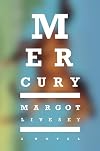
When you get married and have kids, sometimes you have to put other things about your life on the back burner, at least in the early years when babies are so overwhelmingly needy. This can be incredibly difficult, especially when the thing you've sidelined is something that once brought you much joy or even defined a major piece of yourself. And if you come to find the time to pursue that passion once again, it can be that much more intense than it was before you knew what life was like show more without it. The trick is in the balancing of the life you've chosen and the newly rediscovered dream, not allowing one to subsume the other. This struggle and the way it changes the dynamic of the family involved is at the heart of Margot Livesey's newest novel, Mercury.
Donald and Viv Stevenson have what looks to be an enviable marriage. They have two children and jobs they enjoy well enough. Their personalities balance each other out and they hold the same liberal beliefs, working from the same moral stance. But in the past year, Donald has been felled by grief after the death of his father and he seems to have insulated himself from further emotion. While Donald is at an emotional remove from Viv and the kids, he is missing a complete sea change in his wife. Having given up a lucrative job in finance to work at her best friend's barn and riding school, Viv is happy working with young riders until a new horse comes to board at Windy Hill. Mercury, a beautiful thoroughbred, is an exceptional horse and he reawakens Viv's long dormant desire to compete. Slowly she is drawn into more and more obsessive and troubling behaviour around this horse that is not hers.
Told in three sections, with Donald's narrative framing Viv's, this story of a foundering marriage, obsession, omissions, and shifting perspectives is an interesting one. Donald is by far the more sympathetic character. He is an optometrist whose vision certainly isn't clear but he never betrays his base character. His worst sin is in missing the transformation of his wife. In fact, he has a long history of not confronting unpleasantness and waffling over decisions in his background, which causes him to take on quite a lot of unearned guilt over the terrible result of Viv's unhealthy obsession and possessiveness. In his narration, he struggles to discover where he has been willfully blind and therefore must take responsibility for missing pivotal moments that could have changed their eventual outcome. Inserted into the middle of his hindsight narration is Viv's section, which is written as if she is telling her version of events to Donald, justifying her actions and laying blame on his emotional unreachability. But it is only in the wake of the shocking happening that she reveals her secrets and her trespasses to his view. And even in the wake of this event, neither of them have any clarity on the moral imperative they face.
The novel is complex with ambiguities and blame, and the theme of sight and blindness is quite obvious throughout the narrative. The tension rises throughout Donald's first section but once the threatened action comes to fruition, the story becomes less alarming and more focused on internal reactions, the question of what is right and why, and whether a marriage gone so far off track can come together again. There is much that is troubling here, both intentionally written that way and for me as a reader. There is an overt political diatribe that could have been more subtly (and therefore effectively) handled and a couple of tangential plot lines had more weight than they deserved. The ending is unrealistic and rather unsatisfying. But over all, the novel is a quiet look at the secrets, omissions, and incremental changes in character that result in a marriage that is no longer what it once was and will appeal to those who enjoy reading about non-attention grabbing marriages in crisis or about the small, non-sexual infidelities that can, and do, change the tenor of everything. show less
Donald and Viv Stevenson have what looks to be an enviable marriage. They have two children and jobs they enjoy well enough. Their personalities balance each other out and they hold the same liberal beliefs, working from the same moral stance. But in the past year, Donald has been felled by grief after the death of his father and he seems to have insulated himself from further emotion. While Donald is at an emotional remove from Viv and the kids, he is missing a complete sea change in his wife. Having given up a lucrative job in finance to work at her best friend's barn and riding school, Viv is happy working with young riders until a new horse comes to board at Windy Hill. Mercury, a beautiful thoroughbred, is an exceptional horse and he reawakens Viv's long dormant desire to compete. Slowly she is drawn into more and more obsessive and troubling behaviour around this horse that is not hers.
Told in three sections, with Donald's narrative framing Viv's, this story of a foundering marriage, obsession, omissions, and shifting perspectives is an interesting one. Donald is by far the more sympathetic character. He is an optometrist whose vision certainly isn't clear but he never betrays his base character. His worst sin is in missing the transformation of his wife. In fact, he has a long history of not confronting unpleasantness and waffling over decisions in his background, which causes him to take on quite a lot of unearned guilt over the terrible result of Viv's unhealthy obsession and possessiveness. In his narration, he struggles to discover where he has been willfully blind and therefore must take responsibility for missing pivotal moments that could have changed their eventual outcome. Inserted into the middle of his hindsight narration is Viv's section, which is written as if she is telling her version of events to Donald, justifying her actions and laying blame on his emotional unreachability. But it is only in the wake of the shocking happening that she reveals her secrets and her trespasses to his view. And even in the wake of this event, neither of them have any clarity on the moral imperative they face.
The novel is complex with ambiguities and blame, and the theme of sight and blindness is quite obvious throughout the narrative. The tension rises throughout Donald's first section but once the threatened action comes to fruition, the story becomes less alarming and more focused on internal reactions, the question of what is right and why, and whether a marriage gone so far off track can come together again. There is much that is troubling here, both intentionally written that way and for me as a reader. There is an overt political diatribe that could have been more subtly (and therefore effectively) handled and a couple of tangential plot lines had more weight than they deserved. The ending is unrealistic and rather unsatisfying. But over all, the novel is a quiet look at the secrets, omissions, and incremental changes in character that result in a marriage that is no longer what it once was and will appeal to those who enjoy reading about non-attention grabbing marriages in crisis or about the small, non-sexual infidelities that can, and do, change the tenor of everything. show less

In the fall of 1999, three siblings - Matthew, Zoe, and Duncan - find a boy in a field, stabbed and left for dead. They flag down a car and get help, saving the boy's life, and the event subtly changes all their lives. Zoe pursues an American at Oxford; Matthew teams up with the boy's older brother, Tomas, to search for the assailant; and 13-year-old Duncan, adopted at birth, decides to search for his birth mother. Each of the three independently makes the discovery that their father is show more having an affair, and that the woman is pregnant with their half-sibling. Their stories culminate in the town New Year's celebration, and an epilogue marks a coda eight and a half years later.
Quiet and masterful; perhaps Livesey's best yet. Narration is third person limited, switching between the three siblings.
Quotes
...and they were all laughing again, the gap between disaster and happiness instantly closed. (Matthew, 36)
Was her mother suggesting that feelings were optional? That one could pick and choose between, say, love and hate, boredom and pleasure? (Zoe, 95)
Which was more frightening: the random attacker, or the purposeful? Both, he thought, in different ways. (Matthew, 107)
"We don't always have to act on information." (Rufus to Zoe, 128)
We don't have to act on information, she thought as she walked away, but we nearly always do. (Zoe, 129)
"People talk about locked-room mysteries, but the ultimate locked room is another person's brain." (Detective to Matthew, 133)
She remembered her mother's mysterious suggestion that feelings were optional. Now emotions were leaping up, swirling around, volunteering, vanishing, some dimly recognizable, some barely apprehended. (Zoe, 177)
"Nothing prepares one for the discovery that there are people who have no conscience." (Detective to Matthew, 218)
"My job is to figure out crimes. I don't necessarily believe in punishment. You'll appreciate the irony." (Detective to Matthew, 220)
"Do you think there are things a person can do that are unforgivable?"
"...To be honest, I'm not sure I know what forgiveness is. You hold something in your mind without anger. Is that forgiveness?" (243) show less
Quiet and masterful; perhaps Livesey's best yet. Narration is third person limited, switching between the three siblings.
Quotes
...and they were all laughing again, the gap between disaster and happiness instantly closed. (Matthew, 36)
Was her mother suggesting that feelings were optional? That one could pick and choose between, say, love and hate, boredom and pleasure? (Zoe, 95)
Which was more frightening: the random attacker, or the purposeful? Both, he thought, in different ways. (Matthew, 107)
"We don't always have to act on information." (Rufus to Zoe, 128)
We don't have to act on information, she thought as she walked away, but we nearly always do. (Zoe, 129)
"People talk about locked-room mysteries, but the ultimate locked room is another person's brain." (Detective to Matthew, 133)
She remembered her mother's mysterious suggestion that feelings were optional. Now emotions were leaping up, swirling around, volunteering, vanishing, some dimly recognizable, some barely apprehended. (Zoe, 177)
"Nothing prepares one for the discovery that there are people who have no conscience." (Detective to Matthew, 218)
"My job is to figure out crimes. I don't necessarily believe in punishment. You'll appreciate the irony." (Detective to Matthew, 220)
"Do you think there are things a person can do that are unforgivable?"
"...To be honest, I'm not sure I know what forgiveness is. You hold something in your mind without anger. Is that forgiveness?" (243) show less
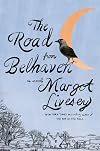
This is the story of a girl growing up on a farm in Scotland in the 1880s, where she is being raised by her grandparents. She loves the farm and the farm animals with all of her heart and has a companion jackdaw and a steady friend in the hired boy. Lizzie does have one thing that sets her apart; sometimes she has brief visions of future events. But this story remains one about a girl growing up and of a young woman figuring out how to make her way in the world and how best to care for those show more she loves.
I saw a review calling this book "Anne of Green Gables for adults" and that's a pretty accurate description, honestly. This novel deals far more with the darker parts of farm life and of that time, the risks of death or injury, the financial precarity, the way that most people are struggling to get by and a single mistake can cost everything. Lizzie is pragmatic and resourceful, like all good protagonists. I enjoyed every single moment I was reading this excellent book. show less
I saw a review calling this book "Anne of Green Gables for adults" and that's a pretty accurate description, honestly. This novel deals far more with the darker parts of farm life and of that time, the risks of death or injury, the financial precarity, the way that most people are struggling to get by and a single mistake can cost everything. Lizzie is pragmatic and resourceful, like all good protagonists. I enjoyed every single moment I was reading this excellent book. show less
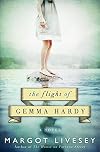
Growing up an orphan in Scotland in the 1960s, Gemma Hardy is sent by her aunt to a rotten school, where this bright orphan holds her own until she gets a job as a governess for a young charge.
If you think that sounds awfully like Jane Eyre, you would be right - the author makes no bones about her literary debt, but modernizes and explores the tale in an interesting way. Even better, The Flight of Gemma Hardy stands well on its own as a good story, even if a reader is unfamiliar with the show more original classic. Gemma is determined and smart and holds her own, so I generally rooted for her even when I did not like her or some of her decisions. She's also self-absorbed and hypocritical, you see, expecting a lot more from others than she expects from herself. And because we're getting her first-person account of her life, we're seeing everyone else's actions through her biases. Though I don't like Gemma Hardy as much as its literary parent, there is enough meat to the story - themes of friendship and connection, for example, and the symbolism of islands and birds - to make readers have plenty to think and talk about after the last page is turned. show less
If you think that sounds awfully like Jane Eyre, you would be right - the author makes no bones about her literary debt, but modernizes and explores the tale in an interesting way. Even better, The Flight of Gemma Hardy stands well on its own as a good story, even if a reader is unfamiliar with the show more original classic. Gemma is determined and smart and holds her own, so I generally rooted for her even when I did not like her or some of her decisions. She's also self-absorbed and hypocritical, you see, expecting a lot more from others than she expects from herself. And because we're getting her first-person account of her life, we're seeing everyone else's actions through her biases. Though I don't like Gemma Hardy as much as its literary parent, there is enough meat to the story - themes of friendship and connection, for example, and the symbolism of islands and birds - to make readers have plenty to think and talk about after the last page is turned. show less
Lists
Awards


You May Also Like


Associated Authors
Statistics
- Works
- 14
- Also by
- 8
- Members
- 3,851
- Popularity
- #6,579
- Rating
- 3.7
- Reviews
- 222
- ISBNs
- 112
- Languages
- 5
- Favorited
- 10
