

Lauren Grodstein
Author of A Friend of the Family
About the Author
Lauren Grodstein lives in New York and teaches writing at Cooper Union
Disambiguation Notice:
Lauren Grodstein published the young adult novel Girls Dinner Club under the pseudonym Jessie Elliot.
Image credit: reading at 2018 Gaithersburg Book Festival By Slowking4 - Own work, GFDL 1.2, https://commons.wikimedia.org/w/index.php?curid=69292218
Works by Lauren Grodstein
Associated Works
Who Can Save Us Now? Brand-New Superheroes and Their Amazing (Short) Stories (2008) — Contributor — 160 copies, 7 reviews
Freud's Blind Spot: 23 Original Essays on Cherished, Estranged, Lost, Hurtful, Hopeful, Complicated Siblings (2010) — Contributor — 19 copies
Promised Lands: New Jewish American Fiction on Longing and Belonging (2010) — Contributor — 13 copies
Tagged
Common Knowledge
- Other names
- Elliot, Jessie [pseudonym]
- Birthdate
- 1975-11-19
- Gender
- female
- Nationality
- USA
- Places of residence
- New York, New York, USA
- Disambiguation notice
- Lauren Grodstein published the young adult novel Girls Dinner Club under the pseudonym Jessie Elliot.
- Associated Place (for map)
- New York, USA
Members
Reviews
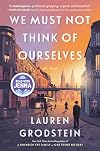
Outstanding novel about living in the Warsaw Ghetto during WWII. The everydayness amidst the horror of people crowded together starving, being shot for no reason, dead bodies left on sidewalks is heart-rending.
For Adam Paskow, English teacher and widower, living with other families in a small apartment is the 'new normal.' He is asked to keep a journal of the daily lives of those around him for the Oneg Shabbat archive project.
For whatever reason, I'm thinking, this is going to be boring show more but no, Grodstein creates a novel with a plot, and dialog, that is anything but boring. It is frightening, fragile, strong, grotesque, beautiful; filled with pain, anguish, anger, but most of all love.
A book to read, to keep and cherish. show less
For Adam Paskow, English teacher and widower, living with other families in a small apartment is the 'new normal.' He is asked to keep a journal of the daily lives of those around him for the Oneg Shabbat archive project.
For whatever reason, I'm thinking, this is going to be boring show more but no, Grodstein creates a novel with a plot, and dialog, that is anything but boring. It is frightening, fragile, strong, grotesque, beautiful; filled with pain, anguish, anger, but most of all love.
A book to read, to keep and cherish. show less
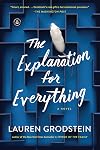
If you read Lauren Grodstein’s Explanation for Everything, you will, at some point, find yourself within its pages. She draws no caricatures. There’s Biology professor Andy Waite, mourning his wife who was killed by a drunk driver, leaving him and his two young daughters alone. There’s Melissa, the mousy, but somehow wheedling, undergraduate who persuades Dr. Waite to help her with an independent study, despite the fact the study is about Intelligent Design and Dr. Waite is a staunch show more Darwinian. There’s the next-door-neighbor, Sheila, who wants so badly to hold Andy’s attention, as she recovers from the alcohol abuse she uses to numb the pain of her husband’s betrayal. Then, there’s Lionel, the evangelical Christian who suffers for his cause and suffers through its loss. And, last but not least, there’s Rosenblum, Andy’s larger-than-life mentor.
At its core, Explanation for Everything is not a debate between Intelligent Design or Darwanism, or even a debate between Christians and Atheists -- Grodstein does her best not to show bias or to take sides. Because the debate is part of the story, it should make us think, right? Instead, it sets the mood, like the blurry colors in the backdrop of a painting, but never takes the foreground.
If religion and evolution aren’t the focus of the novel, then what is? The underlying loneliness and loss of each of the characters weaves them together. We may not always agree with Andy’s decisions and his treatment of the people in his life, but we can sympathize with his grief which makes him one of the walking dead. He trips through life, only becoming aware of his actions, when he falls on his face. In Andy’s own words, he carries an odd “mixture of loneliness and longing to be left alone.” For all of us who have loved without measure and then paid the price when our love was lost, we can sympathize and root for Andy as he stumbles through the darkness toward the light. show less
At its core, Explanation for Everything is not a debate between Intelligent Design or Darwanism, or even a debate between Christians and Atheists -- Grodstein does her best not to show bias or to take sides. Because the debate is part of the story, it should make us think, right? Instead, it sets the mood, like the blurry colors in the backdrop of a painting, but never takes the foreground.
If religion and evolution aren’t the focus of the novel, then what is? The underlying loneliness and loss of each of the characters weaves them together. We may not always agree with Andy’s decisions and his treatment of the people in his life, but we can sympathize with his grief which makes him one of the walking dead. He trips through life, only becoming aware of his actions, when he falls on his face. In Andy’s own words, he carries an odd “mixture of loneliness and longing to be left alone.” For all of us who have loved without measure and then paid the price when our love was lost, we can sympathize and root for Andy as he stumbles through the darkness toward the light. show less
 This review was written for LibraryThing Early Reviewers.
I wanted to like this much more than I did. The concept is heartbreaking and clever, the writing deft, the characterization vivid...but I hated having to spend over 300 pages with the narrator. Which is peculiar, because I've known and tremendously enjoyed befriending women like her. She's sharp and insightful, self-focused and childish, determined and hard-working, private, hypocritical, loving and fierce.
...She's also an island. No matter how much insight I was getting into her inner self show more through her narration, I couldn't find a way to connect that inner self to the people in her life. Important conversations—essential conversations—simply didn't happen. At least, not 'til the last 30 pages. So for the vast majority of the book, I felt trapped inside this woman's mind: alone with her pain and her fear and her grief.
Arguably, the most important conversation she's having is the one with her grown-up son via the book, but watching moment after moment of potential connection to family and friends and even strangers pass without remark, perhaps even without notice, left me fuming and frustrated with the narrator. Why whine when you can seek counsel, Karen? Why weep when you can find understanding? Why stew in your anger and hurt when you can demand explanations?
These are the sorts of flaws in a character that I can appreciate from the outside, but when I'm penned within her mind, reaping alongside her the agony of self-inflicted isolation? It's difficult to think about anything but escape, even if the story is heartbreaking and clever, deftly rendered, and vivid. show less
...She's also an island. No matter how much insight I was getting into her inner self show more through her narration, I couldn't find a way to connect that inner self to the people in her life. Important conversations—essential conversations—simply didn't happen. At least, not 'til the last 30 pages. So for the vast majority of the book, I felt trapped inside this woman's mind: alone with her pain and her fear and her grief.
Arguably, the most important conversation she's having is the one with her grown-up son via the book, but watching moment after moment of potential connection to family and friends and even strangers pass without remark, perhaps even without notice, left me fuming and frustrated with the narrator. Why whine when you can seek counsel, Karen? Why weep when you can find understanding? Why stew in your anger and hurt when you can demand explanations?
These are the sorts of flaws in a character that I can appreciate from the outside, but when I'm penned within her mind, reaping alongside her the agony of self-inflicted isolation? It's difficult to think about anything but escape, even if the story is heartbreaking and clever, deftly rendered, and vivid. show less
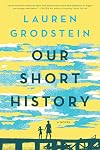
The sad reality of this novel is that Karen, the narrator, is going to die of cervical cancer. She has a son, Jacob, who wants to meet his father, Dave. Dave and Karen never married and he did not want children. When Karen discovered she was pregnant, the relationship ended. Jacob (Jake) is six when he finally meets his father and it is pretty much love at first sight. Lauren Grodstein writes beautifully about Karen's fears for Jacob's future and her pain at having to leave him. My only show more criticism of this book is the framework of the book. It is written as a letter to Jake. I didn't care for that device to get at the story. But that aside, this was an excellent book. show less
This review was written for LibraryThing Early Reviewers.Lists
Awards


You May Also Like


Associated Authors
Statistics
- Works
- 10
- Also by
- 4
- Members
- 1,360
- Popularity
- #18,902
- Rating
- 3.5
- Reviews
- 158
- ISBNs
- 64
- Languages
- 3
- Favorited
- 2
