
Jonathan Tropper
Author of This Is Where I Leave You: A Novel
About the Author
Jonathan Tropper is the author of How to Talk to a Widower, Everything Changes, The Book of Joe, Plan B, and One Last Thing Before I Go. He adapted his novel, This Is Where I Leave You, into a feature film starring Jason Bateman and Tina Fey. He is an executive producer and co-creator of the show more Cinemax series Banshee. He teaches writing at Manhattanville College. (Bowker Author Biography) show less
Image credit: JonathanTropper.com
Series
Works by Jonathan Tropper
Tagged
Common Knowledge
- Canonical name
- Tropper, Jonathan
- Legal name
- Tropper, Jonathan
- Birthdate
- 1970-02-19
- Gender
- male
- Nationality
- USA
- Places of residence
- Westchester, New York, USA
- Associated Place (for map)
- New York, USA
Members
Reviews
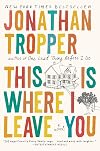
When this novel appeared in a BookBub email, I scooped it up for a couple of bucks, and then found out I was reading one of the funniest novels I've ever read. I don't know if the sarcasm was just what I needed or if the classic family dysfunctions were just so insightful, but I really laughed a lot during this quick read. In three days I read about a seven day shiva, where our narrator, Judd, goes home to grieve the loss of his father on the heels of grieving the loss of his wife, Jen,who show more he found in his bed with his obnoxious boss. So he's a sympathetic narrator but also a bright, witty observer. During these seven days the three brothers and one sister hash out old grudges and invent some new ones. "In my family, we don’t so much air our grievances as wallow in them. Anger and resentment are cumulative." Somewhere underneath there is a realized undertone of love and caring but during most of the storyline the traded barbs along with the observational insights of the author make for an entertaining getaway from our Carona virus containment.
Some lines:
Now Dad is dead and Wendy is cracking wise.
It serves him right, since he was something of a pioneer at the forefront of emotional repression
He is the Paul McCartney
of our family: better-looking than the rest of us, always facing a different direction in pictures, and occasionally rumored to be dead.
I was thirty-four years old and homeless, lying awake in the dead of night on a lumpy sofa bed in a rented basement, listening to my landlords piss and shit while my former wife and former boss sixty-nined in my head. Rock bottom rose up to meet show less
Some lines:
Now Dad is dead and Wendy is cracking wise.
It serves him right, since he was something of a pioneer at the forefront of emotional repression
He is the Paul McCartney
of our family: better-looking than the rest of us, always facing a different direction in pictures, and occasionally rumored to be dead.
I was thirty-four years old and homeless, lying awake in the dead of night on a lumpy sofa bed in a rented basement, listening to my landlords piss and shit while my former wife and former boss sixty-nined in my head. Rock bottom rose up to meet show less

"Dad lives on in all of us. Our parents can continue to screw us up even after they die, and in this way, they're never really gone."
Filled with humor and insight but also drama and family dysfunction, this is an interesting look into one family. Siblings, four of them, are coming home to honor the final will of their father - to sit for seven days and have people visit and mourn with them, to sit and mourn their father and be together.
I loved the drama and the humor. I loved the dynamics show more the family had, to finish each other's sentences. I loved the silly neighbors that arrived and how Judd (MC) gave his perspective of who the neighbor was when he was young and who they were now. I even loved all their childhood friends showing up and them trying to pick through their emotions and lives as it crumbled around them.
It's a very good story. I'll definitely read more from this author. show less
Filled with humor and insight but also drama and family dysfunction, this is an interesting look into one family. Siblings, four of them, are coming home to honor the final will of their father - to sit for seven days and have people visit and mourn with them, to sit and mourn their father and be together.
I loved the drama and the humor. I loved the dynamics show more the family had, to finish each other's sentences. I loved the silly neighbors that arrived and how Judd (MC) gave his perspective of who the neighbor was when he was young and who they were now. I even loved all their childhood friends showing up and them trying to pick through their emotions and lives as it crumbled around them.
It's a very good story. I'll definitely read more from this author. show less

Do you recall the Great #Franzenfruede Debate of 2010? One of the points brought up in that discussion was that certain fictional subject matter seems to be viewed differently depending on whether it’s written by a man or a woman. In making one of her arguments, Jennifer Weiner mentioned that male authors who cover the territory of “domestic" or "relationship" fiction don't seem expected to choose between commercial and critical success the way female authors are, and one of the examples show more she cited was Jonathan Tropper.
Tropper’s last novel, This is Where I Leave You, got a pretty good reception from bloggers when it was published and has been on my Kindle for months. When I found a break in my reading schedule recently, I decided its time to be read had come. And Weiner’s not wrong; the domestic upheavals and family dysfunction that Tropper details in his story of a week with the Foxman family do seem to be more typically found in fiction written by women. However, the character viewpoint from which the story is told, and the humor and style with which it’s told, sounded pretty male to me, and I mean that in a very good way.
Men and women tend to react differently to infidelity, and Judd Foxman’s reaction to the discovery that his wife has been carrying on an extended affair with his boss is a man’s reaction; he walks out on her, but not before inflicting bodily harm on the other guy with a lighted birthday cake. The losses of his marriage and his job are soon followed by the loss of his father, who left a surprising last request: he wanted his widow and children - who have been indifferently Jewish for years - to come together in the family home and sit shiva for him. The week of enforced togetherness among the four adult Foxman children and their outspoken celebrity-psychiatrist mother stirs up family business both old and new - after all, conventional wisdom suggests that a psychiatrist’s kids may be especially messed up - and serves to demonstrate that some families get along better when they don’t see each other very often.
There are places where the novel is laugh-out-loud funny, and places where it feels emotionally true; in some places, it’s both. The narration is in Judd’s voice, and I liked and empathized with him; I liked most of the characters, actually, even though some weren’t terribly likable. And I may be stereotyping, but I thought that the role sex plays in the book marks it as fiction produced by a male. It’s not particularly graphic, but it is frequently on character’s minds, shaping their perceptions, and in their conversations; also, the way it’s perceived and talked about is pretty matter-of-fact, which strikes me as more of a male approach to the subject, and one I was surprisingly comfortable with.
My reading last year was heavily skewed to women writers, and since they do seem more prone to writing fiction with the themes and topics that most appeal to me, I was neither surprised nor bothered by that. Having said that, I’m trying to shift the balance a little this year, and finding men whose writing comes from a similar place seems like a good way to start. This is Where I Leave You is the first of Jonathan Tropper’s novels I’ve had the pleasure of reading, but I’m quite certain that it won’t be the last. show less
Tropper’s last novel, This is Where I Leave You, got a pretty good reception from bloggers when it was published and has been on my Kindle for months. When I found a break in my reading schedule recently, I decided its time to be read had come. And Weiner’s not wrong; the domestic upheavals and family dysfunction that Tropper details in his story of a week with the Foxman family do seem to be more typically found in fiction written by women. However, the character viewpoint from which the story is told, and the humor and style with which it’s told, sounded pretty male to me, and I mean that in a very good way.
Men and women tend to react differently to infidelity, and Judd Foxman’s reaction to the discovery that his wife has been carrying on an extended affair with his boss is a man’s reaction; he walks out on her, but not before inflicting bodily harm on the other guy with a lighted birthday cake. The losses of his marriage and his job are soon followed by the loss of his father, who left a surprising last request: he wanted his widow and children - who have been indifferently Jewish for years - to come together in the family home and sit shiva for him. The week of enforced togetherness among the four adult Foxman children and their outspoken celebrity-psychiatrist mother stirs up family business both old and new - after all, conventional wisdom suggests that a psychiatrist’s kids may be especially messed up - and serves to demonstrate that some families get along better when they don’t see each other very often.
There are places where the novel is laugh-out-loud funny, and places where it feels emotionally true; in some places, it’s both. The narration is in Judd’s voice, and I liked and empathized with him; I liked most of the characters, actually, even though some weren’t terribly likable. And I may be stereotyping, but I thought that the role sex plays in the book marks it as fiction produced by a male. It’s not particularly graphic, but it is frequently on character’s minds, shaping their perceptions, and in their conversations; also, the way it’s perceived and talked about is pretty matter-of-fact, which strikes me as more of a male approach to the subject, and one I was surprisingly comfortable with.
My reading last year was heavily skewed to women writers, and since they do seem more prone to writing fiction with the themes and topics that most appeal to me, I was neither surprised nor bothered by that. Having said that, I’m trying to shift the balance a little this year, and finding men whose writing comes from a similar place seems like a good way to start. This is Where I Leave You is the first of Jonathan Tropper’s novels I’ve had the pleasure of reading, but I’m quite certain that it won’t be the last. show less
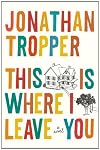
I have a new favorite author to add to my list of must-reads–Jonathan Tropper. I had already listened to the audiobook “The Book of Joe“ and loved his wild sense of humor and perceptive observations. I wasn’t disappointed as I laughed my way through this one.
Shortly after he walks in on his wife in bed with his boss––in his own bed, as a matter of fact–Judd Foxman is called to sit shiva for his deceased father. Sitting shiva entails the entire family-–a sexy, psychiatrist show more mother, 3 brothers with a lifetime of issues, and a cynical, outspoken sister — sitting in the same house for seven days of mourning, on small chairs that put them at crotch level of the hordes of visiting sympathizers.
This is a family of grudges, secrets and emotional repression, and you can tell from Day 1 that it’s not going to be pretty. But Tropper’s irreverent comical sense and witty repartee make this troupe of highly dysfunctional family members a delight. You’ll be laughing and rooting for them the whole way through. show less
Shortly after he walks in on his wife in bed with his boss––in his own bed, as a matter of fact–Judd Foxman is called to sit shiva for his deceased father. Sitting shiva entails the entire family-–a sexy, psychiatrist show more mother, 3 brothers with a lifetime of issues, and a cynical, outspoken sister — sitting in the same house for seven days of mourning, on small chairs that put them at crotch level of the hordes of visiting sympathizers.
This is a family of grudges, secrets and emotional repression, and you can tell from Day 1 that it’s not going to be pretty. But Tropper’s irreverent comical sense and witty repartee make this troupe of highly dysfunctional family members a delight. You’ll be laughing and rooting for them the whole way through. show less
Lists
Awards


You May Also Like


Associated Authors
Statistics
- Works
- 12
- Members
- 7,506
- Popularity
- #3,263
- Rating
- 3.8
- Reviews
- 343
- ISBNs
- 199
- Languages
- 17
- Favorited
- 25