

Joshua Ferris
Author of Then We Came to the End
About the Author
Joshua Ferris, is bestselling author best known for his debut 2007 novel, Then We Came to the End. The book is a comedy about the American workplace, told in the first-person plural. He graduated from the University of Iowa with a BA in English and Philosophy 1996. He then moved to Chicago and show more worked in advertising for several years before obtaining an MFA in writing from UC Irvine. His first published story, Mrs. Blue, appeared in the Iowa Review in 1999. Then We Came to the End has been greeted by positive reviews from The New York Times Book Review, The New Yorker, Esquire, and Slate, has been published in twenty-five languages, was a finalist for the National Book Award, and received the 2007 PEN/Hemingway Award. Joshua's other books include The Unnamed and To Rise Again at a Decent Hour, which is New York Times bestseller. (Bowker Author Biography) show less
Image credit: Photo Credit: Kelly Campbell
Works by Joshua Ferris
Associated Works
Heavy Rotation: Twenty Writers on the Albums That Changed Their Lives (2009) — Contributor — 23 copies, 2 reviews
Tagged
Common Knowledge
- Birthdate
- 1974-11-08
- Gender
- male
- Education
- University of Iowa (BA|English/Philosophy)
University of California, Irvine (MFA) - Occupations
- author
- Nationality
- USA
- Birthplace
- Danville, Illinois, USA
- Places of residence
- Key West, Florida, USA
Chicago, Illinois, USA
Danville, Illinois, USA (birthplace)
Brooklyn, New York, New York, USA - Associated Place (for map)
- USA
Members
Reviews

This meandering tale of a group of co-workers who spend more time gossiping about one another than they do working, even in the face of an economic downturn, makes up in sheer style what it might lack in plot.
Ferris has assembled a cast of characters with the same kind of goofiness that pervaded “The Office” and occasionally even rings with the same tone of “M*A*S*H” or "Catch-22", but without the blood. Even as the reader may be allowed a bit of impatience at the juvenile hijinks of show more the workplace, anyone who has ever worked in an office will recognize the petty frustrations and the ego-driven conflicts. A continuing thread dealing with the poaching of office equipment from recently-vacated cubicles is probably the funniest motif in the book; many of the other situations actually depend on an essential sadness that pervades cubicle-land.
Most of the book is written from an unusual first-person plural viewpoint: “When someone quit, we couldn’t believe it.” “We wanted to die looking stupid in front of Lynn, but we didn’t mind it in front of Joe.” The single exception is a third-person chapter in the midst of all this middle-school nattering in which a character faces the prospect of a looming surgery that is terrifying to her.
“The Thing to Do and the Place to Be” could easily be a stand-alone short story, and one could entertain the notion that the rest of the novel actually sprang up to accompany it. Powerful and frightening, it’s something that will stick with the reader for a long time, particularly if they have ever found themselves at a similar crossroads.
Ferris wraps all this up with a bittersweet coda set at a time when the team has gone their separate ways. Some questions are answered – a few with borderline unbelievable resolutions -- while others are allowed to play out unresolved.
Kind of like life, actually. show less
Ferris has assembled a cast of characters with the same kind of goofiness that pervaded “The Office” and occasionally even rings with the same tone of “M*A*S*H” or "Catch-22", but without the blood. Even as the reader may be allowed a bit of impatience at the juvenile hijinks of show more the workplace, anyone who has ever worked in an office will recognize the petty frustrations and the ego-driven conflicts. A continuing thread dealing with the poaching of office equipment from recently-vacated cubicles is probably the funniest motif in the book; many of the other situations actually depend on an essential sadness that pervades cubicle-land.
Most of the book is written from an unusual first-person plural viewpoint: “When someone quit, we couldn’t believe it.” “We wanted to die looking stupid in front of Lynn, but we didn’t mind it in front of Joe.” The single exception is a third-person chapter in the midst of all this middle-school nattering in which a character faces the prospect of a looming surgery that is terrifying to her.
“The Thing to Do and the Place to Be” could easily be a stand-alone short story, and one could entertain the notion that the rest of the novel actually sprang up to accompany it. Powerful and frightening, it’s something that will stick with the reader for a long time, particularly if they have ever found themselves at a similar crossroads.
Ferris wraps all this up with a bittersweet coda set at a time when the team has gone their separate ways. Some questions are answered – a few with borderline unbelievable resolutions -- while others are allowed to play out unresolved.
Kind of like life, actually. show less
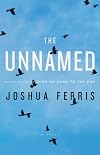
I suspect that the temptation to "walk away from it all" is a common one that almost everyone thinks about, even if only for an instant, at one time or another. Few of us, however, succumb to the temptation because our good sense allows us to control the fleeting urge to chuck it all away for a fresh start. What would happen, though, if, like Tim Farnsworth, the urge to walk away had to be responded to literally - no other option allowed? How would we survive the elements and the dangers of show more the streets? What would happen to those we leave behind? Joshua Ferris explores those questions in "The Unnamed."
Tim Farnsworth, a wealthy Harvard-educated attorney and partner at a prestigious New York City firm, lives with a monster: an unnamed disease that requires him to walk until he drops into a deep sleep from sheer exhaustion. The disease comes and goes, sometimes disappearing for years at a time, but when the urge to start walking strikes, Tim Farnsworth has no choice. He starts walking, and neither the obligations of his job nor those of his family can check his need to hit the streets.
Tim and his wife, by now, know what to expect when the disease returns. Tim is able to alert his wife to what his happening to him and she quickly outfits him in his warmest clothing and makes sure that he leaves the house (or office) with a backpack filled with things to help him survive on his own. Even all this planning does not always work, however, because Tim has a way of walking away from his possessions when coming out of one of his deep sleeps.
"The Unnamed," despite the bleakness of its theme, is a terrific character study because it places the reader deep inside Tim Farnsworth's head as he struggles to understand and control the disease that is slowly, but steadily, killing him. We share his frustration and despair when even the best doctors fail him; we worry with him about how his wife and daughter are holding up back home; we understand his anger at how his longtime legal colleagues take advantage of his illness; and, through his eyes, we see life stripped to its most fundamental elements.
This is a difficult novel to read because of its theme and storyline, and I have no quarrel with that. Ferris succeeds in making the reader feel Tim's struggle not to surrender to the hopelessness of his situation as the unnamed disease more and more dominates his life. As a result, some readers might, after putting down the book, be a bit reluctant to return to it. This feeling, though, only illustrates how successful Ferris is in making the reader feel the Farnsworth family's pain. On the other hand, I did struggle during the somewhat tedious section of the book during which Tim loses touch with reality to such an extent that he cannot distinguish the real world from his dream world. This overlong section of the book would have been more effective had it been presented concisely because, as it is written, I found myself rushing through it in order to get to the rest of the story.
"The Unnamed" is one of those books I will think about for a while - but not one that I am likely to want to read a second time. There is a lot to be gained from reading it once, however, and I recommend it to anyone ready to contemplate life at its most basic.
Rated at: 3.5 show less
Tim Farnsworth, a wealthy Harvard-educated attorney and partner at a prestigious New York City firm, lives with a monster: an unnamed disease that requires him to walk until he drops into a deep sleep from sheer exhaustion. The disease comes and goes, sometimes disappearing for years at a time, but when the urge to start walking strikes, Tim Farnsworth has no choice. He starts walking, and neither the obligations of his job nor those of his family can check his need to hit the streets.
Tim and his wife, by now, know what to expect when the disease returns. Tim is able to alert his wife to what his happening to him and she quickly outfits him in his warmest clothing and makes sure that he leaves the house (or office) with a backpack filled with things to help him survive on his own. Even all this planning does not always work, however, because Tim has a way of walking away from his possessions when coming out of one of his deep sleeps.
"The Unnamed," despite the bleakness of its theme, is a terrific character study because it places the reader deep inside Tim Farnsworth's head as he struggles to understand and control the disease that is slowly, but steadily, killing him. We share his frustration and despair when even the best doctors fail him; we worry with him about how his wife and daughter are holding up back home; we understand his anger at how his longtime legal colleagues take advantage of his illness; and, through his eyes, we see life stripped to its most fundamental elements.
This is a difficult novel to read because of its theme and storyline, and I have no quarrel with that. Ferris succeeds in making the reader feel Tim's struggle not to surrender to the hopelessness of his situation as the unnamed disease more and more dominates his life. As a result, some readers might, after putting down the book, be a bit reluctant to return to it. This feeling, though, only illustrates how successful Ferris is in making the reader feel the Farnsworth family's pain. On the other hand, I did struggle during the somewhat tedious section of the book during which Tim loses touch with reality to such an extent that he cannot distinguish the real world from his dream world. This overlong section of the book would have been more effective had it been presented concisely because, as it is written, I found myself rushing through it in order to get to the rest of the story.
"The Unnamed" is one of those books I will think about for a while - but not one that I am likely to want to read a second time. There is a lot to be gained from reading it once, however, and I recommend it to anyone ready to contemplate life at its most basic.
Rated at: 3.5 show less
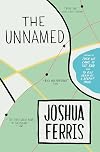
Imagine that, one day, you are compelled to start walking. You HAVE to walk. You walk for hours until you collapse from exhaustion. The compulsion to walk can strike at any time, in any weather. You might be in the middle of a work meeting. You might be sitting at home talking to your wife. You don't want to walk, but you're forced to by some compulsion that no medical doctor can detect or define. And it seems like you might be the only one in the world who has this compulsion.
Imagine that show more you are married to a man who suffers from this walking compulsion. At any time of day or night, he might disappear from your home. Frantic, you drive your car searching for him. Sometimes you find him sleeping in a pile of snow, half-frozen, miles from your suburban home. Other times you have to wait until you receive a phone call telling you where he is. You love him ... you really do. But this walking compulsion is difficult to understand. What is making him do this? Why can't the doctors figure it out? Is this a mental illness? Is he faking it? Sometimes the stress of living with the uncertainty of his affliction is too much to handle. But then the compulsion disappears. Life gets back to normal. Until one day, "it" starts again.
This is the life of Tim and Jane Farnsworth. As the book opens, the walking has started again for the third time after stopping for a few years. As readers, we're plunged right into the thick of it—with Tim and Jane struggling to keep it together and maintain the life they've built since the last time "it" happened. Alternating between Tim and Jane's perspectives, the book explores how Tim's walking affects their lives, their marriage, and the life of their only daughter—who is just now beginning to fully understand what her father and mother have gone through.
I started this book early one evening, was quickly sucked in, and finished it in one night. I felt as compelled to read it as Tim was compelled to walk. The details on how Tim and Jane try to manage his walking were fascinating and horrible. And the choices that each makes to try and keep Tim's compulsion from destroying their lives were simultaneously tragic and heroic. My heart broke when Tim decided to try and spare Jane the continued horror of his affliction, and it broke again when he struggled to return to her in a time of need.
When I began reading, I was reminded of Stephen King's story, The Long Walk, which is wildly different but involves forced walking. (In the story, teenage boys are forced to walk until they are the last one standing or risk being shot to death.) When reading King's story, I was fascinated with the idea of being forced to walk far beyond what your body could take or endure. I rekindled that fascination when reading about Tim's walking. Ferris does a wonderful job of making the walking "come alive." At times, I felt like I was out there with Tim...tramping by empty fields or down the sides of abandoned highways. The logistics of how Tim and Jane try to cope with the walking interested me too. It was impossible for me not to imagine myself in Tim's place. What would I do if this happened to me? Interestingly, I never really imagined myself as Jane. In many ways, being Jane seemed like the more horrifying position to be in, which I think says something about me but I'm not sure what.
This felt like such an original book. When trying to figure out what "genre" to put it in, I was flummoxed. Is this is a thriller? In a way— but it doesn't really capture the depth and "literariness" of the book. I finally decided it was a Personal Dystopia. In most dystopian books, we see an entire world that is negative or horrifying. In this book, only Tim and Jane experience the dystopia. Their world is ripped apart in a way that no one else can fully comprehend or define. At one point, Tim wishes he suffered from something that was "named" and "known"—like cancer—something you could explain to someone and they could understand or sympathize with.
I loved this book. It was dark and bleak and haunting and compelling. If you're looking for something different to read and what I've described sounds intriguing, give this book a try. I imagine you'll find it as haunting and compelling as I did. (Just a word of caution: Don't start it if you don't have time to finish it any time soon. If you're like me, you won't be able to stop reading. It really was "unputdownable.") show less
Imagine that show more you are married to a man who suffers from this walking compulsion. At any time of day or night, he might disappear from your home. Frantic, you drive your car searching for him. Sometimes you find him sleeping in a pile of snow, half-frozen, miles from your suburban home. Other times you have to wait until you receive a phone call telling you where he is. You love him ... you really do. But this walking compulsion is difficult to understand. What is making him do this? Why can't the doctors figure it out? Is this a mental illness? Is he faking it? Sometimes the stress of living with the uncertainty of his affliction is too much to handle. But then the compulsion disappears. Life gets back to normal. Until one day, "it" starts again.
This is the life of Tim and Jane Farnsworth. As the book opens, the walking has started again for the third time after stopping for a few years. As readers, we're plunged right into the thick of it—with Tim and Jane struggling to keep it together and maintain the life they've built since the last time "it" happened. Alternating between Tim and Jane's perspectives, the book explores how Tim's walking affects their lives, their marriage, and the life of their only daughter—who is just now beginning to fully understand what her father and mother have gone through.
I started this book early one evening, was quickly sucked in, and finished it in one night. I felt as compelled to read it as Tim was compelled to walk. The details on how Tim and Jane try to manage his walking were fascinating and horrible. And the choices that each makes to try and keep Tim's compulsion from destroying their lives were simultaneously tragic and heroic. My heart broke when Tim decided to try and spare Jane the continued horror of his affliction, and it broke again when he struggled to return to her in a time of need.
When I began reading, I was reminded of Stephen King's story, The Long Walk, which is wildly different but involves forced walking. (In the story, teenage boys are forced to walk until they are the last one standing or risk being shot to death.) When reading King's story, I was fascinated with the idea of being forced to walk far beyond what your body could take or endure. I rekindled that fascination when reading about Tim's walking. Ferris does a wonderful job of making the walking "come alive." At times, I felt like I was out there with Tim...tramping by empty fields or down the sides of abandoned highways. The logistics of how Tim and Jane try to cope with the walking interested me too. It was impossible for me not to imagine myself in Tim's place. What would I do if this happened to me? Interestingly, I never really imagined myself as Jane. In many ways, being Jane seemed like the more horrifying position to be in, which I think says something about me but I'm not sure what.
This felt like such an original book. When trying to figure out what "genre" to put it in, I was flummoxed. Is this is a thriller? In a way— but it doesn't really capture the depth and "literariness" of the book. I finally decided it was a Personal Dystopia. In most dystopian books, we see an entire world that is negative or horrifying. In this book, only Tim and Jane experience the dystopia. Their world is ripped apart in a way that no one else can fully comprehend or define. At one point, Tim wishes he suffered from something that was "named" and "known"—like cancer—something you could explain to someone and they could understand or sympathize with.
I loved this book. It was dark and bleak and haunting and compelling. If you're looking for something different to read and what I've described sounds intriguing, give this book a try. I imagine you'll find it as haunting and compelling as I did. (Just a word of caution: Don't start it if you don't have time to finish it any time soon. If you're like me, you won't be able to stop reading. It really was "unputdownable.") show less
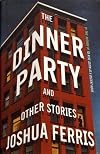
a/k/a "Every Asshole You Know Is Male". Which normally I wouldn't mind, but eleven stories with the same basic theme is a bit much. Even if they are well-written, and even if they offer a wide variety of misbehaviors. Ferris's first novel, Then We Came to the End, was an incredibly funny book about the incredibly sad topic of the slow drip, drip, drip of layoffs. This collection is man vs woman, man vs self, man vs man. And the men always lose. The first story sets the tone with a truly show more horrific saga of a man who can't stand his wife's best friend and wow, does he get his by the end. I still have to recommend he book because the words really do work, but I suggest not reading them all at once. Juggle at least one novel with this one.
Quote: "There was an essential difference between them - what he might have called her restlessness, what she might have called his complacency. When they argued now it was often over this. Why could she not be more like him and why could he not be more like her?" show less
Quote: "There was an essential difference between them - what he might have called her restlessness, what she might have called his complacency. When they argued now it was often over this. Why could she not be more like him and why could he not be more like her?" show less
Lists
Unread books (1)
Indie Next Picks (1)
stories at work (1)
2000s decade (1)
2010s (1)
Awards


You May Also Like


Associated Authors
Statistics
- Works
- 10
- Also by
- 15
- Members
- 7,682
- Popularity
- #3,169
- Rating
- 3.6
- Reviews
- 419
- ISBNs
- 140
- Languages
- 14
- Favorited
- 6


