
Gary Shteyngart
Author of Super Sad True Love Story
About the Author
Gary Shteyngart was born in Leningrad, which is now St. Petersburg, Russia, in 1972. He moved to the United States seven years later with his family. He received a bachelor's degree in politics from Oberlin College in Ohio and an MFA in creative writing from City University of New York. His debut show more novel, The Russian Debutante's Handbook, won the Stephen Crane Award for First Fiction and the National Jewish Book Award for Fiction. His other works include Absurdistan, Super Sad True Love Story, which won the Bollinger Everyman Wodehouse Prize, and Little Failure: A Memoir. He has taught writing at Hunter College, Columbia University, and Princeton University. (Bowker Author Biography) show less
Image credit: Gary Shteyngart in New York City on 2018
Works by Gary Shteyngart
Associated Works
Ballad of the Whiskey Robber: A True Story of Bank Heists, Ice Hockey, Transylvanian Pelt Smuggling, Moonlighting Detectives and Broken Hearts (2004) — Narrator, some editions — 797 copies, 31 reviews
Eat, Memory: Great Writers at the Table: A Collection of Essays from the New York Times (2008) — Contributor — 180 copies, 6 reviews
Tagged
Common Knowledge
- Canonical name
- Shteyngart, Gary
- Other names
- Shteyngart, Igor Semyonovich (birth)
- Birthdate
- 1972-07-05
- Gender
- male
- Education
- Stuyvesant High School
Oberlin College (BA | politics)
Hunter College (MFA) - Occupations
- professor
writer - Organizations
- Columbia University
Travel + Leisure - Awards and honors
- Granta's Best Of Young American Novelists (2007)
- Agent
- Denise Shannon
- Nationality
- USA
Russia (birth) - Birthplace
- Leningrad, Russian Federation, USSR
- Places of residence
- New York, New York, USA
- Associated Place (for map)
- Leningrad, Russian Federation, USSR
Members
Reviews
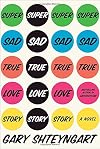
initial reaction
Reminds me of neuromancer and Rucker and Doctorow (Cory not E.L.) with a twist of Paul Verhoeven. It’s a satire, too, with people being deported because of low credit ratings, companies and governments merging indistinguishably, rating everyone’s “fuckability” bars via digital social networks, and the undercurrent of the promise of immortality and youth for the rich. (i think they are being bilked).
secondary reaction
I like this book. It’s not outstanding or show more visionary or life-changing for me but it’s good enough that i care and want to finish it. In fact, it’s making me reconsider reading Absurdistan again and i found that book ridiculously puerile and pretentious. Maybe i didn’t read it long enough…
consumatory response
A bleak but vibrant picture of the world-to-be and the world-as-is. It is satirical but not in a laugh-out-loud comical way. This aims an acerbic and wry eye to the deepest depths of consumerism and the capitalist mindset laced with pop culture and the power of social media to track, inform, and manipulate. We glide through this environment on a love story. A very human love story filled with characters that feel real even if they aren’t fleshed out too too much. I said earlier i wanted to finish it but as i got further in i found that i wanted to consume it whole. The story resonated with me.
Watching Lenny fall in love with Eunice was understated and vague but i think the shallowness of it was the point. She seems to represent the modern type of young person who is “so Media” and Lenny the older way, reading dirty, smelly books that make lots of people gag to even think of them. But Eunice appreciates this in Lenny - she’s the wave of the future, the bridge from the current past to the impending future. A present that respects its past but aims relentlessly toward what’s next. And she’s just as fickle while seeming devoted and without a shred of shame. She’s a savvy, smart innocent while Lenny is an experienced, intelligent romantic. The world of the book turns on this dynamic within the relationship and without. Everyone is constantly under scrutiny by everyone else connected in realtime by smart devices called “apparati” that sync credit scores, “fuckability,” likes/dislikes, etc. turning every minute life into a dating service profile. If you’re not part of that then you are abandoned as worthless, obsolete. Makes your stomach lurch.
Every bit of Super sad true love story’s title is accurate except for being true - it is science fiction, of course, but it is true in the sense of relationships and how they work. Personal and societal.
Lenny eventually moves to a free state where pristine credit ratings aren’t valued, aging isn’t belittled and ridiculed, and his vast fame at the story he publishes about him and Eunice’s time together leaves him in economically comfortable anonymity. show less
Reminds me of neuromancer and Rucker and Doctorow (Cory not E.L.) with a twist of Paul Verhoeven. It’s a satire, too, with people being deported because of low credit ratings, companies and governments merging indistinguishably, rating everyone’s “fuckability” bars via digital social networks, and the undercurrent of the promise of immortality and youth for the rich. (i think they are being bilked).
secondary reaction
I like this book. It’s not outstanding or show more visionary or life-changing for me but it’s good enough that i care and want to finish it. In fact, it’s making me reconsider reading Absurdistan again and i found that book ridiculously puerile and pretentious. Maybe i didn’t read it long enough…
consumatory response
A bleak but vibrant picture of the world-to-be and the world-as-is. It is satirical but not in a laugh-out-loud comical way. This aims an acerbic and wry eye to the deepest depths of consumerism and the capitalist mindset laced with pop culture and the power of social media to track, inform, and manipulate. We glide through this environment on a love story. A very human love story filled with characters that feel real even if they aren’t fleshed out too too much. I said earlier i wanted to finish it but as i got further in i found that i wanted to consume it whole. The story resonated with me.
Watching Lenny fall in love with Eunice was understated and vague but i think the shallowness of it was the point. She seems to represent the modern type of young person who is “so Media” and Lenny the older way, reading dirty, smelly books that make lots of people gag to even think of them. But Eunice appreciates this in Lenny - she’s the wave of the future, the bridge from the current past to the impending future. A present that respects its past but aims relentlessly toward what’s next. And she’s just as fickle while seeming devoted and without a shred of shame. She’s a savvy, smart innocent while Lenny is an experienced, intelligent romantic. The world of the book turns on this dynamic within the relationship and without. Everyone is constantly under scrutiny by everyone else connected in realtime by smart devices called “apparati” that sync credit scores, “fuckability,” likes/dislikes, etc. turning every minute life into a dating service profile. If you’re not part of that then you are abandoned as worthless, obsolete. Makes your stomach lurch.
Every bit of Super sad true love story’s title is accurate except for being true - it is science fiction, of course, but it is true in the sense of relationships and how they work. Personal and societal.
Lenny eventually moves to a free state where pristine credit ratings aren’t valued, aging isn’t belittled and ridiculed, and his vast fame at the story he publishes about him and Eunice’s time together leaves him in economically comfortable anonymity. show less
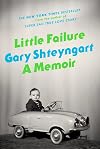
This was at times brilliant, occasionally funny, and often exceptionally annoying, and since that seems to be how the author is -- or at least how he portrays himself -- solid work there.
My favorite parts of this come relatively early in the book. Life in the USSR, moving to the US, adapting to life here, Gary's discovery of being a class clown, Gary's discovery of being an American adolescent -- all those things were gripping. Shteyngart is a fascinating writer with great turns of phrase show more and really evocative descriptions, and his experiences in this section of the tale are novel enough to be well worth reading.
Then comes the portion of the book where he is largely obsessed with a) women and b) alcohol and drugs. His obsession with women (who are absolutely interchangeable -- he rarely sees a woman as more than a fleshlight with legs) is just a litany of "why won't she?" Why won't she fuck me? Why won't she love me? Why won't she be my mommy? And to be fair to him, the Shteyngart writing this knows why. But GOD does the endless focus on this feel gross. Honestly, the drugs and alcohol were a lot better, except that most of the time he was crossfaded and STILL whining about the women who won't have sex with him.
In fact, this is just a huge problem generally in the latter half of the book. Shteyngart obviously loathes the person he was between the ages of 15 and 30, and his loathing is clearly and amply communicated. He has not one drop of compassion for that version of him, and as a result, the reader kind of can't do anything but hate him, either. Or at least I couldn't. And that's a lot of time to spend with a dude you hate.
(Also, this is a side note, but I hope Shteyngart makes a fairly hefty donation to Oberlin, because the college portion of this book is possibly the worst rip on a college I've ever read in my life. This is especially comical because I've read multiple memoirs by people who went to Oberlin (and I have a friend who went to Oberlin *while Shteyngart was there*) and none of them had this experience at all. In other words: the problem was you, Gary. That was the experience you chose to have.)
I started enjoying the book again right at the very end, when post-psychoanalysis, actually adult Shteyngart visits Russia with his parents. They were interacting like grownups and (finally) like people who actually loved each other, and it was a nice conclusion to an otherwise unpleasant third act.
(Oh. Warning for a LOT of child abuse.) show less
My favorite parts of this come relatively early in the book. Life in the USSR, moving to the US, adapting to life here, Gary's discovery of being a class clown, Gary's discovery of being an American adolescent -- all those things were gripping. Shteyngart is a fascinating writer with great turns of phrase show more and really evocative descriptions, and his experiences in this section of the tale are novel enough to be well worth reading.
Then comes the portion of the book where he is largely obsessed with a) women and b) alcohol and drugs. His obsession with women (who are absolutely interchangeable -- he rarely sees a woman as more than a fleshlight with legs) is just a litany of "why won't she?" Why won't she fuck me? Why won't she love me? Why won't she be my mommy? And to be fair to him, the Shteyngart writing this knows why. But GOD does the endless focus on this feel gross. Honestly, the drugs and alcohol were a lot better, except that most of the time he was crossfaded and STILL whining about the women who won't have sex with him.
In fact, this is just a huge problem generally in the latter half of the book. Shteyngart obviously loathes the person he was between the ages of 15 and 30, and his loathing is clearly and amply communicated. He has not one drop of compassion for that version of him, and as a result, the reader kind of can't do anything but hate him, either. Or at least I couldn't. And that's a lot of time to spend with a dude you hate.
(Also, this is a side note, but I hope Shteyngart makes a fairly hefty donation to Oberlin, because the college portion of this book is possibly the worst rip on a college I've ever read in my life. This is especially comical because I've read multiple memoirs by people who went to Oberlin (and I have a friend who went to Oberlin *while Shteyngart was there*) and none of them had this experience at all. In other words: the problem was you, Gary. That was the experience you chose to have.)
I started enjoying the book again right at the very end, when post-psychoanalysis, actually adult Shteyngart visits Russia with his parents. They were interacting like grownups and (finally) like people who actually loved each other, and it was a nice conclusion to an otherwise unpleasant third act.
(Oh. Warning for a LOT of child abuse.) show less
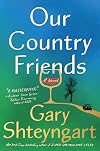
This started out slow for me, and to be honest it stayed slow (Shteyngart is generally pretty frenetic) but this was slow in a Tolstoyian/Chekovian way which I like just fine. I ended up adoring this pandemic Uncle Vanya with loving and explicit nods to The Big Chill and in my opinion clear connections to Les Liaisons Dangereuses and the Pedro season of The Real World: San Francisco.
The book centers on a Covid house party of sorts organized by successful, but financially struggling, writer show more Sasha Senderovsky. (I always assume Shteyngart is writing some aspect of himself in his main characters, but no character in his fiction has seemed so clearly a Shteyngart avatar as Sasha.) Sasha's wife Masha, a psychiatrist, is terrified by and obsessed with Covid. The couple has recently left the city and moved to a rural area near a college town in upstate New York where they have built outbuildings so they can have their city friends surrounding them and avoid rubbing elbows with actual rural people whom they assume are all undereducated, gun-toting, Trump-loving white supremacists. For Covid lockdown they choose to surround themselves with Sasha's three best friends, as well as a writer who studied with Sasha and is currently enjoying some fame for writing a book about being raised poor white trash (see eg Hillbilly Elegy but this author is just a low-key racist, not a right wing propagandist like JD Vance.) Also invited is a famous actor working on a miniseries treatment with Sasha (who I am pretty sure is David Duchovny with a soupcon of James Franco.) Like all of us they assumed lockdown would last for a short time and then realized it was not ending any time soon. There is lots of drama, lots of sex (some gross some not, but all a bit more elemental than I generally enjoy reading about), lots of food and alcohol, lots of weird shifting relationships filled with betrayal and lust and love and reconciliation, lots of analysis of masculinity among ostensibly feminist men, and lots of levels of privilege.
This is a very literary book, in the sense that much of it is essentially a literary salon (until, as they say in The Real World "people stop being polite and start getting real.") This is a very New York book. This is a very Jewish book. This is a very American book. That checks a boatload of boxes for me, but if you have antipathy toward, or simply a lack of interest in, literary Jewish New Yorkers, this is not going to work for you. Also, he really drags the borough in which I reside, so if you love Queens expect to be irked. Extra points for ending in my favorite Filipino restaurant -- he doesn't name it, but I am about 95% sure it is my beloved Jeepny! (Now sadly closed and I sorely miss their banana ribs.) Thanks Gary! A Jeepny memorial is a worthy choice. show less
The book centers on a Covid house party of sorts organized by successful, but financially struggling, writer show more Sasha Senderovsky. (I always assume Shteyngart is writing some aspect of himself in his main characters, but no character in his fiction has seemed so clearly a Shteyngart avatar as Sasha.) Sasha's wife Masha, a psychiatrist, is terrified by and obsessed with Covid. The couple has recently left the city and moved to a rural area near a college town in upstate New York where they have built outbuildings so they can have their city friends surrounding them and avoid rubbing elbows with actual rural people whom they assume are all undereducated, gun-toting, Trump-loving white supremacists. For Covid lockdown they choose to surround themselves with Sasha's three best friends, as well as a writer who studied with Sasha and is currently enjoying some fame for writing a book about being raised poor white trash (see eg Hillbilly Elegy but this author is just a low-key racist, not a right wing propagandist like JD Vance.) Also invited is a famous actor working on a miniseries treatment with Sasha (who I am pretty sure is David Duchovny with a soupcon of James Franco.) Like all of us they assumed lockdown would last for a short time and then realized it was not ending any time soon. There is lots of drama, lots of sex (some gross some not, but all a bit more elemental than I generally enjoy reading about), lots of food and alcohol, lots of weird shifting relationships filled with betrayal and lust and love and reconciliation, lots of analysis of masculinity among ostensibly feminist men, and lots of levels of privilege.
This is a very literary book, in the sense that much of it is essentially a literary salon (until, as they say in The Real World "people stop being polite and start getting real.") This is a very New York book. This is a very Jewish book. This is a very American book. That checks a boatload of boxes for me, but if you have antipathy toward, or simply a lack of interest in, literary Jewish New Yorkers, this is not going to work for you. Also, he really drags the borough in which I reside, so if you love Queens expect to be irked. Extra points for ending in my favorite Filipino restaurant -- he doesn't name it, but I am about 95% sure it is my beloved Jeepny! (Now sadly closed and I sorely miss their banana ribs.) Thanks Gary! A Jeepny memorial is a worthy choice. show less
The love story is really just a façade for the
The prime jobs are in “media” or “credit.” Everyone’s entire sense of worth is based on either how popular they are or how much Yen they have in the bank. Credit poles are placed throughout the city so everyone knows each other’s total net worth which is displayed as you pass. Everyone also carries an apparati (think miniaturized smart phone) which continually feeds a stream of information and rates people they come in contact with in regards to worth and sex appeal. The device also connects to an online service called GlobalTeens that everyone, regardless of age, uses as their main communication tool. This is an obvious jab at Facebook which was started for college students but has now become a world-wide communication platform.
While everyone remains self absorbed in their looks, bank account and social standing, few notice the decay of the government and society around them. Citizens are subjected to random searches and bureaucratic hurdles often marked by a sign that states that they must “deny its existence and imply consent.”
The author is incredibly skilled with words and uses them to evoke mixed emotions which leads to an unsettling atmosphere. Even if the story doesn’t sound interesting, read it for the sheer quality of the writing.
Lists
Best Dystopias (1)
A Novel Cure (1)
Awards


You May Also Like


Associated Authors
Statistics
- Works
- 10
- Also by
- 24
- Members
- 9,776
- Popularity
- #2,442
- Rating
- 3.6
- Reviews
- 400
- ISBNs
- 172
- Languages
- 16
- Favorited
- 15


