
Michael Chabon
Author of The Amazing Adventures of Kavalier & Clay
About the Author
Michael Chabon was born in Washington, D.C. on May 24, 1963. He received a B.A. in English literature from the University of Pittsburgh in 1985 and a Master of Fine Arts degree in English writing at the University of California at Irvine in 1987. Chabon found success at the age of 24, when William show more Morrow publishing house offered him $155,000, a near-record sum, for the rights to his first novel The Mysteries of Pittsburgh, which was his thesis in graduate school. After The Mysteries of Pittsburgh became a national bestseller, he began writing a series of short stories about a little boy dealing with his parents' divorce. The stories, which in part appeared in The New Yorker and G.Q., were bound together in 1991 into a volume titled A Model World and Other Stories. His other works include Wonder Boys, The Astonishing Secret of Awesome Man, Telegraph Avenue, and Pop: Fatherhood in Pieces. In 2001 he won the Pulitzer Prize for fiction for his novel The Amazing Adventures of Kavalier and Clay. He and Ayelet Waldman are co-editors of, Kingdom of Olives and Ash: Writers Confront the Occupation.. (Bowker Author Biography) show less
Series
Works by Michael Chabon
McSweeney's 10: Mammoth Treasury of Thrilling Tales (2002) — Editor; Contributor — 1,527 copies, 21 reviews
Manhood for Amateurs: The Pleasures and Regrets of a Husband, Father, and Son (2009) 1,467 copies, 61 reviews
Fight of the Century: Writers Reflect on 100 Years of Landmark ACLU Cases (2020) — Editor — 261 copies, 5 reviews
Star Trek: Picard - The Complete Series — Creator — 27 copies
Collected Fiction: The Mysteries of Pittsburgh, Wonder Boys, and Werewolves in Their Youth (2018) 13 copies
Closing Time mammoth tales 3 copies
MysteriesPittsburgh 1 copy
Měsíční svit 1 copy
Black Mask Stories 1 copy
Lavenue De Ocean Nouvelles 1 copy
The Escapists, Issue 4 1 copy
Norse Myths 1 copy
The Hofzinser Club 1 copy
The Escapists, Issue 6 1 copy
The Escapists, Issue 5 1 copy
The Escapists, Issue 3 1 copy
The Escapists, Issue 2 1 copy
The Escapists, Issue 1 1 copy
Along the Frontage Road 1 copy
In the Black Mill 1 copy
Yiddish Police Union 1 copy
Associated Works
Trickster Makes This World: Mischief, Myth, and Art (1997) — Foreword, some editions — 1,046 copies, 8 reviews
Casting the Runes and Other Ghost Stories [Oxford World Classics] (1987) — Introduction, some editions — 432 copies, 10 reviews
American Fantastic Tales : Terror and the Uncanny from the 1940's to Now (2009) — Contributor — 298 copies, 5 reviews
The Year's Best Fantasy and Horror: Fifteenth Annual Collection (2002) — Contributor — 275 copies, 4 reviews
Light the Dark: Writers on Creativity, Inspiration, and the Artistic Process (2017) — Contributor — 165 copies, 5 reviews
The Ecco Anthology of Contemporary American Short Fiction (2008) — Contributor — 140 copies, 2 reviews
Brown Sugar Kitchen: New-Style, Down-Home Recipes from Sweet West Oakland (2014) — Foreword, some editions — 91 copies
Navigating The Golden Compass: Religion, Science & Dæmonology in Philip Pullman's His Dark Materials (2005) — Contributor — 65 copies, 1 review
Kong Unbound: The Cultural Impact, Pop Mythos, and Scientific Plausibility of a Cinematic Legend (2005) — Contributor — 21 copies
How Comics Were Made: A Visual History from the Drawing Board to the Printed Page (2024) — Foreword — 20 copies
Amerika, Amerika bloemlezing — Contributor — 8 copies
Hebbes7: 10 nieuwe smaakmakers voor het najaar — Contributor — 3 copies
Steranko : arte noir [del 5 al 14 de julio, 2002, Semana Negra, Gijón, España] — Contributor — 1 copy
Tagged
Common Knowledge
- Canonical name
- Chabon, Michael
- Legal name
- Chabon, Michael
- Other names
- Bach, Leon Chaim
Cohen, Malachi B.
Zorn, August Van
שייבון, מייקל - Birthdate
- 1963-05-24
- Gender
- male
- Education
- Carnegie Mellon University
University of Pittsburgh (BA | 1984)
University of California, Irvine (MFA | 1987 | Creative Writing) - Occupations
- novelist
short story writer
columnist
screenwriter - Organizations
- Science Fiction and Fantasy Writers of America
- Awards and honors
- Helmerich Award (2008)
Pulitzer Prize (2001)
American Academy of Arts and Letters (2012) - Agent
- Evans, Mary
- Relationships
- Waldman, Ayelet (spouse)
- Nationality
- USA
- Birthplace
- Washington, D.C., USA
- Places of residence
- Washington, D.C., USA
Berkeley, California, USA
Pittsburgh, Pennsylvania, USA
Columbia, Maryland, USA - Map Location
- Washington DC, USA
Members
Discussions
"Moonglow" by Michael Chabon in 75 Books Challenge for 2022 (March 2022)
Michael Chabon in Other People's Libraries (November 2021)
THE DEEP ONES: "The God of Dark Laughter" by Michael Chabon in The Weird Tradition (March 2015)
The Amazing Adventures of Kavalier & Clay - Group Read (May) in 75 Books Challenge for 2013 (July 2013)
GROUP READ - Gentlemen of the Road by Michael Chabon in The 12 in 12 Category Challenge (August 2012)
Reviews
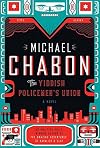
Chabon is one of those indisputable geniuses, who manages to garner praise from the literary elite, genre audiences, and the popular press. The Yiddish Policemen's Union is a stylish alternate history novel and noir thriller centered around Jewish Alaska and human destiny.
Yeah, Jewish Alaska. In 1940 the United States decided to settle Jewish Refugees around Sikta, a plan that in our timeline was blocked by Anthony Dimond. With the influx of refugees, the Holocaust only killed 2 million show more Jews, Israel lost its war for independence, and the timeline diverged in a thousand small ways. Though they live in Alaska, the Sitka Jews certainly aren't Americans, and in two months their Yiddish-speaking quasi-nation will cease to exist, as it reverts back to the United States at the end of the 60 year treaty.
Meyer Landsman is a homicide detective with the Sikta police force, who's slow-motion suicide via plum brandy is interrupted when one of the other residents in his fleabag motel is murdered. It's just another heroin junkie dead, but he's a neighbor, and Meyer makes it a mission to give the young man some peace, despite the warnings of his partner and cousin Johnny Berko (a massive half-Indian Jew) and his new boss and ex-wife Bima, who's trying to hand the transition authority a clean desk. Meyer stumbles into something much bigger than he is. The dead man is Mendel Shpilman, estranged son of the Orthodox Rabbi/Organized Crime Boss, and a plausible candidate for Tzadik ha-Dor, a potential Messiah born every generation. Hardboiled detective work mixes with international espionage, applied eschatology, and the blend of love and betrayal that means family.
The idea that is at heart of this book is "a twist in his soul", a beautiful phrase used to describe the dead Mendel, which refers to both his Messianic blessings, his easy genius, his homosexuality, and his eventual addiction and death. The twist is in Meyer, in his obsession with homicide work, the deep wounds that he believes he inflicted on his father and ex-wife, in the whole topsy-turney world of Jewish Sitka and the deals that threaten to make it and unmake. Chabon writes in a way that implies that we are all twists; little vortexes in the great flow of life.
And of course, he's a fantastic descriptive writer, a miracle worker of his own with metaphor and the senses. Jewish Sikta feels alive in a way that is rare in literature, in all of its rich contradictions. It's a modern city and an overgrown shtetl where everyone is related and tied into a rich web of gossip; the chief divine is also the chief gangster; and escape from the past is impossible even as it's being obliterated.
I could gripe (I always can), that perhaps the pastiche of noir is little more than pastiche, that the women in this world, Meyer's ex-wife Bina, dead sister Naomi, and the Rabbi's wife Batsheva, are more interesting than the men, and sadly under-served by the story. Perhaps even that the alternate history is a mere gloss that does little to expand the discussion of Jewishness. But this are minor complaints against the power of this masterpiece.
*****
August 2012 review
One part Philip Roth Jewish kvetching, one part Raymond Chandler hardboiled detective, and a dash of Philip K Dick alt-history, this book is a wonder. I won't ruin the plot, but all I can say is that Chabon is an undisputed grandmaster of sensual writing. Jewish Sitka is one of the realist fictional places I've read about, the predicament of its fundamentally lost characters all too familiar.
Who needs sleep when you have literature? show less
Yeah, Jewish Alaska. In 1940 the United States decided to settle Jewish Refugees around Sikta, a plan that in our timeline was blocked by Anthony Dimond. With the influx of refugees, the Holocaust only killed 2 million show more Jews, Israel lost its war for independence, and the timeline diverged in a thousand small ways. Though they live in Alaska, the Sitka Jews certainly aren't Americans, and in two months their Yiddish-speaking quasi-nation will cease to exist, as it reverts back to the United States at the end of the 60 year treaty.
Meyer Landsman is a homicide detective with the Sikta police force, who's slow-motion suicide via plum brandy is interrupted when one of the other residents in his fleabag motel is murdered. It's just another heroin junkie dead, but he's a neighbor, and Meyer makes it a mission to give the young man some peace, despite the warnings of his partner and cousin Johnny Berko (a massive half-Indian Jew) and his new boss and ex-wife Bima, who's trying to hand the transition authority a clean desk. Meyer stumbles into something much bigger than he is. The dead man is Mendel Shpilman, estranged son of the Orthodox Rabbi/Organized Crime Boss, and a plausible candidate for Tzadik ha-Dor, a potential Messiah born every generation. Hardboiled detective work mixes with international espionage, applied eschatology, and the blend of love and betrayal that means family.
The idea that is at heart of this book is "a twist in his soul", a beautiful phrase used to describe the dead Mendel, which refers to both his Messianic blessings, his easy genius, his homosexuality, and his eventual addiction and death. The twist is in Meyer, in his obsession with homicide work, the deep wounds that he believes he inflicted on his father and ex-wife, in the whole topsy-turney world of Jewish Sitka and the deals that threaten to make it and unmake. Chabon writes in a way that implies that we are all twists; little vortexes in the great flow of life.
And of course, he's a fantastic descriptive writer, a miracle worker of his own with metaphor and the senses. Jewish Sikta feels alive in a way that is rare in literature, in all of its rich contradictions. It's a modern city and an overgrown shtetl where everyone is related and tied into a rich web of gossip; the chief divine is also the chief gangster; and escape from the past is impossible even as it's being obliterated.
I could gripe (I always can), that perhaps the pastiche of noir is little more than pastiche, that the women in this world, Meyer's ex-wife Bina, dead sister Naomi, and the Rabbi's wife Batsheva, are more interesting than the men, and sadly under-served by the story. Perhaps even that the alternate history is a mere gloss that does little to expand the discussion of Jewishness. But this are minor complaints against the power of this masterpiece.
*****
August 2012 review
One part Philip Roth Jewish kvetching, one part Raymond Chandler hardboiled detective, and a dash of Philip K Dick alt-history, this book is a wonder. I won't ruin the plot, but all I can say is that Chabon is an undisputed grandmaster of sensual writing. Jewish Sitka is one of the realist fictional places I've read about, the predicament of its fundamentally lost characters all too familiar.
Who needs sleep when you have literature? show less
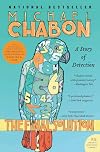
I'm having trouble coming to terms with this book. Add it on the pile of my ambivalence about Michael Chabon. I think the thing that bugs me the most is the potential for greatness here.
An aging Sherlock Holmes is coming to terms with the fact that he is no longer in his prime and preparing himself for death and battling senility? Awesome, awesome premise. As a huge fan of Sherlock Holmes, I usually refuse to touch modern interpretations, because I don't trust authors to give me what Conan show more Doyle did to make Holmes so compelling. On this aspect, Chabon mostly delivers: he captures Holmes' greatness in his dedication and flashes of brillance and tempers it with his moodiness and self-destructiveness. It's not, by any stretch of the imagination, a Holmes mystery, though, failing in the complete lack of explanation of how Holmes deduces anything (and really, failing as a compelling mystery all over.) Holmes is aging, his brain isn't what it used to be, don't tell us that, show us by having Holmes try his famous Holmes deduction. Show us him missing clues, or thinking slowly, or coming to the wrong conclusions. It's an insanely original, compelling idea, that mostly only reaches it's full potential when Holmes reflects on a post-Blitz London with anger that London still exists in the post-Holmes area and that the Blitz and WWI have allowed it to change and grow into something else. I love the idea of what happens to the characters we love when they move past what they once were.
I think the big reason that this book fails is that while Chabon is good at many things, the novella is not an ideal format. His books become compelling over time, as you become more enmeshed with the characters. Pages give his language room to proliferate and his sprawling sentences feel less suffocating in longer books. There are so many ideas here, ripe for the picking. I can't possible imaging saying to myself "I have an idea for a book that's about an aging Holmes, in WWII, meeting a mute orphan, who will act as his foil, who has a parrot, who knows secret numbers, which may be the key to German codes, prompting discussion of the lengths one will go for national loyalty and exploring the tension between commitment to country and commitment to Jewish orphaned refuges in the middle of the holocaust, while also discussing the morally grey characters who form this boy's foster family and I want this story to be an exemplar of the modern mystery novel. That sounds like it can be done in 170 pages!" Everything loses in the brevity.
What really bothers me is that in the author's note, Chabon writes about the respect he has for "genre novels" and that he wants people who normally don't read genre to pick up this book and it to make them want to go back and read more mysteries. It's insulting to authors who frequently write genre. I agree that genre can be the most compelling form of fiction; it's freed from constraints; it can explore the worlds of possibilities and use that to reflect on the way our world is. This is not a great genre novel, and although Chabon has been a great friend to the melding of genre and literature in Kavalier and Clay (superhero/comic book) and Yiddish Policeman's Union (a much better version of mystery/noir), he should have left this one to the mystery writers. show less
An aging Sherlock Holmes is coming to terms with the fact that he is no longer in his prime and preparing himself for death and battling senility? Awesome, awesome premise. As a huge fan of Sherlock Holmes, I usually refuse to touch modern interpretations, because I don't trust authors to give me what Conan show more Doyle did to make Holmes so compelling. On this aspect, Chabon mostly delivers: he captures Holmes' greatness in his dedication and flashes of brillance and tempers it with his moodiness and self-destructiveness. It's not, by any stretch of the imagination, a Holmes mystery, though, failing in the complete lack of explanation of how Holmes deduces anything (and really, failing as a compelling mystery all over.) Holmes is aging, his brain isn't what it used to be, don't tell us that, show us by having Holmes try his famous Holmes deduction. Show us him missing clues, or thinking slowly, or coming to the wrong conclusions. It's an insanely original, compelling idea, that mostly only reaches it's full potential when Holmes reflects on a post-Blitz London with anger that London still exists in the post-Holmes area and that the Blitz and WWI have allowed it to change and grow into something else. I love the idea of what happens to the characters we love when they move past what they once were.
I think the big reason that this book fails is that while Chabon is good at many things, the novella is not an ideal format. His books become compelling over time, as you become more enmeshed with the characters. Pages give his language room to proliferate and his sprawling sentences feel less suffocating in longer books. There are so many ideas here, ripe for the picking. I can't possible imaging saying to myself "I have an idea for a book that's about an aging Holmes, in WWII, meeting a mute orphan, who will act as his foil, who has a parrot, who knows secret numbers, which may be the key to German codes, prompting discussion of the lengths one will go for national loyalty and exploring the tension between commitment to country and commitment to Jewish orphaned refuges in the middle of the holocaust, while also discussing the morally grey characters who form this boy's foster family and I want this story to be an exemplar of the modern mystery novel. That sounds like it can be done in 170 pages!" Everything loses in the brevity.
What really bothers me is that in the author's note, Chabon writes about the respect he has for "genre novels" and that he wants people who normally don't read genre to pick up this book and it to make them want to go back and read more mysteries. It's insulting to authors who frequently write genre. I agree that genre can be the most compelling form of fiction; it's freed from constraints; it can explore the worlds of possibilities and use that to reflect on the way our world is. This is not a great genre novel, and although Chabon has been a great friend to the melding of genre and literature in Kavalier and Clay (superhero/comic book) and Yiddish Policeman's Union (a much better version of mystery/noir), he should have left this one to the mystery writers. show less
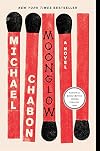
Michael Chabon writes with such engaging originality and imagination that I’d read anything he puts out. This novel combines a look at the complex relationships in his own family with some of the historical events of the 20th century. In writing about the people in his own family, he shows how world history affects generations in very personal ways, or how the personal often reflects profound social issues.
There’s a lot of beautiful writing here, with the moon and rocketry a symbol for show more the escape from the difficulties and horrors of life on earth. Similarly, a lot of Chabon’s images are so stark or unusual that they stick in the mind – the hermaphrodite in the trailer, for example, the conversations with the German priest, the dream of the horse, the snake hunt. These seem a lot of disparate images, but Chabon uses them to highlight the memorable story of his grandfather’s life.
Chabon’s grandfather wants to escape from the antisemitism and poverty of the USA in the 1920s and ’30s, and from the isolation that he seems to experience even within his own community. He joins the army, but is sent to join an intelligence unit. What he finds in searching for the U2 rocket construction sites leaves him unable to separate the aeronautical dream from the slave labour death camps overseen by rocketeer Wernher von Braun. This becomes even more complicated when he falls in love with a French refugee who is dealing with mental health issues that were compounded by – or maybe rose out of – her experiences in the war. Finally, he comes face to face with von Braun at an astronautics conference, and feels nothing for him but pity. In the end, Chabon concludes, his grandfather found love and outlived von Braun.
The role of storytelling is one of the themes in this novel, as it was in other books by Chabon. Storytelling offers a way to make sense of one’s life, as Chabon’s grandfather seems to be trying to do. It’s also a way to create a new life, as both his grandmother and von Braun have chosen to do. Chabon sees this as a house of cards: the stories his grandfather tells are pieces of some kind of building, although the building is unstable and prone to falling apart. Nevertheless, putting them together allows Chabon to find a kind of order in the bizarre series of events that he discovers make up his own family.
The links between fiction and reality is another theme in Chabon’s writing that comes out here. The book’s subtitle says that this is a novel, although it reads as a fairly straightforward retelling of his grandfather’s last days. Chabon’s gift as a writer is to make even the bizarre seem realistic. But perhaps the subtitle is merely meant to explain imagined lines of dialogue that Chabon wasn’t present for, or to provide a cover for the criminal events that he describes. (Family meetings might be difficult if he has to justify all the stories in the book.) But it made me wonder how much of this story is made up, as I did in Chabon’s Cavalier and Clay book. It also leads to the question of how much conventional history is a story. The whitewashed story of Werner von Braun and the American rocket program, for example, was clearly embellished to suit the needs and political objectives of the time.
Not long ago, I read The Way the Crow Flies by Ann-Marie Macdonald, which has surprising parallels to this novel. Both seem to use elements of the authors’ family lives to explore the compromised history of the rocket programs of Germany and the United States, within a complex social context that includes family lies, racism, sexual abuse and criminality. Both are powerful reflections on the ideals of the space race coming into conflict with personal and political ends, and by extension with the idealistic stories we tell ourselves and the reality they hide. show less
There’s a lot of beautiful writing here, with the moon and rocketry a symbol for show more the escape from the difficulties and horrors of life on earth. Similarly, a lot of Chabon’s images are so stark or unusual that they stick in the mind – the hermaphrodite in the trailer, for example, the conversations with the German priest, the dream of the horse, the snake hunt. These seem a lot of disparate images, but Chabon uses them to highlight the memorable story of his grandfather’s life.
Chabon’s grandfather wants to escape from the antisemitism and poverty of the USA in the 1920s and ’30s, and from the isolation that he seems to experience even within his own community. He joins the army, but is sent to join an intelligence unit. What he finds in searching for the U2 rocket construction sites leaves him unable to separate the aeronautical dream from the slave labour death camps overseen by rocketeer Wernher von Braun. This becomes even more complicated when he falls in love with a French refugee who is dealing with mental health issues that were compounded by – or maybe rose out of – her experiences in the war. Finally, he comes face to face with von Braun at an astronautics conference, and feels nothing for him but pity. In the end, Chabon concludes, his grandfather found love and outlived von Braun.
The role of storytelling is one of the themes in this novel, as it was in other books by Chabon. Storytelling offers a way to make sense of one’s life, as Chabon’s grandfather seems to be trying to do. It’s also a way to create a new life, as both his grandmother and von Braun have chosen to do. Chabon sees this as a house of cards: the stories his grandfather tells are pieces of some kind of building, although the building is unstable and prone to falling apart. Nevertheless, putting them together allows Chabon to find a kind of order in the bizarre series of events that he discovers make up his own family.
The links between fiction and reality is another theme in Chabon’s writing that comes out here. The book’s subtitle says that this is a novel, although it reads as a fairly straightforward retelling of his grandfather’s last days. Chabon’s gift as a writer is to make even the bizarre seem realistic. But perhaps the subtitle is merely meant to explain imagined lines of dialogue that Chabon wasn’t present for, or to provide a cover for the criminal events that he describes. (Family meetings might be difficult if he has to justify all the stories in the book.) But it made me wonder how much of this story is made up, as I did in Chabon’s Cavalier and Clay book. It also leads to the question of how much conventional history is a story. The whitewashed story of Werner von Braun and the American rocket program, for example, was clearly embellished to suit the needs and political objectives of the time.
Not long ago, I read The Way the Crow Flies by Ann-Marie Macdonald, which has surprising parallels to this novel. Both seem to use elements of the authors’ family lives to explore the compromised history of the rocket programs of Germany and the United States, within a complex social context that includes family lies, racism, sexual abuse and criminality. Both are powerful reflections on the ideals of the space race coming into conflict with personal and political ends, and by extension with the idealistic stories we tell ourselves and the reality they hide. show less
Michael Chabon takes on Sherlock Holmes with this excellent mystery involving a young boy who doesn't speak, his stolen parrot (who whispers seemingly random numbers in German), the murder of one man who tried to steal it, and the search for the man who succeeded in the theft.
I love Doyle's Holmes stories with an enthusiastic and enduring adoration, and normally I won't touch remakes, as it were, of favorite stories or characters. But I also absolutely love Chabon, and I'm very glad that I show more made an exception for this little gem. Chabon's sketch of Holmes in his beekeeping old age is perfectly wonderful. show less
I love Doyle's Holmes stories with an enthusiastic and enduring adoration, and normally I won't touch remakes, as it were, of favorite stories or characters. But I also absolutely love Chabon, and I'm very glad that I show more made an exception for this little gem. Chabon's sketch of Holmes in his beekeeping old age is perfectly wonderful. show less
Lists
Jewish Books (5)
. (1)
Non-Fiction (1)
First Novels (1)
Disco Elysium (1)
Hidden Classics (1)
100 New Classics (1)
Holocaust (1)
. (1)
Read These Too (1)
Audio Books (1)
Wishlist (1)
Nineties (1)
Nebula Award (1)
Asia (1)
Winter Books (1)
Best War Stories (1)
1990s (1)
Best Dystopias (1)
To borrow next (1)
Art of Reading (2)
Overdue Podcast (2)
Urban Fiction (2)
Favourite Books (2)
A Novel Cure (2)
Magic Realism (2)
Five star books (3)
To Read (4)
Unread books (4)
Fiction For Men (3)
USA Road Trip (2)
Gen X Library (1)
Swashbucklers (1)
Put a Bird On It (1)
Murder Mysteries (1)
5 Best 5 Years (1)
Indie Next Picks (1)
2000s decade (1)
Great Audiobooks (1)
Emily's Reviews (1)
The "A" List (1)
Best Satire (1)
. (1)
Awards


You May Also Like


Associated Authors
Statistics
- Works
- 74
- Also by
- 65
- Members
- 67,836
- Popularity
- #198
- Rating
- 3.9
- Reviews
- 1,905
- ISBNs
- 622
- Languages
- 23
- Favorited
- 374


