
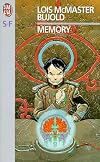
Review upon reread: I’ve been avoiding rereading any of the Vorkosigan books for, oh, about a decade now, because I knew that it wouldn’t quite hold up, and indeed, it doesn’t fully. Some of the assumptions that underpin this universe are no longer something I can just read past uncritically, and some of the stuff Miles says and does makes him seem like even more of an asshole than it did twenty years ago. And, let’s face it: I love Miles as a character, but he’s enough of an asshole that I would hate him in real life. I do think this book was, or at least could have been, a step toward making him less of as asshole, though. Miles, in short, is finally growing up in this one, and let’s just say it is definitely time.
But what I love about this book did hold up. I love that one of Miles’s terrible decisions finally comes home to roost, and he loses big, and survives and finds a new life in the ashes. I love the mystery, even if it was obvious the first time I read this and continues to be obvious now. I love Simon, living through a much worse personal apocalypse and finding his new life a lot more gracefully than Miles ever could. And, on a more Doylist level, I love seeing someone completely reboot a series on book 10, just change everything it and the main character are about. It’s impressively well done.
Just not quite the perfect book it used to be for me.
But what I love about this book did hold up. I love that one of Miles’s terrible decisions finally comes home to roost, and he loses big, and survives and finds a new life in the ashes. I love the mystery, even if it was obvious the first time I read this and continues to be obvious now. I love Simon, living through a much worse personal apocalypse and finding his new life a lot more gracefully than Miles ever could. And, on a more Doylist level, I love seeing someone completely reboot a series on book 10, just change everything it and the main character are about. It’s impressively well done.
Just not quite the perfect book it used to be for me.
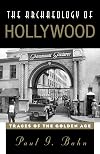
This book is the weirdest, dullest combination of "what I did on my summer vacation," lies, and offensive bullshit.
The book isn't actually about the archaeology of Hollywood, which I assumed (I think fairly) from the title and summary. Instead, it precisely recreates the experience of your incredibly boring great uncle telling you at unnecessary length about his trip to Los Angeles. The "facts" (more on those scare quotes later) are exactly the same kind of thing you'd get if you took a couple of bus tours in the area, and the pictures are, well. Someone's vacation snaps. Bahn went to the Guadalupe Dunes, some theaters, some museums, and a whoooole lot of parking lots, and he is happy to tell you all about them, including every single address he visited. (He apparently didn't go to Universal Studios, though, because he talks about the millions of people who take the studio tour but fails to mention that it is a theme park and that's why they go there.) Bahn does spend a little time at the ends of the chapters imagining what an alien archaeologist might make of the material remains of Hollywood's past, but that is, actually, fiction.
But then, a lot of this book is fiction. (Extremely dull, poorly written fiction.) I am not an expert or even a fan of golden age Hollywood. I just live in Southern California and read the occasional book on the subject. I should not be able to find tons of errors in this book, and yet here we are. Some of my favorites of his errors:
- He gets show more Mary Pickford's age wrong. How do you write a book on golden age Hollywood without knowing when Mary Pickford was born?
- He calls Sessue Hayakawa S. I. Hayakawa. Those are two different people. S. I. was an academic and politician. Sessue was an early film star, and again: if you love the golden age, I would think you'd know that.
- He reports multiple urban legends as facts. Joni Mitchell has said multiple times that Hawai'i was the inspiration for "Big Yellow Taxi." She's been very clear! Bahn says that a Hollywood hotel called the Garden of Allah inspired the song, which is fully an urban legend, and not even one that makes any sense.
- Bahn also says, without any qualifiers at all, that Thomas Ince was murdered. There's no way to know for sure, but he probably wasn't, and Ince shouldn't be alongside, say, William Desmond Taylor in a list of early Hollywood murder victims, let alone first on the list.
There are also a bunch of more minor errors; it was bad enough that if I read anything I hadn't already seen in a more reliable source, I put the book down and researched it. (And a lot of times it was wrong.)
And then there are the times when Bahn misses the boat on much larger, more important topics. Early on, he notes that it's "...inevitable that the author of [a book on Hollywood] should be from the Old World," apparently because Americans are just too close to the film industry to appreciate it. My suggestion to him would be that, judging by this book, he might want to stay in his lane. Any decent Californian, just as an example, would not have said that the missions were "intended to look after the Indians' spiritual well-being," because we know how wrong and offensive that is and on how many levels. We also could have told him that there's more than just ignorance behind the loss of so many old buildings. We have earthquakes here, Paul. We have regular updates to our building codes to keep people alive. And it is really, really hard to retrofit a building to code; in some cases it's impossible. Oh, and Bahn says multiple times that it's possible to grow up in Southern California without learning anything about local history, and he's not wrong. I mean, you can grow up ignorant of history anywhere if you just believe. But I assure you, if you went to public school here and paid attention, you know some stuff about local history, including about the industry. (I think this is an old man yelling at clouds thing. The early days of Hollywood matter the most to him! Why don't they matter the most to everyone?)
There's also a touch of just absolute bewilderment in this. This book was published in 2014. It has the shortest references list I've ever seen in a non-memoir non-fiction book, and most of the references are from the 1980s and 1990s. It also has a 76 page appendix (in a 280 page book) listing a ton of celebrity graves with no commentary, something you can very easily get from the internet. Why is that there? Why is any of this here? What is the actual point of this book?
Spoiler warning: there is no point. This book sucks. It's wrong. It's bad. It's boring. It's not even well-written. (And I'm not ever going to be less mad about his addiction to exclamation points. You are not required to use one every two paragraphs, just FYI.) It's weird that it got published, and weirder that it got published without anyone ever mentioning to Bahn that he was humiliating himself in public by putting his name on this. show less
The book isn't actually about the archaeology of Hollywood, which I assumed (I think fairly) from the title and summary. Instead, it precisely recreates the experience of your incredibly boring great uncle telling you at unnecessary length about his trip to Los Angeles. The "facts" (more on those scare quotes later) are exactly the same kind of thing you'd get if you took a couple of bus tours in the area, and the pictures are, well. Someone's vacation snaps. Bahn went to the Guadalupe Dunes, some theaters, some museums, and a whoooole lot of parking lots, and he is happy to tell you all about them, including every single address he visited. (He apparently didn't go to Universal Studios, though, because he talks about the millions of people who take the studio tour but fails to mention that it is a theme park and that's why they go there.) Bahn does spend a little time at the ends of the chapters imagining what an alien archaeologist might make of the material remains of Hollywood's past, but that is, actually, fiction.
But then, a lot of this book is fiction. (Extremely dull, poorly written fiction.) I am not an expert or even a fan of golden age Hollywood. I just live in Southern California and read the occasional book on the subject. I should not be able to find tons of errors in this book, and yet here we are. Some of my favorites of his errors:
- He gets show more Mary Pickford's age wrong. How do you write a book on golden age Hollywood without knowing when Mary Pickford was born?
- He calls Sessue Hayakawa S. I. Hayakawa. Those are two different people. S. I. was an academic and politician. Sessue was an early film star, and again: if you love the golden age, I would think you'd know that.
- He reports multiple urban legends as facts. Joni Mitchell has said multiple times that Hawai'i was the inspiration for "Big Yellow Taxi." She's been very clear! Bahn says that a Hollywood hotel called the Garden of Allah inspired the song, which is fully an urban legend, and not even one that makes any sense.
- Bahn also says, without any qualifiers at all, that Thomas Ince was murdered. There's no way to know for sure, but he probably wasn't, and Ince shouldn't be alongside, say, William Desmond Taylor in a list of early Hollywood murder victims, let alone first on the list.
There are also a bunch of more minor errors; it was bad enough that if I read anything I hadn't already seen in a more reliable source, I put the book down and researched it. (And a lot of times it was wrong.)
And then there are the times when Bahn misses the boat on much larger, more important topics. Early on, he notes that it's "...inevitable that the author of [a book on Hollywood] should be from the Old World," apparently because Americans are just too close to the film industry to appreciate it. My suggestion to him would be that, judging by this book, he might want to stay in his lane. Any decent Californian, just as an example, would not have said that the missions were "intended to look after the Indians' spiritual well-being," because we know how wrong and offensive that is and on how many levels. We also could have told him that there's more than just ignorance behind the loss of so many old buildings. We have earthquakes here, Paul. We have regular updates to our building codes to keep people alive. And it is really, really hard to retrofit a building to code; in some cases it's impossible. Oh, and Bahn says multiple times that it's possible to grow up in Southern California without learning anything about local history, and he's not wrong. I mean, you can grow up ignorant of history anywhere if you just believe. But I assure you, if you went to public school here and paid attention, you know some stuff about local history, including about the industry. (I think this is an old man yelling at clouds thing. The early days of Hollywood matter the most to him! Why don't they matter the most to everyone?)
There's also a touch of just absolute bewilderment in this. This book was published in 2014. It has the shortest references list I've ever seen in a non-memoir non-fiction book, and most of the references are from the 1980s and 1990s. It also has a 76 page appendix (in a 280 page book) listing a ton of celebrity graves with no commentary, something you can very easily get from the internet. Why is that there? Why is any of this here? What is the actual point of this book?
Spoiler warning: there is no point. This book sucks. It's wrong. It's bad. It's boring. It's not even well-written. (And I'm not ever going to be less mad about his addiction to exclamation points. You are not required to use one every two paragraphs, just FYI.) It's weird that it got published, and weirder that it got published without anyone ever mentioning to Bahn that he was humiliating himself in public by putting his name on this. show less
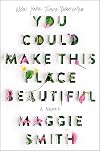
Look, Maggie Smith is very good at words, and my rating reflects that, but it also reflects serendipity. I put this book on hold at the library last December with no knowledge of what it was about. Just -- hey, I like memoirs, I like some of Maggie Smith's poetry, why not give it a try? At least this time I knew why the author was famous! Two days ago, I spent the morning talking to my friend about her divorce, the divorce she found out she was having only a few weeks ago. That afternoon, my hold came in at the library and I opened this book, and it sort of felt like I was holding my friend's broken heart in my hand.
Maggie Smith writes the feelings of divorce, the feelings of betrayal, amazingly well. Is there resolution in this? Not really, but sort of. (She proves herself capable of standing on her own. That's actually all the narrative this needs, although I also appreciatedthat his house ends up full of bees .) But every word fits here; every word works. At times, this is a memoir; at other times, it's a prose poem. Either way, it's entirely worth reading. I can't say I enjoyed this book, because it too closely echoed the pain someone I love is living with every second right now. But I sure felt it.
Maggie Smith writes the feelings of divorce, the feelings of betrayal, amazingly well. Is there resolution in this? Not really, but sort of. (She proves herself capable of standing on her own. That's actually all the narrative this needs, although I also appreciated
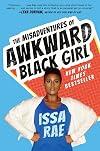
Embarrassment humor and fatphobia. This just isn’t for me.
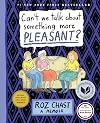
I didn't know much about this when I got it from the library, and I wouldn't have chosen it if I had known what it was about. I very much enjoyed it anyway. Chast manages to write about a truly difficult, painful situation with humor and honesty, and it's a topic relevant to all of us. (After all, the one thing we're all guaranteed to do sooner or later is die.)
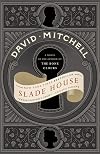
If your book is tagged as horror and I, a noted horror wimp, can read it before bed without even a single shudder, you've somehow divorced horrific concepts from the emotion they're intended to produce. (Me, reading this: Golly, is this character about to see their own self-portrait with missing eyes? Just like the others have? Well gee whiz, they sure did. Ah, a new section. I wonder how this character will -- oh, there we go, and there's that gosh-darned portrait again. This book is like perfectly prepared plain oatmeal: it goes down quickly and easily, it does the most basic version of its intended job, and it doesn't leave many memories behind.
I mean, it probably doesn't help that this is an unlabeled sequel, a thing I only learned after I finished it, but since Mitchell explains the whole conceit in, let's just say, extensive detail in the leadup to the unsatisfying but not especially enraging ending, I can't think it would help much to have read The Bone Clocks. I'm trying to decide whether I want to bother with it now. On the minus side, Mitchell doesn't seem to be, uh, very good at creating characters (that's why this book generates such remarkably minimal emotion), but on the plus side, Marinus is possibly the most interesting character in Slade House, and I understand she's in The Bone Clocks as well.
Either way: this book is okay. It's whatever. It's mid. Read it or don't; the outcome will be basically the same.
I mean, it probably doesn't help that this is an unlabeled sequel, a thing I only learned after I finished it, but since Mitchell explains the whole conceit in, let's just say, extensive detail in the leadup to the unsatisfying but not especially enraging ending, I can't think it would help much to have read The Bone Clocks. I'm trying to decide whether I want to bother with it now. On the minus side, Mitchell doesn't seem to be, uh, very good at creating characters (that's why this book generates such remarkably minimal emotion), but on the plus side, Marinus is possibly the most interesting character in Slade House, and I understand she's in The Bone Clocks as well.
Either way: this book is okay. It's whatever. It's mid. Read it or don't; the outcome will be basically the same.
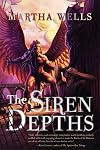
UPDATE ON REREAD: I was a fool! This is still the best book of the five, I think, but book 2 is the 3.5. This is, honestly, a 5 star book.
^^^
Huh. I think I actually liked this book best of the trilogy, which is deeply unusual for me. (I hate endings.) I feel weird rating all three the same, but, well -- Cloud Roads is a 3.5, Serpent Sea is a true 4.0, and Siren Depths is probably a 4.5. So they all get a four.
I think this book fulfilled the promise of the series, being about home and family and history and the scars the past leaves on you. It also has a truly compelling plot, and some of my favorite secondary characters of the series. Chime has always been one of my favorites, but here he's joined by Shade, the consort of another court, andMoon's mother. This book is worth reading just to meet Moon's mother. Jade tells Moon at one point, "Your mother is sustained by pure rage," and she is, but she is also incredibly smart and focused and just super awesome.
And the worldbuilding remains my favorite part of this series. I would love to read books set in almost any of the many cultures of the Three Worlds.
Basically, I loved this, and I wish there was another book in the series, partly because I'm not ready to be done with it, and partly because I want to see if it just keeps on getting better.
^^^
Huh. I think I actually liked this book best of the trilogy, which is deeply unusual for me. (I hate endings.) I feel weird rating all three the same, but, well -- Cloud Roads is a 3.5, Serpent Sea is a true 4.0, and Siren Depths is probably a 4.5. So they all get a four.
I think this book fulfilled the promise of the series, being about home and family and history and the scars the past leaves on you. It also has a truly compelling plot, and some of my favorite secondary characters of the series. Chime has always been one of my favorites, but here he's joined by Shade, the consort of another court, and
And the worldbuilding remains my favorite part of this series. I would love to read books set in almost any of the many cultures of the Three Worlds.
Basically, I loved this, and I wish there was another book in the series, partly because I'm not ready to be done with it, and partly because I want to see if it just keeps on getting better.
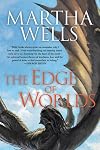
I was a little apprehensive going into this series, because the previous trilogy had ended so well! But, as usual, I found both the Raksura and the world they live in irresistible. This is a delightful continuation of the series, and this and its sequel complete Moon's arc and introduce great new characters (and some fascinating new wrinkles).
If I'd read this when it first came out, I'd probably have been frustrated at where the book ended, but fortunately I could just go right on to the next one.
All in all, a great entry in a great series in a great world.
If I'd read this when it first came out, I'd probably have been frustrated at where the book ended, but fortunately I could just go right on to the next one.
All in all, a great entry in a great series in a great world.
This was a fun book to read, but possibly the best aspect of it was encountering horror authors I remembered from the Midnight Society/Midnight Pals back on Twitter, so I'd recommend reading that first. (If you can find it.) And the second best aspect of it was all the weird shit I ended up googling as a result of it. (Ivy League New Pentacostalists speaking in tongues! The PMRC's Filthy 15 and where they are now! And so on.) The book itself comes third, and that's why it's getting three stars. But I did enjoy it, and since this is the closest I'll ever get to reading most of the books featured here, I'm glad I read it.
Also, it features this truest of statements: "Since time immemorial, humankind's greatest natural predator has been the clown." That by itself is worth at least three stars.
Also, it features this truest of statements: "Since time immemorial, humankind's greatest natural predator has been the clown." That by itself is worth at least three stars.
A solid book covering the history of timekeeping and some interesting aspects of humans' relationship to time. This probably would have been a five-star book if it had had more illustrations; Struthers' descriptions of mechanisms were sometimes hard for me, a personal with the mechanical ability of a snail, to follow. I definitely still enjoyed this look at time and history, though.
Who Ate the First Oyster?: The Extraordinary People Behind the Greatest Firsts in History by Cody Cassidy
Cassidy summarizes the research, findings, and theories to make stories about a bunch of early firsts -- first invention, first joke, first person to die of smallpox. (That last isn't a greatest first, but we'll put that to the side for now.) He also chooses to tell stories about the extraordinary people, giving them names and backgrounds and explaining a little of how they lived, but of course these stories are 90% (or more) fiction. It's kind of a trade off -- he's making things more memorable by making them less factual.
Cassidy also reports things as settled fact even when they can't be. For every theory, there's a counter-theory, and archaeology is a very challenging discipline to find definitive proof in. But Cassidy rarely says "some people believe this, some others believe that, and one lone but very esteemed loon in Chicago believes something entirely different." This kind of made it tough for me to buy the facts he offers as definitive.
(Also, an absolute side note, but I got partway into the chapter on smallpox and went to check the date this book was published. It was hallucinatory reading about R0 and zoonotic diseases and pandemics, all explained like these things were very historical and hypothetical, while living in the third of act of very recent pandemic. But it was a fun look back in time -- this book was published after we all knew what an R0 was, but it was written before that. An era-spanning book!)
I'm not sorry I read this. It was fun and light and show more easy to digest. Just possibly a little too light for my tastes. show less
Cassidy also reports things as settled fact even when they can't be. For every theory, there's a counter-theory, and archaeology is a very challenging discipline to find definitive proof in. But Cassidy rarely says "some people believe this, some others believe that, and one lone but very esteemed loon in Chicago believes something entirely different." This kind of made it tough for me to buy the facts he offers as definitive.
(Also, an absolute side note, but I got partway into the chapter on smallpox and went to check the date this book was published. It was hallucinatory reading about R0 and zoonotic diseases and pandemics, all explained like these things were very historical and hypothetical, while living in the third of act of very recent pandemic. But it was a fun look back in time -- this book was published after we all knew what an R0 was, but it was written before that. An era-spanning book!)
I'm not sorry I read this. It was fun and light and show more easy to digest. Just possibly a little too light for my tastes. show less
I have so many questions for this author. Let's take them in order.
1. Was I supposed to like Wrexford? Like, for real, he's one of two main characters, so I would think you'd want me to like him. And if you did, I assume you would have given him some redeeming traits. Did you forget to do that, or did I miss them? Maybe they got swamped by all the being an asshole, especially to his servants and to women, and then forgiving himself for it because he's just such a naughty boy. Or maybe there was something I missed when he was throwing around his privilege and physical size to intimidate people. Or maybe it was when he was deliberately endangering poor children. Or being furious with Charlotte because she was angry at him for deliberately endangering those kids. But, wow, whatever good points he has sure passed me by.
2. Why did you choose to write certain characters' dialogue in dialect when you have no ear for dialect? I mean, okay, yes, this is exactly the kind of book where I would expect only the poorest characters' speech to be written in "phonetic" dialect just to emphasize how poor and other they are. I'm not at all happy about it, but I'm aware I have only myself to blame. But those characters are supposed to be cockney, and yet, as transcribed, their accents are a weird combination of cockney, Scottish, Russian, and something I can only assume is a speech pathology. Like, transcribing accents in a non-phonetic language (hi, English!) is always a mug's game, but in show more this case it is especially bad because you don't seem to be able to hear what an accent sounds like.
3. Why did you choose to set this in fantasy Regency England if you love real Regency England so much? You must be aware that this setting bears only a faint resemblance to real Regency England; you've got ahistorical shit all over the place in here, including turns of phrase that came into being a hundred or more years after the Regency, and a couple that to my American ears sound very, very American. Even the detection techniques themselves are ahistorical. So why bother with Regency England at all? Is it is just that you like the clothes?
4.Why did you choose to use real scientists in your fantasy Regency England? This absolutely gives away the bad guy if the reader knows anything about the history of science. (We'll leave to the side that if the reader knows anything about the history of science, they'll also spend a significant chunk of the novel screaming "It didn't go that way!")
I just can't with this book. show less
1. Was I supposed to like Wrexford? Like, for real, he's one of two main characters, so I would think you'd want me to like him. And if you did, I assume you would have given him some redeeming traits. Did you forget to do that, or did I miss them? Maybe they got swamped by all the being an asshole, especially to his servants and to women, and then forgiving himself for it because he's just such a naughty boy. Or maybe there was something I missed when he was throwing around his privilege and physical size to intimidate people. Or maybe it was when he was deliberately endangering poor children. Or being furious with Charlotte because she was angry at him for deliberately endangering those kids. But, wow, whatever good points he has sure passed me by.
2. Why did you choose to write certain characters' dialogue in dialect when you have no ear for dialect? I mean, okay, yes, this is exactly the kind of book where I would expect only the poorest characters' speech to be written in "phonetic" dialect just to emphasize how poor and other they are. I'm not at all happy about it, but I'm aware I have only myself to blame. But those characters are supposed to be cockney, and yet, as transcribed, their accents are a weird combination of cockney, Scottish, Russian, and something I can only assume is a speech pathology. Like, transcribing accents in a non-phonetic language (hi, English!) is always a mug's game, but in show more this case it is especially bad because you don't seem to be able to hear what an accent sounds like.
3. Why did you choose to set this in fantasy Regency England if you love real Regency England so much? You must be aware that this setting bears only a faint resemblance to real Regency England; you've got ahistorical shit all over the place in here, including turns of phrase that came into being a hundred or more years after the Regency, and a couple that to my American ears sound very, very American. Even the detection techniques themselves are ahistorical. So why bother with Regency England at all? Is it is just that you like the clothes?
4.
I just can't with this book. show less
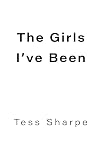
A page-turning YA survival and heist novel with a really large amount of abuse, sexual assault, and trauma. But then, this book is actually about how people become survivors, and what surviving looks like. I've never read Sharpe before, but I will again; she's good.
The Murder of Roger Ackroyd: A Hercule Poirot Mystery (Agatha Christie Collection) by Agatha Christie
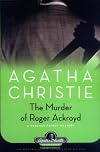
In my house, we talk about North by Northwest Syndrome, a term we coined after watching that movie and going, "Why is this a classic? This has all been done so much better." And then we realized that all those other movies were imitating North by Northwest and our perspective flipped. This book, for me, had a huge case of of North by Northwest Syndrome. It's been spoiled by all the books that it inspired.
Major spoilers under the cut.
I figured out what was going on pretty much on the first page. My brain went: Christie swapped persons and writing style for a Poirot book? Huh, weird. I bet the narrator is the murderer. And when you're reading through that lens, you see all the missing stuff and gaps in time that confirm it, and absolutely nothing is a surprise by the big reveal. I would have loved to read this book without my awareness of the intervening 100 years of mystery novel development, but of course I couldn't. North by Northwested.
Despite that, though, I enjoyed this book a lot more than my other recent new-to-me Christie reads (and also more than my recent Christie rereads). The change in narrative style suits Christie, and her plotting is (unlike, say, Death in the Air) basically perfect. This is honestly such a solid mystery of the country house kind, and I enjoyed it despite the North by Northwest Syndrome.
Major spoilers under the cut.
Despite that, though, I enjoyed this book a lot more than my other recent new-to-me Christie reads (and also more than my recent Christie rereads). The change in narrative style suits Christie, and her plotting is (unlike, say, Death in the Air) basically perfect. This is honestly such a solid mystery of the country house kind, and I enjoyed it despite the North by Northwest Syndrome.
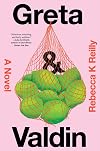
This is a delightful read about the eponymous Greta and Valdin, siblings who share an apartment in Auckland, and their extended (and very intertwined) family. Lots of queerness, lots of relationships (romantic, sexual, familial, and otherwise), and moments of real humor. Both Greta and Valdin read as neurodivergent to me, which was great.
This book is SUCH a New Zealand book. (I did feel my Kiwi friends led me astray, though. No one eats pie in this book!) It has a very strong sense of place and time, which meant I did a bit of googling as I was reading. You can absolutely get everything in it without googling, but I like to know what all the things mean. If you also do, maybe don't google weta unless you enjoy pictures of horrible insects.
But, truly, this was a sweet, fun, sometimes funny book with great characters. I very much enjoyed it.
This book is SUCH a New Zealand book. (I did feel my Kiwi friends led me astray, though. No one eats pie in this book!) It has a very strong sense of place and time, which meant I did a bit of googling as I was reading. You can absolutely get everything in it without googling, but I like to know what all the things mean. If you also do, maybe don't google weta unless you enjoy pictures of horrible insects.
But, truly, this was a sweet, fun, sometimes funny book with great characters. I very much enjoyed it.
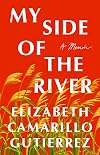
It took me a little bit to settle into this memoir, mostly because of some of the writing choices Camarillo Gutierrez makes, but I very much enjoyed it. (And thank you, Libby, for having two books I put on hold months apart come up together -- Parachute Kids and My Side of the River were a great pairing for both the similarities and the differences.)
Camarillo Gutierrez doesn't seem entirely clear on who her audience is, but that's absolutely fine with a memoir; some of them are written just to get it all on paper, and while I don't think that's what happened here, a memoir is maybe the only form of writing that can work even without a sense of the audience. I do wish she'd decided whether or not she expected her readers to know a little Spanish; it took me a while to adjust to her style of dialogue. If someone was speaking Spanish in the book, she put the Spanish first and then the English. I don't speak Spanish, but I can read it enough to follow the Spanish in this book, and for the first few chapters, it felt like everyone was repeating themselves constantly. On the other hand, she didn't translate the occasional random Spanish word at all, which I assume would be a bit of a roadblock for someone who spoke no Spanish.
Camarillo Gutierrez does a great job of conveying a life lived at great risk, but she still seems pretty distanced from her own emotions about it -- totally understandable, given that she had to distance herself to survive what happened to her, and then show more to get to where she wanted to be. She talks about telling her story over and over, in college applications, in job interviews, in applications for her brother, in her TED talk, to the point where she became numb to what she was saying, and some of that numbness does come through in the book. But, again, that works; the book itself demonstrates everything she's describing. (She also talks about how she turned her trauma into gold, and I think that's what the book is doing, in addition to talking about the horrible choices and extreme trauma our brutal immigration system requires.)
Overall, a really solid read. show less
Camarillo Gutierrez doesn't seem entirely clear on who her audience is, but that's absolutely fine with a memoir; some of them are written just to get it all on paper, and while I don't think that's what happened here, a memoir is maybe the only form of writing that can work even without a sense of the audience. I do wish she'd decided whether or not she expected her readers to know a little Spanish; it took me a while to adjust to her style of dialogue. If someone was speaking Spanish in the book, she put the Spanish first and then the English. I don't speak Spanish, but I can read it enough to follow the Spanish in this book, and for the first few chapters, it felt like everyone was repeating themselves constantly. On the other hand, she didn't translate the occasional random Spanish word at all, which I assume would be a bit of a roadblock for someone who spoke no Spanish.
Camarillo Gutierrez does a great job of conveying a life lived at great risk, but she still seems pretty distanced from her own emotions about it -- totally understandable, given that she had to distance herself to survive what happened to her, and then show more to get to where she wanted to be. She talks about telling her story over and over, in college applications, in job interviews, in applications for her brother, in her TED talk, to the point where she became numb to what she was saying, and some of that numbness does come through in the book. But, again, that works; the book itself demonstrates everything she's describing. (She also talks about how she turned her trauma into gold, and I think that's what the book is doing, in addition to talking about the horrible choices and extreme trauma our brutal immigration system requires.)
Overall, a really solid read. show less
I very much support everything this book is about, but I just couldn't keep on with it. The writing was clumsy, the characters were very one-note, and the whole thing was wildly unengaging. I kept finding chores to do rather than read this, and that is a definite sign to put the book down.

For me, there was only one entertaining thing about this book, and it is the absolutely amazing depiction of air travel in 1935. On this plane from Le Bourget to Croydon, there are 28 passengers in two cars. (And two stewards; stewardesses hadn't arrived on the scene, let alone flight attendants.) They're served a five-course meal (at least), plus anything else they care to order. There are holes in the airplane windows for ventilation, which absolutely made my jaw drop. (Then I realized that there was probably no internal ventilation system. Then I wondered what altitude these planes flew at.) And there's one note that feels entirely modern but is surprising for the period: there's no smoking aboard the plane. (I wondered whether that was out of fear of the plane catching fire or if that was because of the ventilation situation.)
Otherwise: it's an absolutely ridiculous mystery written in the classic early Christie style: start with a forest of red herrings, misdirect wildly, and keep revealing new things that completely change the picture. Honestly, as a mystery novel, this is pretty bad. But as a depiction of early air travel, it's fascinating. I can't believe I find myself saying this, but I wanted more airplanes and less murder.
Otherwise: it's an absolutely ridiculous mystery written in the classic early Christie style: start with a forest of red herrings, misdirect wildly, and keep revealing new things that completely change the picture. Honestly, as a mystery novel, this is pretty bad. But as a depiction of early air travel, it's fascinating. I can't believe I find myself saying this, but I wanted more airplanes and less murder.
I'd really love to know who came up with that subtitle. This is not a history of travel, nor is it particularly irreverent. It's a thoughtful critique of travel (which does include some information about the origins and history of travel) by someone who loves to travel, with some personal narrative thrown in for flavor. It's an interesting book and well worth reading! Just -- wow, that subtitle is doing it absolutely no favors. Even "A Personal History of Travel" would have been better.
As for the content of the book -- it is what it doesn't say on the tin. Habib analyzes who travels, how they travel, why they travel, and what it means to travel. She travels while brown, as an immigrant to the US from India, and so her experience of it is different from how rich-country tourists travel. I appreciated her perspective and especially her analysis of the difficulties and history of passports. (I already knew about what she calls passportism; if you have friends from poorer countries, you very quickly learn about the different classes of passports and travelers. But it was nice to see it all laid out like this.)
I will say, though, that as someone who does not travel -- I fully agree with Habib's father that travel is just avoidable discomfort, unless there are people who love at the other end of it, in which case it is necessary discomfort -- it was amusing to read such a critical commentary on travel written by someone who seems to travel more in a year than I have in my adult show more life. But, hey, the best criticism comes from a place of love! show less
As for the content of the book -- it is what it doesn't say on the tin. Habib analyzes who travels, how they travel, why they travel, and what it means to travel. She travels while brown, as an immigrant to the US from India, and so her experience of it is different from how rich-country tourists travel. I appreciated her perspective and especially her analysis of the difficulties and history of passports. (I already knew about what she calls passportism; if you have friends from poorer countries, you very quickly learn about the different classes of passports and travelers. But it was nice to see it all laid out like this.)
I will say, though, that as someone who does not travel -- I fully agree with Habib's father that travel is just avoidable discomfort, unless there are people who love at the other end of it, in which case it is necessary discomfort -- it was amusing to read such a critical commentary on travel written by someone who seems to travel more in a year than I have in my adult show more life. But, hey, the best criticism comes from a place of love! show less
I am starting to realize that there are only two categories of Agatha Christie novels:
1. Books with such good ideas that other people wrote much better books around them, with actually good characterization and dialogue and so on. In other words, North by Northwested books -- books that seem cliché because they invented the cliché.
2. Books with such terrible ideas that no one's ever wanted to re-use them, so they can still surprise you, but the surprise sounds like, "Seriously? THAT is what you came up with? Oh my stars."
This book is a category one. It's a solid idea! But I've read it so many times in so many other books that it has entirely lost its novelty for me.I knew the outline of the solution at 2% and identified the murderer as soon as he walked onto the page. Better yet, my wife identified the outline of the solution after reading just the back cover text. And unfortunately Christie is a good read mainly for her plots; her characters are not her strong suit, so a North by Northwested book is truly a bland read.
I salute Christie for, I assume, originating this plot, but man the intervening century has done this book no favors.
1. Books with such good ideas that other people wrote much better books around them, with actually good characterization and dialogue and so on. In other words, North by Northwested books -- books that seem cliché because they invented the cliché.
2. Books with such terrible ideas that no one's ever wanted to re-use them, so they can still surprise you, but the surprise sounds like, "Seriously? THAT is what you came up with? Oh my stars."
This book is a category one. It's a solid idea! But I've read it so many times in so many other books that it has entirely lost its novelty for me.
I salute Christie for, I assume, originating this plot, but man the intervening century has done this book no favors.
This is a lighthearted look at the experience of losing a parent, which -- I've been there, but it was long enough ago that I can handle someone being lighthearted about it. Even so, I didn't find this book particularly funny or compelling. It's fine! It's some words! They're okay to read! I think maybe Kilmartin is better at stand-up humor than writing humor.
I also found it frustrating in places, and then I got frustrated with myself for getting hung up on what my own dead dad called "other science facts." But, like there's a reason they haven't cured cancer yet! (It's not one disease. It's a bunch of them, and they are constantly mutating. Also, curing cancer is really, really hard because it's not a separate entity: it's literally a part of the sick person. It's not because cancer researchers aren't trying hard enough.) Also, Laurie, when you compared Jonas Salk and Henry Heimlich, uh. Did you talk to any Boomers about vaccines? My parents DID sometimes call it the Salk vaccine, to distinguish it from the Sabin vaccine. (One is a killed virus vaccine. The other is attenuated.) The real proof that Salk was selfless was that he didn't patent his vaccine. There was a lot of stuff like that, where my sense of humor was nullified by a voice in my head shrieking, "But that's factually WRONG."
I do think there's a market for death-related humor writing; there is a point where you're desperate to feel anything but grief, and a genuinely funny book (that isn't full of stuff show more that's wrong) could work really well for that. I just don't think this is the specific book we need. show less
I also found it frustrating in places, and then I got frustrated with myself for getting hung up on what my own dead dad called "other science facts." But, like there's a reason they haven't cured cancer yet! (It's not one disease. It's a bunch of them, and they are constantly mutating. Also, curing cancer is really, really hard because it's not a separate entity: it's literally a part of the sick person. It's not because cancer researchers aren't trying hard enough.) Also, Laurie, when you compared Jonas Salk and Henry Heimlich, uh. Did you talk to any Boomers about vaccines? My parents DID sometimes call it the Salk vaccine, to distinguish it from the Sabin vaccine. (One is a killed virus vaccine. The other is attenuated.) The real proof that Salk was selfless was that he didn't patent his vaccine. There was a lot of stuff like that, where my sense of humor was nullified by a voice in my head shrieking, "But that's factually WRONG."
I do think there's a market for death-related humor writing; there is a point where you're desperate to feel anything but grief, and a genuinely funny book (that isn't full of stuff show more that's wrong) could work really well for that. I just don't think this is the specific book we need. show less
This is a gorgeous book for an entirely different reader than the one I am. I certainly noticed much of what Cusk was doing here -- the repeating themes and the iterations of those themes, the way each conversation the narrator has reflects on the central topics ever-present in the narrator's mind (and, presumably, in Cusk's, and not just because this book is so close to autobiographical), the careful deployment of words and sentences. I even occasionally paused while reading and thought, "Oh, clever." But even as I observed what Cusk was doing and how she did it, I was so distant from the novel that I absolutely did not care about it.
In other words, Cusk pushed me into the state her narrator at one point claims to be inhabiting, where she is passively observing her life and not wanting things from it or trying to influence its direction. When I was reading the book, any tiny thing could distract me. When I wasn't reading it, I had no desire to go back to it, no desire to think about it or speculate about what might come next, no desire to talk about it. I was absolutely neutral: didn't hate it, didn't love it, didn't care. And I am quite sure that was intentional on Cusk's part; for one thing, she describes it right there in the novel. It's just -- that's not how I want to interact with a book. (Or, for that matter, with life.) I want to be invested in what I read. I want to react to it emotionally, not just intellectually. I want to care about it in some way. And that show more made me the wrong reader for this well-crafted book.
So: three stars. Did read, didn't care. show less
In other words, Cusk pushed me into the state her narrator at one point claims to be inhabiting, where she is passively observing her life and not wanting things from it or trying to influence its direction. When I was reading the book, any tiny thing could distract me. When I wasn't reading it, I had no desire to go back to it, no desire to think about it or speculate about what might come next, no desire to talk about it. I was absolutely neutral: didn't hate it, didn't love it, didn't care. And I am quite sure that was intentional on Cusk's part; for one thing, she describes it right there in the novel. It's just -- that's not how I want to interact with a book. (Or, for that matter, with life.) I want to be invested in what I read. I want to react to it emotionally, not just intellectually. I want to care about it in some way. And that show more made me the wrong reader for this well-crafted book.
So: three stars. Did read, didn't care. show less
I wanted to like this. I should have liked this. It has gods, and not just any gods, but asshole gods from multiple pantheons in a modern setting. But the book just kept on not clicking. The infodumps were extensive, the exposition was clunky as hell, and the language was more "Curious! I am extremely intelligent" than, you know, engaging. I didn't have it in me to soldier on.
This book is a textual proof of the theorem "ball is life." Because, yes, it is about basketball -- street ball, high school basketball teams, college ball, the Cleveland Cavaliers, and most of all LeBron James. But basketball provides the framework (literally; the book is structured like a basketball game) for Abdurraqib to talk about his life: his family, his history, his grief and loss, and his very occasional moment of soaring joy. It's an intense ride. It also straddles the line between poetry and prose, except when it comes down decisively on the side of poetry, so it's more work to read than your typical memoir. But it's worth it.
This is a true fan memoir, and it beautifully demonstrates all the things I know to be true about a fandom. Abdurraqib shows how a fandom can become the trellis on which (and through which, and around which) your life grows. He also shows, at length, how you find in the fandom what you need, how it becomes about whatever your life is currently about.
(This book also contained one moment of genuine culture shock for me. Abdurraqib discusses his period of being unhoused, and he talks about the mercy his friends and family showed him by not asking how he was doing or what was up -- not asking why someone else was living in his apartment, not asking why he was wearing the same clothes for multiple days, all of that. If I were in that same situation, if no one asked me, if no one offered me help, I wouldn't take it as mercy. I'd assume they show more just didn't care about me. It took me a while to see how letting someone struggle alone, even when he's drowning, might be a kindness.)
There's nothing truly new in this book, nothing shocking or surprising, but the way Abdurraqib interacts with things, explains them, elaborates on them -- that is new. And it's so well done. I loved it. But take your time. This book is a tough read on multiple levels. show less
This is a true fan memoir, and it beautifully demonstrates all the things I know to be true about a fandom. Abdurraqib shows how a fandom can become the trellis on which (and through which, and around which) your life grows. He also shows, at length, how you find in the fandom what you need, how it becomes about whatever your life is currently about.
(This book also contained one moment of genuine culture shock for me. Abdurraqib discusses his period of being unhoused, and he talks about the mercy his friends and family showed him by not asking how he was doing or what was up -- not asking why someone else was living in his apartment, not asking why he was wearing the same clothes for multiple days, all of that. If I were in that same situation, if no one asked me, if no one offered me help, I wouldn't take it as mercy. I'd assume they show more just didn't care about me. It took me a while to see how letting someone struggle alone, even when he's drowning, might be a kindness.)
There's nothing truly new in this book, nothing shocking or surprising, but the way Abdurraqib interacts with things, explains them, elaborates on them -- that is new. And it's so well done. I loved it. But take your time. This book is a tough read on multiple levels. show less
I don't feel right rating this, because it's obviously really good -- the characters are well drawn, the plot is great, the problems and obstacles are in character, the writing is excellent -- but I didn't enjoy reading it all that much. I am just too old for high school books and high school stories, and I KNOW this, but I keep being tempted by all the great summaries and the characters I would have loved at 15. And the thing is, I rate based on how much I enjoy the book, not how good I think it is. So no rating, but if this is the kind of thing you like, you'll like this.
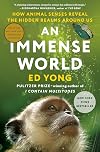
I loved this! It is rich in fun science facts, and also if you want to create alien races from scratch, let's just say you could do worse than choosing, say, an elephant fish and going from there. Basically, read this to find out all the weird stuff life can do here on earth and then realize that science fiction writers and alienfuckers simply aren't going hard enough.
(One tiny note, from me to Yong: I realize writing about COVID for years has probably given you a really low estimate of how much science the average human knows or wants to know, but in future please remember that your books are written for people who want to read them! In other words, we pick up your books going, "Hell YES, give me all your science facts on this topic." We don't need apologies for the science existing! And apologizing for science existing or making it sound all exhausting and difficult actually encourages people to think of it that way. Trust your readers!)
I do recommend skipping the chapter on the pain sense if you're sensitive to animal harm. I did not think to until much too late.
But, seriously, overall just a super fun book (except for the last part) and filled throughout with fascinating facts to learn and know. Do recommend, both for science fact lovers and science fiction writers.
(One tiny note, from me to Yong: I realize writing about COVID for years has probably given you a really low estimate of how much science the average human knows or wants to know, but in future please remember that your books are written for people who want to read them! In other words, we pick up your books going, "Hell YES, give me all your science facts on this topic." We don't need apologies for the science existing! And apologizing for science existing or making it sound all exhausting and difficult actually encourages people to think of it that way. Trust your readers!)
I do recommend skipping the chapter on the pain sense if you're sensitive to animal harm. I did not think to until much too late.
But, seriously, overall just a super fun book (except for the last part) and filled throughout with fascinating facts to learn and know. Do recommend, both for science fact lovers and science fiction writers.
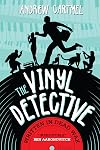
UPDATE: Just learned this author has written a book with a female main character/narrator, and I can't stop trying to imagine the train wreck it must surely be.
Original review:
If you've ever hung out in an independent record store, a comic book shop, a D&D store, or a major convention, you've basically already met the main character of this book. He's that dude who learned a whole lot about one specific topic he loves -- anime, Doctor Who, Wolverine -- and he uses that knowledge to prove to himself that he's smarter than other people. In other words, he's a dude with a hyperfixation who thinks his hyperfixation makes him better than people who don't care about it. (It does not.)
And to be clear: I love a hyperfixation. It doesn't even have to be mine! If you want to excitedly tell me cool facts about Hittites or kpop idols or orchids or Stephen King or Catullus or Azumanga Daioh, I am here to listen, and I will be interested. But if you're a gatekeeper using your hyperfixation to look down on others, you're a tool and you can get in the sea.
He's a tool in other ways, too. There's the thing where the Vinyl Detective is hired by a woman, sees her like twice more, and is "stabbed through the heart" when he discovers she has a boyfriend. There's the thing where he lies to his girlfriend (different woman than the above) to go meet his ex-girlfriend and then, when it turns out to be a setup and his girlfriend has to save him, he gets mad that she didn't trust him. (He's got show more kind of a specialty in being angry at women for failing to live up to his ethical standards; weird how none of them applies to his male friends.)
Actually, the Vinyl Detective has a bunch of issues with women. At one point, a woman quotes his own words back at him and he decides that from her, they're snotty. And that same woman displays social skills -- you know, smiling at people, taking an interest in them, being nice -- and his conclusion is "Pretty women can get away with murder," because it must be her face and her legs making people be nice and not any actual skill of hers, right?
Truly, VD is a dick, and Andrew Cartmel thinks he's cool as shit. This made reading this book difficult.
But, okay, a mystery doesn't have to have likeable characters. Does this book have a good plot? Well. Let's just say that it does in fact have a plot, but unfortunately every surprise is obvious from such a distance that you just kind of spend the last half of the book mentally shrieking things like"You don't need every record because it is VERY OBVIOUS what goes in the missing spots! Every reveal is like this: much too little, much too late.
There are other plot problems -- the sudden wellness of VD's friend Tinkler (yes, Cartmel also thinks he's being funny with names), which is revealed in a jarring time skip that is done solely to make a joke (that Tinkler woke up because VD told him he'd had sex with an attractive woman, which by the way occurs in a ludicrously bad sex scene), the weird way no one has any curiosity about plot holes (there is a "death" that is clearly, obviously not a death, and it only works because everyone involved acts like aliens around the whole thing ), the way the rarity of records fluctuates based on what the plot needs to happen. It's just. Kind of a mess.
Overall, this book is worth reading only if you're eager to spend time with extremely superior megafan tools and you don't want to spend a lot of time hanging out in used record stores. show less
Original review:
If you've ever hung out in an independent record store, a comic book shop, a D&D store, or a major convention, you've basically already met the main character of this book. He's that dude who learned a whole lot about one specific topic he loves -- anime, Doctor Who, Wolverine -- and he uses that knowledge to prove to himself that he's smarter than other people. In other words, he's a dude with a hyperfixation who thinks his hyperfixation makes him better than people who don't care about it. (It does not.)
And to be clear: I love a hyperfixation. It doesn't even have to be mine! If you want to excitedly tell me cool facts about Hittites or kpop idols or orchids or Stephen King or Catullus or Azumanga Daioh, I am here to listen, and I will be interested. But if you're a gatekeeper using your hyperfixation to look down on others, you're a tool and you can get in the sea.
He's a tool in other ways, too. There's the thing where the Vinyl Detective is hired by a woman, sees her like twice more, and is "stabbed through the heart" when he discovers she has a boyfriend. There's the thing where he lies to his girlfriend (different woman than the above) to go meet his ex-girlfriend and then, when it turns out to be a setup and his girlfriend has to save him, he gets mad that she didn't trust him. (He's got show more kind of a specialty in being angry at women for failing to live up to his ethical standards; weird how none of them applies to his male friends.)
Actually, the Vinyl Detective has a bunch of issues with women. At one point, a woman quotes his own words back at him and he decides that from her, they're snotty. And that same woman displays social skills -- you know, smiling at people, taking an interest in them, being nice -- and his conclusion is "Pretty women can get away with murder," because it must be her face and her legs making people be nice and not any actual skill of hers, right?
Truly, VD is a dick, and Andrew Cartmel thinks he's cool as shit. This made reading this book difficult.
But, okay, a mystery doesn't have to have likeable characters. Does this book have a good plot? Well. Let's just say that it does in fact have a plot, but unfortunately every surprise is obvious from such a distance that you just kind of spend the last half of the book mentally shrieking things like
There are other plot problems -- the sudden wellness of VD's friend Tinkler (yes, Cartmel also thinks he's being funny with names), which is revealed in a jarring time skip that is done solely to make a joke (that Tinkler woke up because VD told him he'd had sex with an attractive woman, which by the way occurs in a ludicrously bad sex scene), the weird way no one has any curiosity about plot holes (
Overall, this book is worth reading only if you're eager to spend time with extremely superior megafan tools and you don't want to spend a lot of time hanging out in used record stores. show less
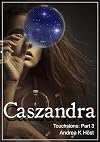
I have been waiting for months to write this review, hoping that the words to explain just how spectacularly disastrous this book is would somehow magically appear in my head. I -- I give up. Every time I try, I end up with broken sentences and a lot of emphatic hand gestures and squeaking. So, instead, I'm going to focus on the biggest problem, which should be enough to send anyone running.
The first two books in the series are competently written, and in terms of actual, technical words-making-sentences so is this one, but then. But THEN. Then came the romance. Oh, help. Halfway through this book, I googled the author, hoping desperately that she was still young enough that she might outgrow this view of human relationships. (She's not, but it's entirely possible she wrote this when she was; it certainly reads like the work of a very young woman. And I read this series because I loved another book of hers, The Pyramids of London, so I'm just going to assume this is juvenilia and try to forget.)
What's wrong with the romance? Oh, golly. Our heroine is an Australian schoolgirl who ends up (in the first book of the trilogy) stranded on another world. She discovers she has amazing psychic magnifying powers and gets taken onto a psychic ninja force. (Basically.) So far, I am down with this -- I am all about this kind of wish fulfillment fiction. For the first two books, Cass has a painful (annnnnd kind of obsessive) crush on a dude who avoids her like she's got a fungus. show more Again, all fine and good. That is a thing that happens!
In this book, Host attempts the technically challenging turn-that-UST-into-RST maneuver and falls flat on her face, injuring readers in the process. Caszandra begins just after Cass and Avoid Dude confess their mutual attraction and instantly start banging; within weeks they are living together, then engaged, then adopting traumatized war orphans. For serious. All of this without them ever engaging in an actual conversation, and with such serious Girl, You In Danger signs that my mind became a screaming mess of red alert sirens and flashing lights. He's a controlling super psychic super ninja! She's terrified to be apart from him! (And can't get away from him, for Reasons.) She barely knows him! He demands that she keep ABSOLUTELY NO SECRETS from him, because it would bother him! She complies because she wants him to trust her! He can only trust her if he has complete control over her! And on. And on. And ON. Did I mention she's a teenager? Isolated from her family and all her friends, and in a society she doesn't know or understand and cannot safely explore?
Yeah. It's a textbook preparing-to-be-abusive relationship. With added traumatized war orphans. I don't even remember the last part of the book; my brain was too busy shrieking for someone to DO SOMETHING for this poor girl (and those poor war orphans). But instead, the author is selling this as a romantic! Amazing! Wonderful! Relationship!
I could not buy what she was selling, and I deeply regret buying this book. show less
The first two books in the series are competently written, and in terms of actual, technical words-making-sentences so is this one, but then. But THEN. Then came the romance. Oh, help. Halfway through this book, I googled the author, hoping desperately that she was still young enough that she might outgrow this view of human relationships. (She's not, but it's entirely possible she wrote this when she was; it certainly reads like the work of a very young woman. And I read this series because I loved another book of hers, The Pyramids of London, so I'm just going to assume this is juvenilia and try to forget.)
What's wrong with the romance? Oh, golly. Our heroine is an Australian schoolgirl who ends up (in the first book of the trilogy) stranded on another world. She discovers she has amazing psychic magnifying powers and gets taken onto a psychic ninja force. (Basically.) So far, I am down with this -- I am all about this kind of wish fulfillment fiction. For the first two books, Cass has a painful (annnnnd kind of obsessive) crush on a dude who avoids her like she's got a fungus. show more Again, all fine and good. That is a thing that happens!
In this book, Host attempts the technically challenging turn-that-UST-into-RST maneuver and falls flat on her face, injuring readers in the process. Caszandra begins just after Cass and Avoid Dude confess their mutual attraction and instantly start banging; within weeks they are living together, then engaged, then adopting traumatized war orphans. For serious. All of this without them ever engaging in an actual conversation, and with such serious Girl, You In Danger signs that my mind became a screaming mess of red alert sirens and flashing lights. He's a controlling super psychic super ninja! She's terrified to be apart from him! (And can't get away from him, for Reasons.) She barely knows him! He demands that she keep ABSOLUTELY NO SECRETS from him, because it would bother him! She complies because she wants him to trust her! He can only trust her if he has complete control over her! And on. And on. And ON. Did I mention she's a teenager? Isolated from her family and all her friends, and in a society she doesn't know or understand and cannot safely explore?
Yeah. It's a textbook preparing-to-be-abusive relationship. With added traumatized war orphans. I don't even remember the last part of the book; my brain was too busy shrieking for someone to DO SOMETHING for this poor girl (and those poor war orphans). But instead, the author is selling this as a romantic! Amazing! Wonderful! Relationship!
I could not buy what she was selling, and I deeply regret buying this book. show less
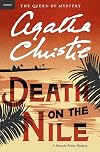
Bizarrely, my ebook version of this started with a cheery letter from Agatha Christie herself that was part advertisement ("I think...the book is one of the best..."), part a discussion of what inspired the book (trip to Egypt, which I think we all could guess), and part, uh. Talking about how real the characters are to her. Which, okay, she's not entirely wrong -- the three named are among her most fleshed-out, realized characters, although they're surrounded by the usual Christie two-dimensional stock characters. But they're still, at heart, Christie characters and therefore not quiiiiite believable.
Christie also says in the introduction that the plot is intricate and "very elaborately worked out," and while this is true in a purely mechanical sense, it's simultaneously unrealistic and not all that difficult to solve. I figured out most of the plot, including multiple side issues, before the first murder happens, although to be fair that isn't until 40% of the book. (I was deeply amused that Poirot's solution relies almost entirely on the clues from after the murder. Apparently Christie didn't want to hang a lampshade on the pointers from before it.)
Some stuff from this really doesn't hit well. I have to mention the racism. I think we all knew that was coming, given the setting and the author, but it's still worth pointing out that this book is racist and colonialist as hell. And while I'm at it, I'll file my standard Christie complaint, which is that she firmly show more believes that any unattached young women must be either engaged or dead or at the end of the book. So you have this sort of Noah's ark approach to things, where women are thrust into the arms of men they've known for less than a week and who at best have had an entirely off-the-page romance.
There are amusing notes, too. One of the characters is an author whose books aren't selling because they're too full of sex and prurience. You know how the public hates reading about such things, after all! And there's a young man who seems to be a combination of communist, anarchist, misogynist, eugenicist, and just straight-up pro violence. It's like Christie couldn't quite get her ideologies straight and just gave all her least liked beliefs to one character.
Overall, not one of Christie's very best, but certainly in the top quartile. show less
Christie also says in the introduction that the plot is intricate and "very elaborately worked out," and while this is true in a purely mechanical sense, it's simultaneously unrealistic and not all that difficult to solve. I figured out most of the plot, including multiple side issues, before the first murder happens, although to be fair that isn't until 40% of the book. (I was deeply amused that Poirot's solution relies almost entirely on the clues from after the murder. Apparently Christie didn't want to hang a lampshade on the pointers from before it.)
Some stuff from this really doesn't hit well. I have to mention the racism. I think we all knew that was coming, given the setting and the author, but it's still worth pointing out that this book is racist and colonialist as hell. And while I'm at it, I'll file my standard Christie complaint, which is that she firmly show more believes that any unattached young women must be either engaged or dead or at the end of the book. So you have this sort of Noah's ark approach to things, where women are thrust into the arms of men they've known for less than a week and who at best have had an entirely off-the-page romance.
There are amusing notes, too. One of the characters is an author whose books aren't selling because they're too full of sex and prurience. You know how the public hates reading about such things, after all! And there's a young man who seems to be a combination of communist, anarchist, misogynist, eugenicist, and just straight-up pro violence. It's like Christie couldn't quite get her ideologies straight and just gave all her least liked beliefs to one character.
Overall, not one of Christie's very best, but certainly in the top quartile. show less
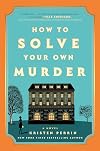
I really enjoyed this, albeit with some major caveats.
The good stuff: this is a well-constructed mystery, clearly written by someone who knows the classic mystery tropes and enjoys them. The characters are interesting enough to be going on with -- I would not mind reading a series about them, although unfortunately I found Frances's generation more gripping than Annie's and, obviously, most of them are now dead or gone. I enjoyed the complex histories people had with each other and with Castle Knoll. The pacing of the book is solid and the process of watching Annie learn about things is fun.
The bad stuff: I get why Perrin made a lot of her stylistic choices, but oh, they were hard on the my brain. The bouncing back and forth in tense -- okay, sometimes it works, but here in my opinion it didn't quite, and I kept stumbling over it. And the attempts to render modern speech sometimes left pages feeling a bit unedited. (There were also a few historical errors that raised my eyebrows a bit, but let's face it: if there's only a few, it's in the top 10% of the modern historical mystery genre.)
Overall, I quite enjoyed this, and I'd happily read another book in the series.
The good stuff: this is a well-constructed mystery, clearly written by someone who knows the classic mystery tropes and enjoys them. The characters are interesting enough to be going on with -- I would not mind reading a series about them, although unfortunately I found Frances's generation more gripping than Annie's and, obviously, most of them are now dead or gone. I enjoyed the complex histories people had with each other and with Castle Knoll. The pacing of the book is solid and the process of watching Annie learn about things is fun.
The bad stuff: I get why Perrin made a lot of her stylistic choices, but oh, they were hard on the my brain. The bouncing back and forth in tense -- okay, sometimes it works, but here in my opinion it didn't quite, and I kept stumbling over it. And the attempts to render modern speech sometimes left pages feeling a bit unedited. (There were also a few historical errors that raised my eyebrows a bit, but let's face it: if there's only a few, it's in the top 10% of the modern historical mystery genre.)
Overall, I quite enjoyed this, and I'd happily read another book in the series.