

Karen Joy Fowler
Author of The Jane Austen Book Club
About the Author
Karen Joy Fowler is the author of several novels and short story collections. Her works include Sarah Canary, The Sweetheart Season, Sister Noon, and The Jane Austen Book Club. She has received numerous awards including the World Fantasy Award in 1999 for Black Glass, the World Fantasy Award in show more 2011 for What I Didn't See, and the 2014 PEN/Faulkner Award for Fiction for We Are All Completely Beside Ourselves. This same title was nominated for The Man Booker Prize for Best Novel in 2014. (Bowker Author Biography) show less
Image credit: Jeff Willhelm, www.squawvalleywriters.org/press.htm
Series
Works by Karen Joy Fowler
The James Tiptree Award Anthology 1: Sex, the Future, and Chocolate Chip Cookies (2005) — Editor — 180 copies, 5 reviews
The James Tiptree Award Anthology 2: Stories for Men, Women, and the Rest of Us (2006) — Editor — 101 copies, 3 reviews
The James Tiptree Award Anthology 3: Subversive Stories about Sex and Gender (2007) — Editor — 98 copies, 2 reviews
The James Tiptree Award Anthology 4: Subversive Stories about Sex and Gender (2008) — Editor — 6 copies
The Great Silence 6 copies
2007 1 copy
Associated Works
Sense and Sensibility / Pride and Prejudice / Mansfield Park / Emma / Northanger Abbey / Persuasion / Lady Susan (1981) — Introduction, some editions — 7,597 copies, 43 reviews
Steering the Craft: Exercises and Discussions on Story Writing for the Lone Navigator or the Mutinous Crew (1998) — Introduction, some editions — 1,886 copies, 28 reviews
My Mother She Killed Me, My Father He Ate Me: Forty New Fairy Tales (2010) — Contributor — 1,108 copies, 27 reviews
The Big Book of Science Fiction: The Ultimate Collection (2016) — Contributor — 523 copies, 8 reviews
The Year's Best Science Fiction: Ninth Annual Collection (1992) — Contributor — 458 copies, 4 reviews
The Norton Book of Science Fiction: North American Science Fiction, 1960-1990 (1993) — Consultant — 345 copies, 6 reviews
The Year's Best Science Fiction: Third Annual Collection (1986) — Contributor — 251 copies, 1 review
Flirting with Pride & Prejudice: Fresh Perspectives on the Original Chick-Lit Masterpiece (2005) — Contributor — 242 copies, 9 reviews
The Year's Best Fantasy and Horror: Seventeenth Annual Collection (2004) — Contributor — 241 copies, 9 reviews
The Year's Best Fantasy and Horror: Sixteenth Annual Collection (2003) — Contributor — 240 copies, 2 reviews
The Vintage Book of Amnesia: An Anthology of Writing on the Subject of Memory Loss (2000) — Contributor — 228 copies, 2 reviews
The Year's Best Science Fiction: Fourth Annual Collection (1987) — Contributor — 221 copies, 1 review
Women of Wonder, the Contemporary Years: Science Fiction by Women from the 1970s to the 1990s (1995) — Contributor — 217 copies, 2 reviews
Daughters of Earth: Feminist Science Fiction in the Twentieth Century (2006) — Contributor — 188 copies, 6 reviews
What Might Have Been, Volumes 1 & 2: Alternate Empires, Alternate Heroes (1990) — Contributor — 184 copies, 2 reviews
The Year's Best Fantasy and Horror 2008: 21st Annual Collection (2008) — Contributor — 176 copies, 5 reviews
The Best Science Fiction and Fantasy of the Year, Volume 6 (2012) — Contributor — 162 copies, 4 reviews
The Very Best of Fantasy & Science Fiction: Sixtieth Anniversary Anthology (2009) — Contributor — 151 copies, 6 reviews
The Best Science Fiction and Fantasy of the Year, Volume 4 (2010) — Contributor — 141 copies, 2 reviews
New Eves: Science Fiction About the Extraordinary Women of Today and Tomorrow (1994) — Contributor — 71 copies, 3 reviews
Nebula Awards 27: SFWA's Choices for the Best Science Fiction and Fantasy of the Year (1993) — Contributor — 61 copies, 1 review
Nebula Awards 26: SFWA's Choices for the Best Science Fiction and Fantasy of the Year (1992) — Contributor — 52 copies, 1 review
Field of Fantasies: Baseball Stories of the Strange and Supernatural (2014) — Contributor — 46 copies
Women of Other Worlds: Excursions Through Science Fiction and Feminism (1999) — Contributor — 42 copies
Better Than Fiction 2: True Adventures from 30 Great Fiction Writers (2015) — Contributor — 34 copies
A Cross of Centuries: Twenty-five Imaginative Tales About the Christ (2007) — Contributor — 32 copies, 2 reviews
The Magazine of Fantasy and Science Fiction June 1991, Vol. 80, No. 6 (1991) — Contributor — 22 copies
The Best from Fantasy and Science Fiction: A 45th Anniversary Anthology (1994) — Contributor — 21 copies
Isaac Asimov's Science Fiction Magazine: Vol. 12, No. 7 [July 1988] (1988) — Contributor — 20 copies, 1 review
Isaac Asimov's Science Fiction Magazine: Vol. 11, No. 7 [July 1987] (1987) — Contributor — 16 copies
Isaac Asimov's Science Fiction Magazine: Vol. 9, No. 10 [October 1985] (1985) — Contributor — 15 copies
Isaac Asimov's Science Fiction Magazine: Vol. 13, No. 12 [December 1989] (1989) — Author — 14 copies
Isaac Asimov's Science Fiction Magazine: Vol. 14, No. 7 [July 1990] (1990) — Contributor — 14 copies
The Magazine of Fantasy and Science Fiction June 1985, Vol. 68, No. 6 (1985) — Contributor — 14 copies
Isaac Asimov's Science Fiction Magazine: Vol. 9, No. 12 [December 1985] (1985) — Contributor — 13 copies
The Magazine of Fantasy and Science Fiction March 1986, Vol. 70, No. 3 (1986) — Contributor — 13 copies
Isaac Asimov's Science Fiction Magazine: Vol. 9, No. 3 [March 1985] (1985) — Contributor — 12 copies
Isaac Asimov's Science Fiction Magazine: Vol. 10, No. 8 [August 1986] (1986) — Contributor — 12 copies
The Magazine of Fantasy and Science Fiction November 1986, Vol. 71, No. 5 (1986) — Contributor — 12 copies, 1 review
Das Science Fiction Jahr 1994. Ein Jahrbuch für den Science Fiction Leser (1994) — Contributor — 10 copies
Subterranean Magazine Winter 2014 — Contributor — 6 copies
Starshipsofa Stories Vol 3 — Contributor — 4 copies
Subterranean Magazine Summer 2011 — Contributor — 2 copies
Zärtlich war die Zukunft. (7445 415). Liebesgeschichten aus der Welt von morgen. (1989) — Contributor — 2 copies
Mondaugen — Contributor — 1 copy
Locus Nr.492 2002.01 — Contributor — 1 copy
Science Fiction Eye #07, August 1990 — Contributor — 1 copy
Millemondi Inverno 1992 — Contributor — 1 copy
Tales of the Unanticipated 15, Fall / Winter 1995 / 1996 — Contributor — 1 copy
Science Fiction Eye #08, Winter 1991 — Contributor — 1 copy
Science Fiction Eye #10, June 1992 — Contributor — 1 copy
Rod Serling's the Twilight Zone Magazine 1987 01 January-February — Contributor — 1 copy
Tagged
Common Knowledge
- Birthdate
- 1950-02-07
- Gender
- female
- Education
- University of California, Berkeley (Political Science)
- Occupations
- science fiction writer
fantasy writer
novelist - Organizations
- James Tiptree, Jr. Literary Award Council (founder)
Science Fiction and Fantasy Writers of America - Awards and honors
- John W. Campbell Award (1987)
- Agent
- Wendy Weil
- Nationality
- USA
- Birthplace
- Bloomington, Indiana, USA
- Places of residence
- Bloomington, Indiana, USA (birth)
Palo Alto, California, USA
Davis, California, USA
Santa Cruz, California, USA - Associated Place (for map)
- California, USA
Members
Discussions
We Are All Completely Beside Ourselves: SPOILERS ALLOWED in Girlybooks (November 2015)
2014 Booker Prize longlist: We Are All Completely Beside Ourselves in Booker Prize (October 2014)
The Jane Austen Book CLub in I Love Jane Austen (April 2008)
Reviews
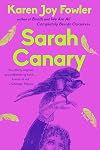
I know this story. Only, instead of Chin Ah Kin, a Chinese immigrant who reluctantly sets off on an epic journey to protect the strange, otherworldly woman who crosses his path, it was a handsome prince. And instead of B.J., a gentle madman who accompanies him on his quest, it was a brave little jester. And instead of strange, otherworldly Sarah Canary (who may be, but almost certainly is not a demon, an enchantress, a mermaid, a wild woman raised by wolves, or a notorious murderess on the show more lam), it was the Pied Piper, who leads everyone who gets caught up in her wake to their doom – or, if they are truly worthy, a kind of transcendence.[return][return]Except for that, it was exactly the same story….[return][return]This is one darn peculiar book. And I mean that in a good, and thoroughly admiring way. If I was commanded to try to sum it up -- put up against a wall, say, and threatened with being mauled by a tiger (this actually happens …) if I didn’t -- I would say that it is the story of America, told from the perspective of those whose stories have usually been ignored and airbrushed away. But through the magic of Sarah Canary, for once we hear a version of those stories – from the reviled immigrant labourer, from the young man whose take on reality is skewed just a little off-center, from the voiceless women, from the Native Americans. Everyone who has had to hide behind an alien culture, struggle into alien clothes, and even adopt alien names, just to survive.[return][return]As usual, Fowler’s story (and its meanings) is multi-layered: a story about “otherness,” which recognizes that nothing is simple: the marginalized are quite capable of great cruelty and exploitation of those who are a little lower down the pecking order from them. A story about “civilization,” and how very uncivilized it can be. A story about story-telling, and its power to make sense of the most absurd situations. [return][return]And as usual, Fowler’s writing is a delight: dreamlike and funny. The “plot” may seem to take a while to get going but, if you’re like me, you will suddenly realize that it’s been there all along. That you, too, have been swept along in the churning wake of Sarah Canary, and nothing will seem quite the same again. show less
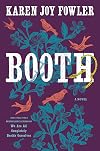
Villains have families, too. That's not something we often think about. When villains die in movies, it doesn't occur to us that they must have had someone who loved them. And it is much the same way with real-life villains.
This thought led Karen Joy Fowler to write her excellent 2022 novel “Booth” about not John Wilkes Booth but rather his family.
Fowler tells her story through the eyes of various members of the Booth family, but never John Wilkes, the handsome, unpredictable younger show more brother. It is Edwin, an older son in a family of actors, who becomes the family's central figure. It is he, not Junius or John, who matches their father's greatness on the stage.
It turns out that their father and mother had never actually married. It's a shock to all when his actual wife arrives from England and begins making demands. Then there is his alcoholism, a trait passed down to his elder sons. The daughters — Rosalie, the plain one, and Asia, the beauty — also feature prominently in the novel.
Although the Booths have slaves — set free but still working for the family — their sympathies lie with the North when war breaks out. That is, except for John, who has lived in Richmond, and Joe, an even younger brother, who was notable for being a deserter from both armies.
The assassination of Abraham Lincoln comes as as much of a shock to the Booths as to anyone else, and they all pay the price of notoriety. Edwin's acting career tanks; Junius spends time in prison for the crime of being John's brother.
At times you don't know whether you are reading fiction or history, and this uncertainty seems to be deliberate on Fowler's part. Little is actually known about Rosalie, one of the best drawn characters, and so she is almost entirely fictional. Others left letters or are mentioned more in historical records, and so their stories read more like history. All in all, it makes for an impressive book, not as good as some of Fowler's other novels, yet better than many books written by historians about this tragedy. show less
This thought led Karen Joy Fowler to write her excellent 2022 novel “Booth” about not John Wilkes Booth but rather his family.
Fowler tells her story through the eyes of various members of the Booth family, but never John Wilkes, the handsome, unpredictable younger show more brother. It is Edwin, an older son in a family of actors, who becomes the family's central figure. It is he, not Junius or John, who matches their father's greatness on the stage.
It turns out that their father and mother had never actually married. It's a shock to all when his actual wife arrives from England and begins making demands. Then there is his alcoholism, a trait passed down to his elder sons. The daughters — Rosalie, the plain one, and Asia, the beauty — also feature prominently in the novel.
Although the Booths have slaves — set free but still working for the family — their sympathies lie with the North when war breaks out. That is, except for John, who has lived in Richmond, and Joe, an even younger brother, who was notable for being a deserter from both armies.
The assassination of Abraham Lincoln comes as as much of a shock to the Booths as to anyone else, and they all pay the price of notoriety. Edwin's acting career tanks; Junius spends time in prison for the crime of being John's brother.
At times you don't know whether you are reading fiction or history, and this uncertainty seems to be deliberate on Fowler's part. Little is actually known about Rosalie, one of the best drawn characters, and so she is almost entirely fictional. Others left letters or are mentioned more in historical records, and so their stories read more like history. All in all, it makes for an impressive book, not as good as some of Fowler's other novels, yet better than many books written by historians about this tragedy. show less
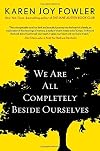
I was smitten by this novel, unexpectedly. The premise was kind of interesting but seemed potentially gimmicky, and this is the author of [The Jane Austen Book Club], which does not, on the face of it, seem remotely my sort of thing. However, the book was given to me, and I felt an obligation to report. Almost immediately, I was picking it up at odd moments to read when I should’ve been doing other things.
Rosemary (the narrator) and Fern are raised as sisters, along with an older brother, show more in the 1970s. At age five, Rosemary is sent to stay with her grandparents for a few weeks. When she is brought back, home is in a different location, with familiar items and unpacked boxes, and Fern is gone. And so are the grad students who were studying the concurrent development of the two, human Rosemary and chimpanzee Fern. (This is technically a spoiler, because a number of chapters go by before the salient fact is revealed, but it is the reason for reading this book, and it is in all the reviews.) Rosemary’s mother is devastated and uncommunicative. Rosemary’s psychologist father is defensive; he tells the children that Fern has gone to a farm with other chimpanzees, and a visit would disrupt her acclimation. Rosemary’s brother is sullen. Years go by, with occasional snippets of a family that hasn’t fully recovered, and when Rosemary is twelve, her brother, on the verge of college, abruptly disappears, and the family can find no trace until the FBI comes around; he is wanted for vandalism of an animal research laboratory at UC Davis.
Rosemary tells the story as she is approaching age forty, focusing on her years in college, not coincidentally at UC Davis. Away from the home town that remembers too much, she wants to present a new self, leave behind the “monkey girl” of not-quite-right social behavior, but befriends Harlow, a drama student with little regard for appropriate boundaries. And then her brother shows up, drops a crucial bit of information and a burden of responsibility, and disappears again. Rosemary begins piecing together what happened when she was old enough to remember but too young to understand, casually inserting references to the intellectual milieu of her childhood. It is her voice as much as her story that is compelling.
My father would surely want me to point out that, at five, I was still in Jean Piaget’s preoperational phase with regard to cognitive thinking and emotional development. He would want you to understand that I am undoubtedly, from my more mature perspective, imposing a logical framework on my understanding of events that didn’t exist at the time. Emotions in the preoperational phase are dichotomous and extreme. Consider it said.
Rosemary hints about Fern now, Fern who also would be approaching age forty. Where is Fern? There is precedent in other family chimpanzee experiments. Rosemary’s memories don’t precisely match her mother’s. Rosemary has not the slightest idea why her brother believes that she is to blame. Family dynamics are fragile in the present and murky in the past. Rosemary’s process of constructing a coherent story is emotionally gripping, but this is a crying and laughing at the same time sort of book, warmth and wit together. Highly highly recommended.
(read 28 Oct 2013) show less
Rosemary (the narrator) and Fern are raised as sisters, along with an older brother, show more in the 1970s. At age five, Rosemary is sent to stay with her grandparents for a few weeks. When she is brought back, home is in a different location, with familiar items and unpacked boxes, and Fern is gone. And so are the grad students who were studying the concurrent development of the two, human Rosemary and chimpanzee Fern. (This is technically a spoiler, because a number of chapters go by before the salient fact is revealed, but it is the reason for reading this book, and it is in all the reviews.) Rosemary’s mother is devastated and uncommunicative. Rosemary’s psychologist father is defensive; he tells the children that Fern has gone to a farm with other chimpanzees, and a visit would disrupt her acclimation. Rosemary’s brother is sullen. Years go by, with occasional snippets of a family that hasn’t fully recovered, and when Rosemary is twelve, her brother, on the verge of college, abruptly disappears, and the family can find no trace until the FBI comes around; he is wanted for vandalism of an animal research laboratory at UC Davis.
Rosemary tells the story as she is approaching age forty, focusing on her years in college, not coincidentally at UC Davis. Away from the home town that remembers too much, she wants to present a new self, leave behind the “monkey girl” of not-quite-right social behavior, but befriends Harlow, a drama student with little regard for appropriate boundaries. And then her brother shows up, drops a crucial bit of information and a burden of responsibility, and disappears again. Rosemary begins piecing together what happened when she was old enough to remember but too young to understand, casually inserting references to the intellectual milieu of her childhood. It is her voice as much as her story that is compelling.
My father would surely want me to point out that, at five, I was still in Jean Piaget’s preoperational phase with regard to cognitive thinking and emotional development. He would want you to understand that I am undoubtedly, from my more mature perspective, imposing a logical framework on my understanding of events that didn’t exist at the time. Emotions in the preoperational phase are dichotomous and extreme. Consider it said.
Rosemary hints about Fern now, Fern who also would be approaching age forty. Where is Fern? There is precedent in other family chimpanzee experiments. Rosemary’s memories don’t precisely match her mother’s. Rosemary has not the slightest idea why her brother believes that she is to blame. Family dynamics are fragile in the present and murky in the past. Rosemary’s process of constructing a coherent story is emotionally gripping, but this is a crying and laughing at the same time sort of book, warmth and wit together. Highly highly recommended.
(read 28 Oct 2013) show less
In an “Author’s Note” toward the end of Booth, Karen Joy Fowler notes that the germ of this book came from thinking about America’s mass shootings and the families of the shooters. “How,” she asked herself, “would such a family deal with their own culpability?”
This led her to the gifted, troubled family of the actor and bigamist Junius Brutus Booth and the ten children he had with the woman he ran off to America with in an act of Byronic madness.
The ninth of these children show more was John Wilkes, whose flair for the dramatic gesture led him to Ford’s Theater on April 14, 1865. There he crossed paths with Abraham Lincoln, whom he slays.
Throughout the book, as Fowler weaves her narrative, changing viewpoints from one sibling to another (but never taking that of John Wilkes), she includes insets of Lincoln’s unfolding life that suggest parallels in the trajectories of his life and that of the man who took it.
A recurring motif is Shakespeare, two plays in particular. One is “Richard III,” one of the elder Booth’s staples (“no role is so completely Father’s own as that of the murdering and murdered king”). The other is “Hamlet,” in which John Wilkes’ brother Edwin became the definitive interpreter of his time of the ghost-haunted prince of Denmark who avenged his father’s murder. Of course, no writings, except for the Bible, affected Lincoln as deeply as Shakespeare.
Fowler closes by noting that she was in final edits during the insurrection of January 6, 2021, when she saw “the flag of the Confederacy carried through the halls of the Capitol for the very first time.” She ends: “Let it be the last.”
This sense of the past as prologue gives the book much of its poignancy but also points to a flaw. This is not a biography but historical fiction. Yet, from time to time, Fowler breaks genre. A reader attuned to history immediately responds to the first mention of theatre owner John T. Ford, or Laura Keene’s overwhelming success with “Our American Cousin,” or John Wilkes’ attraction to the Virginia state flag with its motto “sic semper tyrannis,” and accepts these as a legitimate use of foreshadowing. But Fowler also intrusively brings the story up to date. For example, after Maryland—without seceding from the Union—blocks the route of conscripts from the North, leading Lincoln to impose countermeasures little short of military occupation, Maryland adopts a new state song exulting how the state “spurns the Northern scum!” Fowler notes the repeated failed attempts to replace it, most recently in 2020. These lapses resemble an actor on stage breaking the fourth wall, and they jar.
Aside from these, though, I found the book readable. It’s a particular achievement that, in relating a story whose conclusion is all-too-well known, Fowler can hold one’s attention. In fact, the closer the inevitable climax approached, the more difficulty I had in putting it down. show less
This led her to the gifted, troubled family of the actor and bigamist Junius Brutus Booth and the ten children he had with the woman he ran off to America with in an act of Byronic madness.
The ninth of these children show more was John Wilkes, whose flair for the dramatic gesture led him to Ford’s Theater on April 14, 1865. There he crossed paths with Abraham Lincoln, whom he slays.
Throughout the book, as Fowler weaves her narrative, changing viewpoints from one sibling to another (but never taking that of John Wilkes), she includes insets of Lincoln’s unfolding life that suggest parallels in the trajectories of his life and that of the man who took it.
A recurring motif is Shakespeare, two plays in particular. One is “Richard III,” one of the elder Booth’s staples (“no role is so completely Father’s own as that of the murdering and murdered king”). The other is “Hamlet,” in which John Wilkes’ brother Edwin became the definitive interpreter of his time of the ghost-haunted prince of Denmark who avenged his father’s murder. Of course, no writings, except for the Bible, affected Lincoln as deeply as Shakespeare.
Fowler closes by noting that she was in final edits during the insurrection of January 6, 2021, when she saw “the flag of the Confederacy carried through the halls of the Capitol for the very first time.” She ends: “Let it be the last.”
This sense of the past as prologue gives the book much of its poignancy but also points to a flaw. This is not a biography but historical fiction. Yet, from time to time, Fowler breaks genre. A reader attuned to history immediately responds to the first mention of theatre owner John T. Ford, or Laura Keene’s overwhelming success with “Our American Cousin,” or John Wilkes’ attraction to the Virginia state flag with its motto “sic semper tyrannis,” and accepts these as a legitimate use of foreshadowing. But Fowler also intrusively brings the story up to date. For example, after Maryland—without seceding from the Union—blocks the route of conscripts from the North, leading Lincoln to impose countermeasures little short of military occupation, Maryland adopts a new state song exulting how the state “spurns the Northern scum!” Fowler notes the repeated failed attempts to replace it, most recently in 2020. These lapses resemble an actor on stage breaking the fourth wall, and they jar.
Aside from these, though, I found the book readable. It’s a particular achievement that, in relating a story whose conclusion is all-too-well known, Fowler can hold one’s attention. In fact, the closer the inevitable climax approached, the more difficulty I had in putting it down. show less
Lists
Female Author (3)
Florida (1)
SF Masterworks (1)
Austenland (1)
Magic Realism (1)
Unread books (1)
Nebula Award (1)
Booker Prize (2)
First Novels (1)
Favourite Books (1)
Awards


You May Also Like


Associated Authors
Statistics
- Works
- 62
- Also by
- 163
- Members
- 15,147
- Popularity
- #1,509
- Rating
- 3.7
- Reviews
- 609
- ISBNs
- 230
- Languages
- 18
- Favorited
- 16

