
Jami Attenberg
Author of The Middlesteins
About the Author
Works by Jami Attenberg
1000 Words: A Writer's Guide to Staying Creative, Focused, and Productive All Year Round (2024) 152 copies, 4 reviews
In the Bushes (short story) 1 copy
All Grown Up 1 copy
Associated Works
Alone in the Kitchen with an Eggplant: Confessions of Cooking for One and Dining Alone (2007) — Contributor — 585 copies, 31 reviews
Tagged
Common Knowledge
- Birthdate
- 1971
- Gender
- female
- Education
- John Hopkns University
- Awards and honors
- St. Francis College Literary Prize
- Nationality
- USA
- Birthplace
- Arlington Heights, Illinois, USA
- Places of residence
- Brooklyn, New York, USA
Buffalo Grove, Illinois, USA
New Orleans, Louisiana, USA - Associated Place (for map)
- USA
Members
Reviews

I've read three of Jami Attenberg's novels and have the others on my shelf, just waiting for the right time. I love her writing, and she seems like a cool person to boot (if her Twitter is any indication - ha!). This work of nonfiction is sort-of a memoir and sort-of a primer on writing as a craft and a calling. It's beautifully and painfully honest and sharply insightful - I marked *a lot* of passages. In each essay, Attenberg connects a personal story or part of her life to her writing and show more how she approaches it. It's a fascinating look "behind the curtain" of a talented, and reasonably - though not overwhelmingly - successful writer. My only quibble - and really, it's minor and more an issue with me, probably - is that I occasionally got confused by the (lack of) coherent timeline, so that sometimes I couldn't figure out if what I was reading about happened before or after something previously read. At times, I feel like this would have made a difference in understanding her perspective and thoughts on what I was reading in the moment.
4.25 stars
"Now I could close my eyes, hold a thought in my head, the sun above me, while far away my family was being noisy, talking, eating. Do you know this continuous tension of needing and not needing people? Knowing they're nearby, happy they're there, but wishing them away, too." (p. 79)
"But forgiveness is another thing to learn, forgiving ourselves for not always being our best, for not always accomplishing everything. Add forgiveness to the arsenal of skills we need to acquire in order to survive everyday life. Forgive ourselves for being human." (p. 189)
"This doesn't mean I am perfect now. I will never be perfect. This doesn't mean I won't still get things wrong. I have acquired too many scars to be fully healed. I have broken so many habits but not all of them. Even the experience of writing a book is just making one mistake after another until you're not anymore. Every day we sit down to work we swim in a sea of our own fuck-ups. On the shore is one good sentence." (p. 256) show less
4.25 stars
"Now I could close my eyes, hold a thought in my head, the sun above me, while far away my family was being noisy, talking, eating. Do you know this continuous tension of needing and not needing people? Knowing they're nearby, happy they're there, but wishing them away, too." (p. 79)
"But forgiveness is another thing to learn, forgiving ourselves for not always being our best, for not always accomplishing everything. Add forgiveness to the arsenal of skills we need to acquire in order to survive everyday life. Forgive ourselves for being human." (p. 189)
"This doesn't mean I am perfect now. I will never be perfect. This doesn't mean I won't still get things wrong. I have acquired too many scars to be fully healed. I have broken so many habits but not all of them. Even the experience of writing a book is just making one mistake after another until you're not anymore. Every day we sit down to work we swim in a sea of our own fuck-ups. On the shore is one good sentence." (p. 256) show less
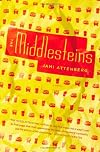
I loved Attenberg's painfully blunt, omniscient narrator, revealing all those inner thoughts that we never share. (The one chapter written from a different p.o.v. didn't work for me.)
I loved the foreshadowing and straight-up revelation of characters' fates.
It took me a while to warm up to the characters, but this was such a quick read (in both length and style) that I stuck with them and felt rewarded.
I love Karen's comparison to Richard Scarry's Busytown and Melki's mention of Seinfeld. show more The Middlesteins reminded me of the Bravermans from the TV show Parenthood: liberal, chaotic family with some weed and sex thrown in. (Benny & Rachelle Middlestein especially remind me of Adam & Kristina Braverman.)
I almost forgot: So You Think You Can Dance = BEST B'NAI MITVAH (that's plural for Bar or Bat Mitvah & what you call it when twins share a ceremony) THEME EVER! show less
I loved the foreshadowing and straight-up revelation of characters' fates.
It took me a while to warm up to the characters, but this was such a quick read (in both length and style) that I stuck with them and felt rewarded.
I love Karen's comparison to Richard Scarry's Busytown and Melki's mention of Seinfeld. show more The Middlesteins reminded me of the Bravermans from the TV show Parenthood: liberal, chaotic family with some weed and sex thrown in. (Benny & Rachelle Middlestein especially remind me of Adam & Kristina Braverman.)
I almost forgot: So You Think You Can Dance = BEST B'NAI MITVAH (that's plural for Bar or Bat Mitvah & what you call it when twins share a ceremony) THEME EVER! show less
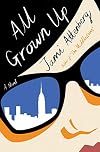
Told in a series of short stories/vignettes, All Grown Up gives us a portrait of disaffected, self-absorbed New Yorker Andrea who is a failed-but-never-really-tried artist, hates her job, fires her therapist, fights with her mother, sleeps around, drinks too much, and thinks too much. Andrea is annoying and self-centered, afraid to make real connections with people, but so adrift in her own life, she can't see the source of her own unhappiness. It would be easy to hate Andrea, and I kind of show more did - but I also liked her and felt for her, and I think it's a credit to Attenberg's skill that she could successfully draw such a character. show less

Meet the Tuchmans, two of the most despicable parental units in modern literature, put on earth to destroy their children and grandchildren with their violence, sexual harassment, and endless pursuit of living room remodeling. Yet the novel succeeds in amusing and horrifying the reader, with the addition of some seemingly random characters (a coroner, a roommate, a childhood friend) outside the family who fleetingly pop up and then depart, offering a welcome contrast to the terrible show more protagonists. The focus is on a sweltering summer day in post-Katrina New Orleans and the last breaths of father Victor, mourned by no one but mother Barbra (note spelling), and she's only sorry because the money stream, slowed to a trickle by a mountain of lawsuits, is going to die with him. Daughter Alex and son Gary, bolstered by their loving grandmother, manage to survive their childhoods, but divorce and their own demons make for a confusing inheritance for their daughters. The story is told from the PoV of every character other than Victor, and that's probably because his thoughts are too rancid to be put on the page. Somehow, though, it's a somberly hopeful book of clever dialogue and memorable confrontations.
Quotes: "Residents who predated Twyla wanted to know her intentions with New Orleans, as if she were a suitor courting the city and they were overprotective parents."
"Lonely was something you were born with. Lonely was about not feeling understood or heard." show less
Quotes: "Residents who predated Twyla wanted to know her intentions with New Orleans, as if she were a suitor courting the city and they were overprotective parents."
"Lonely was something you were born with. Lonely was about not feeling understood or heard." show less
Lists
Awards


You May Also Like


Associated Authors
Statistics
- Works
- 13
- Also by
- 3
- Members
- 3,255
- Popularity
- #7,854
- Rating
- 3.6
- Reviews
- 210
- ISBNs
- 124
- Languages
- 5
- Favorited
- 3

