
Ayelet Waldman
Author of Love and Other Impossible Pursuits
About the Author
Ayelet Waldman was born on December 11, 1964. She graduated from Wesleyan University in 1986 and from Harvard Law School in 1991. Before becoming a full-time writer, she worked at a New York law firm and as a federal public defender in California. She is the author of the Mommy-Track Mysteries show more series, Daughter's Keeper, Love and Other Impossible Pursuits, and Red Hook Road. In her essay Motherlove, which was published in Because I Said So: 33 Mothers Write about Children, Sex, Men, Aging, Faith, Race and Themselves, Waldman admitted that she loves her husband more than her children. Her book Bad Mother was written as a result of the negative reaction to her essay. She and Michael Chabon are co-editors of, Kingdom of Olives and Ash: Writers Confront the Occupation. (Bowker Author Biography) show less
Image credit: ayeletwaldman.com
Series
Works by Ayelet Waldman
Fight of the Century: Writers Reflect on 100 Years of Landmark ACLU Cases (2020) — Editor — 262 copies, 5 reviews
A Really Good Day: How Microdosing Made a Mega Difference in My Mood, My Marriage, and My Life (2017) 262 copies, 18 reviews
Inside This Place, Not of It: Narratives from Women's Prisons (2011) — Editor — 141 copies, 2 reviews
Associated Works
Girls Who Like Boys Who Like Boys: True Tales of Love, Lust, and Friendship Between Straight Women and Gay Men (2007) — Contributor — 111 copies, 3 reviews
Loving Learning: How Progressive Education Can Save America's Schools (2015) — Foreword, some editions — 23 copies
Tagged
Common Knowledge
- Birthdate
- 1964-12-11
- Gender
- female
- Education
- Harvard University(JD)
Wesleyan University (AB) - Occupations
- federal public defender
law professor
novelist - Organizations
- University of California, Berkeley
- Relationships
- Chabon, Michael (spouse)
- Short biography
- Ayelet Waldman and her husband, novelist Michael Chabon, live with their four children in Berkeley, California.
- Nationality
- USA
- Birthplace
- Jerusalem, Israel
- Places of residence
- Montréal, Québec, Canada
New Jersey, USA
Berkeley, California, USA - Associated Place (for map)
- USA
Members
Discussions
Fiction-Drama Child Dies in Name that Book (November 2009)
Reviews
Bad Mother: A Chronicle of Maternal Crimes, Minor Calamities, and Occasional Moments of Grace by Ayelet Waldman
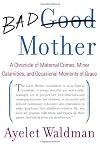
To be perfectly honest, part of the reason I had an interest in this book was to see what the wife was like of author Michael Chabon. He's a brilliant writer - an Artist Extraordinaire with language, a guy who pops words into a magic hat and pulls out entire new universes of spun sugar, capturing his readers into a sweet and glorious web of wonder.
As it turns out, he’s also just a husband and dad! And he drives a minivan! And his wife loves him very much, with a devotion for which she has show more taken a great deal of criticism. On March 27, 2005, The New York Times published an article by Waldman in which she wrote that she could imagine a future without her children, but not without her husband. He is her bashert, or soul mate.
The mothers of the world were (and remain) outraged, identifying her as a bad mother. Yet even aside from her strong feelings for him, the fact is that children grow up and leave, but a spouse is (or can be) forever.
Bad Mother is Waldman’s response to her critics. And it is also about “the perils and joys of trying to be a decent mother in a world intent on making you feel like a bad one.” It is a world in which other mothers judge you for not appearing enough for storytime at school, for putting your child in front of the television instead of reading him or her from The Great Books of Literature, for not taking enough photographs or taking too many, and especially, for having a career. Waldman reveals, “As happy as I am to crown myself Queen of the Maternal Damned, part of me still believes that my children would be better off with June Cleaver.”
Waldman’s chapter-essays are in-your-face and non-apologetic. She has eighteen for a variety of reasons she explains in the beginning, but I thought she could have left a few out (which would have, however, messed up her “eighteen” trope). I admit I might not want to live with her (she does, it seems, try very hard to be a perfect mom, in spite of her protestations), but I found her honesty and earnestness refreshing. And this would make a great selection for a book club. If Waldman’s assertions about love, parenting, and sex after children don’t get a great conversation going, nothing will! show less
As it turns out, he’s also just a husband and dad! And he drives a minivan! And his wife loves him very much, with a devotion for which she has show more taken a great deal of criticism. On March 27, 2005, The New York Times published an article by Waldman in which she wrote that she could imagine a future without her children, but not without her husband. He is her bashert, or soul mate.
The mothers of the world were (and remain) outraged, identifying her as a bad mother. Yet even aside from her strong feelings for him, the fact is that children grow up and leave, but a spouse is (or can be) forever.
Bad Mother is Waldman’s response to her critics. And it is also about “the perils and joys of trying to be a decent mother in a world intent on making you feel like a bad one.” It is a world in which other mothers judge you for not appearing enough for storytime at school, for putting your child in front of the television instead of reading him or her from The Great Books of Literature, for not taking enough photographs or taking too many, and especially, for having a career. Waldman reveals, “As happy as I am to crown myself Queen of the Maternal Damned, part of me still believes that my children would be better off with June Cleaver.”
Waldman’s chapter-essays are in-your-face and non-apologetic. She has eighteen for a variety of reasons she explains in the beginning, but I thought she could have left a few out (which would have, however, messed up her “eighteen” trope). I admit I might not want to live with her (she does, it seems, try very hard to be a perfect mom, in spite of her protestations), but I found her honesty and earnestness refreshing. And this would make a great selection for a book club. If Waldman’s assertions about love, parenting, and sex after children don’t get a great conversation going, nothing will! show less
A Really Good Day: How Microdosing Made a Mega Difference in My Mood, My Marriage, and My Life by Ayelet Waldman
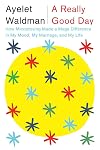
A Really Good Day is fascinating, often hilarious, but also quite serious and thought-provoking. Although I've never read her fiction, Ayelet Waldman has a voice like few others in her non-fiction, and it's one I love. She's bracingly frank, self-deprecating, honest, and above all intelligent and unflinching in her analysis of so many things, from parenting and her marriage to the tragic folly of U.S. drug policy. This book is not just a "come along with me while I take LSD for a month" show more stunt book, like so many others in the genre that has overflowed grotesquely since Eat, Pray, Love was published. It is carefully, almost obsessively, researched, and every funny and/or personal anecdote is balanced by several paragraphs of considered argument and deep delving into the thorny personal and cultural questions around the right to alter one's consciousness. If you're open to thinking outside the box on these issues (or maybe especially if you're not), A Really Good Day is a really good, and important, read. show less
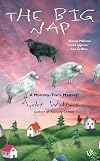
Waldman is funny and often irreverent in her depictions of Juliet Applebaum, a young Jewish lawyer turned Mommy-Track-Mommy after the birth of her second child, Isaac. While Juliet is secure in her religious views, she's taken into the darker realms of Hasidim beliefs, wherein women are controlled by the men in their lives, but ironically shave their heads and wear elaborate wigs in order to adhere to "modesty" rules of the religion. Breast feeding takes on comic hilarity in many moments show more because Juliet, while often modestly covering her breasts, often has to feed her ravenous "mutant vampire" of a son. Because Waldman is honest and direct about how religious beliefs can stymie women's skills and choices, the story is a quick, often amusing, look at a fearless attorney's take on "tough guys" who try to bully her. Well worth reading, but some editing errors cause moments of confusion. show less
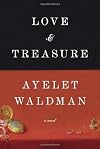
Soon after I’d enjoyed Waldman’s 2009 essay collection, Bad Mother, I heard an interview where she characterized her writing philosophy as not exactly write what you know but write what you want to know. Walking the talk, she then described the genesis of her next writing project -- she'd Googled keywords of topics that interested her: Hungary (she wanted to visit a friend there and liked the excuse of researching a writing project) + the Holocaust (she’s Jewish and hadn’t written show more about it) + art (she was interested) = a novel about the Hungarian Gold Train at the end of WWII. I was thrilled to learn that she’s seen her idea through to publication as Love and Treasure.
[On the train were] 1,500 cases of watches, jewelry, and silver, 5,250 carpets, thousands of coats and stoles and muffs of mink, fox, and ermine, crates of microscopes and cameras, porcelain and glassware, furniture, books and manuscripts and tapestries, gold coins and bullion, the few remaining precious gems, the liturgical objects, the stamp collections and silver-backed hairbrushes, all the items, valuable and less so, that constituted the wealth of the Jews of Hungary, 437,402 of whom had been deported to Auschwitz over the course of just 56 days almost exactly a year before.
A bit like Nicole Krauss’s Great House, this novel is written as a series of novellas linked by a shared item, in this case a jeweled pendant. In the first, the pendant is discovered by an American army officer charged with securing the contents of the Gold Train in 1945 Salzburg amid displaced persons and the aftermath of war. In the second, that officer’s grand-daughter works with a gray-market art dealer in 2013 Budapest to trace ownership of the pendant. And finally, that owner and her life are explored in 1913 Budapest.
I had a couple false starts with this novel; the first section felt wooden and I feared that Waldman’s “Googled” premise wasn’t going to work. But near the end of that section, she captured me and I felt a story begin and then get better and better. She writes well, the material is always intellectually interesting (the aftermath of war, especially regarding Hungarian Jews; art history; feminism and suffrage), and eventually it also becomes emotionally engaging. And enjoyable! -- in the second section there’s a nod to a fairy tale that’s a blatant chuckle between writer and reader, and the third section, narrated by a Freudian analyst, has much amusing satire. And the story is important: in the end, it's clear that the value of the stolen cargo on the Gold Train is insignificant compared with the Holocaust's stolen human potential.
(Review based on an advance reading copy provided by the publisher.) show less
[On the train were] 1,500 cases of watches, jewelry, and silver, 5,250 carpets, thousands of coats and stoles and muffs of mink, fox, and ermine, crates of microscopes and cameras, porcelain and glassware, furniture, books and manuscripts and tapestries, gold coins and bullion, the few remaining precious gems, the liturgical objects, the stamp collections and silver-backed hairbrushes, all the items, valuable and less so, that constituted the wealth of the Jews of Hungary, 437,402 of whom had been deported to Auschwitz over the course of just 56 days almost exactly a year before.
A bit like Nicole Krauss’s Great House, this novel is written as a series of novellas linked by a shared item, in this case a jeweled pendant. In the first, the pendant is discovered by an American army officer charged with securing the contents of the Gold Train in 1945 Salzburg amid displaced persons and the aftermath of war. In the second, that officer’s grand-daughter works with a gray-market art dealer in 2013 Budapest to trace ownership of the pendant. And finally, that owner and her life are explored in 1913 Budapest.
I had a couple false starts with this novel; the first section felt wooden and I feared that Waldman’s “Googled” premise wasn’t going to work. But near the end of that section, she captured me and I felt a story begin and then get better and better. She writes well, the material is always intellectually interesting (the aftermath of war, especially regarding Hungarian Jews; art history; feminism and suffrage), and eventually it also becomes emotionally engaging. And enjoyable! -- in the second section there’s a nod to a fairy tale that’s a blatant chuckle between writer and reader, and the third section, narrated by a Freudian analyst, has much amusing satire. And the story is important: in the end, it's clear that the value of the stolen cargo on the Gold Train is insignificant compared with the Holocaust's stolen human potential.
(Review based on an advance reading copy provided by the publisher.) show less
Lists
Awards


You May Also Like


Associated Authors
Statistics
- Works
- 23
- Also by
- 8
- Members
- 4,371
- Popularity
- #5,737
- Rating
- 3.6
- Reviews
- 185
- ISBNs
- 140
- Languages
- 6
- Favorited
- 7