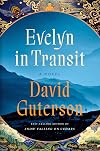
David Guterson’s 2026 novel Evelyn in Transit is grand example of storytelling in plain, unadorned language. It contains the story of a woman from Indiana who proves you never know a person’s worth until they reach their potential. Educated in a Catholic elementary school, Evelyn, whose character is at base blameless, exhibits mild behavior problems, and is an uninterested pupil. Later on, she shows fearlessness at expressing herself in group therapy sessions for teens, and is a tireless laborer at odd jobs she takes, at restaurants, fruit picking, and helping build a sacred Buddhist peace monument on a mountain in New Mexico.
Alternating chapters deal with Evelyn and with a child Buddhist monk in Tibet, named Tsering Lekpa. Tsering is admitted to a monastery as a young boy and learns his principals well, and matures into an abbot, but accepting all the subservience and notoriety grates on him. He feels unworthy of it and much of his life seems pointless. He accordingly travels to Seattle after meeting a Buddhist professor who teaches at the university there, and goes to work translating manuscripts.
Evelyn’s and Tsering’s stories entwine when three Buddhist monks arrive at Evelyn’s Evansville home, with the surprising news that they think her son Cliff, roughly six or seven years old, is the sixth reincarnation of a holy monk, called Norbu Rinpoche. Tsering, who had grown old and died, was the fifth. Something about this news stirs Evelyn to travel with her show more little boy to Nepal.
Guterson’s genius dictates that he portray both characters, particularly Evelyn, in flat, starkly mundane prose, that keeps us nevertheless reading on because of the sympathy we feel for both. He spends most of his energy and resources on Evelyn, and with excellent reason. I’ll leave you the joy of learning the reason on your own. The journey is well worth it.
Guterson’s work is straightforward, but develops a surprising depth and subtlety in its development and resolution. Evelyn inspires a deep loyalty in the reader, and she gets a confirming affirmation by story’s end. Rather than run the risk of giving too much away, I will end by confidently recommending Evelyn in Transit, an accomplished, worthy read by a superb author too little appreciated.
https://bassoprofundo1.blogspot.com/2026/06/evelyn-in-transit-by-david-guterson.... show less
Alternating chapters deal with Evelyn and with a child Buddhist monk in Tibet, named Tsering Lekpa. Tsering is admitted to a monastery as a young boy and learns his principals well, and matures into an abbot, but accepting all the subservience and notoriety grates on him. He feels unworthy of it and much of his life seems pointless. He accordingly travels to Seattle after meeting a Buddhist professor who teaches at the university there, and goes to work translating manuscripts.
Evelyn’s and Tsering’s stories entwine when three Buddhist monks arrive at Evelyn’s Evansville home, with the surprising news that they think her son Cliff, roughly six or seven years old, is the sixth reincarnation of a holy monk, called Norbu Rinpoche. Tsering, who had grown old and died, was the fifth. Something about this news stirs Evelyn to travel with her show more little boy to Nepal.
Guterson’s genius dictates that he portray both characters, particularly Evelyn, in flat, starkly mundane prose, that keeps us nevertheless reading on because of the sympathy we feel for both. He spends most of his energy and resources on Evelyn, and with excellent reason. I’ll leave you the joy of learning the reason on your own. The journey is well worth it.
Guterson’s work is straightforward, but develops a surprising depth and subtlety in its development and resolution. Evelyn inspires a deep loyalty in the reader, and she gets a confirming affirmation by story’s end. Rather than run the risk of giving too much away, I will end by confidently recommending Evelyn in Transit, an accomplished, worthy read by a superb author too little appreciated.
https://bassoprofundo1.blogspot.com/2026/06/evelyn-in-transit-by-david-guterson.... show less
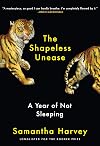
In The Shapeless Unease Samantha Harvey recounts an interval in her life in which she suffered severe insomnia, describing struggling with the condition of getting little or no sleep over several months’ time. She describes her nights—filled with repeated plagues of watching her digital clock, of almost getting to sleep only to have a noisy truck pass on the street, rattling her awake, of the ever-deepening dread and self-fulfilling prophecy of the impossibility of getting any sleep again tonight.
I can attest to the accuracy of her telling, both of the deepening desperation through the nights and weeks and months, and the zombie-like trance of dealing with people during the day who have actually slept.
She distinguishes her narrative by presenting it with honesty, and the sense that there’s an end to the vicious cycle (there is).
She also intersperses passages of stories she’s writing, or thinking about writing, and of random-seeming observations and reflections on consciousness and philosophy. For example she disagrees with William James about how life can be conquered with reason and intellect. She dwells for a time on the Parahã tribe in the Amazon, unencroached upon by the modern world. This group has no concept of the past or the future, no words for before or after; the concepts “tomorrow” or “yesterday” are utterly foreign. They never put a dependent clause in a sentence.
Her memoir includes snippets of a story she’s tentatively writing of a man show more who robs cash machines, calling it “jackpotting” them. She describes her frustrating visits to the doctor—she alternates between thinking she must sound like a crabby child, and feeling rage at being so helpless and living in Britain, where health care can apparently feel like a constant struggle with a vast bureaucracy.
She gets better for a few weeks on sleeping pills, only to quickly relapse. Finally she describes the process of swimming in a lake, where she concentrates on currents and waves, and how to counter them, and how to go with their flow. She finishes by writing about getting over it all through some subtle inevitable, natural process, and how the memory of the interval faded into an unreality.
The Shapeless Unease is vivid, sympathy-inducing in those of us who’ve suffered sleeplessness, and so real that it I worried I might start a spell of insomnia of my own. (I didn’t.) To anyone who’s wondered about the disorder, Harvey’s book is exceedingly honest and accurate, and her odd musings intriguing. Her writing, of course, reinforces what what we know about her matchless talent.
In The Shapeless Unease Samantha Harvey recounts an interval in her life in which she suffered severe insomnia, describing struggling with the condition of getting little or no sleep over several months’ time. She describes her nights—filled with repeated plagues of watching her digital clock, of almost getting to sleep only to have a noisy truck pass on the street, rattling her awake, of the ever-deepening dread and self-fulfilling prophecy of the impossibility of getting any sleep again tonight.
I can attest to the accuracy of her telling, both of the deepening desperation through the nights and weeks and months, and the zombie-like trance of dealing with people during the day who have actually slept.
She distinguishes her narrative by presenting it with honesty, and the sense that there’s an end to the vicious cycle (there is).
She also intersperses passages of stories she’s writing, or thinking about writing, and of random-seeming observations and reflections on consciousness and philosophy. For example she disagrees with William James about how life can be conquered with reason and intellect. She dwells for a time on the Parahã tribe in the Amazon, unencroached upon by the modern world. This group has no concept of the past or the future, no words for before or after; the concepts “tomorrow” or “yesterday” are utterly foreign. They never put a dependent clause in a sentence.
Her memoir includes snippets of a story she’s tentatively writing of a man who robs cash machines, calling it “jackpotting” them. She describes her frustrating visits to the doctor—she alternates between thinking she must sound like a crabby child, and feeling rage at being so helpless and living in Britain, where health care can apparently feel like a constant struggle with a vast bureaucracy.
She gets better for a few weeks on sleeping pills, only to quickly relapse. Finally she describes the process of swimming in a lake, where she concentrates on currents and waves, and how to counter them, and how to go with their flow. She finishes by writing about getting over it all through some subtle inevitable, natural process, and how the memory of the interval faded into an unreality.
The Shapeless Unease is vivid, sympathy-inducing in those of us who’ve suffered sleeplessness, and so real that it I worried I might start a spell of insomnia of my own. (I didn’t.) To anyone who’s wondered about the disorder, Harvey’s book is exceedingly honest and accurate, and her odd musings intriguing. Her writing, of course, reinforces what what we know about her matchless talent.
https://bassoprofundo1.blogspot.com/2026/06/the-shapeless-unease-by-samantha-har... show less
I can attest to the accuracy of her telling, both of the deepening desperation through the nights and weeks and months, and the zombie-like trance of dealing with people during the day who have actually slept.
She distinguishes her narrative by presenting it with honesty, and the sense that there’s an end to the vicious cycle (there is).
She also intersperses passages of stories she’s writing, or thinking about writing, and of random-seeming observations and reflections on consciousness and philosophy. For example she disagrees with William James about how life can be conquered with reason and intellect. She dwells for a time on the Parahã tribe in the Amazon, unencroached upon by the modern world. This group has no concept of the past or the future, no words for before or after; the concepts “tomorrow” or “yesterday” are utterly foreign. They never put a dependent clause in a sentence.
Her memoir includes snippets of a story she’s tentatively writing of a man show more who robs cash machines, calling it “jackpotting” them. She describes her frustrating visits to the doctor—she alternates between thinking she must sound like a crabby child, and feeling rage at being so helpless and living in Britain, where health care can apparently feel like a constant struggle with a vast bureaucracy.
She gets better for a few weeks on sleeping pills, only to quickly relapse. Finally she describes the process of swimming in a lake, where she concentrates on currents and waves, and how to counter them, and how to go with their flow. She finishes by writing about getting over it all through some subtle inevitable, natural process, and how the memory of the interval faded into an unreality.
The Shapeless Unease is vivid, sympathy-inducing in those of us who’ve suffered sleeplessness, and so real that it I worried I might start a spell of insomnia of my own. (I didn’t.) To anyone who’s wondered about the disorder, Harvey’s book is exceedingly honest and accurate, and her odd musings intriguing. Her writing, of course, reinforces what what we know about her matchless talent.
In The Shapeless Unease Samantha Harvey recounts an interval in her life in which she suffered severe insomnia, describing struggling with the condition of getting little or no sleep over several months’ time. She describes her nights—filled with repeated plagues of watching her digital clock, of almost getting to sleep only to have a noisy truck pass on the street, rattling her awake, of the ever-deepening dread and self-fulfilling prophecy of the impossibility of getting any sleep again tonight.
I can attest to the accuracy of her telling, both of the deepening desperation through the nights and weeks and months, and the zombie-like trance of dealing with people during the day who have actually slept.
She distinguishes her narrative by presenting it with honesty, and the sense that there’s an end to the vicious cycle (there is).
She also intersperses passages of stories she’s writing, or thinking about writing, and of random-seeming observations and reflections on consciousness and philosophy. For example she disagrees with William James about how life can be conquered with reason and intellect. She dwells for a time on the Parahã tribe in the Amazon, unencroached upon by the modern world. This group has no concept of the past or the future, no words for before or after; the concepts “tomorrow” or “yesterday” are utterly foreign. They never put a dependent clause in a sentence.
Her memoir includes snippets of a story she’s tentatively writing of a man who robs cash machines, calling it “jackpotting” them. She describes her frustrating visits to the doctor—she alternates between thinking she must sound like a crabby child, and feeling rage at being so helpless and living in Britain, where health care can apparently feel like a constant struggle with a vast bureaucracy.
She gets better for a few weeks on sleeping pills, only to quickly relapse. Finally she describes the process of swimming in a lake, where she concentrates on currents and waves, and how to counter them, and how to go with their flow. She finishes by writing about getting over it all through some subtle inevitable, natural process, and how the memory of the interval faded into an unreality.
The Shapeless Unease is vivid, sympathy-inducing in those of us who’ve suffered sleeplessness, and so real that it I worried I might start a spell of insomnia of my own. (I didn’t.) To anyone who’s wondered about the disorder, Harvey’s book is exceedingly honest and accurate, and her odd musings intriguing. Her writing, of course, reinforces what what we know about her matchless talent.
https://bassoprofundo1.blogspot.com/2026/06/the-shapeless-unease-by-samantha-har... show less
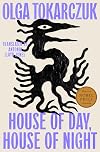
Olga Tokarczuk first published House of Day, House of Night in Poland in 1998 under the title Dom dzienny, dom nocny. The current translation, by Antonia Lloyd-Jones, came out in the UK in 2024, and in the US in 2025. A little reminiscent of Drive Your Plow Over the Bones of the Dead, this book is a compendium of startling, vivid anecdotes whose focus and significance become clear as you go along. It’s highly entertaining, challenging, and awe-inspiring. This steaming dish of cassoulet has rich helpings of odd characters doing odd things, philosophic musings about abstruse subjects, and is seasoned with a generous dose of humor. A grand tour for the discerning reader.
Set in southwest Poland in the last half of the 20th Century, the story includes portraits of some unusual characters: there’s a gender-fluid monk called Paschalis who in the 16th Century writes the life of a saint; Pieter Dieter, who dies on the border between postwar Germany and Poland; Franz Frost, a German who is driven to worry in the early 1930s, and begins to wonder how life could proceed unaffected after a new planet is discovered. (Spoiler alert: it can’t.) And there’s Ergo Sum, a Classics teacher who suffers from lycanthropy.
But most important of all is the enigmatic Marta, whose offbeat view of the world is perhaps the most telling morsel of wisdom in the entire book. (It’s not laid out plainly; stay alert to the clues.)
This region of southwestern Poland is called Silesia, and during show more World War II, it was annexed by Germany, with land and property coming into the hands of German citizens. After the war, the border with Germany was shifted back westward, and the Germans who’d moved there were moved back. This swinging over and back is a regular theme, in all its varied guises; the title suggests it, as well.
Since this is not a detailed analysis, but a simple review, I will simply report that it is replete with possible philosophical approaches to the universe, even going to far as to contain, in the words of the unnamed narrator, a detailed Greek philosophy of two warring cosmic forces, chthonos, the generative, out-of-control procreative urge, and chaos, the force of destruction and decay. In the middle, like the eye of a hurricane, is the happy and well-balanced chronos. Compare and contrast this scheme with Marta’s statement about all the world’s creatures spending half their lives in the dark, and half in light. So, House of Day, House of Night, is a lumpy, delicious gravy, hinting at answers to difficult, head-scratching questions. It contains laugh-out-loud moments and sober moments of reflection. It is a book of bifurcation.
But mostly it’s another triumph from Nobel and International Booker Prize-winning Olga Tokarczuk. Set out on your own adventure and take it up right away.
https://bassoprofundo1.blogspot.com/2026/03/house-of-day-house-of-night-by-olga.... show less
Set in southwest Poland in the last half of the 20th Century, the story includes portraits of some unusual characters: there’s a gender-fluid monk called Paschalis who in the 16th Century writes the life of a saint; Pieter Dieter, who dies on the border between postwar Germany and Poland; Franz Frost, a German who is driven to worry in the early 1930s, and begins to wonder how life could proceed unaffected after a new planet is discovered. (Spoiler alert: it can’t.) And there’s Ergo Sum, a Classics teacher who suffers from lycanthropy.
But most important of all is the enigmatic Marta, whose offbeat view of the world is perhaps the most telling morsel of wisdom in the entire book. (It’s not laid out plainly; stay alert to the clues.)
This region of southwestern Poland is called Silesia, and during show more World War II, it was annexed by Germany, with land and property coming into the hands of German citizens. After the war, the border with Germany was shifted back westward, and the Germans who’d moved there were moved back. This swinging over and back is a regular theme, in all its varied guises; the title suggests it, as well.
Since this is not a detailed analysis, but a simple review, I will simply report that it is replete with possible philosophical approaches to the universe, even going to far as to contain, in the words of the unnamed narrator, a detailed Greek philosophy of two warring cosmic forces, chthonos, the generative, out-of-control procreative urge, and chaos, the force of destruction and decay. In the middle, like the eye of a hurricane, is the happy and well-balanced chronos. Compare and contrast this scheme with Marta’s statement about all the world’s creatures spending half their lives in the dark, and half in light. So, House of Day, House of Night, is a lumpy, delicious gravy, hinting at answers to difficult, head-scratching questions. It contains laugh-out-loud moments and sober moments of reflection. It is a book of bifurcation.
But mostly it’s another triumph from Nobel and International Booker Prize-winning Olga Tokarczuk. Set out on your own adventure and take it up right away.
https://bassoprofundo1.blogspot.com/2026/03/house-of-day-house-of-night-by-olga.... show less
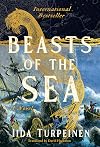
Translated from the Finnish by David Hackston
Iida Turpeinen’s first novel goes deeply into 18th Century scientific practices, treating historical people and events vividly, bringing her readers to a shipwreck in the Aleutian islands, a murderous winter in Siberia, and finishing off at the Baltic Sea coast near 1950s Helsinki. She recounts the tragically wrong-headed beliefs about wildlife husbandry prevalent during the 1700s, the too-late discovery that extinction is a real thing, and concludes with a latter-day example of a heroic quartet of brothers who save a Finnish island near Helsinki from overhunting. Her account contains reliable information on official policy, and is vivid and effective while rendering her characters’ flaws, beliefs, and motivations. It’s a very affecting piece.
Her cast includes renowned naturalist Georg Wilhelm Steller, documenter of at least nine different species, eight of which bear his name (Steller’s Jay, Steller’s Sea Eagle, Steller’s Sea Lion, to name only a few). Prominent roles are also played by Anna, the put-upon wife of J.H. Furuhjelm, the last governor of the Russian America colony (Alaska); Professor Alexander von Nordmann and his assistant, the illustrator Hilda Olson; and 20th Century Finnish conservator John Grönvall.
This book beats to the pulse of conservation, and its cast of characters all reflect beliefs and attitudes of the time toward wildlife and the natural world. Steller discovers the Sea Cow in 1741, show more while on an island in the Bering Sea. By 1769, this gentle giant has breathed its last. Twenty-eight years! That’s all it took for the planet’s best hunters to slaughter it out of sight. It was docile, sluggish, and apparently delicious, although only roughly a fifth were taken for consumption. The rest? For furs, perhaps.
As the Eighteenth Century turned to the Nineteenth, prominent scientists like Georges Cuvier and Alexander von Humboldt warned of the disastrous results of untrammeled human exploitation of the natural world. This brought to the public consciousness the actual danger inherent in waste and bloodthirstiness, though perhaps not prominently enough.
In spite of its subject, Beasts of the Sea has an engaging manner, perhaps even a charm to recommend it. Take it up if your interest runs to cultural and scientific shifts in our approach to the natural world. But also, you will experience a moment in time when naturalists were often celebrities, and when, in the wake of discovering thrilling fossils, the hunt for dinosaurs began in earnest.
https://bassoprofundo1.blogspot.com/2026/03/beasts-of-sea-by-iida-turpeinen.html show less
Iida Turpeinen’s first novel goes deeply into 18th Century scientific practices, treating historical people and events vividly, bringing her readers to a shipwreck in the Aleutian islands, a murderous winter in Siberia, and finishing off at the Baltic Sea coast near 1950s Helsinki. She recounts the tragically wrong-headed beliefs about wildlife husbandry prevalent during the 1700s, the too-late discovery that extinction is a real thing, and concludes with a latter-day example of a heroic quartet of brothers who save a Finnish island near Helsinki from overhunting. Her account contains reliable information on official policy, and is vivid and effective while rendering her characters’ flaws, beliefs, and motivations. It’s a very affecting piece.
Her cast includes renowned naturalist Georg Wilhelm Steller, documenter of at least nine different species, eight of which bear his name (Steller’s Jay, Steller’s Sea Eagle, Steller’s Sea Lion, to name only a few). Prominent roles are also played by Anna, the put-upon wife of J.H. Furuhjelm, the last governor of the Russian America colony (Alaska); Professor Alexander von Nordmann and his assistant, the illustrator Hilda Olson; and 20th Century Finnish conservator John Grönvall.
This book beats to the pulse of conservation, and its cast of characters all reflect beliefs and attitudes of the time toward wildlife and the natural world. Steller discovers the Sea Cow in 1741, show more while on an island in the Bering Sea. By 1769, this gentle giant has breathed its last. Twenty-eight years! That’s all it took for the planet’s best hunters to slaughter it out of sight. It was docile, sluggish, and apparently delicious, although only roughly a fifth were taken for consumption. The rest? For furs, perhaps.
As the Eighteenth Century turned to the Nineteenth, prominent scientists like Georges Cuvier and Alexander von Humboldt warned of the disastrous results of untrammeled human exploitation of the natural world. This brought to the public consciousness the actual danger inherent in waste and bloodthirstiness, though perhaps not prominently enough.
In spite of its subject, Beasts of the Sea has an engaging manner, perhaps even a charm to recommend it. Take it up if your interest runs to cultural and scientific shifts in our approach to the natural world. But also, you will experience a moment in time when naturalists were often celebrities, and when, in the wake of discovering thrilling fossils, the hunt for dinosaurs began in earnest.
https://bassoprofundo1.blogspot.com/2026/03/beasts-of-sea-by-iida-turpeinen.html show less
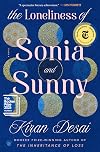
Get ready for a rollicking, maximalist ride through End-of-20th-Century India. Kiran Desai sets her novel at a time when India’s struggle to attain the prosperity achieved in Western countries, runs squarely up against its labyrinth of societal and family morés, corruption, and its quirky, hidebound worldviews. In her handling, these forces exert their never-ending pressure against one true thing: young love. In telling this tale, she has brought out a rare gem of a novel: she dives deeply into her native country, warts and all, and lets her central characters attempt to find solutions. It’s a heroic battle, and the tome stuns us with its comprehensive treatment and its hints of where hope might be might be found, against all odds.
This is a tremendous book, a book over-brimming with ambition. Our author juggles so many objects—plot, character, theme—with unerring balance and focus, even as we (I) had to go back, more than once, several pages to figure out how we got where we are. Desai has performed a bravura, spectacular feat with Loneliness. Take up this great, Booker-shortlisted book and be enriched.
India’s ghosts conspire against good intentions and justice—what can young people do? And what can they do against a hex loosed on them by an insane, megalomaniacal sorcerer-artist? Both our protagonists hallucinate and have paranoid episodes under its power. Our eponymous young people also hesitate, misread the forces keeping them apart, and live separately show more even after having experienced a brief joyful intimacy. Sonia and Sonny careen and ricochet past each other, propelled every which way by family and cultural forces well beyond their control. India at that time suffers paroxysms of sectarian violence, as well. Desai sets up her prospective lovers on opposite sides: Sonny is Hindu, Sonia Muslim. This led me to wonder: is Desai trying to guide this populous, complicated country to a promised land of a peace?
This book overflows with image, ambition, cosmopolitanism, human nature portrayed with pinpoint accuracy, and modern impulse trying to push past traditional restraint. Without doubt, it will hold your interest, both in the general storytelling sense, and in the sense of wanting the favorable outcome. It’s a tribute—its exhaustive treatment of India’s people, culture, and self-defeating inconsistencies reflect that country’s plurality and multilayered humanity. And Desai harnesses it all brilliantly. Take this one up!
https://bassoprofundo1.blogspot.com/2026/02/the-loneliness-of-sonia-and-sonny-by... show less
This is a tremendous book, a book over-brimming with ambition. Our author juggles so many objects—plot, character, theme—with unerring balance and focus, even as we (I) had to go back, more than once, several pages to figure out how we got where we are. Desai has performed a bravura, spectacular feat with Loneliness. Take up this great, Booker-shortlisted book and be enriched.
India’s ghosts conspire against good intentions and justice—what can young people do? And what can they do against a hex loosed on them by an insane, megalomaniacal sorcerer-artist? Both our protagonists hallucinate and have paranoid episodes under its power. Our eponymous young people also hesitate, misread the forces keeping them apart, and live separately show more even after having experienced a brief joyful intimacy. Sonia and Sonny careen and ricochet past each other, propelled every which way by family and cultural forces well beyond their control. India at that time suffers paroxysms of sectarian violence, as well. Desai sets up her prospective lovers on opposite sides: Sonny is Hindu, Sonia Muslim. This led me to wonder: is Desai trying to guide this populous, complicated country to a promised land of a peace?
This book overflows with image, ambition, cosmopolitanism, human nature portrayed with pinpoint accuracy, and modern impulse trying to push past traditional restraint. Without doubt, it will hold your interest, both in the general storytelling sense, and in the sense of wanting the favorable outcome. It’s a tribute—its exhaustive treatment of India’s people, culture, and self-defeating inconsistencies reflect that country’s plurality and multilayered humanity. And Desai harnesses it all brilliantly. Take this one up!
https://bassoprofundo1.blogspot.com/2026/02/the-loneliness-of-sonia-and-sonny-by... show less
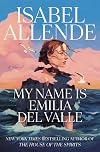
Translated from the Spanish by Frances Riddle.
Isabel Allende presents us with a stirring adventure story in 2025’s My Name is Emilia del Valle. She conjures up an old fashioned hero for her first-person protagonist, an adventurous, iconoclastic young woman from 19th Century San Francisco. The product of a tryst between her novice nun mother and a mysterious progenitor who immediately leaves, she lucks out with doting, freethinking Papo, a stepdad who engenders in her a confident, not to say fearless, outlook. This brash worldview gets her into some extremely deadly jeopardy when she ends up on the losing side in the the Chilean civil war. It’s vivid, captivating, enthralling work.
As Emilia’s mother prepares to take a nun’s vows she’s swept up in a random tryst and immediately abandoned by a wastrel Chilean aristocrat. Emilia’s mother, Molly, earns the sobriquet “Saint Molly” for the good work she does teaching the children of impoverished Spanish-speaking denizens of the S.F. Mission District and for providing free bread to the neighborhood every day. Her marriage of convenience to don Pancho is a stroke of pure luck for Molly and especially for Emilia.
Emilia grows tall and strong and bilingual, and her Papo encourages her impulse to write down her thoughts and impressions. Grown into womanhood, she takes a male nom de plume and publishes dime novels in the 1880s, adding to the family coffers. This leads to journalism, working for the Hearst newspaper, show more the Examiner, where she meets reporter Eric Whelan and begins a reporting/column-writing partnership. The two partners travel to Chile to cover its civil war of 1891, and the adventure shifts into high gear.
Allende writes adventure with pace, realism, and an unblinking eye toward human nature in all its wartime butchery. Our hero suffers physically and emotionally: she is beaten, starved, imprisoned. She must decide at length whether to investigate the spurious inheritance her biological father left her — it’s impossibly remote in southern Chile.
You must read this faced-paced, gritty tale of a young woman’s determination and pluck, to find out. I heartily recommend this careening adventure tale, from a storyteller who proves her worth over and over.
https://bassoprofundo1.blogspot.com/2026/01/my-name-is-emilia-del-valle-by-isabe... show less
Isabel Allende presents us with a stirring adventure story in 2025’s My Name is Emilia del Valle. She conjures up an old fashioned hero for her first-person protagonist, an adventurous, iconoclastic young woman from 19th Century San Francisco. The product of a tryst between her novice nun mother and a mysterious progenitor who immediately leaves, she lucks out with doting, freethinking Papo, a stepdad who engenders in her a confident, not to say fearless, outlook. This brash worldview gets her into some extremely deadly jeopardy when she ends up on the losing side in the the Chilean civil war. It’s vivid, captivating, enthralling work.
As Emilia’s mother prepares to take a nun’s vows she’s swept up in a random tryst and immediately abandoned by a wastrel Chilean aristocrat. Emilia’s mother, Molly, earns the sobriquet “Saint Molly” for the good work she does teaching the children of impoverished Spanish-speaking denizens of the S.F. Mission District and for providing free bread to the neighborhood every day. Her marriage of convenience to don Pancho is a stroke of pure luck for Molly and especially for Emilia.
Emilia grows tall and strong and bilingual, and her Papo encourages her impulse to write down her thoughts and impressions. Grown into womanhood, she takes a male nom de plume and publishes dime novels in the 1880s, adding to the family coffers. This leads to journalism, working for the Hearst newspaper, show more the Examiner, where she meets reporter Eric Whelan and begins a reporting/column-writing partnership. The two partners travel to Chile to cover its civil war of 1891, and the adventure shifts into high gear.
Allende writes adventure with pace, realism, and an unblinking eye toward human nature in all its wartime butchery. Our hero suffers physically and emotionally: she is beaten, starved, imprisoned. She must decide at length whether to investigate the spurious inheritance her biological father left her — it’s impossibly remote in southern Chile.
You must read this faced-paced, gritty tale of a young woman’s determination and pluck, to find out. I heartily recommend this careening adventure tale, from a storyteller who proves her worth over and over.
https://bassoprofundo1.blogspot.com/2026/01/my-name-is-emilia-del-valle-by-isabe... show less
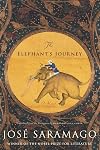
In 2008’s The Elephant’s Journey, Nobel Prize winner José Saramago recounts the 1552 handing-over of adult Asian elephant Solomon (or Suleiman or Solimon), from Dom João III, the king of Portugal, to Archduke Maximilian of Austria. Told with tongue firmly in cheek, it leaves no social stratum un-hoisted on the petard of our clever author’s sense of irony. It’s funny cover to cover; it strictly maintains a 21st Century point of view, and doesn’t let latter-day foolishness go unpunished, either. I can’t remember laughing out loud so often while reading a semi-serious work of fiction.
Dom João III, mighty king of the vast Portuguese trading and military empire, puzzles at the outset, wondering what kind of gift he can give his friend and ally Austrian Archduke Maximilian to further cement their relations. It would be difficult to name two more august royals in Europe at the time — Portugal nearly at the height of its global power, and the Holy Roman Empire that epoch’s European colossus.
However, Saramago portrays these august personages as insecure, petty, self-aggrandizing and sometimes downright silly. However, the author reserves his most barbed observations for the two military contingents, one from each empire. The way they torture themselves over minute details, and whose pride will be damaged by whom, is simply beyond the pale — in the hands of this world-renowned author, it’s gorgeous, and gorgeously funny. in this Saramago imagines they turn show more the simplest of transactions into trouble over trifles about who will stand where, and who will be allowed into the Portuguese outpost for the transfer. Spoiler: NOT the Austrians!
Our Nobelist author saves his most open-hearted passages for the two characters at the center of his narrative: the elephant and his mahout, or handler. The elephant is cooperative and rather quick to learn; and Subhro, the handler, learns about European rivalries, Catholic hypocrisy and showmanship during the bloody Lutheran Reformation and its religious wars, and tries to monetize his main asset by selling elephant hair as a cure for baldness.
Needless to say, I’m recommending this tour de force comic novel in the highest terms possible. Take and enjoy.
https://bassoprofundo1.blogspot.com/2025/12/the-elephants-journey-by-jose-sarama... show less
Dom João III, mighty king of the vast Portuguese trading and military empire, puzzles at the outset, wondering what kind of gift he can give his friend and ally Austrian Archduke Maximilian to further cement their relations. It would be difficult to name two more august royals in Europe at the time — Portugal nearly at the height of its global power, and the Holy Roman Empire that epoch’s European colossus.
However, Saramago portrays these august personages as insecure, petty, self-aggrandizing and sometimes downright silly. However, the author reserves his most barbed observations for the two military contingents, one from each empire. The way they torture themselves over minute details, and whose pride will be damaged by whom, is simply beyond the pale — in the hands of this world-renowned author, it’s gorgeous, and gorgeously funny. in this Saramago imagines they turn show more the simplest of transactions into trouble over trifles about who will stand where, and who will be allowed into the Portuguese outpost for the transfer. Spoiler: NOT the Austrians!
Our Nobelist author saves his most open-hearted passages for the two characters at the center of his narrative: the elephant and his mahout, or handler. The elephant is cooperative and rather quick to learn; and Subhro, the handler, learns about European rivalries, Catholic hypocrisy and showmanship during the bloody Lutheran Reformation and its religious wars, and tries to monetize his main asset by selling elephant hair as a cure for baldness.
Needless to say, I’m recommending this tour de force comic novel in the highest terms possible. Take and enjoy.
https://bassoprofundo1.blogspot.com/2025/12/the-elephants-journey-by-jose-sarama... show less
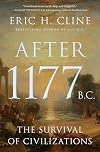
Dr. Eric H. Cline’s second book on the Late Bronze Age Collapse, called “After 1177 BC,” follows up his popular 2014 chronicle of the Late Bronze Age Collapse, “1177 BC.” In the previous volume he adopted an arbitrary date for the well-known calamity that brought several ancient civilizations to their knees, and others to the dustbin of history. In his new compendium Dr. Kline picks eight flourishing, civilized Eastern Mediterranean cultures and provides serious, nuanced accounts of which these civilizations adapted and thrived, which survived but barely, and which simply disappeared. It is a highly illuminating read.
As you might expect in an academic treatise, he lays out the facts of dates, regimes, industrial and trade practices, migration, and warfare methodically. He always couches his facts in terms of reliable sources, and where his sources lead to doubt, Dr. Cline faithfully reports the reasons for and the extent of the uncertainty. The result is a closely reasoned, well-organized recounting, that gains credibility as we go along.
At volume’s end, he presents a table to list the ancient civilizations and the fate of each in the wake of the Late Bronze Age Collapse. He presupposes that the reader is aware of the episode, but in case you need a refresher: early in the 12th Century BCE some combination of unanticipated forces: a spate of powerful earthquakes, climate change leading to drought and famine, and/or multiple waves of mysterious invaders from show more faraway lands, resulted in the simultaneous collapse of trade, economic depression, war, revolution, the splintering of populations, and the retrogression of technological standards. It was the end of the world as the well-established cultures of the ancient Eastern Mediterranean knew it.
But Professor Cline’s mission is to provide a closer, more nuanced look at the effects of the calamity, and his combination of rigorous analysis and careful filling-in-the-blanks works superbly. His ultimate recap, a carefully laid-out table featuring the cultures of the time and how each weathered, or failed to weather, the Collapse, adds to the general public’s understanding, and provides a nexus for the professional archeological and historical work which will follow. (I will quibble with the professor’s use of the term BC instead of the more current BCE to describe the time period. Presumably the title of the initial volume of 11 years ago led to the practice, but it’s too bad.)
In the end, Professor Cline urges the general public to drop the idea that the period led to an early Dark Age, and simply refer to the emerging epoch as the Iron Age. His book is at once encyclopedic and daringly speculative. A terrific effort from a foremost expert.
https://bassoprofundo1.blogspot.com/2025/12/after-1177-bc-by-eric-h-cline-phd.ht... show less
As you might expect in an academic treatise, he lays out the facts of dates, regimes, industrial and trade practices, migration, and warfare methodically. He always couches his facts in terms of reliable sources, and where his sources lead to doubt, Dr. Cline faithfully reports the reasons for and the extent of the uncertainty. The result is a closely reasoned, well-organized recounting, that gains credibility as we go along.
At volume’s end, he presents a table to list the ancient civilizations and the fate of each in the wake of the Late Bronze Age Collapse. He presupposes that the reader is aware of the episode, but in case you need a refresher: early in the 12th Century BCE some combination of unanticipated forces: a spate of powerful earthquakes, climate change leading to drought and famine, and/or multiple waves of mysterious invaders from show more faraway lands, resulted in the simultaneous collapse of trade, economic depression, war, revolution, the splintering of populations, and the retrogression of technological standards. It was the end of the world as the well-established cultures of the ancient Eastern Mediterranean knew it.
But Professor Cline’s mission is to provide a closer, more nuanced look at the effects of the calamity, and his combination of rigorous analysis and careful filling-in-the-blanks works superbly. His ultimate recap, a carefully laid-out table featuring the cultures of the time and how each weathered, or failed to weather, the Collapse, adds to the general public’s understanding, and provides a nexus for the professional archeological and historical work which will follow. (I will quibble with the professor’s use of the term BC instead of the more current BCE to describe the time period. Presumably the title of the initial volume of 11 years ago led to the practice, but it’s too bad.)
In the end, Professor Cline urges the general public to drop the idea that the period led to an early Dark Age, and simply refer to the emerging epoch as the Iron Age. His book is at once encyclopedic and daringly speculative. A terrific effort from a foremost expert.
https://bassoprofundo1.blogspot.com/2025/12/after-1177-bc-by-eric-h-cline-phd.ht... show less
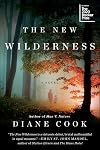
In The New Wilderness Diane Cook explores the sometimes fraught relationship between a mother Bea, and her daughter, Agnes. She plays this relationship out on a dystopian landscape, stripped of all modernity’s distractions. She warns us about mismanaging our home planet and simultaneously lays human nature and human interaction open to review and judgment. The author celebrates and grieves over the eternal give and take between mother and daughter; Cook tackles this essential chore brilliantly, showing all its depth and tenderness, and not sparing us the painful moments. In fact, she handles this volatile relationship so perfectly that the novel was shortlisted for the 2020 Booker Prize.
Bea gives birth to Agnes in the City, and like so many children in that toxic, dangerous pit, she becomes critically ill, to the level of coughing up blood. Desperate, Bea and her husband Glen win passes to join a group of like-minded pilgrims and leave the City permanently behind, and make their collective way in the Wilderness State. The Wilderness State is a vast tract of natural environment—free of the devastation that has left the City uninhabitable. This group, called the Community, generally succeeds at living off the land. Yes, they run afoul a few times of the Rangers, the formal authority over the Wilderness State, but things don’t really spiral out of control until other groups violate the borders of this reserve, after which daily subsistence becomes too much of a show more challenge.
Cook’s kernel remains Bea and Agnes. Other plot directions orbit this way and that, but Bea and Agnes continually return front and center. The author always portrays these two women with such logic, such love, and, after Agnes grows to approximate independence, at high stakes loggerheads—it simply isn’t possible that it could have been handled any more fairly, or with any more love or mercy.
The author crafts her love story in admirable and direct prose. Speech and reasoning within the group progresses in blunt terms, because decisions have direct consequences when you’re a migrant group living off the land. There’s no higher power, no magisterial narrator to describe beautiful scenes, or give hints about advisable survival strategies, which is exactly how it should be.
The book contains at length a subtle hint at a higher symbolism, but I won’t speculate about it, because I think it would remain a minor feature, and not a very influential one. But if you sit down to this book, it will take you on a journey through human nature in the face of the natural world, and plot out for you the parabola of love’s trajectory of two willful women, tied together by love. Memorable and merciful, true to life and thought-provoking, the Booker committee was right to honor this one. A true winner.
https://bassoprofundo1.blogspot.com/2025/11/the-new-wilderness-by-diane-cook.htm... show less
Bea gives birth to Agnes in the City, and like so many children in that toxic, dangerous pit, she becomes critically ill, to the level of coughing up blood. Desperate, Bea and her husband Glen win passes to join a group of like-minded pilgrims and leave the City permanently behind, and make their collective way in the Wilderness State. The Wilderness State is a vast tract of natural environment—free of the devastation that has left the City uninhabitable. This group, called the Community, generally succeeds at living off the land. Yes, they run afoul a few times of the Rangers, the formal authority over the Wilderness State, but things don’t really spiral out of control until other groups violate the borders of this reserve, after which daily subsistence becomes too much of a show more challenge.
Cook’s kernel remains Bea and Agnes. Other plot directions orbit this way and that, but Bea and Agnes continually return front and center. The author always portrays these two women with such logic, such love, and, after Agnes grows to approximate independence, at high stakes loggerheads—it simply isn’t possible that it could have been handled any more fairly, or with any more love or mercy.
The author crafts her love story in admirable and direct prose. Speech and reasoning within the group progresses in blunt terms, because decisions have direct consequences when you’re a migrant group living off the land. There’s no higher power, no magisterial narrator to describe beautiful scenes, or give hints about advisable survival strategies, which is exactly how it should be.
The book contains at length a subtle hint at a higher symbolism, but I won’t speculate about it, because I think it would remain a minor feature, and not a very influential one. But if you sit down to this book, it will take you on a journey through human nature in the face of the natural world, and plot out for you the parabola of love’s trajectory of two willful women, tied together by love. Memorable and merciful, true to life and thought-provoking, the Booker committee was right to honor this one. A true winner.
https://bassoprofundo1.blogspot.com/2025/11/the-new-wilderness-by-diane-cook.htm... show less
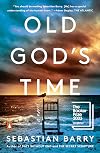
Sebastian Barry invents a confounding and remarkable protagonist in Old God’s Time (2023). He presents an older man whose life has not been kind to him; he’s a challenging, rather unmoored protagonist, who has faced more than his share of violence and tragedy, and who may perhaps be forgiven for his lapses. If that’s what they are.
Tom Kettle is our character, a retired detective, having plied his trade with a modicum of distinction on the Dublin police force. He sits by himself in his beloved wicker chair in a splendid seaside flat and works at not thinking. A visit from two young detectives throws him off—he feels alternately pleased, doubtful, and panicky. He knows old cases are going to rear their heads, and that’s what panics him.
Right from the outset, the author works brilliantly to inure us to the rickety fancies of this shambling, awkward man. We begin to learn not to trust all that he sees, and in effect we learn it at the same time as Tom learns it about himself. The happy and not so happy days of his past ambush him, and he must determine how they affect his current days. For one thing, he still idolizes and yearns for his late wife; he aches with the sad remembrance of this loss. Some of Barry’s most poignant passages are uttered or thought by Tom about his dearly departed June:
As if no one had been crushed, no one had been hurried from the halls of life, and the power of his love could effect that, could hold her buoyant and eternal in the show more embrace of an ordinary day.
Passages like these, with the soaring emotional force urgently felt by Tom, crowd this stunning book. The diction, the lilt, the typical phrasing of Irish idiom and culture, all contribute to a memorable, rewarding read. That they share the page with such timeless and weighty human issues is a tribute to Barry’s art. The author pays deep homage to his character and what he stands for, and is utterly justified in doing so.
Old God’s Time is densely plotted, humane in its treatment of careworn characters, and grandly finessed from beginning to end. Very highly recommended.
https://bassoprofundo1.blogspot.com/2025/10/old-gods-time-by-sebastian-barry.htm... show less
Tom Kettle is our character, a retired detective, having plied his trade with a modicum of distinction on the Dublin police force. He sits by himself in his beloved wicker chair in a splendid seaside flat and works at not thinking. A visit from two young detectives throws him off—he feels alternately pleased, doubtful, and panicky. He knows old cases are going to rear their heads, and that’s what panics him.
Right from the outset, the author works brilliantly to inure us to the rickety fancies of this shambling, awkward man. We begin to learn not to trust all that he sees, and in effect we learn it at the same time as Tom learns it about himself. The happy and not so happy days of his past ambush him, and he must determine how they affect his current days. For one thing, he still idolizes and yearns for his late wife; he aches with the sad remembrance of this loss. Some of Barry’s most poignant passages are uttered or thought by Tom about his dearly departed June:
As if no one had been crushed, no one had been hurried from the halls of life, and the power of his love could effect that, could hold her buoyant and eternal in the show more embrace of an ordinary day.
Passages like these, with the soaring emotional force urgently felt by Tom, crowd this stunning book. The diction, the lilt, the typical phrasing of Irish idiom and culture, all contribute to a memorable, rewarding read. That they share the page with such timeless and weighty human issues is a tribute to Barry’s art. The author pays deep homage to his character and what he stands for, and is utterly justified in doing so.
Old God’s Time is densely plotted, humane in its treatment of careworn characters, and grandly finessed from beginning to end. Very highly recommended.
https://bassoprofundo1.blogspot.com/2025/10/old-gods-time-by-sebastian-barry.htm... show less

Translated from the Polish by Antonia Lloyd-Jones in 2018.
Name a prestigious literary award, and Olga Tokarczuk has won it: the Nobel Prize and the International Booker (both in 2018); Slovenia’s Vilencia Prize (2013); the Internationaler Brückepreis (2015), for contributing to better understanding among nations; the Jan Michalski Prize, awarded from Switzerland in 2015; the Prix Laure Bataillon (2019), for literature translated into French; and Poland’s own highest literary award, the Nike, in 2008 and 2015.
Drive Your Plow over the Bones of the Dead combines a quirky purported madwoman/astrologer, an insular village on a plateau in southwestern Poland, five gruesome deaths (four by murder), and a riotously funny first-person protagonist in a hilarious, sometimes gloomy, treat. I left out sublime and mood-altering descriptions of nature—the forest, the harsh winter, the wildlife, (including beetle larvae)—and apt observations of modern trends and class differentiation. All of it serves the author’s purpose, which is obviously to amuse her readers, while shining an unblinking light on hypocritical modern practices in all their rough-hewn cruelty. It’s quite the variegated pleasure, a multi-layered romp.
The novel’s title is a slightly paraphrased quote from William Blake; our heroine recites it to herself as she watches winter take over her village on All Saints’ Day. She thus observes the inexorable change of seasons; winter seems to last the longest, show more while spring and summer go by in a flash. She gives everyone pet names, which sometimes become the actual names people go by: Big Foot, Dizzy, Oddball, and Miss Good News, among others. These add to the quirkiness of the character and of the novel; it’s just one more layer of delight on offer.
Be all that as it may, a magisterial justice meted out by nature holds this energetic, told-by-a-dubious-protagonist tale together. And it gives it its lance-like point. I’m all over the lot here, I know, because this book gave me so much pleasure. But the novel is tightly organized, while seeming random; it is wise while seeming silly. The heroine’s internal dialogue is always truly hers: it relies on a shaky foundation of superstition, folklore, and tendentious evidence, but never loses its way toward justice.
Take up this slim volume by one of this moment’s true luminaries. And then move on to the genre-bending Flights, and the comprehensive Books of Jacob. I am somewhat ashamed to say that’s the limit of my exposure to this superb artist. All three are more than worth your while; I’m sure she’ll never produce anything that isn’t.
https://bassoprofundo1.blogspot.com/2025/10/drive-your-plow-over-bones-of-dead-b... show less
Name a prestigious literary award, and Olga Tokarczuk has won it: the Nobel Prize and the International Booker (both in 2018); Slovenia’s Vilencia Prize (2013); the Internationaler Brückepreis (2015), for contributing to better understanding among nations; the Jan Michalski Prize, awarded from Switzerland in 2015; the Prix Laure Bataillon (2019), for literature translated into French; and Poland’s own highest literary award, the Nike, in 2008 and 2015.
Drive Your Plow over the Bones of the Dead combines a quirky purported madwoman/astrologer, an insular village on a plateau in southwestern Poland, five gruesome deaths (four by murder), and a riotously funny first-person protagonist in a hilarious, sometimes gloomy, treat. I left out sublime and mood-altering descriptions of nature—the forest, the harsh winter, the wildlife, (including beetle larvae)—and apt observations of modern trends and class differentiation. All of it serves the author’s purpose, which is obviously to amuse her readers, while shining an unblinking light on hypocritical modern practices in all their rough-hewn cruelty. It’s quite the variegated pleasure, a multi-layered romp.
The novel’s title is a slightly paraphrased quote from William Blake; our heroine recites it to herself as she watches winter take over her village on All Saints’ Day. She thus observes the inexorable change of seasons; winter seems to last the longest, show more while spring and summer go by in a flash. She gives everyone pet names, which sometimes become the actual names people go by: Big Foot, Dizzy, Oddball, and Miss Good News, among others. These add to the quirkiness of the character and of the novel; it’s just one more layer of delight on offer.
Be all that as it may, a magisterial justice meted out by nature holds this energetic, told-by-a-dubious-protagonist tale together. And it gives it its lance-like point. I’m all over the lot here, I know, because this book gave me so much pleasure. But the novel is tightly organized, while seeming random; it is wise while seeming silly. The heroine’s internal dialogue is always truly hers: it relies on a shaky foundation of superstition, folklore, and tendentious evidence, but never loses its way toward justice.
Take up this slim volume by one of this moment’s true luminaries. And then move on to the genre-bending Flights, and the comprehensive Books of Jacob. I am somewhat ashamed to say that’s the limit of my exposure to this superb artist. All three are more than worth your while; I’m sure she’ll never produce anything that isn’t.
https://bassoprofundo1.blogspot.com/2025/10/drive-your-plow-over-bones-of-dead-b... show less
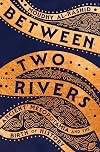
As a reader on, and ponderer about, ancient cultures, my favorite has always been Sumer. They built the first cities, (probably) invented the wheel for transport, and most magnificent of all, invented writing. I wouldn’t call myself a buff, but I do have a 35,000-foot familiarity with the Sumerians. But gosh, has my knowledge grown by leaps and bounds because of Moudhy al-Rashid’s delightful, relatable book, Between Two Rivers.
I didn’t know, for instance, that the cultures that occupied the area after the Sumerians faded, Akkadia, Assyria, and Babylonia, among others, held the Sumerian culture in awe, used Sumerian as a lingua franca long after it was dead (the way Latin functioned in Europe through the Middle Ages), and that cuneiform writing evolved over a couple of thousand years to serve as the typescript for Akkadian, Elamite, Hittite, and Old Persian, and other languages. It finally faded out just as the Common Era began and the Phoenician alphabet gained in use.
This is a scholarly book; it has not only the main text, but a) a listing of Selected Artefacts Cited; b) a Timeline of Ancient Mesopotamian History; c) 23 pages of Bibliography; d) copious endnotes, and e) an index. But not only is Dr. Al-Rashid thorough, she is engaging and relatable. Her delight at holding ancient clay tablets in her hand, her wonder at the advanced math the Sumerians applied to understanding and predicting Jupiter’s orbit … this Oxford University lecturer infects us with her show more energy and enthusiasm. We cannot help share her delight as she recognizes the feelings, aspirations, and timeless issues experienced so long ago.
In addition to praising the accomplishments of these clever ancients, al-Rashid singles out certain individuals for focus or special comment. In the 7th century BCE, a Neo-Babylonian king re-instituted the long-abandoned practice of naming a high priestess to the moon god. His daughter was re-named Ennigaldi-Nanna, and we know her because archeologists unearthed clay tablets about the event, and because an archeologist found a room in her newly built palace. The room contained objects from an astonishing range of time, from decades prior to 1500 years in the past. Was Ennigaldi-Nanna a curator of a museum? Were these objects just there together by random chance? We’ll never know, but the author takes this example and shows how it reflected a culture of honoring the past. The ancient princess inspires the author — she represents a kindred spirit from long ago. The author even asks, is it possible she curated an ancient museum, preserving pieces that were archaic even so long ago?
I’ve read academic texts before, but never one with this kind of personal slant. We learn much about al-Rashid, just as we learn to appreciate the ancient day-to-day women and men trying to get on with life, and apparently succeeding brilliantly. This book is a multivariate joy: informative, brightly descriptive, and engaging. Take it up!
https://bassoprofundo1.blogspot.com/2025/10/between-two-rivers-by-moudhy-al-rash... show less
I didn’t know, for instance, that the cultures that occupied the area after the Sumerians faded, Akkadia, Assyria, and Babylonia, among others, held the Sumerian culture in awe, used Sumerian as a lingua franca long after it was dead (the way Latin functioned in Europe through the Middle Ages), and that cuneiform writing evolved over a couple of thousand years to serve as the typescript for Akkadian, Elamite, Hittite, and Old Persian, and other languages. It finally faded out just as the Common Era began and the Phoenician alphabet gained in use.
This is a scholarly book; it has not only the main text, but a) a listing of Selected Artefacts Cited; b) a Timeline of Ancient Mesopotamian History; c) 23 pages of Bibliography; d) copious endnotes, and e) an index. But not only is Dr. Al-Rashid thorough, she is engaging and relatable. Her delight at holding ancient clay tablets in her hand, her wonder at the advanced math the Sumerians applied to understanding and predicting Jupiter’s orbit … this Oxford University lecturer infects us with her show more energy and enthusiasm. We cannot help share her delight as she recognizes the feelings, aspirations, and timeless issues experienced so long ago.
In addition to praising the accomplishments of these clever ancients, al-Rashid singles out certain individuals for focus or special comment. In the 7th century BCE, a Neo-Babylonian king re-instituted the long-abandoned practice of naming a high priestess to the moon god. His daughter was re-named Ennigaldi-Nanna, and we know her because archeologists unearthed clay tablets about the event, and because an archeologist found a room in her newly built palace. The room contained objects from an astonishing range of time, from decades prior to 1500 years in the past. Was Ennigaldi-Nanna a curator of a museum? Were these objects just there together by random chance? We’ll never know, but the author takes this example and shows how it reflected a culture of honoring the past. The ancient princess inspires the author — she represents a kindred spirit from long ago. The author even asks, is it possible she curated an ancient museum, preserving pieces that were archaic even so long ago?
I’ve read academic texts before, but never one with this kind of personal slant. We learn much about al-Rashid, just as we learn to appreciate the ancient day-to-day women and men trying to get on with life, and apparently succeeding brilliantly. This book is a multivariate joy: informative, brightly descriptive, and engaging. Take it up!
https://bassoprofundo1.blogspot.com/2025/10/between-two-rivers-by-moudhy-al-rash... show less
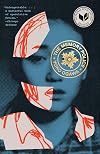
Translated from the Japanese by Stephen Snyder
Yoko Ogawa first published The Memory Police in Japan in 1994, under the title Hisoyaka na kesshō; Stephen Snyder’s translation bears a 2019 copyright. This unique tale recounts the strange goings on on a small Japanese island where things are forgotten. More accurately, I should state that things are “disappeared.” And the Memory Police administer people’s compliance with these orders in their iron-fisted way. If this sounds awkward, it’s because it is.
Our unnamed first-person protagonist is a woman in her 30s who is a novelist. Early on we encounter the process of when something is disappeared; the first memorable disappearance is roses. On a sunny morning, the stream outside the novelist’s home bears a curious series of brightly colored, uniformly shaped flat objects flowing on its surface. As people, including our novelist, approach for a closer look, it turns out that rose petals by the hundreds of thousands are floating along the stream, out to sea and oblivion. Immediately afterward, there are no more rose bushes, but the curious thing is, that the people accept it as a matter of course, shrug it off, and plant something new in the space.
Every once in a while something else “is disappeared” (Ogawa’s term for the odd occurrences). Not long after roses disappear, photographs share the same fate, and people, faced with having these odd pieces of paper with images they can’t place, simply burn them all. show more Not long after that, birds disappear, along with everybody’s memory of them. But: not everybody loses their memories. Rather than be rounded up by the Memory Police, these poor people with healthy memories have to live in hiding, fearing discovery. If the Memory Police find you and cart you off in one of their green trucks, you are never seen or heard from again.
The restraint with which Ogawa tells her tale chills us to the bone. Clearly the book contains strong elements of totalitarianism and people’s passive acceptance of its ever-more-outrageous depredations. But her novel also treats human memory, society, groupthink, and consciousness. The sheep-like population, including our protagonist, awaits its ultimate fate with hardly a whimper.
Also, Ogawa gilds her story with a novel within the novel — a surreal inversion of her main plot — which adds a frightening fillip to the lessons in the frightening main story.
Told in plain, almost gentle, language, The Memory Police posits its principal lessons for us all to see, and warns us in magisterial terms about bowing to the state’s bullying caprice. This novel will edify you with its through-the-looking-glass approach to modern life and particularly, life in a modern totalitarian state. I rode a roller coaster reading this, and ended up at a high point of appreciation: I had that frisson that I get when I come across reverberant, cunning, effective fiction — when the roller coaster came to a stop, I found myself at a high point of awe and tentative understanding. Read this book; take the ride I did, and join me at the sparkling, enlightened finish.
https://bassoprofundo1.blogspot.com/2025/10/the-memory-police-by-yoko-ogawa.html show less
Yoko Ogawa first published The Memory Police in Japan in 1994, under the title Hisoyaka na kesshō; Stephen Snyder’s translation bears a 2019 copyright. This unique tale recounts the strange goings on on a small Japanese island where things are forgotten. More accurately, I should state that things are “disappeared.” And the Memory Police administer people’s compliance with these orders in their iron-fisted way. If this sounds awkward, it’s because it is.
Our unnamed first-person protagonist is a woman in her 30s who is a novelist. Early on we encounter the process of when something is disappeared; the first memorable disappearance is roses. On a sunny morning, the stream outside the novelist’s home bears a curious series of brightly colored, uniformly shaped flat objects flowing on its surface. As people, including our novelist, approach for a closer look, it turns out that rose petals by the hundreds of thousands are floating along the stream, out to sea and oblivion. Immediately afterward, there are no more rose bushes, but the curious thing is, that the people accept it as a matter of course, shrug it off, and plant something new in the space.
Every once in a while something else “is disappeared” (Ogawa’s term for the odd occurrences). Not long after roses disappear, photographs share the same fate, and people, faced with having these odd pieces of paper with images they can’t place, simply burn them all. show more Not long after that, birds disappear, along with everybody’s memory of them. But: not everybody loses their memories. Rather than be rounded up by the Memory Police, these poor people with healthy memories have to live in hiding, fearing discovery. If the Memory Police find you and cart you off in one of their green trucks, you are never seen or heard from again.
The restraint with which Ogawa tells her tale chills us to the bone. Clearly the book contains strong elements of totalitarianism and people’s passive acceptance of its ever-more-outrageous depredations. But her novel also treats human memory, society, groupthink, and consciousness. The sheep-like population, including our protagonist, awaits its ultimate fate with hardly a whimper.
Also, Ogawa gilds her story with a novel within the novel — a surreal inversion of her main plot — which adds a frightening fillip to the lessons in the frightening main story.
Told in plain, almost gentle, language, The Memory Police posits its principal lessons for us all to see, and warns us in magisterial terms about bowing to the state’s bullying caprice. This novel will edify you with its through-the-looking-glass approach to modern life and particularly, life in a modern totalitarian state. I rode a roller coaster reading this, and ended up at a high point of appreciation: I had that frisson that I get when I come across reverberant, cunning, effective fiction — when the roller coaster came to a stop, I found myself at a high point of awe and tentative understanding. Read this book; take the ride I did, and join me at the sparkling, enlightened finish.
https://bassoprofundo1.blogspot.com/2025/10/the-memory-police-by-yoko-ogawa.html show less

Dr. Guy Davenport studied at Duke and Oxford, and received his PhD at Harvard in 1961, with a dissertation on Ezra Pound’s poetry. The Geography of the Imagination compiles 40 erudite, closely reasoned essays, and I will readily confess that I have not read all of them. Each piece is filled with such vast background and erudition that, even for a culture vulture like me, it became overwhelming — too much to review. But there is a lot I can tell you:
Grant Wood’s well known and much-parodied painting American Gothic is over-rich with graphic references, according to the professor, from Scots-Presbyterian geometric fabric patterns, to the seven trees being a reference to those of King Solomon’s porch; the style of the house in the background gives the piece its title, American Gothic, as it is a classic of the American Gothic Revival style; a bamboo sunscreen on the porch has been purchased from China via Sears Roebuck; it rolls up, and suggests nautical technology applied to the prairie. Davenport takes some length to extoll the eyeglasses, invented in the Thirteenth Century, the same era that the buttonholes came into use in the configuration seen in the painting. The farmer’s modest wife secures her Reformation collar with a cameo brooch which recalls a style from the Sixth Century BCE; she is the product of the ages: she has the hair-do of a Medieval Madonna, and besides the collar and cameo, wears a Nineteenth-Century pinafore. The stock market crash of 1929 show more has put that look in her eye.
In a piece called “The Symbol of the Archaic,” Davenport points out that in the Western historic scheme“archaic” for more than a millennium meant ancient Greece and Rome. It wasn’t until the 20th Century that science helped the humanities dispel this myopia, and establish the true archaic in cave paintings from 40,000 years ago. He cites Pablo Picasso as one of the principal beneficiaries of this discovery: the artist apparently copied the lines sketched long ago on a wall in a cave in Spain in some of his most famous human figures. From this runway he soars into a discussion of Pablo Neruda and the historian William H. Prescott, who, he says, were “appalled by the brutality with which the indigenous cultures of the Americas were murdered.” References to Melville and the poet Charles Olson on the “ruins of the Second World War,” who in turn was one of the most insightful readers of Melville, whose “Clarel was one of the great (and greatly neglected) meditations on ruins (of Christianity as well as of cultures which he greatly expected he might have found more congenial than his own, if mankind had allowed them to survive)…”
Each essay that I read had these paths and tracings to cultural guides — readers and cognoscenti who understood the great artists — their great observations on culture, morals, antiquity, literature, society, and art, and fed these appreciative insights to those of us (like Professor Davenport), who thirsted for them, and who could explicate and appreciate them and do their bit for the rest of us in their turn.
A side note I have to add: in the piece “The Symbol of the Archaic,” Davenport includes a coinage by Ezra Pound: pejorocracy, ruling by the worst of men. These rulers are put in place because of rampant and willful stupidity, “as it [modernity] has no critical rules for analyzing reality such as the ancient cultures kept bright and sharp.”
Some of my few readers will appreciate literary essays; I eat them up for sustenance. They reach me in ways no other written thing can. I’ve just gleaned a little idea of the topography of the tip of the iceberg here; this review is simple reporting, moreso than my other reviews. Thanks for your support.
https://bassoprofundo1.blogspot.com/2025/09/the-geography-of-imagination-essays-... show less
Grant Wood’s well known and much-parodied painting American Gothic is over-rich with graphic references, according to the professor, from Scots-Presbyterian geometric fabric patterns, to the seven trees being a reference to those of King Solomon’s porch; the style of the house in the background gives the piece its title, American Gothic, as it is a classic of the American Gothic Revival style; a bamboo sunscreen on the porch has been purchased from China via Sears Roebuck; it rolls up, and suggests nautical technology applied to the prairie. Davenport takes some length to extoll the eyeglasses, invented in the Thirteenth Century, the same era that the buttonholes came into use in the configuration seen in the painting. The farmer’s modest wife secures her Reformation collar with a cameo brooch which recalls a style from the Sixth Century BCE; she is the product of the ages: she has the hair-do of a Medieval Madonna, and besides the collar and cameo, wears a Nineteenth-Century pinafore. The stock market crash of 1929 show more has put that look in her eye.
In a piece called “The Symbol of the Archaic,” Davenport points out that in the Western historic scheme“archaic” for more than a millennium meant ancient Greece and Rome. It wasn’t until the 20th Century that science helped the humanities dispel this myopia, and establish the true archaic in cave paintings from 40,000 years ago. He cites Pablo Picasso as one of the principal beneficiaries of this discovery: the artist apparently copied the lines sketched long ago on a wall in a cave in Spain in some of his most famous human figures. From this runway he soars into a discussion of Pablo Neruda and the historian William H. Prescott, who, he says, were “appalled by the brutality with which the indigenous cultures of the Americas were murdered.” References to Melville and the poet Charles Olson on the “ruins of the Second World War,” who in turn was one of the most insightful readers of Melville, whose “Clarel was one of the great (and greatly neglected) meditations on ruins (of Christianity as well as of cultures which he greatly expected he might have found more congenial than his own, if mankind had allowed them to survive)…”
Each essay that I read had these paths and tracings to cultural guides — readers and cognoscenti who understood the great artists — their great observations on culture, morals, antiquity, literature, society, and art, and fed these appreciative insights to those of us (like Professor Davenport), who thirsted for them, and who could explicate and appreciate them and do their bit for the rest of us in their turn.
A side note I have to add: in the piece “The Symbol of the Archaic,” Davenport includes a coinage by Ezra Pound: pejorocracy, ruling by the worst of men. These rulers are put in place because of rampant and willful stupidity, “as it [modernity] has no critical rules for analyzing reality such as the ancient cultures kept bright and sharp.”
Some of my few readers will appreciate literary essays; I eat them up for sustenance. They reach me in ways no other written thing can. I’ve just gleaned a little idea of the topography of the tip of the iceberg here; this review is simple reporting, moreso than my other reviews. Thanks for your support.
https://bassoprofundo1.blogspot.com/2025/09/the-geography-of-imagination-essays-... show less
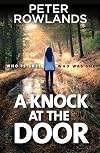
Author Peter Rowlands has produced a number of thriller/mystery titles, including 2023’s A Knock at the Door. If this book is any indicator, his other mysteries will entertain, show off the writer’s knack for the genre, and stretch the reader’s own sleuthing skills. This is a rewarding, entertaining entry.
One evening, as heavy rain and thunder oppress his uncle’s stately residence in Gloucester, cautious, right-thinking, 30-ish Rory Cavenham opens the front door to a soaking, bedraggled young person who seeks shelter from the weather. Naturally, he lets this poor soul into the house, and hunts up tea and a change of clothes. As it happens, this person is a woman near his own age, has a dreadful fear of the police, and a serious case of amnesia. The trauma she’s escaping from, and her lack of memory, so debilitate her, she can’t even properly identify herself.
Thus starts Rory’s long quest to help this woman — who eventually goes by the name Rebecca — rebuild her past, navigate her present, and safeguard her future. It’s not easy. As we follow his campaign, we encounter secretive security thugs who won’t identify whom they work for, a local company performing research into arcane human biology and physiology, a fifty year-old murder case, and much more. Rowlands traces his hero’s solo efforts in enough detail, and with sufficient realism, that we can’t help but invest in his success. He and his damsel in distress become quite sympathetic as they show more work together — but also sometimes at loggerheads — to reconstruct her life.
Rowlands weaves a great many twists and turns into the story. Cavenham encounters a balanced roster of helpful and unhelpful characters along the way, and we never really know who will actually help him, and who wants to block his efforts. The vulnerable Rebecca holds a surprise or two for him, also, even as he tries to find her best interests through the thicket they encounter. Suffice it to say that you may get turned around as you read this book, and even if you aren’t, the end will surprise you anyway.
I’m discussing the plot more than I normally would, because it’s mainly the point — how do our heroes get to the end, given their entirely murky start. However, I have read enough mysteries over the years to know that this one succeeds, entertains, and pays off with a very memorable outcome. If mystery/thrillers are your thing, pick this up by all means.
https://bassoprofundo1.blogspot.com/2025/09/a-knock-at-door-by-peter-rowlands.ht... show less
One evening, as heavy rain and thunder oppress his uncle’s stately residence in Gloucester, cautious, right-thinking, 30-ish Rory Cavenham opens the front door to a soaking, bedraggled young person who seeks shelter from the weather. Naturally, he lets this poor soul into the house, and hunts up tea and a change of clothes. As it happens, this person is a woman near his own age, has a dreadful fear of the police, and a serious case of amnesia. The trauma she’s escaping from, and her lack of memory, so debilitate her, she can’t even properly identify herself.
Thus starts Rory’s long quest to help this woman — who eventually goes by the name Rebecca — rebuild her past, navigate her present, and safeguard her future. It’s not easy. As we follow his campaign, we encounter secretive security thugs who won’t identify whom they work for, a local company performing research into arcane human biology and physiology, a fifty year-old murder case, and much more. Rowlands traces his hero’s solo efforts in enough detail, and with sufficient realism, that we can’t help but invest in his success. He and his damsel in distress become quite sympathetic as they show more work together — but also sometimes at loggerheads — to reconstruct her life.
Rowlands weaves a great many twists and turns into the story. Cavenham encounters a balanced roster of helpful and unhelpful characters along the way, and we never really know who will actually help him, and who wants to block his efforts. The vulnerable Rebecca holds a surprise or two for him, also, even as he tries to find her best interests through the thicket they encounter. Suffice it to say that you may get turned around as you read this book, and even if you aren’t, the end will surprise you anyway.
I’m discussing the plot more than I normally would, because it’s mainly the point — how do our heroes get to the end, given their entirely murky start. However, I have read enough mysteries over the years to know that this one succeeds, entertains, and pays off with a very memorable outcome. If mystery/thrillers are your thing, pick this up by all means.
https://bassoprofundo1.blogspot.com/2025/09/a-knock-at-door-by-peter-rowlands.ht... show less
I’ve seen Sebastian Faulks’s Paris Echo (2018) described as a “love letter to Paris,” but I’m not sure that’s the point of this novel. I’m sure Faulks is totally fine with Paris, but his first love is for his characters: Hannah, a post-doctoral historian researching the experiences of women during the Nazi occupation, both within the Resistance and outside of it; Tariq, a callow youth from Tangier, who follows a mysterious impulse and travels to Paris on a lark; and Hannah’s friend Julian, an English professor of literature. It’s a generous book, both toward its characters and its readers.
Years ago, Hannah was jilted at a very young age, and is still trying to get past it. Her research, however, provides a strong dose of perspective as she listens to audio files of survivors’ life-and-death experiences. Tariq winds up at her apartment, and his ingenuous, non-threatening manner helps him inveigle a place to flop. We see much of Paris through his youthful, unjaded eye. Julian pursues Hannah, in his reserved English way, quite often failing to say the right thing, too proper to truly advance his campaign. They’re endearing characters, particularly Tariq, who plays an innocent in perhaps the most cultured city in the world.
The city during World War II captures our attention, too. Hannah is writing about women during the Occupation, and Faulks manages quite adeptly to add color and nuance to a time, which, like most things in history, are only partially show more understood. The choices women have to make under the assumption that Germany will win the war — a completely reasonable belief until the Battle of Stalingrad — and the way they greeted British and American forces (not always enthusiastically), receive treatment here, and demonstrate that sometimes later judgments are inevitably harsh and unwarranted. Hannah’s own opinion evolves as she digs more deeply.
The author draws out his themes of wartime hardship among non-combatants, of French atrocities against Algerians, including their shoddy treatment of those who supported them during Algeria’s war for independence (gained in 1962), and gives them a human face. This is a balanced treatment of both private and public behavior in mid-century France.
But more than that, Paris Echo engages the reader in the lives of highly sympathetic characters, and reflects the human emotions and aspirations in a bright and memorable way. Highly recommended.
https://bassoprofundo1.blogspot.com/2025/09/paris-echo-by-sebastian-faulks.html show less
Years ago, Hannah was jilted at a very young age, and is still trying to get past it. Her research, however, provides a strong dose of perspective as she listens to audio files of survivors’ life-and-death experiences. Tariq winds up at her apartment, and his ingenuous, non-threatening manner helps him inveigle a place to flop. We see much of Paris through his youthful, unjaded eye. Julian pursues Hannah, in his reserved English way, quite often failing to say the right thing, too proper to truly advance his campaign. They’re endearing characters, particularly Tariq, who plays an innocent in perhaps the most cultured city in the world.
The city during World War II captures our attention, too. Hannah is writing about women during the Occupation, and Faulks manages quite adeptly to add color and nuance to a time, which, like most things in history, are only partially show more understood. The choices women have to make under the assumption that Germany will win the war — a completely reasonable belief until the Battle of Stalingrad — and the way they greeted British and American forces (not always enthusiastically), receive treatment here, and demonstrate that sometimes later judgments are inevitably harsh and unwarranted. Hannah’s own opinion evolves as she digs more deeply.
The author draws out his themes of wartime hardship among non-combatants, of French atrocities against Algerians, including their shoddy treatment of those who supported them during Algeria’s war for independence (gained in 1962), and gives them a human face. This is a balanced treatment of both private and public behavior in mid-century France.
But more than that, Paris Echo engages the reader in the lives of highly sympathetic characters, and reflects the human emotions and aspirations in a bright and memorable way. Highly recommended.
https://bassoprofundo1.blogspot.com/2025/09/paris-echo-by-sebastian-faulks.html show less
In Jenny Kidd author Laury A. Egan expertly assembles colorful, but not-quite-what-they-seem characters to animate this dark thriller. Set in Venice, her story features art forgery, theft, multiple murders, and an age-old noble family awash in mystery and decadence. It’s a slender piece, paced like lightning, and edge-of-your-seat suspenseful — a truly gripping read.
The eponymous character, a gifted young American artist, has abandoned New York in favor of Venice for a couple of months so that she can sharpen her skills. The attractions, both personal and cultural, exert their irresistible pull on Jenny immediately on her arrival. In short order, she meets an enigmatic but charming British woman, two young aristocratic members of Venetian society (under whose spell she can’t help but fall), and a pushy American man who seems to turn up wherever Jenny goes. And even that’s not all: add in her fretting, emotionally distant, and disapproving parents, back in America, and you have a young woman whom trouble will inevitably find. And sure enough, in very short order Jenny’s apartment is burgled, she is seduced — and learns a lot about herself in the process — and ultimately, imprisoned.
Egan taps this bewitching cast with her magic wand, and they misbehave in quite unexpected ways. And she keeps us, her breathless readers, pulled this way and that in suspense. We guess at who’s guilty of crimes and who isn’t; sometimes a character’s activity paints them in a show more suspicious light, and sometimes we suspect them for reasons of our own. Jenny’s captivity stretches out, occupying a considerable portion of the narrative; her multiple attempts at escape come a cropper, one after the other.
Come for the culture, the world-class scenery, and the plucky heroine. Stay for the ingenious skulduggery. Don’t miss this chilling, and emotional, adventure!
https://bassoprofundo1.blogspot.com/2025/08/jenny-kidd-by-laury-egan.html show less
The eponymous character, a gifted young American artist, has abandoned New York in favor of Venice for a couple of months so that she can sharpen her skills. The attractions, both personal and cultural, exert their irresistible pull on Jenny immediately on her arrival. In short order, she meets an enigmatic but charming British woman, two young aristocratic members of Venetian society (under whose spell she can’t help but fall), and a pushy American man who seems to turn up wherever Jenny goes. And even that’s not all: add in her fretting, emotionally distant, and disapproving parents, back in America, and you have a young woman whom trouble will inevitably find. And sure enough, in very short order Jenny’s apartment is burgled, she is seduced — and learns a lot about herself in the process — and ultimately, imprisoned.
Egan taps this bewitching cast with her magic wand, and they misbehave in quite unexpected ways. And she keeps us, her breathless readers, pulled this way and that in suspense. We guess at who’s guilty of crimes and who isn’t; sometimes a character’s activity paints them in a show more suspicious light, and sometimes we suspect them for reasons of our own. Jenny’s captivity stretches out, occupying a considerable portion of the narrative; her multiple attempts at escape come a cropper, one after the other.
Come for the culture, the world-class scenery, and the plucky heroine. Stay for the ingenious skulduggery. Don’t miss this chilling, and emotional, adventure!
https://bassoprofundo1.blogspot.com/2025/08/jenny-kidd-by-laury-egan.html show less
In The Bookshop (1978) author Penelope Fitzgerald presents the determination shown and the obstacles faced in her English heroine’s path as she moves to coastal Suffolk and opens a humble bookshop. She spices her story with generous doses of wryly observed humor, but beneath it all is England’s ossified class structure, with its nasty oppressive dealings, small and large. It is a slender volume, full of quirky observations, laugh-out-loud humor, and all of it done with exemplary economy.
Set in 1959, the story of widowed Florence Green’s foray into retail contains the minutely observed challenges she faces in running the town’s only bookshop. She must deal with such vicissitudes as a vicious and implacable local society matriarch, an onsite storage facility with permanently wet floors and walls, and a cranky poltergeist.
Along the way, Fitzgerald manages the utmost clarity with the stingiest word use. Florence meets Milo, the slouching, somewhat glamorous BBC employee, whom she captures as going “through life with singularly little effort.” The evil society matriarch has a nephew in Parliament (who facilitates her aunt’s scheming); Fitzgerald sums him up as “brilliant, successful, and stupid.” We learn from David Nicholls’s 2013 introduction that the protagonist shares liberal political views with the author, in that she divides the world into “exterminators and exterminatees, with the former, at any given time, predominating.”
The author allows us show more a peek into the internal dialogue of a charming, ambitious, and kindly heroine. Unfortunately she must contend with English village tastes (provincial), rural characters (quirky and plainspoken), and mores (circumscribed). Fitzgerald won the 1979 Booker Prize for her novel Offshore. Clearly, this was a novelist who knew her craft, and plied it with world class skill. The Bookshop is unblinking, economical, charming, and brilliant. Set aside some time, and get acquainted with this lovely accomplishment.
https://bassoprofundo1.blogspot.com/2025/08/the-bookshop-by-penelope-fitzgerald.... show less
Set in 1959, the story of widowed Florence Green’s foray into retail contains the minutely observed challenges she faces in running the town’s only bookshop. She must deal with such vicissitudes as a vicious and implacable local society matriarch, an onsite storage facility with permanently wet floors and walls, and a cranky poltergeist.
Along the way, Fitzgerald manages the utmost clarity with the stingiest word use. Florence meets Milo, the slouching, somewhat glamorous BBC employee, whom she captures as going “through life with singularly little effort.” The evil society matriarch has a nephew in Parliament (who facilitates her aunt’s scheming); Fitzgerald sums him up as “brilliant, successful, and stupid.” We learn from David Nicholls’s 2013 introduction that the protagonist shares liberal political views with the author, in that she divides the world into “exterminators and exterminatees, with the former, at any given time, predominating.”
The author allows us show more a peek into the internal dialogue of a charming, ambitious, and kindly heroine. Unfortunately she must contend with English village tastes (provincial), rural characters (quirky and plainspoken), and mores (circumscribed). Fitzgerald won the 1979 Booker Prize for her novel Offshore. Clearly, this was a novelist who knew her craft, and plied it with world class skill. The Bookshop is unblinking, economical, charming, and brilliant. Set aside some time, and get acquainted with this lovely accomplishment.
https://bassoprofundo1.blogspot.com/2025/08/the-bookshop-by-penelope-fitzgerald.... show less

Debut author Deepa Anappara follows the lives of a handful of school children in a slum in northern India in Djinn Patrol on the Purple Line. She graphically chronicles their lives in the poverty and utter squalor in which they grow up. They and their struggling families number among the tens of millions of unwanted, willfully neglected human afterthoughts in India. It’s cruelest for the youngest, the children who are born into the endless cycle of lack of education, systemic apathy, and by the economic and caste prejudice that plagues their society.
And yet, Anappara tells their story with considerable humor, through the eyes and voice of a nine year-old boy. The boy, Jai, decides, after a couple of young children have disappeared, to investigate, the way they do on TV police dramas. He enlists the help of a couple of friends, but they wind up sharper and more observant than he could hope to be, much to his embarrassment and frustration. But the tragic story comes frightfully close to home, and the author makes extremely effective use of her character’s point of view to make the tragic story crystal clear and immediate.
In an afterword the author cites the shocking statistic that India loses as many as 180 children each day to traffickers, organ harvesters, and other seekers of easy gain. The author trains her unerring focus on so effectively that no one who reads this book will ever forget it.
I honor Anappara. She took the mission to draw the world’s attention to show more this appalling story, and executed it extremely well.
https://bassoprofundo1.blogspot.com/2025/08/djinn-patrol-on-purple-line-by-deepa... show less
And yet, Anappara tells their story with considerable humor, through the eyes and voice of a nine year-old boy. The boy, Jai, decides, after a couple of young children have disappeared, to investigate, the way they do on TV police dramas. He enlists the help of a couple of friends, but they wind up sharper and more observant than he could hope to be, much to his embarrassment and frustration. But the tragic story comes frightfully close to home, and the author makes extremely effective use of her character’s point of view to make the tragic story crystal clear and immediate.
In an afterword the author cites the shocking statistic that India loses as many as 180 children each day to traffickers, organ harvesters, and other seekers of easy gain. The author trains her unerring focus on so effectively that no one who reads this book will ever forget it.
I honor Anappara. She took the mission to draw the world’s attention to show more this appalling story, and executed it extremely well.
https://bassoprofundo1.blogspot.com/2025/08/djinn-patrol-on-purple-line-by-deepa... show less
Katherine Anne Porter demonstrates both her uncommon mastery of the short story form, and the idiom in which Americans speak, in this collection. This group was first published in 1944; the stories are at that date timely, topical, thought-provoking, and deep. She tackles childhood physical and psychological trauma, family dynamics, and international relations in crisis. Additionally she covers race issues in America, Depression-era political corruption, and rampant xenophobia in 1930s Europe.
This is truly a wide-ranging collection, and it benefits from Porter’s wise and all-encompassing treatment of the issues involved. Two stories stand out in this sampling. The title story features a bootless young American man who has traveled from the U.S. to interbellum Berlin on an ill-advised search for culture, or maybe a muse to move him. He finds a small group of men his age, but each individual signifies the frozen, even ossified, position of European countries caught in the grip of the prior war’s waste and economic ruin.
Another story, “Holiday,” has a full and vivid description of a close-knit Texas farming family from the viewpoint of a visiting woman on holiday. It cites the patriarch’s worldview, strongly influenced by Das Kapital, and his decision to lend out money at less than market rates, so that young people can get started with a farm of their own. But principally, the visitor watches the family from up close; the climactic drama, with its outsider’s show more charity and its reverberant observations, is worth the price of admission by itself.
This brief five-story collection shows great depth and vivid storytelling. Highly recommended.
https://bassoprofundo1.blogspot.com/2025/08/the-leaning-tower-and-other-stories-... show less
This is truly a wide-ranging collection, and it benefits from Porter’s wise and all-encompassing treatment of the issues involved. Two stories stand out in this sampling. The title story features a bootless young American man who has traveled from the U.S. to interbellum Berlin on an ill-advised search for culture, or maybe a muse to move him. He finds a small group of men his age, but each individual signifies the frozen, even ossified, position of European countries caught in the grip of the prior war’s waste and economic ruin.
Another story, “Holiday,” has a full and vivid description of a close-knit Texas farming family from the viewpoint of a visiting woman on holiday. It cites the patriarch’s worldview, strongly influenced by Das Kapital, and his decision to lend out money at less than market rates, so that young people can get started with a farm of their own. But principally, the visitor watches the family from up close; the climactic drama, with its outsider’s show more charity and its reverberant observations, is worth the price of admission by itself.
This brief five-story collection shows great depth and vivid storytelling. Highly recommended.
https://bassoprofundo1.blogspot.com/2025/08/the-leaning-tower-and-other-stories-... show less

Author A.S. Byatt leads us on a tour of the artistic and social zeitgeist of the end of the 19th Century in The Children’s Book; The War to End All Wars explodes across Europe and alters forever the hopes, schemes, artistic ambition, and most of the social activism of the time. The book presents its idyll that will only lead to a catastrophic end; it wrenches all the principals out of their self-absorption, and forces Europe out of its untenable standoff.
The author introduces us to a handful of families, concentrating on the younger generation and its juvenile and coming-of-age issues. Olive, a children’s book author in the south of England, is the matriarch of a goodly brood, and we learn of her children’s quirks and talents as they encounter neighboring families, and their children. Each has talents and exercises them in their own way. As the book progresses these children endure their growing pains; some shine in their various arts and crafts but others must make do in more prosaic ways.
Byatt constructs a multi-level narrative: in one, she paints vivid stories of various families as the young ones and their elders run afoul of life’s harsh realities. Principally it’s the young people who have the hard knocks along the way, but as usual, these knocks result from negligence, or wickedness, or failings, of the elder generation along the way.
The second level deals with Europe’s ultimate hard knock, the Great War. A number of the young hurtle themselves into the show more conflict, both as combatants and as medical staff. The war makes casualties of everyone: every family is ground under the heel of the great catastrophe. The war puts paid to fantasy of the international socialist movement, but also breaks the grip of gender-centric roles to which women had been assigned. Their service in England’s war effort smashed the stereotype of women’s aptitude and function in society, and these changes led ultimately to full suffrage for women in 1928.
Byatt uses specific lives and relationships to spin a sprawling tale of English society leading up to the maelstrom of the war that shreds it. We get a full and desolate sense of end times as the dreams and illusions of the fin de siecle fade and evaporate. This is an ambitious book, and meets all expectations which the author set for herself. It triumphs over its rough and rugged subject matter with grace and force and clarity. Well recommended.
https://bassoprofundo1.blogspot.com/2025/08/the-childrens-book-by-as-byatt.html show less
The author introduces us to a handful of families, concentrating on the younger generation and its juvenile and coming-of-age issues. Olive, a children’s book author in the south of England, is the matriarch of a goodly brood, and we learn of her children’s quirks and talents as they encounter neighboring families, and their children. Each has talents and exercises them in their own way. As the book progresses these children endure their growing pains; some shine in their various arts and crafts but others must make do in more prosaic ways.
Byatt constructs a multi-level narrative: in one, she paints vivid stories of various families as the young ones and their elders run afoul of life’s harsh realities. Principally it’s the young people who have the hard knocks along the way, but as usual, these knocks result from negligence, or wickedness, or failings, of the elder generation along the way.
The second level deals with Europe’s ultimate hard knock, the Great War. A number of the young hurtle themselves into the show more conflict, both as combatants and as medical staff. The war makes casualties of everyone: every family is ground under the heel of the great catastrophe. The war puts paid to fantasy of the international socialist movement, but also breaks the grip of gender-centric roles to which women had been assigned. Their service in England’s war effort smashed the stereotype of women’s aptitude and function in society, and these changes led ultimately to full suffrage for women in 1928.
Byatt uses specific lives and relationships to spin a sprawling tale of English society leading up to the maelstrom of the war that shreds it. We get a full and desolate sense of end times as the dreams and illusions of the fin de siecle fade and evaporate. This is an ambitious book, and meets all expectations which the author set for herself. It triumphs over its rough and rugged subject matter with grace and force and clarity. Well recommended.
https://bassoprofundo1.blogspot.com/2025/08/the-childrens-book-by-as-byatt.html show less
Technically correct and poetically beautiful, Orbital sings a song of love for the lone, madly spinning planet we call home. Roughly 90% through her novel, Samantha Harvey writes:
“Before they came here [the six astronauts on the International Space Station] there used to be a sense of the other side of the world, a far-away-and-out-of-reach. Now they see how the continents run into each other like overgrown gardens — that Asia and Australasia are not separate at all but are made continuous by the islands that trail between; likewise Russia and Alaska are nose to nose, barely a spit of water to hold them apart. Europe runs into Asia with not a note of fanfare. Continents and countries come one after the other and the earth feels — not small, but almost endlessly connected, an epic poem of flowing verses. It holds no possibility of opposition.”
“An epic poem of flowing verses” — this phrase exactly describes Orbital. Winner of the 2024 Booker Prize, Harvey’s lovely extended piece of creative perspective on the Earth does indeed flow with uninterrupted beauty. In her slender novel the author manages to take up cosmic issues, issues which her intrepid astronauts deal with, discuss, reflect upon, and absorb during the endless orbits (16 every 24 hours!). She freights her characters with personal issues as well; she doesn’t overdo this, it’s not her focus. But she does do it enough to keep her cast relatably human. No, her focus is Earth, endlessly spinning show more 250 miles below their hurtling craft. Breathtaking descriptions of multiple dawns and sunsets (eight of each every 24 hours) appeal to our logical minds and stir our imaginations. And Harvey helpfully includes a Mercator projection map of the world and inscribes the paths of each orbit for those of us who like to follow along.
Never have physics or astronautics received such poetical treatment. There are fleeting views of the Milky Way during the brief dark periods, but Harvey confines her close observations for the Home Planet. She composes lovely etudes, imbuing them with love and wonder, and renders them in gorgeous poetry. A highly deserving Booker winner, this is not a book to miss!
https://bassoprofundo1.blogspot.com/2025/07/orbital-by-samantha-harvey.html show less
“Before they came here [the six astronauts on the International Space Station] there used to be a sense of the other side of the world, a far-away-and-out-of-reach. Now they see how the continents run into each other like overgrown gardens — that Asia and Australasia are not separate at all but are made continuous by the islands that trail between; likewise Russia and Alaska are nose to nose, barely a spit of water to hold them apart. Europe runs into Asia with not a note of fanfare. Continents and countries come one after the other and the earth feels — not small, but almost endlessly connected, an epic poem of flowing verses. It holds no possibility of opposition.”
“An epic poem of flowing verses” — this phrase exactly describes Orbital. Winner of the 2024 Booker Prize, Harvey’s lovely extended piece of creative perspective on the Earth does indeed flow with uninterrupted beauty. In her slender novel the author manages to take up cosmic issues, issues which her intrepid astronauts deal with, discuss, reflect upon, and absorb during the endless orbits (16 every 24 hours!). She freights her characters with personal issues as well; she doesn’t overdo this, it’s not her focus. But she does do it enough to keep her cast relatably human. No, her focus is Earth, endlessly spinning show more 250 miles below their hurtling craft. Breathtaking descriptions of multiple dawns and sunsets (eight of each every 24 hours) appeal to our logical minds and stir our imaginations. And Harvey helpfully includes a Mercator projection map of the world and inscribes the paths of each orbit for those of us who like to follow along.
Never have physics or astronautics received such poetical treatment. There are fleeting views of the Milky Way during the brief dark periods, but Harvey confines her close observations for the Home Planet. She composes lovely etudes, imbuing them with love and wonder, and renders them in gorgeous poetry. A highly deserving Booker winner, this is not a book to miss!
https://bassoprofundo1.blogspot.com/2025/07/orbital-by-samantha-harvey.html show less

Simon Tolkien’s protagonist Adam Raine matures from a boy in turn of the 20th Century London to a soldier in the Somme in the Great War, and along the way occupies a long and inescapable series of no man’s lands unique to himself. And of course the No Man’s Land to end all No Man’s Lands occupies the focus and wields its heavy influence on the rest of the narrative, as it did in England and its combatants at the time. This book covers this murderous crucible, this stupendous stupidity, extremely well, charting its influence on a wide variety of characters. The author deals with it in a way that is comprehensive, wise, and gratifying.
A spooked horse tramples Adam’s mother to death on a London street early on, and disconsolate father and son move to the north of England, to a coal mining town. There Adam’s father Daniel hopes to lead the miners to better wages and working conditions, much as he helped labor unions in London. When they first arrive in the north, in a town call Scarsdale, Adam is a lad going on 15 years of age, and occupies a no man’s land — instead of working in the mine, he continues his education at his father’s insistence, and shows enough promise that he could attend university eventually. It separates him from the other boys his age, and marks him forever as a coaldust-free outsider.
Tolkien lets the drama build as Europe heads toward its collective lunacy. After Adam enlists, he’s eventually made a lance corporal because of his show more reliability and leadership skills. Again, he’s separate from the men, many of whom he knew from Scarsdale. The novel flows inexorably toward the Somme and gains gravitas and Adam suffers alienation as the war narrative goes forward. The author handles this superbly, and when Adam is sent home from France for a week’s leave, he cannot shake loose from his wartime experiences long enough to even communicate with Miriam, the woman he loves and who loves him. I honor Tolkien’s very realistic handling of Adam’s haunted self.
And the author handles all of his weighty issues with the same grace and maturity. Pick up No Man’s Land and give yourself over to a fine, gratifying story of a hero who lifts himself up in spite of his fears and flaws, and an author who set himself an immense task and fulfilled every expectation a reader could possibly hope for.
https://bassoprofundo1.blogspot.com/2025/07/no-mans-land-by-simon-tolkien.html show less
A spooked horse tramples Adam’s mother to death on a London street early on, and disconsolate father and son move to the north of England, to a coal mining town. There Adam’s father Daniel hopes to lead the miners to better wages and working conditions, much as he helped labor unions in London. When they first arrive in the north, in a town call Scarsdale, Adam is a lad going on 15 years of age, and occupies a no man’s land — instead of working in the mine, he continues his education at his father’s insistence, and shows enough promise that he could attend university eventually. It separates him from the other boys his age, and marks him forever as a coaldust-free outsider.
Tolkien lets the drama build as Europe heads toward its collective lunacy. After Adam enlists, he’s eventually made a lance corporal because of his show more reliability and leadership skills. Again, he’s separate from the men, many of whom he knew from Scarsdale. The novel flows inexorably toward the Somme and gains gravitas and Adam suffers alienation as the war narrative goes forward. The author handles this superbly, and when Adam is sent home from France for a week’s leave, he cannot shake loose from his wartime experiences long enough to even communicate with Miriam, the woman he loves and who loves him. I honor Tolkien’s very realistic handling of Adam’s haunted self.
And the author handles all of his weighty issues with the same grace and maturity. Pick up No Man’s Land and give yourself over to a fine, gratifying story of a hero who lifts himself up in spite of his fears and flaws, and an author who set himself an immense task and fulfilled every expectation a reader could possibly hope for.
https://bassoprofundo1.blogspot.com/2025/07/no-mans-land-by-simon-tolkien.html show less
Author A.S. Byatt presents her novella-length treatment of Norse mythology in a light-touch narrative showing how it captures a young girl’s imagination in wartime England and has apparently stayed with her for the rest of her life. Byatt appends a short general treatment of her views on mythology, and a couple of illustrations for good measure. I’m no one to trust on this matter, but the main mythological plot and dramatis personae themselves seem exhaustive. It is certainly enough to turn my head, and to force me to reread certain sections to try to make sure I’d kept all the dozens of characters — be they gods, monsters, magic plants, or angry wolves — straight and accounted for.
Overall it’s a highly diverting treatment, and it benefits from the author’s scheme for presenting it as the young girl experiences it. Byatt departs from other retellings of other myths by modern authors, too: she chooses not to novelize her characters in the sense that she does not give them recognizable doubts, personalities, or psychologies. They are vain, vindictive, murderous, ambitious, or dishonest, but never self-doubting. As the author says in her afterword, “No, the wolf swallowed the king of the gods, the snake poisoned Thor, everything was burned in a red light and drowned in blackness.”
So for me, the most interesting aspect of >Ragnarok was its effect on the young English girl who loves the myths so much. Compared to it, in the child’s mind Christian teaching show more pales to watery weakness. At the end, there is a very spare narrative of the thin little girl’s family — her handsome, intrepid father surprises her by returning from the war to a warm welcome, but post-war her mother fades into depression: the long-awaited return to the cottage from which they’d been evacuated “took the life out of the thin child’s mother,” as she sank into the quotidian routine. For the mother, “Dailiness defeated her.”
Ragnarok contains the vivid flights of a young girl’s fancy within a poignant — and pointed — framework. It’s learned, aesthetically refined, and in its way, comprehensive. I found it well worth the (less than onerous) effort. Take and enjoy!
https://bassoprofundo1.blogspot.com/2025/06/ragnarok-by-as-byatt.html show less
Overall it’s a highly diverting treatment, and it benefits from the author’s scheme for presenting it as the young girl experiences it. Byatt departs from other retellings of other myths by modern authors, too: she chooses not to novelize her characters in the sense that she does not give them recognizable doubts, personalities, or psychologies. They are vain, vindictive, murderous, ambitious, or dishonest, but never self-doubting. As the author says in her afterword, “No, the wolf swallowed the king of the gods, the snake poisoned Thor, everything was burned in a red light and drowned in blackness.”
So for me, the most interesting aspect of >Ragnarok was its effect on the young English girl who loves the myths so much. Compared to it, in the child’s mind Christian teaching show more pales to watery weakness. At the end, there is a very spare narrative of the thin little girl’s family — her handsome, intrepid father surprises her by returning from the war to a warm welcome, but post-war her mother fades into depression: the long-awaited return to the cottage from which they’d been evacuated “took the life out of the thin child’s mother,” as she sank into the quotidian routine. For the mother, “Dailiness defeated her.”
Ragnarok contains the vivid flights of a young girl’s fancy within a poignant — and pointed — framework. It’s learned, aesthetically refined, and in its way, comprehensive. I found it well worth the (less than onerous) effort. Take and enjoy!
https://bassoprofundo1.blogspot.com/2025/06/ragnarok-by-as-byatt.html show less
Anissa Gray presents us with the dire predicament and splintered nature of the Cochran family in The Care and Feeding of Ravenously Hungry Girls. The girls of the title, the sisters and daughters of newly incarcerated Althea, each suffer from distinct and realistic challenges, from eating disorders to obsessive/compulsive behavior to substance abuse. Their progress and setbacks depend on cohesion and support from within their group, but it must come from members who doubt their own ability to provide it. Recounting how these desperate young people cope with personal travails makes for rewarding, vivid reading.
Long-simmering difficulties reach crisis when the state of Michigan finds Althea, the matriarchal figure of two sisters and two daughters, guilty of fraud, and sentences her to five years in prison. The narrative consists of the flurry of guilt, anger, fear, and psychic trauma suffered by the women in the wake of this verdict. We meet several of Althea’s fellow inmates and hear their bitter, sometimes inspired, reaction to their terrible lives. But the book mainly contains the insights and troubled memories of the three adult sisters as they try (without much confidence) to pick up and move on from Althea’s misdeeds. It’s told in a rotating first-person point of view of Althea and her two sisters.
Ravenously Hungry Girls contains heart-rending closeups of each sister’s struggle with her debilitating experiences and the irresistible force of their fears and show more compulsions. Gray doesn’t sugarcoat any of these issues, nor does she play them for sympathy. No, she paints her characters honestly, warts and all, and shares their failings and their dogged good intentions.
Through it all, the author reminds her readers of the institutional and cultural handicaps under which these women live. Their race presents its own disadvantages, and the men in their lives are quite far from perfect. Yet the writing hews to the unvarnished, unidealized truth, and she lets her readers judge the rightness of the characters and the narrative for themselves. For me, this novel hits the nail on the head, and shows its author to be a teller of a memorable story, with power, color, and unblinking honesty.
https://bassoprofundo1.blogspot.com/2025/06/the-care-and-feeding-of-ravenously.h... show less
Long-simmering difficulties reach crisis when the state of Michigan finds Althea, the matriarchal figure of two sisters and two daughters, guilty of fraud, and sentences her to five years in prison. The narrative consists of the flurry of guilt, anger, fear, and psychic trauma suffered by the women in the wake of this verdict. We meet several of Althea’s fellow inmates and hear their bitter, sometimes inspired, reaction to their terrible lives. But the book mainly contains the insights and troubled memories of the three adult sisters as they try (without much confidence) to pick up and move on from Althea’s misdeeds. It’s told in a rotating first-person point of view of Althea and her two sisters.
Ravenously Hungry Girls contains heart-rending closeups of each sister’s struggle with her debilitating experiences and the irresistible force of their fears and show more compulsions. Gray doesn’t sugarcoat any of these issues, nor does she play them for sympathy. No, she paints her characters honestly, warts and all, and shares their failings and their dogged good intentions.
Through it all, the author reminds her readers of the institutional and cultural handicaps under which these women live. Their race presents its own disadvantages, and the men in their lives are quite far from perfect. Yet the writing hews to the unvarnished, unidealized truth, and she lets her readers judge the rightness of the characters and the narrative for themselves. For me, this novel hits the nail on the head, and shows its author to be a teller of a memorable story, with power, color, and unblinking honesty.
https://bassoprofundo1.blogspot.com/2025/06/the-care-and-feeding-of-ravenously.h... show less
Author James Salter brought out All That Is in 2013 and in it he traces protagonist Philip Bowman’s relationship history. Bowman pursues and is pursued by a series of beautiful, alluring women from his youth and into his late middle age. In the period between World War II, in which Bowman serves in the U.S. Navy, through and past the wrenching end of the Vietnam War, Salter’s presentation of his hero’s parade of fidelity and infidelity is by turns emotionally engaging and shocking, but unfailingly vivid.
We meet Phil Bowman as a very young but well-respected officer on a ship in the Pacific, as the Allies prepare to invade Okinawa. He comes home with a new and deeper perspective, having lived through the carnage and destruction at sea. He enters the highly competitive publishing field in New York and soon proves a valuable asset to his employer. Well-known events pop up as background: the 1950s prosperity and confidence, the Kennedy assassination, Vietnam, roiling social changes. Bowman is dazzled by a Virginia heiress and marries her, and the almost universal opinion is that the marriage can’t last. It doesn’t. Theirs is an amicable separation and divorce. Subsequent relationships don’t often share that characteristic.
Bowman at times proves a rather aloof partner after the first blush of romance fades. And through it all, we witness all levels of society, and are reminded throughout that the rich get what they want and treat others with disdain and customary show more contempt. Women raise their voices and push for liberating reforms, but these trends play a secondary role, behind Bowman’s exploits with women. He has one rather passionate relationship with a woman by whom he is utterly starstruck; she betrays and nearly ruins him financially. This event and its aftermath form the main nexus of the plot.
The hero serves as witness to social changes, even if they don’t affect him directly very often. Salter’s descriptions vary between uncannily beautiful and workmanlike. Character motivations strike as deeply true, and action has a gratifying inevitability. We are treated to numerous brief departures from the main course of action: generally these are background sketches of a minor character whom we don’t encounter again. They serve to round out the narrative, add color and depth, showing how social and sometimes insular the New York publishing world was at that time.
I found All That Is quite well-crafted but only moderate in its rewards. I’ve seen deeper and higher praise for it from media outlets, but it doesn’t dazzle me that way. This is not written to highlight arcane truths or to commemorate lofty ideals; its focus on the sexual exploits of its hero, and how he affects and treats his partners detracts from any such loftier ambition.
https://bassoprofundo1.blogspot.com/2025/06/all-that-is-by-james-salter.html show less
We meet Phil Bowman as a very young but well-respected officer on a ship in the Pacific, as the Allies prepare to invade Okinawa. He comes home with a new and deeper perspective, having lived through the carnage and destruction at sea. He enters the highly competitive publishing field in New York and soon proves a valuable asset to his employer. Well-known events pop up as background: the 1950s prosperity and confidence, the Kennedy assassination, Vietnam, roiling social changes. Bowman is dazzled by a Virginia heiress and marries her, and the almost universal opinion is that the marriage can’t last. It doesn’t. Theirs is an amicable separation and divorce. Subsequent relationships don’t often share that characteristic.
Bowman at times proves a rather aloof partner after the first blush of romance fades. And through it all, we witness all levels of society, and are reminded throughout that the rich get what they want and treat others with disdain and customary show more contempt. Women raise their voices and push for liberating reforms, but these trends play a secondary role, behind Bowman’s exploits with women. He has one rather passionate relationship with a woman by whom he is utterly starstruck; she betrays and nearly ruins him financially. This event and its aftermath form the main nexus of the plot.
The hero serves as witness to social changes, even if they don’t affect him directly very often. Salter’s descriptions vary between uncannily beautiful and workmanlike. Character motivations strike as deeply true, and action has a gratifying inevitability. We are treated to numerous brief departures from the main course of action: generally these are background sketches of a minor character whom we don’t encounter again. They serve to round out the narrative, add color and depth, showing how social and sometimes insular the New York publishing world was at that time.
I found All That Is quite well-crafted but only moderate in its rewards. I’ve seen deeper and higher praise for it from media outlets, but it doesn’t dazzle me that way. This is not written to highlight arcane truths or to commemorate lofty ideals; its focus on the sexual exploits of its hero, and how he affects and treats his partners detracts from any such loftier ambition.
https://bassoprofundo1.blogspot.com/2025/06/all-that-is-by-james-salter.html show less
Renowned British novelist John Fowles published Daniel Martin in 1977, and has said that it is his favorite of his novels (in a 1986 interview with Professor Emerita Susan Onega of the University of Zaragoza: Jonathan, Richard, “Maramarietta.com, 2025, https://www.maramarietta.com/the-arts/fiction/john-fowles/, retrieved June 9, 2025). It’s a challenging work of fiction, and shows Fowles to be a master of the form. It will reward readers who love sophisticated conversation; erudite analyses of aesthetics and psychology; inward dialogue; and unorthodox approaches to writing fiction.
Dan Martin is a British screenwriter who in the 1970s has achieved worldly success in Hollywood. He’s attended Oxford University, been married and divorced, has a grown daughter, and is in a relationship with a young actress about his daughter’s age. A man with whom he attended Oxford (and is now a don) has fallen deathly ill and summons him from America because he wants to see Martin before he dies.
The meeting proceeds but events take a sudden shocking turn. As a result Dan vaults into a bout of soul searching; he realizes he has been pursuing the wrong things, including his partners, in his life, and now has a clear vision of what, and whom, he wants to pursue.
And this in broad strokes is the plot of the novel. But recounting the plot does nothing to establish in the prospective reader’s mind the depth of Dan’s yearning, nor of the erudition with which he pursues his goals. There show more is a lot of give and take, a lot of conversational thrusting and parrying with his chosen lover/wife/partner to be.
Along with deep and sometimes persuasive discussions of society and philosophy in England and America, we encounter Fowles’s playing with the narrative: he switches from third person to first person in an effort, I think, to capture Dan’s approach to his writing, and his view of himself. The book is full of philosophical asides, but they’re always in service to the protagonist’s thinking at the moment.
I’m reining myself in from doing a more in-depth analysis of this book. I will say it is rich in sparkling true-to-life conversation, spot-on in the way inner dialogues of highly educated people flow, surprising in how the author plays with narrative in an ultra-modern way, and rewarding in its dénouement.
https://bassoprofundo1.blogspot.com/2025/06/daniel-martin-by-john-fowles.html show less
Dan Martin is a British screenwriter who in the 1970s has achieved worldly success in Hollywood. He’s attended Oxford University, been married and divorced, has a grown daughter, and is in a relationship with a young actress about his daughter’s age. A man with whom he attended Oxford (and is now a don) has fallen deathly ill and summons him from America because he wants to see Martin before he dies.
The meeting proceeds but events take a sudden shocking turn. As a result Dan vaults into a bout of soul searching; he realizes he has been pursuing the wrong things, including his partners, in his life, and now has a clear vision of what, and whom, he wants to pursue.
And this in broad strokes is the plot of the novel. But recounting the plot does nothing to establish in the prospective reader’s mind the depth of Dan’s yearning, nor of the erudition with which he pursues his goals. There show more is a lot of give and take, a lot of conversational thrusting and parrying with his chosen lover/wife/partner to be.
Along with deep and sometimes persuasive discussions of society and philosophy in England and America, we encounter Fowles’s playing with the narrative: he switches from third person to first person in an effort, I think, to capture Dan’s approach to his writing, and his view of himself. The book is full of philosophical asides, but they’re always in service to the protagonist’s thinking at the moment.
I’m reining myself in from doing a more in-depth analysis of this book. I will say it is rich in sparkling true-to-life conversation, spot-on in the way inner dialogues of highly educated people flow, surprising in how the author plays with narrative in an ultra-modern way, and rewarding in its dénouement.
https://bassoprofundo1.blogspot.com/2025/06/daniel-martin-by-john-fowles.html show less
The actors in Atavists, a set of 14 madcap stories from Lydia Millet, spout their harebrained opinions, where social media-connected teens of Gen Z and Millennials speak at cross-purposes, summarily correct each other’s political correctness, and dream trendy dreams and visualize leveraging them into celebrity and big paydays. Millet’s tone and content blend to produce frothy pitch-perfect comedy, while beneath it roil the real and apparently intractable 21st Century challenges.
The author weaves brief episodes in the lives of a few families and their contacts — friends, frenemies, exes, coworkers — into a single overarching plot that addresses questions and gives the reader closure. Or at least a hint at closure.
I celebrate Millet’s ear for au courant patter and her unerring feel for the zeitgeist currently plaguing America. Characters pay close attention to their favored online platforms, combing through posts to follow, accuse, disparage, or glorify whomever might be in the crosshairs. They ponder the subjects and viewpoints they might use to influence followers, and how to monetize them. Or they want their trendy, buzzword-filled talking points to climb the best-seller list, thus proving their correctitude, and granting access to the hottest restaurants and resorts.
The author’s petard becomes crowded with all the hoisting. I love the fun she pokes at almost everything she sees, and I admire her tangential acknowledgement of the real issues facing the show more country, the economy, and the planet. Part of her design is to highlight the ineffectual lip service these characters pay to this toxic mix — their attitude, almost without exception — is to cite the issue in didactic terms to prove their superior correctness, and let it go at that.
Pick up Atavists and live alongside these modern-day players; they’re self-absorbed, glib, and out for ol’ #1, but some of them achieve wisdom, perspective, or perform a worthwhile charitable role. Millet is at the absolute forefront of current novelists writing in English, one of my very favorites. She shows a light touch with the fabulous foibles and an unblinking way with the cunning self-interest of her cast. Take and enjoy!
https://bassoprofundo1.blogspot.com/2025/05/atavists-stories-by-lydia-millet.htm... show less
The author weaves brief episodes in the lives of a few families and their contacts — friends, frenemies, exes, coworkers — into a single overarching plot that addresses questions and gives the reader closure. Or at least a hint at closure.
I celebrate Millet’s ear for au courant patter and her unerring feel for the zeitgeist currently plaguing America. Characters pay close attention to their favored online platforms, combing through posts to follow, accuse, disparage, or glorify whomever might be in the crosshairs. They ponder the subjects and viewpoints they might use to influence followers, and how to monetize them. Or they want their trendy, buzzword-filled talking points to climb the best-seller list, thus proving their correctitude, and granting access to the hottest restaurants and resorts.
The author’s petard becomes crowded with all the hoisting. I love the fun she pokes at almost everything she sees, and I admire her tangential acknowledgement of the real issues facing the show more country, the economy, and the planet. Part of her design is to highlight the ineffectual lip service these characters pay to this toxic mix — their attitude, almost without exception — is to cite the issue in didactic terms to prove their superior correctness, and let it go at that.
Pick up Atavists and live alongside these modern-day players; they’re self-absorbed, glib, and out for ol’ #1, but some of them achieve wisdom, perspective, or perform a worthwhile charitable role. Millet is at the absolute forefront of current novelists writing in English, one of my very favorites. She shows a light touch with the fabulous foibles and an unblinking way with the cunning self-interest of her cast. Take and enjoy!
https://bassoprofundo1.blogspot.com/2025/05/atavists-stories-by-lydia-millet.htm... show less
Wrenching life episodes told in plain language; human urges and inadequacies portrayed perfectly; the long-term inescapable consequences of life decisions—all these are on display in Abdulrazak Gurnah’s felicitous and big-hearted latest novel, Theft. Set in the author’s native Tanzania, the book takes up the lives of a couple of extended families, and explores themes of love, betrayal, class oppression, and international economics. It all seems so effortless, and it concludes in such a balanced and generous way. It’s quite artful and unreservedly recommended.
The events of Theft depend on complex family relationships, and they reflect a well-entrenched, if quirky, ethos. This culture reflects an openness to relatives in need, but the need arises from outmoded and frequently misanthropic attitudes. Young people are ostracized—shunted off into service to unfriendly relations and deprived of education—for the offense of having miscreant or unorthodox parents. Tourists to the area show off their wealth and their disregard for local customs and mores. This book contains an unveiled indictment of the systems that result in such abuses.
Gurnah, the 2021 Nobel Prize winner for Literature, composes in plain-spoken, unassuming language; he relies on it to carry the weight of the events which sometimes wreak havoc on his characters’ lives, which it does beautifully. These characters represent the full range of personalities—greed, prejudice, anger, generosity, show more respectfulness, acceptance—and the author unfailingly presents them as arising from the everyday human business of surviving. The tone is very effective; it’s all superb in his hands.
Generous, deceptively deep, and rewarding, this novel is well worth taking up.
https://bassoprofundo1.blogspot.com/2025/05/theft-by-abdulrazak-gurnah.html show less
The events of Theft depend on complex family relationships, and they reflect a well-entrenched, if quirky, ethos. This culture reflects an openness to relatives in need, but the need arises from outmoded and frequently misanthropic attitudes. Young people are ostracized—shunted off into service to unfriendly relations and deprived of education—for the offense of having miscreant or unorthodox parents. Tourists to the area show off their wealth and their disregard for local customs and mores. This book contains an unveiled indictment of the systems that result in such abuses.
Gurnah, the 2021 Nobel Prize winner for Literature, composes in plain-spoken, unassuming language; he relies on it to carry the weight of the events which sometimes wreak havoc on his characters’ lives, which it does beautifully. These characters represent the full range of personalities—greed, prejudice, anger, generosity, show more respectfulness, acceptance—and the author unfailingly presents them as arising from the everyday human business of surviving. The tone is very effective; it’s all superb in his hands.
Generous, deceptively deep, and rewarding, this novel is well worth taking up.
https://bassoprofundo1.blogspot.com/2025/05/theft-by-abdulrazak-gurnah.html show less
Hamilton, Adams, Jefferson: The Politics of Enlightenment and the American Founding by Darren M. Staloff
Subtitle: The Politics of the Enlightenment and the American Founding
Darren Staloff, Ph.D., a historian at the University of Florida, considers three prominent Founding Fathers in Hamilton, Adams, and Jefferson. He takes up each with reference to their role in the founding of the United States, and with reference to each other. Using their own writings and extensive quotes from contemporary and later sources, he paints an extensive and even-handed portrait of each. Steeped in the thought and politics of the time, these in-depth sketches immerse the reader in the personality and the grand achievement of each. They will round out your understanding of each in grand if unblinking style.
In grossly broad strokes, mainstream Enlightenment thought rejected any appeal to the supernatural or divine revelation. This trend brought into common thought a disenchantment with the idea that the world was run by force of some supreme being, and contemplated instead, the natural forces which one could observe and test.
Continuing broadly, Hamilton used a superior mind and indefatigable energy to push through his vision of a strong central authority, with a central bank, a very active commercial market, and government investment in infrastructure. In his view these would together generate wealth and plenty for the new nation. This was at a time when the new country was overwhelmingly agrarian in nature, both in output and civic vision. Obviously his program ultimately carried the day.
Adams show more was a brilliant, sometimes prickly, always vain but honest statesman and politician, whose vision for the new Constitution was enacted in its entirety. I believe that any sharing of this credit, by any other contemporary thinker or Founding Father is illusory, and simple myth-building. Plain wrong.
Jefferson’s gift for lofty language created a grand American myth; his phrasing has inspired foreign revolutionary zealots and American schoolchildren alike. His presidency failed, however: the Embargo Act plunged the new nation into its first deep depression, and produced none of the desired results of projecting nascent American power internationally. In addition, his questionable parochiality about the slavery question, and his hare-brained scheme for solving it did nothing to prevent or forestall the bloody sectional conflict to come. In fact, it helped assure that the conflict would come.
As a history of the period, and three of its principal and most influential actors, this book is thorough and balanced — excellent.
https://bassoprofundo1.blogspot.com/2025/04/hamilton-adams-jefferson-by-darren.h... show less
Darren Staloff, Ph.D., a historian at the University of Florida, considers three prominent Founding Fathers in Hamilton, Adams, and Jefferson. He takes up each with reference to their role in the founding of the United States, and with reference to each other. Using their own writings and extensive quotes from contemporary and later sources, he paints an extensive and even-handed portrait of each. Steeped in the thought and politics of the time, these in-depth sketches immerse the reader in the personality and the grand achievement of each. They will round out your understanding of each in grand if unblinking style.
In grossly broad strokes, mainstream Enlightenment thought rejected any appeal to the supernatural or divine revelation. This trend brought into common thought a disenchantment with the idea that the world was run by force of some supreme being, and contemplated instead, the natural forces which one could observe and test.
Continuing broadly, Hamilton used a superior mind and indefatigable energy to push through his vision of a strong central authority, with a central bank, a very active commercial market, and government investment in infrastructure. In his view these would together generate wealth and plenty for the new nation. This was at a time when the new country was overwhelmingly agrarian in nature, both in output and civic vision. Obviously his program ultimately carried the day.
Adams show more was a brilliant, sometimes prickly, always vain but honest statesman and politician, whose vision for the new Constitution was enacted in its entirety. I believe that any sharing of this credit, by any other contemporary thinker or Founding Father is illusory, and simple myth-building. Plain wrong.
Jefferson’s gift for lofty language created a grand American myth; his phrasing has inspired foreign revolutionary zealots and American schoolchildren alike. His presidency failed, however: the Embargo Act plunged the new nation into its first deep depression, and produced none of the desired results of projecting nascent American power internationally. In addition, his questionable parochiality about the slavery question, and his hare-brained scheme for solving it did nothing to prevent or forestall the bloody sectional conflict to come. In fact, it helped assure that the conflict would come.
As a history of the period, and three of its principal and most influential actors, this book is thorough and balanced — excellent.
https://bassoprofundo1.blogspot.com/2025/04/hamilton-adams-jefferson-by-darren.h... show less