
Madison Smartt Bell
Author of All Souls' Rising
About the Author
Madison Smartt Bell was born and raised in Tennessee; he studied at Princeton University and Hollins College. He has taught in a variety of capacities, including the Iowa Writers' Workshop, the Johns Hopkins University Writing Seminars, the University of Southern Maine, Goucher College, and as a show more Fellow at the MacDowell Colony. Much of his writing, which reflects a concern with race relations, has been critically acclaimed. Bell was awarded the 1989 Lillian Smith Award for Soldier's Joy. His 1996 historical novel All Soul's Rising was nominated for both the National Book Award and the PEN/Faulkner Award. All Soul's Rising, which depicts the slave uprising in Haiti in the late eighteenth century, also led to his selection to the Granta's list of Best Young American Novelists. His books include The Washington Square Ensemble (1983), Waiting for the End of the World (1985), Straight Cut (1986), The Year of Silence (1987), Zero dB (1987), Soldier's Joy (1989), Barking Man (1990), Doctor Sleep (1991), Save Me, Joe Lewis (1993), and All Soul's Rising (1996). His short stories have been frequently anthologized, including selection for the annual Best American Short Stories for 1984, 1987, 1989, and 1990. Bell teaches at Goucher College in Baltimore, Maryland. (Bowker Author Biography) Madison Smartt Bell is the author of eleven previous works of fiction, including All Souls' Rising, which was a National Book Award finalist; Save Me, Joe Louis; Dr. Sleep; Soldier's Joy; and Ten Indians. He lives in Baltimore, Maryland. (Bowker Author Biography) show less
Series
Works by Madison Smartt Bell
Lavoisier in the Year One: The Birth of a New Science in an Age of Revolution (2005) 217 copies, 8 reviews
Associated Works
The Black Jacobins: Toussaint L'Ouverture and the San Domingo Revolution (1938) — Afterword, some editions — 1,790 copies, 24 reviews
The Scribner Anthology of Contemporary Short Fiction: Fifty North American American Stories Since 1970 (1999) — Contributor — 587 copies, 4 reviews
For the Love of Books: 115 Celebrated Writers on the Books They Love Most (1999) — Contributor — 479 copies, 4 reviews
Novel History: Historians and Novelists Confront America's Past and Each Other (2001) — Contributor — 139 copies, 1 review
The Dark End of the Street: New Stories of Sex and Crime by Today's Top Authors (2010) — Contributor — 97 copies, 22 reviews
Genesis as It Is Written: Contemporary Writers on Our First Stories (1996) — Contributor — 69 copies
Rediscoveries II: Important Writers Select Their Favorite Works of Neglected Fiction (1988) — Contributor — 31 copies, 1 review
From Eden to Babylon: The Social and Political Essays of Andrew Nelson Lytle (1990) — Contributor — 30 copies
It's Only Rock and Roll: An Anthology of Rock and Roll Short Stories (1998) — Contributor — 24 copies
Antaeus No. 73/74, Spring 1994 - Who’s Writing This: Notations on the Authorial I {magazine} (1994) — Contributor — 6 copies
Oxford American: The Southern Magazine of Good Writing. No. 57 (2007): Best of the South (2007) — Contributor — 1 copy
Tagged
Common Knowledge
- Birthdate
- 1957-08-01
- Gender
- male
- Education
- Princeton University
Hollins University - Organizations
- Fellowship of Southern Writers
- Awards and honors
- Andrew James Purdy fiction award
Ward Mathis Prize
Francis Leymoyne Page award
Robert Penn Warren Award for Fiction (1995)
John Dos Passos Prize (2001)
Granta's Best Of Young American Novelists (1996) - Relationships
- Spires, Elizabeth (wife)
- Nationality
- USA
- Birthplace
- Nashville, Tennessee, USA
- Places of residence
- Nashville, Tennessee, USA
New York, New York, USA
London, England, UK
Baltimore, Maryland, USA - Associated Place (for map)
- USA
Members
Reviews

Adrian Strother isn't a doctor, and he hasn't slept for some time. Nor can he for the three days that make up this novel. The reader is deposited in media res into Adrian's 1980s London world, which seems to have his American past catching up with him, and his inchoate future dwindling to the indivisible point which hath no points nor parts nor magnitude. He's a talented hypnotist with aspirations to the divine magic of Marsilio Ficino and (more particularly) Giordano Bruno. For much of this show more book he struggles with whether and how to care about the people closest to him, while his professional engagements produce surprising results, and his carefully-constructed interior world reaches its full momentum.
Doctor Sleep isn't a "thriller" as the HBJ jacket copy claims. It's more of a "love story" after the fashion of the two M. John Harrison novels I recently read as Anima. It combines the modern hermeticism of John Crowley's Aegypt books with the gonzo introspection of a Robert Irwin novel. Layer on the chatty readability and pell-mell plotting of an early Palahniuk book, and you'll about have it. But enough of comparisons.
The fast-reading story darkens severely towards its dawn. I caution interested readers against any alleged plot summaries, because although the story itself is given in a perfectly sequential first-person narrative, it all hinges on circumstances that are revealed in an elliptical manner to give them their greatest effect. One of the chief topics of the novel (and the title of the second of its three days) is the art of memory, and what a haphazard glosser might see as background is just as likely to be payoff.
There is certainly a Faust tale here, and much that can be read as allegory. It was the first book of Bell's I have read, but since he could deliver "more light" in this fashion, I won't make it the last. show less
Doctor Sleep isn't a "thriller" as the HBJ jacket copy claims. It's more of a "love story" after the fashion of the two M. John Harrison novels I recently read as Anima. It combines the modern hermeticism of John Crowley's Aegypt books with the gonzo introspection of a Robert Irwin novel. Layer on the chatty readability and pell-mell plotting of an early Palahniuk book, and you'll about have it. But enough of comparisons.
The fast-reading story darkens severely towards its dawn. I caution interested readers against any alleged plot summaries, because although the story itself is given in a perfectly sequential first-person narrative, it all hinges on circumstances that are revealed in an elliptical manner to give them their greatest effect. One of the chief topics of the novel (and the title of the second of its three days) is the art of memory, and what a haphazard glosser might see as background is just as likely to be payoff.
There is certainly a Faust tale here, and much that can be read as allegory. It was the first book of Bell's I have read, but since he could deliver "more light" in this fashion, I won't make it the last. show less

I had formed a favorable interest in author Madison Smartt Bell on the basis of his novel Doctor Sleep, so when I stumbled across a bargain used copy of Master of the Crossroads, I picked it up, only to discover it was the second of a series of three novels. Then, in a squall of objective chance, I happened upon a used copy of this, the first one, just a few days later in a different location.
All Souls' Rising could hardly be more different than Doctor Sleep in scope, scale, setting, and show more subject. The artistry of the writer is, however, in similar evidence. The subject is the Haitian Revolution, and it makes for a very grisly story. Bell does not flinch from descriptions of atrocities and their traumatic effects. But he also leavens the tale with moments of beauty.
There are multiple central characters, with some being historical figures, most notably Toussaint Louverture, who would become (however briefly) the first black ruler of Haiti. The two characters who serve as the real eyes of the reader, however, are the middle-aged Doctor Hébert, just arrived from France on family business, and Riau, a black originally enslaved in Africa. Although Hébert's tale serves to open and conclude the novel, Riau's story is given in the first person, and provides a key counterpoint. There are some powerfully-drawn women characters as well: Nanon, Isabelle Cigny, and Madame Arnaud, among others.
The settings vary among plantation, town, and wilderness. Bell observes the manifold conflicts within the colonial society, and their political consequences. He also remarks religion; both the French Catholicism of the colons and the vodoun of the blacks are shown as capable of good and ill alike.
Bell also furnishes an apparatus to help the reader with context, and to discriminate the established facts from his fictional interpolations. There are a wide-angle expository preface and an appendix affording a "Chronology of Historical Events." In addition, a glossary supplies meanings for scores of French and Creole terms used in the book. (Brief phrases of French go untranslated in the story's dialogue, although more substantial statements get Englished in footnotes.)
Although harrowing at times, this novel was an ultimately satisfying adventure delivering a humane perspective on a tumultuous episode of modern history. show less
All Souls' Rising could hardly be more different than Doctor Sleep in scope, scale, setting, and show more subject. The artistry of the writer is, however, in similar evidence. The subject is the Haitian Revolution, and it makes for a very grisly story. Bell does not flinch from descriptions of atrocities and their traumatic effects. But he also leavens the tale with moments of beauty.
There are multiple central characters, with some being historical figures, most notably Toussaint Louverture, who would become (however briefly) the first black ruler of Haiti. The two characters who serve as the real eyes of the reader, however, are the middle-aged Doctor Hébert, just arrived from France on family business, and Riau, a black originally enslaved in Africa. Although Hébert's tale serves to open and conclude the novel, Riau's story is given in the first person, and provides a key counterpoint. There are some powerfully-drawn women characters as well: Nanon, Isabelle Cigny, and Madame Arnaud, among others.
The settings vary among plantation, town, and wilderness. Bell observes the manifold conflicts within the colonial society, and their political consequences. He also remarks religion; both the French Catholicism of the colons and the vodoun of the blacks are shown as capable of good and ill alike.
Bell also furnishes an apparatus to help the reader with context, and to discriminate the established facts from his fictional interpolations. There are a wide-angle expository preface and an appendix affording a "Chronology of Historical Events." In addition, a glossary supplies meanings for scores of French and Creole terms used in the book. (Brief phrases of French go untranslated in the story's dialogue, although more substantial statements get Englished in footnotes.)
Although harrowing at times, this novel was an ultimately satisfying adventure delivering a humane perspective on a tumultuous episode of modern history. show less
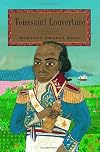
English professor and novelist Madison Smartt Bell's new book, Toussaint Louverture (Pantheon, 2007) is at once a biography of the Haitian Revolution's main leader and at the same time a remarkably useful overall history of that conflict. Louverture makes for an incredibly difficult subject given the paucity of objective sources on his life and legacy, but Bell has handled that dilemma carefully and well.
As Bell notes in his afterword, most portrayals of Louverture show "an extreme show more Toussaint: either a vicious, duplicitous, Machiavellian figure ... or a military and political genius, autodidact, and self-made man, a wise and good humanitarian who not only led his people to freedom but also envisioned and briefly created a society based on racial harmony, at least two hundred years ahead of its time." What Bell has - I suspect consciously - attempted to do here is tack toward the middle, showing Toussaint (to the extent possible) in his own context.
We don't get a great deal here about the motivations of the man, and to his great credit Bell has refrained from attempting to psycho-analyze his subject. Where there are speculations - and there are some, of necessity - they're carefully noted. In the absence of a huge amount of personal detail, Bell provides a fascinating and detailed account of the incredibly complicated politics of Saint Domingue during the years of revolutionary conflict. The balance of power seemed to be constantly shifting (both between and amongst the groups within the colony and with the various European powers), and Bell has managed to recreate the essence of that without bogging the book down. I do wish that he'd included more about the relationship with the fledging United States, including the support offered by the Adams administration during the early years of the rebellion.
Louverture was and remains an impossible figure to pin down. Was he in fact out to secure an independent St. Domingue? If so, why not declare it (he insisted throughout that he remained loyal to France)? Why did he fall into the trap that led to his arrest and deportation? These questions, unfortunately, will probably never be answered. But Bell's book provides a fresh examination of these and other issues, and is an important introduction to its subject. Recommended.
http://philobiblos.blogspot.com/2007/02/book-review-toussaint-louverture.html show less
As Bell notes in his afterword, most portrayals of Louverture show "an extreme show more Toussaint: either a vicious, duplicitous, Machiavellian figure ... or a military and political genius, autodidact, and self-made man, a wise and good humanitarian who not only led his people to freedom but also envisioned and briefly created a society based on racial harmony, at least two hundred years ahead of its time." What Bell has - I suspect consciously - attempted to do here is tack toward the middle, showing Toussaint (to the extent possible) in his own context.
We don't get a great deal here about the motivations of the man, and to his great credit Bell has refrained from attempting to psycho-analyze his subject. Where there are speculations - and there are some, of necessity - they're carefully noted. In the absence of a huge amount of personal detail, Bell provides a fascinating and detailed account of the incredibly complicated politics of Saint Domingue during the years of revolutionary conflict. The balance of power seemed to be constantly shifting (both between and amongst the groups within the colony and with the various European powers), and Bell has managed to recreate the essence of that without bogging the book down. I do wish that he'd included more about the relationship with the fledging United States, including the support offered by the Adams administration during the early years of the rebellion.
Louverture was and remains an impossible figure to pin down. Was he in fact out to secure an independent St. Domingue? If so, why not declare it (he insisted throughout that he remained loyal to France)? Why did he fall into the trap that led to his arrest and deportation? These questions, unfortunately, will probably never be answered. But Bell's book provides a fresh examination of these and other issues, and is an important introduction to its subject. Recommended.
http://philobiblos.blogspot.com/2007/02/book-review-toussaint-louverture.html show less
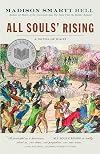
One of the best historical novels I’ve ever read. It’s about the Haitian Revolution—this is the first volume. There are multiple points of view among the white and black people of Haiti. A French doctor comes to Haiti to visit a sister who’s married a Haitian planter and about whom he’s concerned. Dr. Hébert, who becomes involved with a mulatto woman and has a child with her, who’s captured by the rebels and learns about medicinal herbs from Toussaint L’Overature, is the show more “touchstone” character, the one whose sensibilities are most like those of today’s readers. It was a brilliant decision on Bell’s part to have a white man who was not a Haitian colonial (with economic interests in plantations and slave labor) as an observer/participant, one who is of the same class as the planters (without their interests) but is able to accept human beings on their own merits. I understand he continues through the next two volumes of the trilogy. There is also third person narration that focuses on different characters, increasing Toussaint who was already old by Haitian slave standards, a Christian, and from a well-run plantation where slaves were not grossly mistreated. There’s some first person narrative by an African named Riau who remembers his homeland (Toussaint was born into slavery in Haiti) and who moves between Toussaint’s group and some more militant and violent groups. The first person narrative is Bell’s attempt, largely successful, to “get inside the head” of the rebels, in the form of an individual who’s intelligent enough to have some insight into the choices the rebels have. Bell provides ample historical material for the reader to understand the context of the only successful black revolution. It takes place during the unsettled period following the French Revolution. There exist in Haiti at the time not only the same groups of whites there were in the US during slavery (the upper class, who owned land and for whom the institution of slavery is critical and the middle class whites who were traders and shopkeepers and had other jobs and professions and whose wealth did not derive from the land), but political groups as well, those conservatives who supported the king (largely the plantation-owning class) as well as various revolutionary supporters. So to some extent French politics played out in Haiti. There was one governing official who deported those Frenchmen who disagreed with him back to France as traitors, and in some cases to the guillotine. There were also black rebels who were loyal to the king.There’s a year-by-year summary of historical events in an appendix—needed since most readers in English are not very familiar with Haitian history. There’s also an excellent glossary that allows Bell to use French and Creole words in the text because all of them are explained in the glossary. That allows him to initiate the reader into the Voodoo religion and Haitian traditions among whites, Creoles, mulattoes and blacks) as it touches on the events in the novel. It’s extraordinary how successful he is leading readers to understand the multiple points of view. Neither side is monolithic in its interests and values and both the rebels and the white defenders are complicated and changing coalitions of individuals and groups with various motivations. Bell’s narrative also moves back and forth in time, with the novel actually beginning as Toussaint is moved to a secure prison in France in 1802. The events, though, of this first volume mainly take place between 1791 and 1793.I already have the second volume… show less
Lists
Awards


You May Also Like


Associated Authors
Statistics
- Works
- 30
- Also by
- 28
- Members
- 3,227
- Popularity
- #7,930
- Rating
- 3.8
- Reviews
- 52
- ISBNs
- 138
- Languages
- 8
- Favorited
- 8

