
Kelly Cherry
Author of My Life and Dr. Joyce Brothers: A Novel in Stories
About the Author
Kelly Cherry is the Eudora Welty Professor Emerita of English and Evjue-Bascom Professor Emerita in the Humanities at the University of Wisconsin-Madison. The recipient of numerous honors and awards, Cherry was named the poet laureate of Virginia in 2010 and is author of more than twenty-five books show more of fiction and poetry. show less
Works by Kelly Cherry
Time Out of Mind 1 copy
Observing the Invisible 1 copy
Associated Works
When She Named Fire: An Anthology of Contemporary Poetry by American Women (2008) — Contributor — 15 copies
The New York quarterly : NYQ : Number 36, Summer 1988 — Contributor — 1 copy
Tagged
Common Knowledge
- Gender
- female
- Awards and honors
- Hanes Award for Poetry (1989)
Poet Laureate of Virginia - Nationality
- USA
- Associated Place (for map)
- USA
Members
Reviews
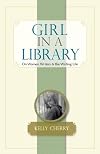
GIRL IN A LIBRARY, by Kelly Cherry.
I'm still working on learning more about Kelly Cherry, a new favorite author, having recently read - and loved - four of her short story collections. For Cherry fans, this book is a great place to learn more about her. Published in 2009, GIRL IN A LIBRARY (a title borrowed from a poem by Randall Jarrell, a writer Cherry admires and met once) is a mixed bag of autobiographical essays, some lit crit, a few extended comparative studies of other Southern women show more writers (Anne Tyler, Elizabeth Hardwick, Bobbie Ann Mason, Mary Ward Brown, Coleen J. McElroy, Gayl Jones, Rita Dove, Ntozake Shange, as well as nods to a few others, both male and female). Of these women, I recognized only the first three, but I will make it a point to learn more about this Mary Ward Brown. And I found a collection of Grace Paley stories on my shelf I think it's time to crack open, considering how Cherry praises her work.
In an essay called "I Was a Teenage Beatnik," she tells of a confusing, lost year at UT-Knoxville, where she was harassed by a nutty dean and the police. Too young to understand the Great Books she was assigned, she did discover the Beats. I thoroughly enjoyed this piece, especially when she mentioned Joyce Johnson's 1983 memoir of her youthful affair with Jack Kerouac. In it Johnson told of how Kerouac didn't respect her choice of Henry James as her favorite novelist. Kerouac told her she should "never revise, never change anything, not a word." Johnson pretended to take this in, but admitted she still loved James. Cherry says, "I love Joyce Johnson." Me too, Kelly. In fact I could never stand Kerouac's writing, but I did love Johnson's memoir, MINOR CHARACTERS.
There is an extensive look at Hardwick's career as both a critic and a writer in "Self and Sensibility." Although I know of Hardwick, I've never read her work. Cherry seems to admire her, but I don't think I'd be interested in her stuff. (Sorry, Kelly.)
In "A Girl in a Library," Cherry pays tribute to her teachers at UNC-Greensboro - Peter Taylor, Fred Chappell, Robert Watson, Allen Tate, and others. She also speaks admiringly here, and in other essays of her love of the work of that grand old lady of Southern fiction, Eudora Welty.
I especially appreciated "The Globe and the Brain: On Place in Fiction," in which she explains in some detail how she came to write the Nina Bryant trilogy of story collections, and the importance of its main locale, Madison, where Cherry lived for over twenty years while teaching at the University of Wisconsin.
But I have to confess my favorite piece here is the last one, "Called to It: An Autobiography." In it she talks more about her childhood, her family, her first marriage, to a young sculptor, about her life-long love affair with books and reading, her compulsion to write, and more. It is, as the title suggests, a memoir in miniature, and I loved it.
There are a few things included here - in the literary criticism pieces - that probably went a bit over my head. But that's okay, because bottom line? I loved this book, and am so glad I read it. Very highly recommended. show less
I'm still working on learning more about Kelly Cherry, a new favorite author, having recently read - and loved - four of her short story collections. For Cherry fans, this book is a great place to learn more about her. Published in 2009, GIRL IN A LIBRARY (a title borrowed from a poem by Randall Jarrell, a writer Cherry admires and met once) is a mixed bag of autobiographical essays, some lit crit, a few extended comparative studies of other Southern women show more writers (Anne Tyler, Elizabeth Hardwick, Bobbie Ann Mason, Mary Ward Brown, Coleen J. McElroy, Gayl Jones, Rita Dove, Ntozake Shange, as well as nods to a few others, both male and female). Of these women, I recognized only the first three, but I will make it a point to learn more about this Mary Ward Brown. And I found a collection of Grace Paley stories on my shelf I think it's time to crack open, considering how Cherry praises her work.
In an essay called "I Was a Teenage Beatnik," she tells of a confusing, lost year at UT-Knoxville, where she was harassed by a nutty dean and the police. Too young to understand the Great Books she was assigned, she did discover the Beats. I thoroughly enjoyed this piece, especially when she mentioned Joyce Johnson's 1983 memoir of her youthful affair with Jack Kerouac. In it Johnson told of how Kerouac didn't respect her choice of Henry James as her favorite novelist. Kerouac told her she should "never revise, never change anything, not a word." Johnson pretended to take this in, but admitted she still loved James. Cherry says, "I love Joyce Johnson." Me too, Kelly. In fact I could never stand Kerouac's writing, but I did love Johnson's memoir, MINOR CHARACTERS.
There is an extensive look at Hardwick's career as both a critic and a writer in "Self and Sensibility." Although I know of Hardwick, I've never read her work. Cherry seems to admire her, but I don't think I'd be interested in her stuff. (Sorry, Kelly.)
In "A Girl in a Library," Cherry pays tribute to her teachers at UNC-Greensboro - Peter Taylor, Fred Chappell, Robert Watson, Allen Tate, and others. She also speaks admiringly here, and in other essays of her love of the work of that grand old lady of Southern fiction, Eudora Welty.
I especially appreciated "The Globe and the Brain: On Place in Fiction," in which she explains in some detail how she came to write the Nina Bryant trilogy of story collections, and the importance of its main locale, Madison, where Cherry lived for over twenty years while teaching at the University of Wisconsin.
But I have to confess my favorite piece here is the last one, "Called to It: An Autobiography." In it she talks more about her childhood, her family, her first marriage, to a young sculptor, about her life-long love affair with books and reading, her compulsion to write, and more. It is, as the title suggests, a memoir in miniature, and I loved it.
There are a few things included here - in the literary criticism pieces - that probably went a bit over my head. But that's okay, because bottom line? I loved this book, and am so glad I read it. Very highly recommended. show less
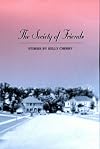
THE SOCIETY OF FRIENDS: STORIES, by Kelly Cherry
Wow! This is the kinda book that makes me wish I were a more eloquent, erudite sort of writer. But I’m not, and I’ve learned to be okay with that. Kelly Cherry, on the other hand, IS that kind of writer. Hence the ‘Wow.’ And I enjoyed the holy hell outa reading these stories.
When I read the name on the cover of this book I thought, Hmm, Quakers! But no, not really, although there is a Quaker wedding ceremony in the title story. But then show more I thought about what I know about Quaker services (which, admittedly, ain’t all that much) - how the services are often just silent meetings, where people sometimes get up to speak if the spirit moves them. There are a baker’s dozen stories here - in which various families, couples, singles - are doing the best they can, quietly living their lives - lives often marked by that kind of “quiet desperation” that Thoreau remarked on. And all the important characters live on the same block, somewhere near downtown Madison, Wisconsin, at the tail end of the twentieth century. So think of that city block as a Quaker Meeting House, and think of each of these stories as one of the congregants standing up and ‘testifying,’ or telling his story. There’s quite a collection of characters here too. There’s a nurse named Shelley, who’s just learned her twenty year-old daughter is gay, so she’s trying to deal with that, aided by her husband and ex-husband, and she’s also pondering life and death matters at her job, watching a young man die slowly and painfully from AIDS (“Not the Phil Donahue Show”). There's a bookstore owner named Guy whose business (in “the kind of city where people get their books from the library”) is going bust (“Tell Her”). There’s Conrad, a medical librarian who has recently lost both his wife and small son, still in shock, trying to put his life back together again (“Chores”). And a young, gifted and black performance artist named Jazz, who has a purple streak in her hair, a cat named Zora Neale, and who may find love with an Assistant D.A. named Manny Durkheim (“Lunachick”). There’s Larry, a fast-talking commodities trader whose wife wants a divorce, and she wants it now, which, as Larry is sadly beginning to understand, is just “How It Goes.”
And there’s Nina Bryant, the most interesting character of all, and the one who ties all of these other characters’ stories together. (Think OLIVE KITTERIDGE, only Nina’s a much nicer person, and this book came out before Strout’s.) Nina is a writer who teaches at the University. She lives with Tavy, her four year-old adopted daughter (who is also her great-niece - it’s a long story; just read it, okay?), and a little dog she’s had for nearly fourteen years (yeah, you know where that’s probably going, but try not to think about it). Nina loves Tavy, and she loves her little dog, but she is lonely. She has not had sex in “a decade,” which she ruefully admits to Palmer, a new and promising suitor. She also harbors some dark secrets from her past, some truly nasty family skeletons.
Nina shows up in about half of the stories here, but two of them, “As It Is In Heaven” and “Love in the Middle Ages” are key to understanding Nina and her particular situation. I refuse to inject any ‘spoilers’ here, because Nina’s story is meant to be one that unfolds slowly, so you’ve gotta just keep reading, okay? Trust me; it’s worth the wait. Because I have to tell you, I love Nina. She is one of the best fictional characters since Scout Finch. Where’d THAT come from? Well, probably all the hoo-haw recently about a new novel coming from Harper Lee. Really though. Nina is an absolutely fascinating character, as are her eccentric musician parents, who, after they retired, moved to England. And Nina and Tavy's visit there after her father dies, in “As It Is In Heaven,” is one of the oddest family visits you’ll ever read about, one that gives you a glimpse of a heaven worth pondering. A story profound and funny, all at the same time - which, I discovered is one of Kelly Cherry's specialties, mixing the ridiculous and the sublime.
Here’s a for-instance for ya. In “Chapters from a Dog’s Life” Nina tells of a visit from another writer friend whose youthful looks make her feel old, and she describes how, after forty -
“… your eyebrows, discovering themselves to be completely exhausted, lied down almost on the tops of your eyelids for a long snooze through the next thirty years.
Let’s face it. Once, your underwear was spanking clean. You could legitimately call it lingerie … Now you tell yourself that God would never let you get in an accident with what you've got on.
What you've got on is already an accident.”
And in the same story, her writer friend (a cat person), on observing the little dog ‘scooting’ his butt, drawls condescendingly, “How very doglike of him.” To which Nina comments -
“After she left I found myself wondering what she thinks writers do. Seems to me we’re all expressing our anal sacs too.”
I love it when an author can poke fun at herself and her profession. These hilarious moments are mixed right in with much sadder moments, like Nina’s noting her dog's advancing age, how he sleeps most of the time now, and how she loves him “because he taught me about being responsible for someone I loved that made me know I could raise a child on my own. I love Tavy better because I loved him first.”
Kelly Cherry knows how to make you think deeply about your own life, but she also knows how to make you laugh. She loves puns - good and bad - as well as riddles (“How many creative writers does it take to change a light bulb? One to change the bulb and ten to workshop it.”), and she sprinkles both lavishly throughout the book, creating comic relief, often just in time. Here’s Nina on Ronald Reagan: “We could all get killed because he thinks being president of the United States is no different from being president of the Screen Actors Guild.” Or Jazz's mother on the purple streak in her daughter's hair: “There's no need to go being the color purple on top of being black.” Some of Cherry's sentences go on and on, but they work, because she is the queen of the comma, the princess of the pregnant pause. I mean this KC don't need no Sunshine Band. This woman can WRITE!
I was torn about this book. I wanted to keep it clean and pristine looking. But I also wanted to dog-ear pages and underline particular passages and make notes. Alas, I did the latter. The book looks battle-worn and weary. Like many of its characters. But you will remember these people. They survived (or did not and went to heaven), whatever the state of their underwear. And they became friends, a “society of friends.”
I could go on and on with the jokes and profundities; Cherry's got a million of 'em. But enough. I loved this book. Made me laugh. Made me cry. Made me shake my head in wonder and admiration. My highest recommendation. show less
Wow! This is the kinda book that makes me wish I were a more eloquent, erudite sort of writer. But I’m not, and I’ve learned to be okay with that. Kelly Cherry, on the other hand, IS that kind of writer. Hence the ‘Wow.’ And I enjoyed the holy hell outa reading these stories.
When I read the name on the cover of this book I thought, Hmm, Quakers! But no, not really, although there is a Quaker wedding ceremony in the title story. But then show more I thought about what I know about Quaker services (which, admittedly, ain’t all that much) - how the services are often just silent meetings, where people sometimes get up to speak if the spirit moves them. There are a baker’s dozen stories here - in which various families, couples, singles - are doing the best they can, quietly living their lives - lives often marked by that kind of “quiet desperation” that Thoreau remarked on. And all the important characters live on the same block, somewhere near downtown Madison, Wisconsin, at the tail end of the twentieth century. So think of that city block as a Quaker Meeting House, and think of each of these stories as one of the congregants standing up and ‘testifying,’ or telling his story. There’s quite a collection of characters here too. There’s a nurse named Shelley, who’s just learned her twenty year-old daughter is gay, so she’s trying to deal with that, aided by her husband and ex-husband, and she’s also pondering life and death matters at her job, watching a young man die slowly and painfully from AIDS (“Not the Phil Donahue Show”). There's a bookstore owner named Guy whose business (in “the kind of city where people get their books from the library”) is going bust (“Tell Her”). There’s Conrad, a medical librarian who has recently lost both his wife and small son, still in shock, trying to put his life back together again (“Chores”). And a young, gifted and black performance artist named Jazz, who has a purple streak in her hair, a cat named Zora Neale, and who may find love with an Assistant D.A. named Manny Durkheim (“Lunachick”). There’s Larry, a fast-talking commodities trader whose wife wants a divorce, and she wants it now, which, as Larry is sadly beginning to understand, is just “How It Goes.”
And there’s Nina Bryant, the most interesting character of all, and the one who ties all of these other characters’ stories together. (Think OLIVE KITTERIDGE, only Nina’s a much nicer person, and this book came out before Strout’s.) Nina is a writer who teaches at the University. She lives with Tavy, her four year-old adopted daughter (who is also her great-niece - it’s a long story; just read it, okay?), and a little dog she’s had for nearly fourteen years (yeah, you know where that’s probably going, but try not to think about it). Nina loves Tavy, and she loves her little dog, but she is lonely. She has not had sex in “a decade,” which she ruefully admits to Palmer, a new and promising suitor. She also harbors some dark secrets from her past, some truly nasty family skeletons.
Nina shows up in about half of the stories here, but two of them, “As It Is In Heaven” and “Love in the Middle Ages” are key to understanding Nina and her particular situation. I refuse to inject any ‘spoilers’ here, because Nina’s story is meant to be one that unfolds slowly, so you’ve gotta just keep reading, okay? Trust me; it’s worth the wait. Because I have to tell you, I love Nina. She is one of the best fictional characters since Scout Finch. Where’d THAT come from? Well, probably all the hoo-haw recently about a new novel coming from Harper Lee. Really though. Nina is an absolutely fascinating character, as are her eccentric musician parents, who, after they retired, moved to England. And Nina and Tavy's visit there after her father dies, in “As It Is In Heaven,” is one of the oddest family visits you’ll ever read about, one that gives you a glimpse of a heaven worth pondering. A story profound and funny, all at the same time - which, I discovered is one of Kelly Cherry's specialties, mixing the ridiculous and the sublime.
Here’s a for-instance for ya. In “Chapters from a Dog’s Life” Nina tells of a visit from another writer friend whose youthful looks make her feel old, and she describes how, after forty -
“… your eyebrows, discovering themselves to be completely exhausted, lied down almost on the tops of your eyelids for a long snooze through the next thirty years.
Let’s face it. Once, your underwear was spanking clean. You could legitimately call it lingerie … Now you tell yourself that God would never let you get in an accident with what you've got on.
What you've got on is already an accident.”
And in the same story, her writer friend (a cat person), on observing the little dog ‘scooting’ his butt, drawls condescendingly, “How very doglike of him.” To which Nina comments -
“After she left I found myself wondering what she thinks writers do. Seems to me we’re all expressing our anal sacs too.”
I love it when an author can poke fun at herself and her profession. These hilarious moments are mixed right in with much sadder moments, like Nina’s noting her dog's advancing age, how he sleeps most of the time now, and how she loves him “because he taught me about being responsible for someone I loved that made me know I could raise a child on my own. I love Tavy better because I loved him first.”
Kelly Cherry knows how to make you think deeply about your own life, but she also knows how to make you laugh. She loves puns - good and bad - as well as riddles (“How many creative writers does it take to change a light bulb? One to change the bulb and ten to workshop it.”), and she sprinkles both lavishly throughout the book, creating comic relief, often just in time. Here’s Nina on Ronald Reagan: “We could all get killed because he thinks being president of the United States is no different from being president of the Screen Actors Guild.” Or Jazz's mother on the purple streak in her daughter's hair: “There's no need to go being the color purple on top of being black.” Some of Cherry's sentences go on and on, but they work, because she is the queen of the comma, the princess of the pregnant pause. I mean this KC don't need no Sunshine Band. This woman can WRITE!
I was torn about this book. I wanted to keep it clean and pristine looking. But I also wanted to dog-ear pages and underline particular passages and make notes. Alas, I did the latter. The book looks battle-worn and weary. Like many of its characters. But you will remember these people. They survived (or did not and went to heaven), whatever the state of their underwear. And they became friends, a “society of friends.”
I could go on and on with the jokes and profundities; Cherry's got a million of 'em. But enough. I loved this book. Made me laugh. Made me cry. Made me shake my head in wonder and admiration. My highest recommendation. show less
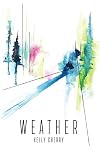
I don't read a lot of poetry, and when I do, I like to 'ease up on it.' Well, Kelly Cherry's chapbook, WEATHER, is perfect for that. And, while you can easily read the whole book in a half hour or less, the poems here are the kind you want to go back over again. They seem deceptively simple, but they often 'ease up' on the profound. The poem "Snow" is a good example with its lines -
"Snow is not just quiet. It is as silent / as the grave that waits for every one of us / and like a grave, the show more snow covers us. / Our voices are hushed like the voices of the dead ..."
And, in the same poem, she reminds us of how children love snow -
"... In fact there's not much children / don't like about snow, for they are brand new / and tender as a mother's kiss, without / intelligence of what must one day come."
In "Wind," Cherry reflects that -
"Wind is wonderful, and not just for the alliteration."
Which made me suddenly remember that old Johnny Mathis song, "Wild Is the Wind." Probably not very 'literary' of me, but there it is anyway. Kelly however, amplifies her poem with homelier images of her restless husband and small dog, "both in love with weather. / The wind excites them ..." Wonderful, wild, wind - yes, alliteration, but accurate too.
There are an even two dozen poems here, all of them weather- or season-related, and thought-provoking in different ways. But if I had to pick a favorite, it would be "The Fourth of July." Because Kelly Cherry and I are of a certain age, in the autumn of our lives. But we can both remember younger years and the excitement and "fireworks" of sex and hoping "to get lucky. Listen to this -
"Still we remember how it was, hot / and steamy, sometimes with .alcohol or drugs. / How we broke out of our bodies as if out of jail, / finding ourselves in a United State."
Oh yes. Thank God for such memories. And thank you, Ms. Cherry, for these lovely, profound, bittersweet poems. Very highly recommended.
- Tim Bazzett, author of the memoir, BOOKLOVER show less
"Snow is not just quiet. It is as silent / as the grave that waits for every one of us / and like a grave, the show more snow covers us. / Our voices are hushed like the voices of the dead ..."
And, in the same poem, she reminds us of how children love snow -
"... In fact there's not much children / don't like about snow, for they are brand new / and tender as a mother's kiss, without / intelligence of what must one day come."
In "Wind," Cherry reflects that -
"Wind is wonderful, and not just for the alliteration."
Which made me suddenly remember that old Johnny Mathis song, "Wild Is the Wind." Probably not very 'literary' of me, but there it is anyway. Kelly however, amplifies her poem with homelier images of her restless husband and small dog, "both in love with weather. / The wind excites them ..." Wonderful, wild, wind - yes, alliteration, but accurate too.
There are an even two dozen poems here, all of them weather- or season-related, and thought-provoking in different ways. But if I had to pick a favorite, it would be "The Fourth of July." Because Kelly Cherry and I are of a certain age, in the autumn of our lives. But we can both remember younger years and the excitement and "fireworks" of sex and hoping "to get lucky. Listen to this -
"Still we remember how it was, hot / and steamy, sometimes with .alcohol or drugs. / How we broke out of our bodies as if out of jail, / finding ourselves in a United State."
Oh yes. Thank God for such memories. And thank you, Ms. Cherry, for these lovely, profound, bittersweet poems. Very highly recommended.
- Tim Bazzett, author of the memoir, BOOKLOVER show less
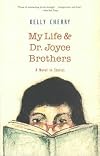
MY LIFE & DR. JOYCE BROTHERS, by Kelly Cherry.
I came at this trilogy from-the-middle-out. Yeah, this is the first book in a Nina Bryant trilogy, and I read the middle book, THE SOCIETY OF FRIENDS, first. But I don't think it really matters, since each of the books also stands alone perfectly well. Each of them is presented as a collection of connected stories, but the stories can stand alone too. In fact many of the stories were first published elsewhere. No matter, because Kelly Cherry show more knits them all together in a masterful fashion, creating a tapestry of a time, a place, and - especially - a family. Or maybe two families: one of them Nina Bryant's first family, which consisted of her parents, classically trained violinists who, to their children's detriment, may have cared too much for their art; her brother, seven years older; and Nina, the baby of the family. And then there will be/is Nina's own family: a much longed for adopted daughter, and her unnamed "little dog."
This book is perhaps a bit easier to follow than the FRIENDS book, if only because Nina is central to each story, which was not true of the second book, which gave thumbnail lives of several of her friends in a close-knit neighborhood of Madison, Wisconsin, where Nina is a teacher of writing at the University. In the course of the stories we learn much about Nina's parents, who struggled through the lean years of the Great Depression, clinging fast to their music. And about her wastrel brother, spoiled and dissolute, a self-centered alcoholic womanizer and 'artist,' worshipped by Nina as a child. Sadly, her brother sexually abused her, a dark family secret from which Nina, now forty-ish, is still struggling to recover, even as she also is trying to get over a man she was deeply in love with who dumped her for someone else. This after an early failed marriage and a short stint in a mental hospital following a half-hearted suicide attempt. Although Nina is a successful writer and professor with advanced degrees, her self-esteem is obviously in the toilet. ("For twenty years I had felt like a piece of shit ...") She joins a Survivors of Incest group and spends much of her time mulling over her personal life and furtively sampling self-help books, like the Brothers book, WHAT EVERY WOMAN SHOULD KNOW ABOUT MEN. Hence the title. Nina knows plenty about men, most of it not good, unfortunately. But she has found a sensitive confidante and 'friend with benefits' in Rajan, a darkly handsome toy designer and divorced father of two teenage sons. She also becomes a temporary caretaker for her brother's pregnant thirteen year-old daughter. I mean there is SO MUCH going on in this story, and Nina Bryant is simply a fascinating character with a lot on her plate. I kept thinking, as I made my way through these stories, "this woman could use a hug."
The book concludes with a kind of dream-like sequence in which Nina is telling her daughter a bedtime story, a story which is also "to herself, so perhaps it is a dream she is dreaming, or a kind of dream. Her child and her dog sleep on."
Oddly, I was reminded of the closing dream-like scenes from the Coen brothers film, RAISING ARIZONA, and its voice-over refrain of "And I dreamed on." Or maybe not so oddly, come to think of it, since the couple in that film were, like Nina Bryant, desperate to have a child. (I know, I know. That film was a comedy; so I should probably point out that Nina is not without an endearingly dry and sometimes even bawdy sense of humor despite her so often sad circumstances.) In point of fact, the final book of the Nina trilogy is titled A KIND OF DREAM. I can't wait to read it. In the meantime, Nina, hang in there; and, before I forget, here's a hug. My highest recommendation. show less
I came at this trilogy from-the-middle-out. Yeah, this is the first book in a Nina Bryant trilogy, and I read the middle book, THE SOCIETY OF FRIENDS, first. But I don't think it really matters, since each of the books also stands alone perfectly well. Each of them is presented as a collection of connected stories, but the stories can stand alone too. In fact many of the stories were first published elsewhere. No matter, because Kelly Cherry show more knits them all together in a masterful fashion, creating a tapestry of a time, a place, and - especially - a family. Or maybe two families: one of them Nina Bryant's first family, which consisted of her parents, classically trained violinists who, to their children's detriment, may have cared too much for their art; her brother, seven years older; and Nina, the baby of the family. And then there will be/is Nina's own family: a much longed for adopted daughter, and her unnamed "little dog."
This book is perhaps a bit easier to follow than the FRIENDS book, if only because Nina is central to each story, which was not true of the second book, which gave thumbnail lives of several of her friends in a close-knit neighborhood of Madison, Wisconsin, where Nina is a teacher of writing at the University. In the course of the stories we learn much about Nina's parents, who struggled through the lean years of the Great Depression, clinging fast to their music. And about her wastrel brother, spoiled and dissolute, a self-centered alcoholic womanizer and 'artist,' worshipped by Nina as a child. Sadly, her brother sexually abused her, a dark family secret from which Nina, now forty-ish, is still struggling to recover, even as she also is trying to get over a man she was deeply in love with who dumped her for someone else. This after an early failed marriage and a short stint in a mental hospital following a half-hearted suicide attempt. Although Nina is a successful writer and professor with advanced degrees, her self-esteem is obviously in the toilet. ("For twenty years I had felt like a piece of shit ...") She joins a Survivors of Incest group and spends much of her time mulling over her personal life and furtively sampling self-help books, like the Brothers book, WHAT EVERY WOMAN SHOULD KNOW ABOUT MEN. Hence the title. Nina knows plenty about men, most of it not good, unfortunately. But she has found a sensitive confidante and 'friend with benefits' in Rajan, a darkly handsome toy designer and divorced father of two teenage sons. She also becomes a temporary caretaker for her brother's pregnant thirteen year-old daughter. I mean there is SO MUCH going on in this story, and Nina Bryant is simply a fascinating character with a lot on her plate. I kept thinking, as I made my way through these stories, "this woman could use a hug."
The book concludes with a kind of dream-like sequence in which Nina is telling her daughter a bedtime story, a story which is also "to herself, so perhaps it is a dream she is dreaming, or a kind of dream. Her child and her dog sleep on."
Oddly, I was reminded of the closing dream-like scenes from the Coen brothers film, RAISING ARIZONA, and its voice-over refrain of "And I dreamed on." Or maybe not so oddly, come to think of it, since the couple in that film were, like Nina Bryant, desperate to have a child. (I know, I know. That film was a comedy; so I should probably point out that Nina is not without an endearingly dry and sometimes even bawdy sense of humor despite her so often sad circumstances.) In point of fact, the final book of the Nina trilogy is titled A KIND OF DREAM. I can't wait to read it. In the meantime, Nina, hang in there; and, before I forget, here's a hug. My highest recommendation. show less
Awards


You May Also Like


Associated Authors
Statistics
- Works
- 39
- Also by
- 12
- Members
- 253
- Popularity
- #90,474
- Rating
- 3.9
- Reviews
- 14
- ISBNs
- 64
- Favorited
- 1